





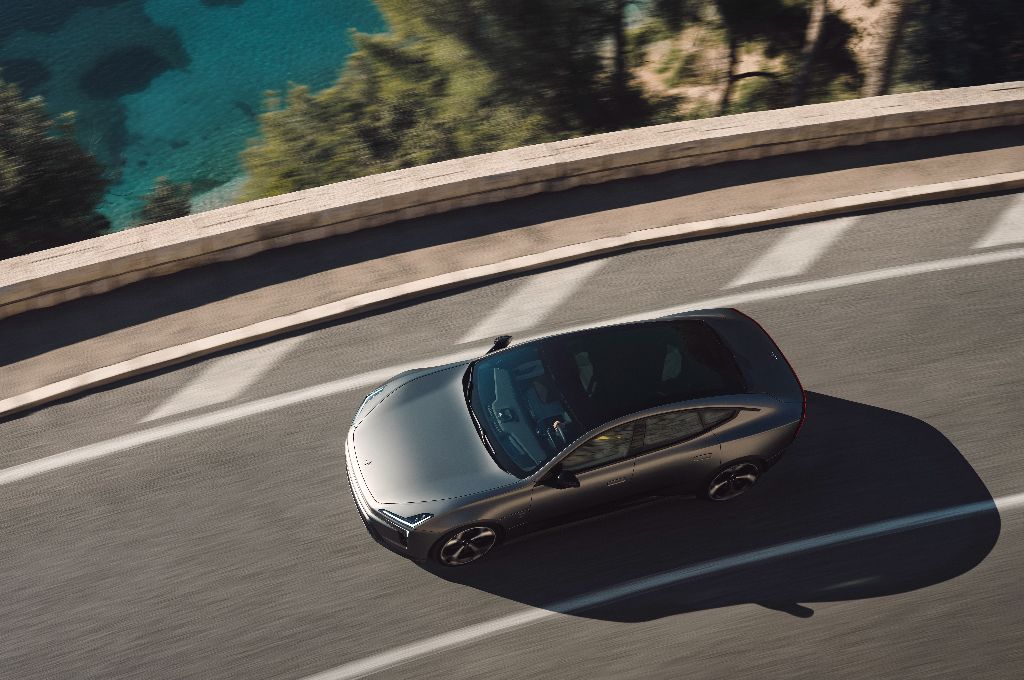
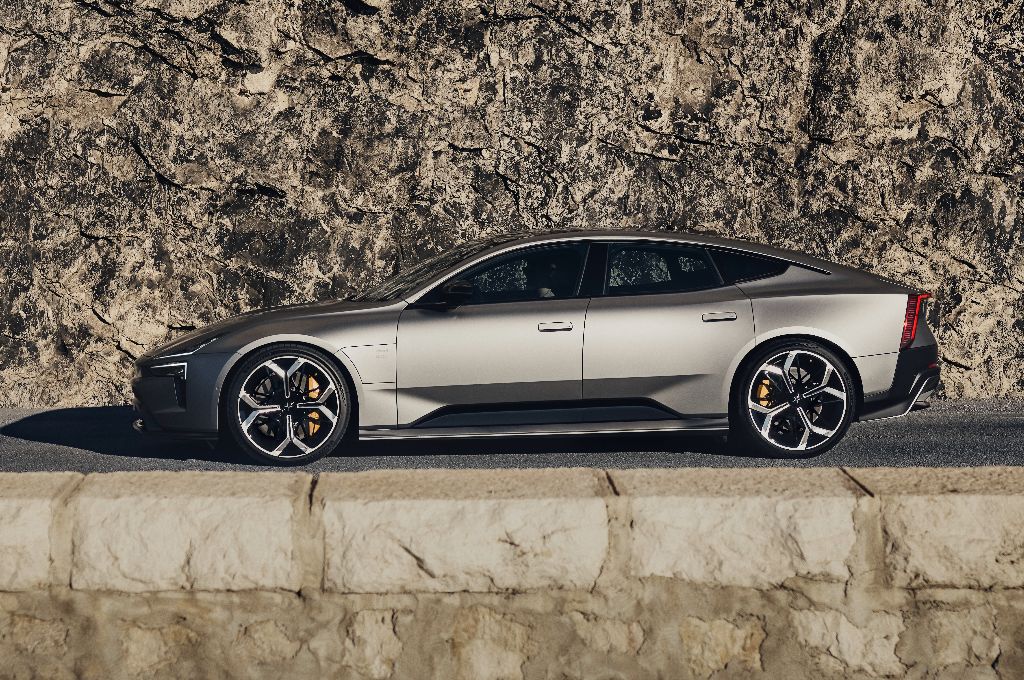
Rival carmakers could learn a thing or two from Polestar, though perhaps they might not want to in this case. The Swedish carmaker has just published its full lifecycle assessment for its new Polestar 5 model, just as it has done with its previous product launches, detailing the environmental impact of building the car and up to delivery.
Polestar is the only carmaker that publishes comprehensive breakdowns of what resources it takes to produce its cars, which are all viewable on its website. In the 5’s case, it has a carbon footprint of 23.8 tCO2e, which covers the emissions from getting the raw materials for the car out of the earth, through to production and then delivery to the customer.
The tCO2e measurement, or tonnes of carbon dioxide equivalent, calculates a CO2 figure for the various greenhouse gases that are produced in the car’s production (such as nitrous oxide and methane) that translates their global warming potential into a CO2 equivalent.
Polestar says that aluminium is one of the most intensive aspects of car production when it comes to carbon footprint, so it has worked hard to change its sourcing and production processes. The company says that 13% of the 5’s aluminium is recycled (keep popping those cans in the green bin) and 83% of it comes from smelters that are powered by renewable energy, which has saved 14tCO2e for every car compared with conventional aluminium sourcing.
The company has also tried to source recycled and plant-based materials where possible for the interior of its cars, further cutting down on emissions. And if buyers do want to go for the leather option on their car, Polestar says that it has tried to source materials that meet strict welfare and chemical standards.
Polestar’s head of sustainability, Fredrika Klarén, said: “You cannot reduce what you don’t measure. Making the carbon footprint of a car visible helps focus the industry on where emissions occur, particularly in materials and manufacturing. That transparency is essential if we want to scale the low-carbon materials, renewable energy and circular solutions needed to reduce the climate impact of cars.”