





New data suggests that EVs are far less likely to fail their MOT tests than their petrol-engined counterparts. Research carried out by New AutoMotive for the British Vehicle Rental and Leasing Association (BVRLA) found striking differences in failure rates, with EVs with higher mileages far less likely to fail compared to petrol cars with identical mileages.
The research analysed data from 47.4 million MOT tests and looked at failure rates and the causes behind failed tests. For cars with between 90,000 and 120,000 miles on the clock, the failure rate for EVs was 16.5%, compared with 22.1% for petrol-engined cars. The difference between the two rates is even greater for higher mileage cars with more than 120,000 recorded miles. In this category, EVs post a failure rate of 16% with petrol cars recording a rate of 23.5%.
For vehicles with lower total mileages, the study found relatively little difference between petrol and electric cars. 12% of EVs with between 20,000 and 40,000 miles on the clock failed their MOT, compared to 11.7% of petrol cars.
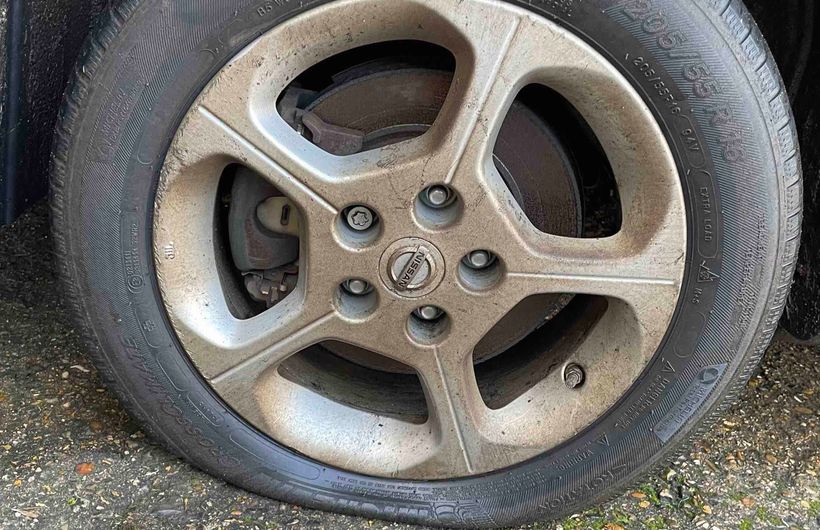
Interestingly, the data shows that EVs have a different pattern of faults compared to petrol cars. Tyre defects are twice as likely to trigger an MOT fail in an EV, while friction brake defects account for a higher than average number of failures. This is particularly apparent in older, low-mileage EVs where brake components have corroded due to the effectiveness of regenerative braking.
A key reason why EVs appear to be more reliable at higher mileages largely comes down to mechanical simplicity. With fewer parts to fail, EVs were found to be more reliable and less likely to have issues with
The report did sound a note of caution around battery health. At present, there is no provision in the MOT test to assess battery health - largely because it is a safety-based check. With a combustion-engined car, a failing engine is likely to be detected at an MOT due to excessive emissions, leaks or warning lights. An EV with a degraded battery can easily pass an MOT if all its safety features are working and the vehicle is otherwise roadworthy.
The research also looked into how long EVs stay on the roads in the UK. The data analysed looked at whether cars came back for another MOT within a 30-month period. The researchers discovered that at 15 years old, 95% of EVs came back for another MOT, compared to just 88% of petrol cars. Based on this dataset, EVs are less likely to disappear from the MOT records.
Older EVs are also being driven more than comparable petrol-engined cars. The research found that EVs actually had higher annual mileages than petrol cars at every age from four to 16 years. For example, at 12 years old an EV covers around 4,920 miles a year, while a petrol-engined car covers around 4,410 miles a year.
Commenting on the findings, BVRLA chief executive Toby Poston said: “Mileage has always been one of the first things people look at when buying a used car, and passing 60,000 or 70,000 miles can have a big impact on how a vehicle is perceived.
"This research suggests we need to think differently when it comes to electric vehicles.
“What this data shows is that mileage alone should not put consumers off. A well-maintained, higher-mileage electric car can be an extremely durable used vehicle.”


.jpg?width=600&height=600)
.jpg?width=600&height=600)