






Suffolk county council in the east of England is holding two events to let its local residents try out an autonomous shuttle service and see what they think about it.
The council says that it is working with a consultancy firm to look at what technical, operational and regulatory requirements would need to be in place in a future network of driverless buses.
Suffolk thinks that the shuttles could be used to get people to main bus and train services along shorter routes, or link up residential areas with important hubs.
Chris Chambers is the council’s cabinet member in charge of transport strategy, and he said: “Autonomous vehicles are not trying to replace cars, they are a means to fix specific, expensive gaps in transportation. As a council we are committed to delivering a range of transport options to meet the changing needs of the county, which is why we are undertaking this study.”
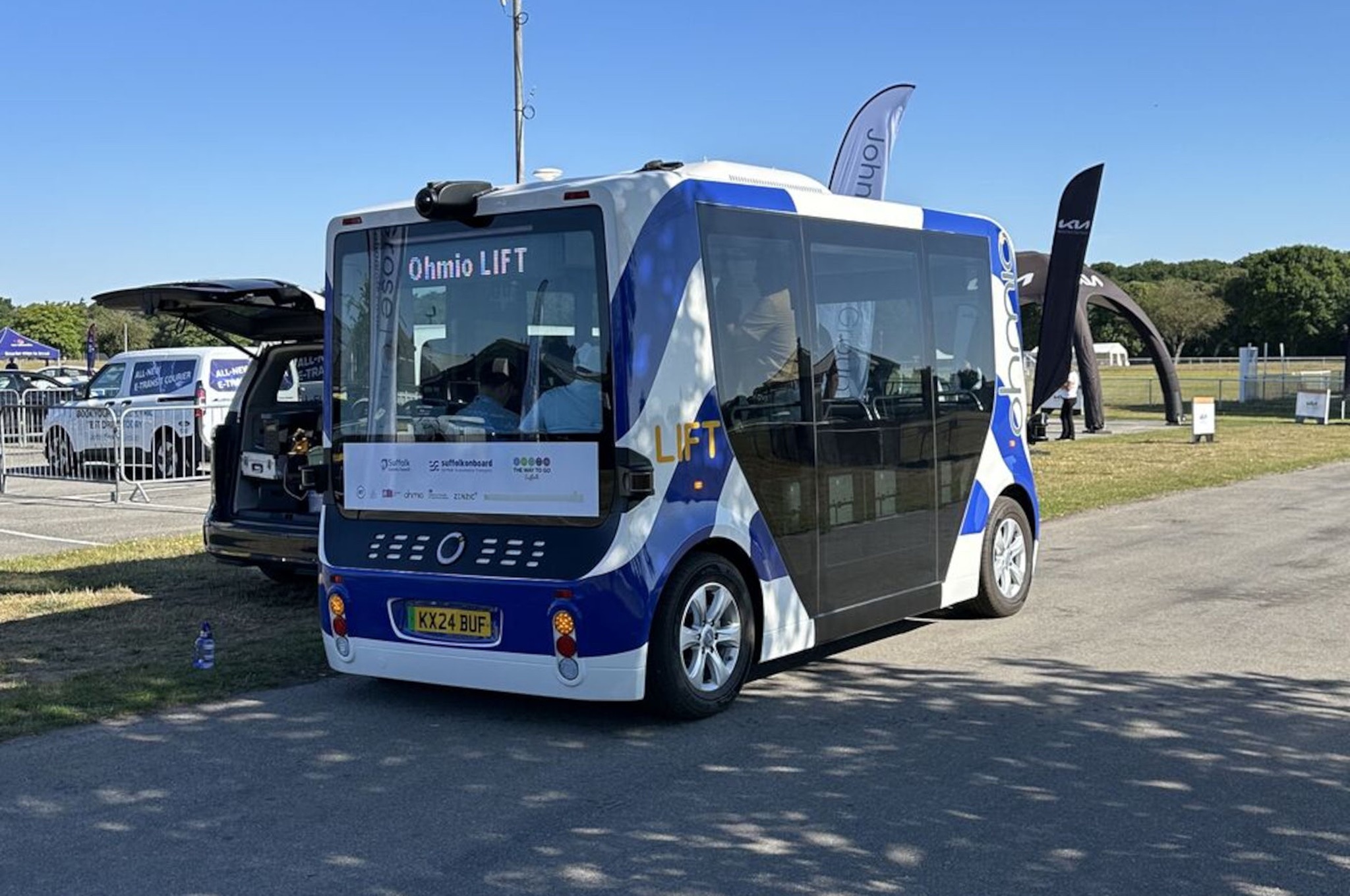
The council has been given a government grant to partially fund the programme, with a view to looking at how self-driving buses like this one can be used to boost overall take-up of public transport options.
The trial will be using the Adastra prototype from New Zealand firm Ohmio. It has no steering wheel or driving seat and can seat up to 14 passengers at up to 40mph, but for this study it will be restricted to eight passengers and 15mph, and a safety operator will be on board.
The Adastra is capable of Level 4 autonomous driving, which means it works along a pre-planned route, but isn’t capable of full Level 5 driving where it would plan its own routes. For that you'd need to head to London before the end of the year, where driverless taxis are set to hit the roads as Waymo gears up for a UK launch.




 2.JPG?width=600&height=600)


