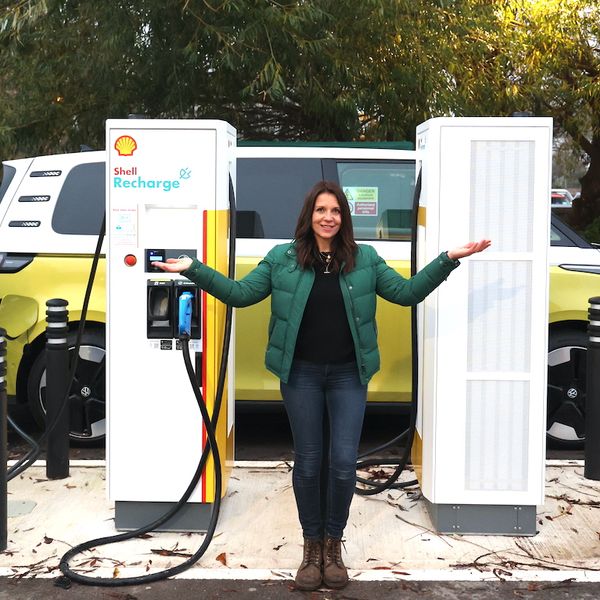






If you live in one of the six million homes in the UK which doesn’t have off street parking, there is still a way you can have an EV and avoid the high costs of public chargers. There is no need to look jealously at the energy prices available to drivers who can home charge, or consider paving over your lawn to try and cram a car in front of your house – because you could plug in to your domestic supply while your car is on the road. But it’s not easy.
All you need is a way of getting a cable from your house to your car. Simply draping it across the pavement is not recommended as it will be vulnerable to damage, and you could find yourself liable if someone trips on the wire.
The answer – which is being encouraged by the government – is called a cross-pavement charging solution. This is gathering support across the country already.
Recent freedom of information request research from Vauxhall revealed that over 40% of councils will have cross-pavement charging available to residents by the end of 2026. The data showed that 56 tier one councils across England, Scotland and Wales either currently offer or will be making cross-pavement charging available by the end of this year.
Currently, seven councils out of the 134 that responded to the FOI request have live cross-pavement charging in their constituencies, with a further 21 in the trial stage, and 28 planning to roll out cross-pavement charging in 2026.
So what do you need to know? There are three main ways to get power across the pavement, but only one is currently considered truly viable.
Types of pavement crossing charger
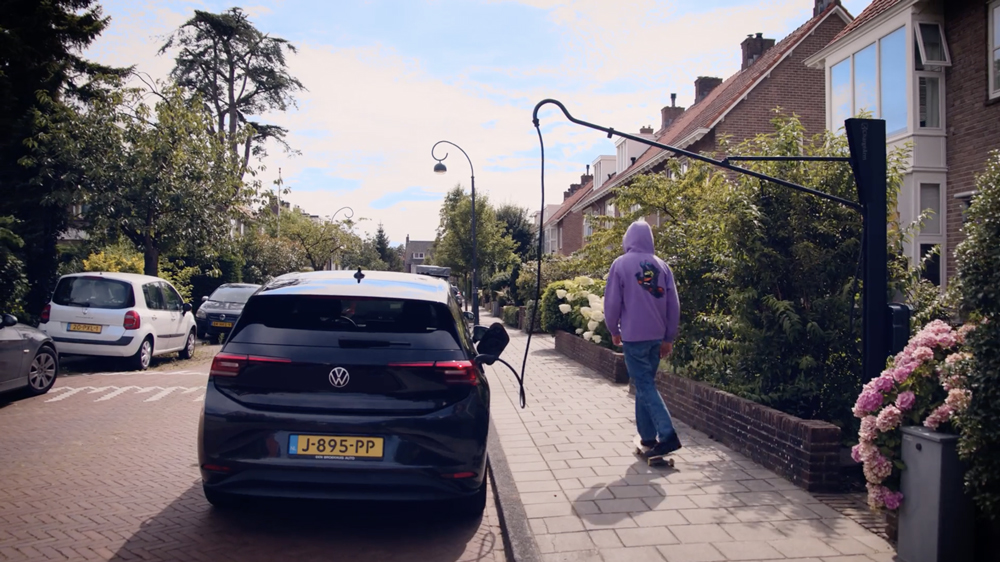
Charging bridge: As the Bear Hunt book says, if you can’t go under it, go over it. Or at least try to. Charging bridges mount the cable on a tall arm which is fixed somewhere in or on your property. When you want to plug in, it swings out and the cable reaches down to your car. It is tall enough to ensure no one will bang their head on it, but it might get clobbered by the window cleaner’s ladder occasionally.
There are a few companies working on perfecting the idea, such as ChargeArm from Holland and Nodum with its more sophisticated ChargeBridge, which includes a remote control cable lowering device.
The downside is that they are more visually obvious than a sub-pavement option, so could attract unwanted attention and might be looked at a little less favourably by the planning permission police, especially in a conservation area.
They might work in some situations, but the government has described them as ‘emerging technology’ and isn’t currently approving any officially.
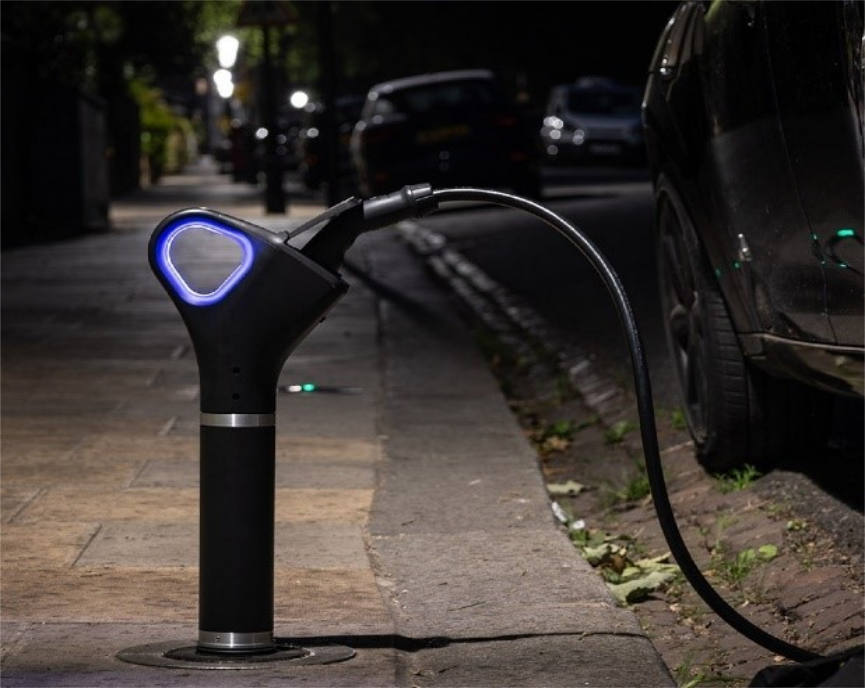
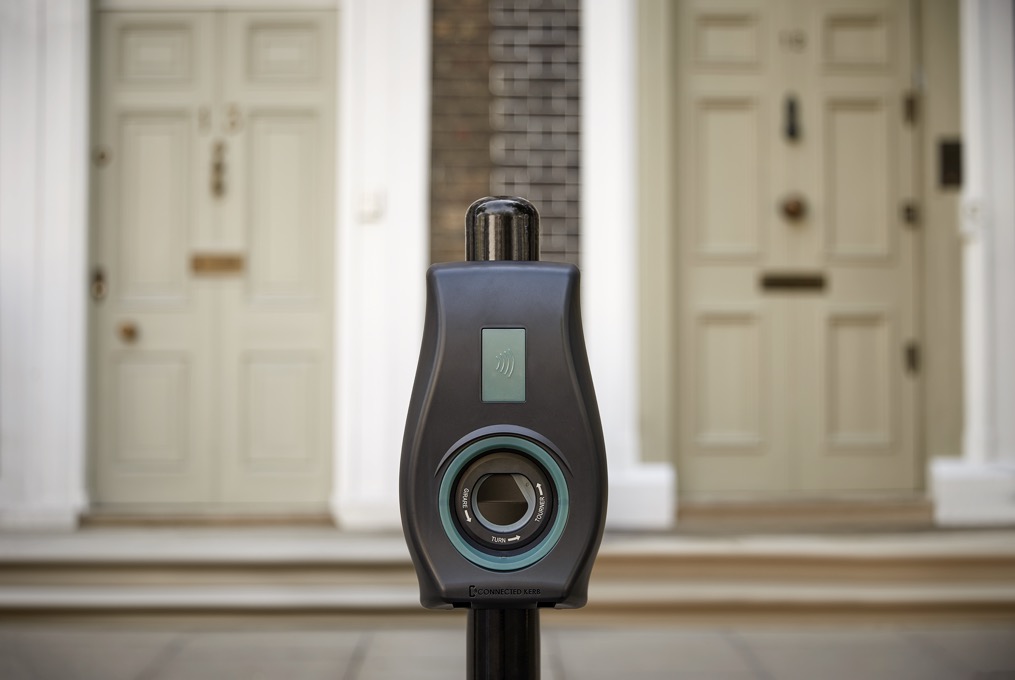
Permanent under pavement cables: When installed, these look like a mini version of a public charging point, with a small removeable bollard which plugs into a slot in the ground. Power is run with a permanent cable under the pavement to the connection socket.
These are neat and easy to use, with the socket remaining flush with the pavement. But they are very expensive compared with the other methods. For this reason they tend to be funded by local authorities who also supply the energy, connecting around 15 charge points with a single electrical connection. Residents use an app to start the charge and pay for electricity, and the rate is usually cheaper than the generally available public points.
There are plenty already in operation – the London Borough of Barnet has installed around 1,250 of these on 107 streets.
These don’t allow you to access the cheaper overnight energy tariffs by taking power from your own home, but there is no reason you couldn’t install your own if you wanted to.
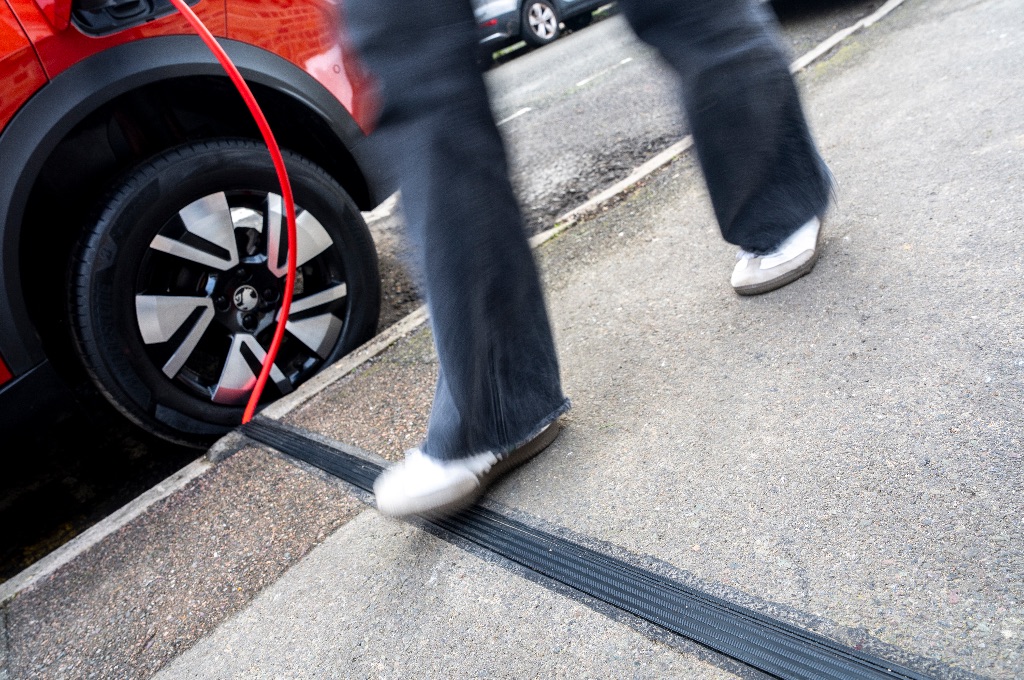
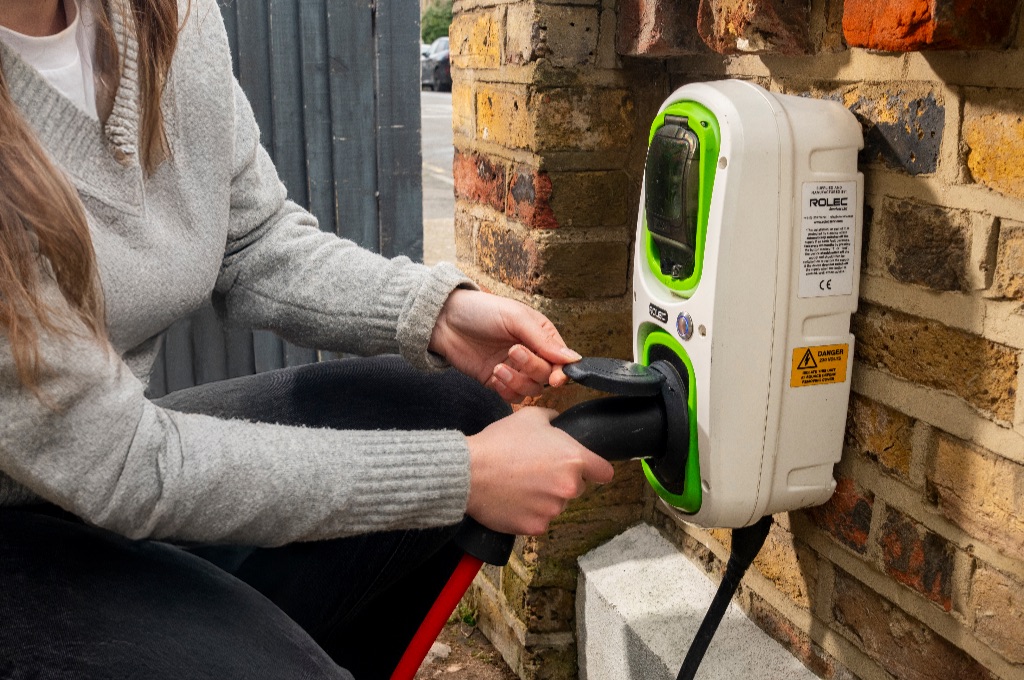
Charging gulley: These are by far the most popular solution, mainly because they are so simple. A channel is installed in the pavement so that a standard charging cable can be fed from the house to the car without the risk of tripping anyone up or damaging the wire. The homeowner uses a standard home charging wall box.
Usually some sort of cover, such as rubber seals or brushes, is incorporated to stop debris falling into the gulley. Feeding the cable in takes less than a minute, and you’ll need to pull it out when you’ve finished charging.
How much do these cost?
There is no simple answer to this, as there are so many factors to consider – including the potential prices of the planning and other permissions you’ll need if crossing a footpath.
The Vauxhall survey showed that costs for installation vary dramatically depending on the council, with some local authorities offering installation services for free while others charge over £1,000. And there are usually some ongoing costs.
As a rule of thumb, it will probably be about £500 according to experts, but don’t hold me to that figure.
Ouch. Can I get a grant?
Yes – the government is keen for these to be installed so is providing £25 million to local authorities for cross-pavement installations. The homeowner can also apply for a government grant for the charge point itself. EV users with local authority permission for a channel can claim a grant up to £500 or 75% of the total cost of installation. Unlike other home charging grants, they are for homeowners as well as renters.
What are the potential problems?
The biggest will be if your council isn’t keen on them. Besides the lack of funding, you will also be faced with trying to get permissions for an installation from different departments within the same authority.
In England, the local transport plan and highways authority will generally sit within one department but planning permission will be in an unconnected part of the council at a more local level. While the government is keen to encourage coordination, there is no compulsion. You might have to push hard and remember who is helpful when you vote.
The government has announced its intention to relax planning rules around pavement charging, but who knows when that will actually come into effect.
Can I reserve the parking space so I can use the charger?
It’s unlikely, unless you are disabled or own the land. The government guidance says: “The installation of a cross-pavement solution does not give the resident ownership or priority to the parking space outside their home, and this should be made clear to the resident. Exceptions to this may apply, when, for example, the space is a designated disabled parking bay.”
This is bound to lead to frustration and the traditional cones/wheelie bin way to block a space. The more friendly alternative is to encourage multiple installations in a local area so residents can share charging – often referred to as community charging services or peer-to-peer charging.
The idea would be that your neighbour could use your charger and pay through an app and you could use someone else’s. Or, of course, you could just do it informally – “you use mine and I’ll use yours”.
Who looks after the gulley?
This is another issue which is being worked through, and there are a few options. In Milton Keynes, for example, the resident pays for the initial survey fee and for an approved contractor to install the channel. The council’s highways team keep responsibility for maintenance.
After an initial three-year period, the homeowner has to pay for the cable channel maintenance and liability with an annual fee. This will cover the continued insurance, routine inspections, any maintenance and admin costs. If the fee isn’t paid, the council can fill in the channel.
An alternative being tried in the London borough of Brent and Oxfordshire county council has a contract where there is no upfront cost but a supplier would charge a fee for access to the units.

What’s the alternative?
On-street charging using lamp post points is one alternative, but the cost per kWh is still much higher than a home supply, partially because the supplier has to charge VAT on the energy at 20% rather than the 5% on domestic supplies. The cost is typically around 54p per kWh compared with the 8p for an overnight rate at home.
You could also choose to charge up at work, which you can do without worrying about tax – but check with your employer or it is basically theft.
The bigger batteries in EVs now could also mean that you could simply use rapid chargers when you need to top up, in the same way as filling with petrol. A 30 minute blast while in the supermarket or gym will be enough for most modern EVs to gain 200+ miles.
The final option is to build a driveway, if you have space and can get permission. Analysis from a landscaping company called Stoneworld shows average monthly searches for converting front gardens into driveways surged by 281% in the past year, partially because of demand for home charging. Drivers prefer Teslas to turf, it seems.