





 Battery size: 69 kWh
 WLTP range: 230 miles
 Real world range: 194 miles (winter)
 Max charging DC: 100 kW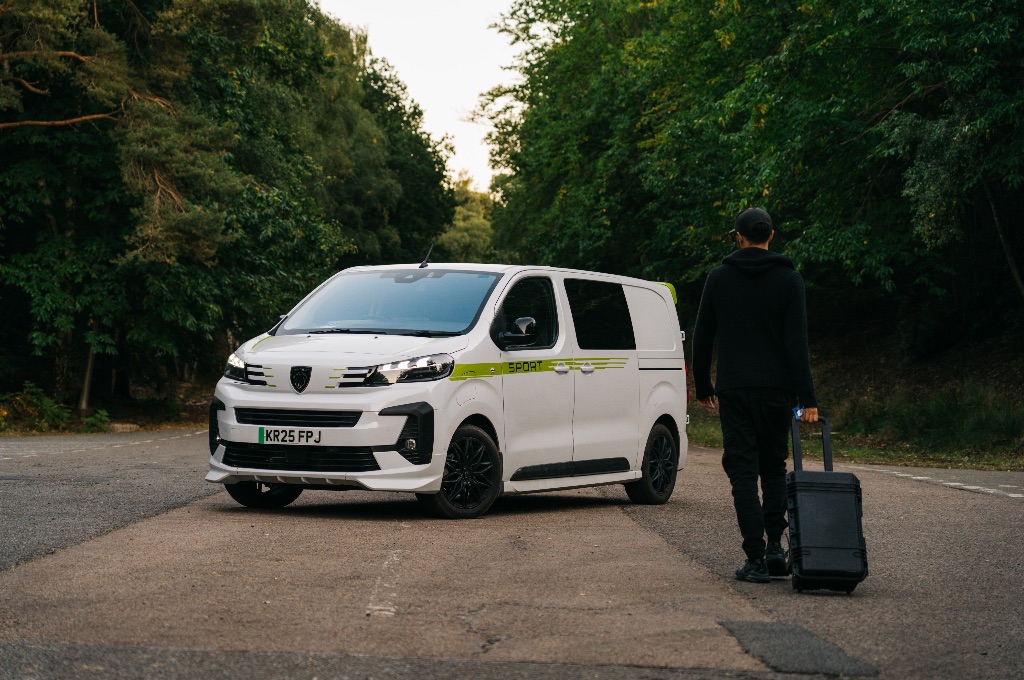




The setup: why the e-Expert made sense
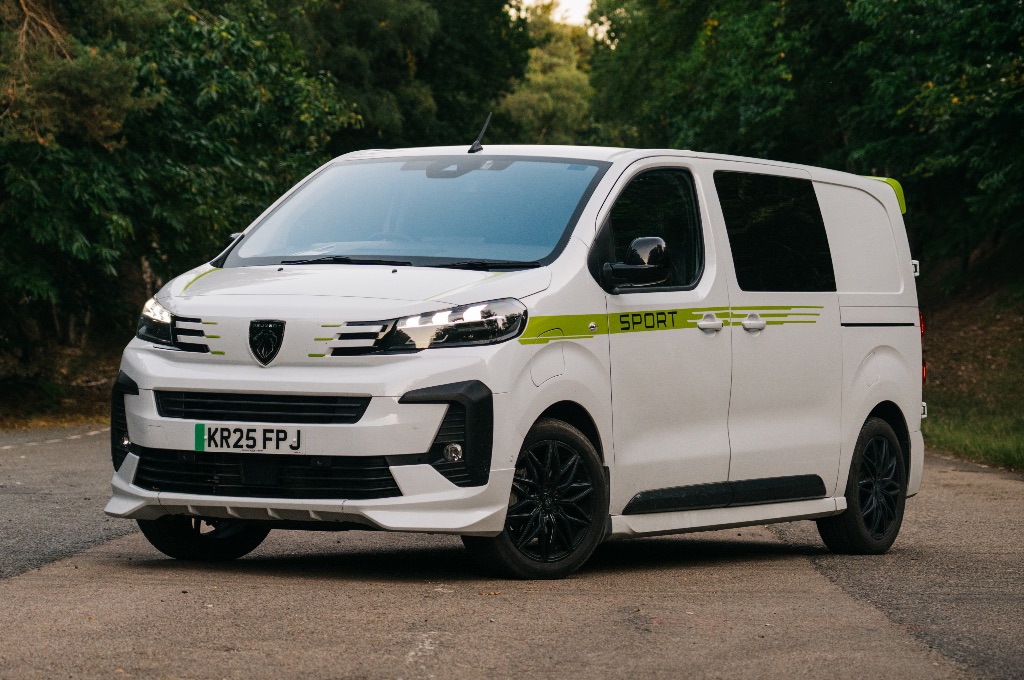
On paper, the e-Expert Sport ticked a lot of boxes for my life in central London. It's fully electric, has a crew layout so can carry people as well as kit, and still has a decent load space. Yet it's compact enough to not feel like I’m piloting a barge through Soho, and crucially it's low enough to squeeze under the height barriers in urban car parks.
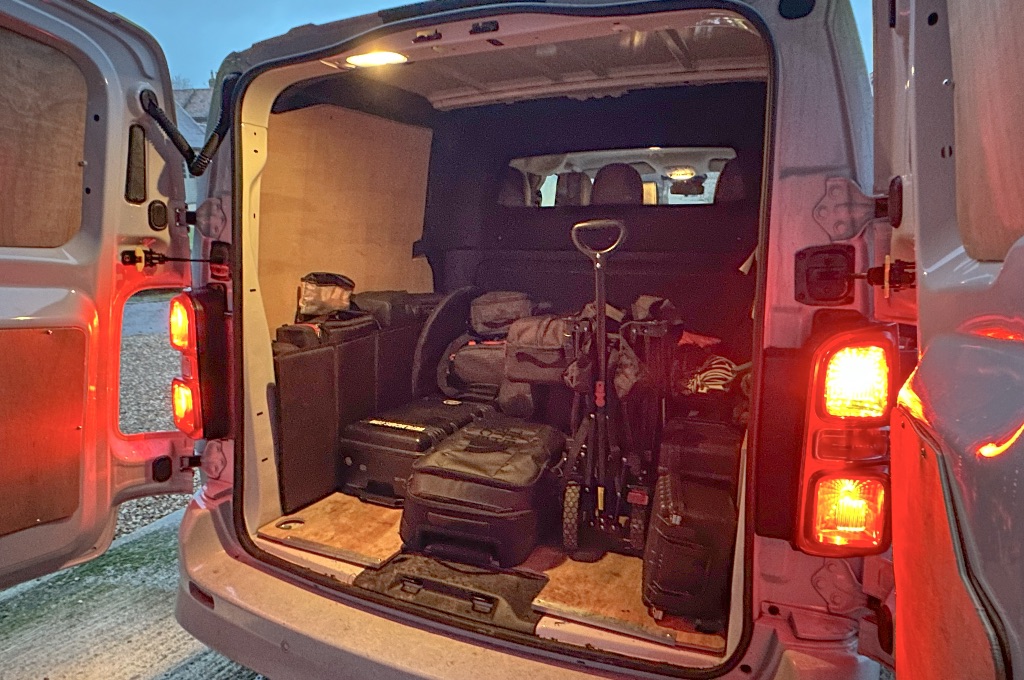
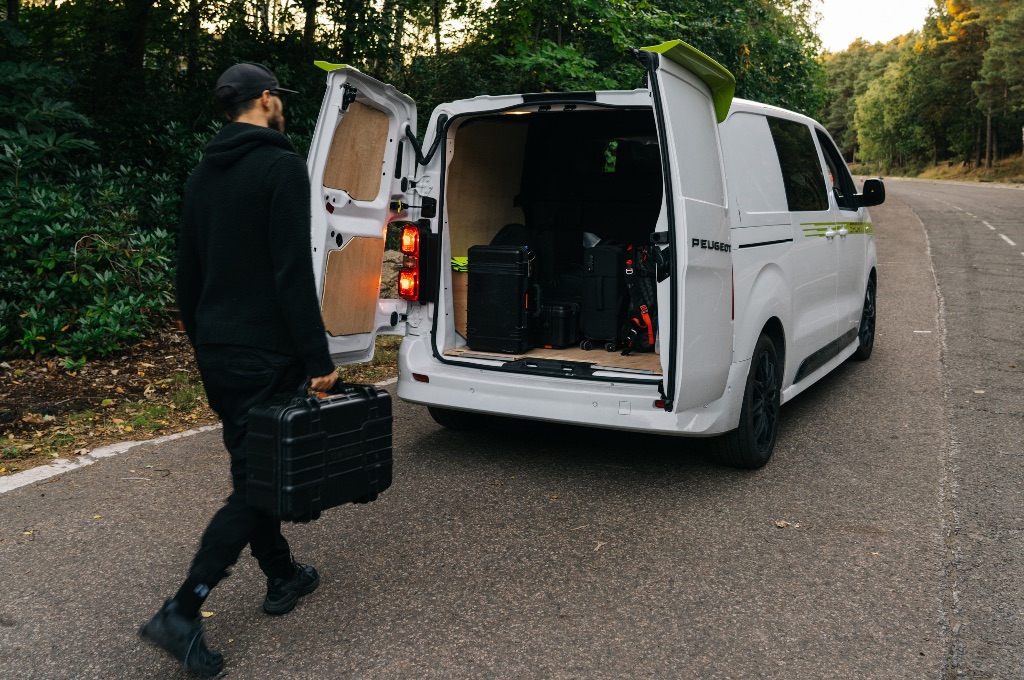
As a crew van, it’s genuinely excellent. The load space swallowed my kit without complaint. Hard cases, backpacks, stands — no packing Tetris skills are required here. Everything fitted neatly, felt secure, and loading/unloading was easy thanks to the low floor and wide rear doors. This is where the e-Expert shines. It’s a tool, and as a tool, it does the job very well.

Urban driving: calm, comfy, and stress-free
In the city at lower speeds, the e-Expert is a joy. It’s quiet, smooth, and genuinely relaxing to drive in traffic. London driving is already chaotic enough — taxis, cyclists, buses doing their own thing — and the last thing you want is a vehicle that adds to your stress levels.
The e-Expert doesn’t.
Visibility is good, the driving position is comfortable, and the driver gets some genuinely lovely comforts. Heated seats and a heated steering wheel might sound like small things, but on dark, cold winter mornings they’re absolute game-changers. Get in, press a button, warm hands, warm back — instant happiness.
I live in central London and park in an underground car park with zero issues, which honestly says a lot for a vehicle of this size.
Comfort… but only for the front

Up front, things are mostly positive. The driver’s seat is comfortable, supportive, and fine for long stints. I've got no complaints there. The passengers, however… that’s a different story.
Yes, you can fit six people. Should you? Only if you don’t like them very much. And if you don't, you won't want them sat quite as close to you.
The front passenger seat is very upright and not adjustable, which becomes uncomfortable surprisingly quickly. After about an hour, passengers start shifting, stretching, and questioning their choice of friend.
In the rear, it’s even more basic. It's fine for short hops across the city, but is absolutely not somewhere you’d want to spend hours. As a crew van for quick shoots and short journeys? Totally adequate. But as a long-distance people mover, and a place you'd expect your family to be happy? Not a chance.
A-roads and high speeds: the wobble
Faster roads are where the e-Expert’s cracks really start to show.
At higher speeds and on A-roads, the van feels wobbly. It's not dramatic or unsafe, but it definitely feels unsettled. There’s a floaty, nervous quality that never quite disappears, especially when pushing on or when it is trying to deal with uneven surfaces - which most British roads are these days.
Motorway cruising is acceptable, but it never feels planted or confidence-inspiring. You’re always aware you’re driving a tall, boxy vehicle that would much rather be back in the city. Most of the time I have some load on board too, so it's not just a van being happier when it is loaded up.
These longer journeys are where the lack of adaptive cruise control really hurts too. It feels like a missed opportunity — especially at this price point and when the safety hardware to make it work is all there.
Regenerative braking: the mood swings

The e-Expert comes with paddles for regenerative braking, which sounds great in theory. But in reality? The regen is… temperamental.
Even when set to the highest level, sometimes it works as expected, slowing the van smoothly. Other times, it just decides it’s not in the mood. Then it’s fine again. Then it’s not.
It’s genuinely unpredictable — like a date with an attitude problem. You learn to adapt, but it never feels consistent enough to fully trust, which takes away from that one-pedal driving confidence you expect from an EV.
Tom from the team says he experiences the same in his Citroen when the battery is near to 100% full, as the regen doesn't have anywhere to put the energy, so it just turns off the braking. That's a surprise if you become used to the deceleration and suddenly it's not there, and I know most other brands put some fake regen on to get around this. I'm going to pay more attention to the battery meter and see when it happens next.
Range: let’s be honest

Like every other Stellantis EV, the range claims are optimistic at best. Officially, you’re told north of 200 miles on a full charge. Realistically? You’d be lucky to see 120 miles.
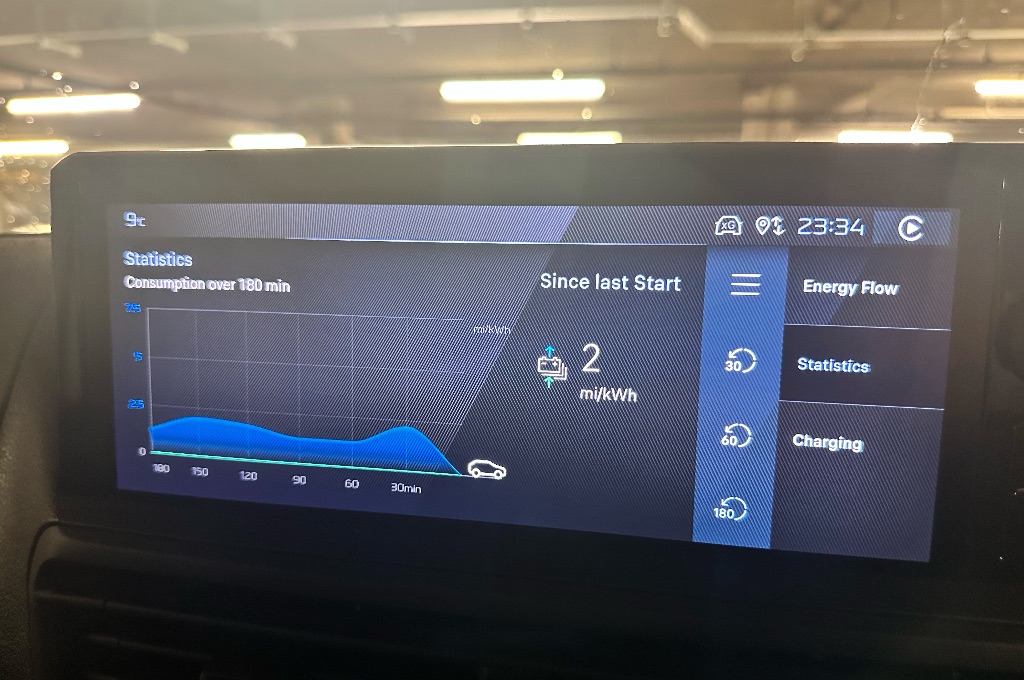
Across mixed driving environments — city traffic, A-roads, and motorway work — efficiency settled at around 2.1 miles per kWh, which quickly resets expectations.
To put that into real-world terms, I left central London with 100% charge (and a claimed 220 mile range) and arrived in Coventry with 21% remaining. No panic, no drama, no emergency charging stops — but also no illusions about what this van can realistically do on a single charge.
And that’s not me driving like a lunatic — that’s normal use, kit in the back, London traffic, and some faster roads. It’s usable, predictable once you accept the reality, but it’s nowhere near the headline figure.
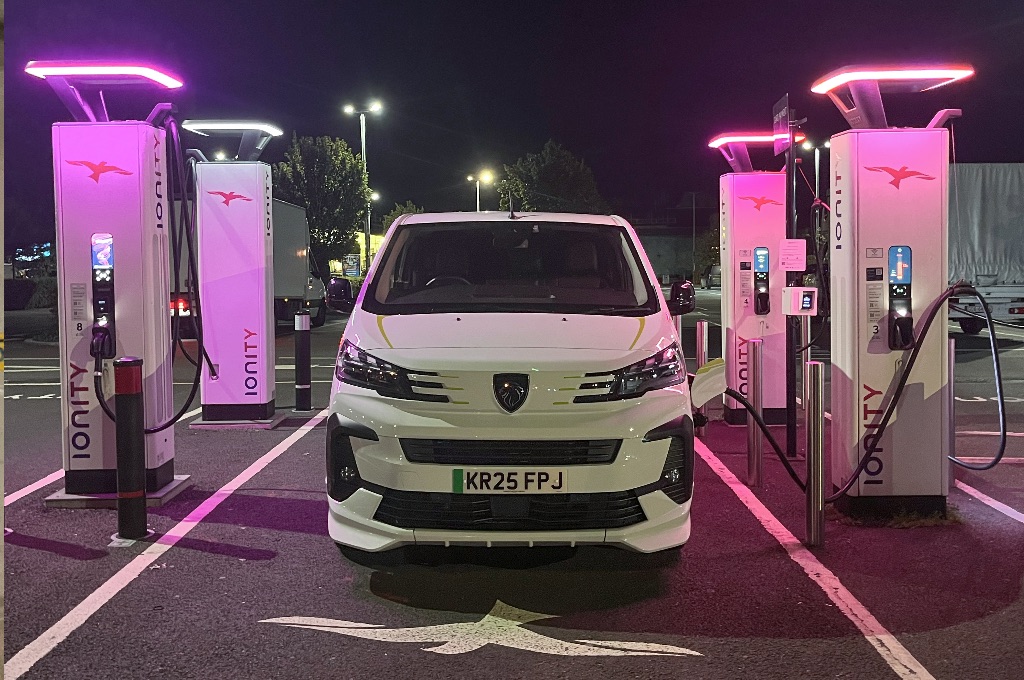
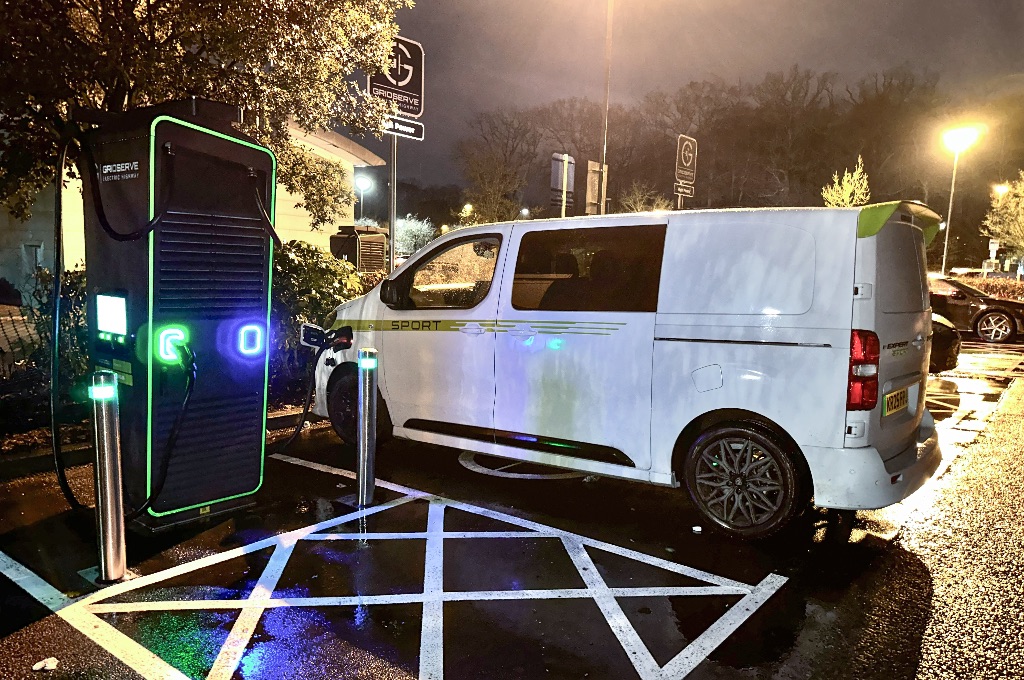
The upside? I never had an issue charging. Home, public, rapid — it all worked without drama. No failed sessions, no weird behaviour, no charging anxiety. It’s also worth mentioning that having the charging port at the front is genuinely handy on a van — it means you can nose into a charging bay or wallbox while keeping the rear loading area fully accessible, making it easy to load, unload, or work while the van is charging.
Tech quirks and cabin oddities

Apple CarPlay mostly behaved, but occasionally just refused to connect for no apparent reason. Turn the car off, back on, try again - this is something we have experienced before with Stellantis products.
Storage inside the cabin is another weak point. There just aren’t enough compartments up front, and nothing for rear passengers. No clever cubbies, no thoughtful touches — which feels like a missed opportunity in a vehicle designed to carry people and kit.
And then there’s the rear-view mirror. It's pointless. Completely pointless. All you can see is the back of the cab. No rear window, no view - just a mirror staring at a bulkhead like it’s waiting for something to happen. A digital rear-view mirror would make so much sense here. If not that, honestly, just remove it entirely. As it stands, it looks like someone forgot to delete it from the spec sheet.
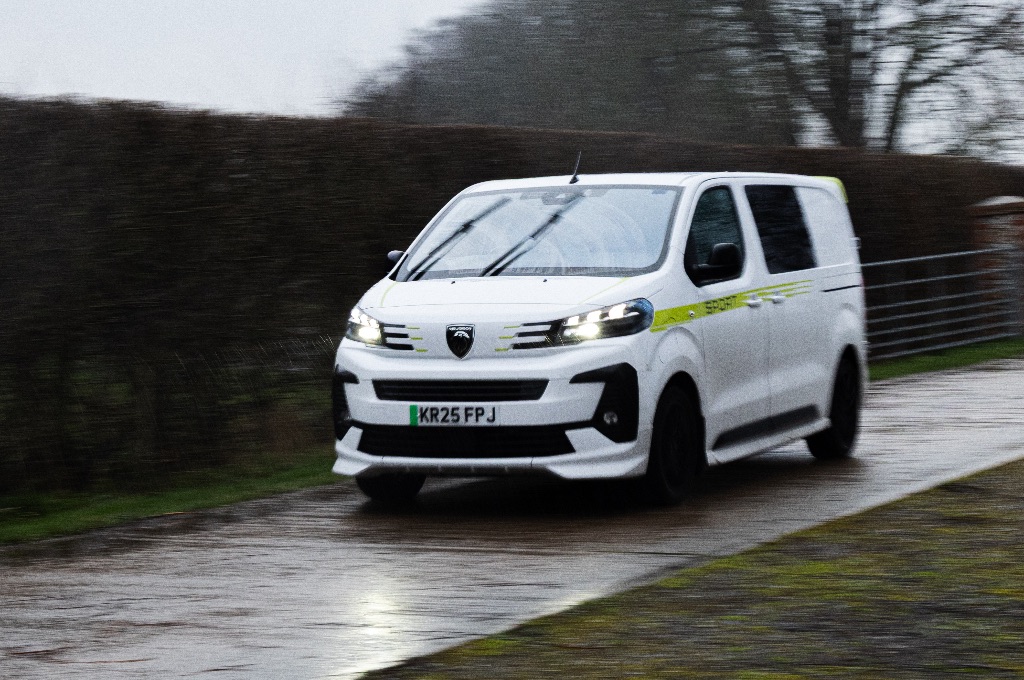
Also worth mentioning: this van is a head-turner, but not in a good way. The Sport trim and colour combo attracts attention, but more in a “what on earth is that?” way than a flattering one.
Living with it: the verdict
Here’s the thing — despite all of that, I really enjoyed living with the e-Expert. I loved the practicality of a crew van, the ease of driving it around London, and how seamlessly it fitted into my work life. As a tool for urban filming, it made total sense.
But at this price point? I struggle. I can’t see many people buying one when you factor in the range reality, comfort compromises, and the fact that it’s about to face serious competition — especially from the upcoming Kia PV5 Crew.
Would I recommend it? Yes — if you know exactly what you’re buying it for. Would I buy one again? Probably not — not at that price, and definitely not in that colour combination.
It’s a brilliant urban workhorse with very clear limits. Once you accept those limits, it’s great. Expect it to be something it’s not, and you’ll be disappointed.

 9
9