





 Battery size: 27.5kWh
 Max charge rate: 50 kW (optional)
 WLTP range: 155 miles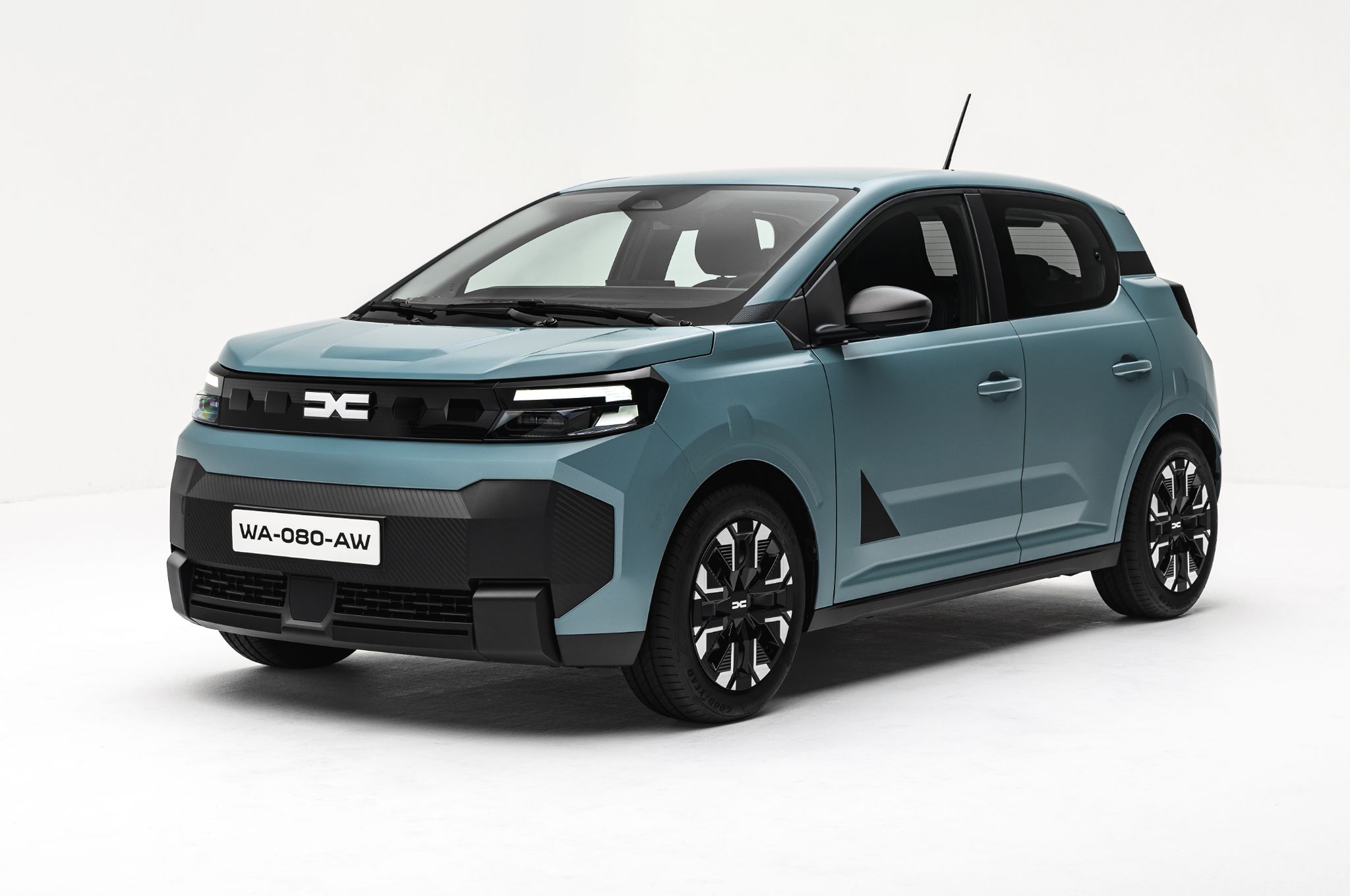
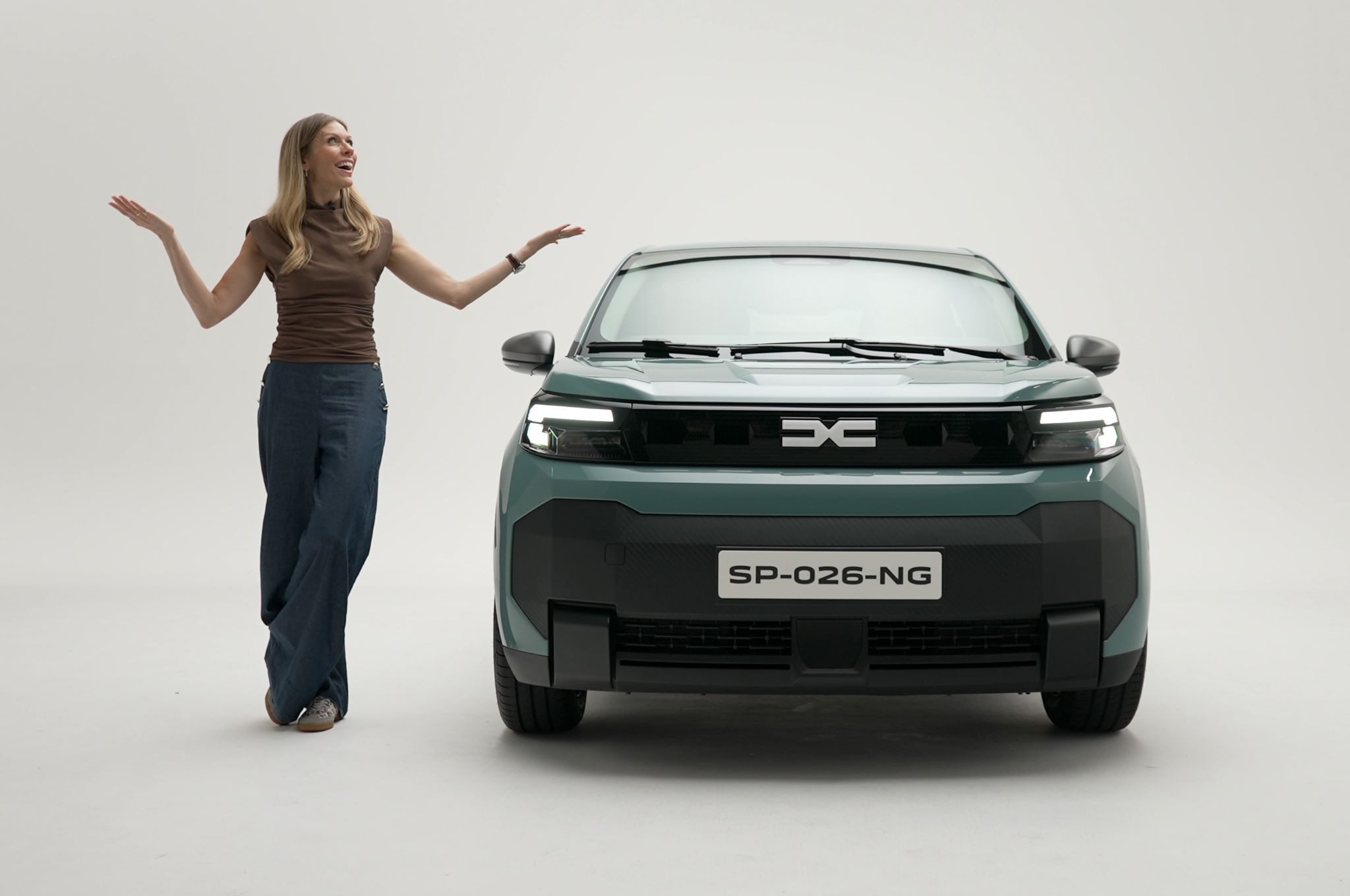



Introduction - new Dacia Spring
The Dacia Spring bounced into the UK at the end of 2024 and has been a modest success. It’s brilliant around town, and very efficient, but there were some complaints - mainly about the quality and the tiny interior space.
One thing no one moaned about was the price. The entry car was a tenner under £12,000 in the UK, making it the cheapest new car you could buy. Not just the cheapest electric car - the cheapest car of any type!

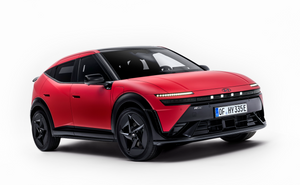
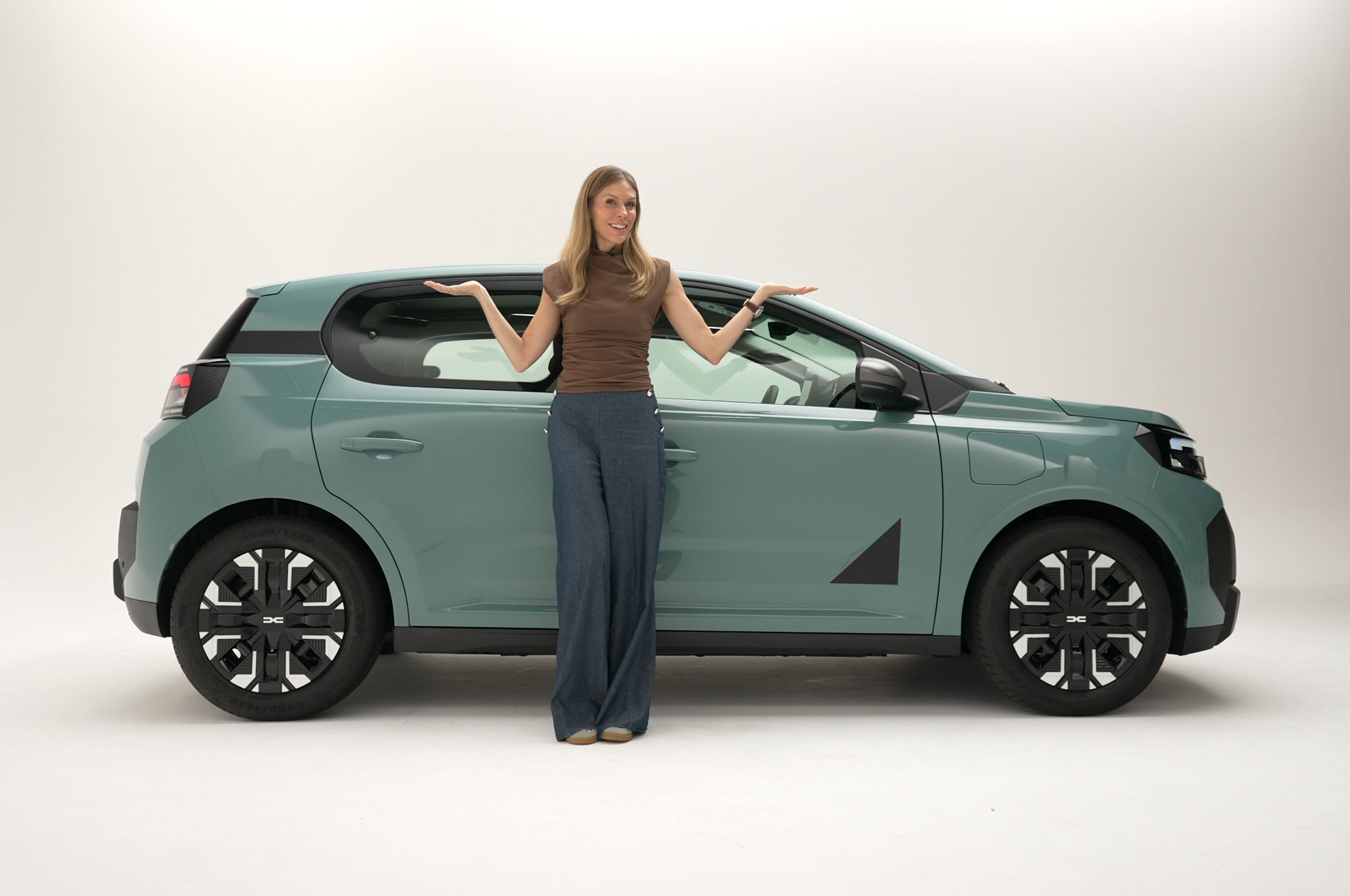
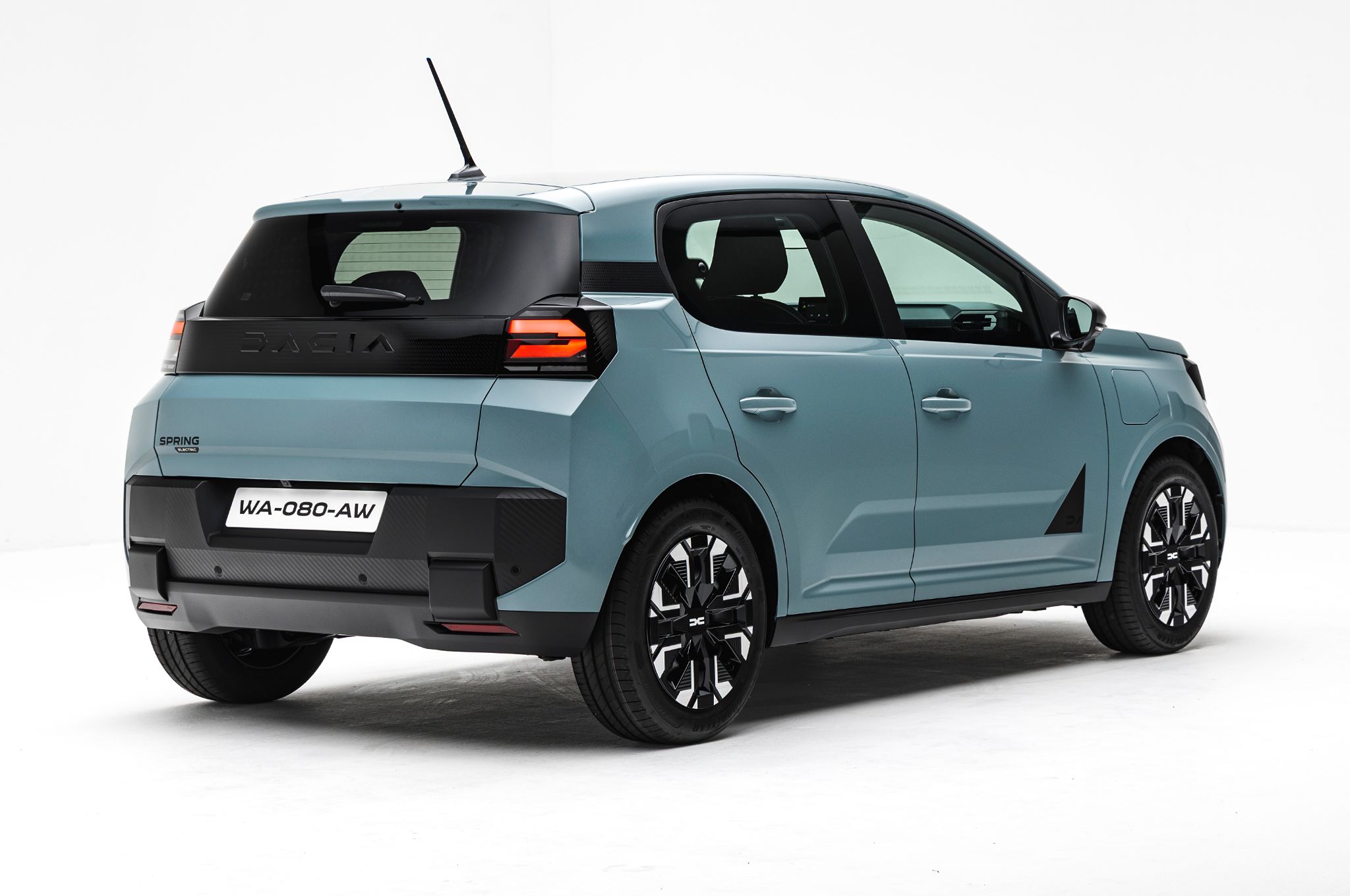
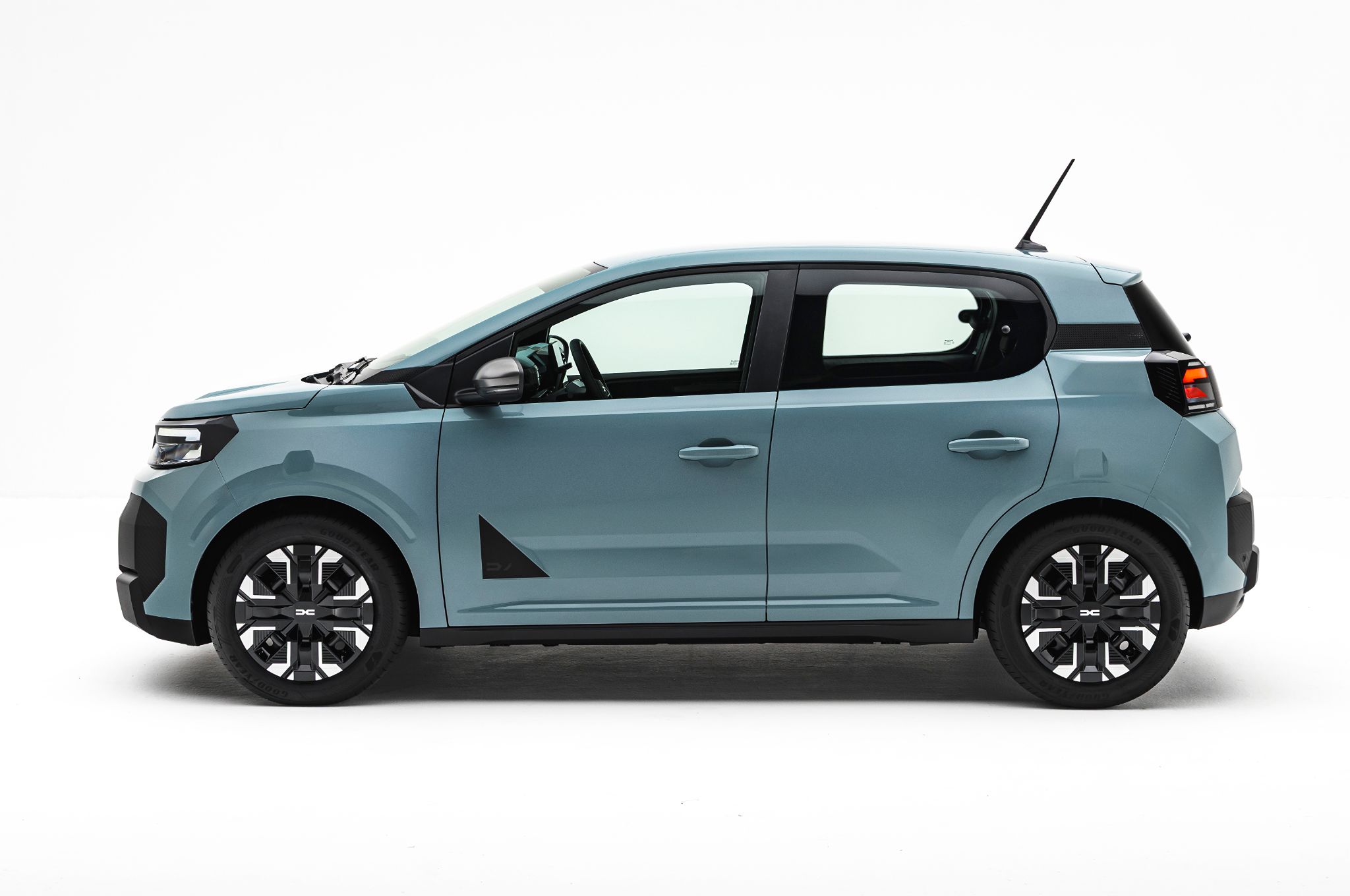
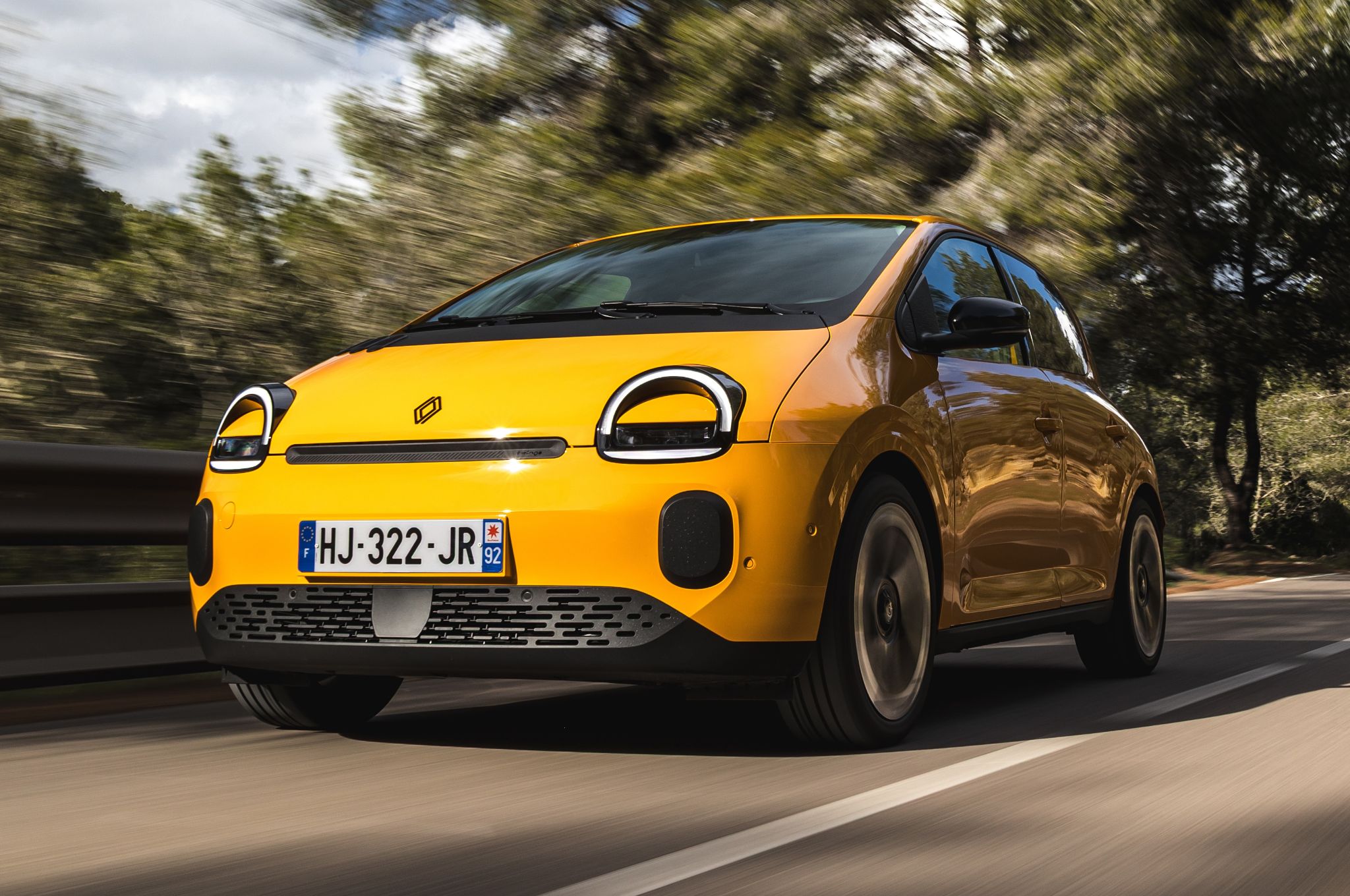
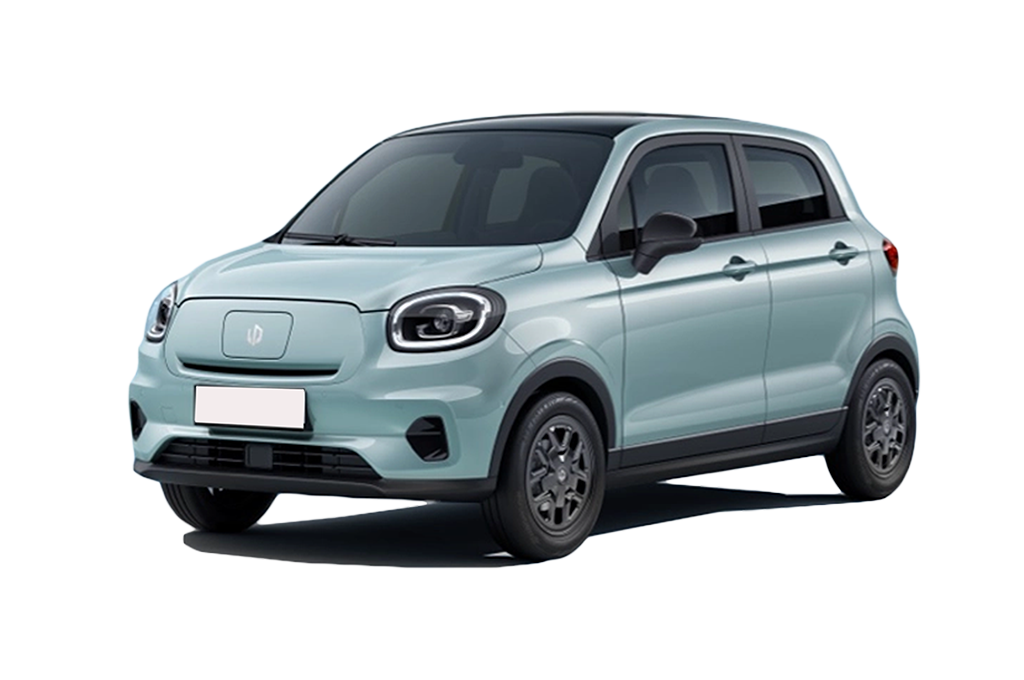
That’s very impressive, but it seems Dacia’s marketing people have realised that buyers don’t mind spending a few extra quid per month if they get a more grown-up car. So we’ve got this. Still a Spring, still dinky, but it has grown by an extra 15cm in length and 18cm in width. At 3.85m in length and 1.74m across (excluding the side mirrors), it’s got an almost identical footprint as the last generation Mini Electric – and is similar in size to rivals like the Honda Super-N, Renault Twingo and Hyundai Inster, although the slightly smaller Leapmotor T03 will no doubt remain the Dacia’s chief rival when it comes to affordability.
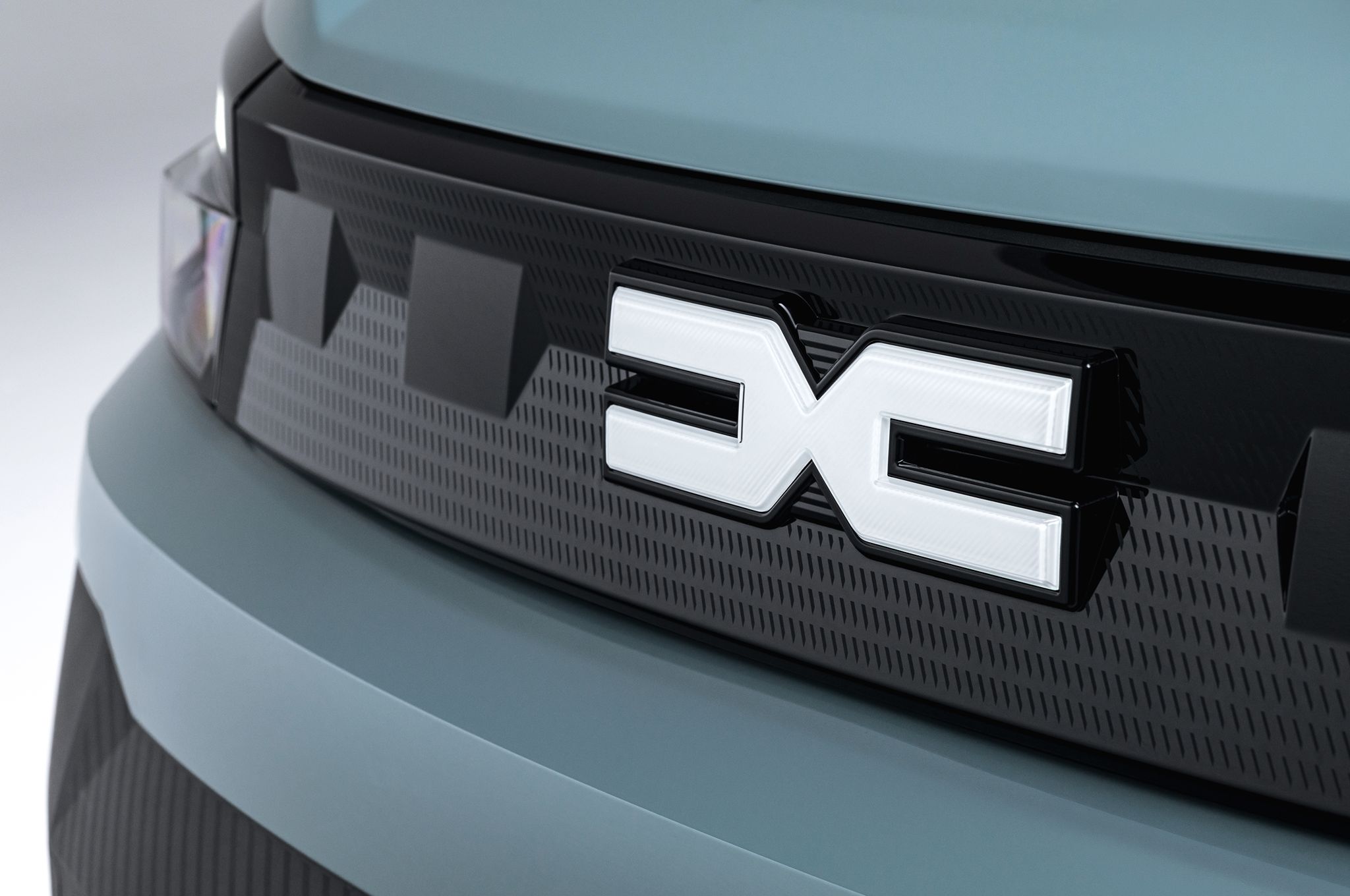
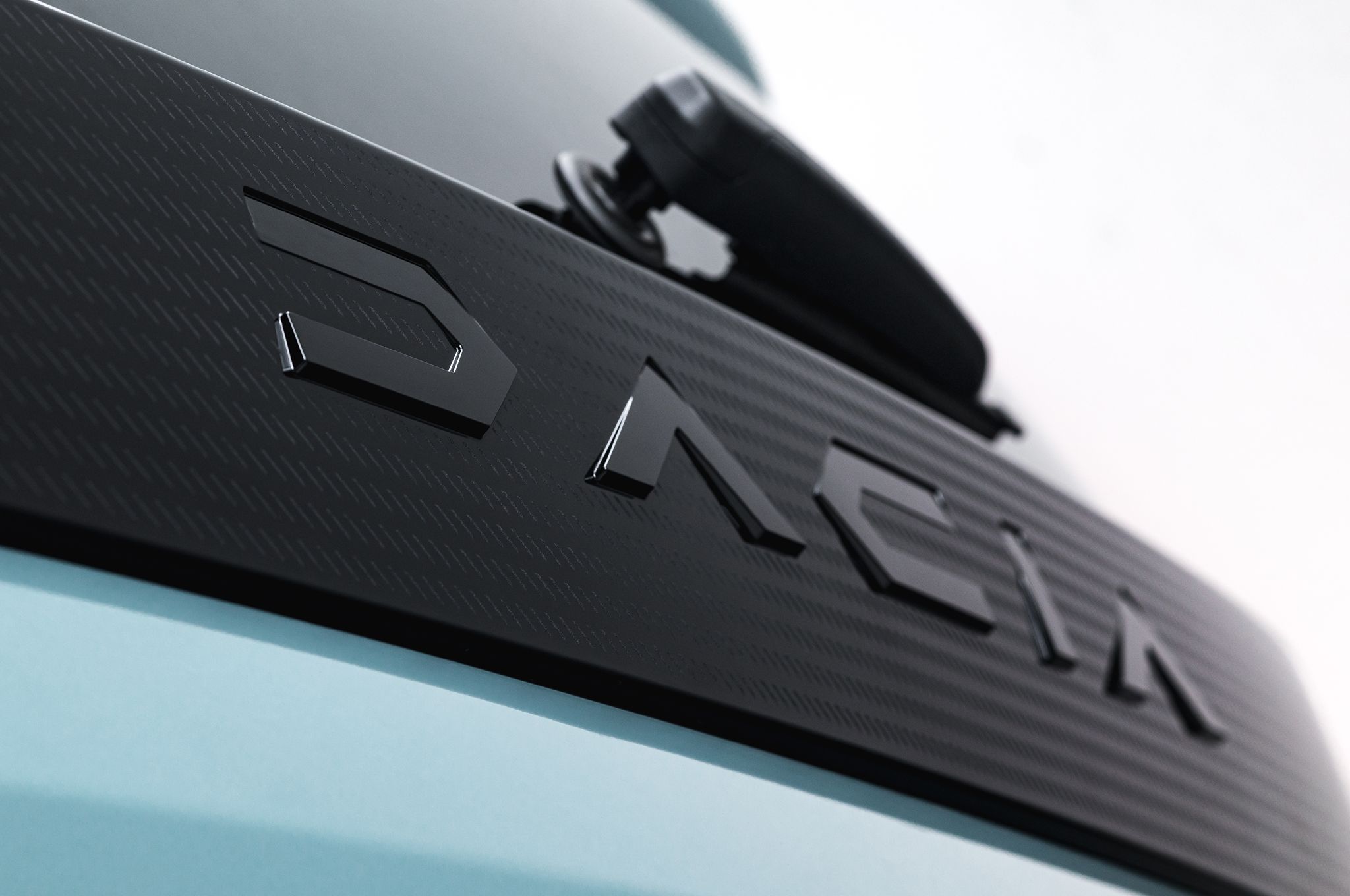
Underneath, the new, 2027 Dacia Spring is based on the same mechanical bits as the new Renault Twingo. But while that car is curvy and cuddly, this is boxy and butch. There’s also chunky, protective cladding on the nose and tail made from self-coloured black plastic, so you won’t need to panic about every little scrape or mark.
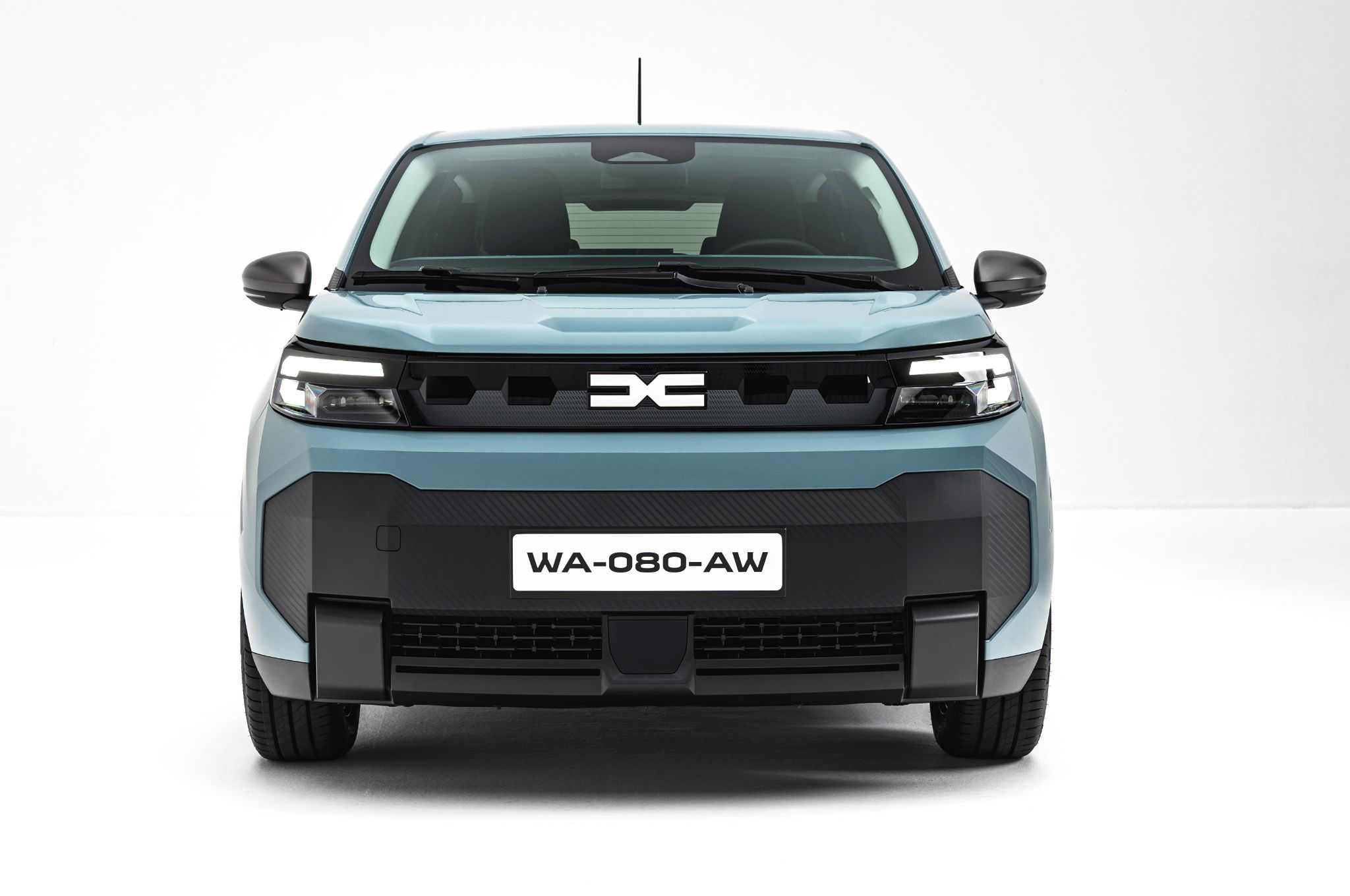
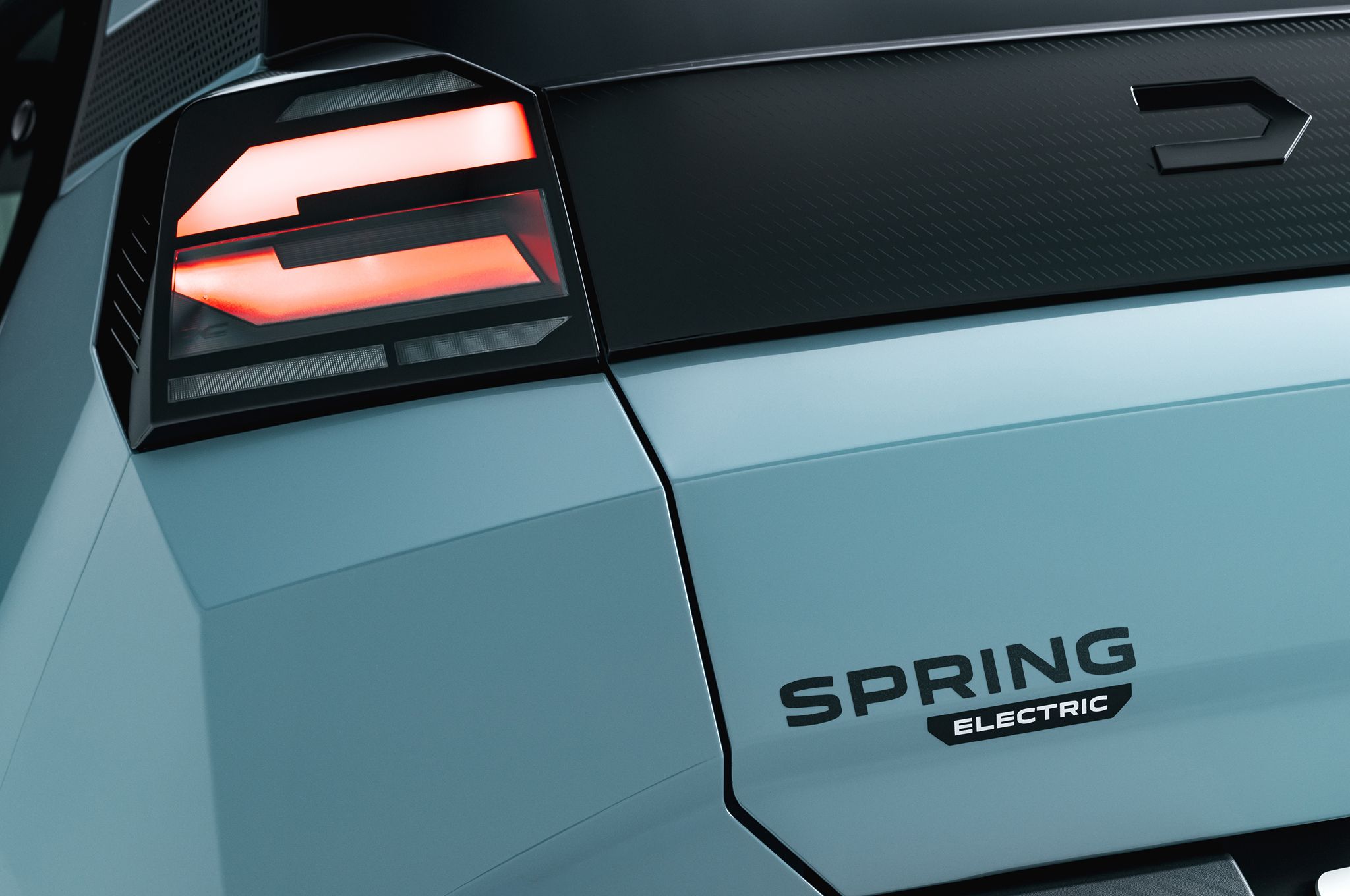
Although it’s quite simple in its design overall, there is a bit of bling, such as the light signature. Only the top here actually has LEDs; the bottom section is just angled at 45 degrees to catch and bounce that light back. It makes the lights look like they are floating and gives the whole front end much more depth.
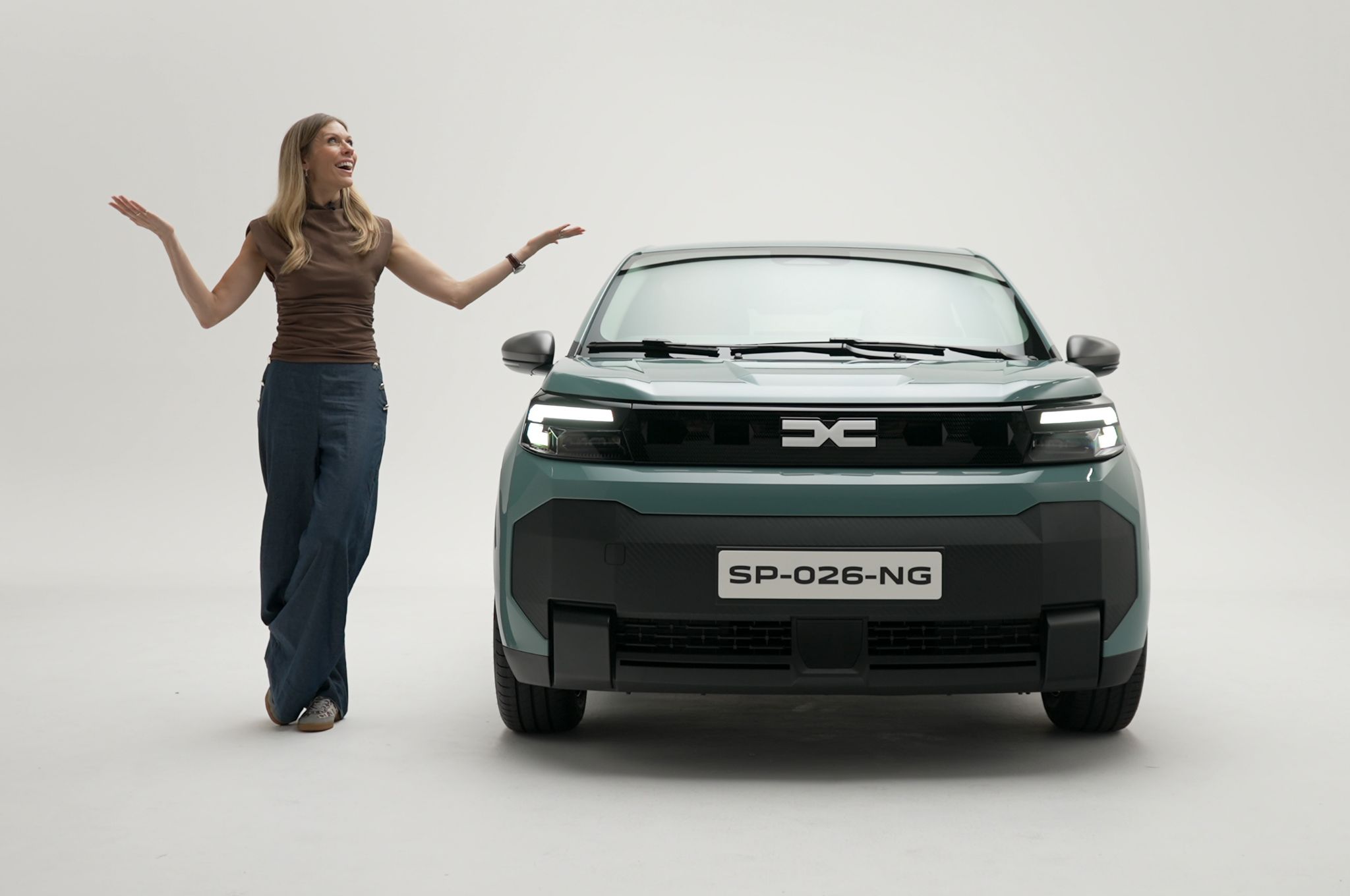
There are two wheel sizes - 15 or 16 inch - depending which of the two trim levels you choose. There are no alloys though - just these aero wheel covers. And there are only four colours too: Agave, Shadow Grey, Diamond Black and Glacier White. Keep it simple, people!
Range, battery and charging
The Spring shares its battery with the Twingo, which means it’s a 27.5 kWh LFP pack. That sounds small but gives a range of up to 155 miles (250 km) over a WLTP combined cycle.
Dacia reckons that most owners will just need to charge once a week, judging by the normal mileage and usage of the average Spring owner. This is a city car, after all!
When it’s time to plug in, there is a 6.6 kW AC charger as standard, which charges from 15% to 80% in around three hours with a 7 kW home charger. The optional Charge Pack includes an 11 kW AC charger and 50 kW DC charger, which we’d definitely recommend you add as it’s always good to have the option of rapid charging – even if you don’t think you’ll use it very often.
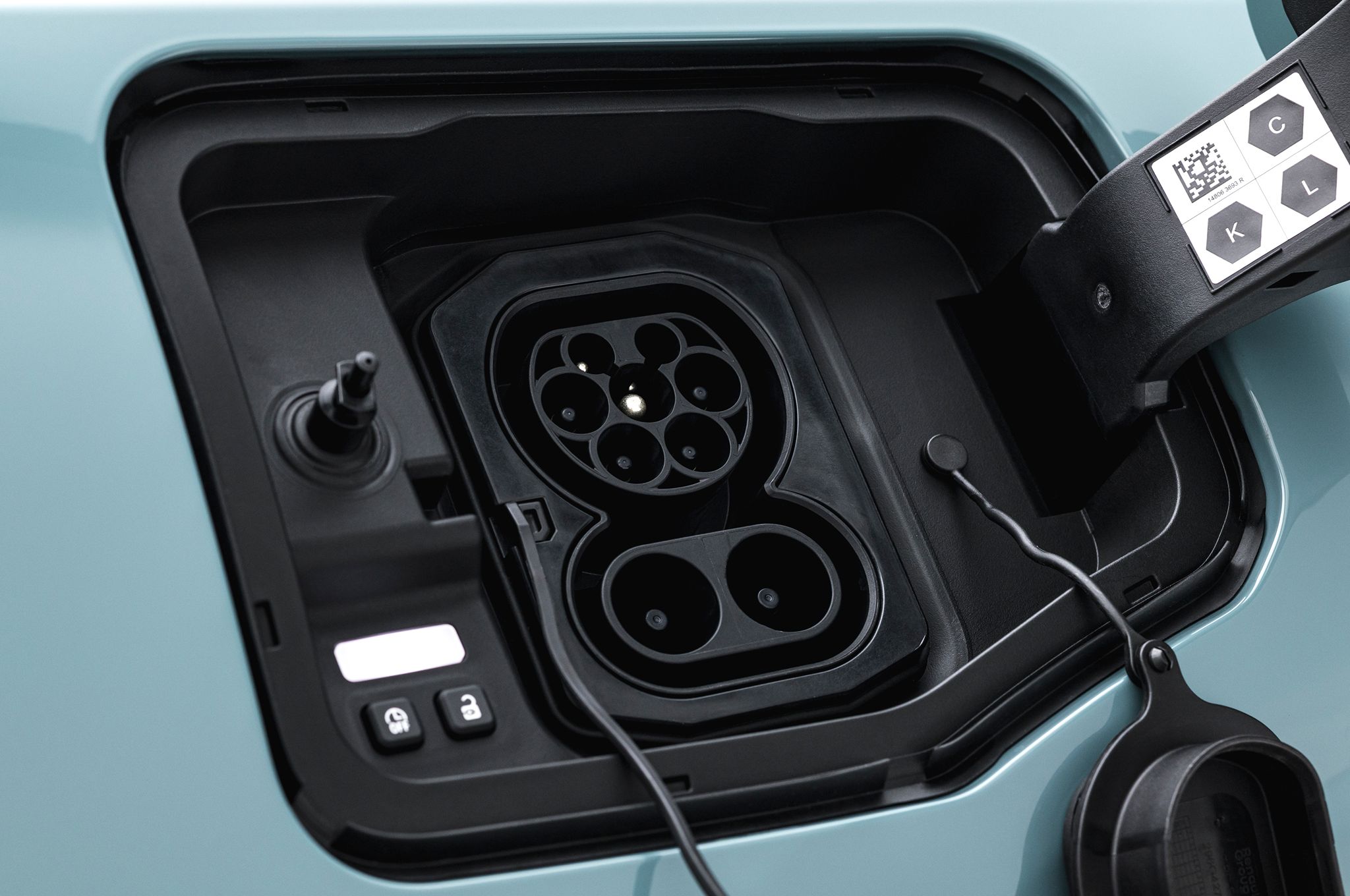
The DC capability provides access to those rapid chargers, so the 15% to 80% top up takes 28 minutes. The pack also gives you vehicle-to-load (V2L) capability, so you can power stuff from the battery. Maybe charge your e-bike up? Power your electric lawn mower down at the allotment? That sort of thing!
Practicality and boot space
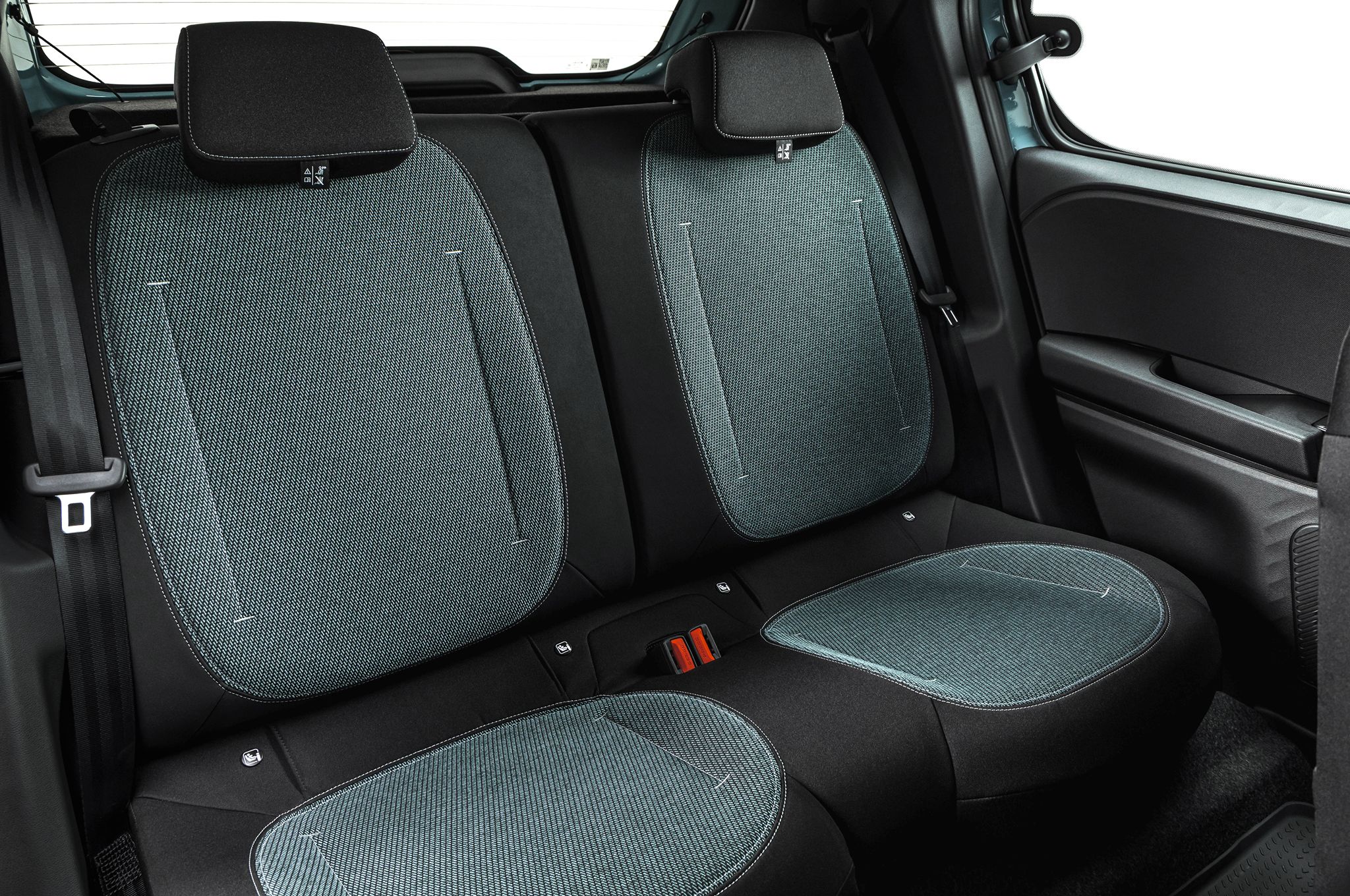
The latest Spring’s bigger measurements mean that it has, of course, gained more space inside. I can actually sit in the back now! Maybe not all that comfortably, but it’s really not that bad. And the extra width means you won’t need to be quite such good friends with whoever you share the two-person bench with. The Spring does remain a four-seater, though.
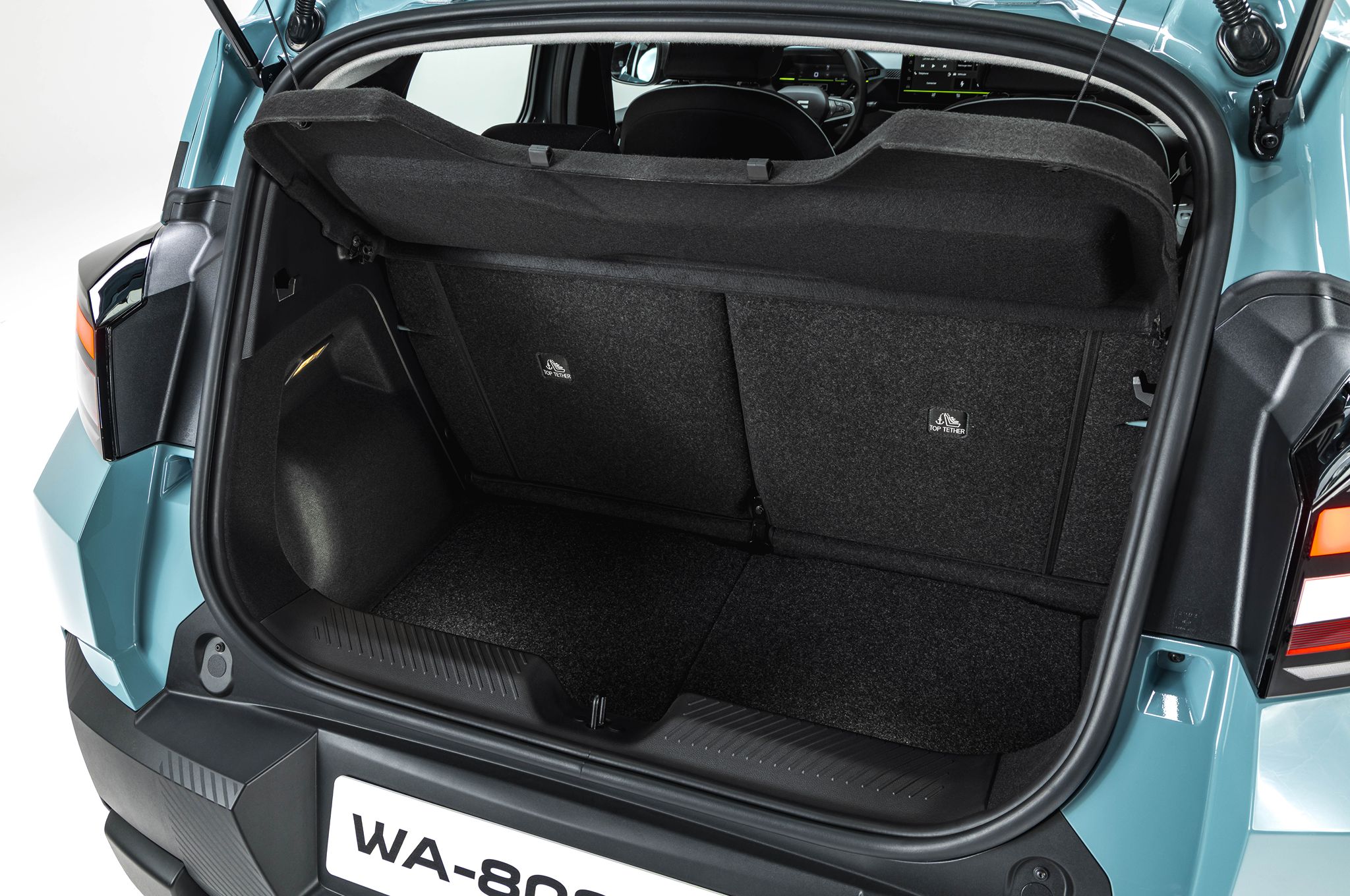
The boot is the most impressive bit though. It has a 337-litre capacity, which actually shames some bigger cars from the segment above. I mean, the VW ID.3 only has 385 litres!! There’s even a clever two-piece removable boot floor in the Spring, so you can hide valuables or use it as a divider to stop your shopping from rolling around.

If you need to haul more stuff, the rear seats have a 50/50 split and fold down to open up 1,283 litres of space.
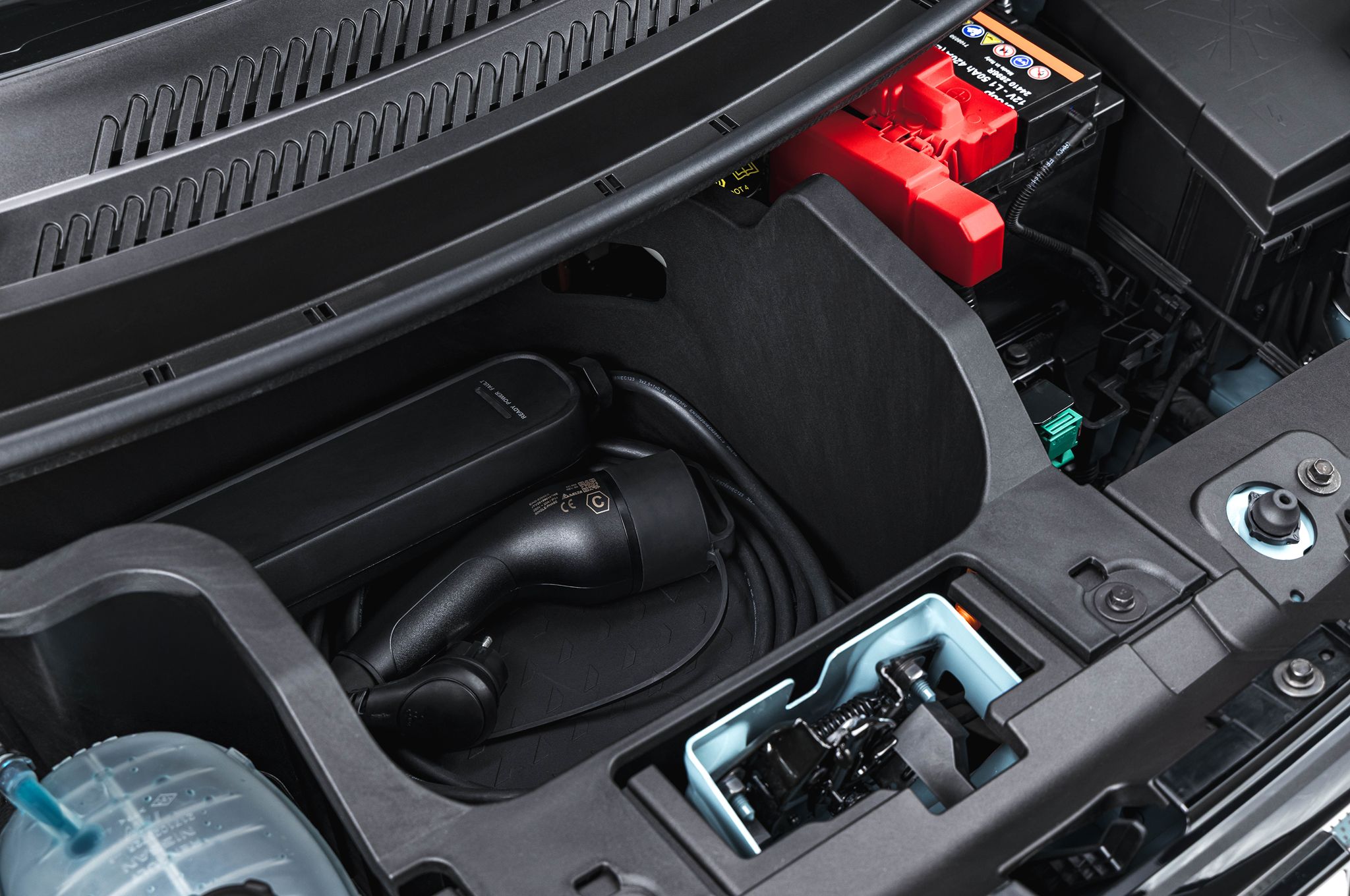
The Spring is the only car in this class to offer a “frunk” - although it’s an option, as you need to buy the tray. It gives an 18-litre cubby under the bonnet that’ll be okay for stashing your charging cables, although it’s a bit tight so you may need to practice your cable winding skills. Or just chuck it in the boot, which is what I’d do!
Interior, styling and technology
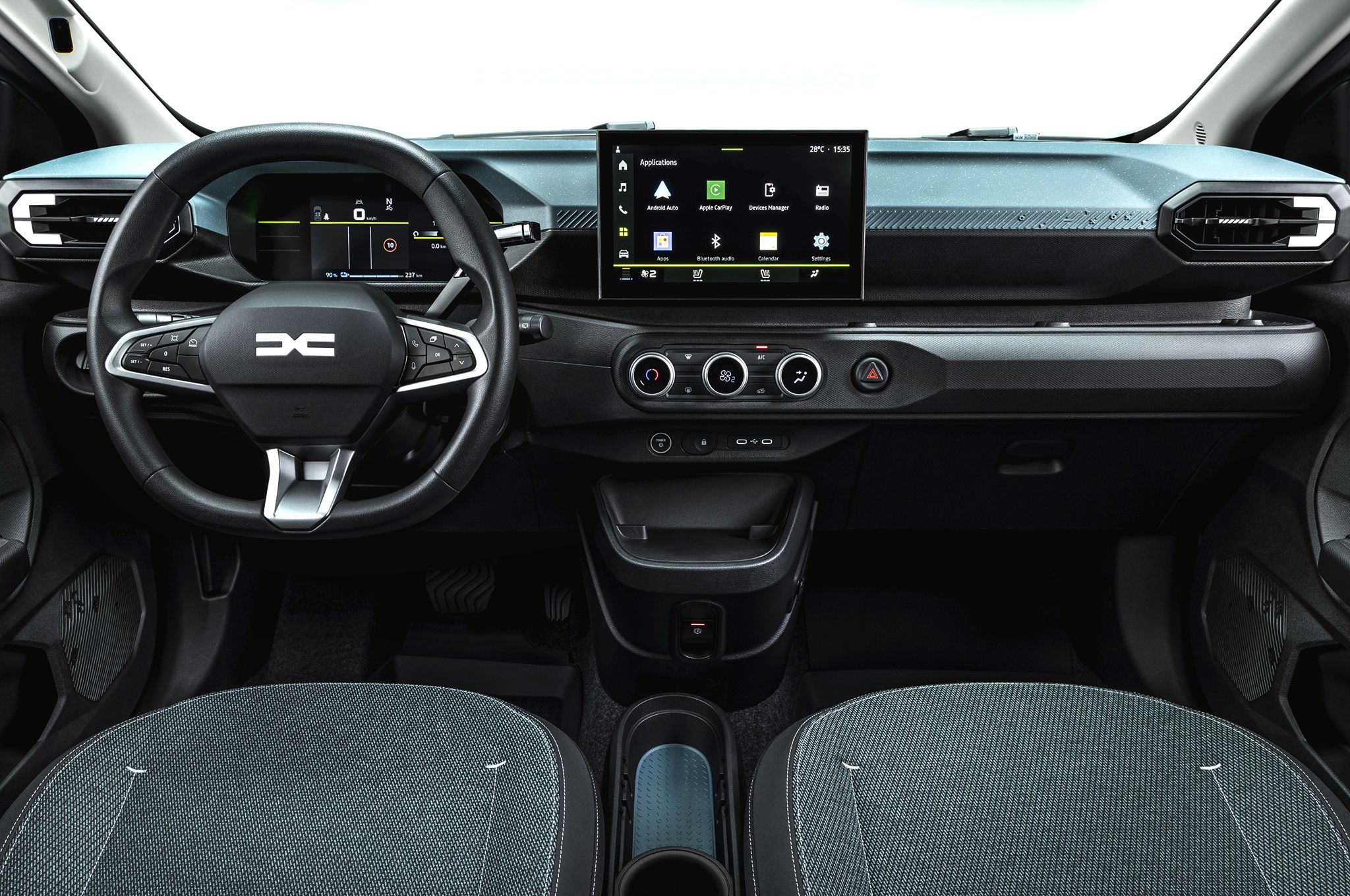
Using the latest Renault bits means there is a big upgrade inside for the new Dacia Spring.
For a start, finding a comfy driving position is much easier than the old Spring as the seat adjusts for height, and the steering wheel moves for both reach and rake too. I found it pretty easy to get comfy in there, and while it’s not the most flexible of driving postions I’d still say that most adults will be able to find a natural-feeling driving position. It’s not at all bad for a cheap car, let’s put it that way!
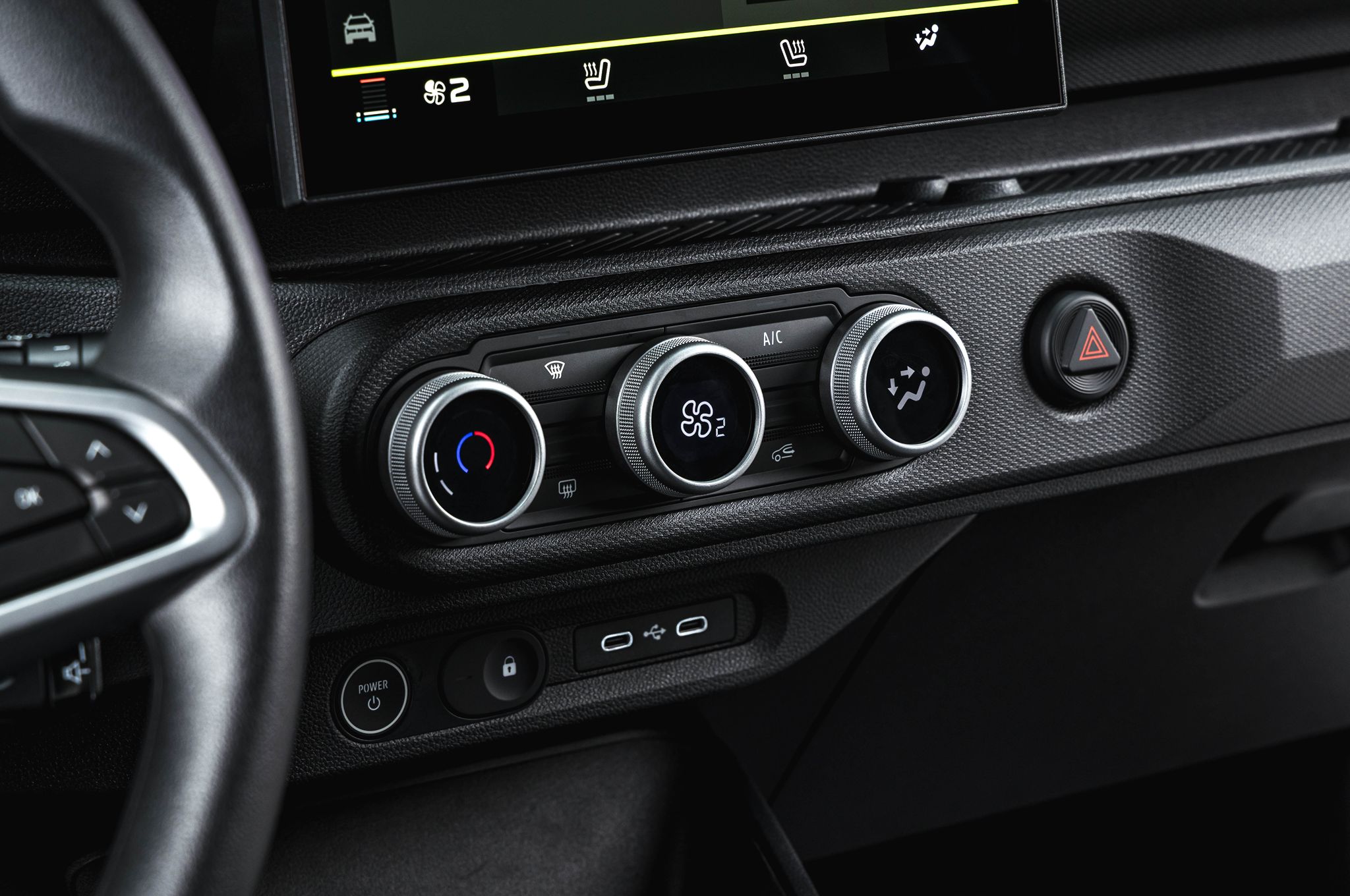
The horizontal dashboard lines give the cabin a more modern feel, and if you go for the posher Journey trim, you get a tidy 7-inch digital display for the driver and a 10.1-inch touchscreen sitting right in the middle.

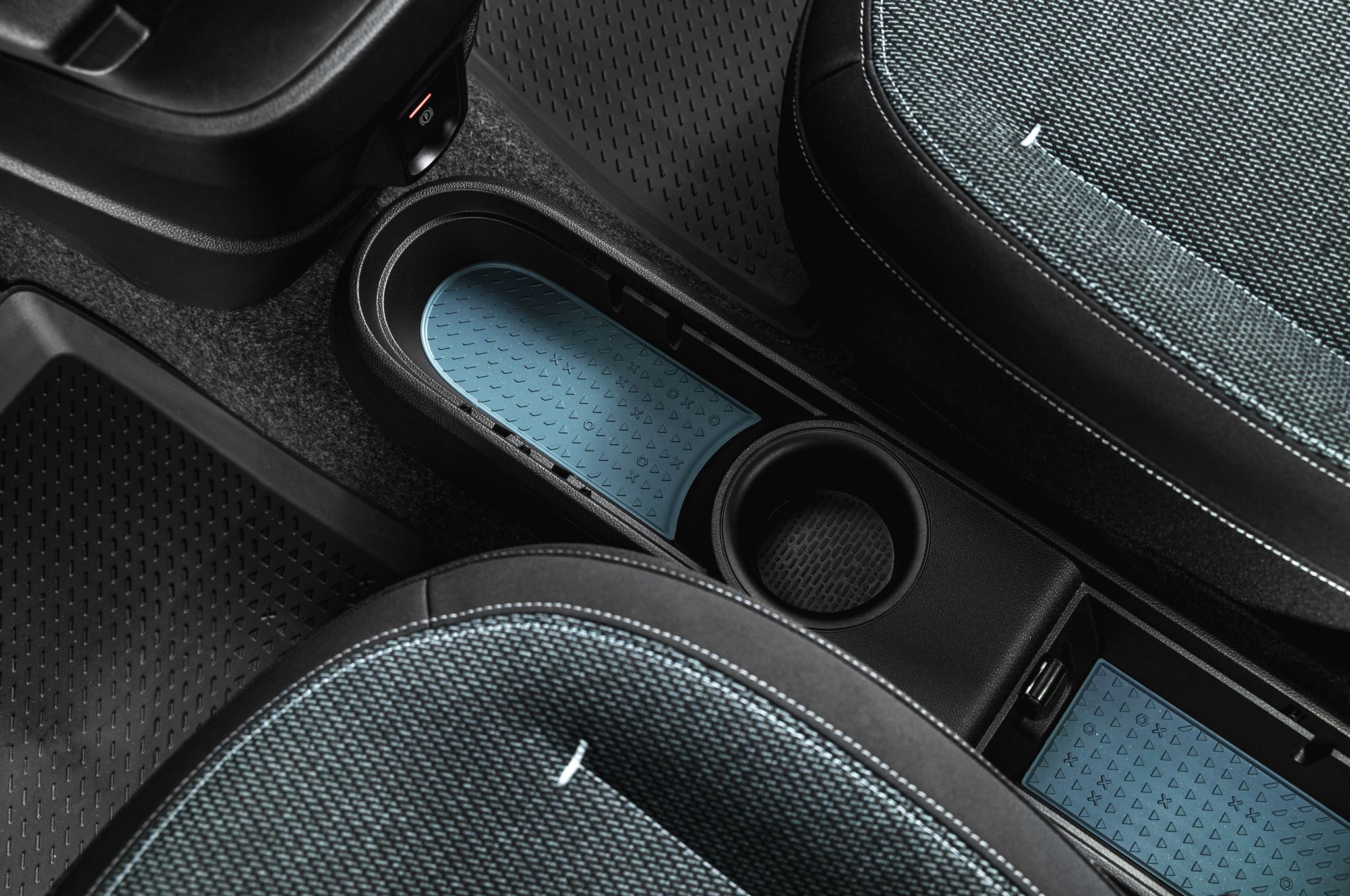
There are plenty of clever cubbies, too. If you want more storage, there are these YouClip mounting points - one by the passenger’s knees and two in the boot - so you clip in all sorts of accessories, such as a 3-in-1 gadget that combines a cupholder, bag hook, and a torch.
Oh - and the old-fashioned handbrake has gone. Am I the only one who quite liked that though?!
If you stick with the cheaper Expression trim, you get the Media Control system, which is a fancy term of using your phone as the screen... You can download the free Dacia app to your phone, and it becomes your main screen for the radio and nav, and it integrates so that you can still use buttons on the steering wheel to show your tunes, podcasts and calls on the digital dash. There’s a proper holder built into the dash to keep your phone secure, and it works in portrait mode too.

I don’t mind this. I know it seems cheap, but actually for the Spring I think it makes a lot of sense. Plus, it means your infotainment is always up to date as it’s your phone, isn’t it?! It makes loads of sense, to me, and I like that Dacia is offering this to keep the Spring cheap and simple. Above all else, that’s what it needs to be. Reminds me of the VW e-UP and Skoda Citigo. Great cars, those!
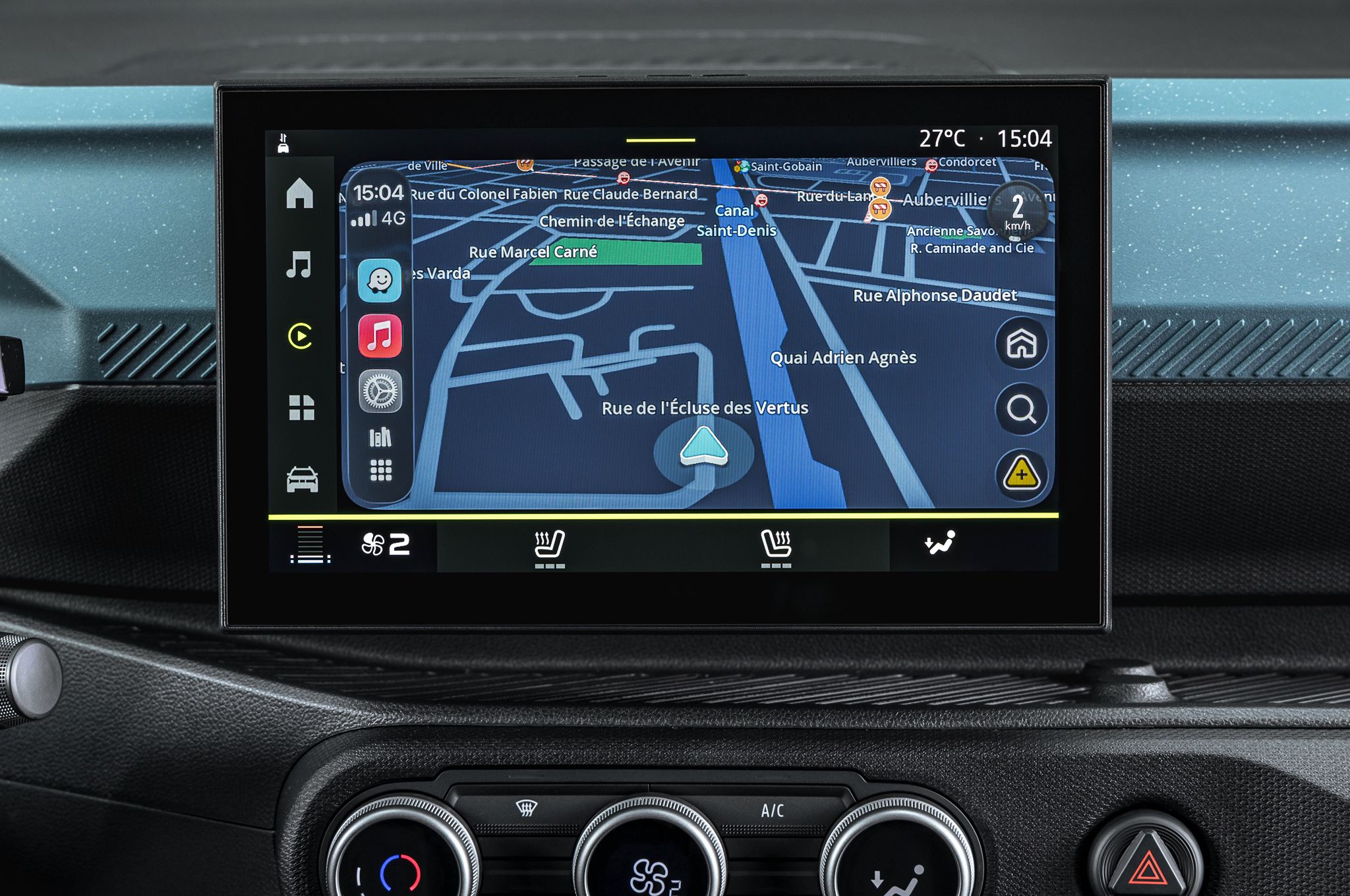
Step up to the Journey trim and you get the 10.1-inch touchscreen that you can see in the car I spent time with in the studio. It gets wireless Apple CarPlay and Android Auto, and eight years of live navigation and map updates thrown in, plus an app that lets you track the car or precondition the cabin before you even get in.
There’s no word on safety score yet – the Dacia Spring and Renault Twingo are yet to be tested. But the Spring does have devent safety equipment, including a ‘My Safety’ button that lets you preset your assistance systems and activate them quickly with a double-press of the button when you get in.
Motors and performance
I didn’t get to drive the Dacia Spring, I’m afraid, so you’ll just have to wait a bit to find out if this is as fun as the excellent little Renault Twingo that it’s based on.
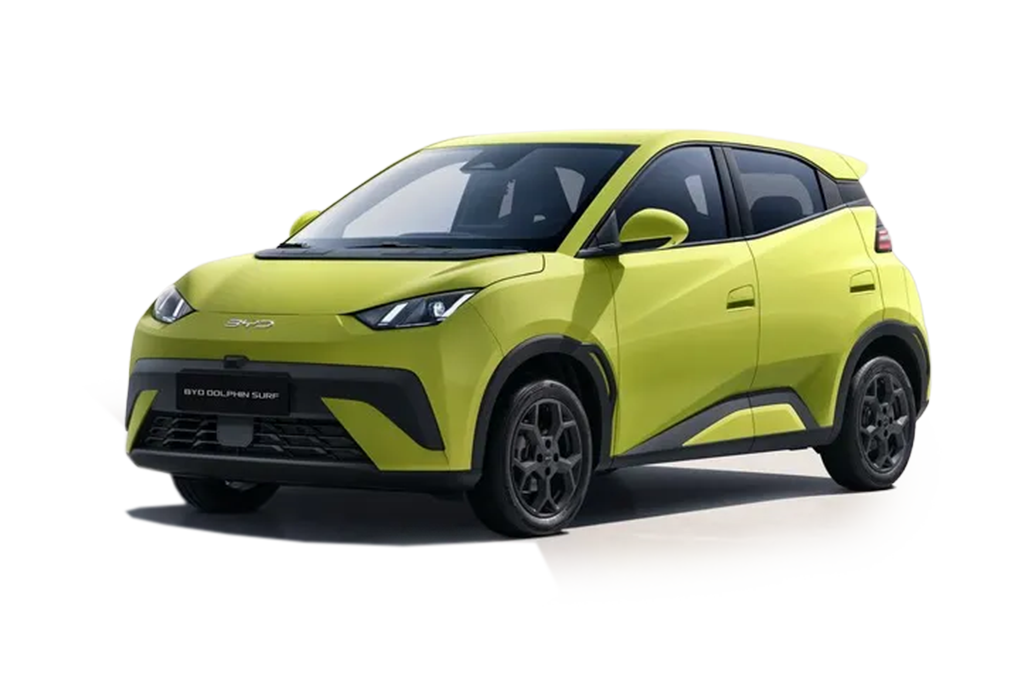
But next to the previous Spring, it has to be said that there’s one area where the new Spring seems to have gone backwards… Performance! The top versions of the old car had a surprising 100hp and a 0-62 time of 9.6 seconds. It didn’t really have the chassis to cope with it though, if we’re honest, so maybe it’s a good thing that the new one has been reined back? The new Dacia Spring gets an 80hp motor powering the front wheels, and a 12.1 second 0-62 time, which sounds glacial but is pretty good by class standards. Only the Hyundai Inster and big battery versions of the BYD Dolphin Surf are faster.
The new Spring is also a lot heavier, rising from 980kg to 1,212kg. Which is a shame, as that’s like having three people on board. But it should feel a lot more planted on the road as a result, so we’ve high hopes despite the weight gain.
Pricing and on sale date
The new Dacia Spring looks like a good package, but what about the price? Will it still keep its ‘cheapest car’ billing when it arrives in the UK in early 2027? We don’t know for sure, but it seems doubtful as you are getting more metal for your money. The man from Dacia says it will be less than £18,000, but the new Spring will be built in Europe so is likely to be eligible for the government grant at some level. We’ll have to wait and see.
Verdict
I’d definitely say that this new Dacia Spring has been lifted above the old car’s main rival - the Leapmotor T03 - and can compete with the BYD Dolphin Surf, Citroen e-C3 Urban and even lower-end versions of the Renault Twingo, too. The battery and range will be an issue for some, and I’d rather have seen rapid charging as a standard feature, but I love that the Spring has grown up a bit but still seems to have kept its cheap-and-cheerful vibe.
It will all come down to pricing, of course. And in the UK, also the plug-in car grant! If the Spring gets the full £3,750, which could take it down to around £15,000, it’s going to look like really good value. Hopefully it will be as good to drive as the Renault Twingo, too!
What do you think? Is the Spring your thing? Do you like the boxy look or would you go for the Twingo? Or the BYD Dolphin Surf? Or maybe the cheaper Leapmotor!?! Hmm... Used Hyundai Inster, right? Let me know in the comments.

 8
8