





Thousands of charge points were added to the UK network in 2025, according to the latest figures from mapping service Zapmap, which has published its latest statistics for the year.
Zapmap says that 14,097 new charge points were added during the year, which brings the UK total to just under 90,000 plugs across just over 45,000 locations. The number added in the year represents a 19% increase in plugs over the previous year, with electric vehicle sales up 24% in the same period according to the SMMT’s figures.
The biggest increase was in the number of ultra-rapid chargers – those capable of 150kW and above – which increased by 41% in the year, mostly concentrated on major roads. It also said that there are now 748 charging hubs across the country, up 39%. A charging hub is classed as six or more 50kW-plus rapid or ultra-rapid chargers on one site. All parts of the UK saw a double-digit percentage increase in the numbers of rapid chargers, but the largest growth was in the northwest of England, with a 35% increase in charge points.
There was also a 30% growth in on-street charge points, which are seen as essential to making EVs practical for those who don’t have access to off-street parking at home. There are now just under 33,200 of those in the country, but 72% of the UK’s on-street charge points are in Greater London, highlighting the scale of what’s needed to boost infrastructure in the rest of the country.
Charging infrastructure is often cited as one of the major factors that puts off potential EV drivers in the UK, especially when it comes to drivers who don’t have access to preferential home charging electricity tariffs.
Electrifying founder Ginny Buckley has been calling for politicians to intervene to ensure that all drivers in all areas of the country are treated fairly: “More government investment in charging infrastructure is welcome – but it needs focused support behind it if we’re to avoid access to charging becoming a postcode lottery. Coventry has over 750 chargers per 100,000 people, yet Manchester, Leeds, Liverpool, Sheffield and Newcastle all sit below 100.
“We know some councils have more expertise in this area than others and that gap won’t close unless the government provides clear, joined-up guidance to help councils get the right chargers in the right places.”
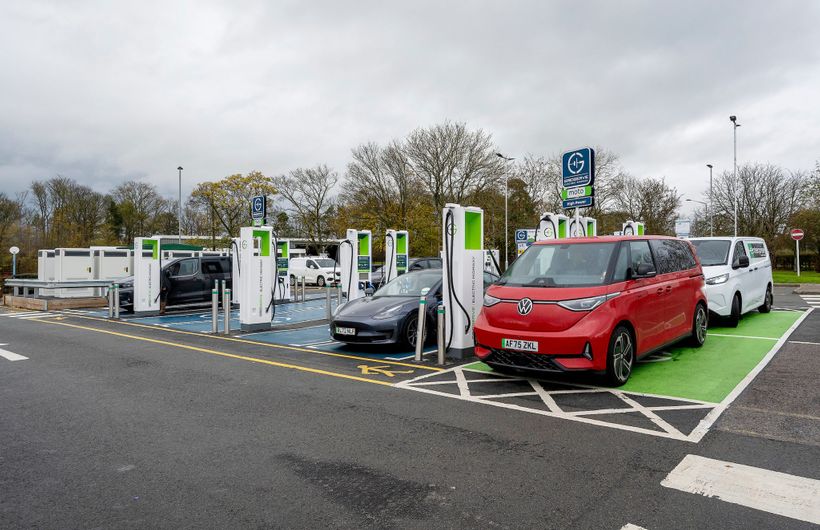 There are now 748 'charging hubs' across the country – places where six more faster charge points are clustered together