





Until I got to Paris for the 2026 motor show, the furthest I had delved into advanced driver assistance was adaptive cruise control and lane keep assist. When BYD told me I’d have the chance to try its City Navigation on Driving Assistant (CNOA) system, I was immediately intrigued. Then I found out we’d be navigating the infamous Arc de Triomphe.
Denza Z9GT: A 1,156hp electric shooting brake
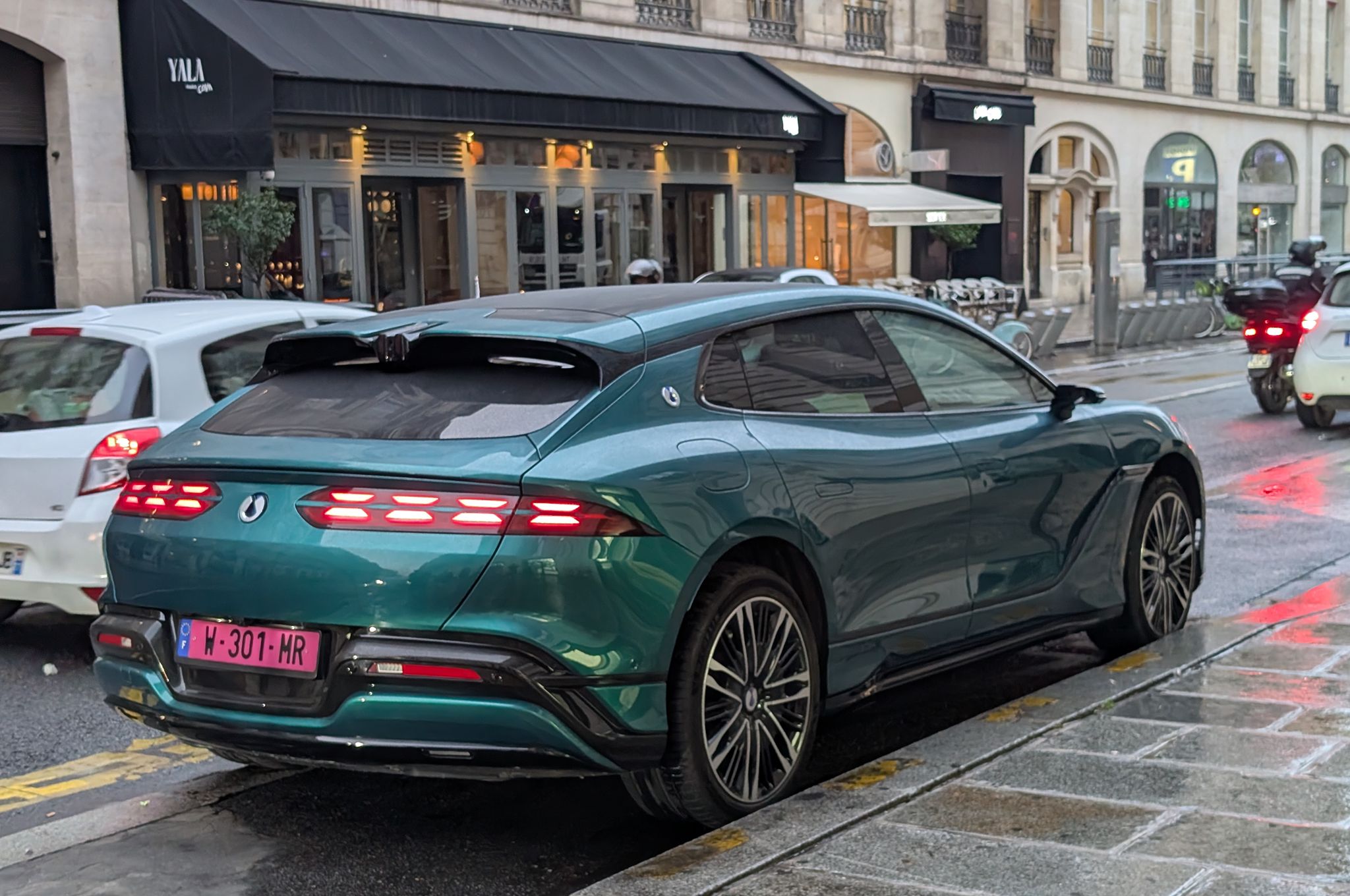
The car chosen for the drive was the Z9GT, one of Denza’s more practical offerings. The five-seat shooting brake can accomodate four six-footers, with enough space in the boot for a weekend in the Cotswolds. It’s also got 1,156hp and can hit 62mph in just 2.7 seconds. We wouldn’t be needing that on our drive, though.
To facilitate the use of the CNOA driver assistance system, the Z9GT is bristling with cameras and sensors that can see in visible light, lidar, millimetre-wave radar and ultrasonic frequencies. I wouldn’t be surprised if the Z9GT could spot a ghost at 20 paces.
.jpg)
The folks at Denza were quick to inform us that the CNOA system cannot be labelled as truly self-driving, as it still needs a human in the driver’s seat, paying attention to the road ahead and the car’s movements. CNOA technically falls within a Level 2+ category, while true autonomous driving is categorised as Level 4.
The driving route would take us on a 3.3-mile (5.3km) tour of some of Paris’s most famous landmarks, up the Champs-Élysées, three-quarters of the way around the Arc de Triomphe, past a viewpoint across the Seine from the Eiffel Tower and back to BYD’s central Paris showroom.
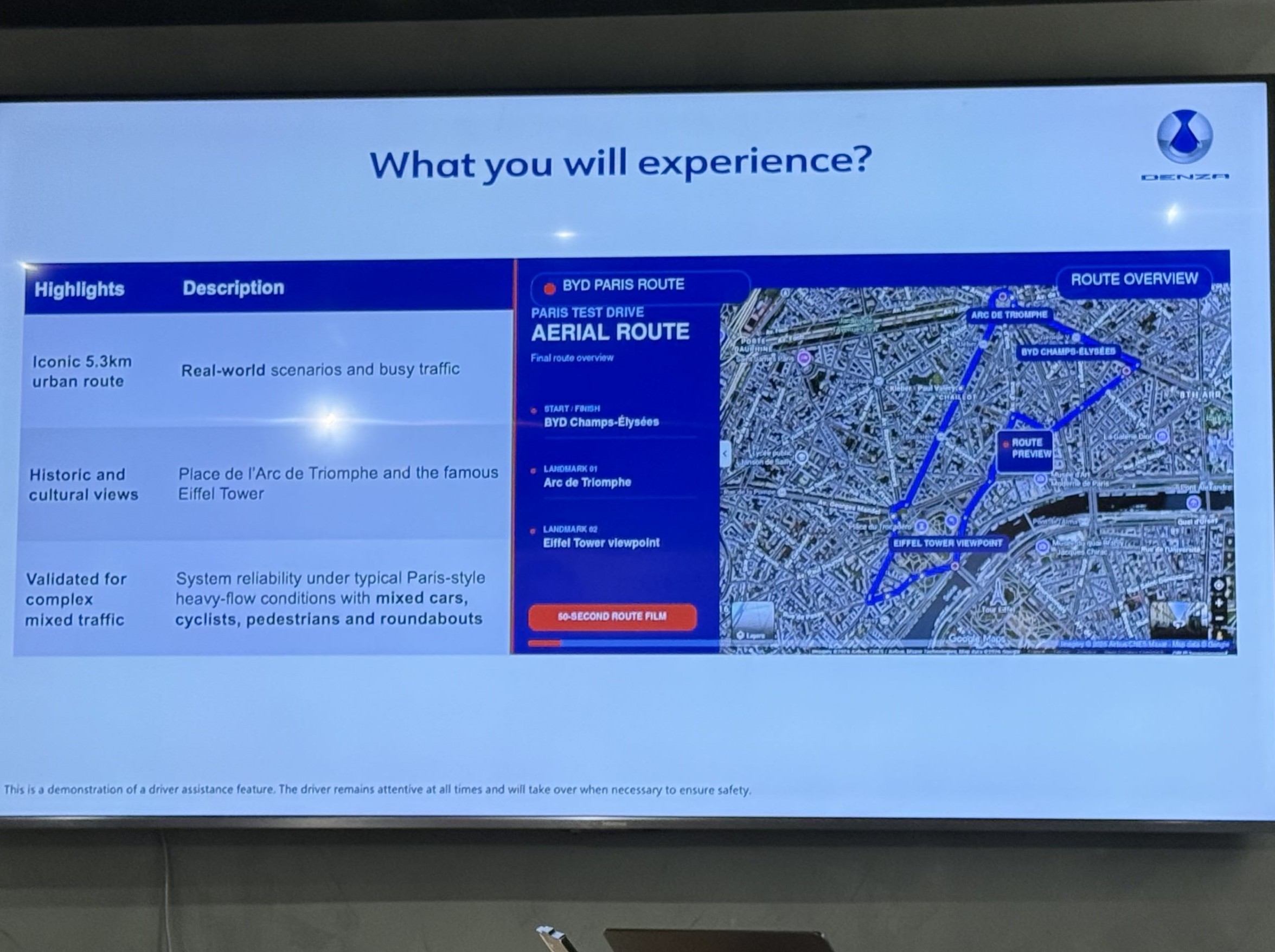
No sooner had we finished our briefing than we bundled into a Z9GT with a test driver to make sure the car didn’t get us into too much trouble. After a quick “how do you do?”, we were away and headed towards our first obstacle.
CNOA struggles with roadworks and traffic cones
The Champs-Élysées itself isn’t a difficult road to drive. It’s a straight line akin to The Mall in central London. Merging onto it from a side street is a tricky task for a competent human driver, but the Z9GT, after a reasonable amount of time assessing the traffic, found a gap and squeezed us in.
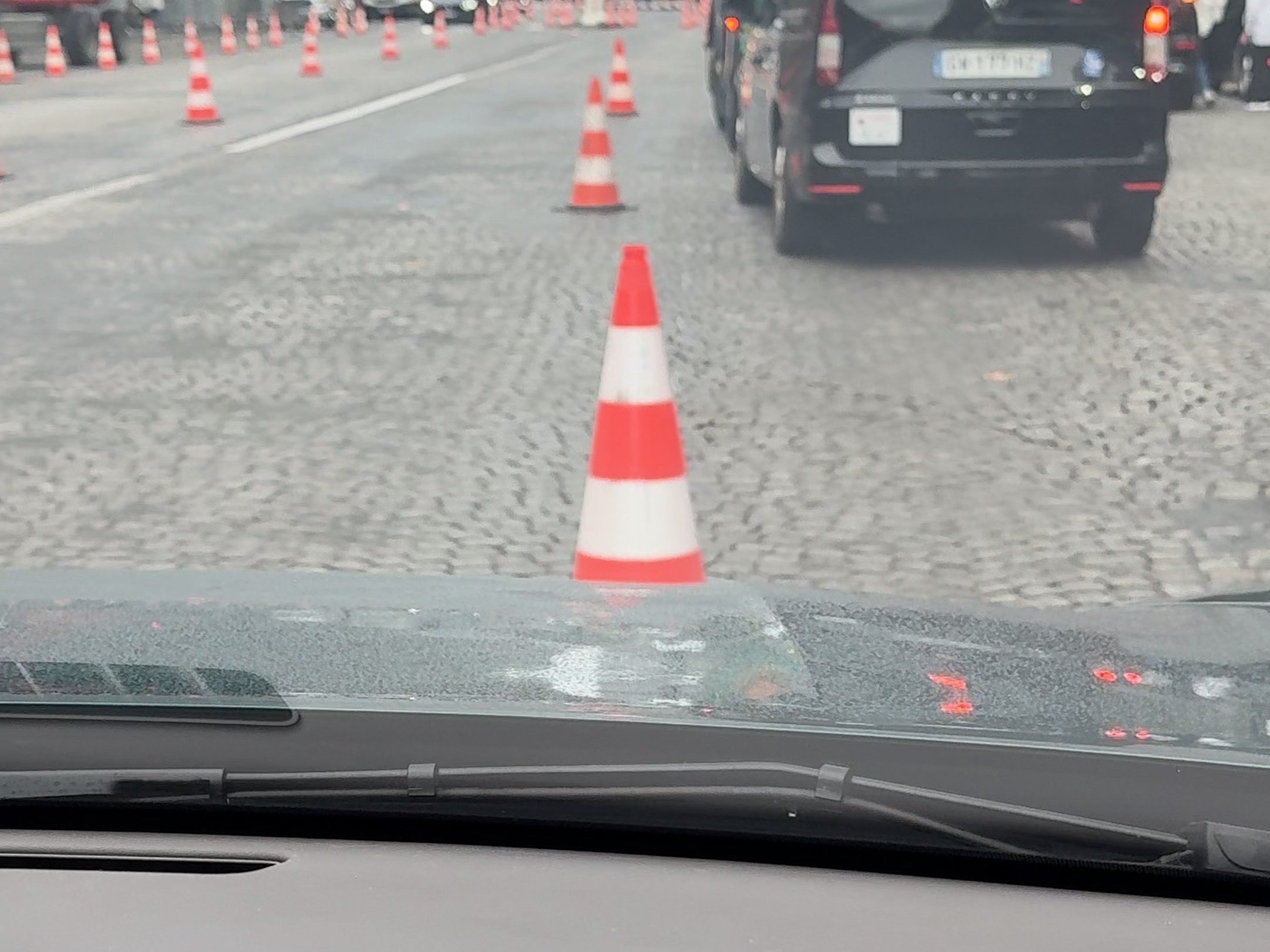
Unbeknownst to us, France had recently hosted an official state visit from the German president. As a result, roadworks were underway to reinstate several traffic lights that had been taken down.
.jpg)
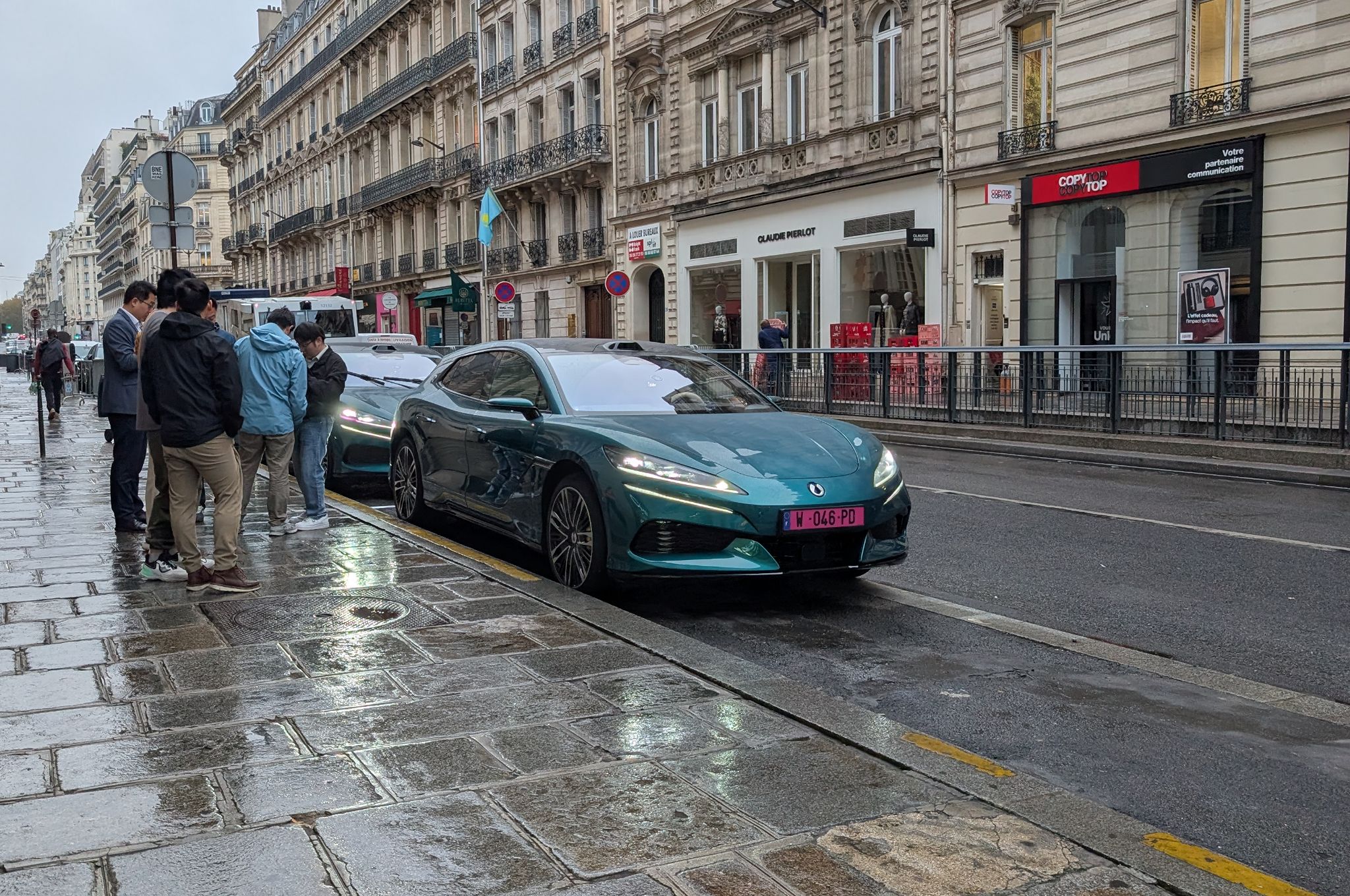
The associated cones were what gave the Z9GT its first spot of bother. Traffic was forced to zipper from two lanes down to one. The CNOA system, however, failed to recognise this traffic movement and instead opted to proceed down the roadworks side of the cones.
Besides a scowl from one of the workmen, no damage was done, and the driver quickly resumed the CNOA system once we were back on the right side of the cones.
There was a second cone-related incident when the same manoeuvre was required again. Only this time, the system became paralysed when it pulled too close to the cone in question and refused to navigate around it one way or the other.
Can BYD’s CNOA handle the Arc de Triomphe?
Onwards, then, to the most challenging obstacle on our journey: the Place de l’Étoile surrounding the Arc de Triomphe.
For the uninitiated, the Place de l’Étoile is often described as one of the world’s most challenging roundabouts. That in itself comes with a caveat because the Place de l’Étoile doesn’t actually feature any lane lines. Instead, 10–12 lanes’ worth of traffic is free to merge and turn as it sees fit, in murmurations rather than an organised flow.
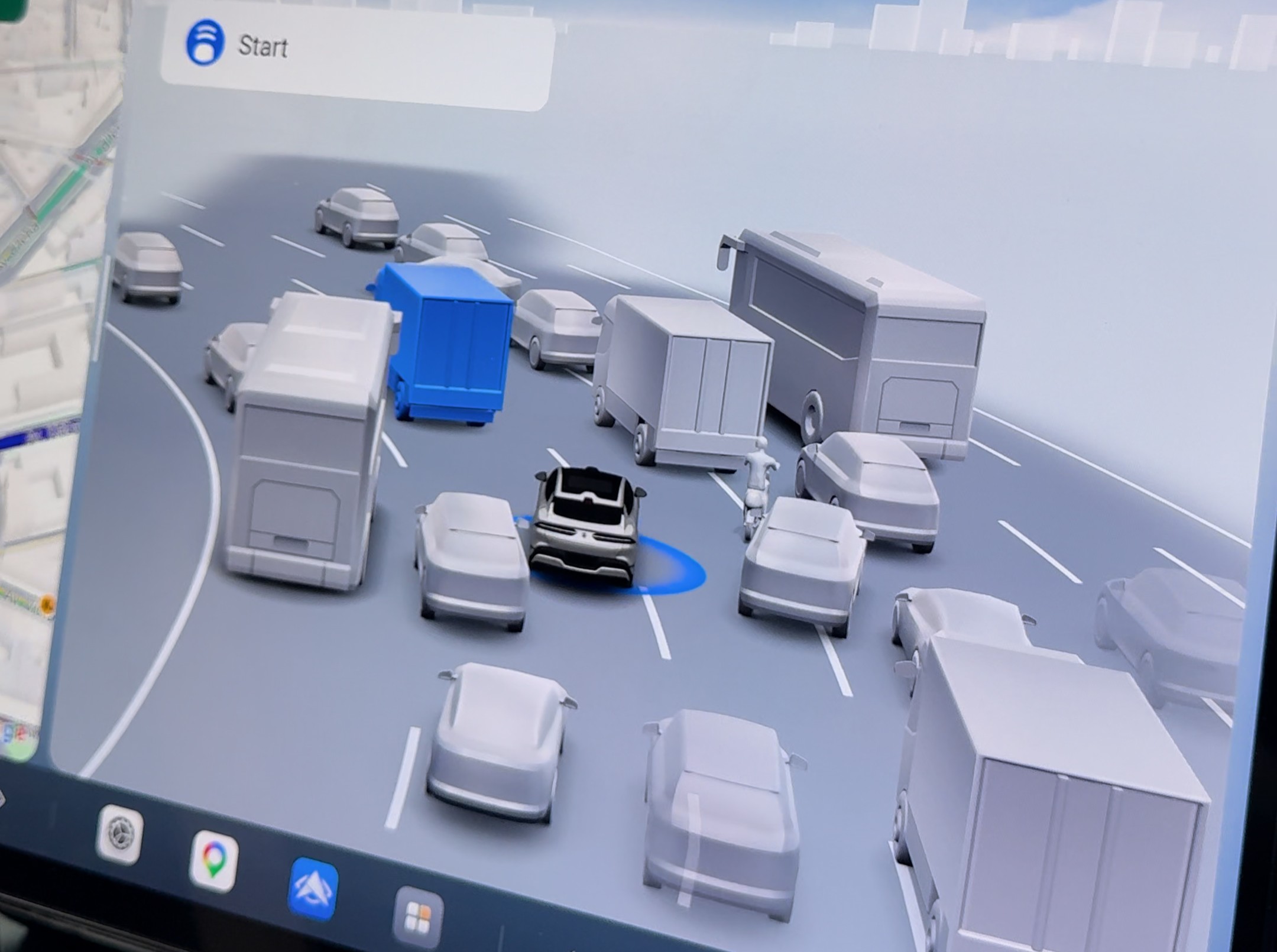
That makes it a daunting environment for first-timers, and particularly for first-timers who aren’t in control of the car as they move across it.
Surprisingly, the Denza Z9GT and its CNOA system handled the chaotic cobblestone area surrounding the Arc de Triomphe rather well. It was moving, on average, more slowly and cautiously than the local traffic, but didn’t once hesitate or stop unexpectedly. We were challenged by mopeds and lorries alike, and yet the collision I feared never came.
The scary part came immediately after tackling the Place de l’Étoile. Having chosen the correct exit, CNOA pulled us onto the wrong side of the road for 10 metres or so. Thankfully, there wasn't any traffic coming the other way yet, and our driver quickly merged us back into the flow of traffic.
A more relaxed drive on the streets of Paris
The remaining two miles of our journey were more or less stress-free, as CNOA seemed to come into its own with slightly faster-flowing traffic. In fact, our driver didn’t have to intervene once.
The Z9GT itself handled the rough roads excellently, all the while massaging my back, cooling my body with its ventilated seats and beckoning me to give its built-in karaoke system a try.
Is BYD’s CNOA system ready for real-world driving?
Having survived the experience in great comfort and luxury, we each drew a deep breath on returning to the BYD showroom.
The CNOA system did not feel finished, but it wasn’t meant to be. The version of CNOA we experienced was still in a pre-release state, but felt both closer to complete than I’d initially expected and yet incomplete enough to be deeply nerve-wracking.
Granted, Parisian traffic is a challenging environment, even at the best of times. But for this software and products like it to work in the wild, they need to be able to handle the worst-case scenario.
I suppose therein lies the key difference between Level 2 and Level 4 driver assistance. Scary as it may be to use a Level 2 system, I’d much prefer it to a system with no driver at all, no matter how good somebody told me it was.