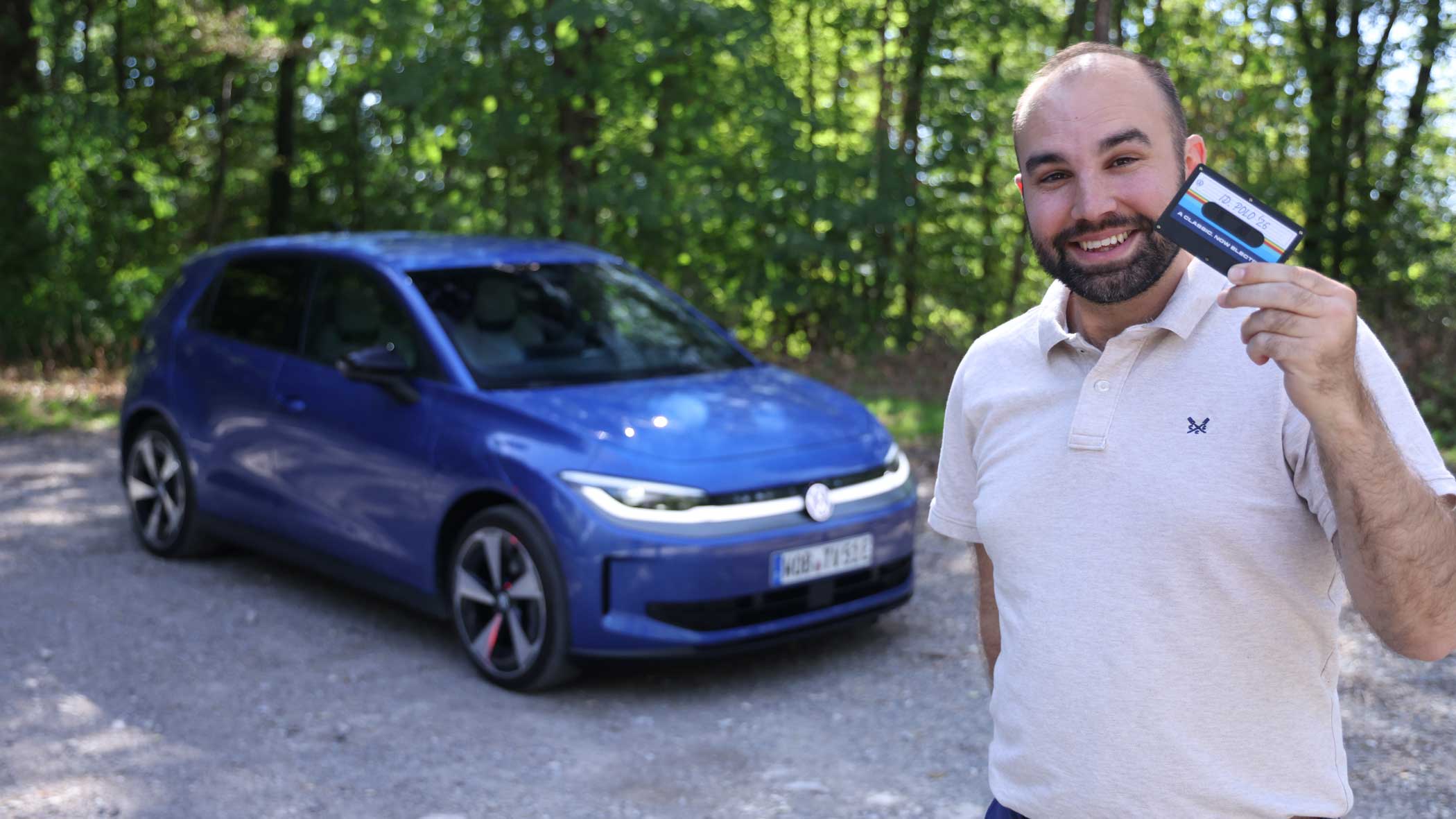
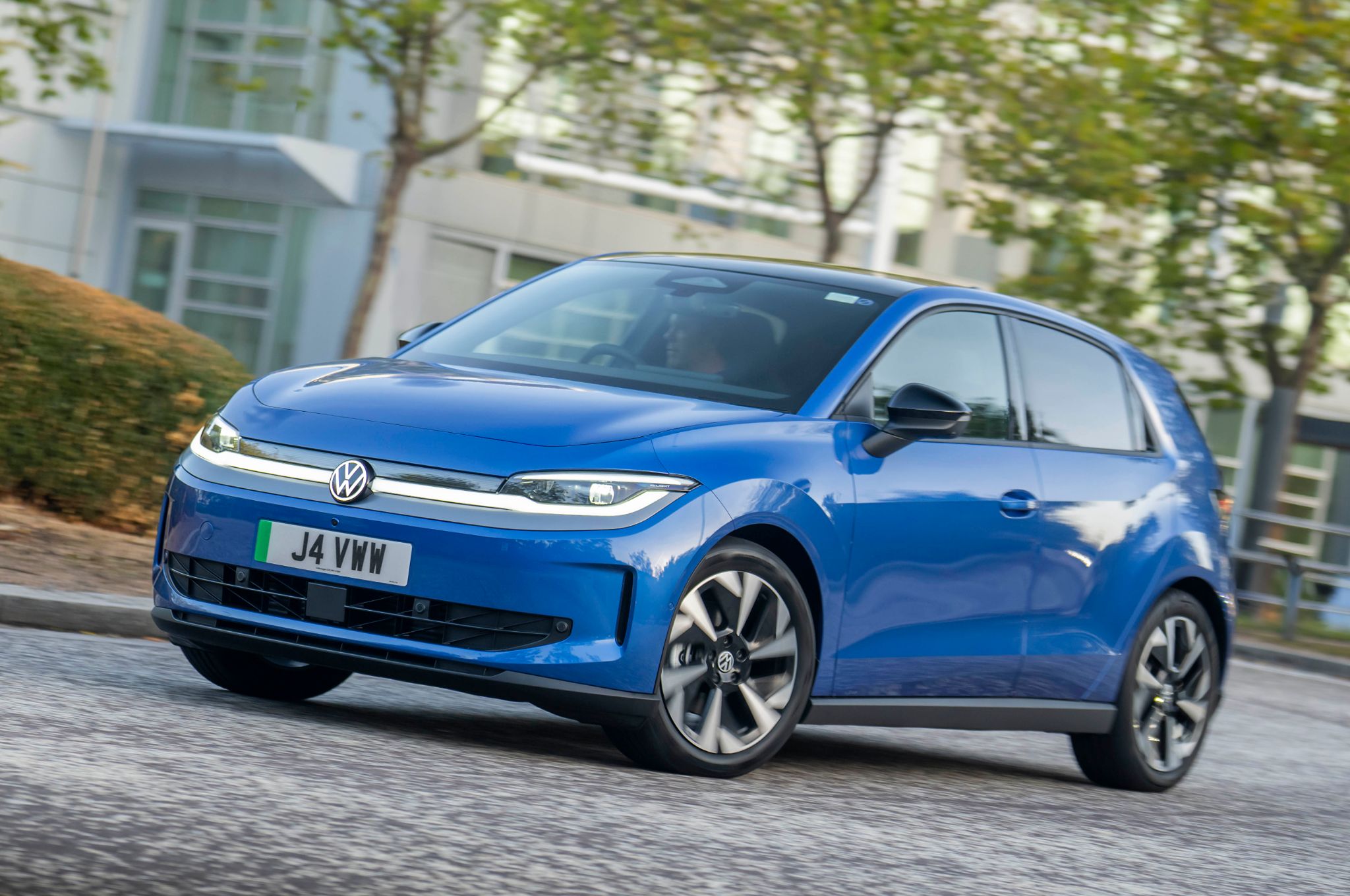
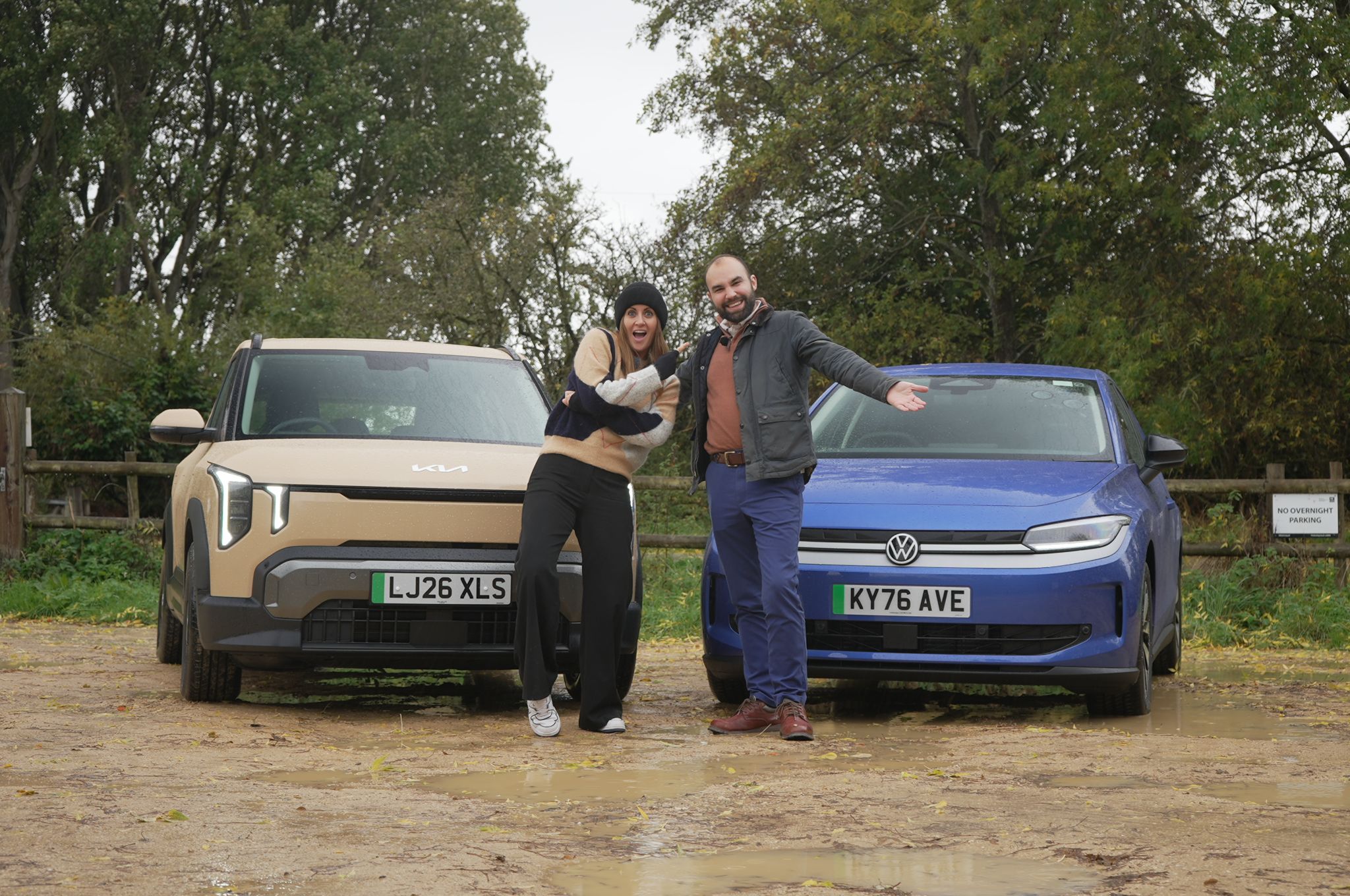
But, in practice, they do take slightly different approaches to the small electric car brief. The Volkswagen is unashamedly familiar in its approach to the small hatchback formula. It looks like a Polo. Feels like a Polo. Is, in fact, a Polo! It's reassuringly sensible and rather pleasantly like a VW of old! I'm a big fan of that, by the way.
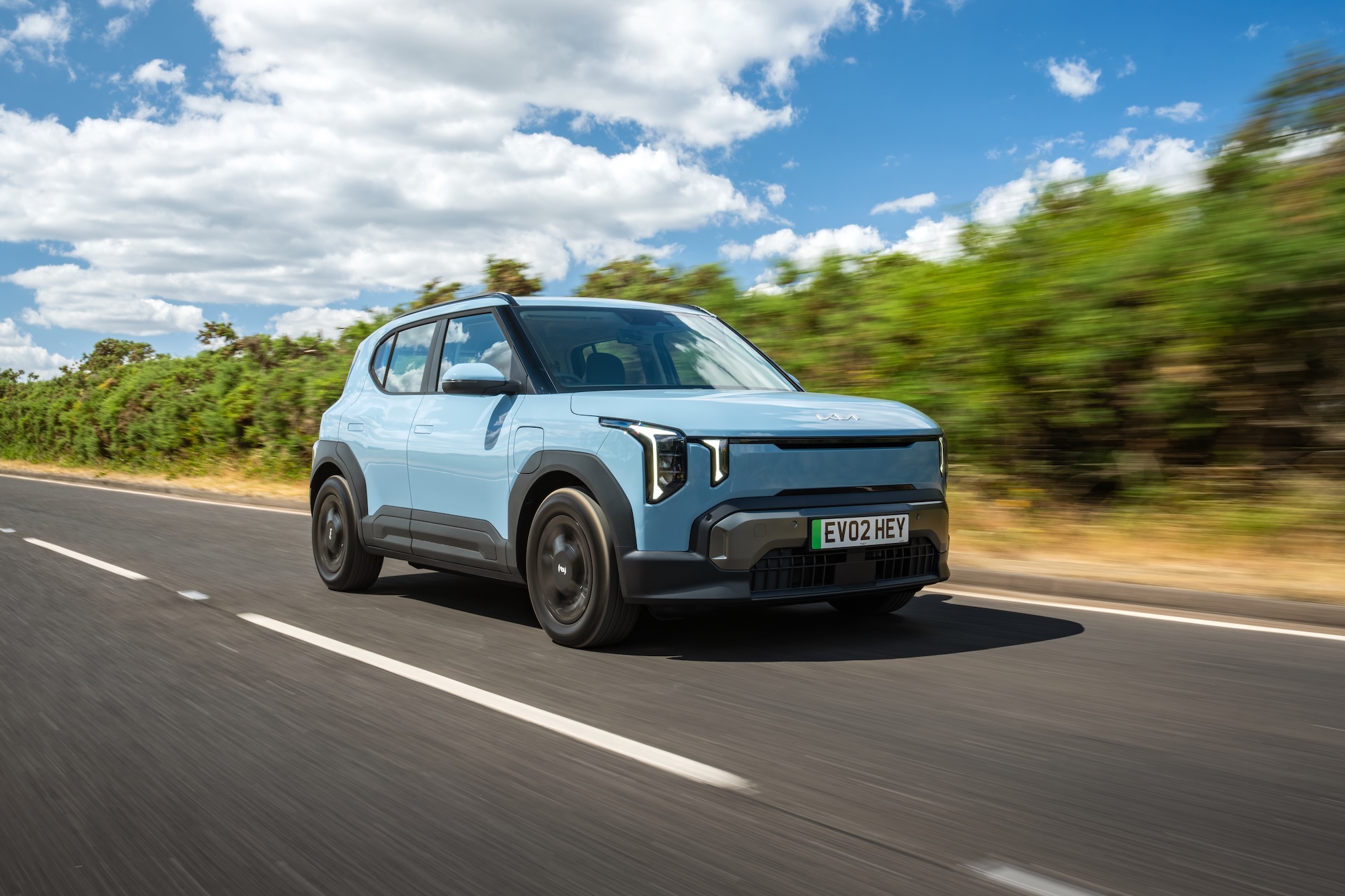
The is a more upright, SUV-inspired design, and it's all just a bit less conventional - if still rather cute, even in the 'false leg beige' of our EV2 Air test car, which went up against the rather smart blue VW ID.Polo Life Launch Edition. So, which one makes the most sense? Let's find out.
Kia EV2 Air
Price from: £27,995 (excluding £3,750 UK Electric Car Grant)
Price after grant: £24,245
WLTP range (test car): 275 miles
Battery: 58kWh
Max charging: 115kW
Power (test car): 134hp
0–62mph: 9.5secs
Boot capacity: 362 litres
Warranty: 7yrs/100,000 miles
VW ID.Polo Life Launch Edition
Price from: £28,830 (excluding £1,500 Electric Car Grant)
Price after grant: £27,330
WLTP range (test car): 275 miles
Battery: 52kW
Max charging: 105kW
Power (test car): 211hp
0–62mph: 7.1secs
Boot capacity: 441 litres
Warranty: 3yrs/60,000 miles
Real-world range and charging
Let's start with the important stuff, shall we? Because range and charging are often what make or break an electric car, and these two are surprisingly closely matched.
The Volkswagen ID.Polo comes with a choice of two batteries. The entry-level 37kWh version offers up to 200 miles of WLTP range, but it's the bigger 52kWh battery that we're interested in here. That manages up to 281 miles, which is seriously impressive for a small hatchback.
The Kia EV2 also offers a choice of batteries. The smaller version manages up to 195 miles, while the long-range model we're comparing here has a 58kWh usable battery and offers up to 275 miles. That figure can drop slightly if you go for one of the higher-spec versions with bigger wheels.
Charging is another close contest. The ID.Polo can charge at up to 105kW, while the Kia manages a slightly faster 115kW. Both can go from 10–80% in under 30 minutes when connected to a suitable rapid charger in ideal conditions, so there's very little to separate them in everyday use. Expect around 15- to 20 minutes for a 100 mile top-up in both of them.
Both cars also offer optional heat pumps, which can help efficiency in colder weather, but do make sure that you'll benefit from that better efficiency enough to justify the cost. You need to do a lot of miles in winter to get back that money, so we'd say that most drivers probably needn't bother! And if you fancy using your car to power electrical gadgets, the Volkswagen has vehicle-to-load (V2L) capability as standard across the range. The Kia offers it too, but you'll need the expensive GT-Line S to get it.
Interior and infotainment
You might expect these affordable little EVs to feel a bit cheap inside, but there's actually plenty to like about both of them. And, thankfully, neither manufacturer has forgotten that people quite like having proper buttons.
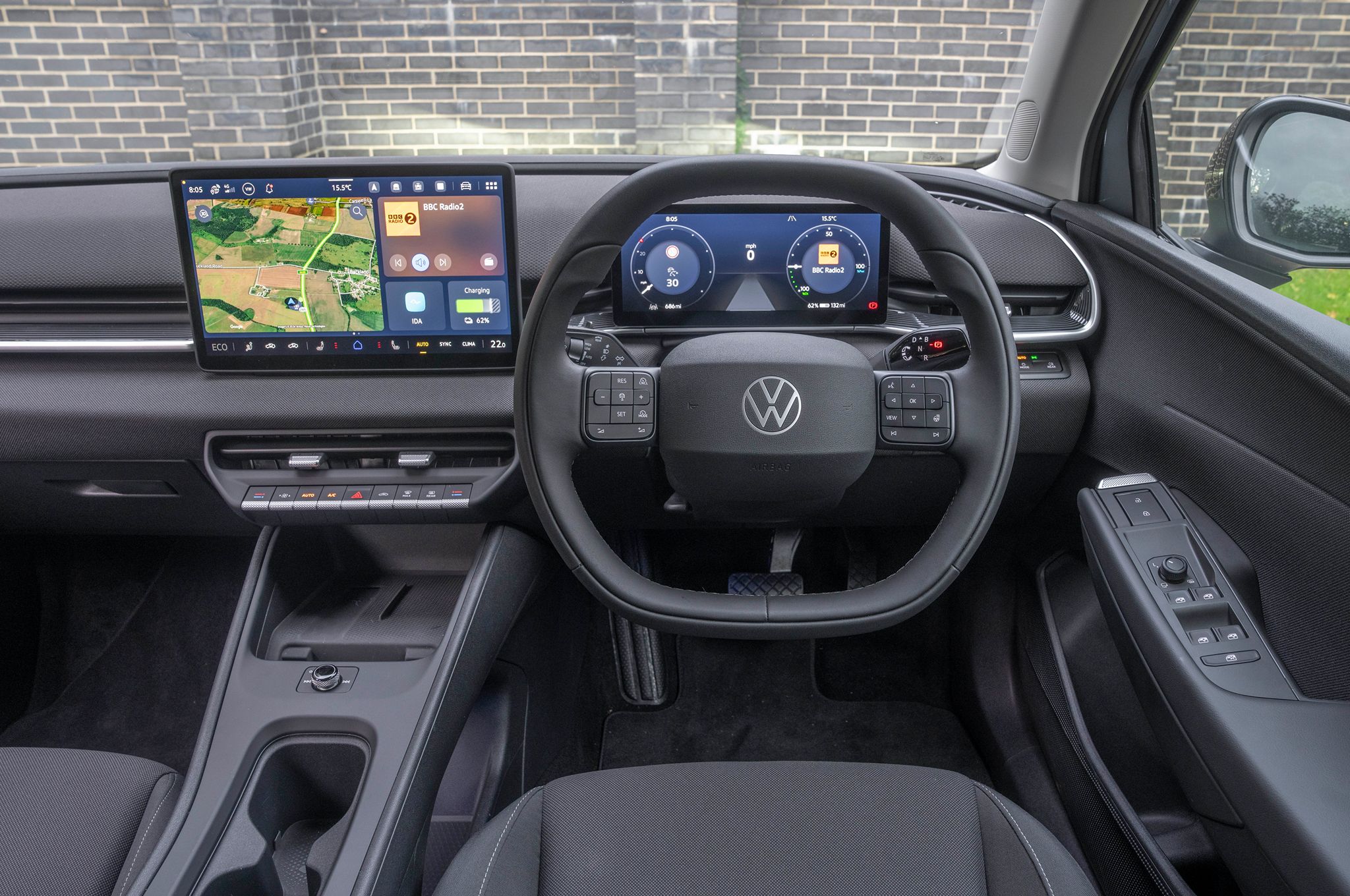
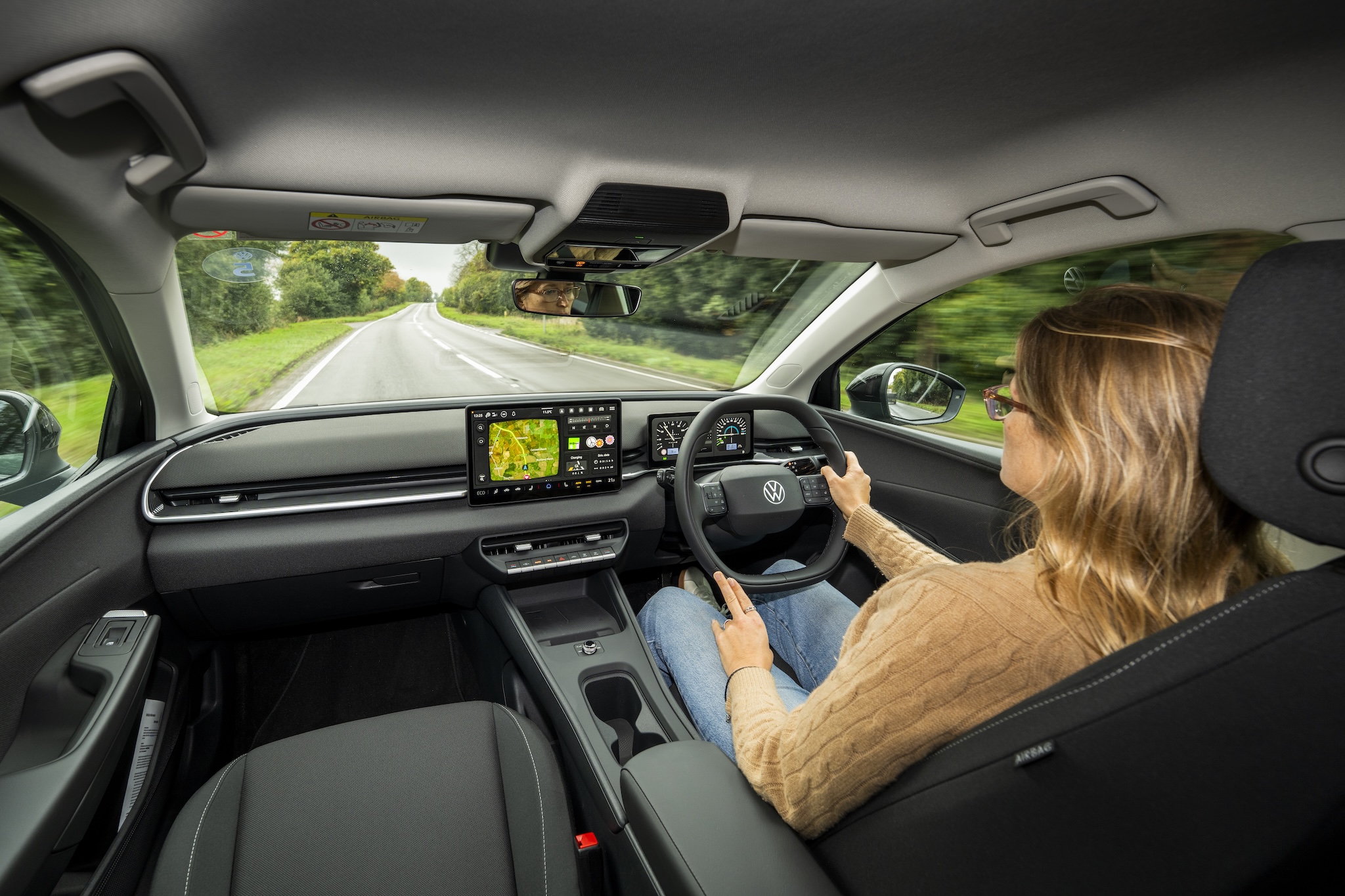
The Volkswagen ID.Polo feels like a return to form for VW. It's smart, solid and refreshingly straightforward, with a 12.9-inch central touchscreen and a 10-inch digital driver's display. The infotainment system has sharp graphics, sensible menus and wireless Apple CarPlay and Android Auto.
But the really good news? Physical controls are back! There are proper buttons for the climate control, a rotary volume knob and four conventional electric window switches. No more fiddling around with touch-sensitive sliders just to turn the temperature down. Hurrah! This makes me very happy, indeed.
There's even a retro display mode that makes the digital instruments look like those from a classic Golf, which I know has been covered widely with the Polo. It's a lovely little touch in an otherwise fairly sensible interior, although it's annoying that the retro screen disappears and reverts to the default modern screen when you skip a track.
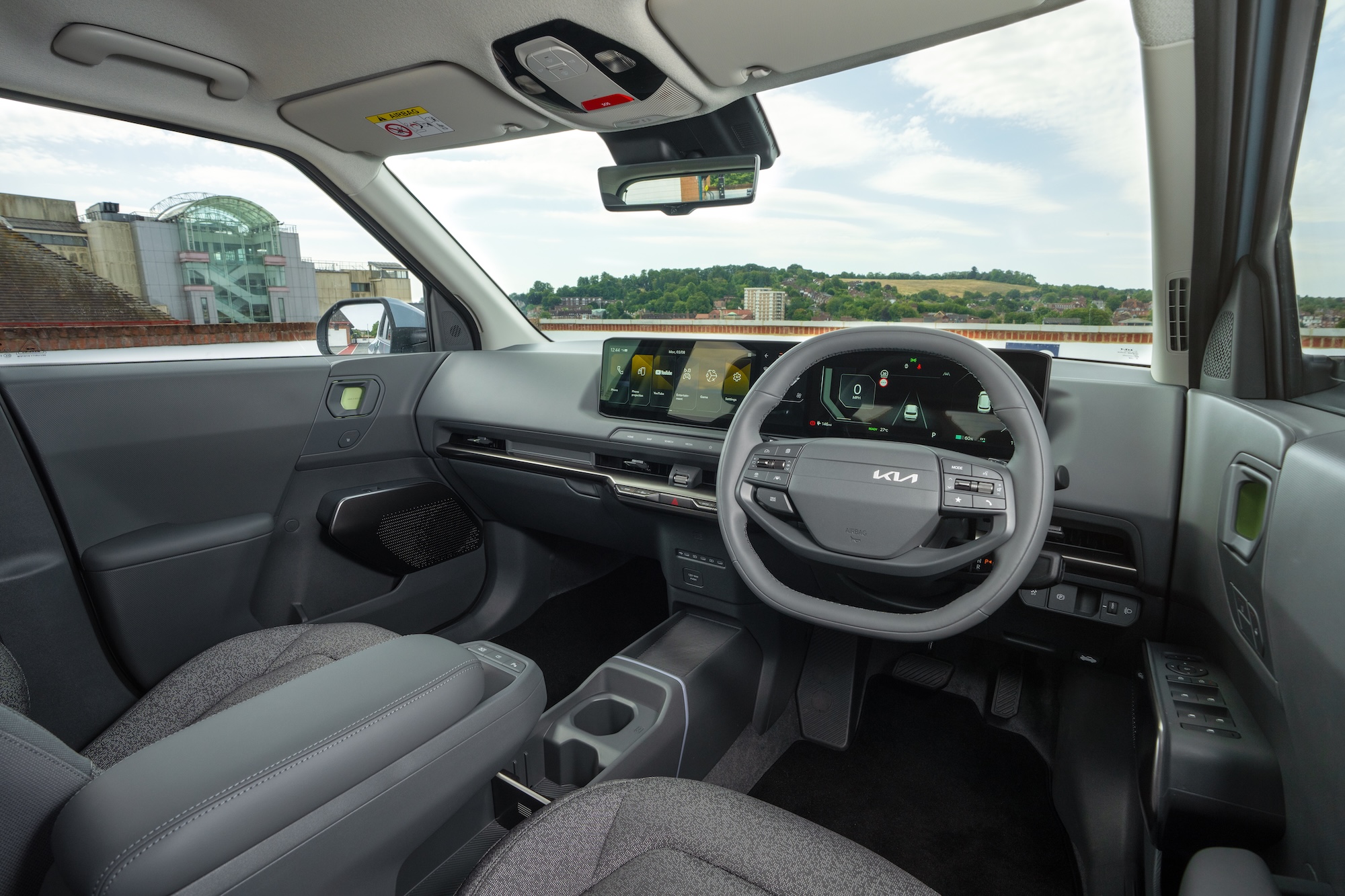
The Kia EV2 takes a slightly different approach. Its dashboard has a 12.3-inch touchscreen, a 12.3-inch driver's display and a separate 5.3-inch climate display. It looks like something from a much bigger and more expensive Kia, and the infotainment system is easy to use, with wireless smartphone connectivity and built-in navigation.
The interior is smart and practical, although it's not especially exciting. The materials feel hard-wearing rather than luxurious, and there's less personality here than you'll find in something like a Renault 5.
Equipment is generous in both cars. The Kia EV2 Air and Volkswagen ID.Polo Life Launch Edition come with heated front seats, a heated steering wheel and dual-zone climate control. Not bad for a couple of supposedly affordable EVs.
The Volkswagen's entry-level Life interior is only available in rather gloomy dark grey, though. You'll need to move up to Style for a lighter interior, and that's also where you'll find options such as massage seats and a panoramic roof. Yes, massage seats in a Polo!
Overall, the Kia impresses with its technology, but the Volkswagen's more traditional controls, quality feel and thoughtful design give it the edge here.
Space and practicality
Now, here's where things get interesting. Because while these are both small cars, they're actually surprisingly practical. At just over four metres long, the Kia EV2 and Volkswagen ID.Polo are virtually identical in length. The Kia is a little taller and its upright, SUV-inspired shape gives it an airy feel inside.
That extra height is particularly welcome if you're regularly getting children in and out of car seats, or simply prefer a more upright seating position. The EV2 has plenty of headroom, and its boxy shape makes good use of the available space.
The Volkswagen takes a more conventional hatchback approach, but it's hardly cramped. There's plenty of room up front, and clever packaging means the cabin feels bigger than the exterior dimensions suggest.
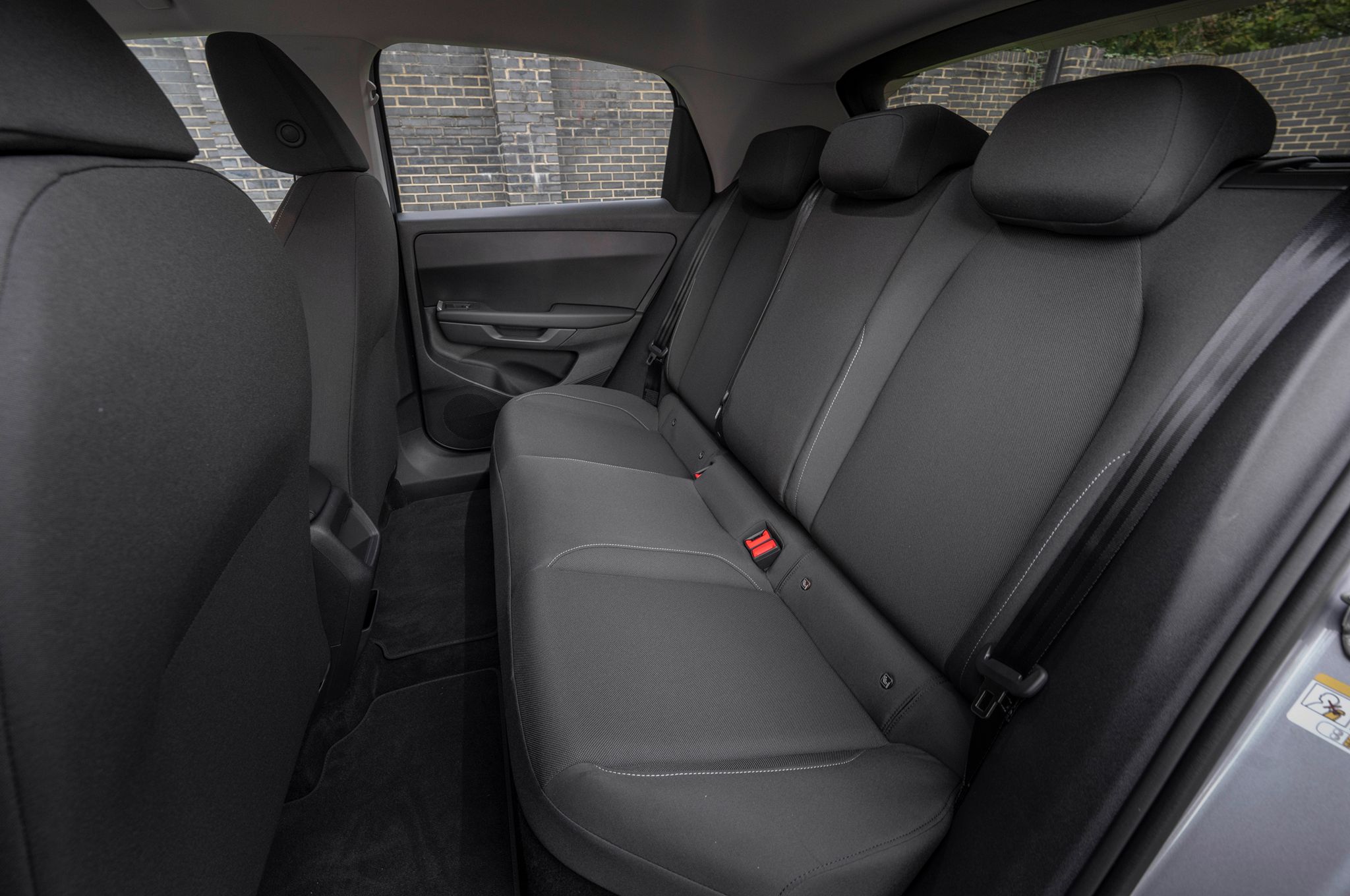
Both cars have three rear seats (although actually getting three passengers across the rear bench will involve a lot of elbow clashing), but there's one particularly useful difference for families. The ID.Polo (rear seats pictured above) has three ISOFIX mounting positions, including one on the front passenger seat, while the Kia has two in the back. That extra mounting point could make a real difference if you're juggling child seats!
Neither car gets a rear centre armrest in the versions we're comparing, although Kia does include one on higher-spec EV2 models. More importantly, both have really decent leg- and headroom, so you'll be fine for lankier teens or for really bulky car seats.
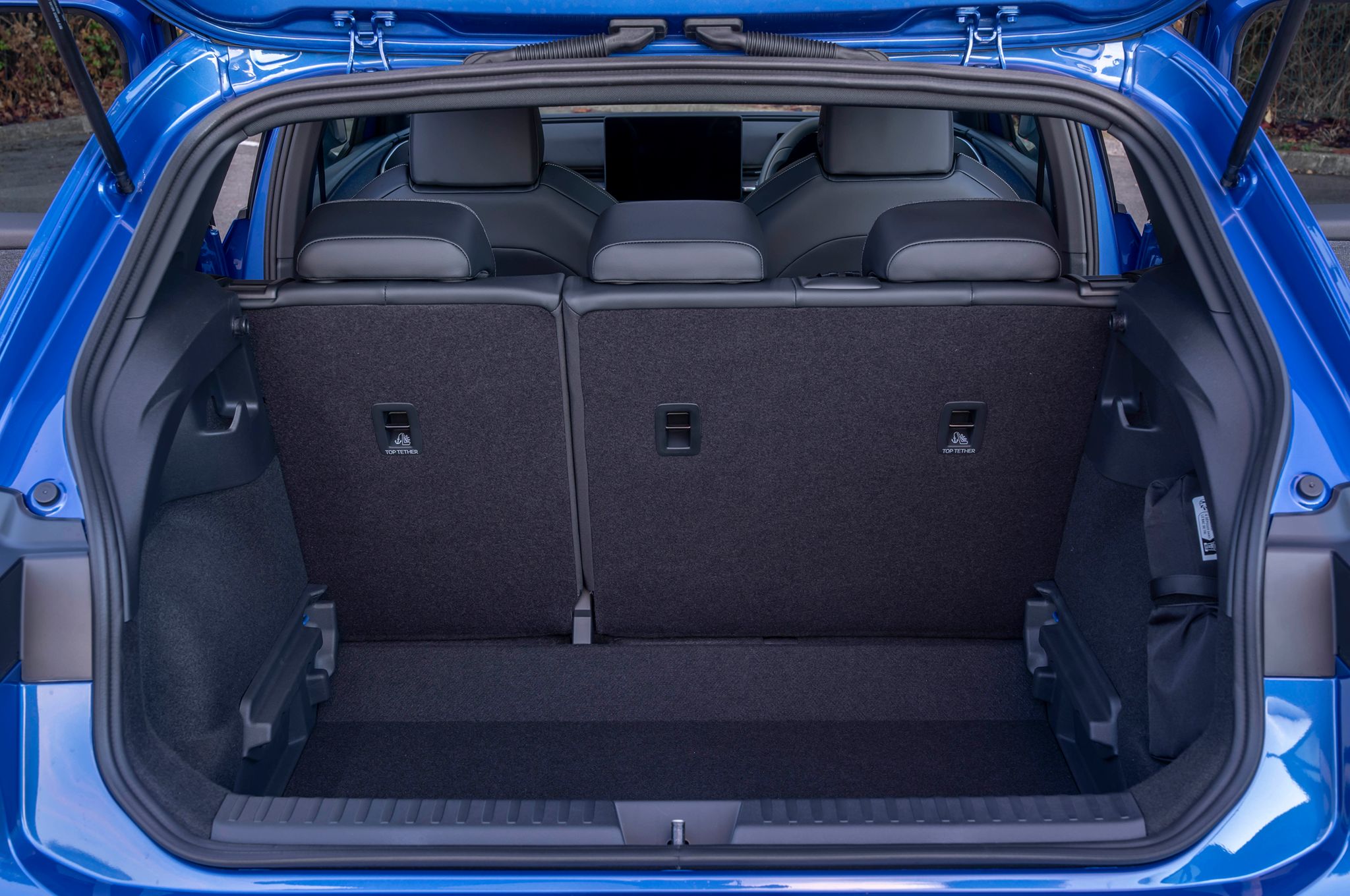
When it comes to boot space, the Volkswagen delivers a fairly decisive victory. The ID.Polo offers a massive 441 litres with the rear seats in place, expanding to 1,243 litres when they're folded. Much of that space comes from a deep underfloor storage area, which is ideal for hiding charging cables, muddy shoes or anything else you don't want rolling around in the main boot.
The Kia manages 362-litres, which is still perfectly respectable for a small electric car, but it's 79-litres down on the Volkswagen.
The Polo's boot (pictured above) is bigger than that of a Volkswagen ID.3 or Golf, which is pretty bloody impressive for a car this size. Both are practical enough to work as everyday family transport, but if luggage space is high on your priority list, the Volkswagen is the clear winner.
Which one is best to drive?
Let's get one thing straight: neither of these cars is trying to be a hot hatch. Not even the Polo, with its surprisingly hearty acceleration. They're designed to be comfortable, easy to drive and capable of handling everything from the school run to a long motorway journey.
The Volkswagen ID.Polo certainly has the advantage when it comes to performance. Its 211hp electric motor delivers 0–62mph in just 7.1 seconds, which is properly brisk. The Kia EV2 has a more modest 135hp and takes 9.5 seconds for the same sprint.
That's a fairly substantial difference, although the Kia doesn't feel especially slow in everyday driving. There's enough low down acceleration and urgency to feel at home getting out into fast-moving traffic or merging onto a fast motorway, and it's generally got a really nice, relaxed but confident character. It's light and easy to drive around town, with good visibility and steering that makes parking a doddle. It's impressively refined on the motorway, too, feeling more like a bigger, more expensive car than its dimensions might suggest.
The downside? It's not particularly exciting when the road gets twisty. There's some body roll in faster corners, and the suspension can get a little unsettled over bumps and imperfections.
The Volkswagen, meanwhile, is a really impressive little car when it comes to ride comfort. Its suspension does a better job of smoothing out rough roads, and it feels more settled and controlled than the Kia, whether you're pottering around town or travelling at motorway speeds. It's also impressively quiet and refined, with a reassuringly solid feel that makes it seem like a much bigger car.
It's a touch more composed through corners, too, with less body movement and more naturaly-feeling steering. It might not be the most entertaining small EV to drive, but it's a wonderfully easy car to get along with.
There's one area where the Kia fights back, though, and that's regenerative braking. Kia's system is one of our favourites, with steering-wheel paddles that let you easily adjust how much the car slows down when you lift off the accelerator. Both cars have a one-pedal mode and variable regen, it's just annoying that you have to adjust the Polo's settings on the screen - even if its default adaptive regen setting is predictable and easy to get along with.
Basically, both cars are comfortable, refined and pleasant to drive, but the Volkswagen is the winner here. Its combination of excellent ride comfort, stronger performance and slightly more composed handling makes it the better all-rounder, particularly if you're going to be spending plenty of time behind the wheel.
Mind you, neither of these small EVs feels like loads of fun, so if you're after something with a bit more fizz and entertainment value, do check out the Renault 5 and Cupra Raval.
Which one is better, then – the Kia EV2 or Volkswagen ID.Polo?
Well, this is a tricky one. And that's a good thing, because it shows just how far affordable electric cars have come. Both the Kia EV2 and Volkswagen ID.Polo offer the sort of range, technology and everyday practicality that would have seemed remarkable in a small electric car just a few years ago. Neither feels like a cheap alternative to a bigger EV, and both could easily work as the main car in a household.
But for us, the Volkswagen ID.Polo is the winner of this test. It's just a touch more composed than the Kia, doing a better job of dealing with the bumps and imperfections that are part of everyday driving. Not that the Kia is uncomfortably - it isn't! But the Polo just feels a touch more slick and settled over patchy roads. If you're after something that's grown-up and refined - and that genuinely feels like a proper family car in a small package, you'll really appreciate the VW ID.Polo's attitude and abilities.
Yes, the Volkswagen costs more, and the Kia EV2 is undoubtedly the better value choice - especially after the full grant has been deducted. But the Polo's superior ride comfort and bigger boot make that extra expense easier to justify - and monthly PCP and lease deals don't look far apart on these two, which is likely the more important factor for most buyers.
Don't get me wrong - the Kia EV2 is a brilliant affordable electric car and remains one of our favourites. But the Volkswagen ID.Polo feels like the more complete package, and of these two it's the one that I'd want to take home with me.