How fast does the Kia PV7 charge?
Very fast! It gets 800V charging, which is a bit like having industrial-strength charging capability. It means that the PV7 will be able to make use of ultra-rapid chargers including the very common 350kW chargers that you find in a lot of motorway services in the UK, now, where you can expect a 10-80% charge in around 25 minutes. Kia hasn’t actually confirmed the maximum charging rate in the PV7, mind you, but it’s a useful step up on the 400V system you get in the Kia PV5, with its 150kW max charging rate.
Plug into a standard 7kW charger at home or the office, and you’ll have a full battery in around 12- or 15 hours, depending on which battery you’re charging.
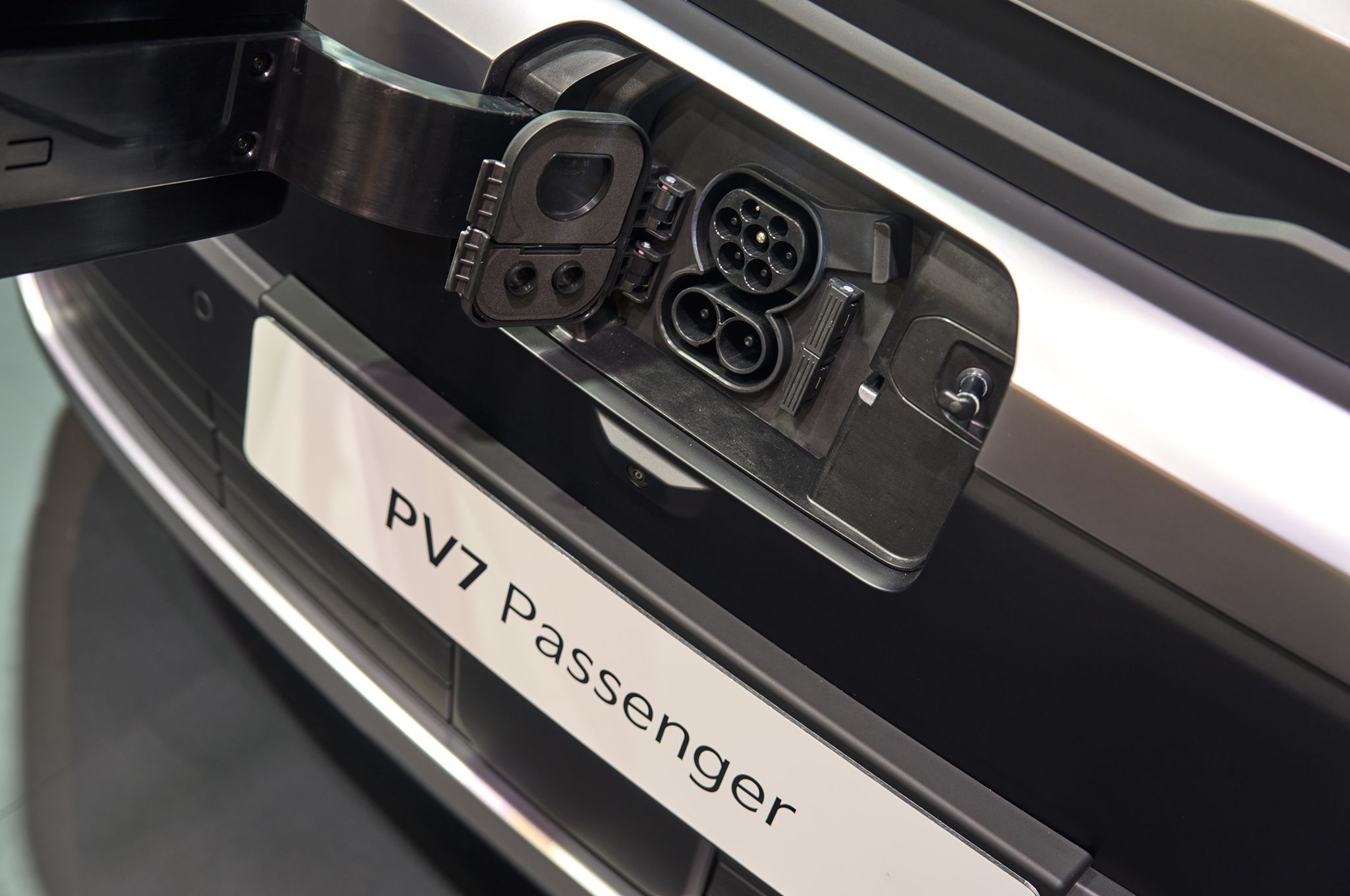
Interestingly, Kia is also offering a second charging port as an option. The standard CCS port – where you can plug into any rapid charger or a normal charger at home or the office - is on the nose. But you can pay a bit extra for an AC charging port at the back of the PV7 Passenger or PV7 Cargo, which could be really useful if you’d rather reverse onto your drive or regular overnight charging spot.
You’ll also get vehicle-to-load on the PV7, with a three-pin domestic socket in the vehicle. Perfect for charging your tools on site, or powering your laptop while you wait for your next fare to arrive at the airport.
How many people does the Kia PV7 Passenger seat?
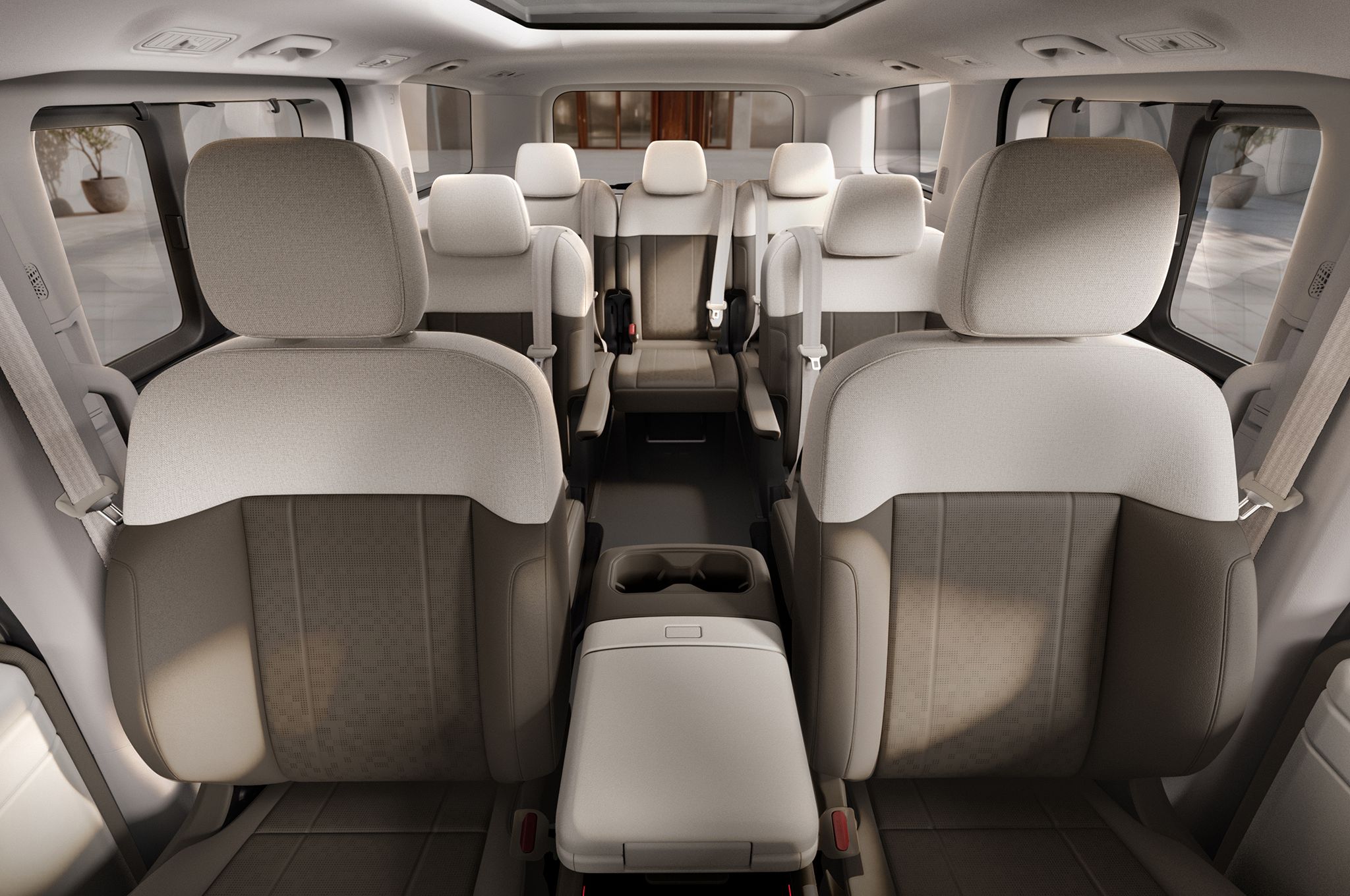
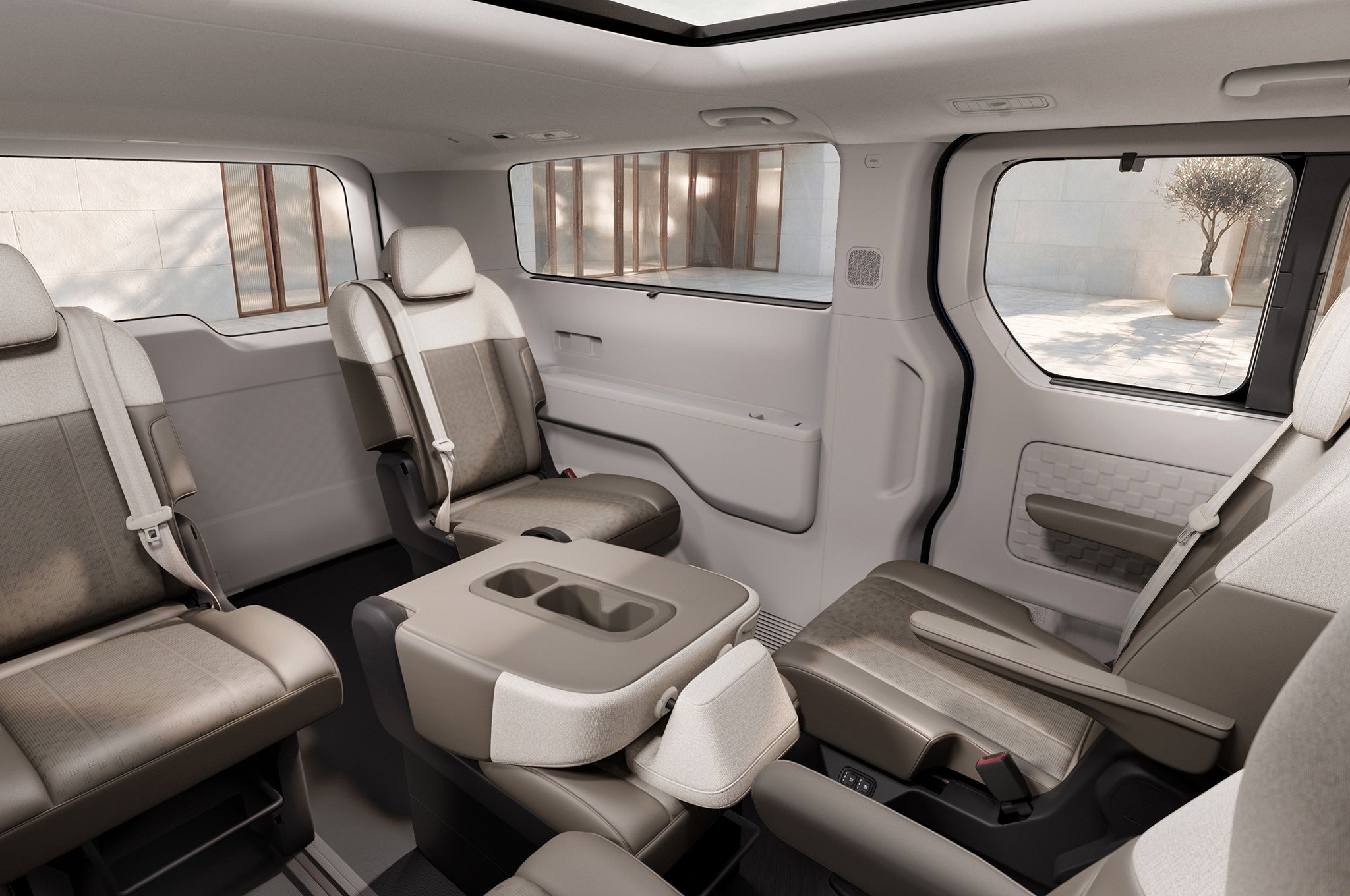
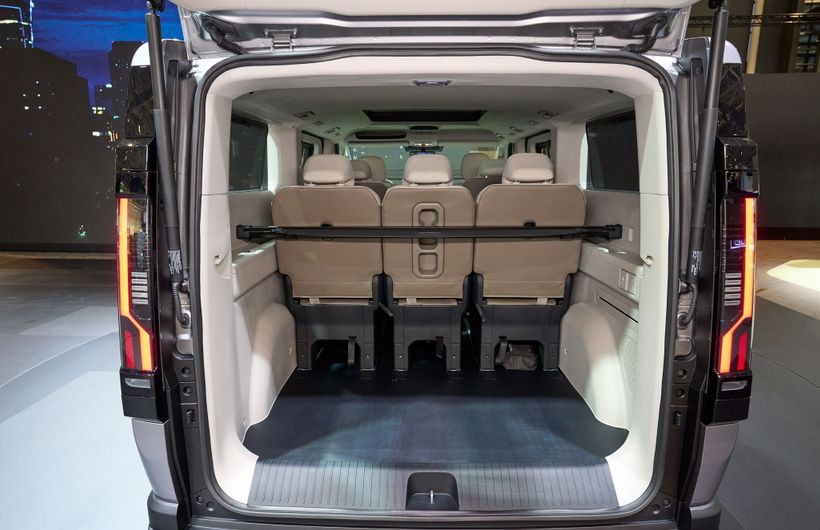
In Europe and the UK, the new PV7 Passenger will seat either seven or nine people depending on which version you go for (or in Korea it’ll seat up to 11!). The seven-seat PV7 comes with ‘long-rail easy remove seats’, so that you can basically turn it into a van if you want to. The nine-seat is also offered with different configurations, including three rows of three-person benches, or you can have a fourth row to give more spacious passenger accommodation – but at the cost of some luggage space.
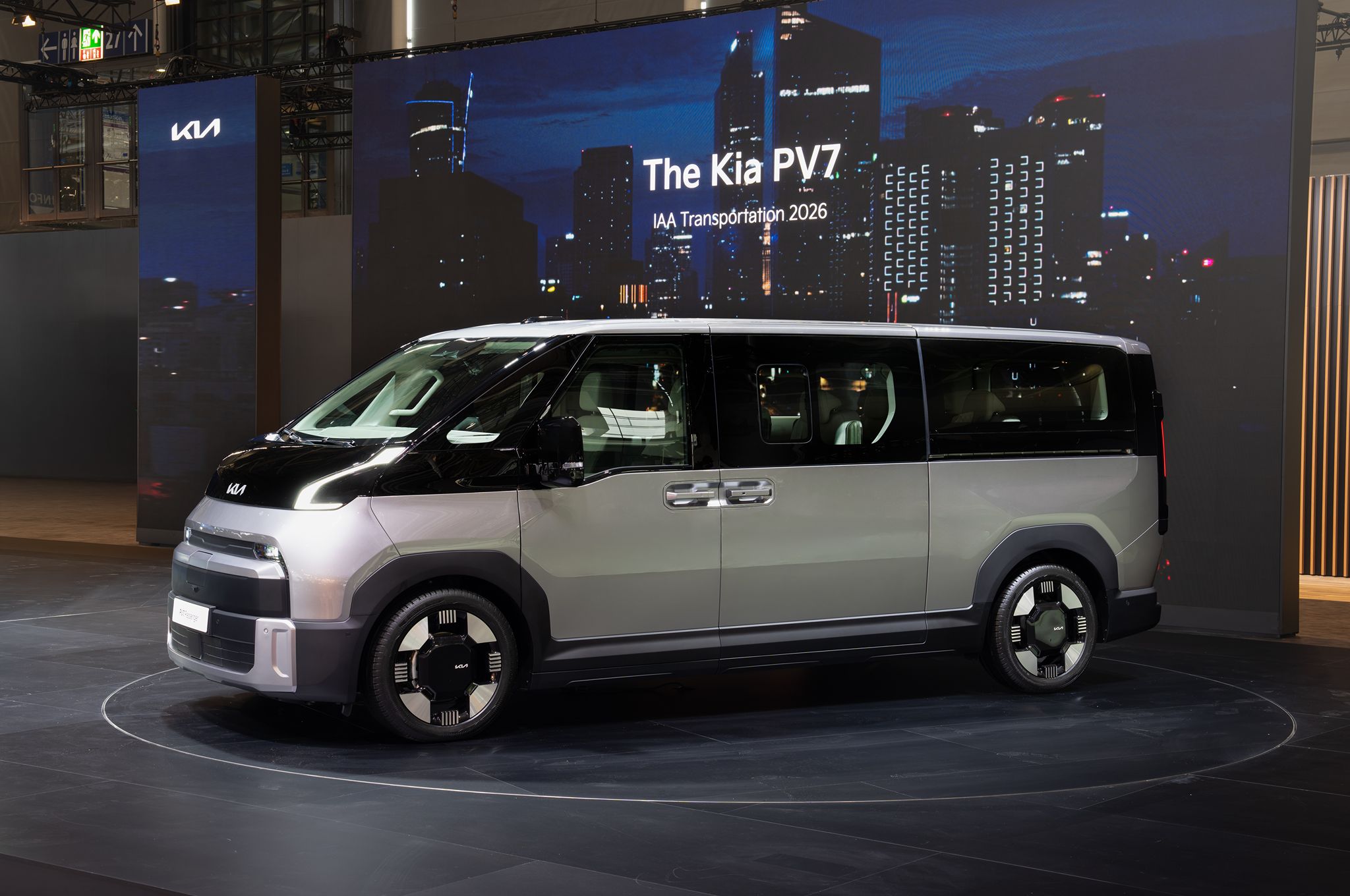
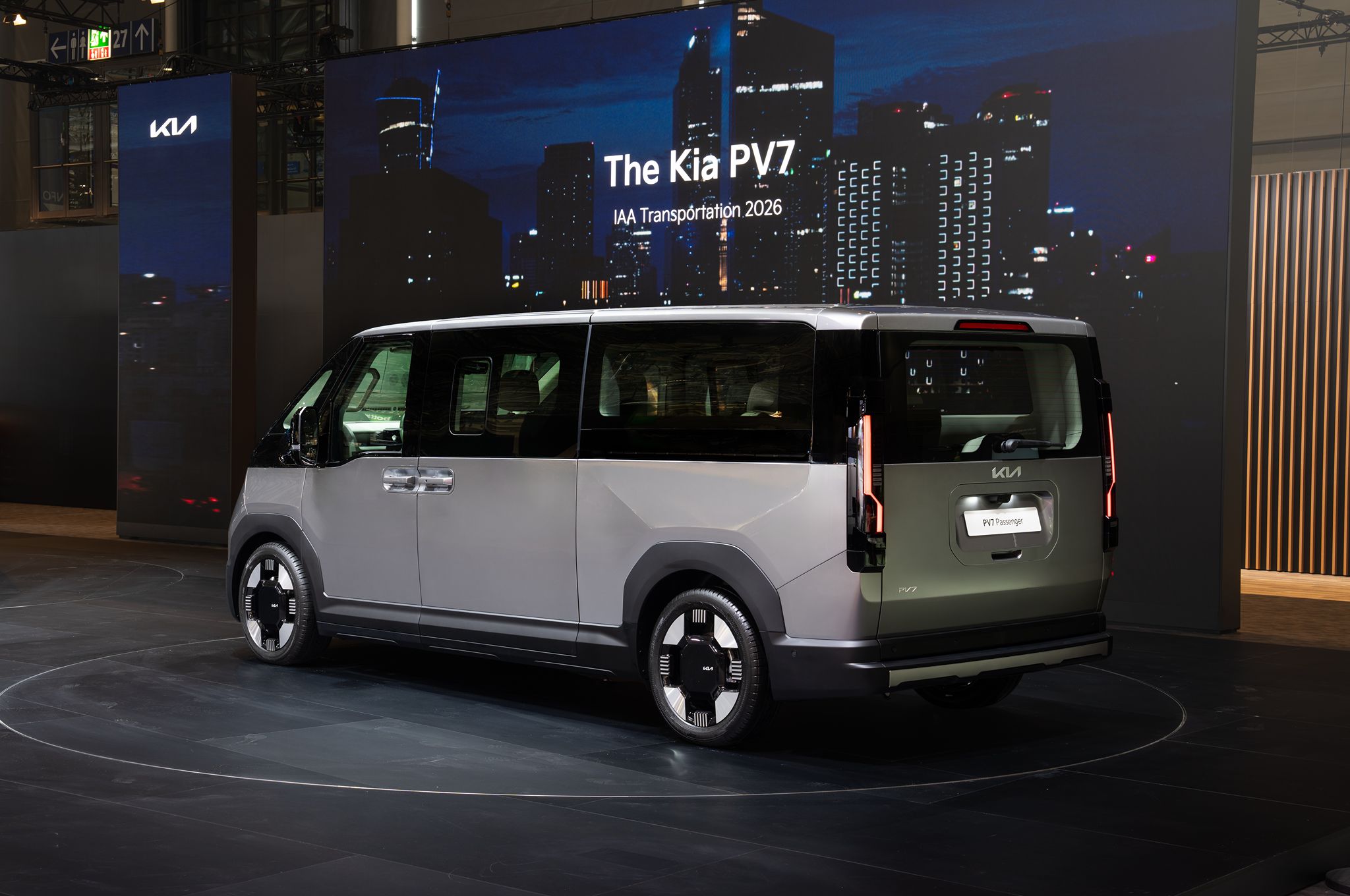
Let’s say it like it is, here: the Kia PV7 Passenger is targeted chiefly at taxi drivers. It’s going to be an airport-run legend, this car. Of course it’ll also appeal to big families, but at 5.35m long it’s not small so you’ll have to really need the extra space or seating capacity to justify this over the smaller seven-seat Kia PV5.
What’s the maximum payload on the Kia PV7 Cargo?
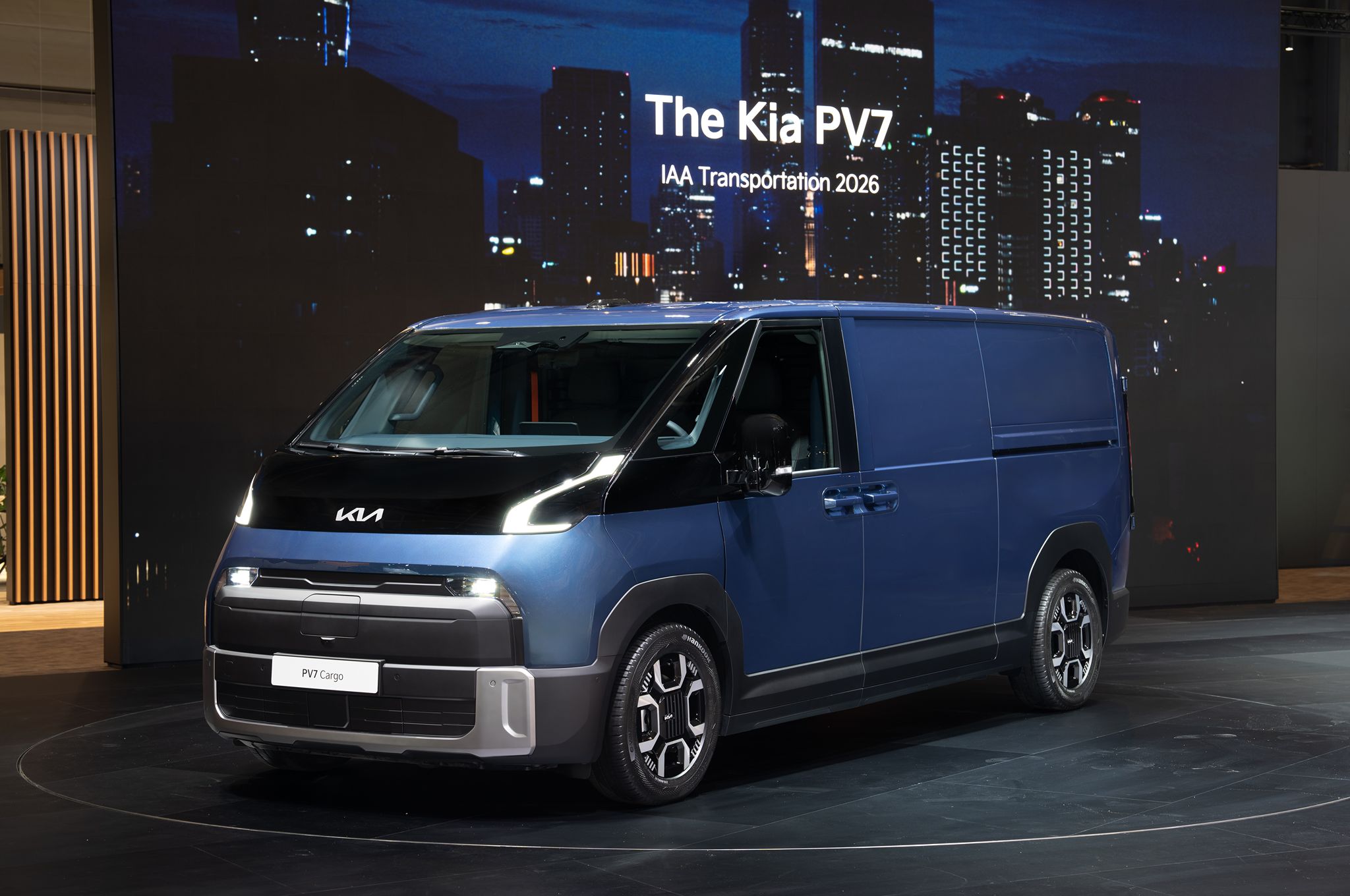
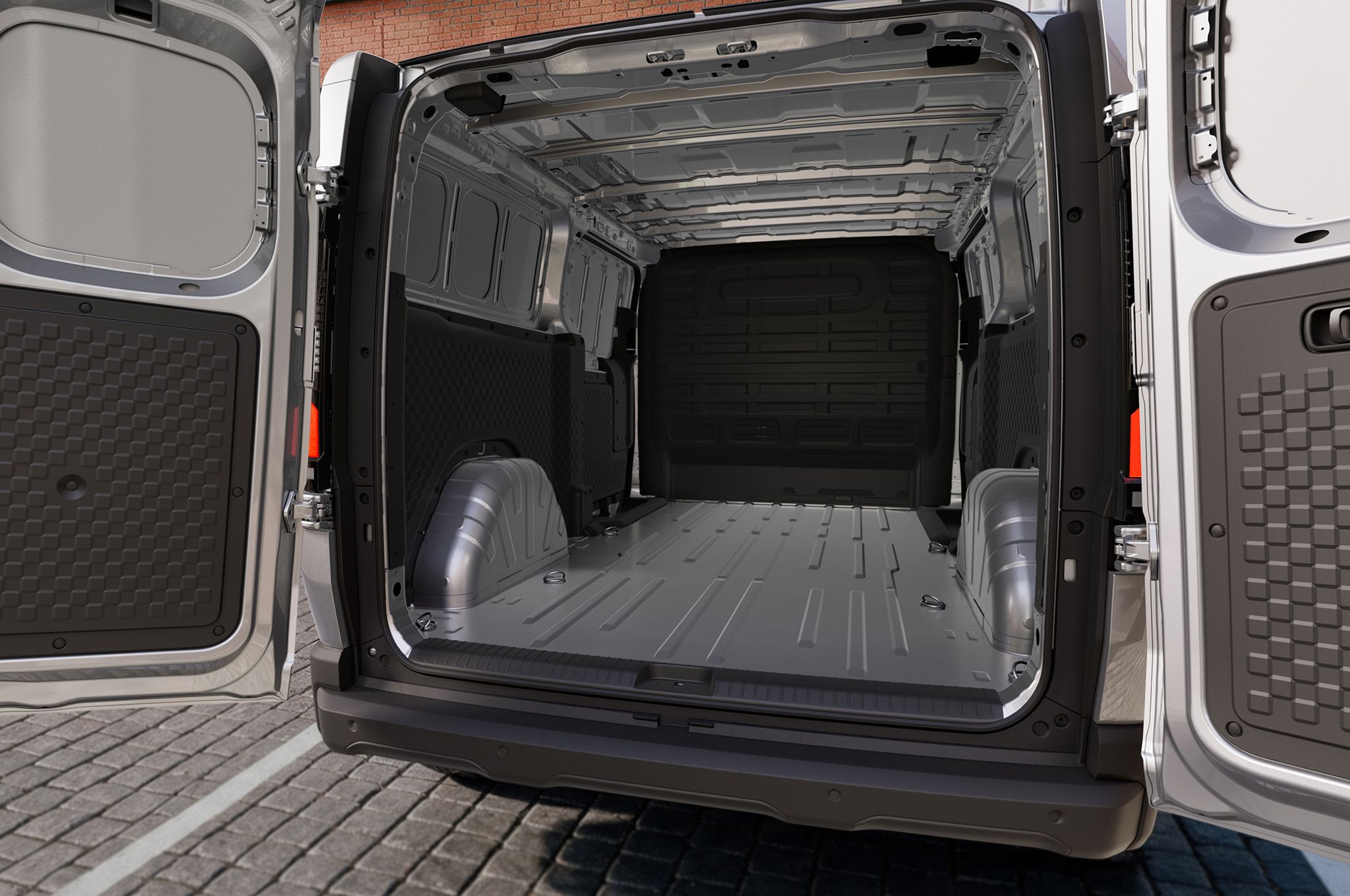
The electric PV7 van will be available as a Long, a High Roof or a Compact model, and globally it’ll be offered with two or three-seat configurations. The Cargo Long has 6.1m3 of cargo room, can take three euro pallets and has a payload capacity of 1,165kg. The PV7 Cargo High Roof provides up to 8.0m3, while the PV7 Compact variant has a payload of 1,200kg. There are no more details yet, beyond that, so we can’t tell you how big the PV7 Compact will be, nor anything further regards range on the PV7 Cargo High Roof – or any of that stuff that we all want to know. You’ll just have to be patient.
What’s the Kia PV7 like inside?
Well, we can’t really tell you because somebody let the work experience kid run air traffic control, and so Nic got stuck at the airport and never made it to see the PV7… Sorry!
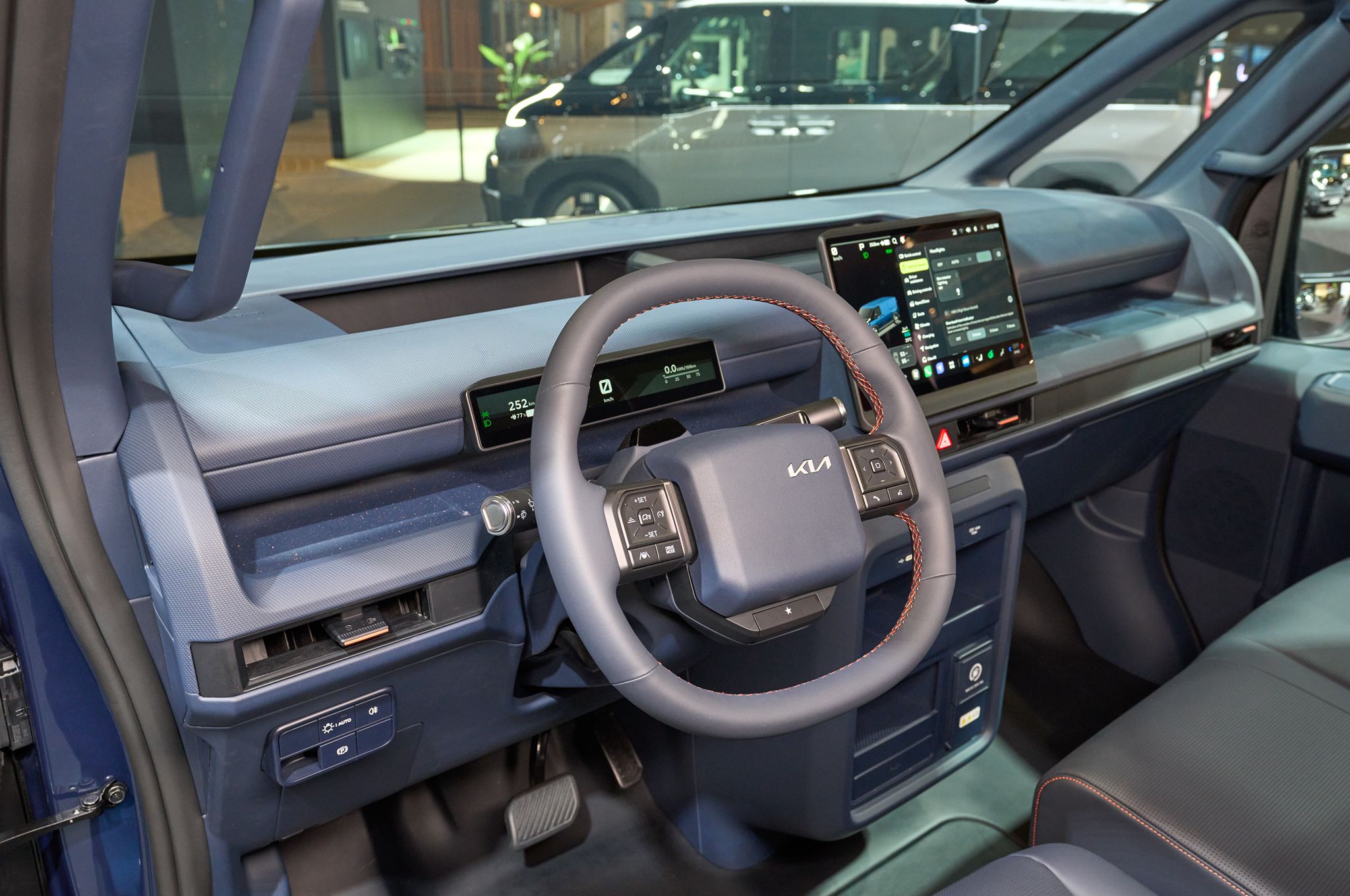
We do know that it’ll get a central touchscreen of either 12.9- or 14.6-inches, and it’ll use the Pleos Connect software. I had a go with the this new system in the Hyundai Ioniq 3 (which gets the same screen size options, and all).
There may well be differences in the Kia, but I did find the Pleos interface very good. It’s an Android-based system, and naturally, you get wireless Apple CarPlay and Android Auto, intelligent charger search function and route planning, voice control and over-the-air software updates. A native nav system may well be optional, or only included on higher-spec PV7 variants, but we’ll have to wait and see.
One of the big features of Pleos Connect is that it now has configurable shortcut buttons, which make it easier to tailor your driver assistance systems and other features.
However, nearly all of the physical buttons have disappeared from the PV7’s dash, and it’s now more screen-dependant. A bit more Tesla-like, really! Although the permanently visible shortcut bar and air-con controls at the bottom of the PV7’s screen do go some way to making up for the lack of ‘proper’ buttons.
What’s the performance like on the PV7, and can I have all-wheel drive?
The electric motor in the PV7 delivers 272hp and 420Nm of torque to the front wheels. There’s no word on what sort of 0-62mph time that delivers, but Kia has said that it’s intending to offer a four-wheel drive version after launch.
When does the Kia PV7 go on sale, and how much will it cost?
Ah, well I’m afraid there’s quite a wait… The Kia PV7 Passenger and PV7 Cargo van range don’t go on sale until the latter half of 2027. Which is annoying, isn’t it? There are no prices for the PV7, yet.
The smaller Kia PV5 Passenger and Cargo range costs from around £33,000 up to just under £42,000 (incl. VAT). We’d estimate that the PV7 range will start from more like £40,000 and will stretch up to well past £50,000 for the long range versions.
![]() The Kia PV7 Passenger is sure to be popular with airport taxi companies
The Kia PV7 Passenger is sure to be popular with airport taxi companies