





If you’ve flown recently, there’s a good chance the pilot had no physical connection to the controls keeping the plane in the air. Fly-by-wire technology is now standard in aviation, and that same thinking is making its way onto our roads.
Brands like Mercedes, Tesla, Lexus and Nio are leading the charge with new steer-by-wire systems, which remove the traditional mechanical link between the steering wheel and the wheels. If this sounds like a step too far, here's what steer-by-wire actually means, why it's not as scary as it sounds, and why we’re not saying goodbye to the steering wheel just yet…
So what's the big news?
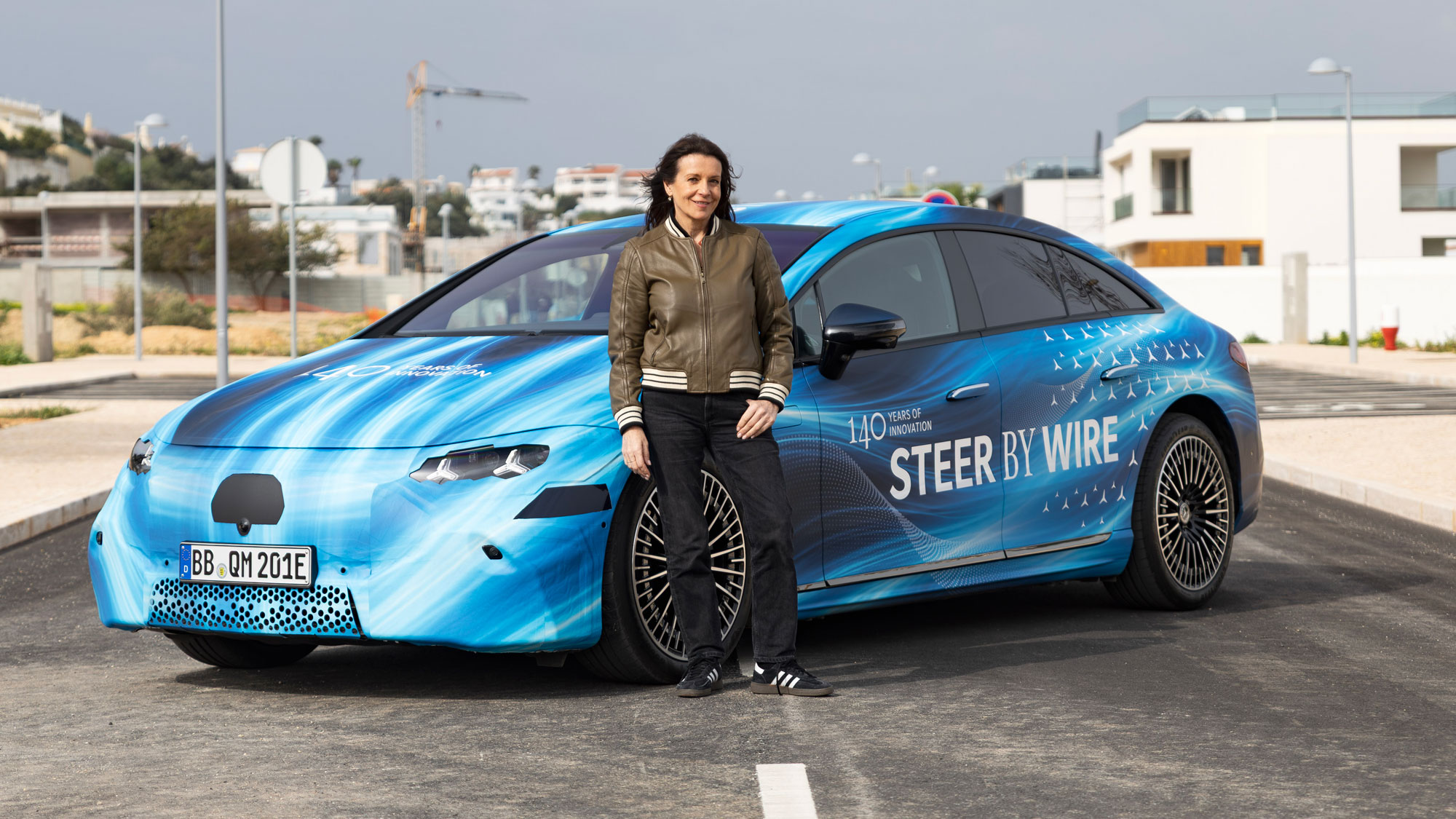
Steer-by-wire is no longer a concept car curiosity, it’s already arriving on driveways. Tesla kicked the door open with the Cybertruck, Lexus dangled the prospect of its One Motion Grip system in the RZ450e, and now Mercedes has become the first German manufacturer to join the party with the 2026 EQS. The tech is spreading fast, and the early verdict from drivers who've tried it is pretty unanimous: it's much better than it sounds.
Right, but what actually is steer-by-wire?
Imagine unplugging the physical rod that connects your steering wheel to your front wheels and replacing it with a clever electronic system instead. That's steer-by-wire in a nutshell. When you turn the wheel, sensors pick up what you're doing and send a signal to a computer, which then tells electric motors to turn the tyres. No metal shaft. No steering column. Just software doing the hard work.
Think of it like how your car's accelerator already works, modern throttle-by-wire systems ditched the old mechanical cable years ago, and you probably never even noticed.
But... is it safe? What if the computer crashes?
This is always the first question, and we can understand why. But here's the reassuring bit: commercial aircraft have been using fly-by-wire technology for over 20 years, with no mechanical backup at all, and it's now considered one of the safest systems in aviation.
Your car works on exactly the same principle. Mercedes claims to have put its new system through over a million test kilometres, across test benches, test tracks and real-world road validation, before putting it in a customer car. And the safety architecture is properly belt-and-braces: there are two completely independent systems running at all times. If one fails, the other takes over instantly, with no drama and no loss of control.
And in the very unlikely event of a complete system failure? In the case of the EQS targeted individual wheel braking via the ESP that can maintain lateral control. Mercedes isn't leaving anything to chance. The Lexus system also carries an emergency power supply that automatically engages should the system lose its primary power supply.
What do the safety experts say?
Mercedes and Lexus reckon that their systems are foolproof. Which they would, obviously. So we asked the safety gurus at Thatcham Research. Dan Harrowell, principal engineer of advanced technologies at Thatcham told us: “Steer-by‑wire systems are a mature and well validated technology that has undergone extensive safety and reliability testing. It represents an evolution of existing electronic power steering systems already widely deployed in passenger vehicles to support driver comfort and ADAS functionality. Similar by‑wire technologies have been used safely in larger vehicles and aircraft for many years.”
What's the actual benefit for drivers?
Quite a lot, as it turns out. Because the system is software-controlled, it can be tuned to feel light and nippy around town, making parking and tight U-turns much easier – while automatically becoming calmer and more stable at motorway speeds. The EQS has a turning circle of just 170 degrees, which is seriously impressive for a large luxury saloon.
Mercedes has also used the technology to resolve a longstanding engineering headache: making a car feel both sporty and comfortable at the same time. The steering ratio now adapts flexibly to different situations, so the EQS can feel agile when you want it to and settled when you don't. Combined with the rear-axle steering – where the back wheels steer in parallel with the fronts at higher speeds – the result is a car that feels more together than ever.
There's another welcome bonus too: those annoying vibrations from rough road surfaces that used to rattle through a traditional steering wheel? Gone. The software simply filters them out, while still calculating genuine tyre-road contact feel through the restoring forces of the steered wheels. You get the useful feedback, without the irritating vibes.
Mercedes has also used the technology to resolve a longstanding engineering headache: making a car feel both sporty and comfortable at the same time. The steering ratio adapts flexibly to different situations, so the EQS can feel agile when you want it to and settled when you don't. Combined with the rear-axle steering, where the back wheels steer in parallel with the fronts at higher speeds, the result is a car that, in theory, offers the best of both worlds.
There's another welcome bonus too: those annoying vibrations from rough road surfaces that used to rattle through a traditional steering wheel? Well, they’re gone. The software simply filters them out, while still calculating genuine tyre-road contact feel through the restoring forces of the steered wheels. You get the useful feedback, without the irritating vibes.
What does it do to the interior?
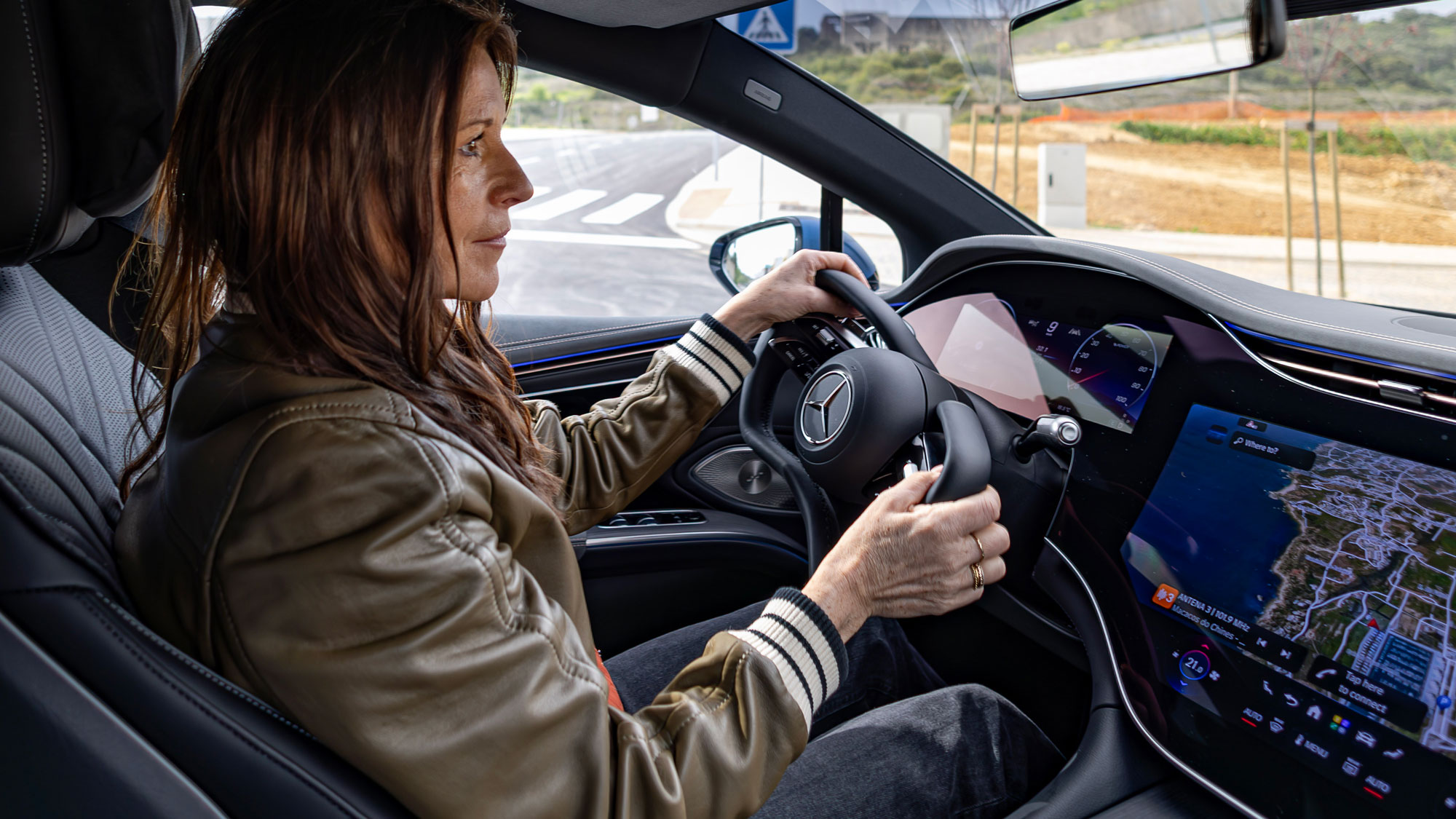
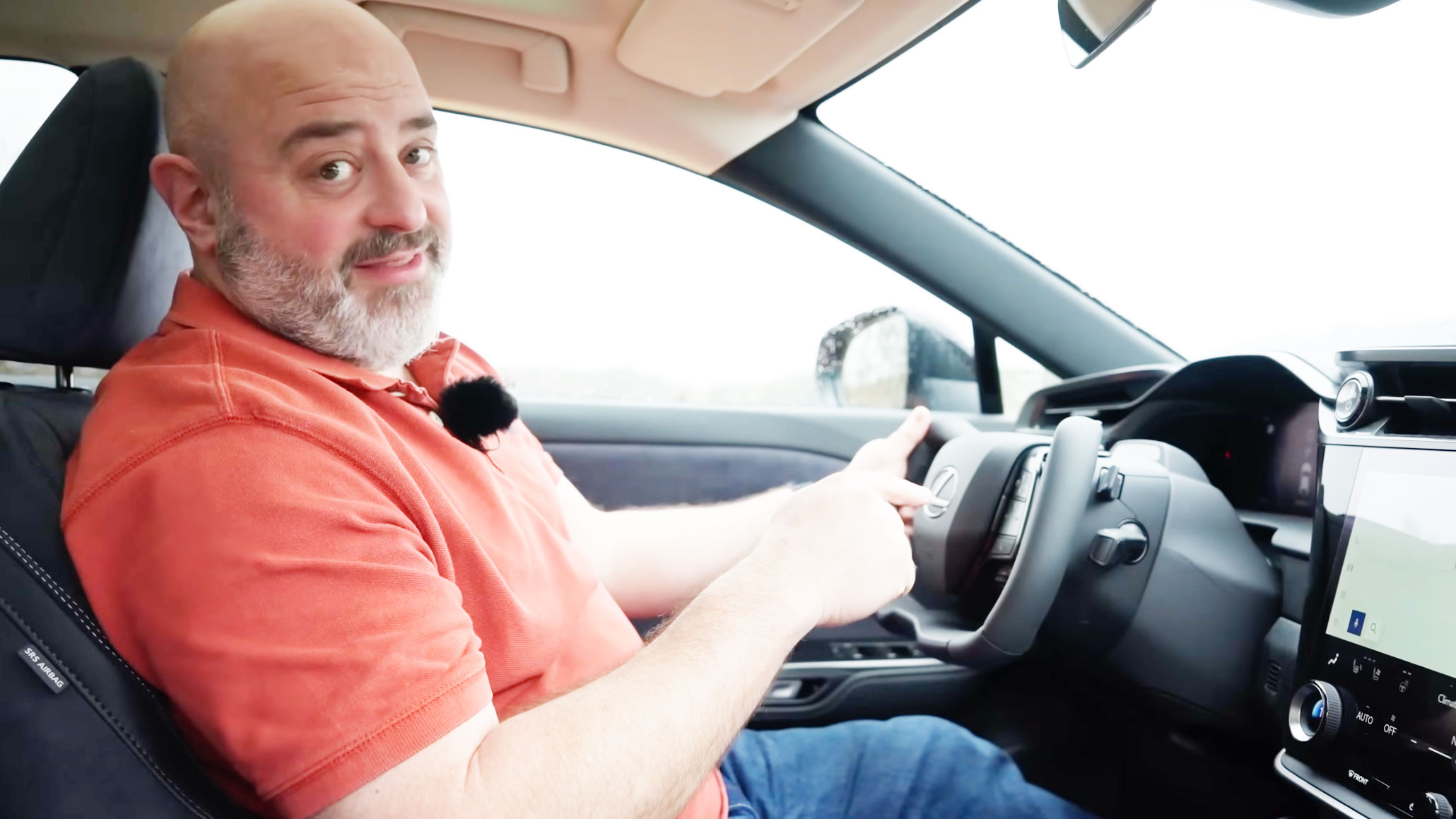
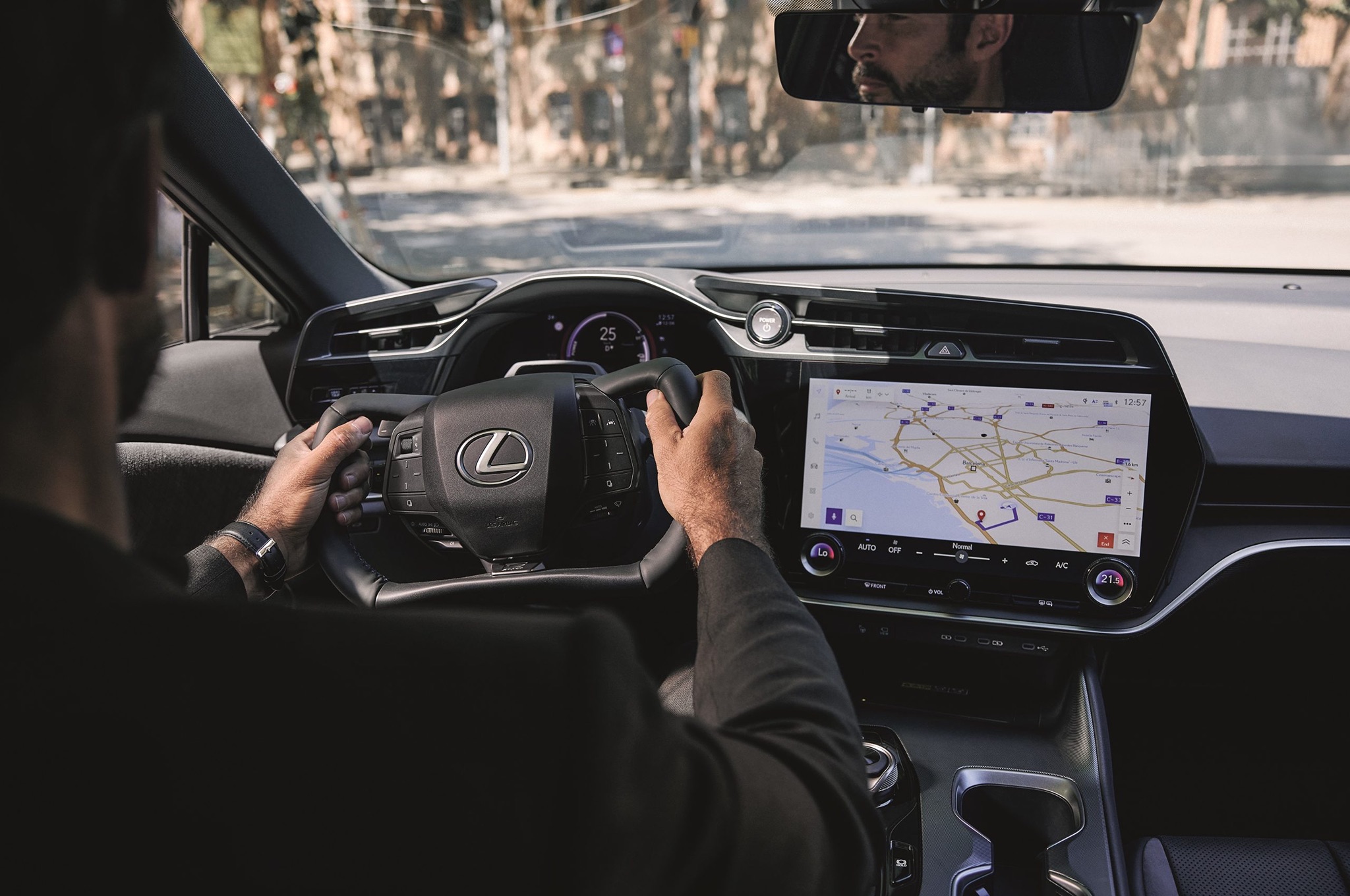
This is where things get genuinely interesting from a design point of view. With no steering column eating into the cabin, Mercedes has been able to fit a flatter, more compact steering wheel that opens up the space in front of you, improves your view of the driver display, and makes getting in and out noticeably easier. Mercedes calls it the "Welcome home" feeling, and for once, that's not just marketing fluff.
Longer term, the implications are even bigger. Mercedes engineers have confirmed the input device could theoretically be a gaming-style controller or joystick. For now they've kept something wheel-shaped to feel familiar, but the door is firmly open.
And, for once, there’s good news for us British buyers. Because there is no physical steering column to package, making right-hand drive versions of cars is a lot easier – and cheaper. You won’t really notice a difference on a £60k Lexus or a £90k Mercedes where conversion costs are more easily absorbed, but for much cheaper, £20k cars where budgets are far tighter, the removals of additional costs for moving steering columns and creating new steering racks could contribute to lower purchase prices.
So will every car maker start going mad for yokes?
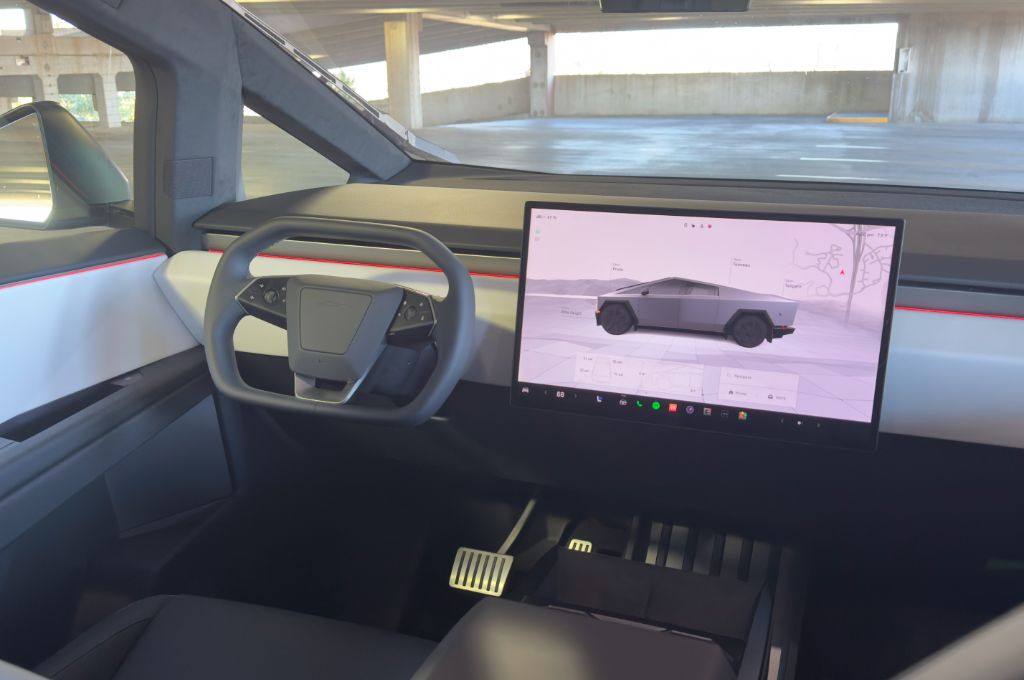
Traditional steering wheels need to be big and round because mechanical systems require several full turns lock-to-lock. With steer-by-wire, the steering ratio is so much quicker and more precise that you simply don't need all that movement. A yoke, that half-wheel shape you'll recognise from Lexus, Tesla and now Mercedes, makes perfect sense when you're only turning through 170 degrees. Though they might not catch on now that the Chinese authorities have banned them from 2028.
Does it actually feel connected to the road, or like driving a video game?
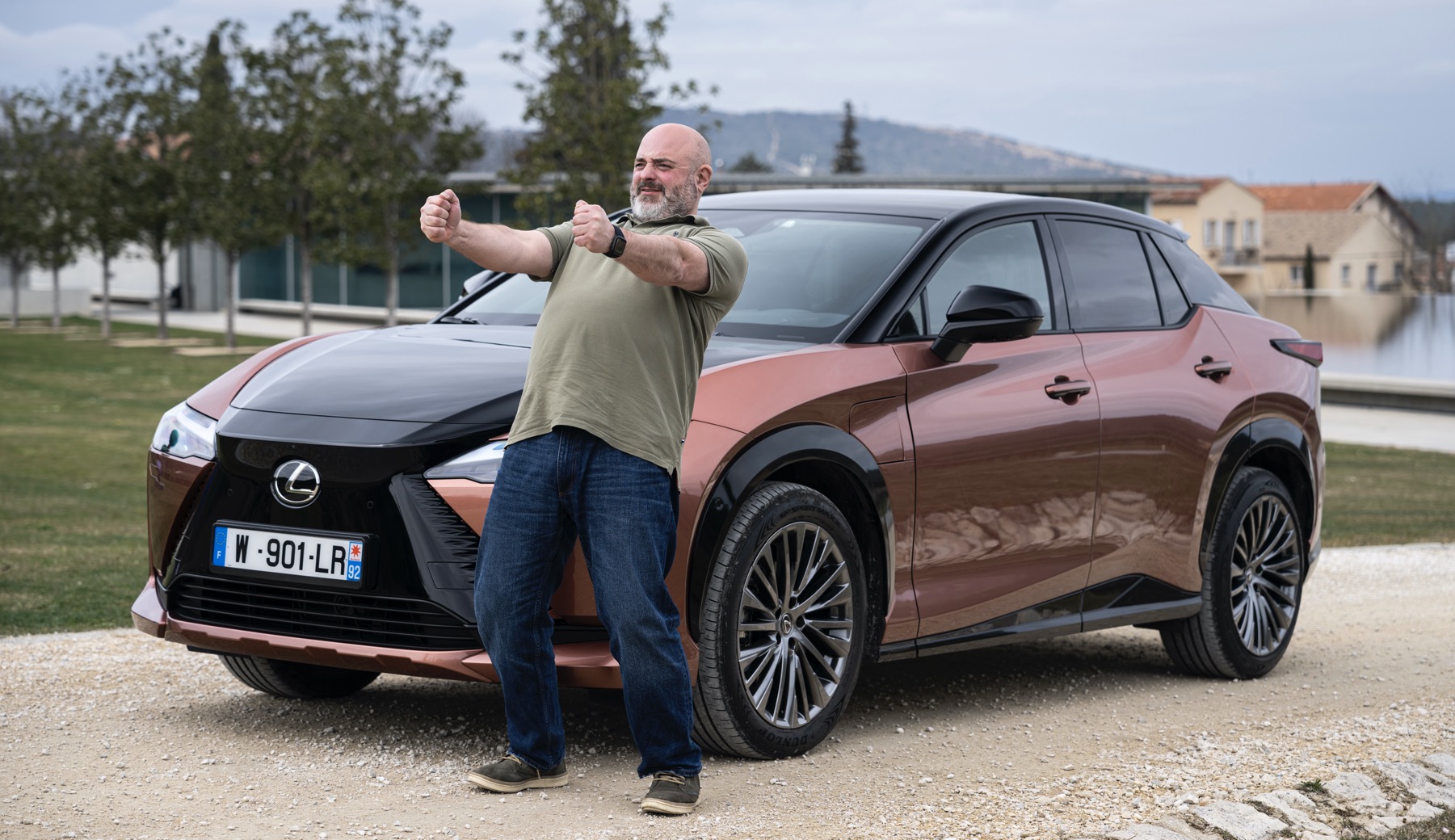
Surprisingly connected, actually. Mercedes has put real effort into programming the software to feed information back through the wheel, so you still get a genuine sense of what the road surface is doing beneath you. When Ginny drove the EQS, the feel through the steering was one of the first things that impressed her. Tom was equally impressed when he drove the Lexus RZ450e fitted with the brand’s One Motion Grip system three years ago.
Done well, steer-by-wire doesn't feel like a video game at all, it feels like a very well-sorted, confidence-inspiring car. Mercedes describes the result as "precise, intuitive and effortless”, and having driven it, that's hard to argue with.
Do you have to have it on the EQS?
No. Mercedes is keeping steer-by-wire as an option rather than making it standard fit. If you'd prefer a conventional electromechanical steering setup, that's still available. The steer-by-wire system is offered across all EQS powertrains, but it comes paired with the 10-degree rear-axle steering, so it's very much positioned as the premium, flagship specification.
Will other cars get it? Why can’t I buy a Lexus with it?
As EV platforms become increasingly software-led, removing mechanical systems reduces complexity, weight and cost, all things that make steer-by-wire an attractive prospect even for mainstream models. Mercedes has said the technology will filter into other models in its lineup, and other manufacturers won't want to be left behind. As self-driving technology develops further, rethinking the steering interface becomes not just desirable but inevitable.
And what of Lexus – who dangled the tech in front of our eyes three years ago? Despite a rave review from Tom (and others) when he tried the system on the RX450e launch, One Motion Grip has yet to materialise on the Lexus options list for EU buyers. While the tech is offered to customers in Japan, it is still officially ‘coming soon’ while the tech is being perfected.
Where is Tesla in all this?
Good question. The Cybertruck proved that the American brand has been able develop a decent drive-by-wire system. We’re unlikely to see that tech transferred to the existing Model 3 or Model Y any time soon, but the forthcoming Cybercab will get it. And Tesla being Tesla, it doesn’t end there. The initial plan was to build the Cybercab without a steering wheel, pedals or mirrors.
However, current US regulations limit the production of cars without physical controls to 2,500 units per year, Tesla is understood to be having a rethink and adding a steering wheel and pedals back in. As for a European launch date, well, don’t hold your breath. Regulatory approval for self-driving is at a very early stage and it’s unlikely that any meaningful progress will be made much before 2028.
Who will be next?
Chinese brands are well advanced with the technology, but as yet, customers in Europe are yet to be offered it. The Nio ET9 currently offers the tech (developed by German firm ZF) while Chinese authorities are finalising a national steer-by-wire standard which comes into effect in 2026. BYD, Xpeng, Geely and Xiaomi are all known to be working on systems, so expect a wave of new models with the tech to appear before the end of the year.