





If you’re making the move from a petrol or diesel car to an EV, the biggest change you’ll notice is how you “fill up”. For some drivers, that’s also where the concerns start. After years of using petrol stations, the idea of charging an electric car can seem unfamiliar and even a little intimidating. The good news is that it’s much simpler than many people expect.
Yes, there’s some new terminology to get your head around and a few new skills to master, but in practice it’s no more hassle than plugging your phone in every night.
Charging at home
In very simple terms, electric cars can be charged at two speeds - slow and rapid. You’ll do the former at home, workplace or anywhere where you see an AC charge point.
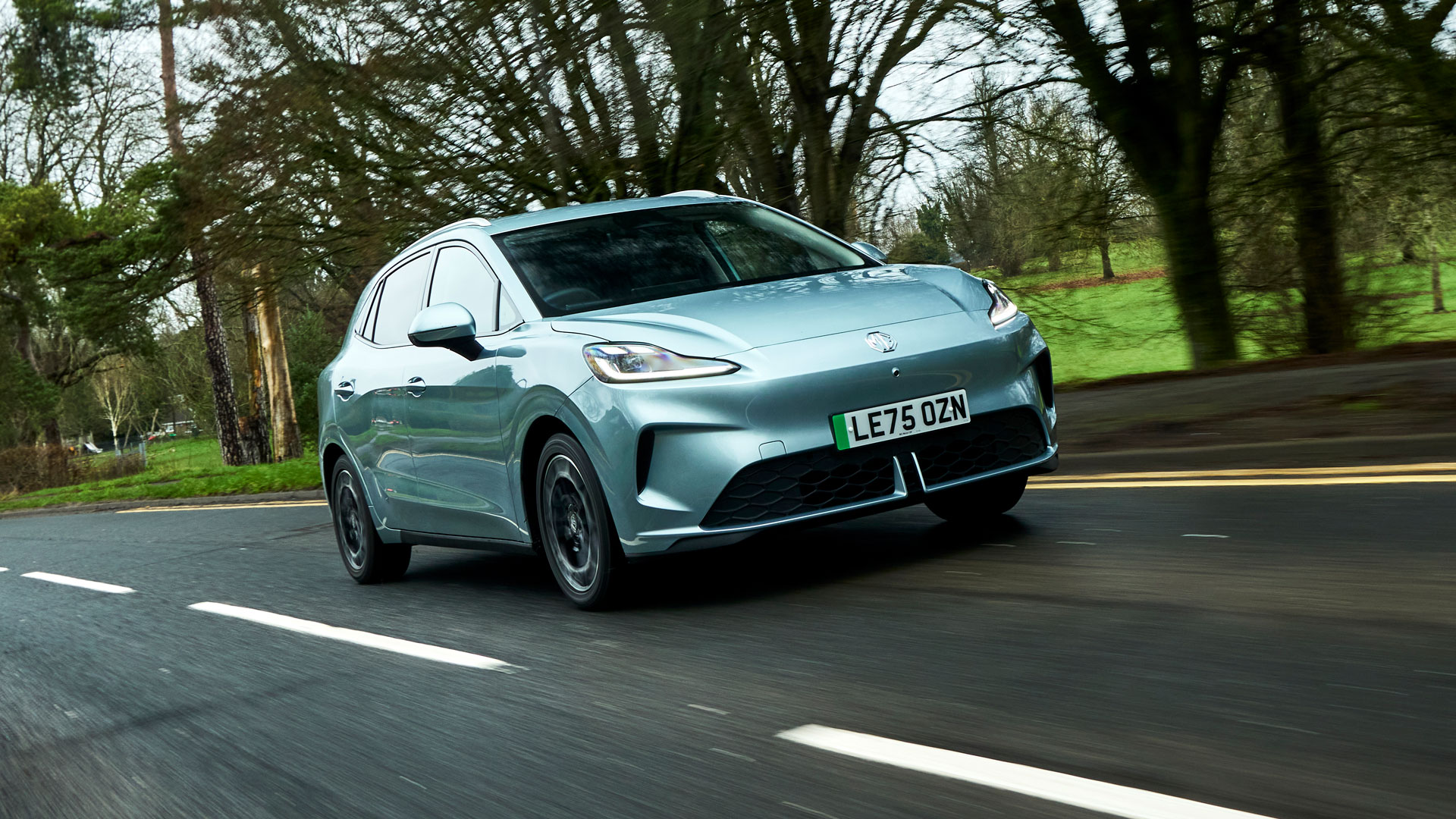
The most effective way of charging your car at home is with a dedicated wallbox. These are designed specifically for charging EVs and are three times as powerful as the normal domestic plug sockets that power your toaster. Any dedicated home car charger has to be installed by a qualified electrician. They come with a host of features such as scheduled charging that allows you to take advantage of cheap, overnight power. If we take an MG4 EV Urban Long Range as an example, a full charge on a home wallbox will take around nine hours.
In an emergency, you can also charge via a standard three pin domestic plug (back to the that socket that you use for your toaster). To do this, you’ll need a bit of kit called a Mode 1 charger. These are sometimes referred to as ‘Granny’ chargers and not all car makers supply them when you buy a car. You should also be aware that Mode 1 chargers are the slowest way of charging your car. If we take our MG4 EV Urban Long Range with a 53.9kWh (nominal) battery, for example, a full charge will take 28 hours to complete. That’s very slow, of course, but it can still be really useful – especially for trickle charging overnight while you’re staying away with friends or on holiday, without access to a car charger.
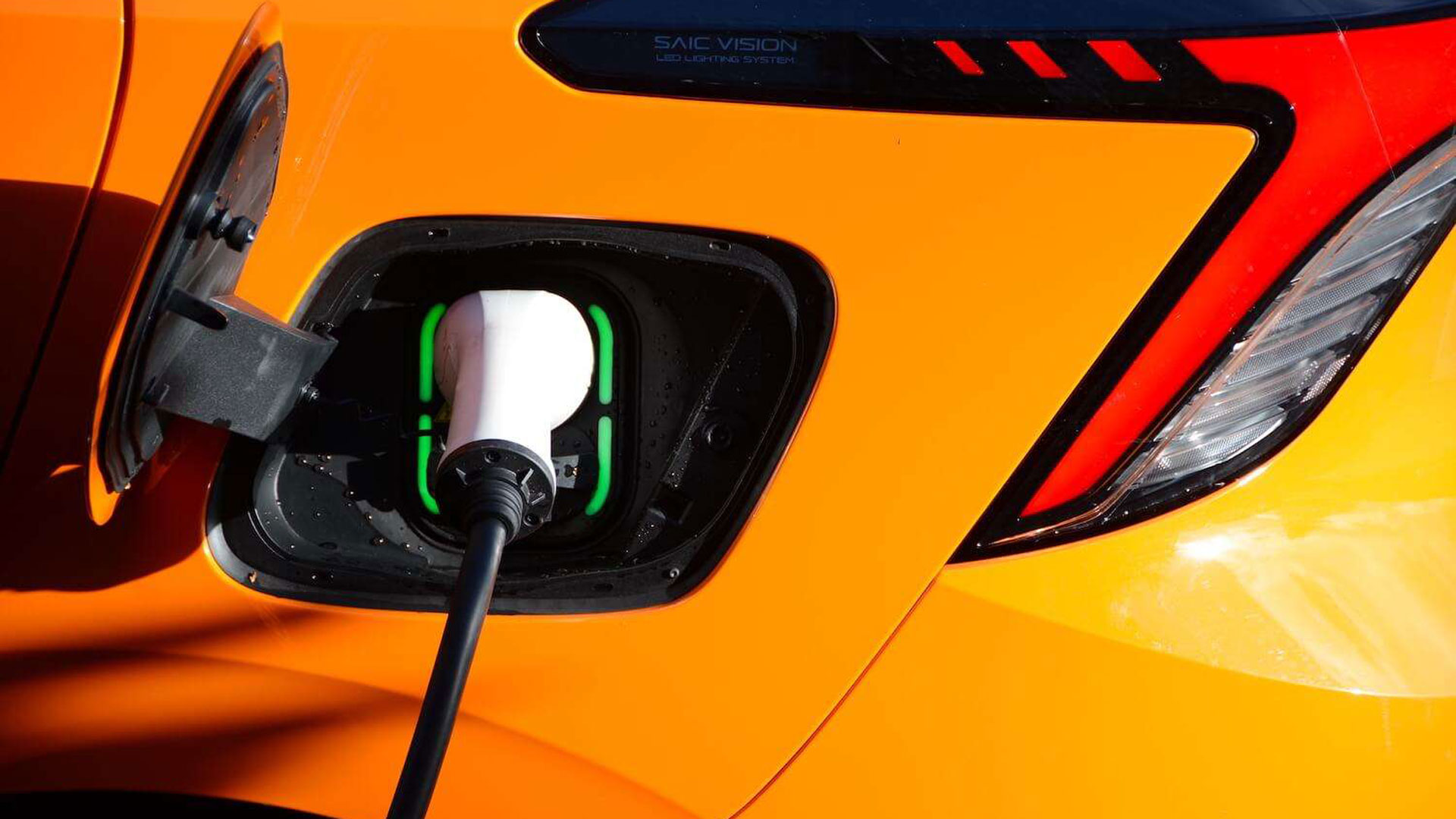
One of the few confusing aspects of having an electric car is cable choice. Put simply, there is one kind of cable for slow charging and another for rapid charging. You don’t need to be worried about the latter, because these are ALWAYS attached to the rapid charger, so you don’t need your own. And nearly all EVs use the same, universal socket type for home charging and rapid charging (Type 2 and CCS, if you’re keen to know) so you needn’t worry about compatibility; your new MG will be able to charge at just about all public or home car chargers in the UK and Western Europe.
For charging on a home wallbox, you’ll need what is known as a Type 2 cable. This has round connectors at either end. One plugs into the charger, the other into your car. Some home chargers come with cables already attached (or tethered to use the correct terminology), which makes life a little easier. All sockets and plugs are 100% waterproof so don’t worry about plugging in or leaving your car charging if it’s raining.
Charging away from home
Home charging is simple and cheap, but what happens if you can’t install a charger at home, or need to fill up mid-journey?
That’s when you’ll need to use a DC public rapid charger. These come in all shapes and sizes but they all do the same thing – put a lot of electricity into your battery in a short space of time. Rapid chargers are able to generate extremely high power outputs – significantly more than a domestic supply, which means charging sessions are measured in minutes rather than hours. Where your 7kW home car charger will be able to top your EV up with around 30 miles of range per hour, rapid chargers can deliver up to 350kW, or roughly 200 miles of range every 15 minutes.
Finding a public rapid charger is pretty simple. You can simply search on the MG4 EV Urban’s nav system, and it’ll show you local rapid chargers and will even give you live info on which ones have charging stations that are free. There are also loads of free smartphone apps that offer intelligent charger searching, journey planning and more. We’d recommend Octopus Electroverse and ZapMap as great places to start. As all chargers are ‘online’, you can see how many chargers are in use before you decide to stop.

Unlike petrol or diesel cars, EVs have a maximum rate at which they can be charged. If we take our MG4 EV Urban Long Range as an example, the peak charging rate is 87kW. Don’t worry if you arrive at a rapid charger and notice that it has ‘150kW’ emblazoned over it. Your car will only take as much power as it wants, so you can plug in safely at ALL public rapid chargers.
The speed at which your car will charge fluctuates throughout the charging session. The car controls the rate at which the battery is charged and only allows high levels of charge when the battery pack is at the perfect temperature. It’s usual to see quite low speeds when you first plug in (the battery will be cold) and then it’ll get faster, before dropping off again when you reach around 70- to 80%. This is what’s called a ‘charging curve’.
Although rapid chargers come in all shapes and sizes, they all work in the same way. You plug in, choose to pay by contactless or through an app and that’s basically it. When you want to stop, you either end the session on the charger or by tapping your contactless card on the pad. All rapid chargers have tethered cables that have a larger plug on the end known as a CCS connector, and as we mentioned – almost all EVs use the same sockets, these days, so your new MG will be compatible with every public rapid charger.
How long will it take to charge your car? Well, that largely depends on how much charge you had to start with, along with other factors such as the ambient temperature (EVs can charge slower when it’s really cold). On a 150kW DC rapid charger, a car like an MG4 EV Urban Long Range can charge from 10-80% in as little as 30 minutes.
Vehicle to load
Okay, we’ve covered the processes involved in adding charge to your car. What if you want to use the energy stored in your car’s battery to power other things? Well, with something called Vehicle to Load (V2L), you can do just that. Most current MG electric models offer V2L, allowing the car’s battery to power external devices such as camping equipment, power tools – or maybe you want to charge your e-bike! - via a dedicated adapter.
With the MG4 EV Urban, you’ll just need the adaptor to make the most of this function. Plug it into the car’s charging socket, and that gives you a normal three-pin plug that you can use to power any normal electrical device. And don’t worry – you can set a minimum charge parameter so that the car doesn’t deplete its battery too much and leave you unable to get home. Useful, eh?