All electric cars are mandated to have a certain level of assistance systems and safety equipment – airbags, autonomous emergency braking and more – as any large volume vehicle that’s on sale. It’s also worth pointing out that there are more than 2 million EVs on the roads in the UK, with around eight to nine million in Europe.
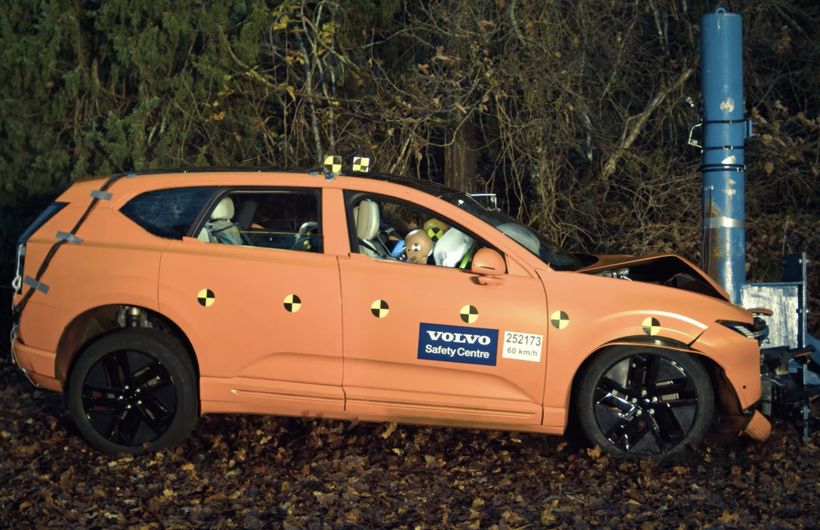
So, electric cars have already proven to be safe – and they're only getting safer, as with all new cars. Volvo even crashed its new EX60 into a 'tree', recently, to show how safe it is!
But it is also true that a lot of buyers are still worried about aspects of EV safety, especially thermal runaway, which is where the battery cells are exposed to oxygen and can catch fire in a chain reaction as each cell ignites the next.
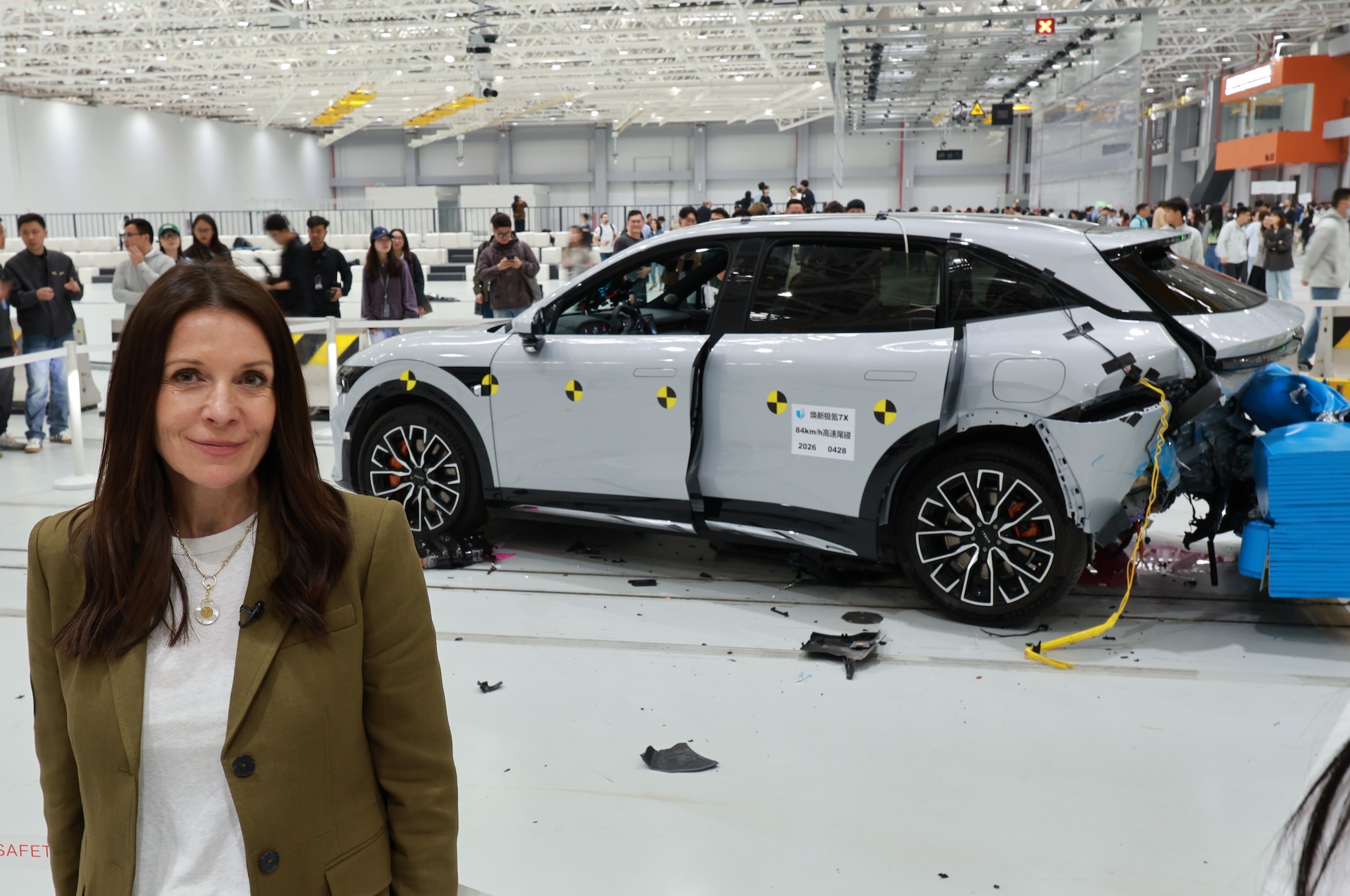
We went to Zeekr’s testing facility in China to watch a high-speed crash test and find out more about how safe an electric car is in a crash.
How safe is an electric car in a crash?
As we’ve said above – it’s very safe! But it was a really shocking thing to watch a crash test like this one.
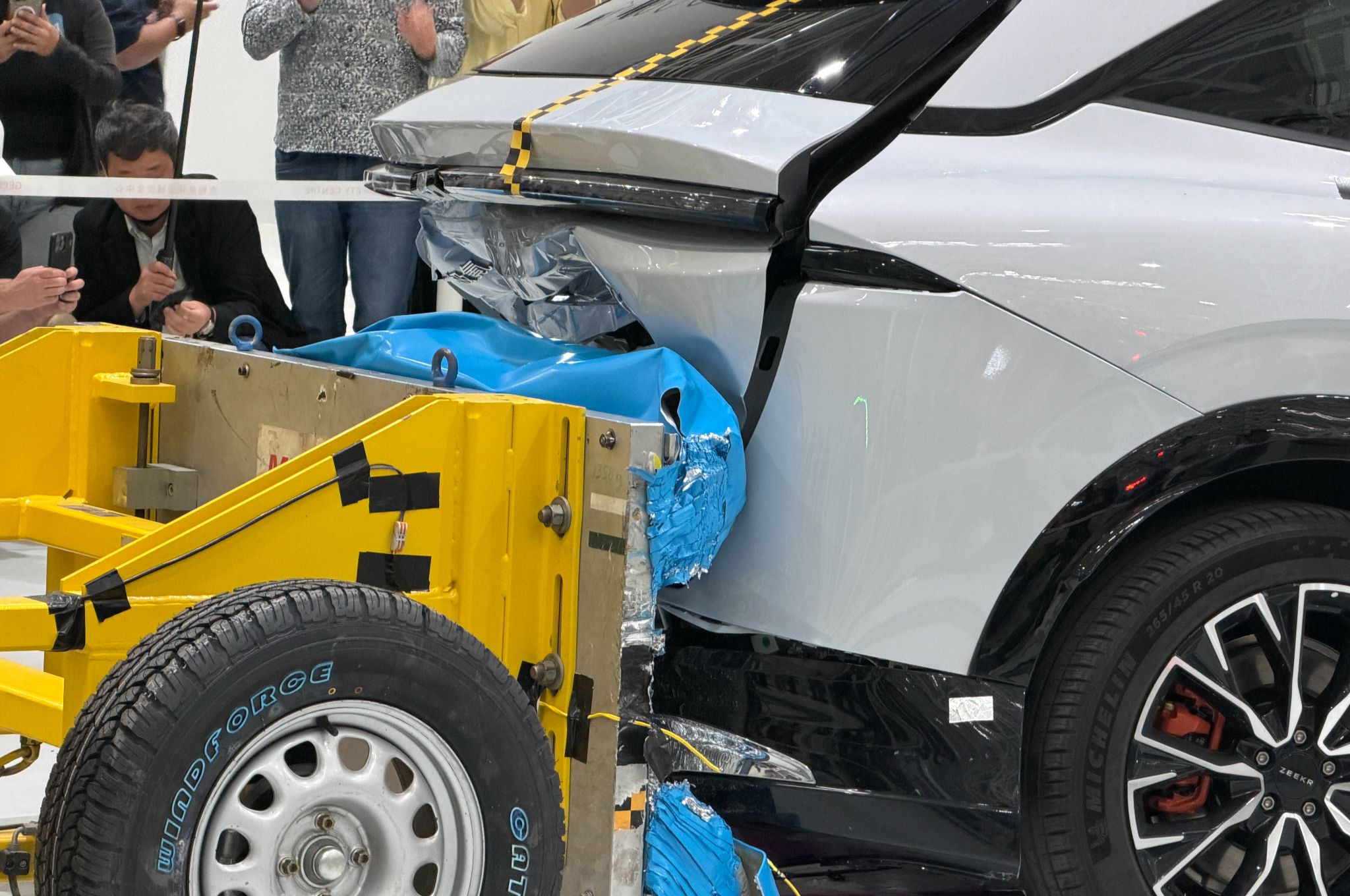
Zeekr showed a crash test where it drove a rig into the back of the Zeekr 7X SUV at 52mph (84kph). The noise is hard to describe, especially as it echoes around Zeekr’s huge facility.
Chinese crash test safety looks to see that the passenger cell remains in tact, and that the doors can still be opened after the impact. The Zeekr 7X passed all of those expectations, and you can actually see in the video of the crash test above that the doors are still in tact and can be opened, and there’s no compromises or danger of the battery pack catching fire.
We stayed in the facility for hours after the test, and the battery remained completely inert.
Why are EVs more expensive to insure, then?
Ah, well that’s a good question. We asked Fraser Lyall, general insurance policy adviser at the Association of British Insurers, who said: “Our members fully support the roll-out of electric vehicles and efforts to transition to net zero. Insurance is priced according to risk, and evidence shows that claims for EVs are around 25% more expensive and repairs take approximately 14% longer than for their ICE equivalents.
"We have consistently highlighted the need for government action to better fund and support the reskilling and retooling of the repair sector so it can meet the demands of an increasingly electrified vehicle fleet. The market remains competitive with cover for electric vehicles available from a wide range of providers. When looking for insurance, we would always recommend shopping around to find a policy that meets your needs, not just based on price.”
In short, it’s not safety aspects that are affecting EV insurance premiums, so much as potentially higher repair costs. And, it’s not even the high voltage battery that is often the cause of that. It can be smaller things such as damage to charging ports in a low speed parking accident, which can be comparably more expensive than the same damage to a non-plug-in vehicle.
Overall, EV safety has been fully proven – not just in the test labs, crash test facilities and development procedures, but also in the last decade and more of mainstream electric car use.
And if you’re still worried about EV battery fires, it’s worth looking at the statistics as it’s been shown that electric cars are far less likely to suffer a fire than a petrol or diesel car. The Swedish Civic Contingencies Agency found that there were only 3.8 fires per 100,000 electric cars, compared with 68 fires per 100,000 combustion-engined cars.
Similarly, in the first half of 2025, Norwegian fire services recorded a fire rate of just 0.034 for BEVs, while for combustion vehicles it reached 0.195. Statistically, that means that combustion cars in Norway catch fire almost six times more often than electric cars.
Are EVs better or worse than a petrol car for pedestrian safety?
There's not really any difference! A 2025 study by the University of Leeds found no significant variation in pedestrian casualty rates between electric cars and traditional petrol or diesel cars on UK roads. Data, collected between 2019 and 2023, showed that casualty rates involving pedestrians were very similar, with 57.8 per billion miles of driving for EVs and 58.9 for non-EVs.
![]() The Volvo EX60 is one of many EVs that have scored the full five stars in Euro NCAP tests
The Volvo EX60 is one of many EVs that have scored the full five stars in Euro NCAP tests