





If you’ve ever wished that EVs would stop getting bigger, heavier and more complicated, Dacia has just brewed something very special in its design lab. Say hello to the Dacia Hipster – a super-compact, super-square concept that’s so adorable it looks like it was doodled by someone daydreaming in a meeting. But behind the cute styling and blocky silhouette lies a serious car that could well introduce a completely new category of cars.
Small is beautiful – and very square
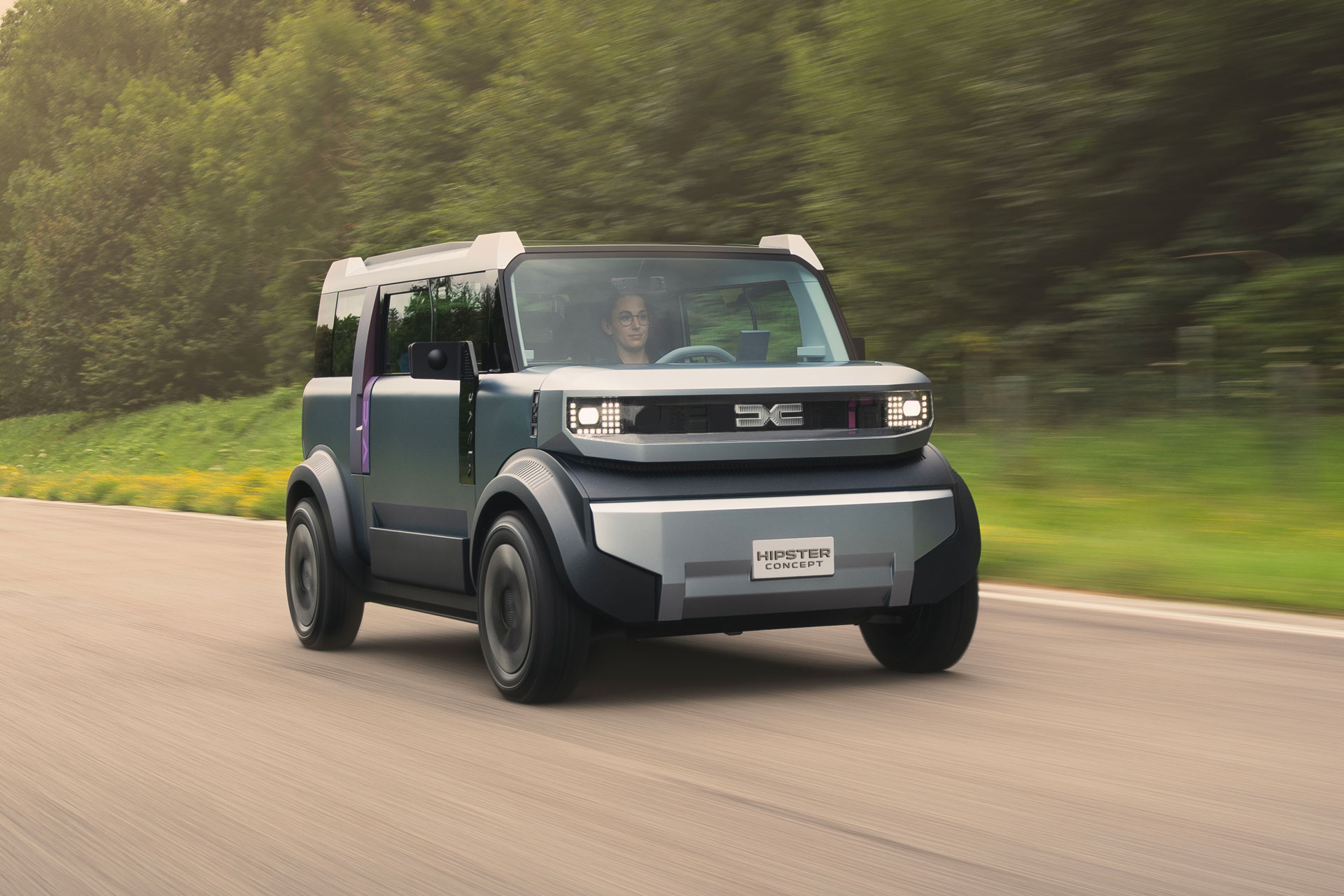
Let’s start with the numbers. The Hipster is just three metres long, which makes it shorter than the original 1959 Mini. Yes, really. In a world where even “city cars” like the Fiat 500 have ballooned past 3.6 metres, the Hipster is practically pocket-sized. And at a whisker over 1.5 metres wide, it’s skinny enough to slip into parking spaces that would make smart owners nervous.
And yet, despite the dinky dimensions, the Hipster doesn’t look fragile. Quite the opposite, in fact. Dacia has deliberately given it a chunky, squared-off stance to avoid that “glorified-mobility-scooter” vibe you get with some ultra-compact EVs. This is a proper little car. Just… smaller.

It’s not an Ami – and that’s the point
It would be easy to look at the Hipster and assume it’s Dacia’s answer to the Citroën Ami. But you’d be wrong. The Ami is technically a quadricycle, meaning it dodges a lot of the regulations and safety kit required of actual cars. That keeps it cheap and cute, but it also keeps it off dual carriageways – legally.
The Hipster, though, is designed as a real car. It’s more spacious, safer and more capable than a quadricycle, yet even simpler and lighter than Dacia’s own Spring EV. Expect a very small battery and a realistic range of under 100 miles, because Dacia knows most city-car drivers rarely need more. It’s the sort of honesty we’ve been crying out for.
.jpg)
How the Hipster stays cheap (and clever)
Affordability is the Hipster’s whole raison d’être. Dacia has basically taken everything non-essential, put it in a box marked ‘No’, and then thrown that box very far away. Do you really need lane-keep assist, multiple cameras and a telly-sized infotainment screen in a tiny town EV? Exactly.
Keeping it simple keeps it light, around 800kg, which is unheard of for a modern electric car. Light weight means better efficiency, nippier performance, fewer materials and, crucially, lower costs. But cutting back hasn’t made it boring. In fact, the Hipster is packed with quirky, brilliant touches.
.jpg)
The Top 10 Hipster “Hip Bits”
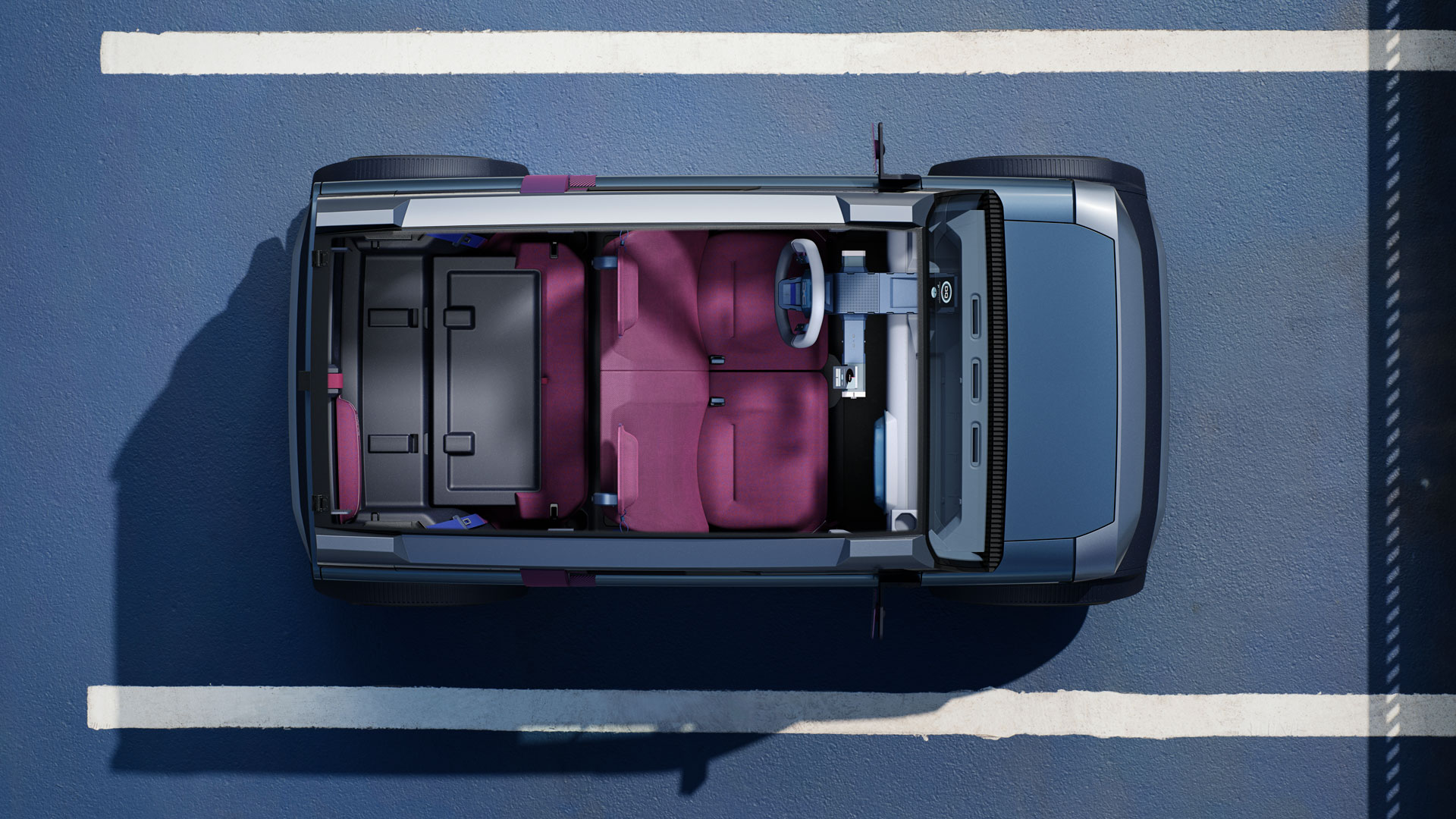
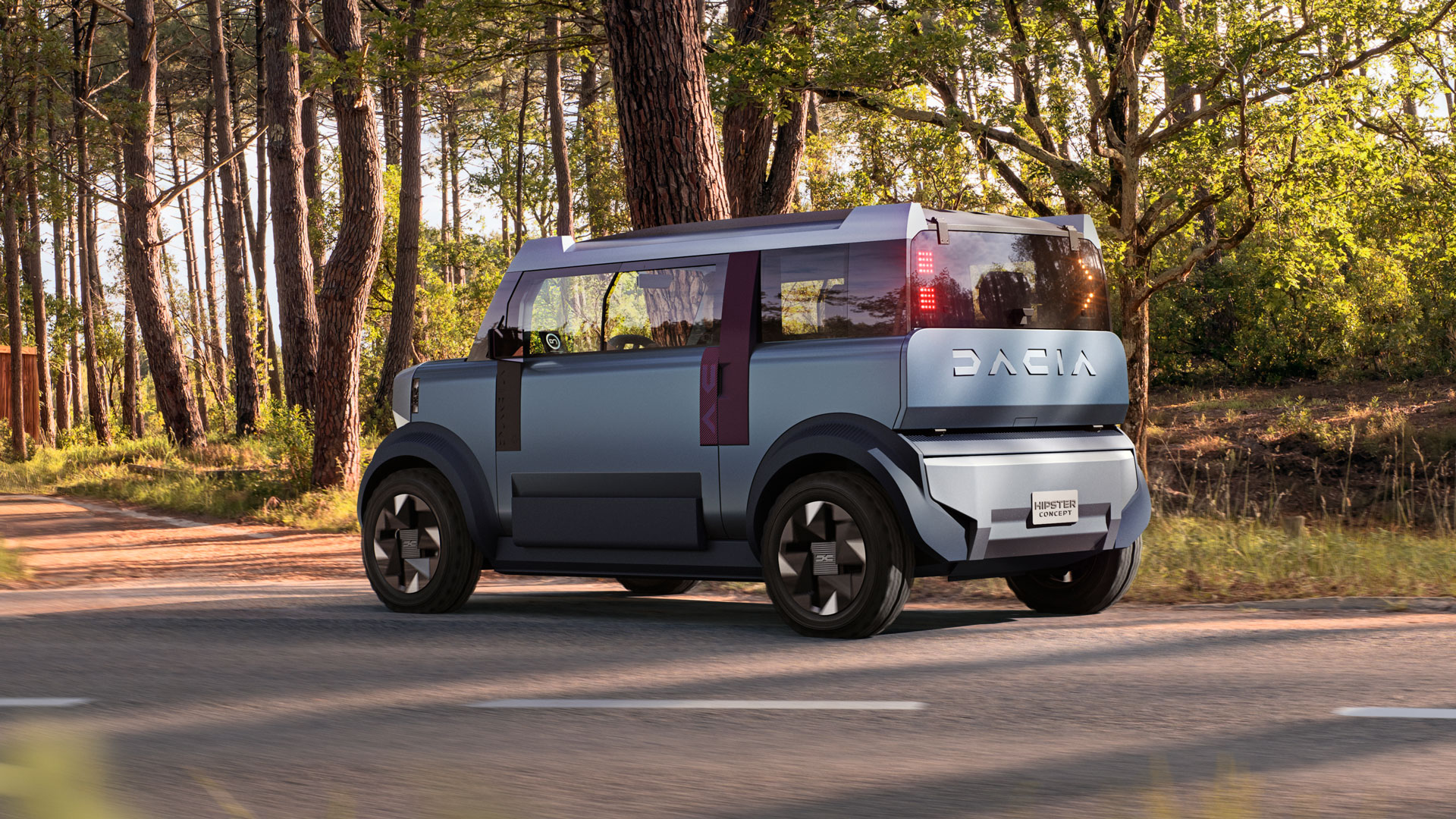
The Hipster is full of brilliantly simple ideas that make you wonder why every small car isn’t designed this way. For starters, it has just three painted parts; everything else is left in bare Starkle plastic, a recycled, colour-through material that shrugs off scratches because the colour runs all the way through. The clever thinking continues at the back, where the boot opens across the full width of the car and the top section can pop up independently for quick access. There’s even extra storage built into the boot lid, although you’ll need impressive cable-winding skills to make the most of it.
The rear lights sit behind the tailgate so they don’t need separate glass and are far less likely to get smashed. And while the standard boot is a modest 70 litres, folding the seats turns the Hipster into a tiny van with 500 litres of space. The rear headrests swivel neatly into the window area when they’re not needed, and the weight-saving continues with fabric door handles instead of chunky metal ones.
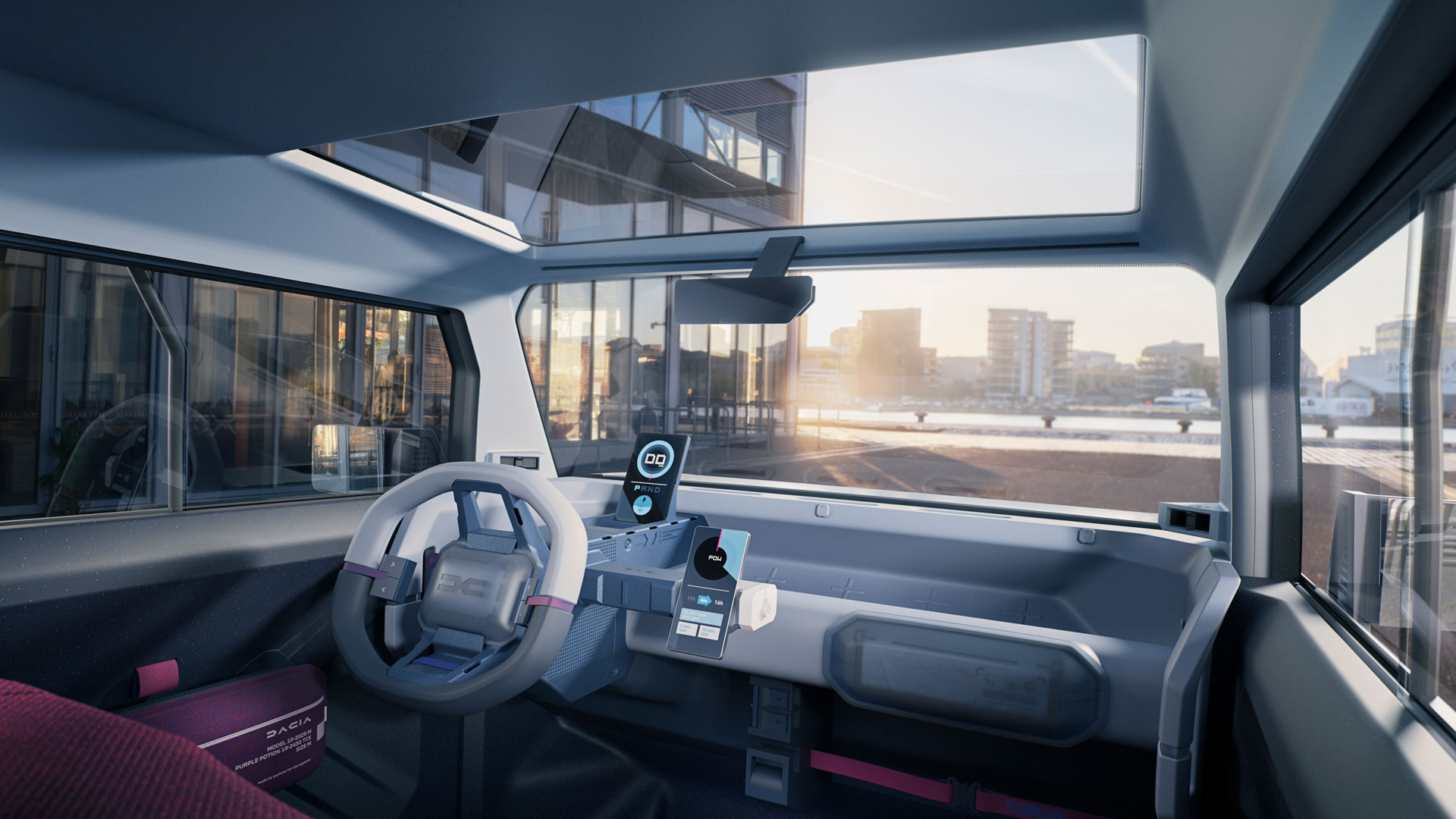
Inside, the large door opening makes it surprisingly easy to climb into the front or the back, and yes – it really can seat four proper humans. The hammock-style front bench is suspended rather than padded, which means no heavy foam and a wonderfully simple, airy feel. And because this is a car designed around essentials, infotainment is pure BYOD: bring your own device. Your phone becomes the key, the screen and the entertainment hub, slotting into a dock and playing through a little Bluetooth speaker. Simple, smart and wonderfully Dacia.
.jpg)
A concept with big questions
The Hipster is technically still a concept, but it makes a point that’s impossible to ignore. Do we actually need massive batteries and tech-laden interiors, or could clever design give us a smaller, lighter, cheaper EV that works perfectly in the real world? In many ways, this is a modern take on the Citroën 2CV or VW Beetle – simple, honest, for the people.
But here’s the catch: for the Hipster to make production in the form Dacia wants, some regulations may need to evolve. Europe’s current rules don’t neatly account for a vehicle that’s this small, this light and still fully road-legal at car level. To hit its targets on weight, safety equipment and cost, Dacia would likely need a bit of regulatory flexibility – something that would let manufacturers innovate with ultra-light EVs without being forced into the same heavy, expensive frameworks as larger cars.
If that happens, the Hipster could open the door to a whole new class of smart, simple, super-efficient electric cars designed around real-world needs rather than marketing checklists. And frankly, that would be one of the most refreshing shifts the EV market has seen in years.
.jpg)