What it’s like to take part in the world’s largest EV range test?
Vicky Parrott
10 Jun 2026
It won’t come as news to anyone that Norway is strikingly beautiful. The postcard scenery that greets you around every corners as you skirt the fjords is world-famous and on most travellers’ bucket lists - with good reason.
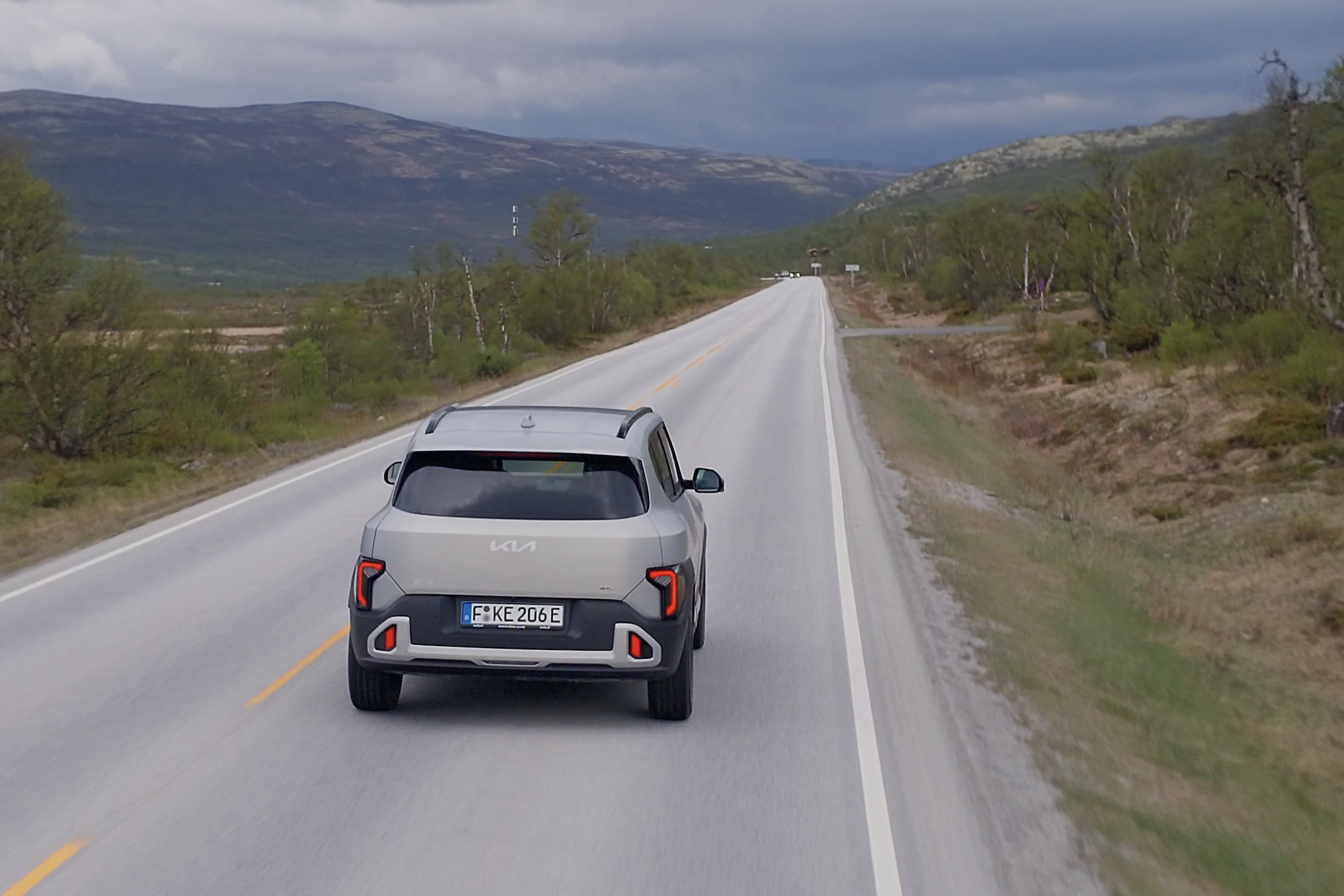
But from the windows of our prototype Kia EV2, it was the wilderness in Norway’s mountains that really left me awe struck. Still showing hidden patches of snow in June, and with that unmissable sense of vastness that true wilderness carries with it. The sort of spaces that are so open and untamed that they trigger a hindbrain alarm bell; your caveman instincts pinging a warning that once alerted you to a potential sabretooth tiger attack. That kind of vastness. The scary yet exciting kind.
Which is all the more unsettling because I know we’re going to run out of charge...
ADVERTISEMENT
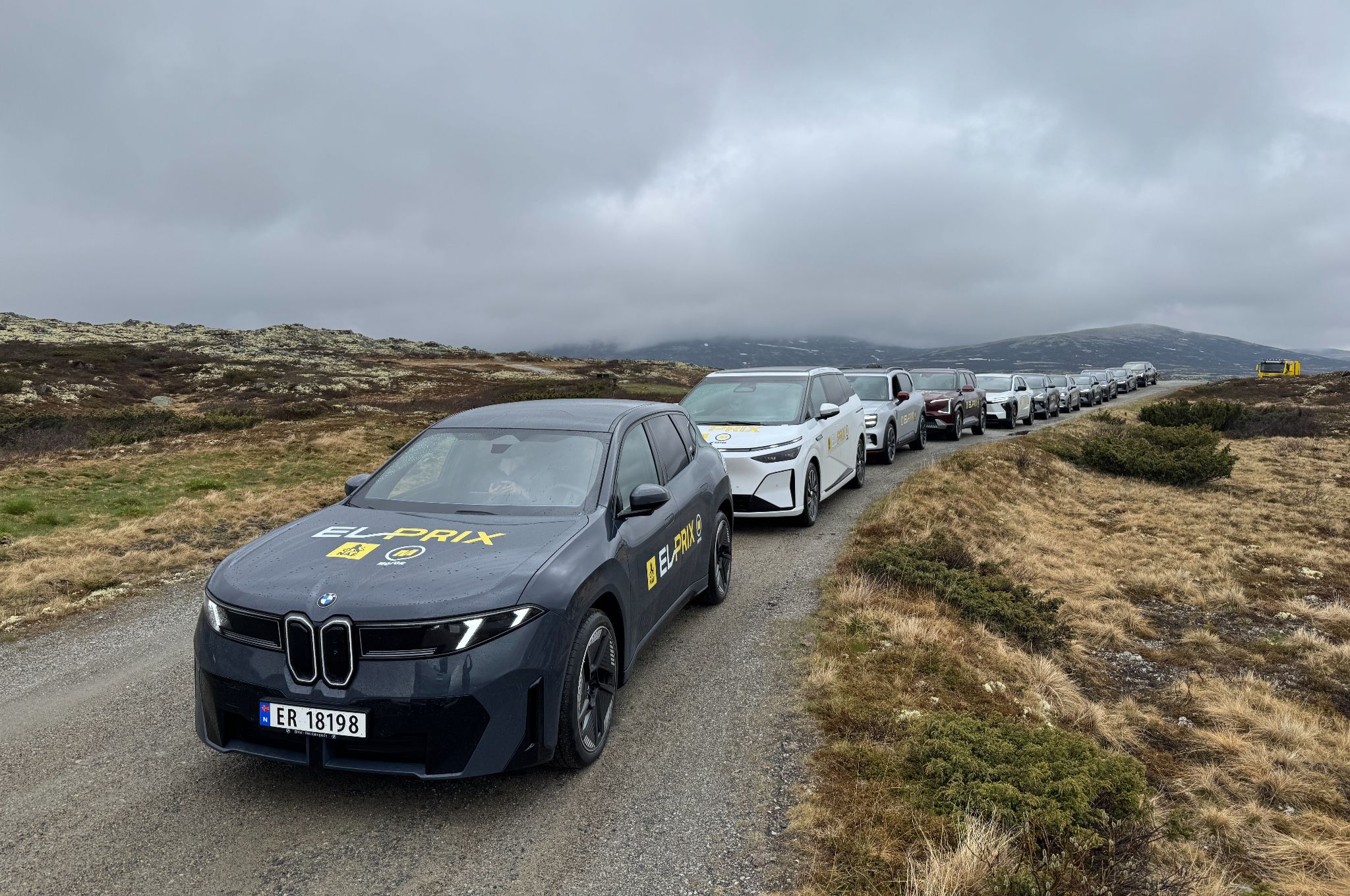
Welcome to the El Prix, the world’s largest electric car range test. Run by the Norwegian Automobile Federation (NAF) in summer and winter every year, the NAF El Prix sets out to test the real-world range of the latest electric cars, and to find out how close they can (or can’t) get to the official WLTP figures.
The same route is run for every El Prix, and it takes in some 250 miles (400km), running out of Oslo along a variety of town and national limit country roads, until it climbs in the mountains – taking in a 1,000 metre incline across the whole route.
Cars have their air-con set to 20deg, the drive mode in the default that the car starts in, and all the ancillaries are in use whenever they’re needed. It’s up to the driver’s discretion how they choose to use the brake regen. I chose to use the manual regen levels in the EV2, which you toggle on paddles, and I generally used one-pedal around town, while letting the car freewheel and maintain pace as much as possible on open stretches of road, before engaging lighter regen for downhill stretches. This is often how I prefer to drive, anyway, so I stuck to the rules of ‘drive how you’d normally drive’.
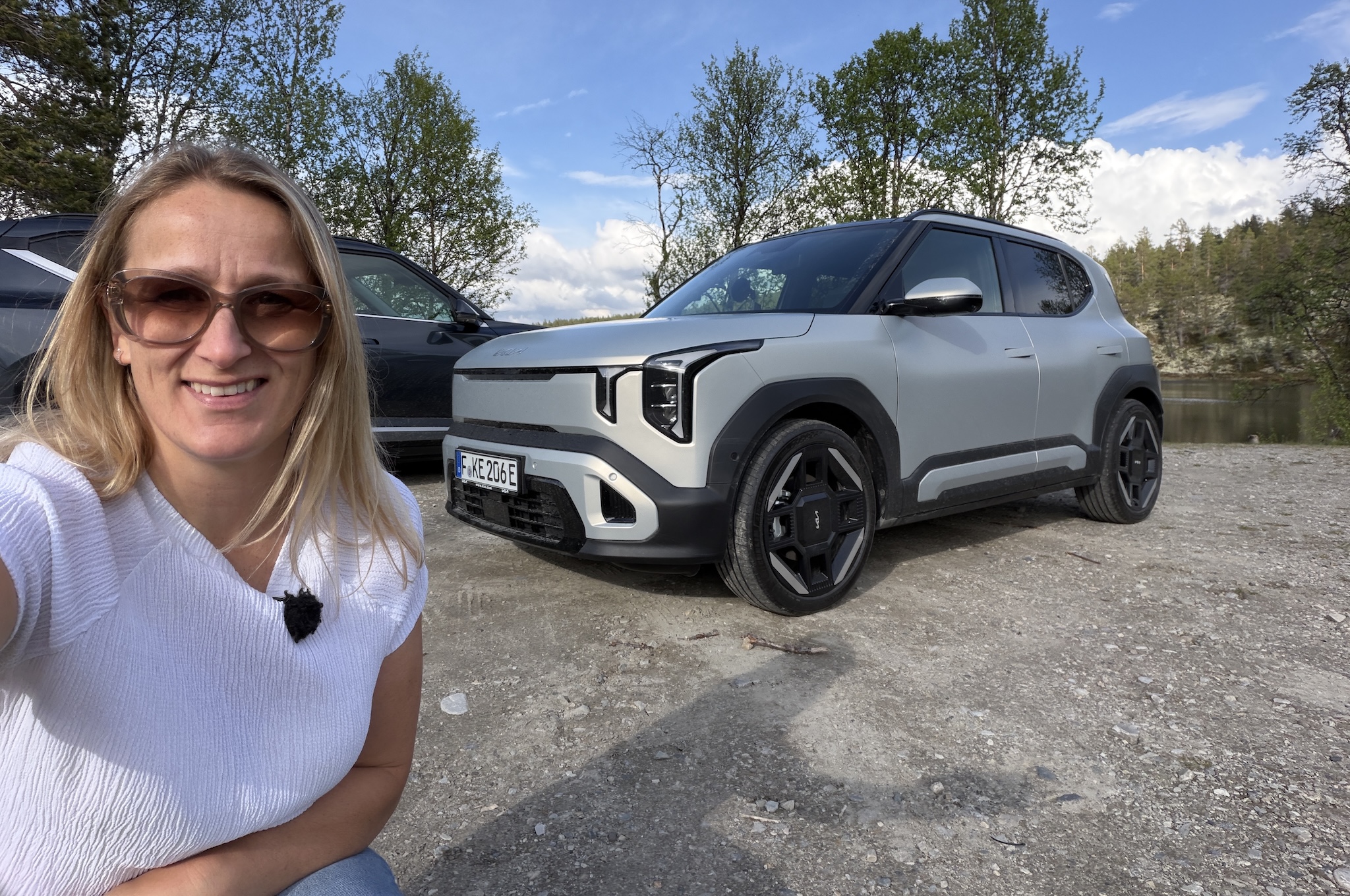
The route feels very sedate initially, heading out of Oslo with our 61kWh Kia EV2 Long Range prototype car shadowing the procedure and test route of the official cars.
But by the time we reach the first scheduled stop after around 100 miles, the roads have opened up to faster, sweeping roads that run north out of the capital and towards that mountain wilderness. Still, small towns dot the route, and our Kia EV2 is taking the whole trip very much in its stride, hovering around average efficiency of around 4.5 miles per kWh (m/kWh) for a potential range of 274 miles. Which is actually more than the 256 miles claimed range of our test car - a high-spec prototype that’s equivalent to GT-Line S trim, and rides on 19-inch Michelin PilotSport tyres.
For a small EV that will compete with the Renault 5 and VW ID.Polo when it arrives in the UK this summer, the EV2 feels very grown up. And with a WLTP range of up to 281 miles if you go for smaller wheels, it really is very grown up. After this first stint, it’s very clear that you could live with this on longer trips just as easily as with the bigger Kia EV3 – especially as it’s pretty spacious, too.
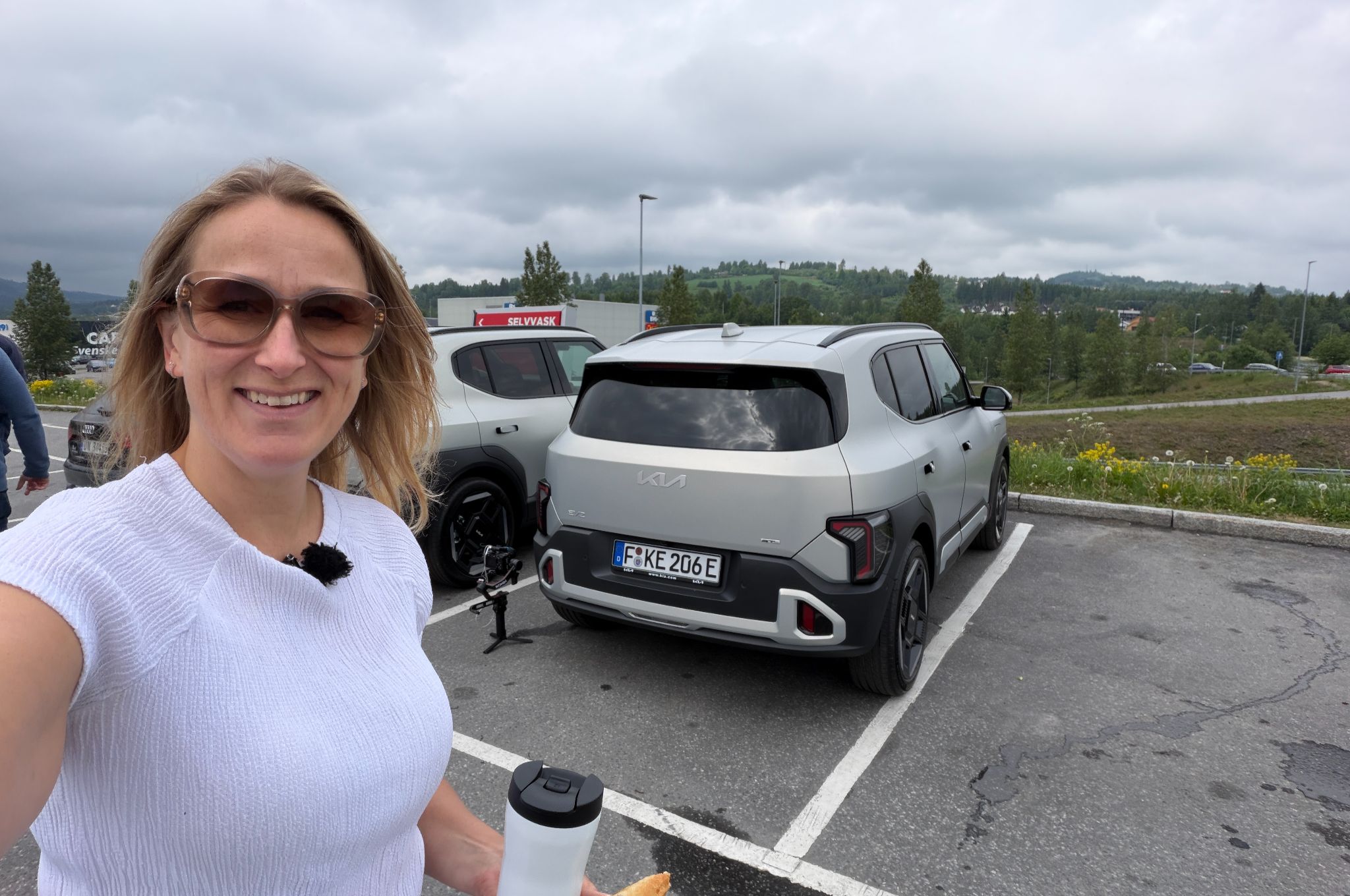
But this isn’t a first drive, or a review of the car. It’s a range test. And what’s been really notable so far about the experience isn’t just the ethereal scenery and how very capable our little electric Kia feels – but also of the organisation of this event. Every car has a driver and co-driver to share the duties and keep on top of paperwork, with data including the test efficiency, mileage and range readout noted down every 50km of the route. Everything is casual and fun but ruthlessly organised, from the re-usable coffee cups that are handed out in a dim underground car park in Oslo (they cost the equivalent of 30 euros and get you free coffee refills at certain charging and re-fuelling stations for a whole year!) to the high-vis vests and radios that ensure communication and safety along the way.
As we creep into the mountains, keeping up with the speed limit so that we arrive at the arranged stops in time (there are time parameters set so that organisers know the drivers aren’t slowing down to unrealistic speeds to improve efficiency), there’s the threat of rain and the odd light shower, but the weather stays at a moderate 15 to 18degC with the roads staying mostly dry.
The 200 mile mark feels like a big one to us, as we start to see the El Prix’s first victims… We pass the Kia EV2 Standard Range – which gets a 42.2kWh battery rather than the 61kWh in our ‘shadow’ EV2 – and not long after a Kia PV5 hunkers in a layby with hi-vis-vest wearers waiting for recovery. We also pass a Dongfeng Vigo and KGM Musso also limp to a halt on the sinuous mountain road, the El Prix livery clear on the cars.
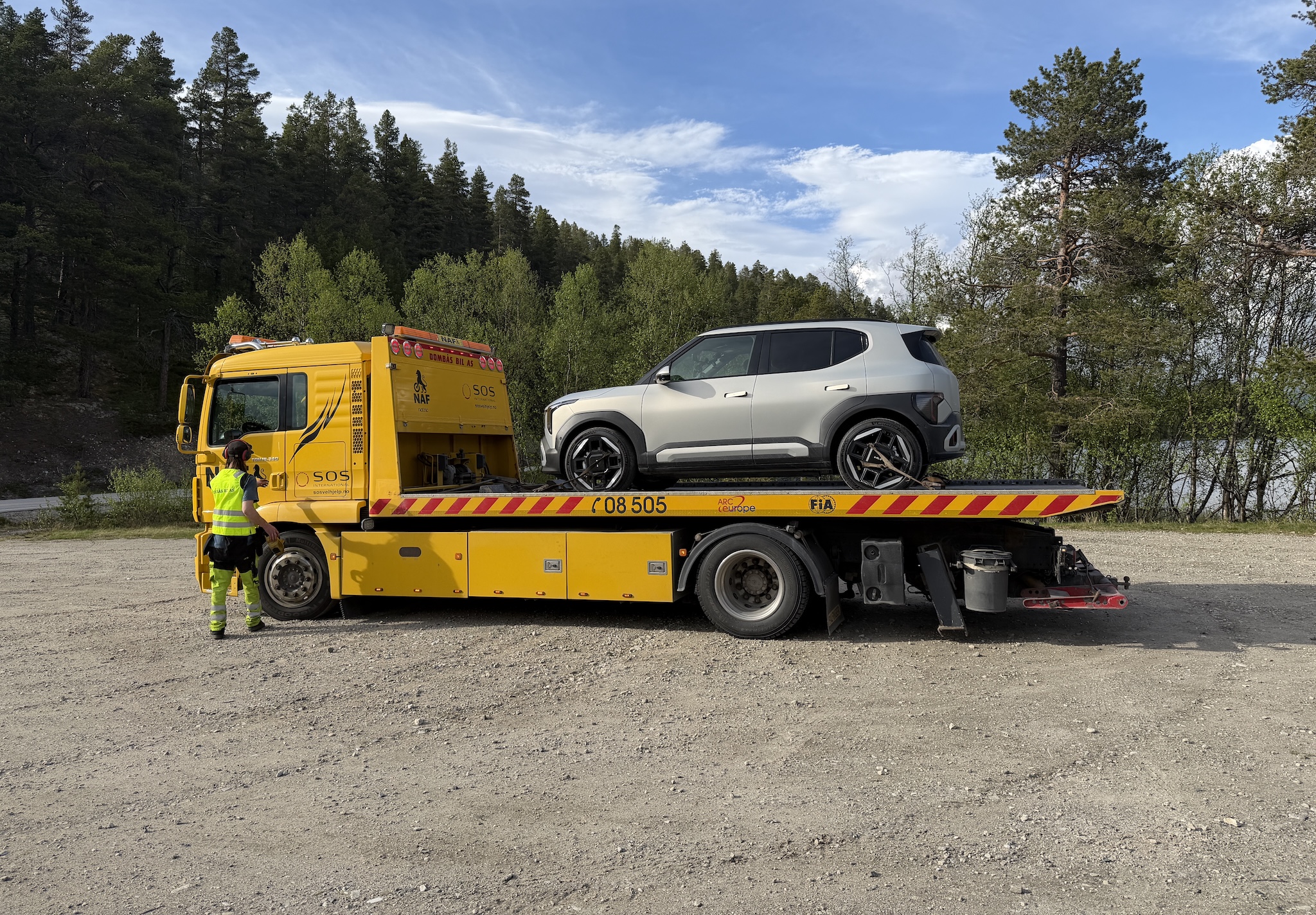
We’re now into the ‘loop’ of this route, which begins with that 250-mile drive into the mountains but, of course, a lot of electric cars will go much further than that. So the El Prix cars loop around and enter an endless circuit until their battery goes into emergency mode and cuts power so that the car can’t keep up with the speed limit. At that point, El Prix rules state that the driver must pull over so that the car can be stopped in a safe place for recovery, and driven onto the low-loader under its own power.
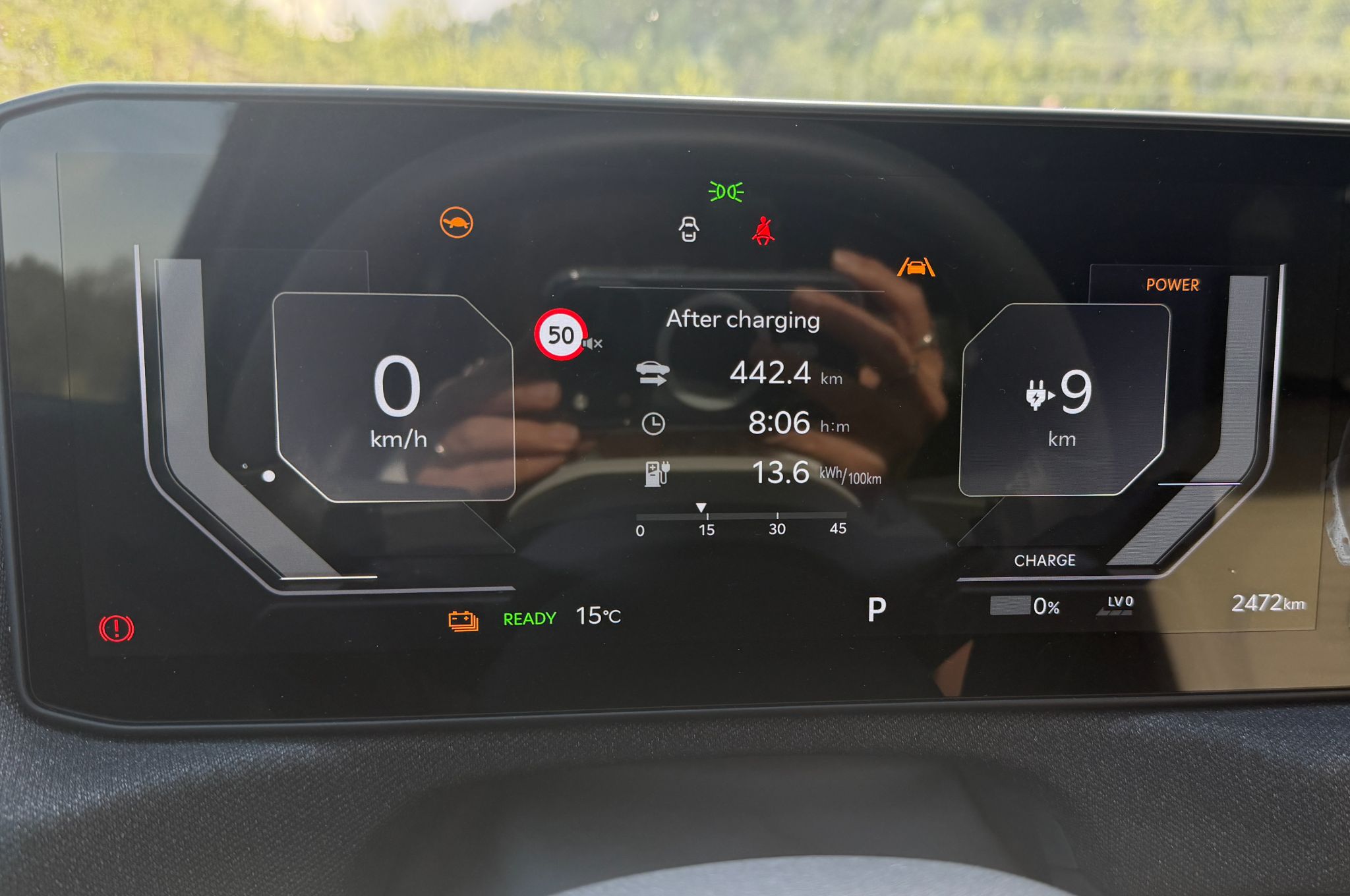
As evening started to fall our Kia EV2 finally pinged a Tortoise icon onto the dash and started to gasp its last miles. It sustained the speed limit for around three miles (5km) after that warning, before eventually cutting power to an emergency crawl. At that point, we pulled the car to a halt after 275 miles (442km), having covered 21 miles more than its official claimed figure suggested.
It had been a long and lovely drive. Full of Scandi-snacks, and the sort of scenery that’s normally viewed in holiday brochures or artistic crime dramas. And the EV2 had been nonchalantly efficient and at ease for the whole trip. One side note is that our high-spec prototype test car isn’t officially in the El Prix - whether because it’s a prototype or because the brilliant guys at NAF didn’t trust my driving and are too polite to tell me, I’m not sure… So don’t expect to see our figures in the final rankings – which you can read more about, here.
And can we spare a thought for the drivers who were testing really long range stuff – including the BMW iX3 and Mercedes GLC Electric! There were some six cars in the test that covered more than 373 miles (600km) – the BMW surpassed 435 miles (700km).
Our drive felt long. Theirs was on another level. They’re probably still up in the mountains, circling the El Prix loop, drinking coffee refills and hoping for it all to end soon…
Primarily, I came away from the experience thoroughly impressed with the Kia EV2 and with the guys at NAF, who do this in order to offer consumers more realistic guidance on range. My only criticism? I’d love to see them add a decent stretch of motorway to the route. While fast enough, and with plenty of variation from town- to mountain, and the added efficiency-killer of many miles of continual uphill driving, for a lot of drivers it won’t be completely representative of a typical day’s commuting without a chunk of sustained motorway driving.
NAF told us that they are discussing how to add this to the test, but obviously safety must come first – and the motorway stretch might potentially come at the expense of that mountain climb - so it’s still in discussion.
Regardless, the El Prix is a hugely impressive venture, and a real feat of organisation to do a real-world range test like this on public roads with 24 cars. It was a lot of fun, and a genuine privilege to follow along in the Kia and see how it’s done.
Now... I wonder if there were any car snacks left?
The Smash were definitely our favourite Norwegian snack. Like salted popcorn, but with chocolate. Yum.











.jpg?width=600&height=600)


