






Daniel Kunkel has been in charge of Gridserve for just over a year now – it’s one of the leading charge companies in the UK, rising to prominence among EV drivers when it took over the hated Ecotricity network and made it all of its chargers work properly.
The outfit has pioneered the charge hub, sort of miniature service stations with loads of plugs, toilets, a nice cafe and a decent little shop. I caught up with Kunkel at the recent opening of the company’s fifth hub at Markham Vale near Chesterfield (find out why it’s not necessarily the future here), with 37 of bajillions of new plugs that Gridserve has set up in recent times.

We have a good chat about the site, how it needed a 3.5km cable running through the local area to make a proper grid connection (“Can you imagine the number of permits that required?”), why Gridserve hasn’t put in megawatt chargers for eHGVs (“We simply can’t see the demand yet. But you’ll see that we’ve actually left space to expand to provide megawatt chargers”)…
He says the hardest part about being a charging company at the moment is trying to decide where to go with the tech, which is still moving at pace (“A lot of the technologies are very much evolving, even though the industry is five to 10 years old now. Charger technology is still developing, batteries too…”).
He also says that the charging ‘gold rush’ of recent years has probably come to a close (“I expect that the market will need to undergo more consolidation”) and there might even be a rationalising of all those apps and cards we have to lug around.
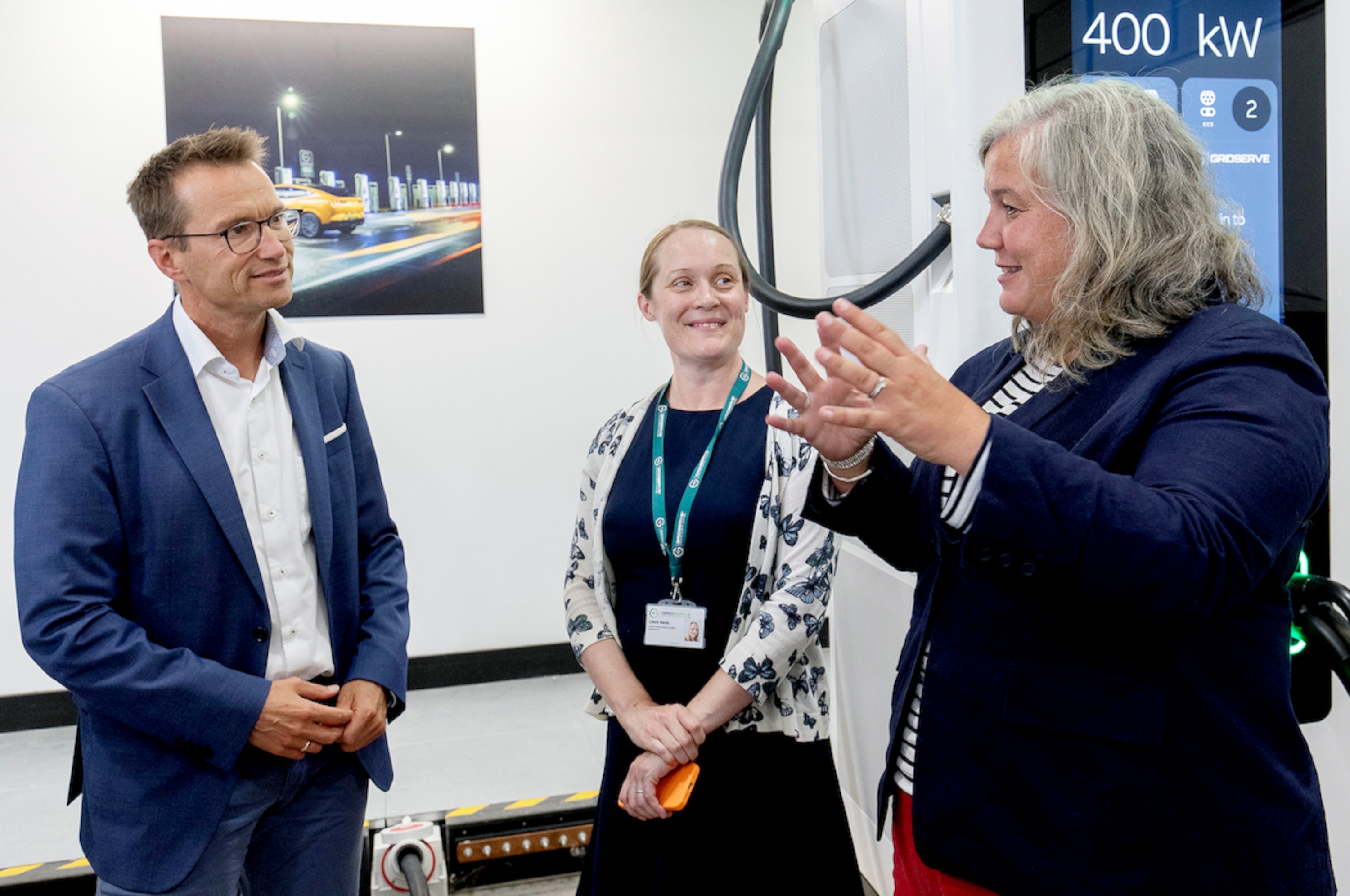
I’m interested in Kunkel's (seen above with transport secretary Heidi Alexander) take on the ZEV mandate argument though – we’re speaking just as Andy Burnham takes office, and there are rumours that the SMMT and wider car industry have been lobbying the government to ditch the proposed ban on petrol and diesel in 2035.
Gridserve is an SMMT member itself, though, so how does it feel when the industry body blames the infrastructure for lower than expected demand for electric cars? “Everyone has had the opportunity to invest in the infrastructure – I think some of the manufacturers did decide to invest in some segments, but I think the reality is that it’s a chicken or egg thing. I sympathise, but I’d rather consider it a collective task than a blame exercise because that’s not constructive.
“It’s much more helpful if we can have the right frameworks, the right policies in place that give everyone certainty. I think there’s a lot of noise making in the system, with manufacturers positioning themselves against the ZEV mandate.”
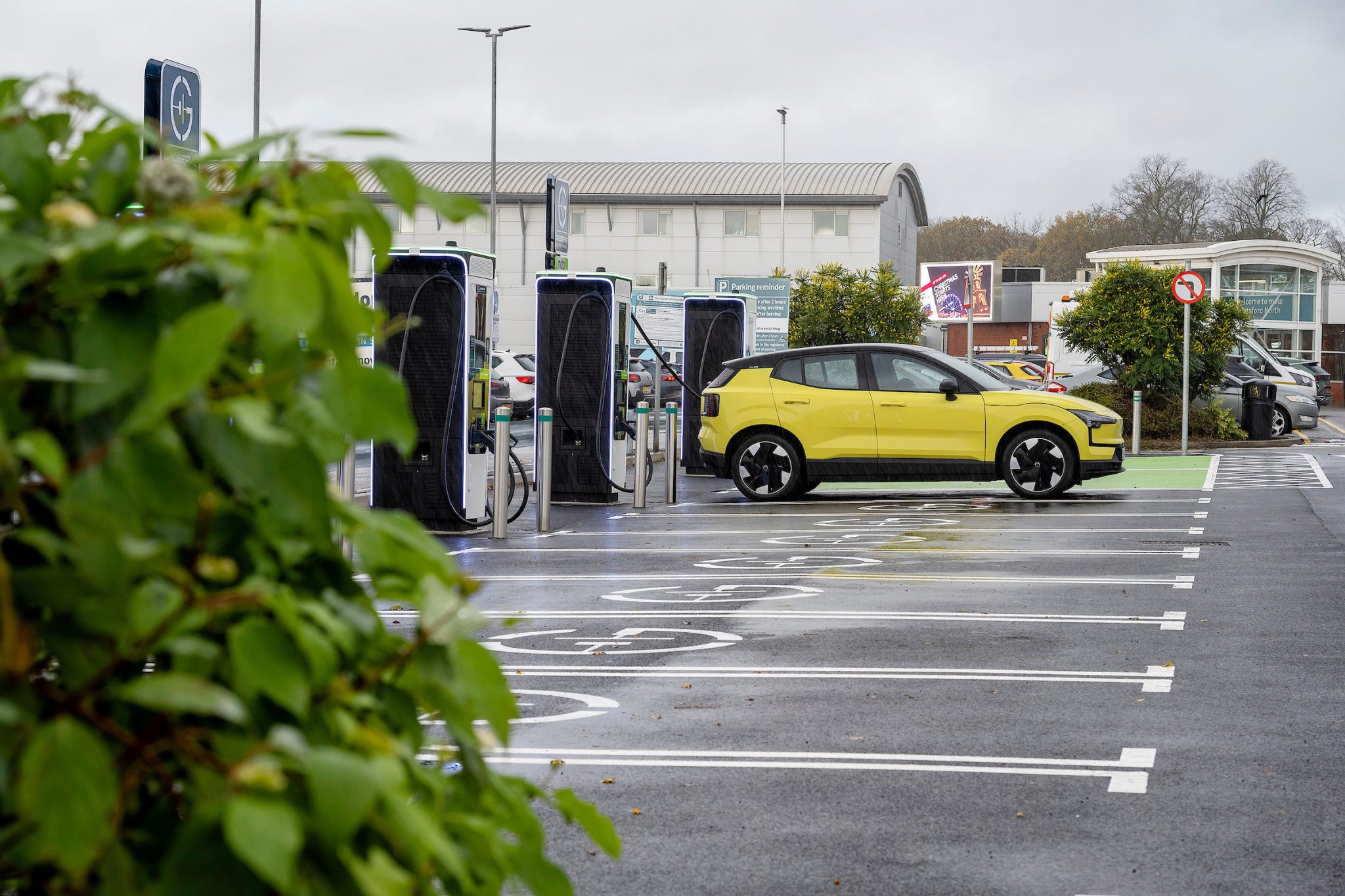
He’s quick to point out the sorts of cars that are built in the UK, which aren’t predominantly electric. But he says there’s a choice to make if the UK is to remain relevant to the global car industry. “My advice is don’t try to be protective – either the UK will be part of the move to electric, or cars will be shipped here from abroad,” he says.
“I would recommend being progressive and inviting parties who want to build EVs over here – it’ll create job certainty in the process. I sympathise with the challenges, but I do believe the noise that it’s just an infrastructure problem is not right. We can see that the infrastructure is deploying as fast as possible. Would we like to deploy it faster? Absolutely. We need demand certainty and supply access, which in our world means grid connections.”
There are a lot of political issues at play – if he had a meeting with the prime minister tomorrow, what would his asks be? “My plea would be let’s keep the consistency of the ZEV mandate in place, let’s push Britain to be at the forefront of the EV journey and use the opportunity to create benefits for the whole of society. And with that, be progressive in terms of EV adoption.
“In terms of selling cars that’s outside my line of business, but as a charge provider I would certainly advocate for VAT parity. Being disadvantaged because we are public charging and not home charging doesn’t feel right to us. Helping us by making the permit processes leaner and faster would certainly help us to build charge points faster. Those would likely be my top three.”
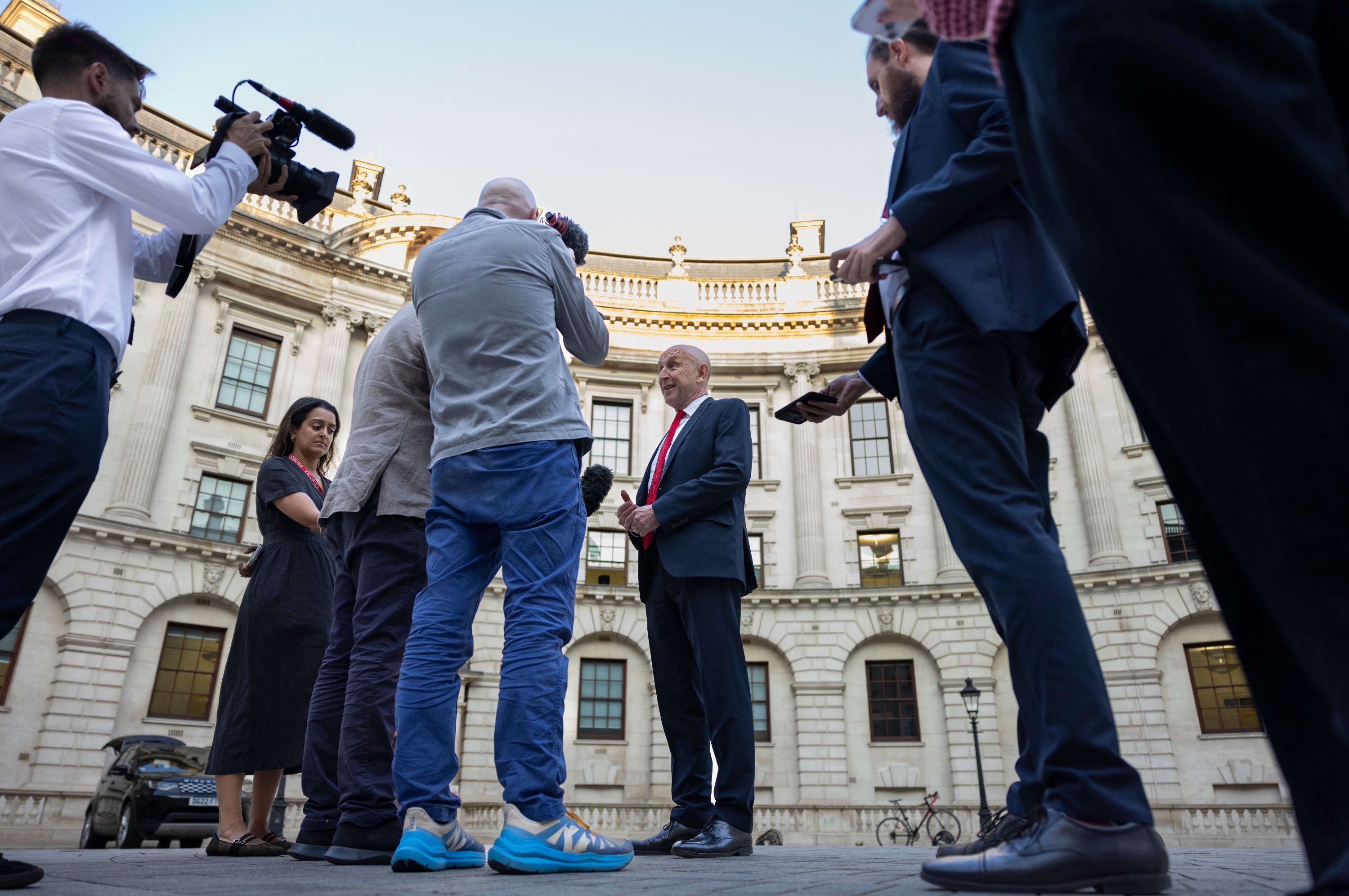
After we talk, chancellor John Healey (above) announces that he's dropping VAT on domestic electricity, further widening the already unfair gap between home and public charging. It remains at least a fairly safe bet that the number of electric cars on the road will grow, but no one could tell you by quite how many just at the moment.
There are other things that would help growth too – like Electrifying, one of Gridserve’s bugbears is signage around charge locations. It’s been campaigning for a relaxation of the strict rules around motorway signage (“We can only show the logo. How funny is that? You can’t even write ‘charge’ underneath it”) and got TV's Laurence Llewellyn-Bowen involved in a campaign last year. Kunkel makes a solid case more people would be encouraged to switch to EVs if they knew that charge stations were close by.
He’s also unenthusiastic about the pay per mile eVED tax that’s coming in 2028, describing it as “one of the less helpful interventions that have been made by the government in recent times. I can respect the need behind it, but we need to learn from other markets.” And with that he dashes off, presumably to install some more chargers somewhere before dinner.



.jpg?width=600&height=600)


