It wasn’t many years ago that if you needed to transport seven passengers in an EV, you had two options: buy a Tesla Model X or two Nissan LEAFs. Thankfully, for those looking to single-handedly repopulate the planet, there are now a plethora of options on the market with more arriving on an almost monthly basis. So buckle up in the back row for our guide to the very best EV seven-seaters on the market…
* Battery: 106kWh * Range (WLTP): up to 385 miles * Max DC charge: 250kW * Price (UK): £65,000+
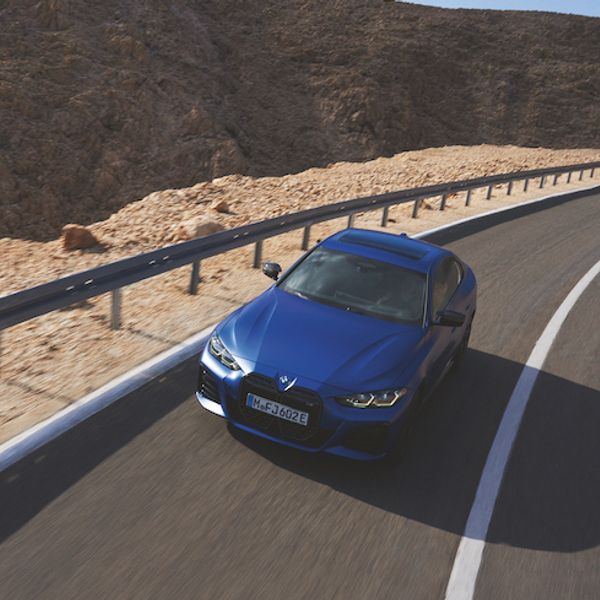
It’s hard to escape the fact that the IONIQ 9 lives in the shadow of its Korean rival (and distant family member), the Kia EV9. The Kia landed ahead of the Hyundai, stole all the headlines and has become the unofficial benchmark car in the sector. But for our money (if we had any), the IONIQ 9 is as good, if not better, than the Kia.
For starters, it comes with a bigger battery (106kWh vs 96kWh) than the EV9, and delivers a longer range as a result. It charges at lightning pace – up to 250kW on a suitable charger – and has a great interior. The Universal Island sliding console is as neat as it is practical and its 300-litre boot capacity in seven-seater layout is excellent. If you can live with the looks (which some can’t), it’s a fantastic all-rounder.
* Battery: 86kWh * Range up to 370 miles * Max DC charge: 199kW * Price (UK): from £51,980
You’ll have to wait until next January before you can actually get your hands on Skoda’s new seven-seater, but the order books are being readied and full pricing has already been announced. So, technically, it’s on sale… Anyway, the Peaq is, in basic terms, an electric counterpart to its hugely successful Kodiaq – which has been a big seller since its introduction a decade ago.
The Peaq (which my autocorrect routinely changes to Peak EVERY TIME), is way more than a stretched Enyaq, and introduces Škoda’s biggest ever battery (86kWh) to deliver 370 miles of range. The interior debuts a lot of new ideas (for Skoda), including a vertical Android-based infotainment screen and more physical buttons. The layout is very well thought-out with a surprising amount of room in the third row. One to watch, for sure.
* Battery: 96 kWh * Range (WLTP): 313–349 miles * Max DC charge: 220 kW * Price (UK): £64,995 – £76,995
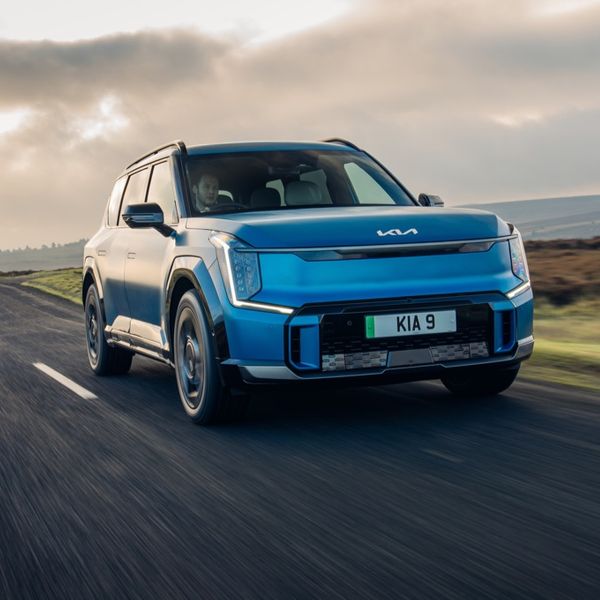
There was a time when people would have balked at spending nearly £65,000 on a Kia. Heck, it wasn’t that long ago that people would have questioned the existence of a £20,000 Kia. But times have changed and the Korean brand's vast seven-seater is a fantastically accomplished family car. Its 96kWh battery delivers a real-world 300-mile range while the 800-volt system makes light work of charging stops (expect up to 250kW DC charging speeds).
You’d expect something with the EV9's dimensions to handle like a cross-channel ferry, but the EV9 is surprisingly light-footed and easy to navigate. Yes, it’s the size of an Amazon warehouse, but its angular design makes it easier to park than most seven-seaters. Inside, the cabin is cleverly laid out and even those in the rearmost seats get decent-sized windows and generous levels of legroom.
* Battery: 107 kWh * Range (WLTP): up to 374 miles * Max DC charge: 250 kW * Price (UK): ~£96,000 – £100,500
The Volvo is another seven-seater that raised eyebrows with its lofty price tag. The all-electric version of Volvo’s hyper-successful XC90 will set you back a six-figure sum, but if you have deep enough pockets, you’ll be getting a great package. Passengers in every row get heated seats, charging ports, and climate control, while the middle row slides for extra third-row legroom. Oh, and there are four sets of Isofix points for young families. However, the EX90 can’t compete with the IONIQ 9 and EV9 when it comes to space in the third row. It’s fine for a couple of ankle-biters, but teens and adult kids will hate you for cramming them in.
The EX90’s 107kWh battery returns up to 374 miles of range, with 250kW charging ensuring that stops are short and sweet. Early cars suffered from a host of software-related issues, but later production models appear to be much better.
* Battery: 85 kWh * Range (WLTP) 379–380 miles * Mac DC charge: 320 kW * Price: £51,000 – £60,000
The old EQB was a quirky but ultimately pretty underwhelming package - even if it did tick all the boxes required by seven-seater buyers. The GLB is a much more convincing car with more space and a much newer feel. It’s based on the same 800-volt platform as the CLA, so comes with 320kW rapid charging, which should make family pit-stops fairly brief.
Inside, the GLB marks a genuine step up from its EQB predecessor, with a longer wheelbase freeing up more legroom in the third row. It’s still beaten by its Korean rivals in terms of outright space, but it’s a smaller car overall, so that’s to be expected. The sliding second row strikes a good balance between passenger space and boot capacity, while the ride prioritises comfort and refinement over outright sportiness. Performance is so-so, unless you go for the pricier 350 models in the range. An improvement on the EQB, but there are better options out there for the money.
* Battery: 73 / 97 kWh * Range (WLTP): up to 410 miles * Max DC charge: 160 kW * Price (UK): from £40,595
Pound for pound, Peugeot’s handsome E-5008 is arguably the best value seven-seater on the market. I say arguably because the entry-level price gets you the smaller 73kWh battery, which delivers a real-world range of under 300 miles – which might be a bit tight for some. If you want the longer range 97kWh, you’re looking at closer to £47,000. That still undercuts rivals like the Škoda Peaq, and Peugeot is no stranger to the tempting finance deal when they need to shift some cars.
The E-5008 shares the E-3008’s neat, sculptural cabin and clever 21-inch curved display, while keeping all seven seats as standard alongside a flat load floor and clever underfloor storage. Avoid the all-wheel drive dual-motor version unless you absolutely need it - the range is the poorest of the bunch at just 289 miles.
* Battery: 86 kWh usable * Range (WLTP): up to 285 miles * Max DC charge: 200 kW * Price (UK): £59,993
If you’re looking to put some joy back into your life after having kids, the Volkswagen ID. Buzz should be at the very top of your shopping list. I’ll be honest here, the Buzz isn’t a car you buy based on a spreadsheet analysis of the best cars in the sector. In fact, the more you delve into the specification, performance and range, the less likely you’ll be to choose one.
Instead, focus on the stuff that makes life a little better. Like the joyous looks, the concept car cabin and the fact that the kids in the rear can play with sliding doors. The Buzz is a car you buy with your heart, not your head. That isn’t to say that it’s a poor EV. Far from it. The 86kWh battery serves up a 250-mile range (which is realistically enough for most) while 200kW charging means that stops will be relatively brief. Although those figures are thumped by most of the alternatives on this page, none of them will make you smile as much as the Buzz. Do it.
* Battery: 52 kWh usable * Range (WLTP): up to 211 miles * Max DC charge: 100 kW * Price (UK): £29,920
If you need a practical seven-seater that won’t empty your wallet, the seven-seat Citroën e-Berlingo might be the answer. But there are a few catches… Charming though the e-Berlingo is, its specification does read like something from six years ago. Its 52kWh battery delivers a WLTP range of 211 miles, which means 170-180 miles in the real world. It’s also pretty compact, which means the third row of seats are strictly for tiny people only.
But let’s focus on the positives. Its size makes it a doddle to park around town and the e-Berlingo’s van heritage makes it a hoot to drive. Visibility is excellent and if you fold down the rear seats, the load area is vast. For a fun, family car that has seven-seat capability, the e-Berlingo still deserves to be on the list.
* Battery: 71.2kWh usable * Range (WLTP): up to 242 miles * Max DC charge: 150 kW * Price (UK): £36,995
The problem with writing lists like this is that just when you think you’re finished, another car pops onto the market. So please welcome (fashionably late), the new Kia PV5. Okay, the PV5 has been out for a while now, but Kia has only just (like an hour ago) decided that it deserves a third row of seats. Good news for buyers - less good for my chances of catching the start of Countdown.
The PV5 has been a hit for Kia, and it’s not hard to see why. It looks great and when compared to other van-based MPVs (like the ID Buzz), it looks remarkable value for money. The new seven-seater starts from just under £37,000 and comes with Kia’s long-range 71.2kWh battery as standard. And that’s where things start to get a bit tricky for Kia. Because of the extra weight involved in having three rows of seats, efficiency and range have taken a hit. A WLTP range of 242 miles means a real-world range of under 200 miles in winter - which isn’t really good enough if you’re looking at the PV5 as a car for longer hauls.