





 Battery size: 79 - 86 kWh
 E-Rating™: B
 Range: 248 - 293 miles
 Max charge rate: 200 kW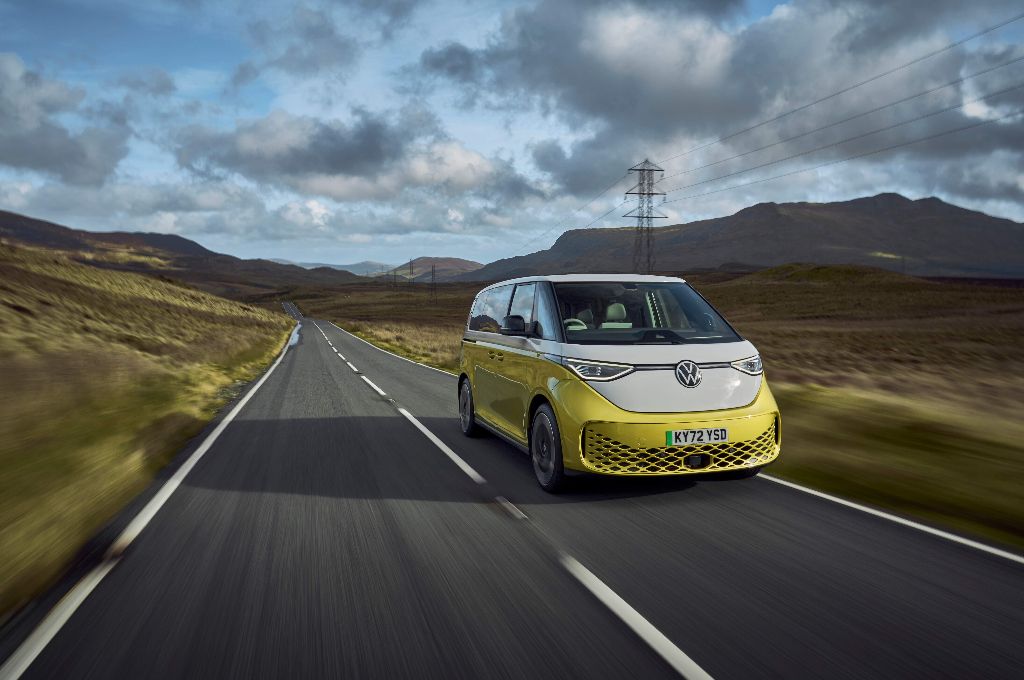

Introduction and model history
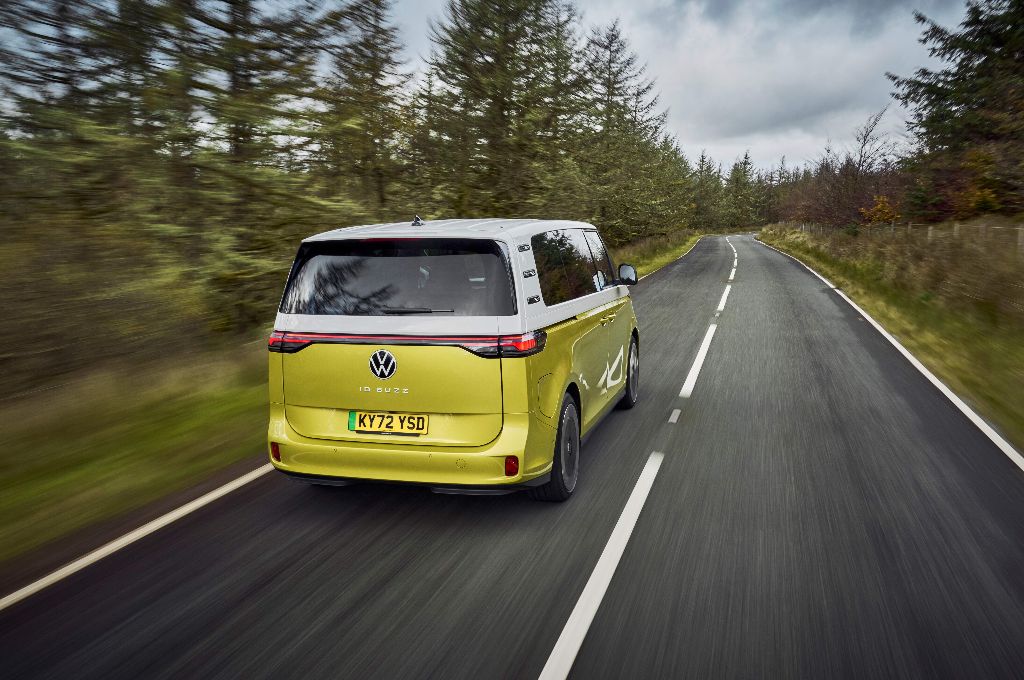
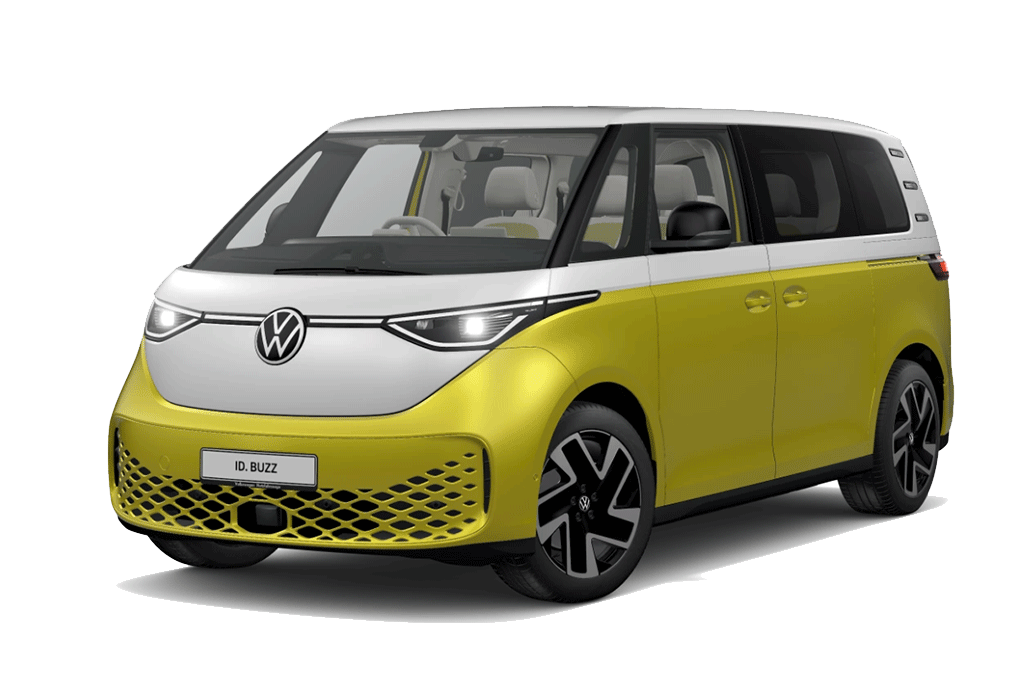
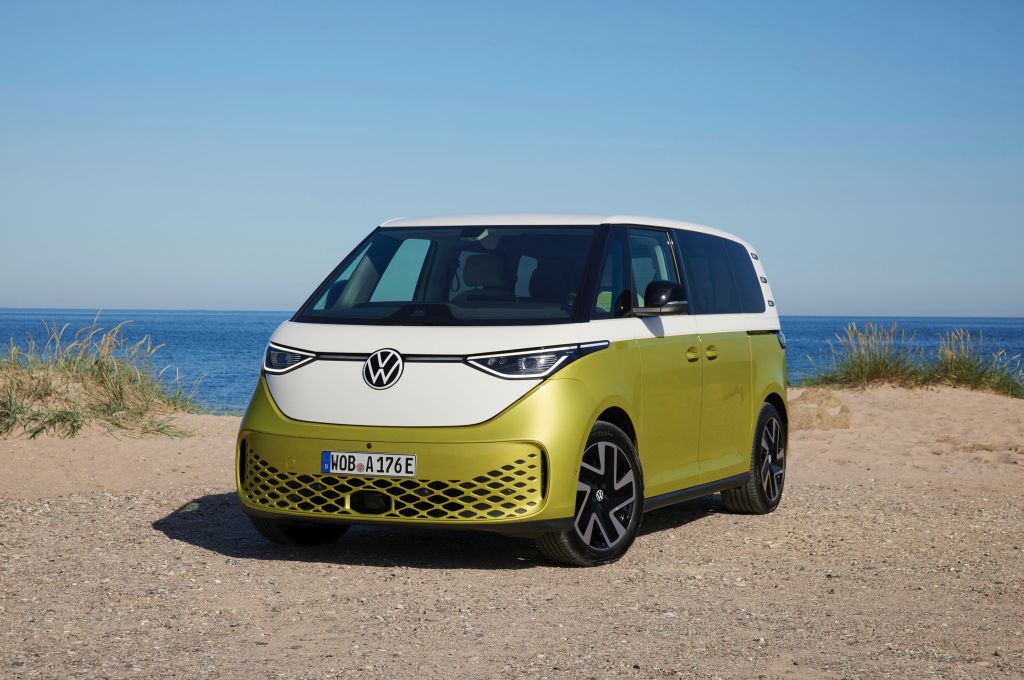
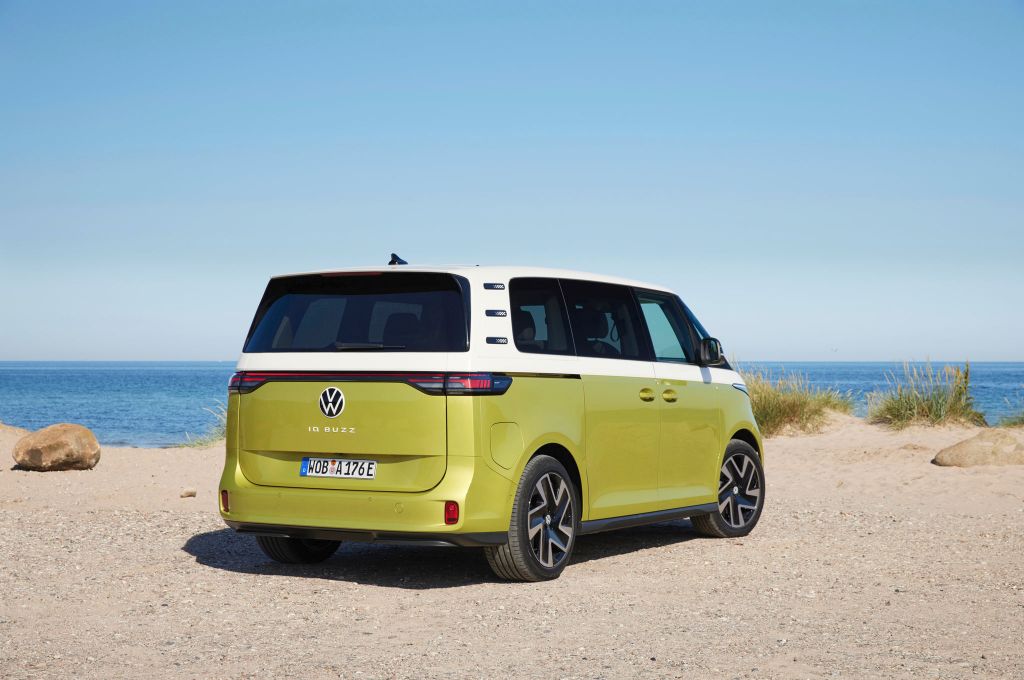
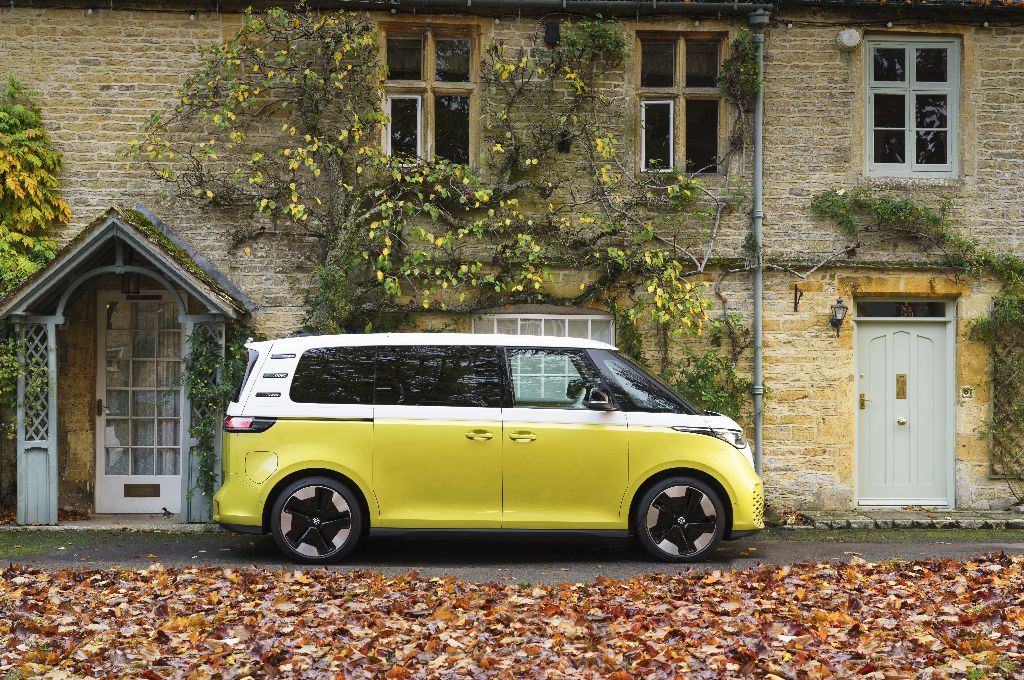
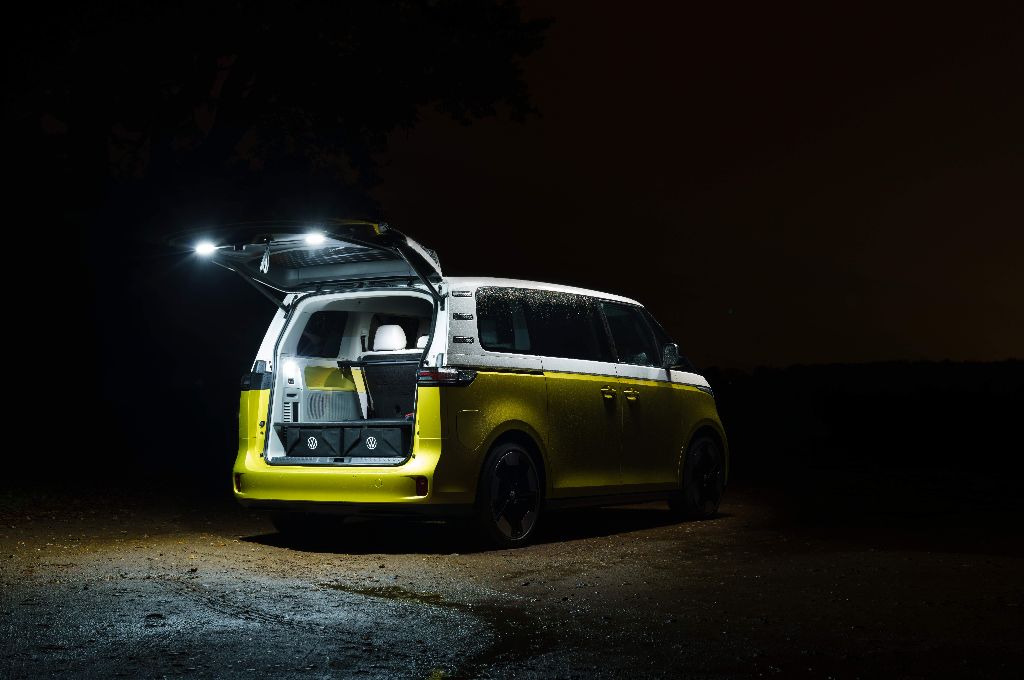
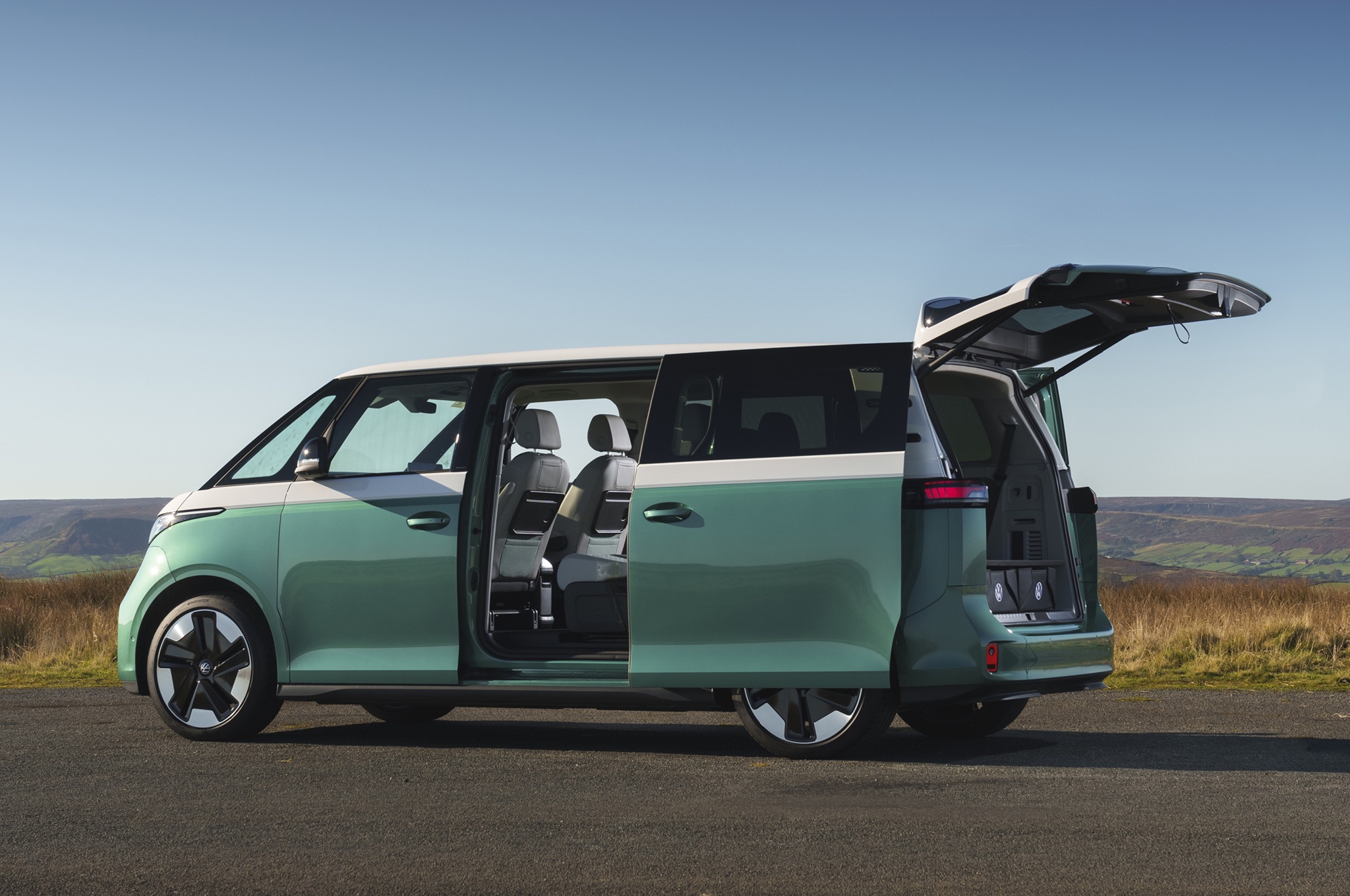
In the metal, the ID. Buzz is glorious. You can even have it in the cheerful, bright colours and two-tone paint of the classic VW camper (also fondly known as the ‘VW bus’, so even the ‘Buzz’ name is a nod to its ancestor) that is unmistakably the chief design influence, here.
Sales of the Volkswagen ID. Buzz started in the UK in 2022, with both a five-seater and a van version. A long-wheelbase, seven-seater version joined the range in 2024, and there have also been updates to the batteries and powertrains across the range over the years. Battery options are currently either 79- or 86kWh packs, which offer WLTP range of around 250- to 290 miles depending on which variant you go for.
A new, four-wheel drive VW ID.Buzz GTX 4Motion also joined the range in 2025, which brings more power and four-wheel drive over the standard, rear-wheel drive versions of the ID.Buzz.
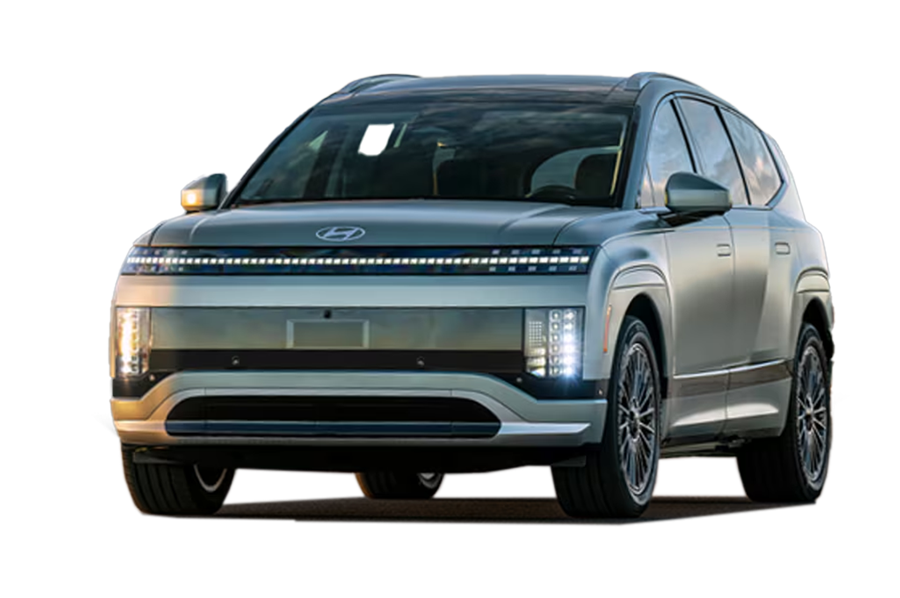
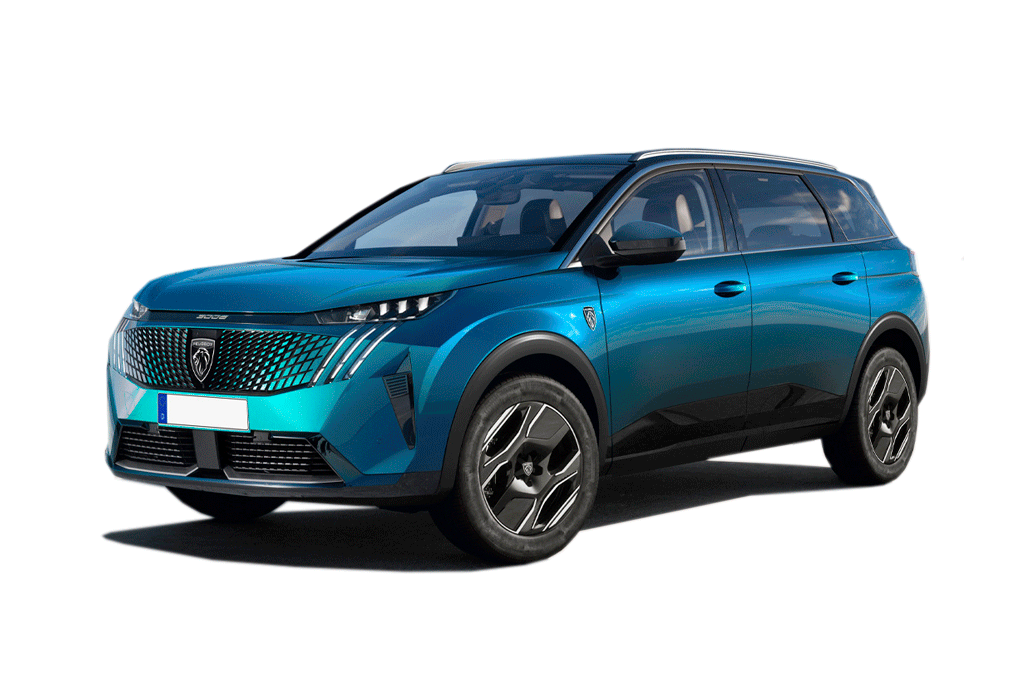
With this sort of range, style and desirability, together with the option of a standard wheelbase ID.Buzz with five seats, or a long-wheelbase model with six- or seven-seats, the ID.Buzz is a really versatile family electric car that actually competes closely with SUVs ranging from the BMW iX3 and Mercedes EQB, through to the Kia EV9 Air and Hyundai Ioniq 9.
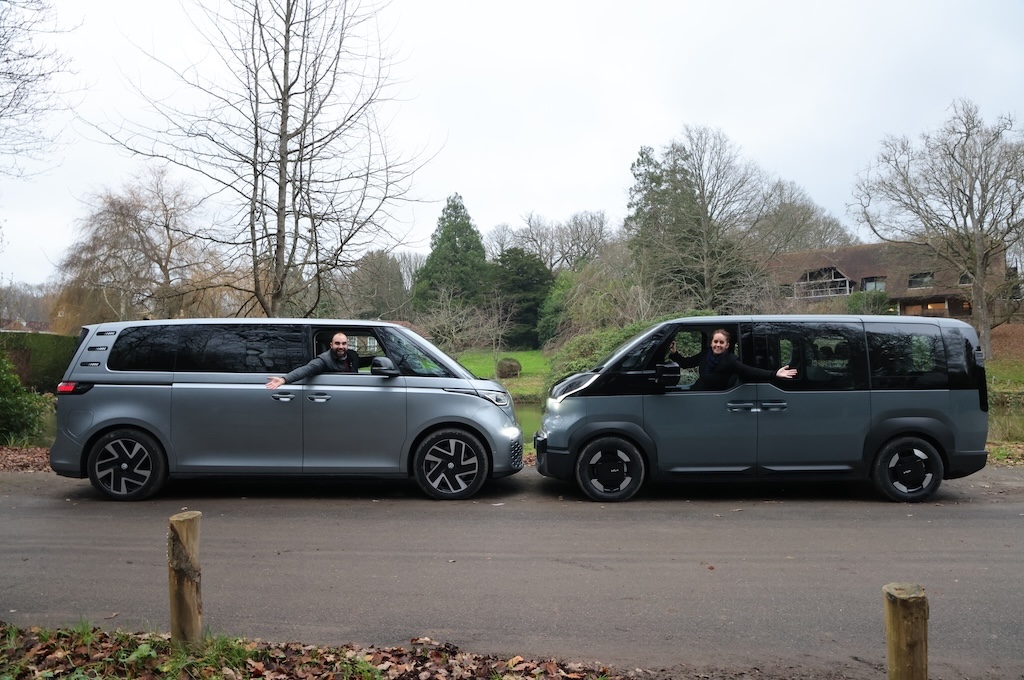
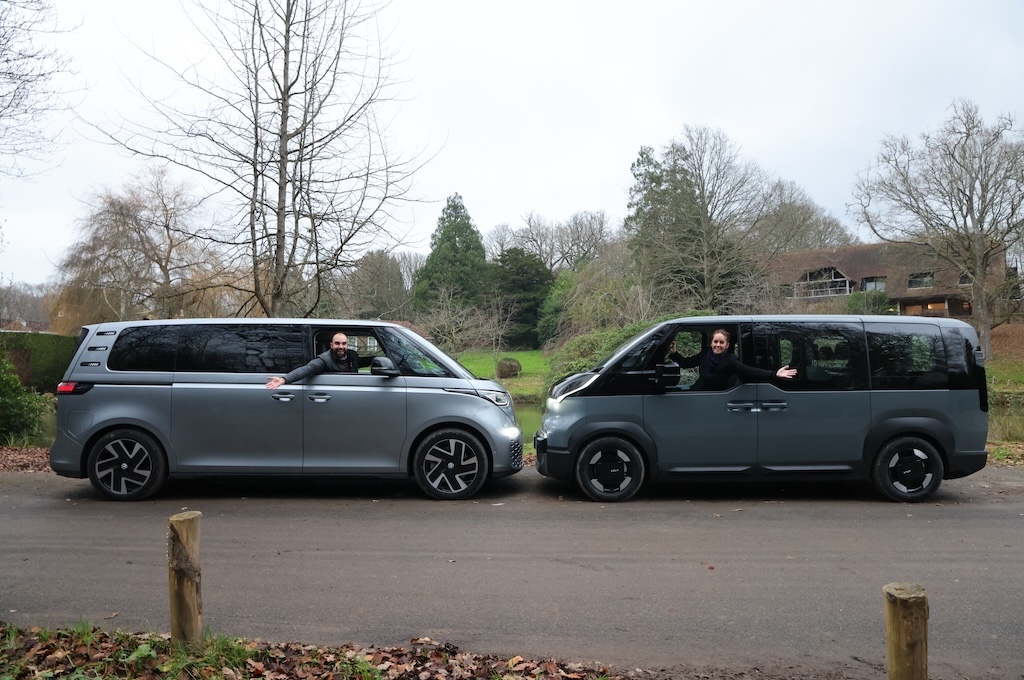
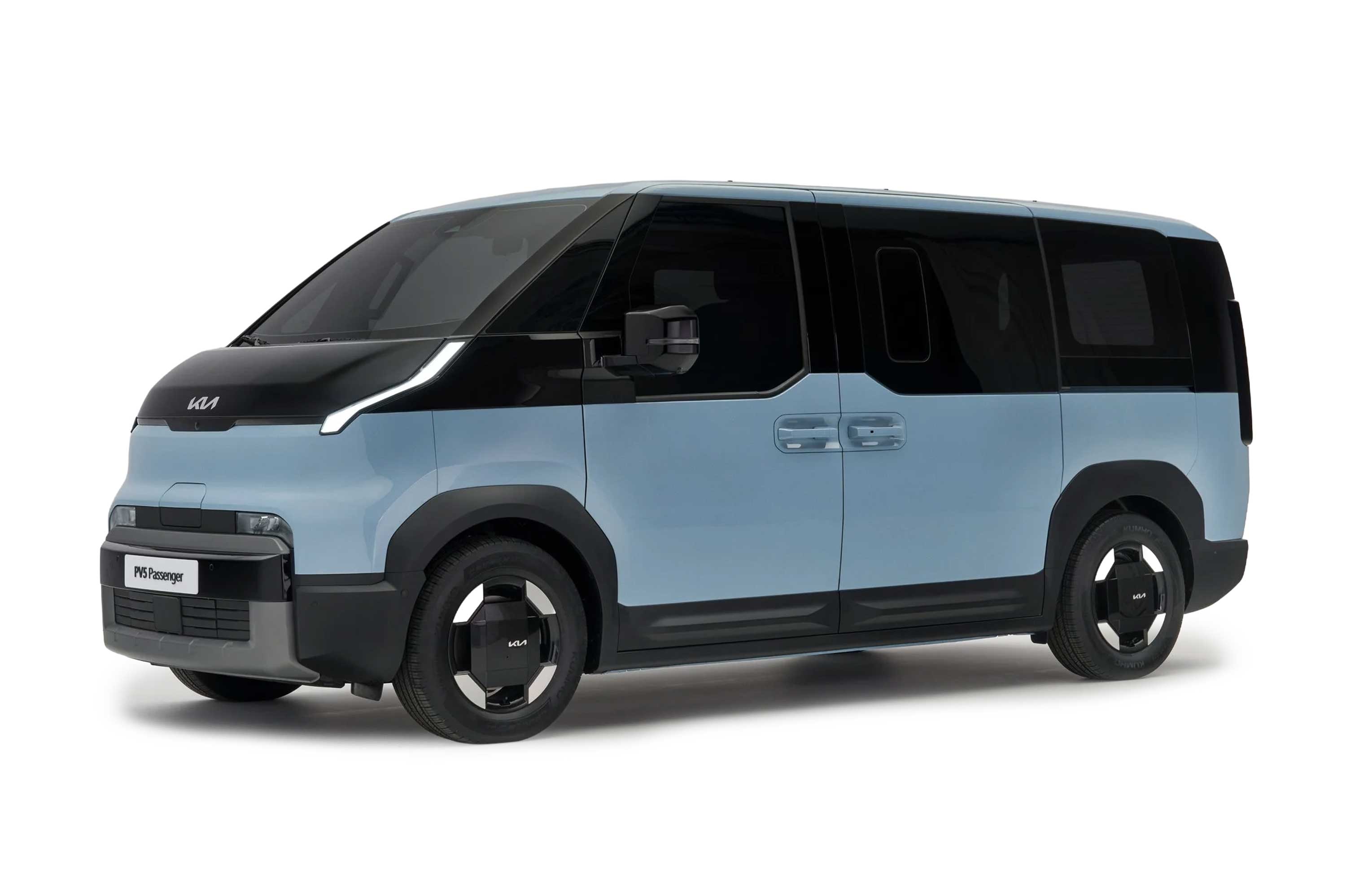
There's also now the Kia PV5 Passenger, which is a much more affordable alternative to the ID.Buzz and one of our favourite electric MPVs, so check out the video twin-test if you want to know which we prefer!
Naturally, a VW ID. Buzz California camper van is also planned, but it’s not here yet.
Anyway, back to the basics of the ID. Buzz, which is based on the same foundations as most electric Volkswagens. Known as the MEB platform, this is effectively a giant skateboard with the battery pack in the middle.

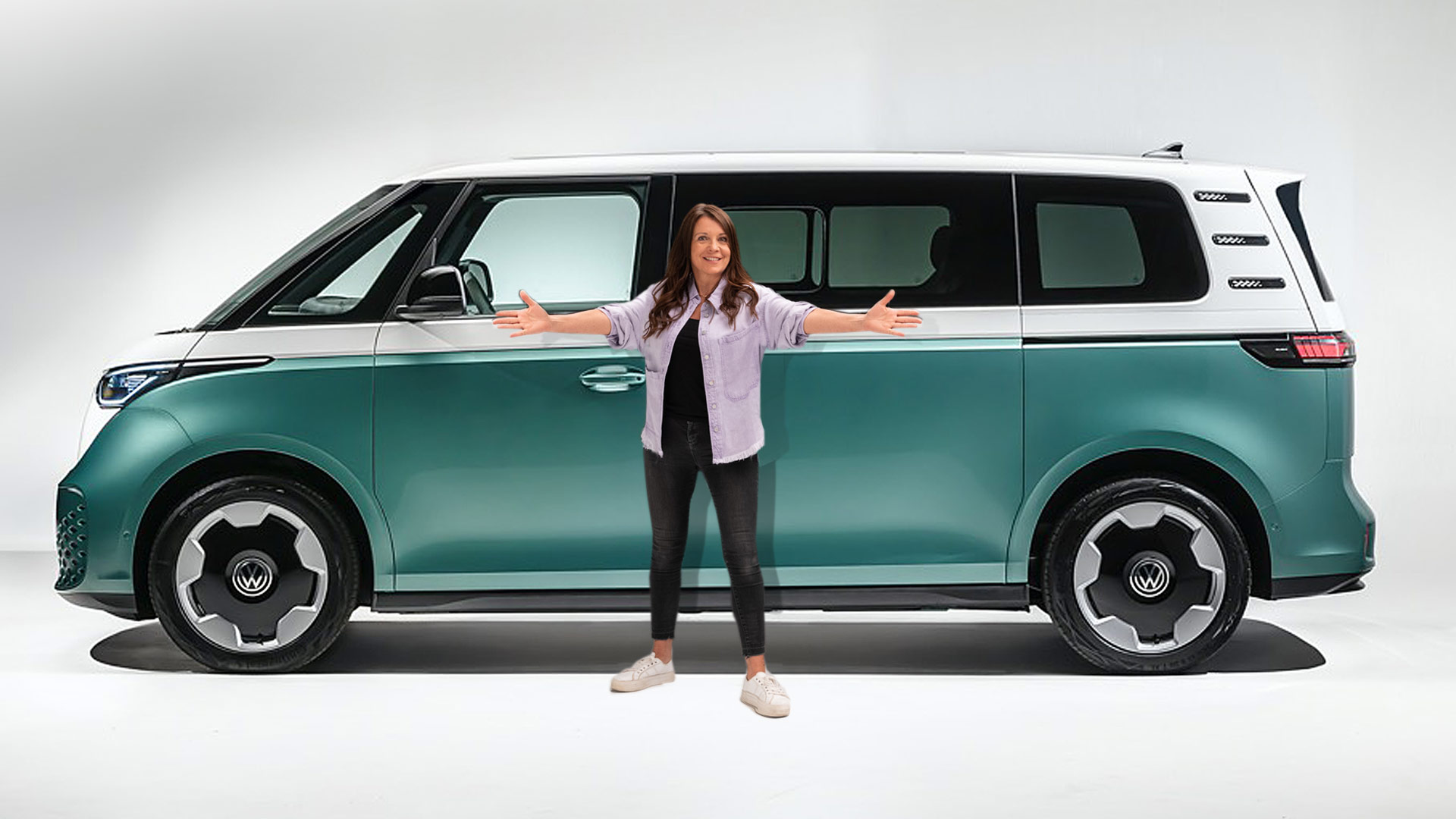
As you’d expect, the Buzz is a fairly big vehicle but it's no bigger than plenty of family SUVs that aren't as practical. If you go for the standard wheelbase (five-seat) ID.Buzz, it's just over 4.71-metres long, which makes it a fraction shorter than the Peugeot E-5008, for instance. The long wheelbase VW ID.Buzz is 4.96m long, making it almost as big as cars like the Kia EV9 and Hyundai Ioniq 9.
Don’t worry about height restrictions, though. Every ID.Buzz falls below the 2.0-metre maximum height restriction that sometimes limits access to car parks.
Range, battery and charging
The ID.Buzz has the option of two batteries. Go for the standard wheelbase model and you get a 79kWh usable capacity with a WLTP range of between 249 miles (for the four-wheel drive GTX 4Motion model) and 283 miles.
Go for the long wheelbase ID.Buzz, which offers a seven-seat layout, and you get the bigger 86kWh battery – but the extra weight means that range isn’t much different and varies from 281- to 293 miles depending on the powertrain.
Real-world range can be very different, though, and we haven’t typically found the ID.Buzz to be very efficient in normal use. On a wintery motorway journey (which is the worst sort of driving for EV efficiency) you should expect to see more like 130- to 160 miles of range from the Buzz. Warmer weather and slower conditions will see that real-world range creep up to over 200 miles.

You can add an optional heat pump to the VW ID.Buzz, which is worth doing only if you do a lot of long journeys in winter.
An eight year, 100,000 mile warranty is standard on Volkswagen’s electric car batteries, and they’re protected against performance loss – so VW will replace or refurbish the battery if it drops below 70% of its as-new performance within that warranty period.
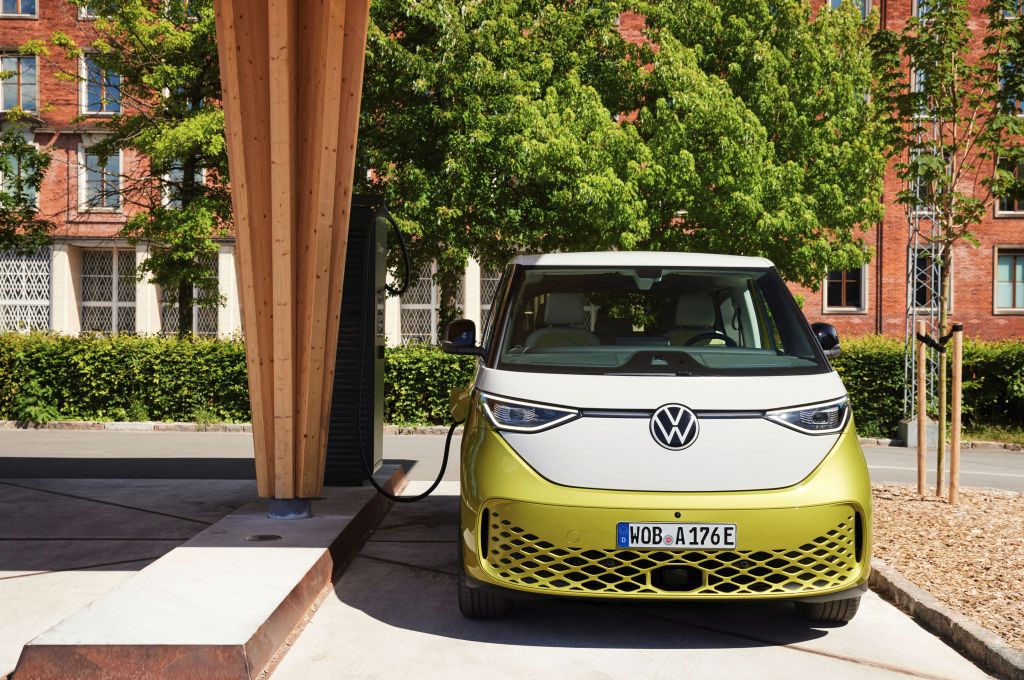
As for rapid charging, with DC charging speeds of between 170- and 200kW depending on which battery you have, the Buzz will top-up from 20-80% in around 20- to 30 minutes.
It also charges at up to 11kW from an AC charger, but most owners will just plug into a 7kW home wallbox, which will deliver a full battery in roughly 11- to 14 hours. With Type 2 and CCS sockets located at the rear of the car, the Buzz is compatible with every home charger, and almost all public chargers in the UK and Western Europe.
You’ll have to pay extra for a cable to charge at a standard three-pin domestic socket, but it can still be useful for trickle-charging overnight. You’ll only be getting around seven miles of range per hour while the car is plugged into a normal domestic socket, but that’s still very useful – especially for charging when you’re away from home at a campsite or rental cottage that doesn’t have dedicated car chargers. I’ve used it when I’ve been on holiday in EVs quite a few times, and it’s surprising how much charge you get if you plug the car in every night.
Sadly, the ID.Buzz does not have vehicle-to-load (V2L) charging, which is a real shame as a car with this sort of outdoor lifestyle appeal would really benefit from being able to power electric devices from its high voltage battery. Just think – you could use the car to power your pump, and blow up your stand-up paddle board really easily. Never mind. VW is introducing V2L on many of its newer EVs, so here’s hoping that it’ll be on the ID.Buzz soon.
Practicality and boot space
You’ll struggle to find a roomier family car than the ID. Buzz, although the Kia PV5 Passenger and Citroen e-Spacetourer run it close.
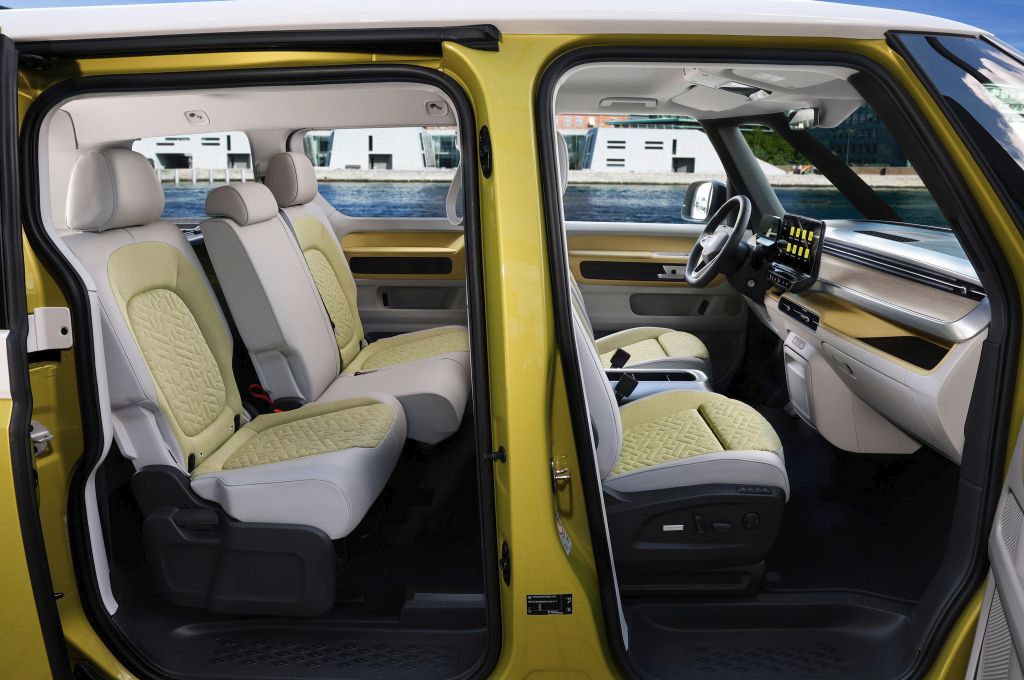
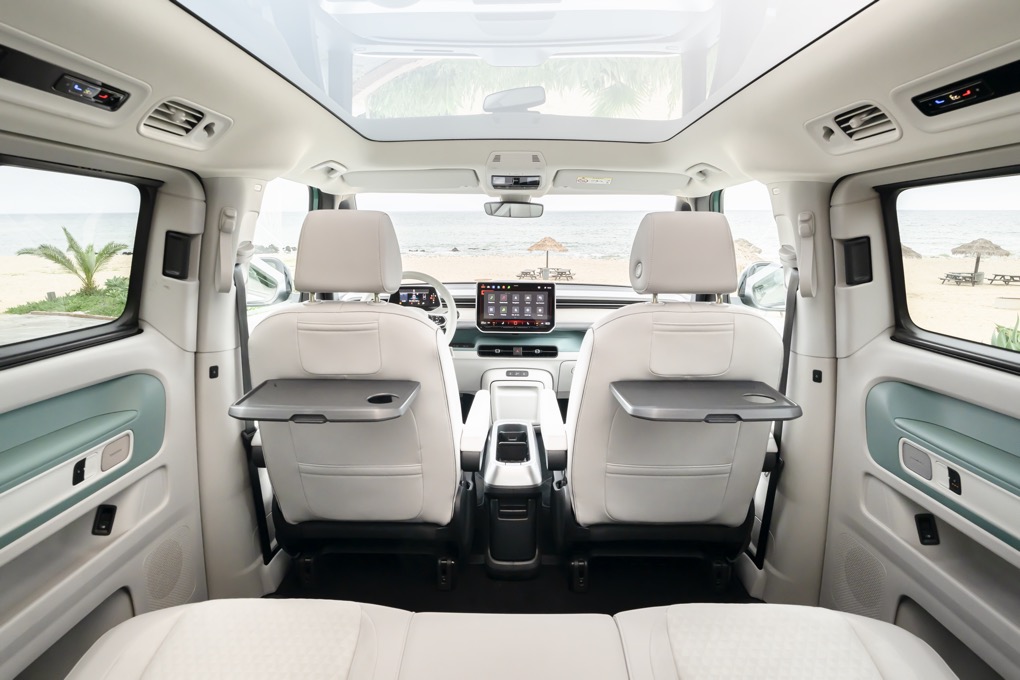
The standard wheelbase ID.Buzz offers either five- or six-seat layouts, but most will go for the five seater, which has huge amounts of head- and legroom for those sat in the rear seats. It’s easy to get in, too, thanks to the huge sliding doors on both sides, which reveal big door apertures and are great for giving easy access even in a tight parking space. There’s more headroom than in almost any SUV, too.

The only thing is that the sliding doors are heavy so, unless you enjoy weight-lifting, you’ll need to specify the Open and Close package that comes in at a hefty £1,055 and adds electrically-powered doors. These are standard on the long wheelbase car, though.
The other fly in the ointment is that the Buzz really only offers four decently shaped seats. While it can officially carry five, the fifth passenger makes do with the firm, raised seat squab in the middle, which isn’t exactly comfortable on longer drives.
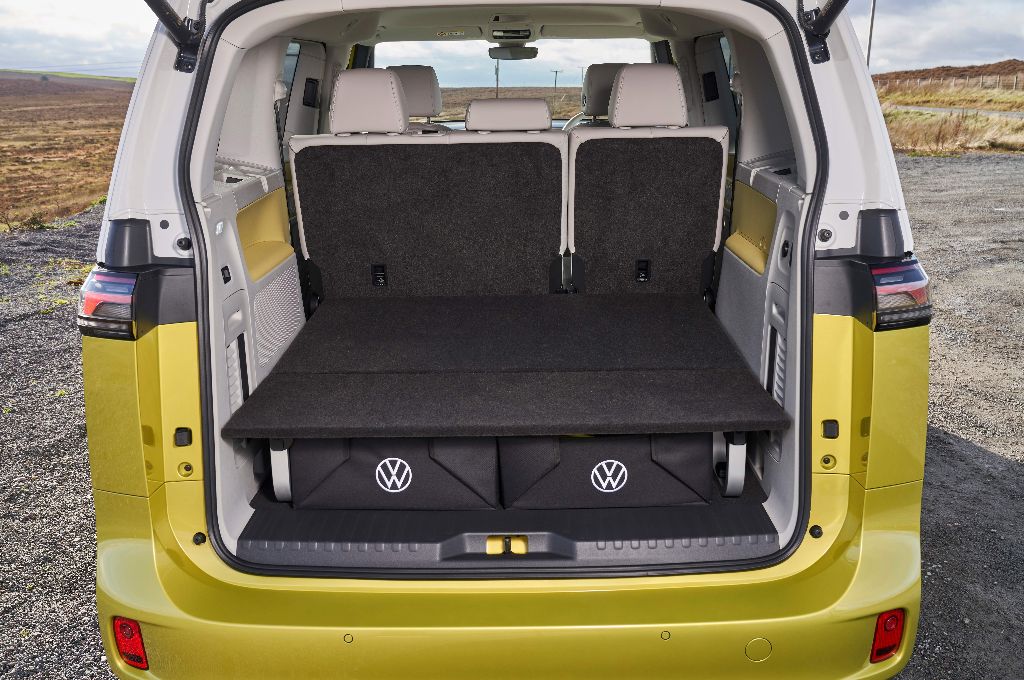
In terms of boot space, the SWB Volkswagen ID.Buzz offers an incredible 1,121 litres of space with the rear seats in position. Fold the second row down and that figure rises to 2,205 litres. What’s more, the rear seats fold to give a completely flat load area – or a 2.2-metre, makeshift bed, if you fancy a bit of spontaneous van-sleeping. It’s annoying that you have to optionally add the ‘multi-flex board’ (known as a variable boot floor, outside of VW boardrooms) that brings the boot floor up to the height of the folded seats – or it’s standard on Style trim.
The long wheelbase VW ID.Buzz gets a 250mm longer wheelbase is available as a six-seater, which gets four individual seats in the back including rotating, captains seats for the full executive boardroom-on-wheels layout. You can get the same layout in the shorter wheelbase model, too, if you want. It gets less bootspace in favour of bigger seats in the back, though. Check out Ginny's walkaround video of the seven-seat LWB VW ID.Buzz, for a really in-depth look at the practicality it offers.
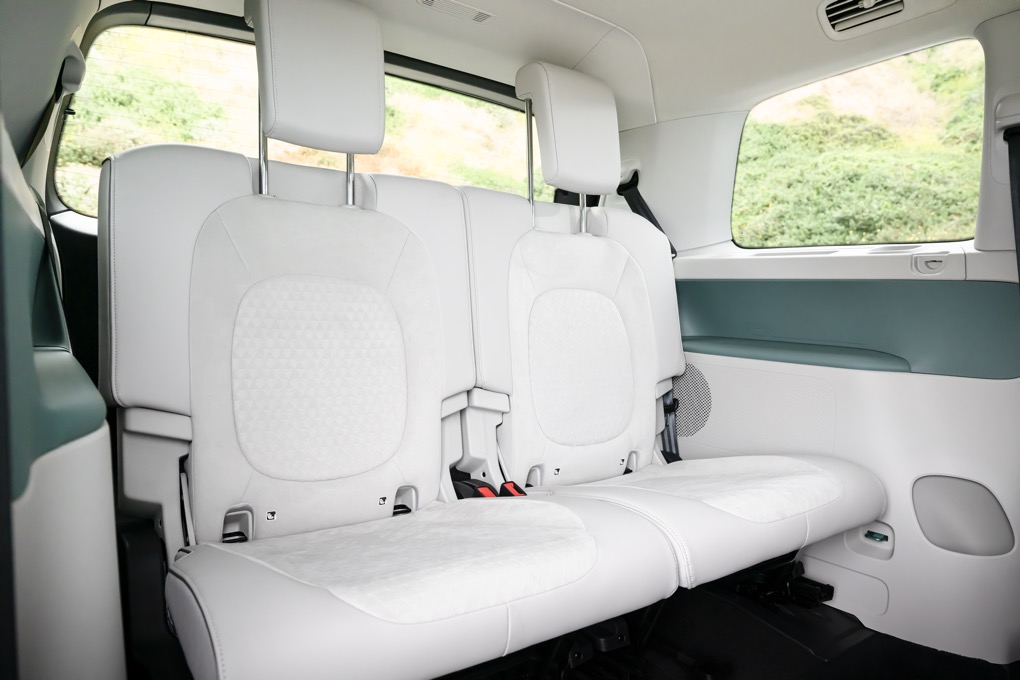
Most ID.Buzz buyers considering the long wheelbase version will be after the family-friendly seven-seat layout, which has a standard three-person bench in the middle, and two additional seats that pop up out of the boot floor when you need them.

To help keep the kids entertained, there are also eight USB-C interfaces on board which are all super-powerful, to keep stuff like laptops charged three times as fast as with conventional USB-C ports. The front passenger seat also has an optional 230-volt socket with a maximum output of 300 watts. That’s not enough to boil a kettle or run my hairdryer (you’d need V2L for that…), but will run a games console or smaller appliance.
The three-seater middle bench seats have backrests that can be reclined, and can be slid forwards and backwards by 200 mm.
The two individual seats in the third row can also be moved forwards and backwards, as well as reclined. They also fold away easily to give more storage space, or can be removed completely if you want to make use of the truly enormous boot space behind that middle row of seats.
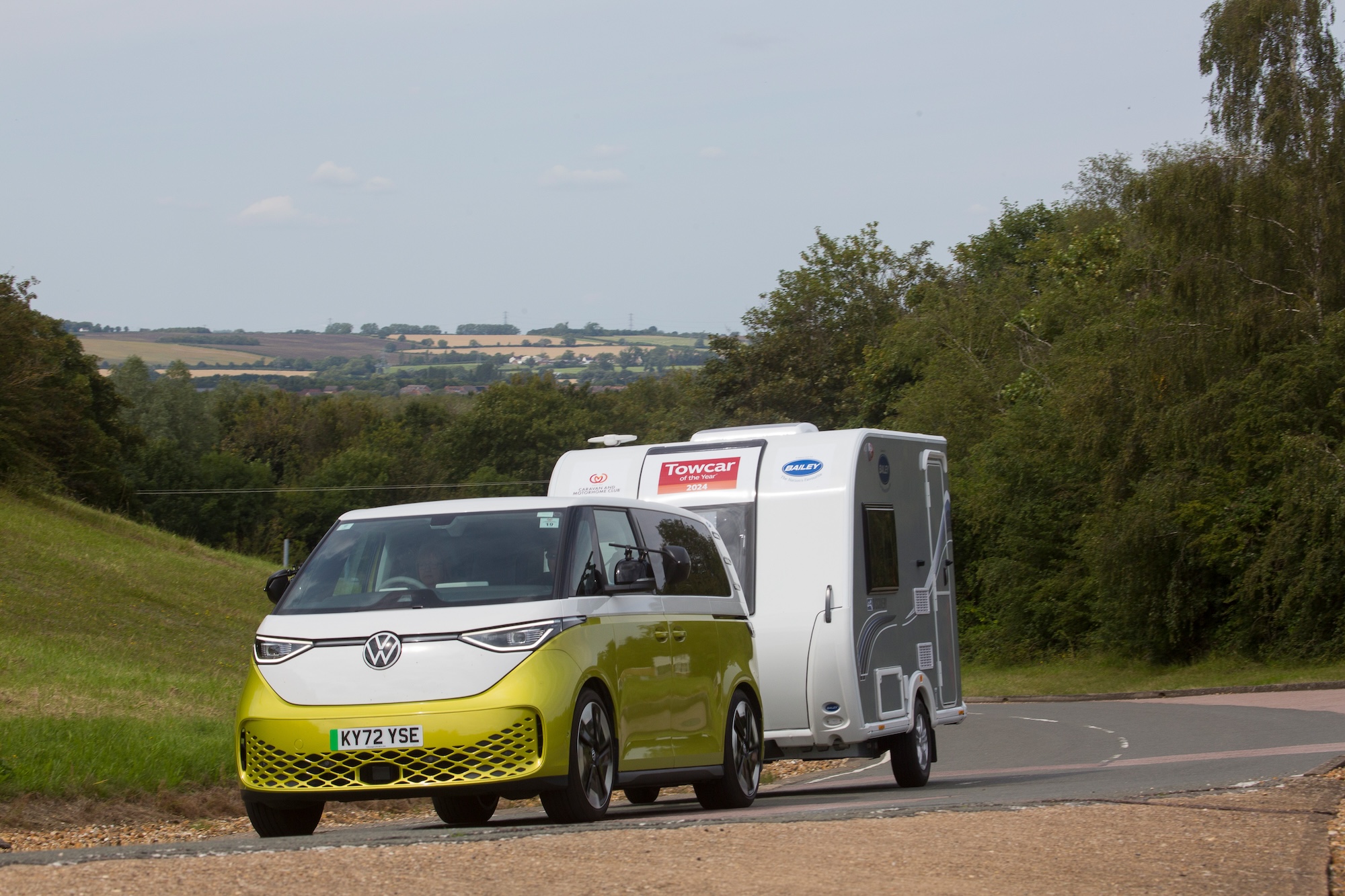
Other practicality things to consider? You can tow with the Buzz, which will pull a braked trailer of up to 1.2 tonnes in the standard rear-wheel models, while the all-wheel drive 4Motion GTX can tow up to 1.8 tonnes. VW offers an electrically retractable tow bar, of course.
Interior, design/styling and technology
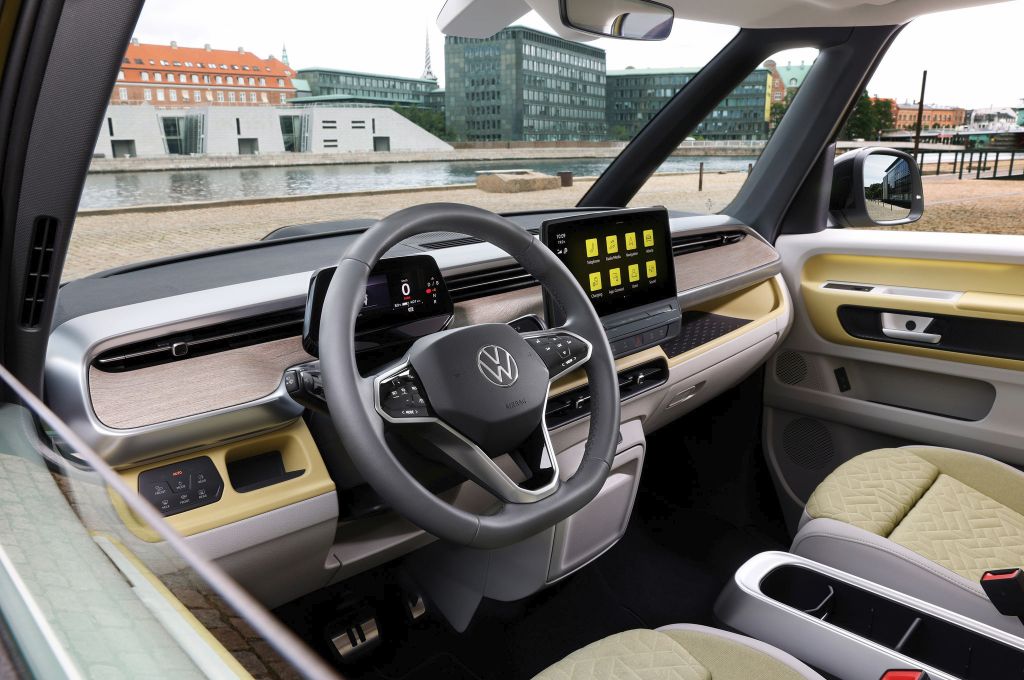
The comfort and perceived quality up front is great, with the huge glass area and high-set position making for a really lovely driving position that’s just peachy for long drives. This is definitely one area where you can see that this is a much more expensive car than the Kia PV5!
There are some really nice touches, too, including the ‘Buzz Box’, which is a deep storage compartment that forms a divider in between the front seats, but it can also be removed to leave a completely flat floor. There are even a couple of lidded bins in the big front-door pockets.
While the driving position is very comfy and has plenty of adjustability even in the ID. Buzz Life, the mid-spec Style gets armrests on both sides of the driver’s and passenger seats, for that full ‘armchair’ experience.

The dashboard stretches out in front of you, when you sit in the ID. Buzz, and despite covering a huge area it’s cleverly detailed and neatly laid-out. Opt for the entry-level Life model and the dash area, steering wheel and infotainment frame is finished in black and grey (colourful upholstery options are available). Move up to the Style version and the whole cabin, including the seats, is colour-matched to the exterior. Style buyers also gain a white steering wheel and a white frame for the infotainment system, which some will love, and others will find themselves constantly cleaning.
Some may not be too delighted to see the same touchscreen system here that features in the VW ID.3 and ID.4, but VW has made big improvements with the software over the years. The 10-inch touchscreen comes with an impressive 9-speaker sound system, wireless Apple CarPlay and Android Auto, navigation with charger search function and a voice-control system that responds (most of the time…) to natural phrases such as “I’m cold”.

It’s got over-the-air software updates, too, so it should get better over time, without you having to take it into the dealer so that someone can plug a laptop in.
Honestly, don’t be put off by the fact that this system was pretty glitchy when it first arrived. It’s really not bad to live with, now, and it gets all the features you want including wireless Apple CarPlay and Android Auto.
The ID. Buzz has good safety credentials, and was awarded the full five stars in Euro NCAP crash tests. It gets adaptive cruise control with stop-and-go that, together with the standard lane-keep assist function, creates a semi-autonomous drive mode. It also senses cars, pedestrians or cyclists up ahead, and will brake automatically if it senses an imminent collision.
Motors, performance and handling
When it originally arrived, the Buzz had a 0-62mph time of 10.2 seconds. Over the years, though, VW has introduced its new and improved powertrain including a more powerful 286hp electric motor powering the rear wheels, which has brought the 0-62mph time down to a very respectable 7.6 seconds (or 7.9 for the long wheelbase).
The ID.Buzz GTX 4Motion has also arrived in recent years, and offers all-wheel drive and 340hp for a 0-62mph of between 6.1- and 6.4 seconds. Mind you, it’s more likely to be the all-weather usefulness of the four-wheel drive system (or the higher towing capacity of 1.8-tonnes) that makes the GTX appeal to most Buzz buyers, rather than its additional performance.
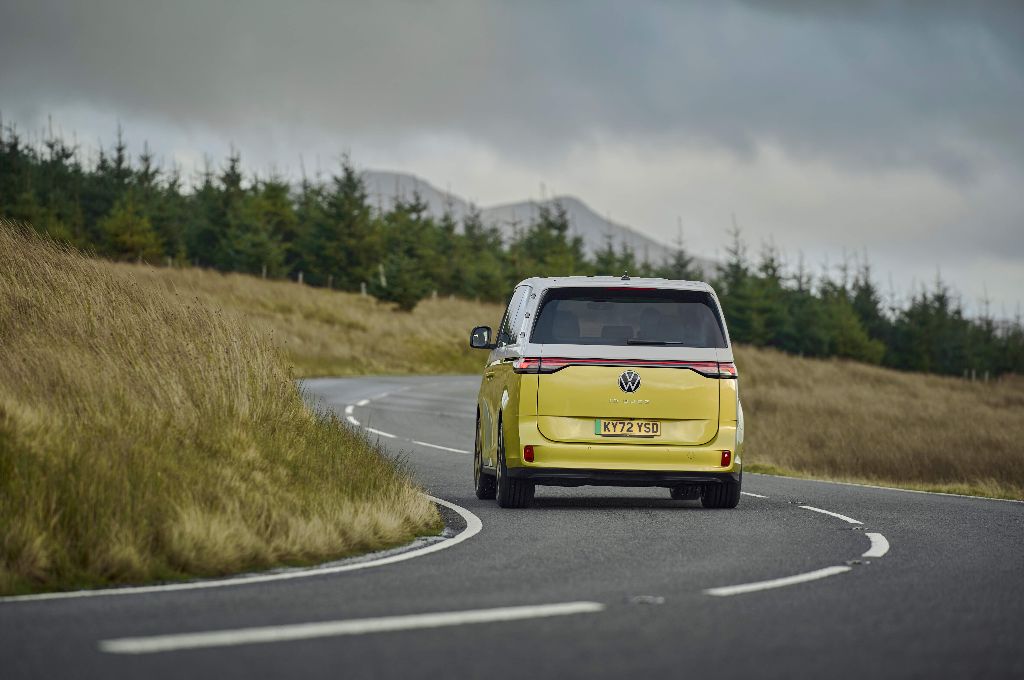
Despite its size and heft, you’ll be pleasantly surprised by how rapid and composed the VW ID.Buzz feels. It’s very easy to drive smoothly, and it feels really grippy and confident even in a fast corner.
Like other ID. models, the Buzz comes with a rather gentle brake regen’ system that only has two settings. It feels almost imperceptible in its standard mode, and even the heavier ‘B’ mode is moderate. There’s nothing wrong with the Buzz’s regen but we reckon that it would benefit from a one-pedal mode for when you’re around town.
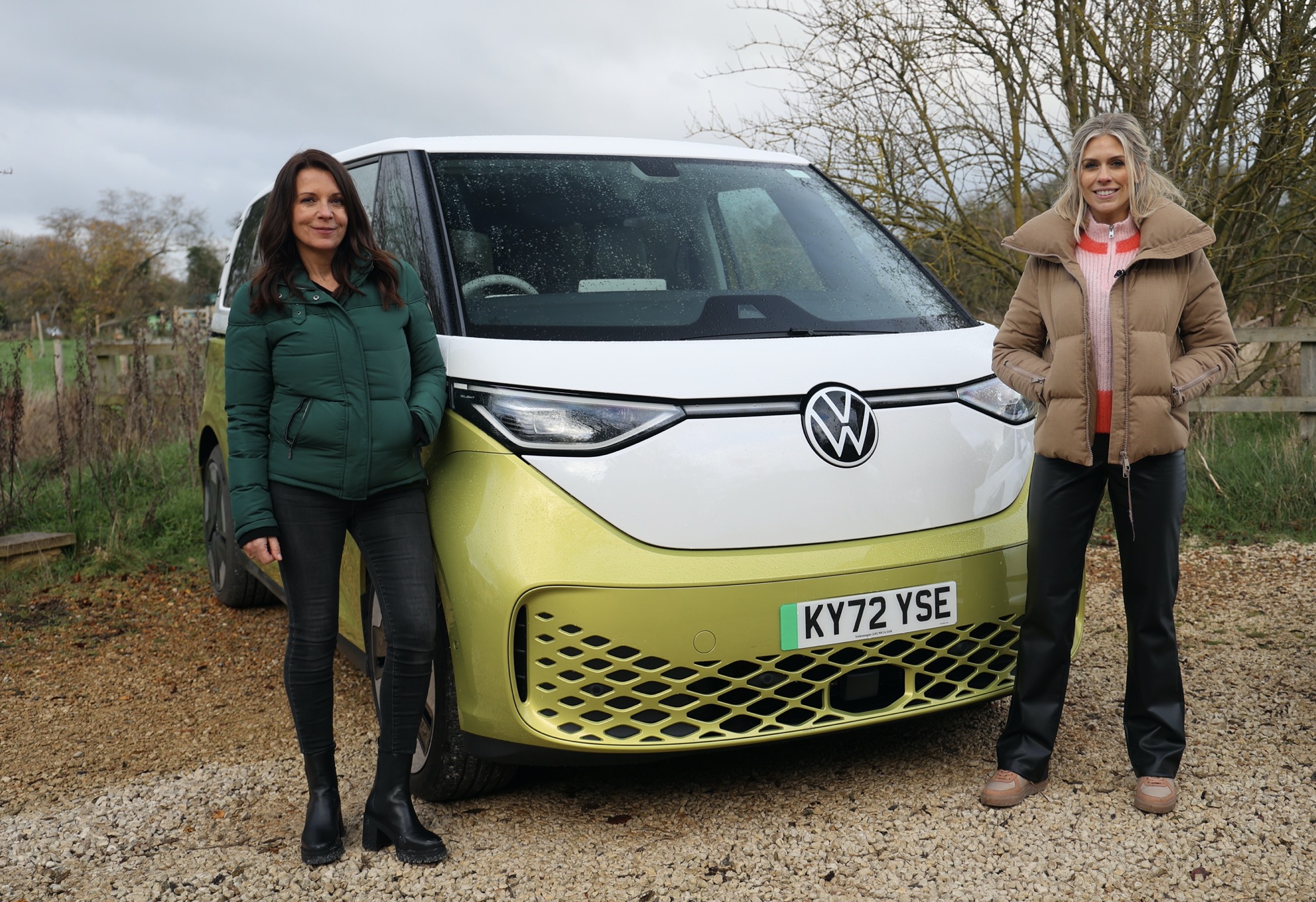
The ID. Buzz is smooth and refined, just as it should be. The ride quality - even on the biggest, optional 21-inch alloy wheels - is composed over small bumps and equally adept at smoothing out bigger undulations. It really does just seem to ease through the miles, and is a delight to spend time in with its airy, light cabin and cushy ride.
The handling matches that laid-back attitude, with light but nicely-weighted steering that makes you feel confident whether you’re wheeling through town or on the motorway. And Volkswagen’s engineers need to be congratulated for giving the ID Buzz a turning circle of just 11.1 metres – or 11.8 metres for the LWB model. That’s impressive for a chunky car, and makes the Buzz surprisingly easy to manoeuvre in a tight car park. For some more context, the Kia EV9 has a 12.3 metre turning circle.
Running costs and pricing
The VW ID.Buzz costs from around £60,000 up to just under £70,000 depending on which variant you want. That’s clearly not cheap! But it’s worth remembering that it is also less money than you’ll pay for similarly equipped variants of the Kia EV9 and Hyundai Ioniq 9, and VW also often has some brilliant lease deals on the ID.Buzz that can make it cheaper than you’d imagine.
Of course, it’s hugely expensive compared to the Kia PV5 Passenger, so if you’re after the sort of space and practicality that the Buzz offers but don’t want to pay the price, the Kia is a really fantastic alternative.
There ID.Buzz has been around a lot longer than the Kia, though, so a used Buzz could be a brilliant option for a retail buyer. Have a look at what you'll pay for a used Buzz by browsing the examples for sale on Electrifying.com right now.
There are only two trims on the Buzz – Life and Style, or a third option is the ID.Buzz GTX with its four-wheel drive and standalone kit list.
Life is well equipped, with most of the features you want including climate control, keyless entry, LED headlights, reversing camera and more. You’ll want to add the £695 Comfort Package that brings heated seats and the variable boot floor, though. Most will go for Style, though, which adds adaptive LED lights, more ambient lighting, powered tailgate and lots of style upgrades. Even if you do go for the higher spec model, it’s worth noting that the two-tone paint that we all want on a Buzz is an eye-wateringly expensive £2,790 option. The GTX model adds exclusive style extras as well as additional performance and four-wheel drive.
The Buzz isn’t that efficient – you’ll get more miles per kWh from the Tesla Model Y or BMW iX3, for instance, while the Kia EV9 is no more efficient but does have a much bigger battery. If you average 2.8m/kWh over the year, in the ID. Buzz, and charge mostly on a standard home electricity tariff, you’ll be paying around 9p per mile to ‘fuel’ the big VW, where more efficient rivals will probably be costing more like 7p per mile.
However, you can cut that electricity cost by more than half by using an off-peak tariff - and even if you don’t, the Buzz costs roughly half of what a petrol or diesel car costs to fuel.
Three years of roadside assistance is thrown in with the Buzz, as is a three-year, 60,000 mile warranty.
Verdict
We love the ID.Buzz. It’s not cheap, but it’s more versatile and practical than comparably priced SUVs, and while the Kia PV5 Passenger is a much better value option it’s not hard to see why the VW’s charm and style would still win you over.

It is a shame that VW couldn’t squeeze a bit more range out of the ID. Buzz, as this is the sort of family car that you will want to use all of the time, especially on longer family trips where the comfort, refinement and spaciousness becomes a huge bonus. Even so, with decent charging speeds, a vast interior and the sort of ‘want one’ factor that no SUV comes remotely close to, the ID. Buzz is one of the most practical electric family cars on sale. And one of the coolest, too.

 8
8.jpg?width=300&height=185)