





 Battery size: 77 kWh
 WLTP range: 346 miles
 Real world range: 210 (winter) - 305 (summer)
 Max charging DC: 175 kW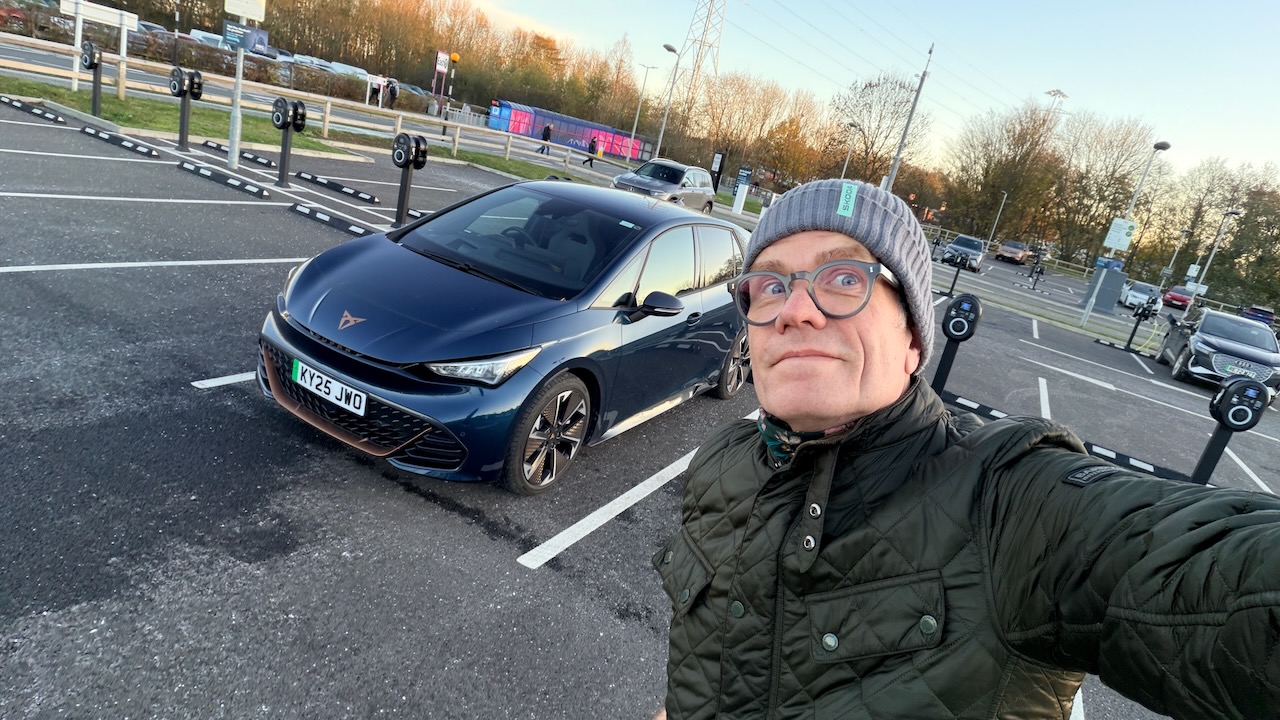



Report 1
July 2025
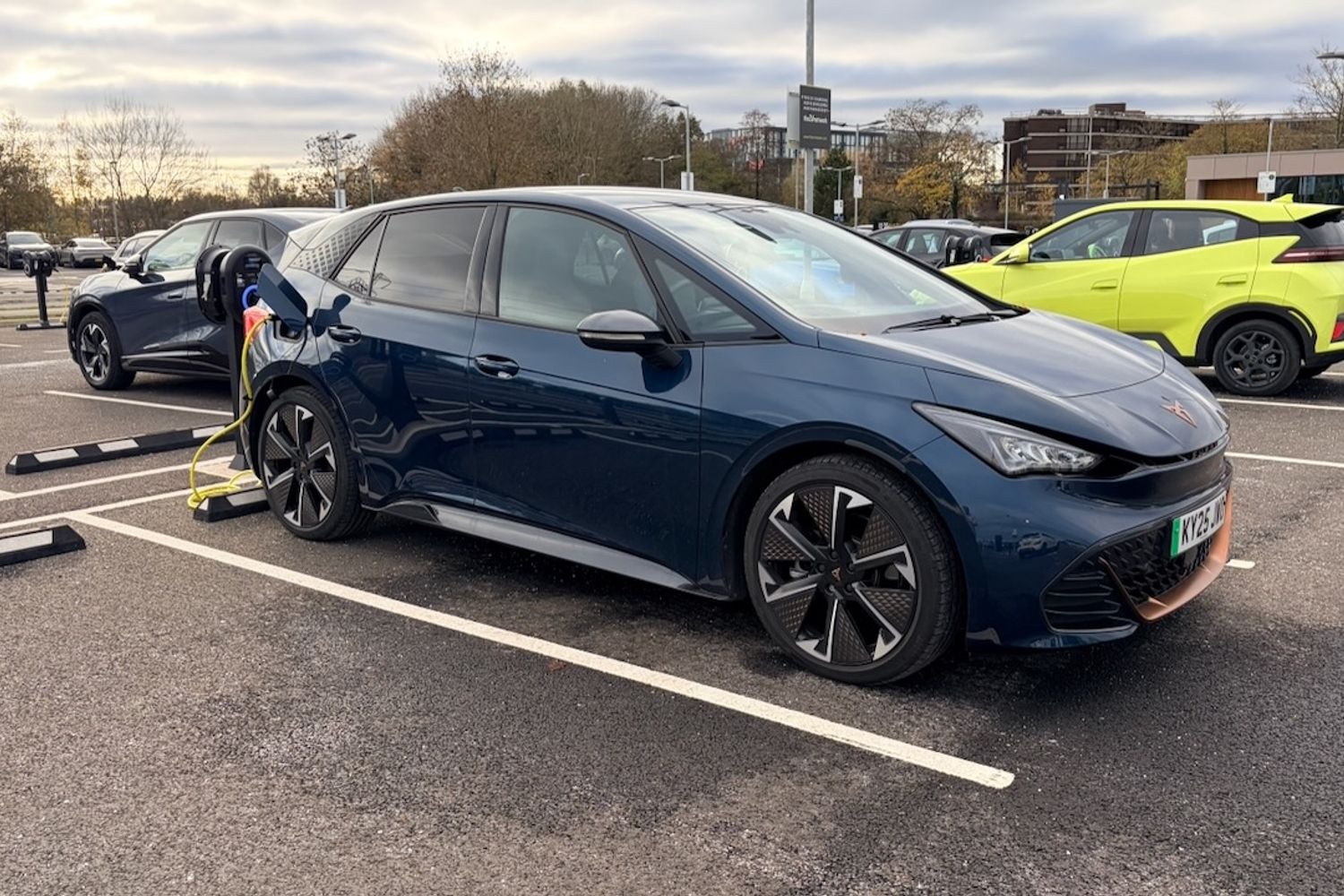
It’s no small secret that we’re big fans of the Cupra Born here at Electrifying.com. Tom B was lucky enough to bag the keys to our first Born long-termer back in 2023 (a 58kWh V3) and still gets dewey-eyed whenever it gets mentioned. In a remarkable twist of good fortune, Cupra replaced that first model with a range-topping VZ, complete with 322hp power output and rear-wheel drive. Although this time, it was Ginny who snaffled the keys. By the way, if you ever want to know what the best electric cars are, don’t waste your time watching videos or reading online reviews, just see which long termer Ginny claims the keys for.
Fast forward to July 2025 and the Born VZ has made way for a rather lovely V3, which we’ll be running for next few months. Although it’s the same spec as the first 2023 version we ran, this version has the larger 77kWh battery and a host of upgrades over the earlier model.

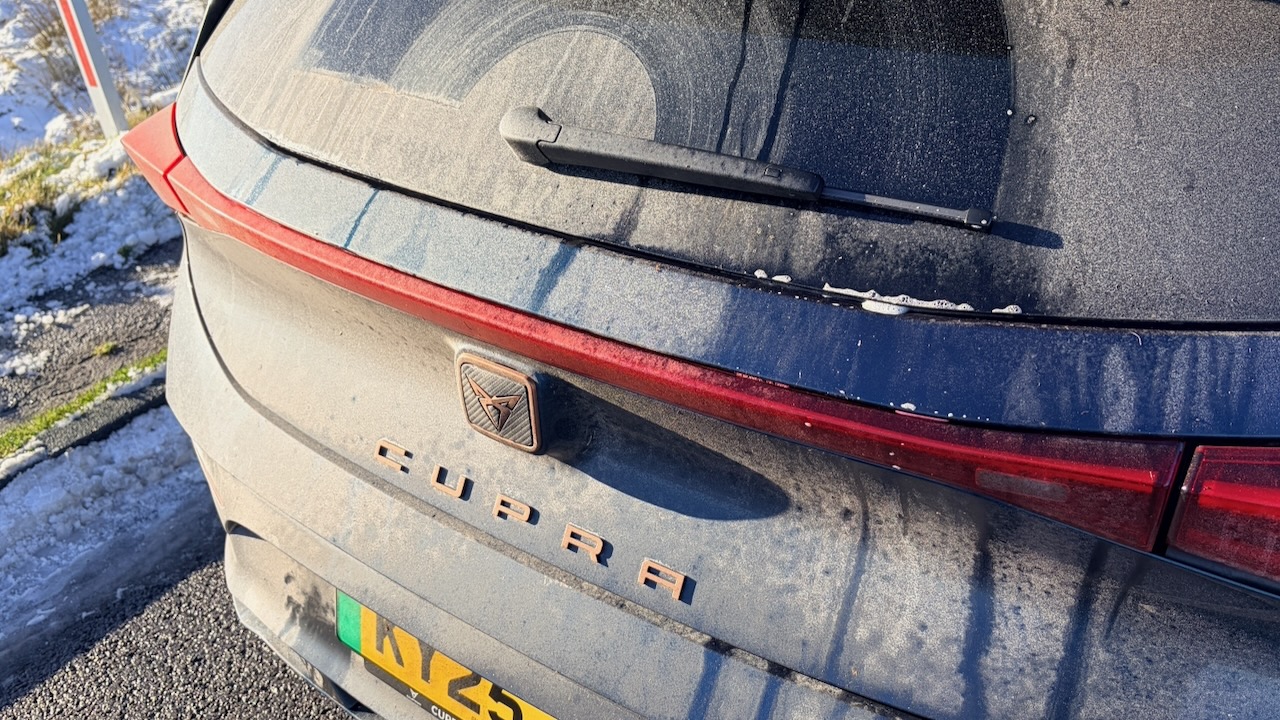
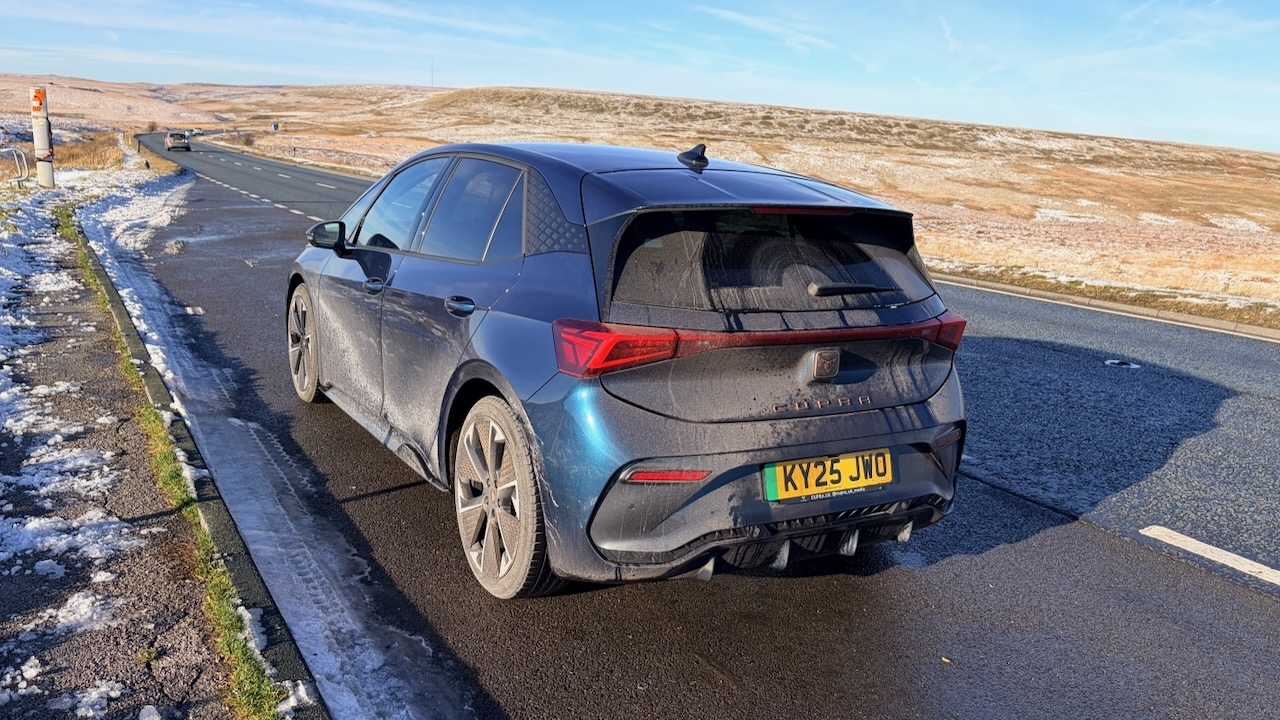
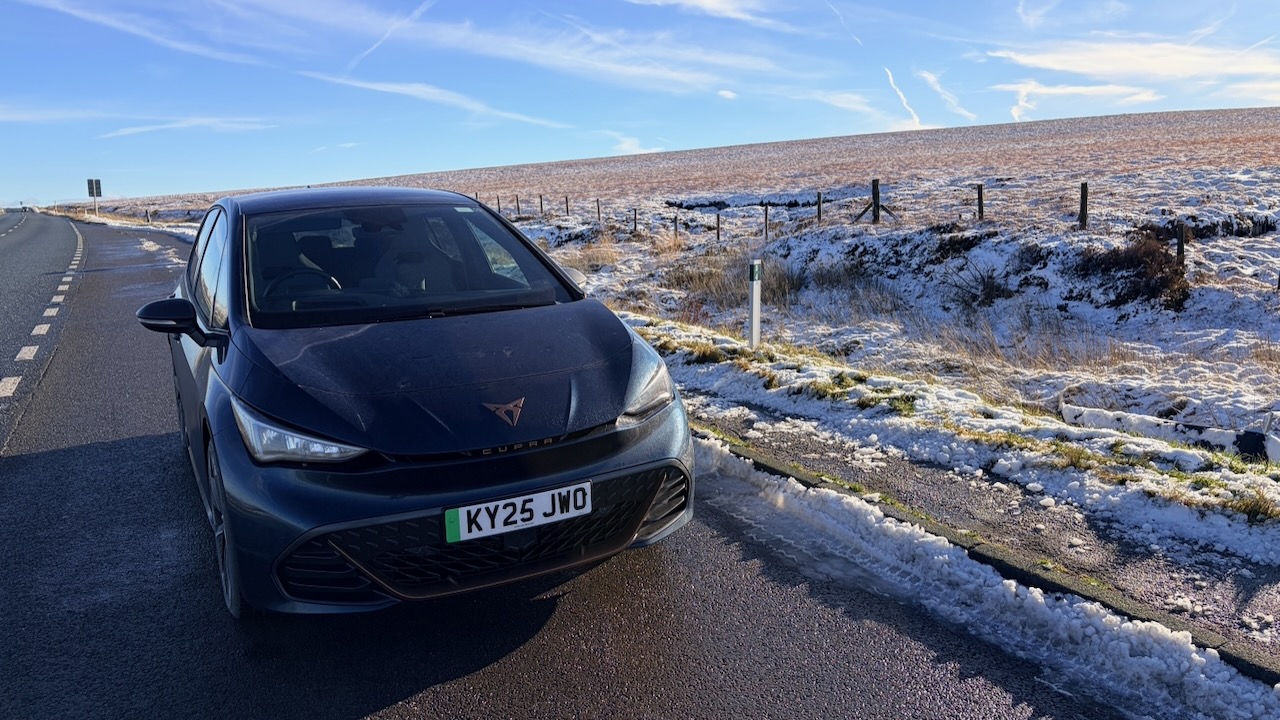
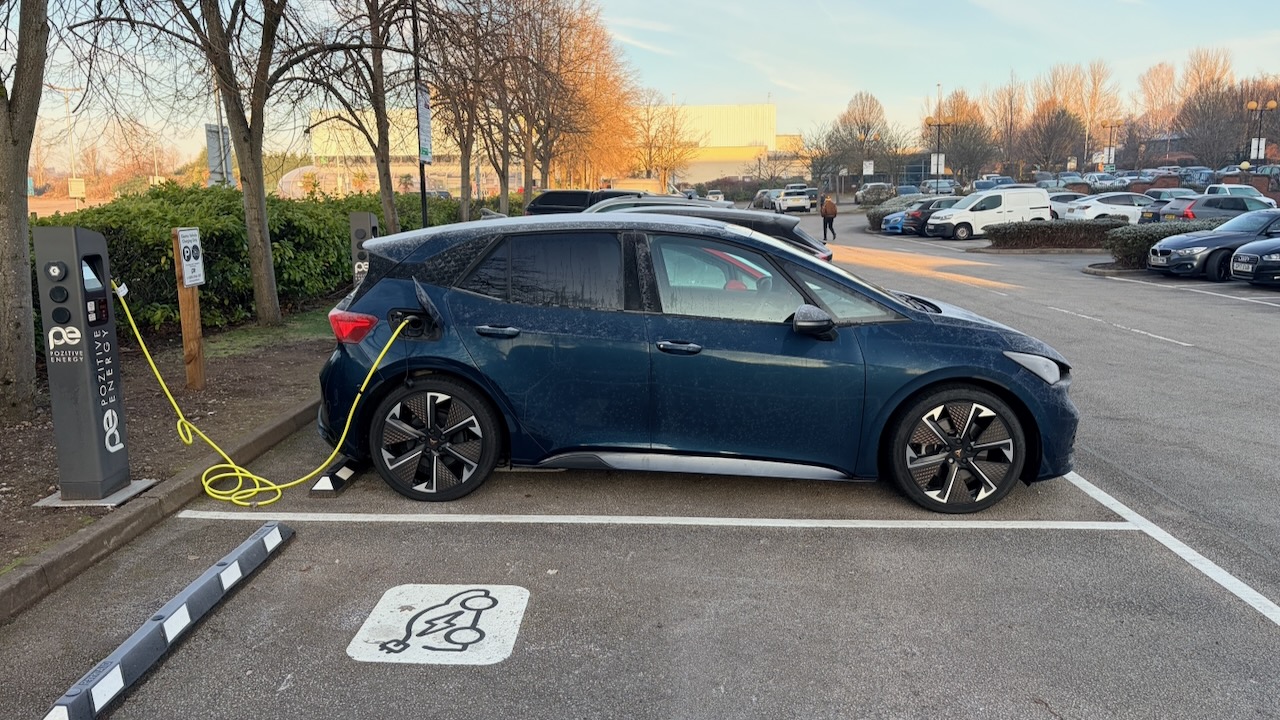
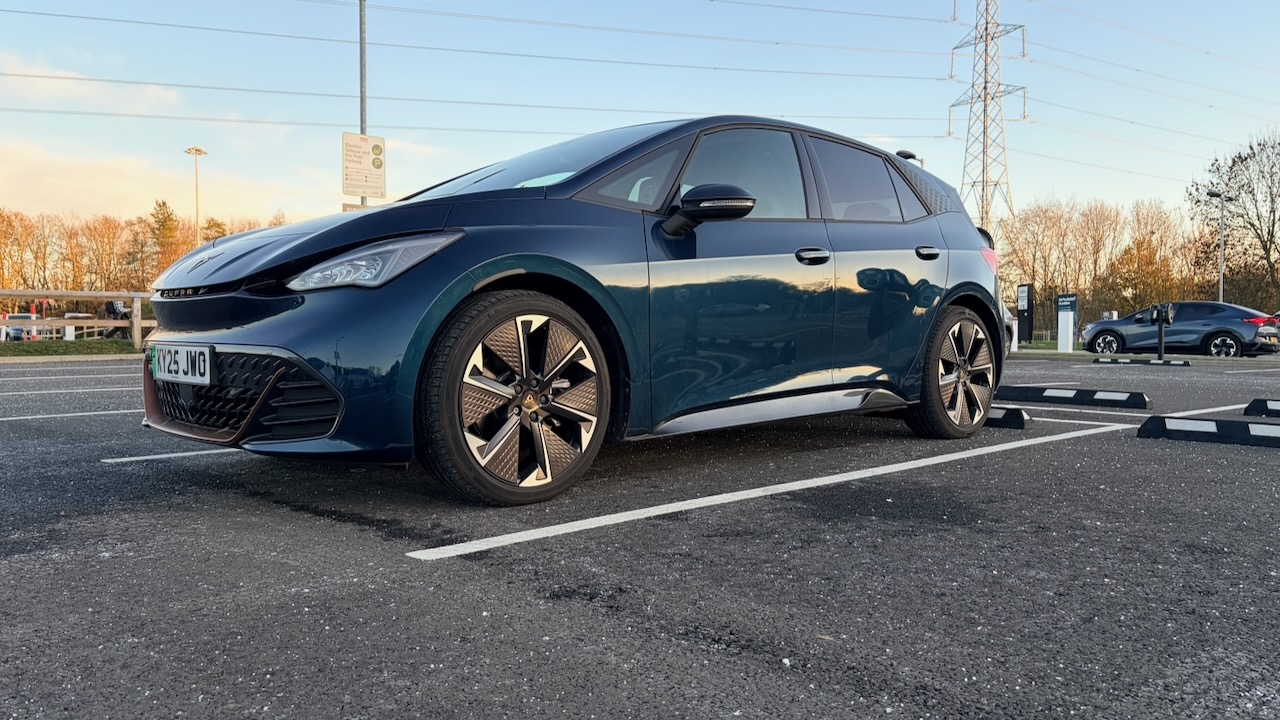
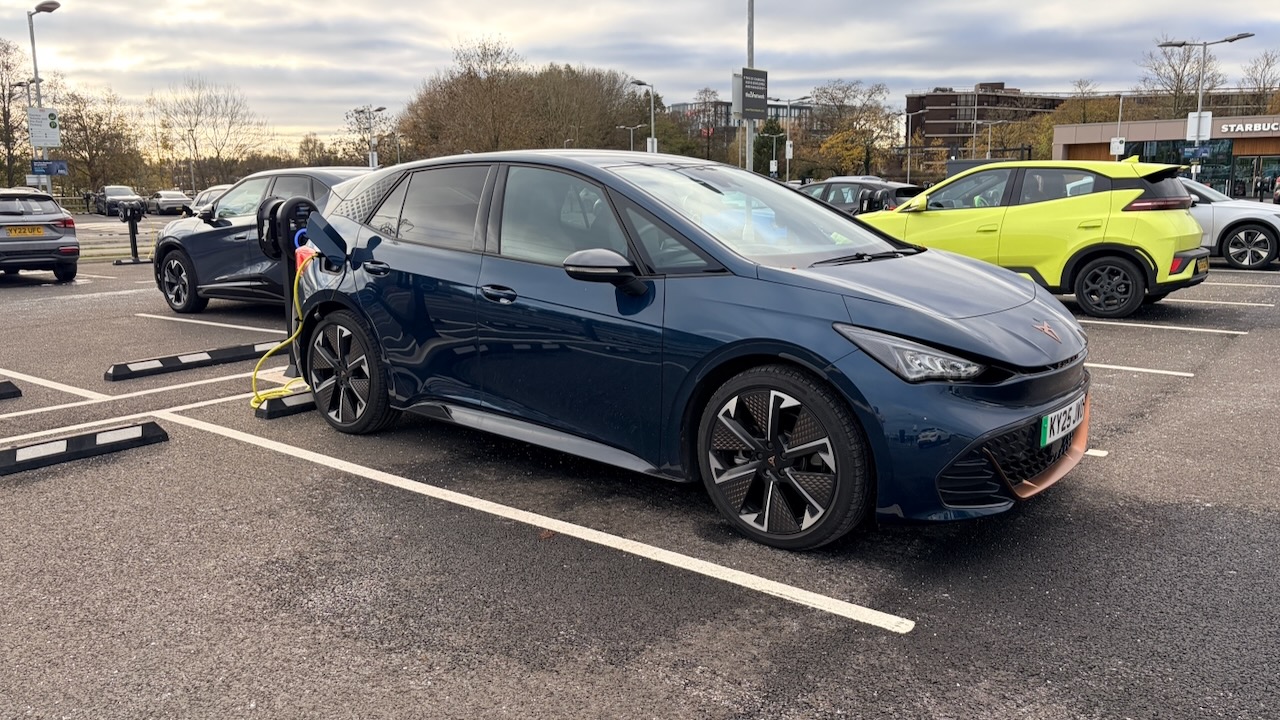
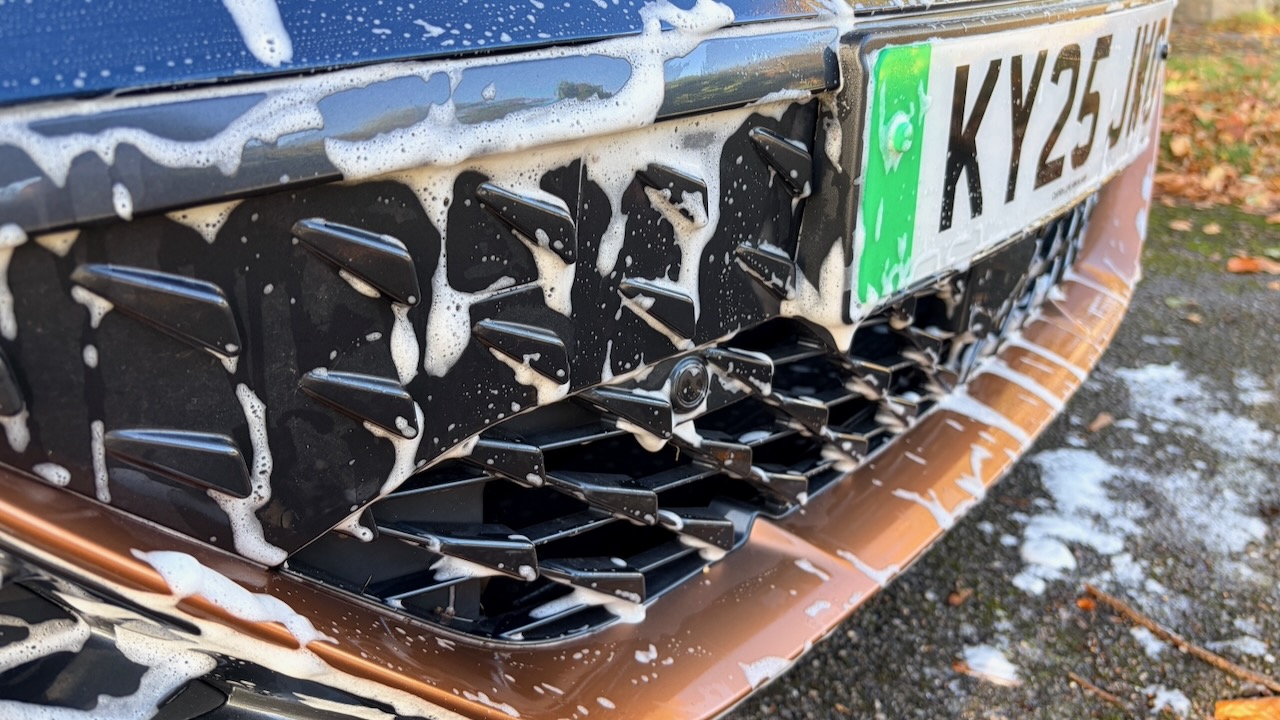
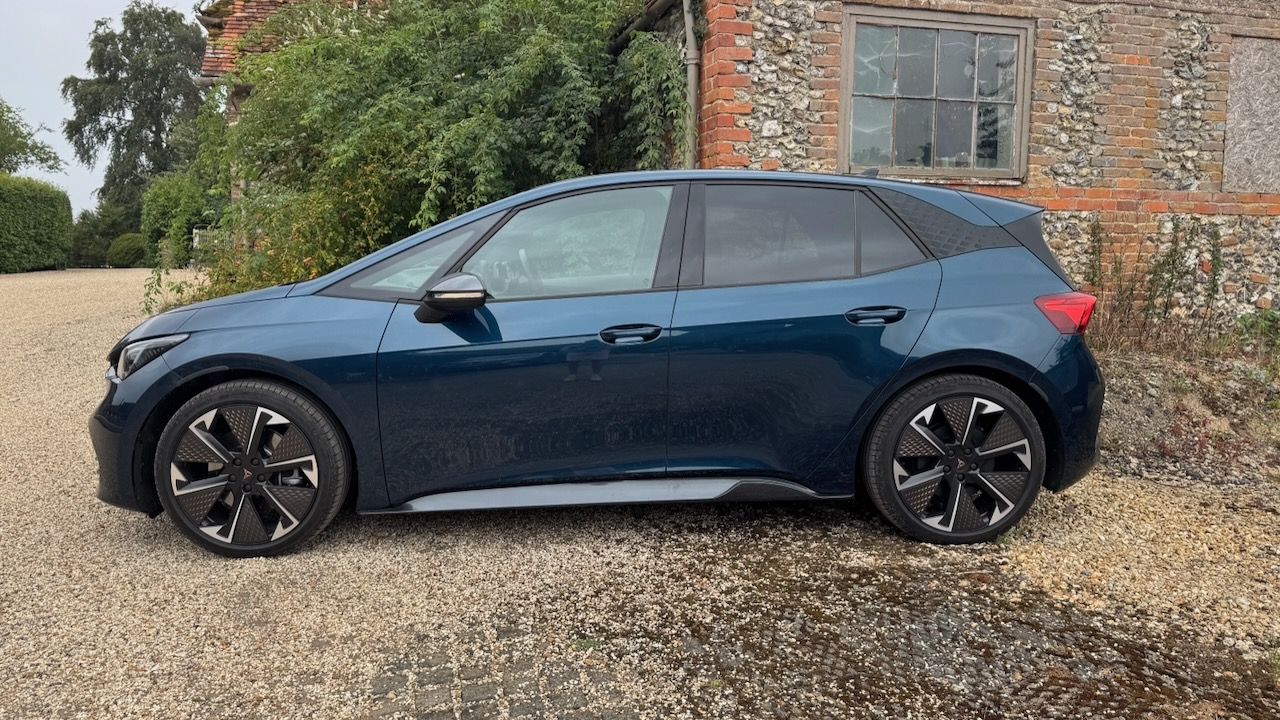
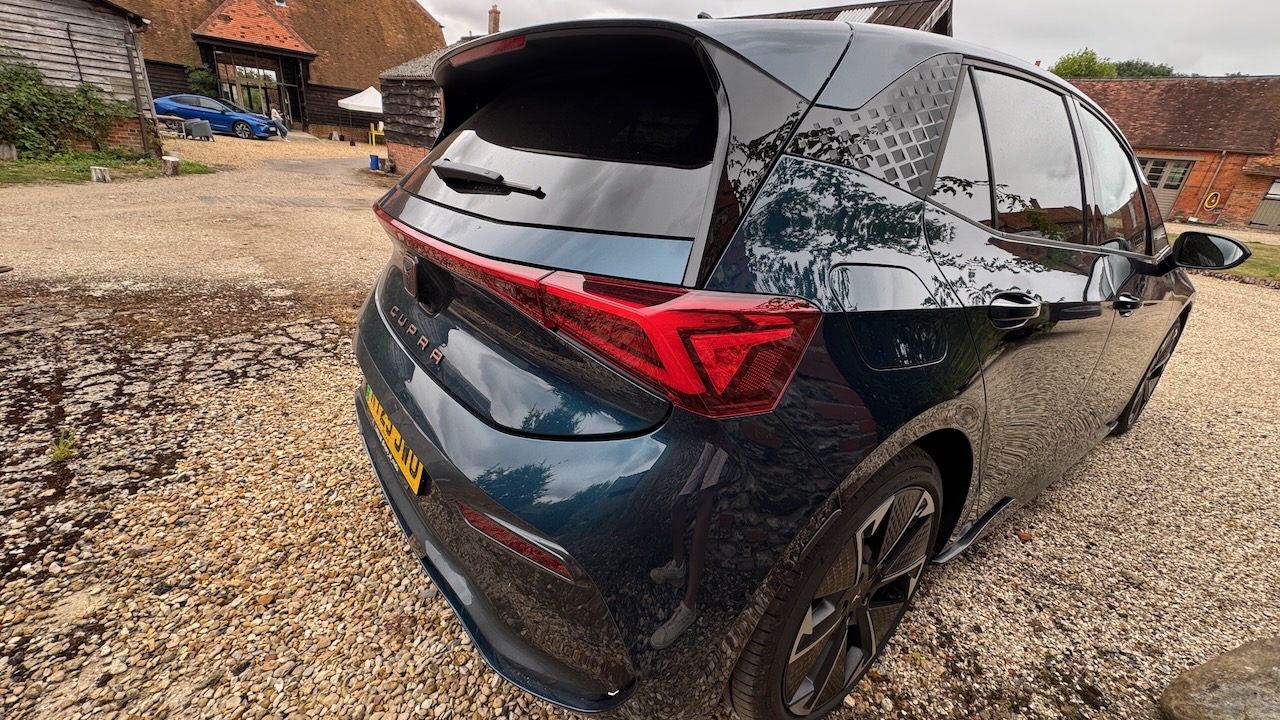
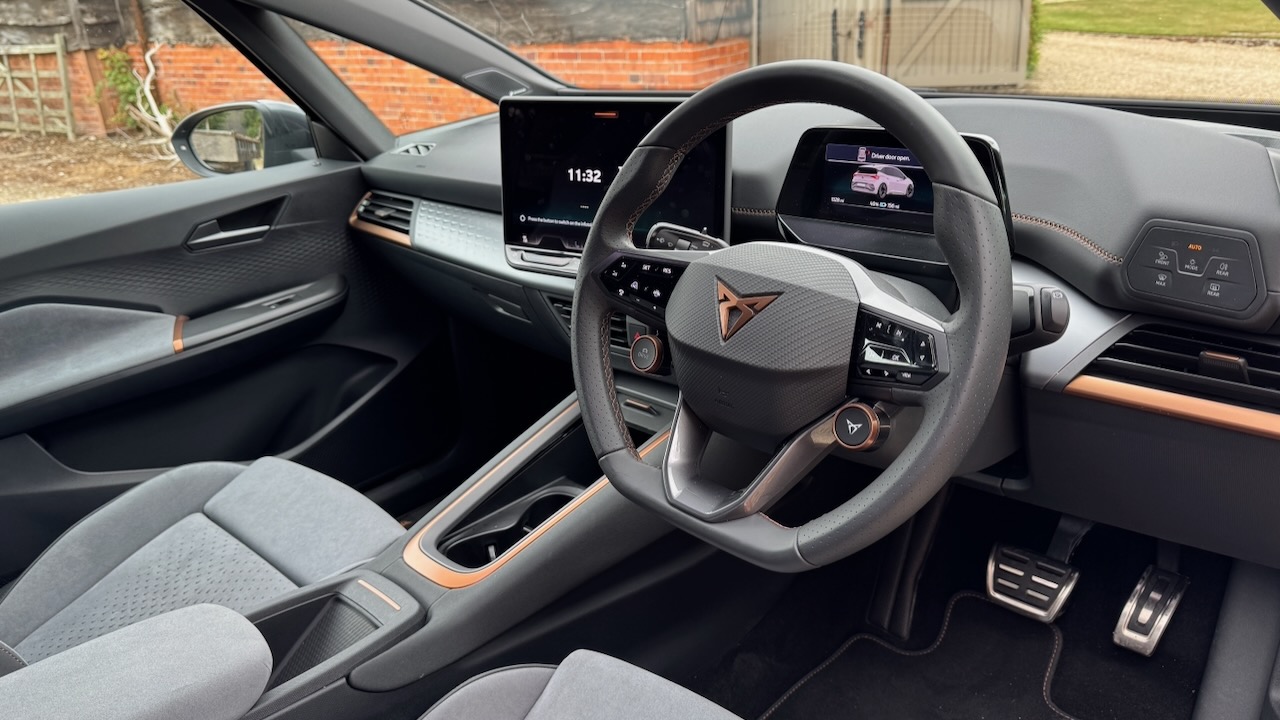
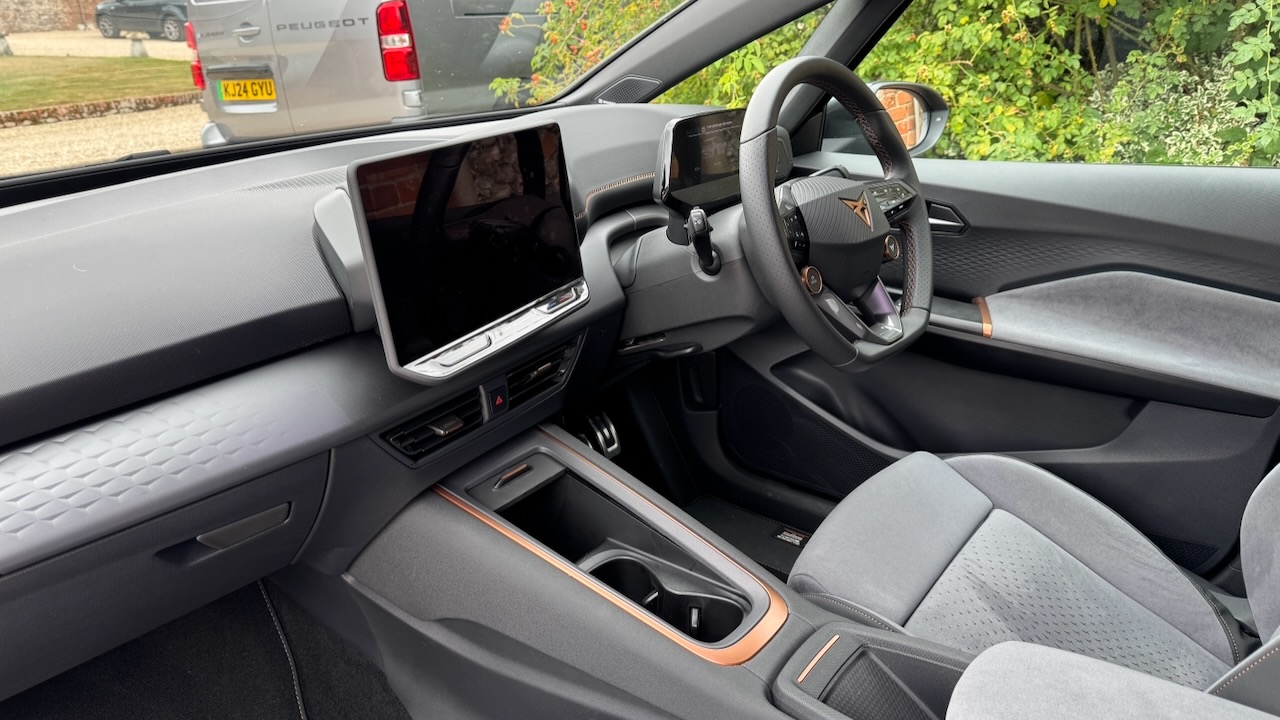
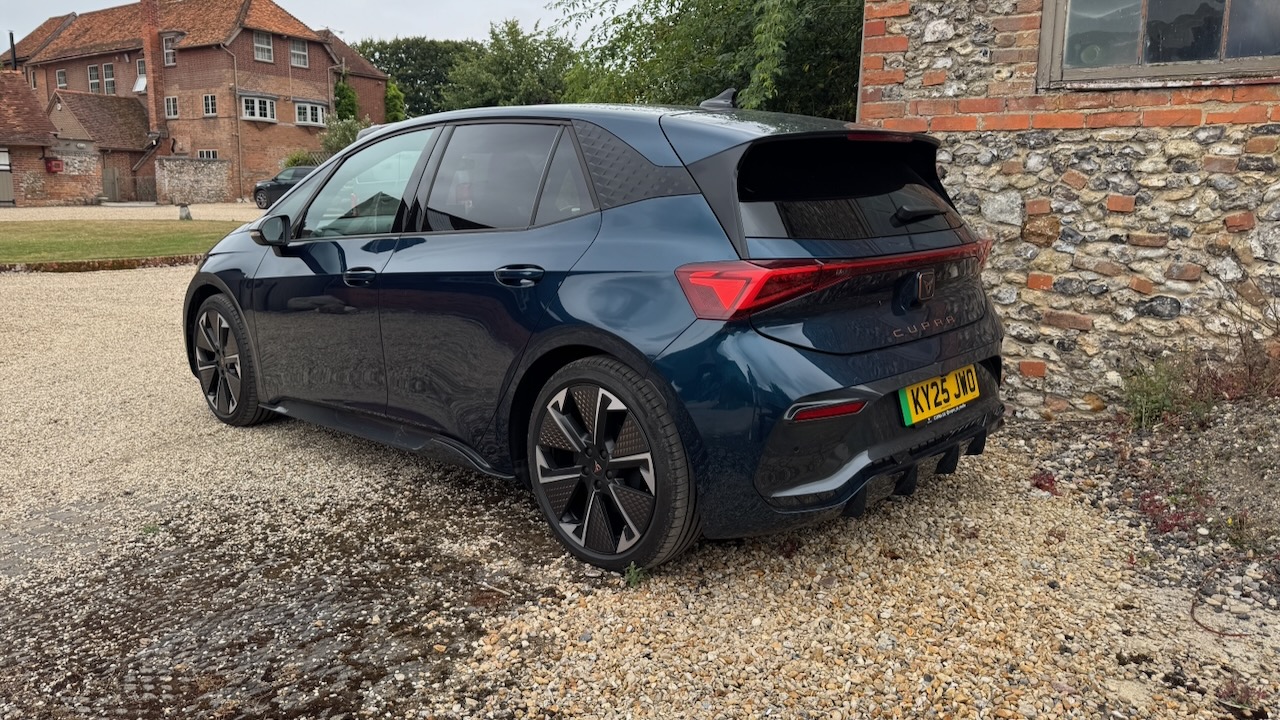
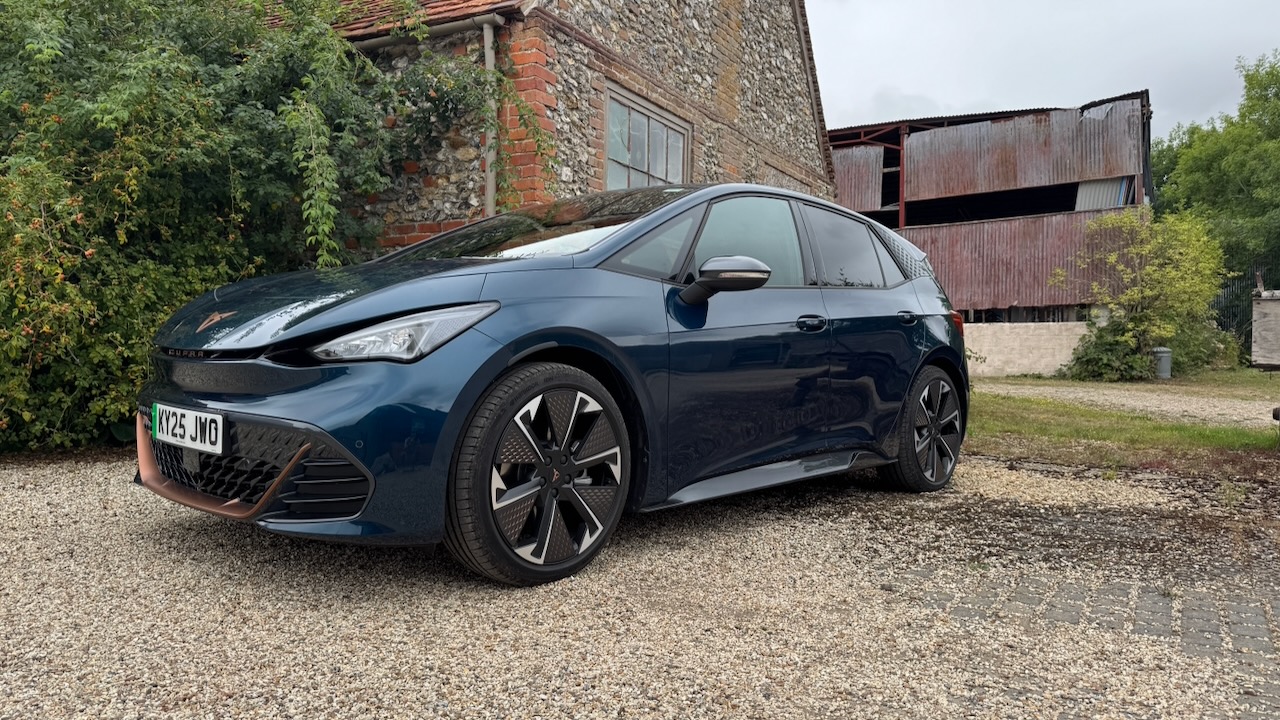
Finished in a rather fetching dark blue (Aurora Blue if we’re being picky) with a grey fabric interior, KY25 JWO is an undeniably handsome machine. The Born has always been the slightly more rugged sibling to the clean-cut Volkswagen ID.3 (with which it shares the vast majority of its underpinnings) and has already drawn very positive comments from pals and family. Sadly for Cupra, though, brand recognition among non-car nerds like me still needs work. Given the amount of marketing cash that has been spent on TV advertising and bookends (the little ads that appear just before a programme restarts after an ad break), I’d expect the Cupra name to be a little more familiar that it appears to be.
Although JWO has only been with me for a few weeks, I can already tell that it’s a great package. Some cars take a while to bed in and become part of your routine, but the Born slotted right in. Maybe that’s because I have an ID.Buzz and I’ve become used to the Volkswagen Group MEB platform quirks, but I think it’s more than that. Cupra, like Škoda and to a lesser extend Volkswagen and Audi, seem to instinctively understand how drivers use cars. It sounds a ridiculous statement to make, but some cars genuinely make me wonder if designers and engineers have ever tried to use their creation on a day-to-day basis.

The Born strikes a clever balance by being both a neat bit of modern design and an easy car to live with. The VW Group-wide update to all MEB platform cars that was quietly introduced last year has made a huge difference to the Born’s usability and I’m looking forward to using it on a regular basis over the next few months.
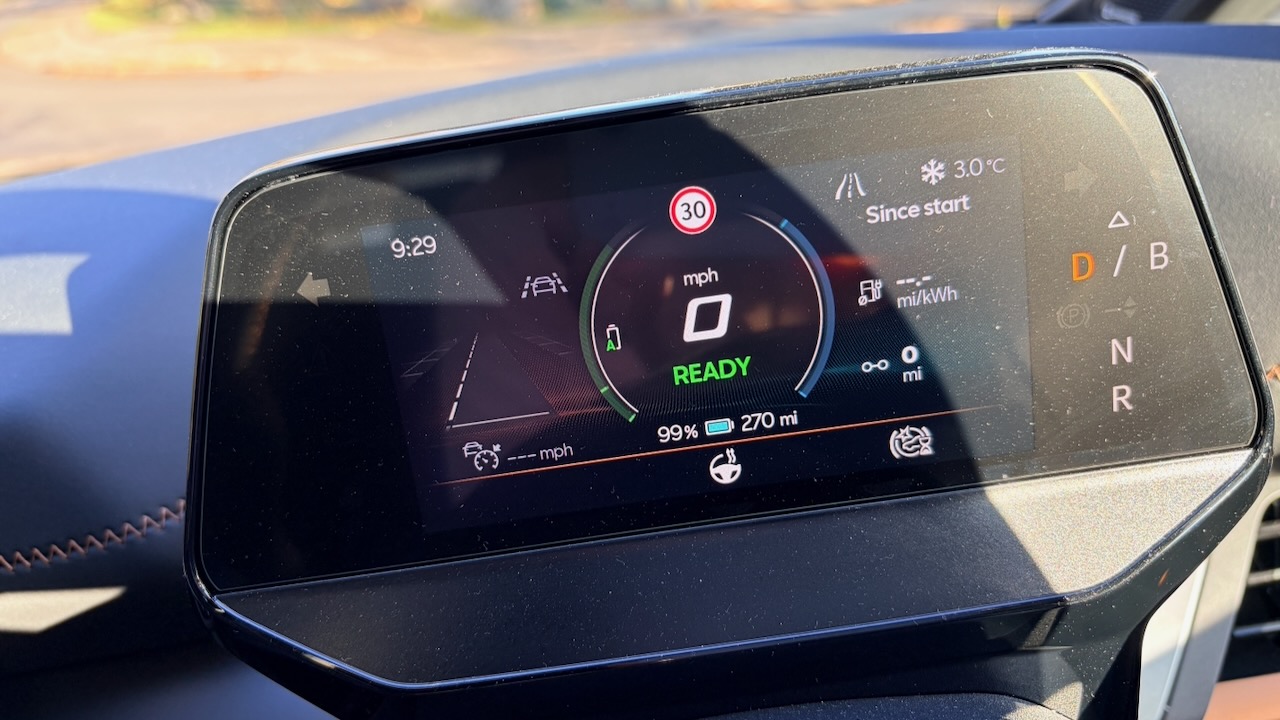
Of course, no long term update would be complete without a comment on driving range. This is, after all, still the first question ANYONE asks when you mention that you have or are reviewing an electric car. The answer, to all those curious, is just over 300 miles in the real world. That’s a bit off the 346 miles official WLTP figure, but most of my journeys to date have been motorway-biased, so I’ll see if that improves as time goes on. It’ll certainly be a pleasure finding out.
Report 2
September 2025
It’s been two and a bit months since the Cupra Born arrived and I have to confess that I’m already dreading the email from the press office arranging a collection date. Living with JWO reminds me of the old Apple ad slogan, “It just works.” I should point out that this isn’t meant as a damning criticism. Quite the opposite in fact. The Born simply gets on with the job it was built to do, but, crucially, does it in style.
I’ve now cranked out a lot more miles in JWO, and my admiration for it grows with every journey. I’ll start with the efficiency details given that these are key concerns to a lot of drivers curious about making the switch. The (surprisingly) warm British summer has been very kind to the Born and I’ve been recording up to 4 miles per kWh on most journeys. Motorways take their toll of course, but it’s never dipped below 3.6 miles per kWh. I’ve never run it from full to completely empty (because I quite like the concept of getting home rather than stopping on the hard shoulder), but I can work out that real world range is just over 300 mile mark in these balmy conditions. Which I think is pretty decent and has given me the flexibility to be bit more choosy on charging stops. My ID. Buzz, with a heavier kerb weight and the aerodynamics of a supermarket, barely scrapes 200 miles with exactly the same battery.

Surprisingly, the 2025-spec Born doesn’t feature the latest drive unit, known internally as APP550. This was introduced across all VW’s MEB platform cars over the last 18 months and came with boosted power outputs, improved efficiency and a huge increase in torque from 310Nm to 545Nm. While cars like the Škoda Elroq and Enyaq benefited from its introduction, the standard Born and ID.3 models didn’t. If you want the extra oomph and efficiency of the newer unit, you’ll need to opt for the range-topping VZ, or wait until 2026 when Cupra introduces it to the other models in the range.
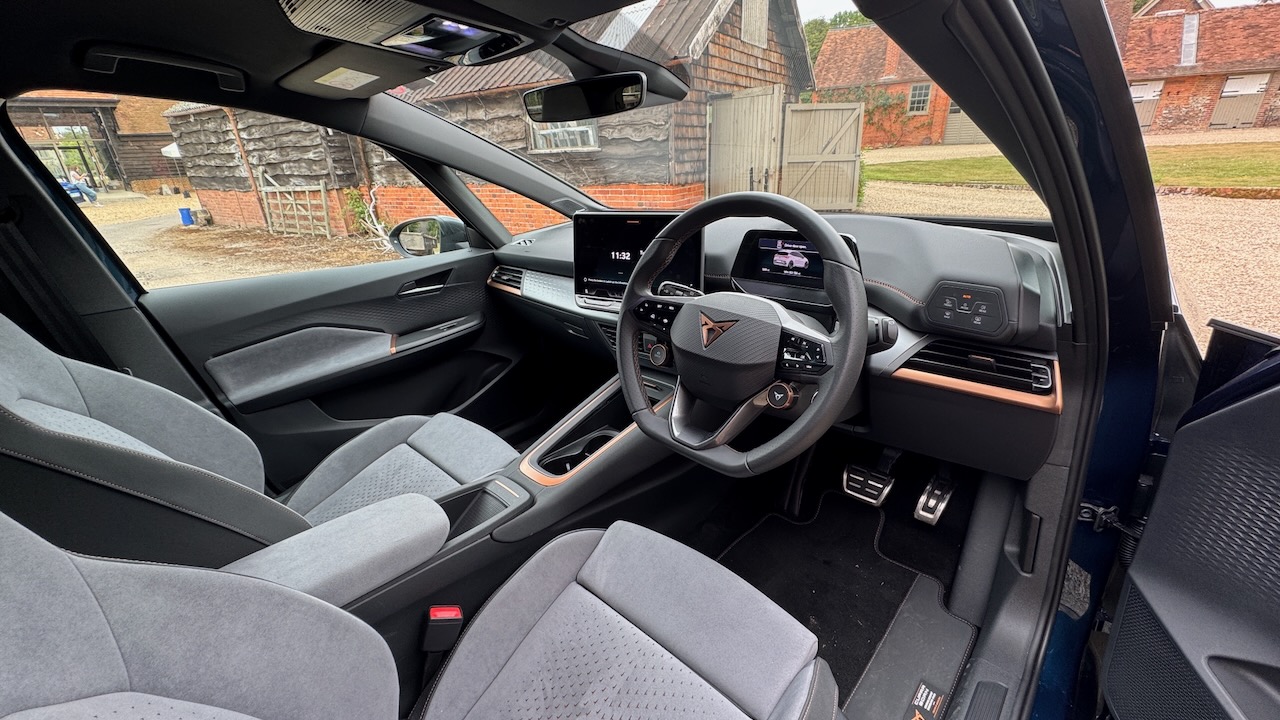
That’s not to say that the Cupra hasn’t been updated since its arrival. One of the biggest and most noticeable improvements has been to the infotainment system. It’s hard to think of a flakier system as those inflicted on early Volkswagen Group MEB cars. As the owner of an ID.Buzz with a first-gen infotainment system, I can confidently state that the current version is a vast improvement. Easy to navigate, fast and largely bug free, it’s genuinely one of the best on the market.

However, what isn’t particularly on the money (ironically) is the price. As tested (with optional metallic paint £995, interior lighting (£285) and Sennheiser sound system (£600), the Born weighs in at £43,730. Which, however you look at it, is a lot of money.
It’s hard to make a case for the Born when cars like the Kia EV4 with an 81kWh is £35,495. Even Cupra’s sibling car, the Škoda Elroq starts at £37,060 with the same long-range 77kWh battery. Maybe the arrival of the 2026 model and the price shock that has accompanied the introduction of the Government’s revamped grant will prompt Cupra to make the Born a little more competitive against its rivals.
Report 3
December 2025
The onset of cooler weather has done little to dampen my admiration for the Born, which is continuing to prove itself as a terrific all-rounder. I’ve been fortunate enough to do a number of long journeys over the last couple of months: one to Scotland and another to the Peak District. Depending on where you dwell, this may not sound like much of a trip, but when you factor in that they both started from Weymouth on the South Coast, you’ll appreciate that these are more than just short jaunts.
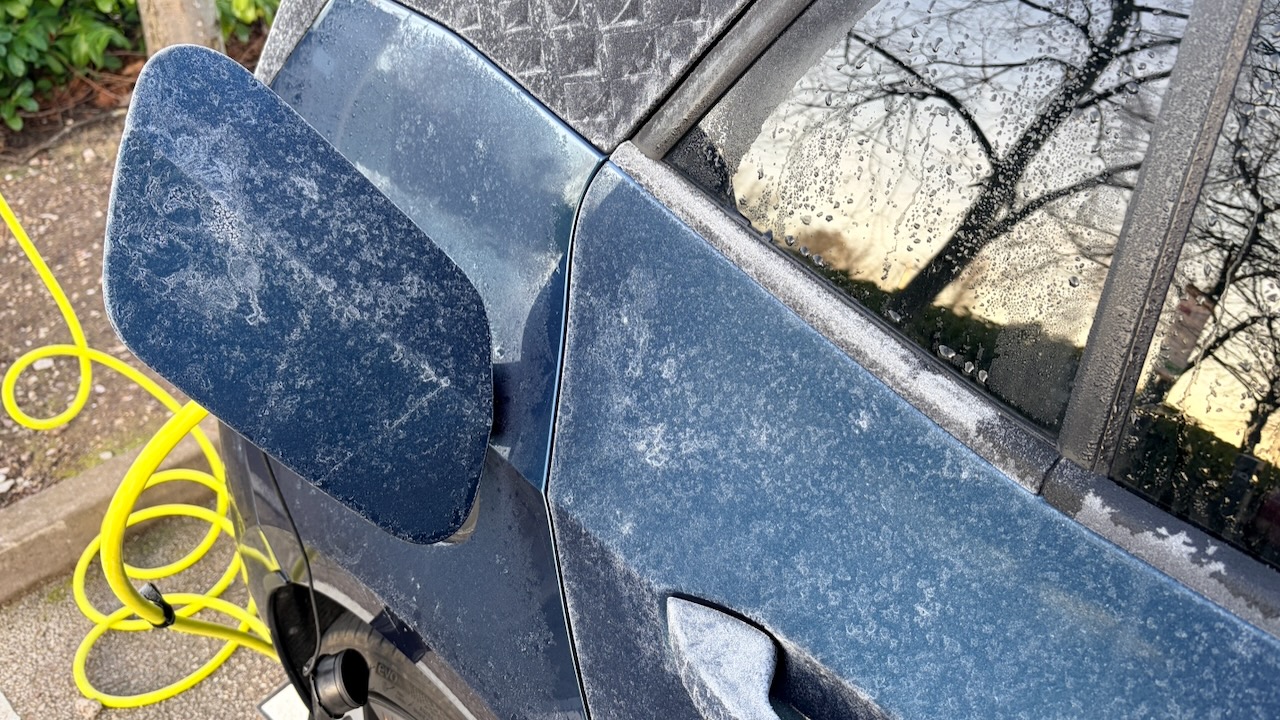
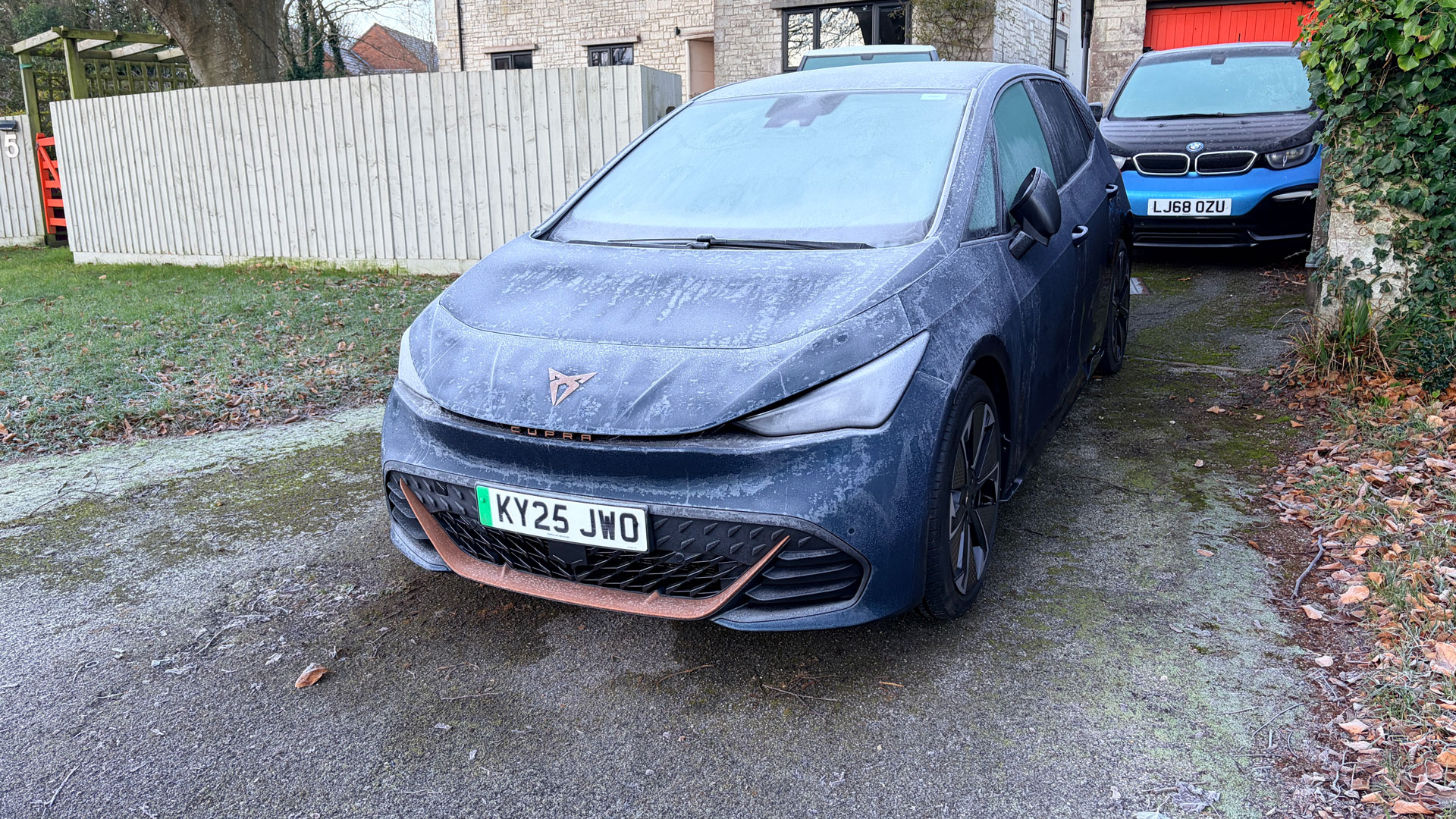
Both trips coincided with really cold snaps where the ambient temperatures rarely ventured above 5 degrees. As we all know, EVs hate the cold (almost as much as I do), so it was interesting to see how the Born coped with wintry weather. In terms of efficiency, the cold temperatures did batter the range figure. On the coldest mornings (sub-zero), the Born was returning between 2.6 and 2.9 miles per kWh - a solid one mile per kWh less than it was returning during the summer. At motorway speeds, where the wind-chill drove down the temperature even more, it struggled to hit 2.5 miles per kWh. Which, if you can be bothered to do the maths, gives a total range of just under 200 miles.

Our car isn’t fitted with a heat pump, but I do wonder how beneficial it would have been on those two trips. Personally, the jury’s out on heat pumps and whether they represent good value for money. When Volkswagen first launched the ID.3 (on which the Born is based), there was talk that it could add a range benefit of 10-30% in cold weather. Over the years, the messaging has changed considerably, with the emphasis now on comfort rather than efficiency. Which, I suspect, is because it doesn’t deliver anywhere near the efficiency benefits the engineers thought it might.
As someone who has spent good money on a heat pump (I added one as an option on my Hyundai IONIQ 5), I’ve yet to experience the benefit. Apologies for veering off a tangent here, but I found that the IONIQ was battered to the same degree as the Cupra when the temperatures dropped. Interestingly, I spoke with a Škoda engineer a couple of years back who suggested that heat pumps only pay dividends when it gets REALLY cold. Like minus 10 cold. It’s only in these temperatures when a heat pump works at its best. Given than -10 days are few and far between in the UK, I’m inclined to think that buyers are better off spending the £970 Cupra charges for the Born heat pump on other things. A grand gets you a long way at home charging prices.

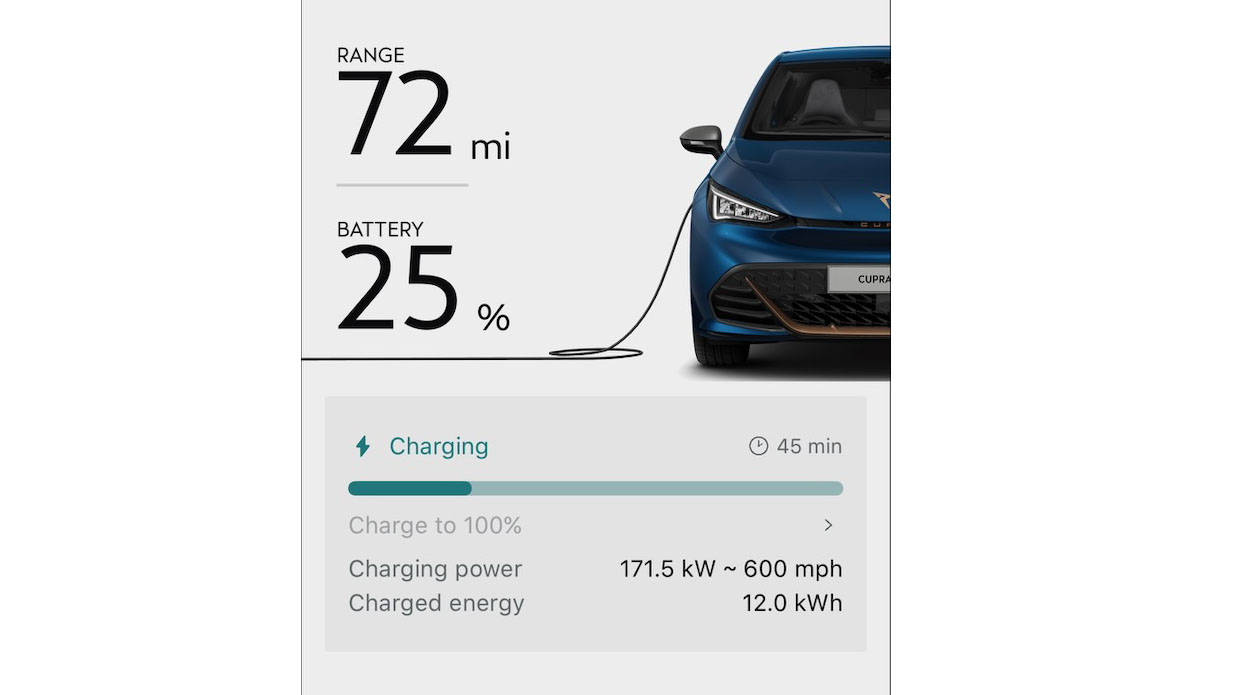
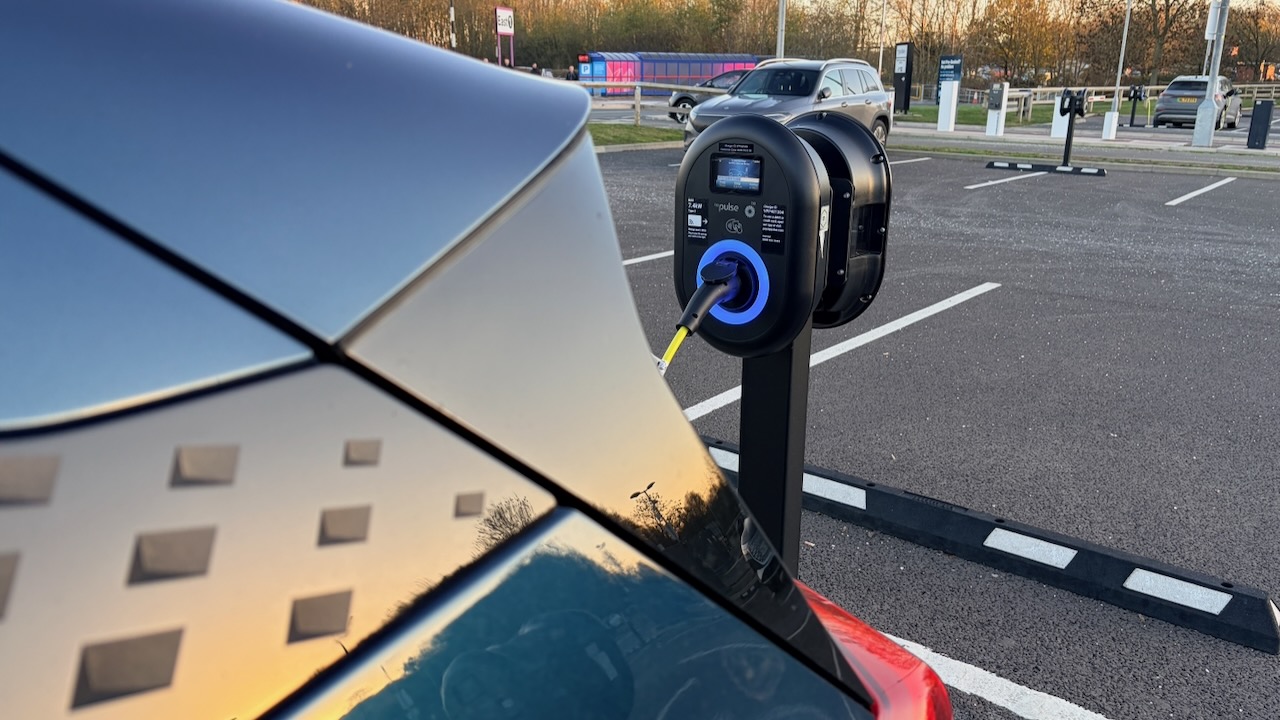
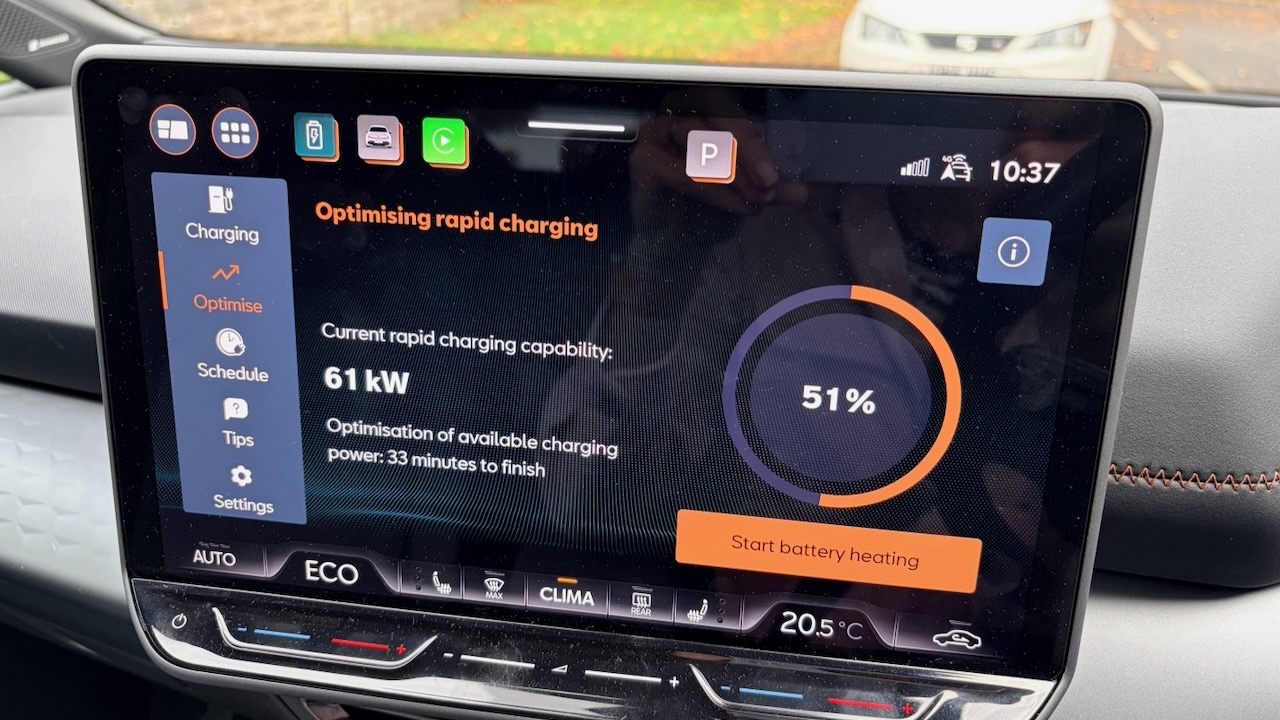
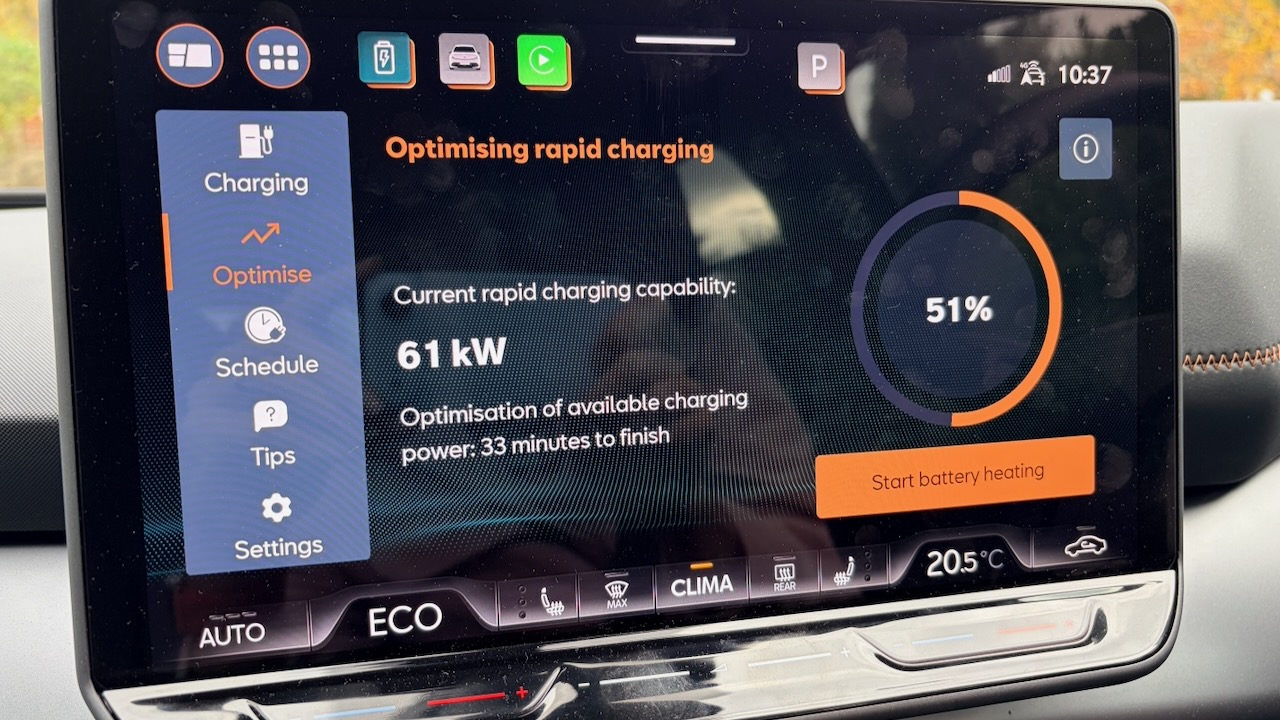
The other reason why I’m not convinced that a heat pump is needed is the Born’s charging capability. Thanks to the Volkswagen Group’s canny decision to allow drivers to manually activate battery conditioning, the Born is a charging king. Just hit the battery icon at the top of the infotainment screen and it displays the current rapid charge speed capability along with a timer that shows how long the battery will take to reach optimum condition. This all sounds a little complicated, so here’s how it worked in the real world. During my Scotland jaunt, I was reaching the end of a three hour driving stint and was starting to plan my charging stop. I called up the battery screen where it showed that the car was capable of charging at 61kW in its current state. It indicated that it would take 33 minutes to reach optimum charging temperature, so I activated the battery heating/conditioning. When I pulled in to charge after half an hour, the charging figure had risen to 140kW - which is exactly what I got when I plugged in. Had I used the Born’s built-in nav and set my end destination as a DC rapid charger, it would have performed the same function, but like many drivers, I’m hopelessly wedded to Google Maps and Waze via Apple CarPlay, so I prefer to use that.
As more winter driving beckons and long trips in the calendar, I’m hoping that the Born continues to prove itself as a thoroughly capable all-rounder.
Report 4
March 2026
And so the email I’d been dreading for weeks finally landed in my inbox. “We’d like to arrange the collection of the Born.” I have to admit that saying farewell to KY25JWO was a surprisingly emotional experience. We’d grown pretty close over the six months we’d spent together and I was rather depressed by the prospect of being Born Free (sorry).
Why the sadness? Good question. On the face of it, the Born is a decent but not exactly class-leading EV. There are better cars for the money (spoiler alert) and if we’re judging a car on things like efficiency, charging ability and range, it sits firmly in the category of okay-but-could-be-better.
During our six months, the Born proved itself to be more than the sum of its parts. I found it to have a real character of its own and it was an absolute dream to live with. What do I mean by that? Well, for comparison purposes, I’m now in a Volvo EX30 Cross Country, which arrived with countless software glitches and design quirks that should never have left the drawing board. Barely a week goes by without the infotainment system shutting itself down or suggesting that I don’t have the key when I do. The Born? It never glitched once. The infotainment system – yes, that much-maligned Volkswagen Group effort – was rock-solid through the whole time. Fast, reliable and easy to navigate, it never once gave me cause for concern. In fact, I’d go as far to say that it’s one of the best on the market for reliability and sensibly located features. It’s certainly in a different league to the first-gen system fitted to my ID. Buzz, which takes around a minute to connect to CarPlay (or not at all if it isn’t in the mood) and has a number of pointless screens that take forever to appear and disappear when you’re trying to access a key menu. The only slight blot on the Born’s copy book has been when the app has updated and seemingly completely forgotten who I am. The charging app for my Andersen charger does the same and it drives me nuts. Other apps update all the time without having to log-in from scratch, so it can be done.
What can I tell you about the last month with the Born? Well, without wanting to bore you to tears, they’ve been incident-free. The (slightly) warmer weather has brought a welcome increase in efficiency, although most of my journeys have been either very early morning or at night, where the sun is nowhere to be found and the temperatures are in single figures. At motorway pace, the Born returns between 3.3 and 3.6 miles per kilowatt hour, which is perfectly acceptable and equates to 250-280 miles on a charge. The best I’ve seen so far has been 3.9 miles per kilowatt hour during a middle-of-the-day A-road run, which would have given me the magical 300 miles of range.
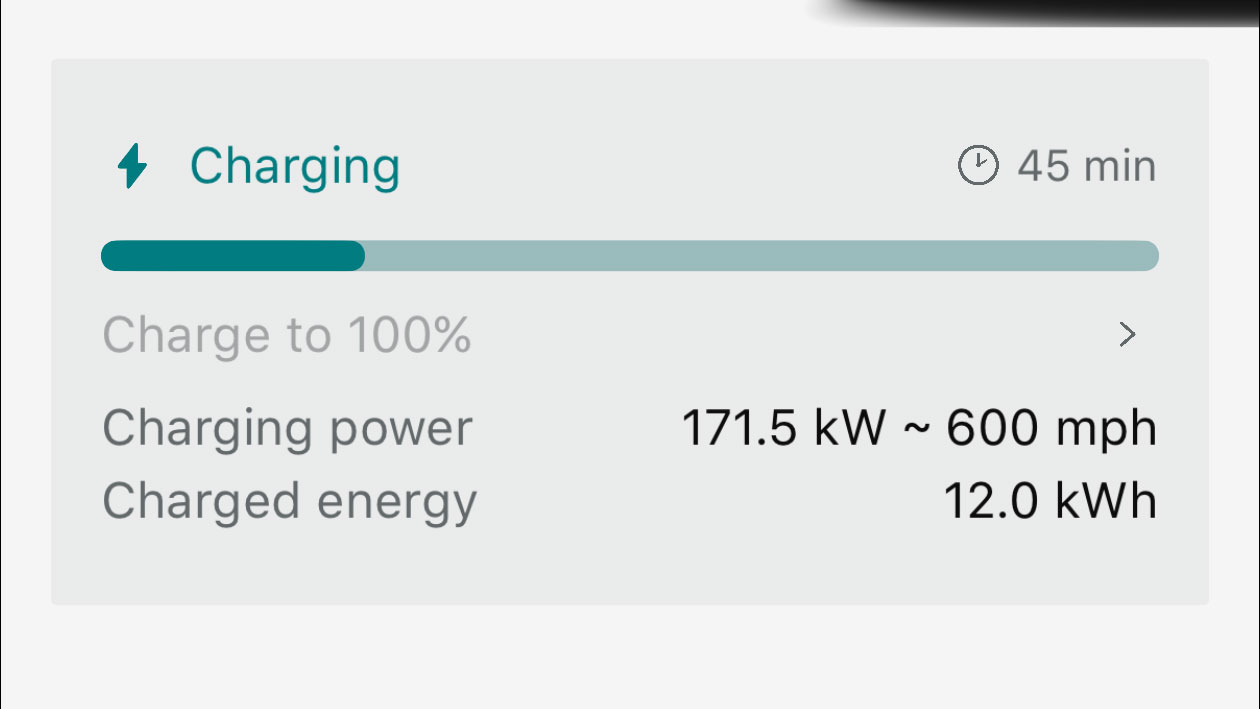
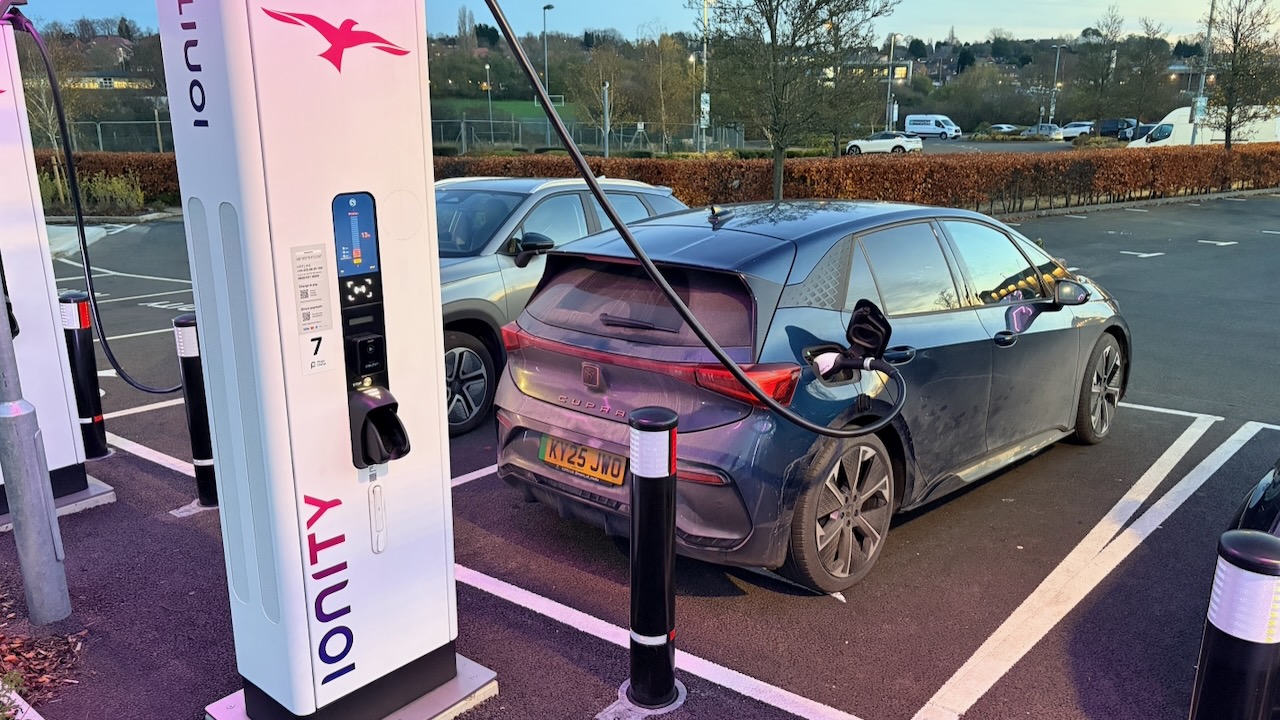
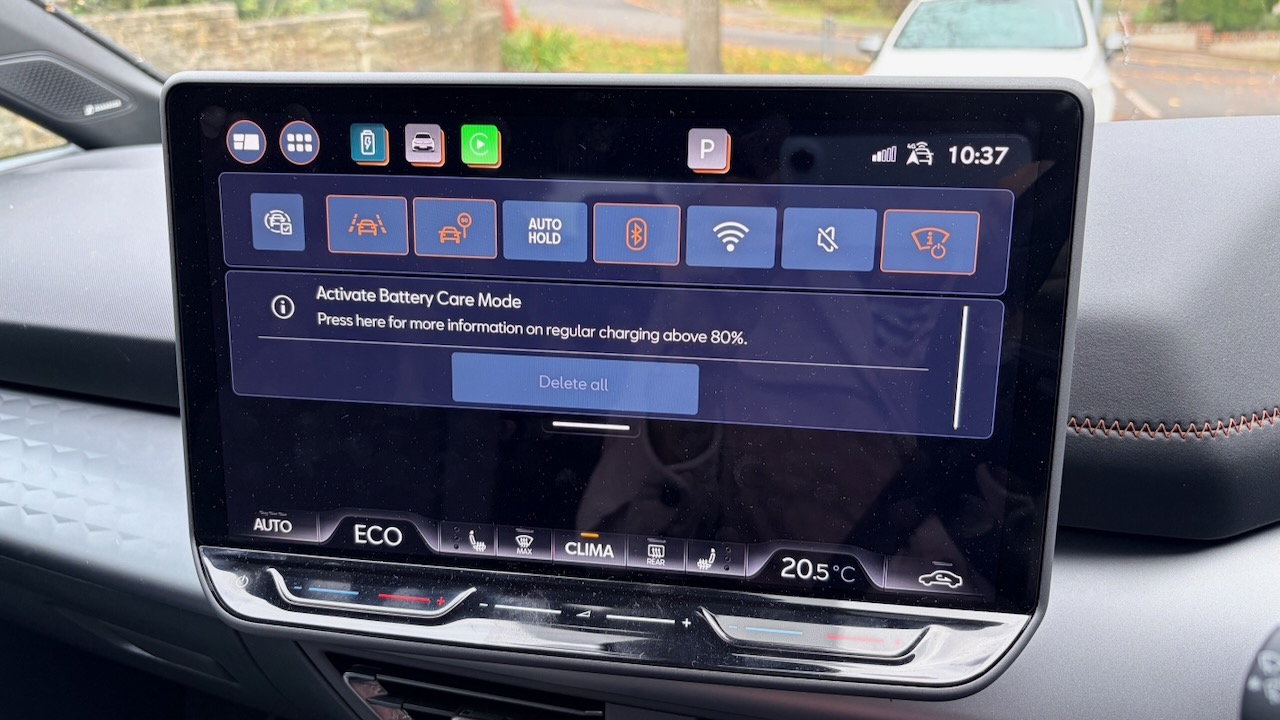
But as most EV owners will know, the ability to reliably rapid charge is as important as a long range. And in this department, the Born has been great. The ability to manually trigger battery preconditioning has been a real bonus. The EX30 I’m currently running doesn’t have this feature and requires me to use the in-built Android system to activate battery heating. That’s fine, but it does mean that I’m having to juggle two systems as I alternate between Apple CarPlay (because that’s where my music / podcasts/ Whatsapp are) and the built-in system. Once preconditioned, the Born is a charging monster and regularly hits full speed seconds after plugging in. Twice it has charged FASTER than the claimed 170kW peak, which is seriously impressive.
So would I choose a Born? I would - definitely. And now that Cupra has given the Born range a design and engineering spruce up (you can watch Nicola’s video here), it’s an even better package.
 9
9