





 Battery size: 37–52kWh
 E-Rating™: A
 Max charge rate: 50–125kW
 WLTP range: 193–267 miles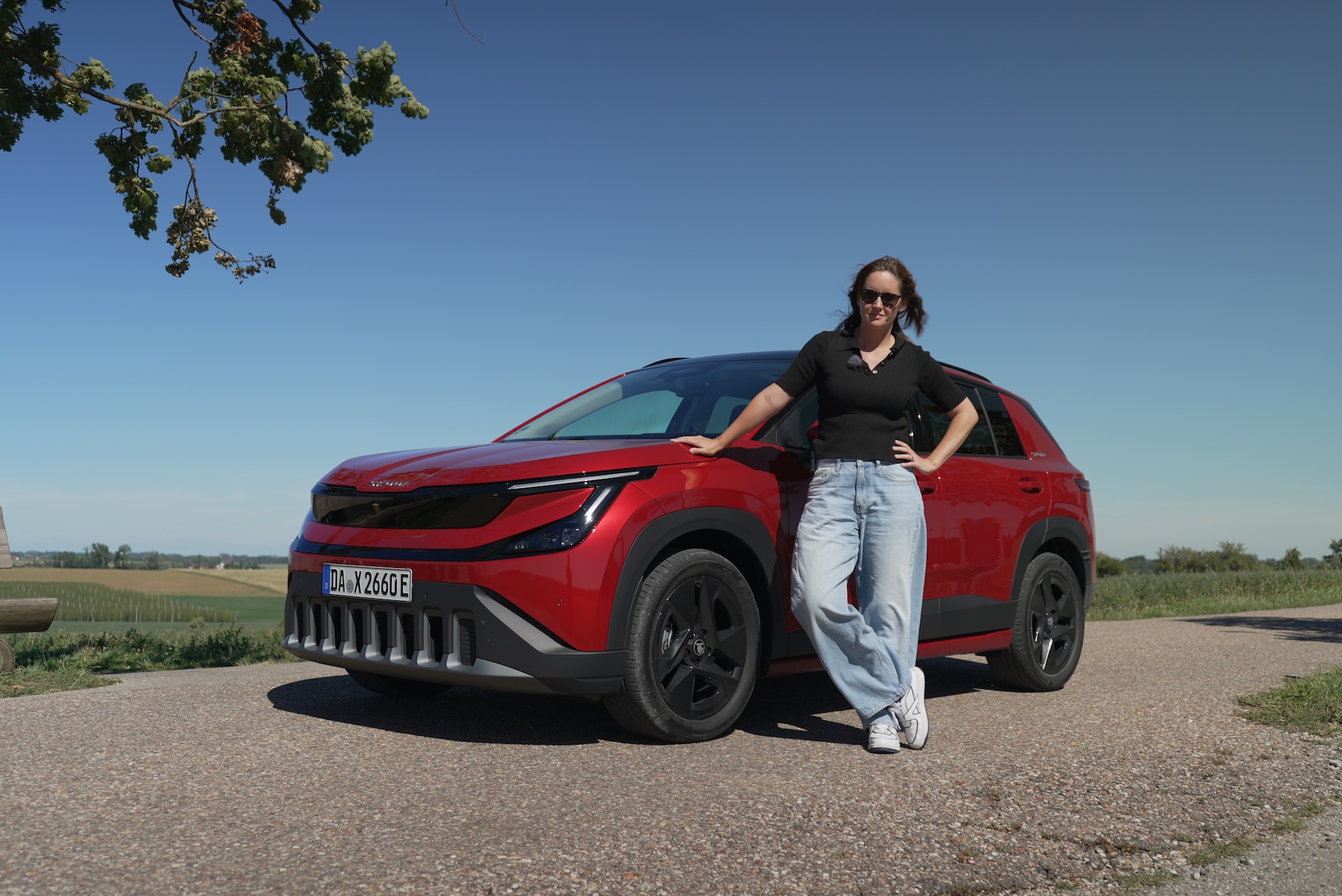



Introduction and model history – Skoda Epiq
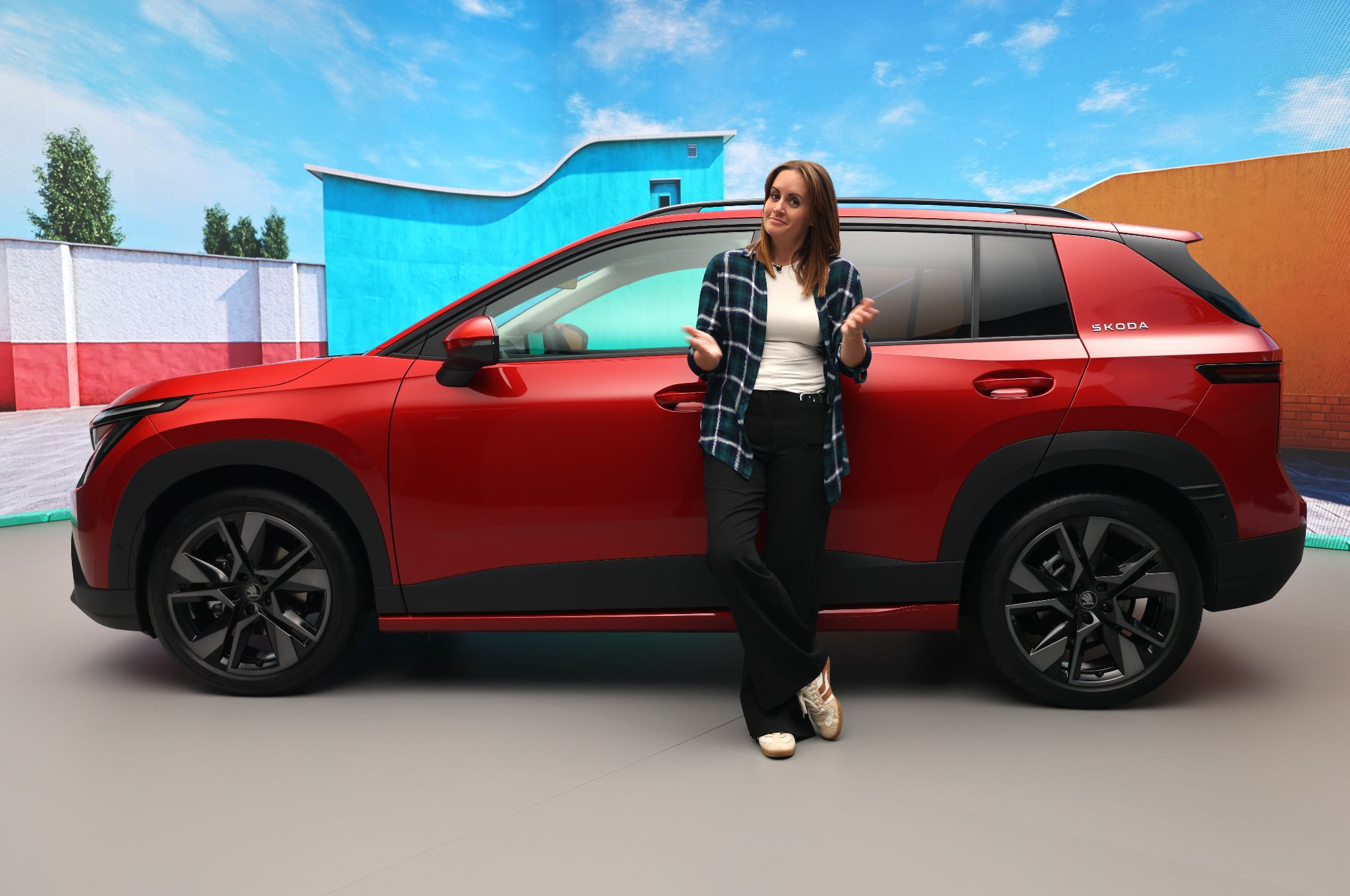
The Skoda Epiq is the new, baby electric Skoda that’s here to take on the small electric hatchback and SUV class. It’s finally arrived and Nic's been for a proper drive in the final production car. Which means that we've now seen the concept, driven the prototype, seen the production car, and now finally actually driven the car! Phew. It's a lot of launches, but it's a really fantastic small family EV, so read on - or watch Nic's vide on the YouTube channel - to find out if the Epiq should be your next EV.
Underneath is the company’s new MEB+ platform, which means that you’re getting the same chassis and electrical gubbins as the new VW ID.Polo, Cupra Raval and VW ID.Cross.
The Skoda gets the same 37kWh LFP and 52kWh NMC battery options, and will be front wheel drive only, with a couple of different power outputs ranging from ‘ooh, that’s quite fast!’ to ‘yeah, that’ll do.’
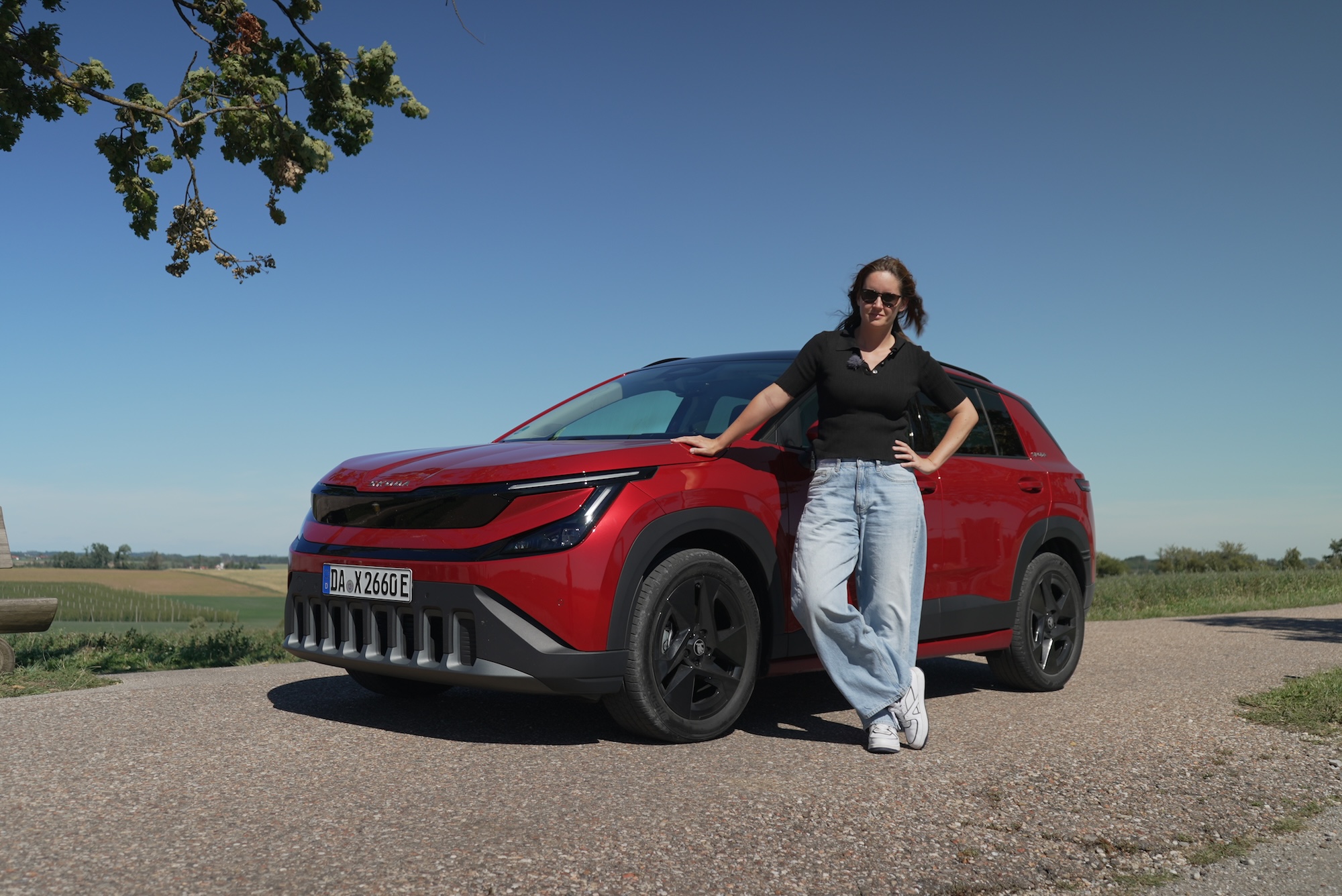
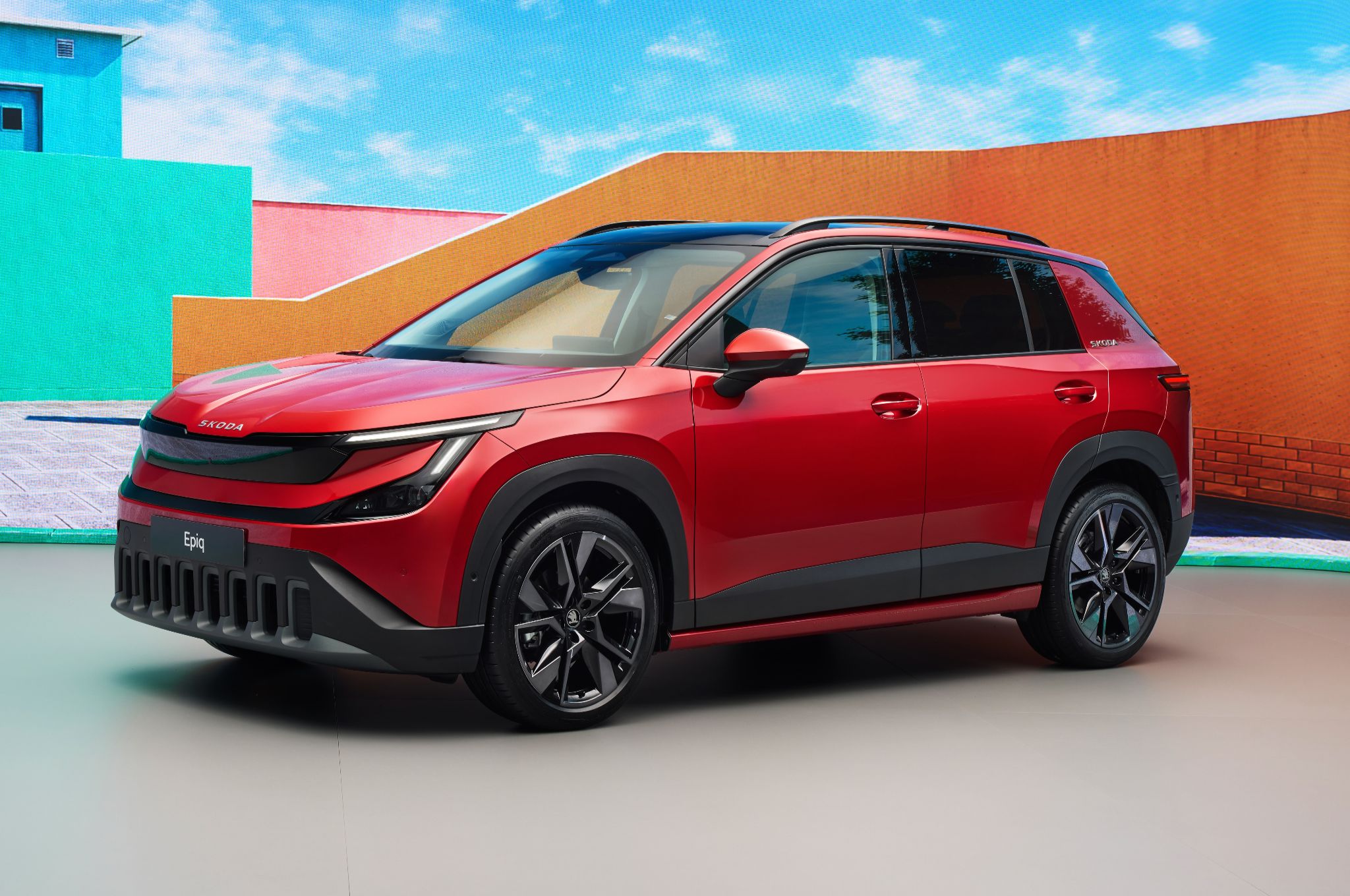
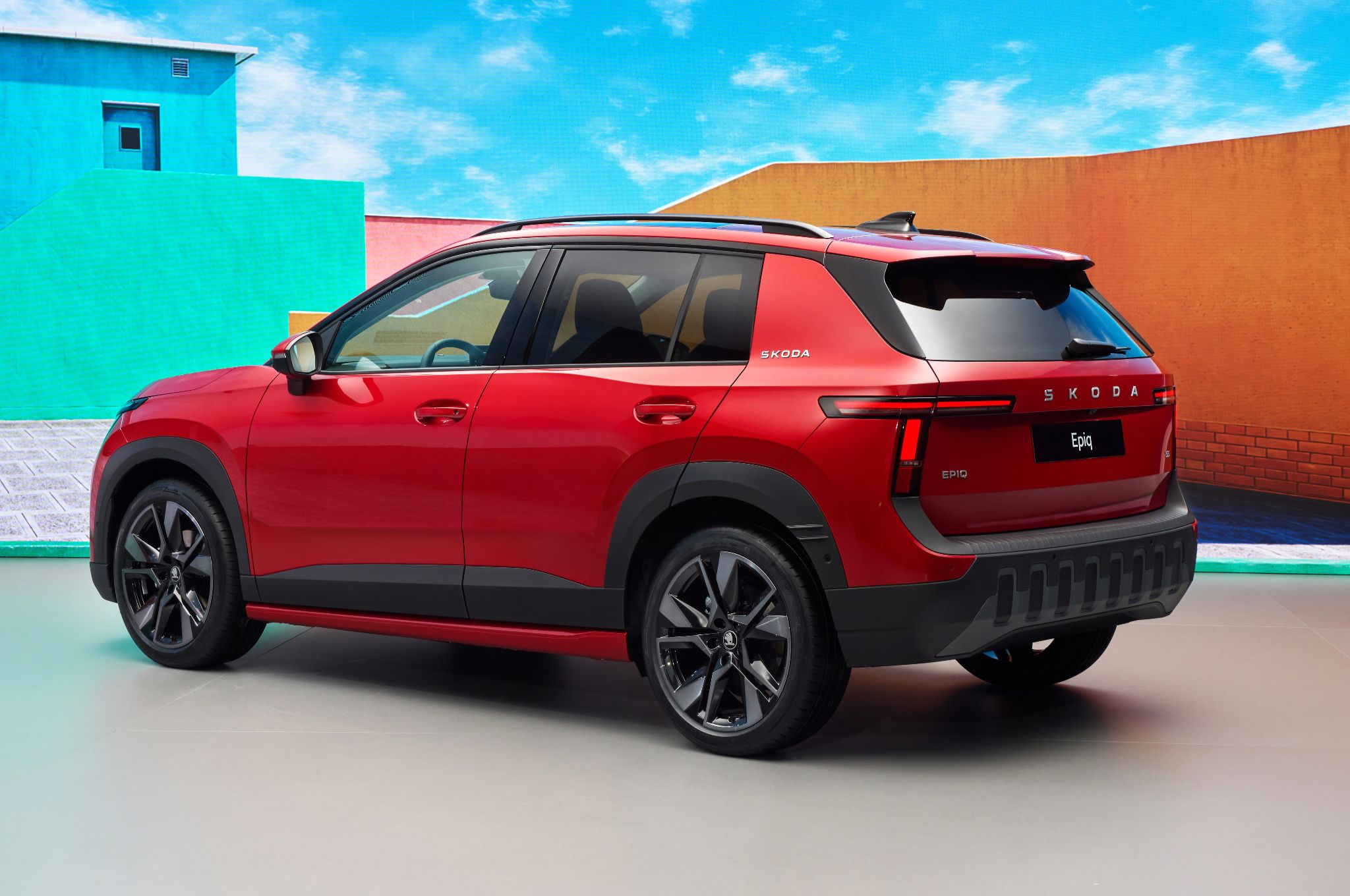
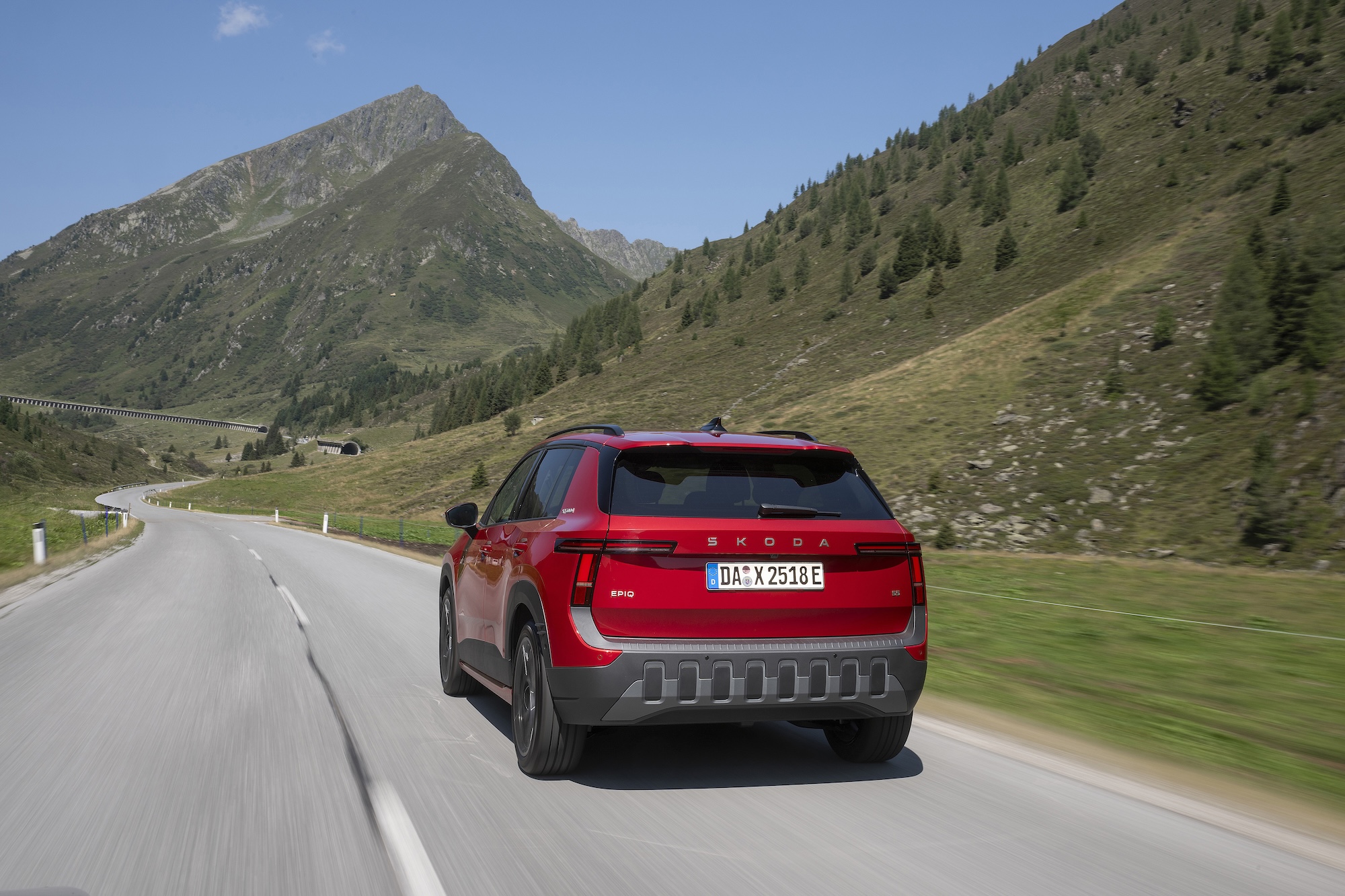
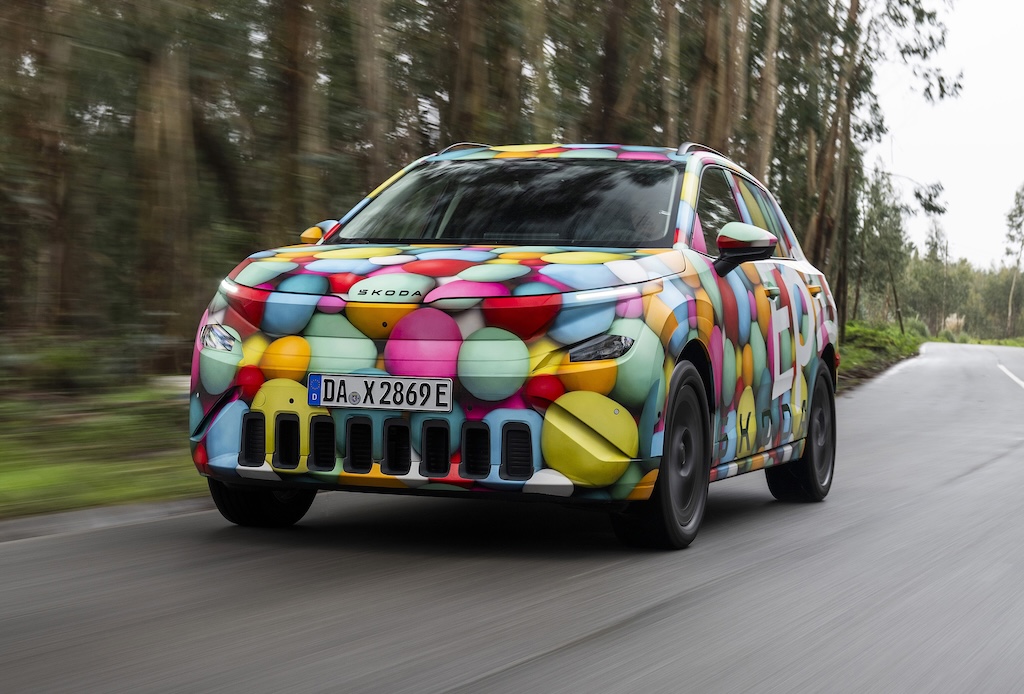
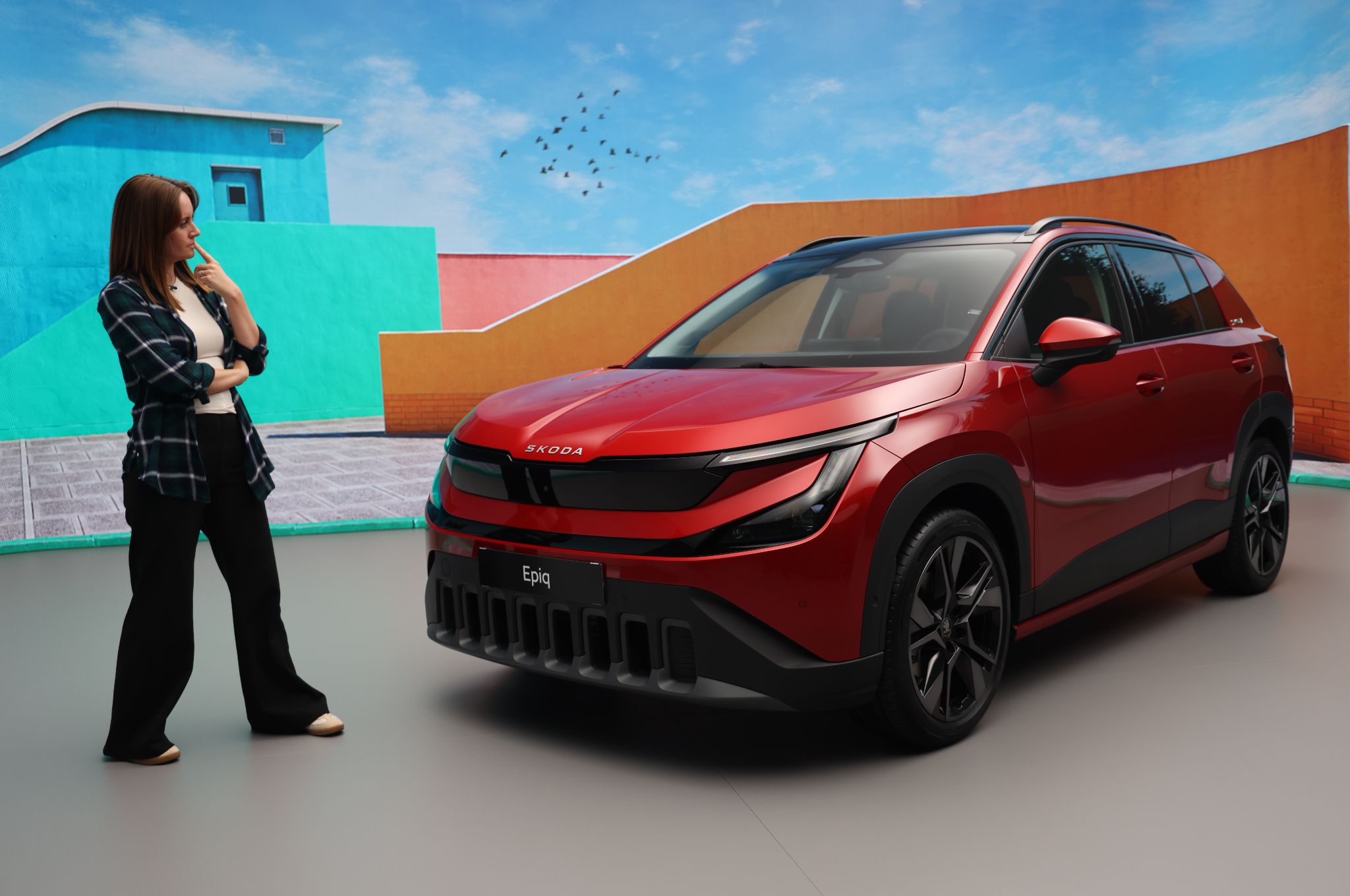
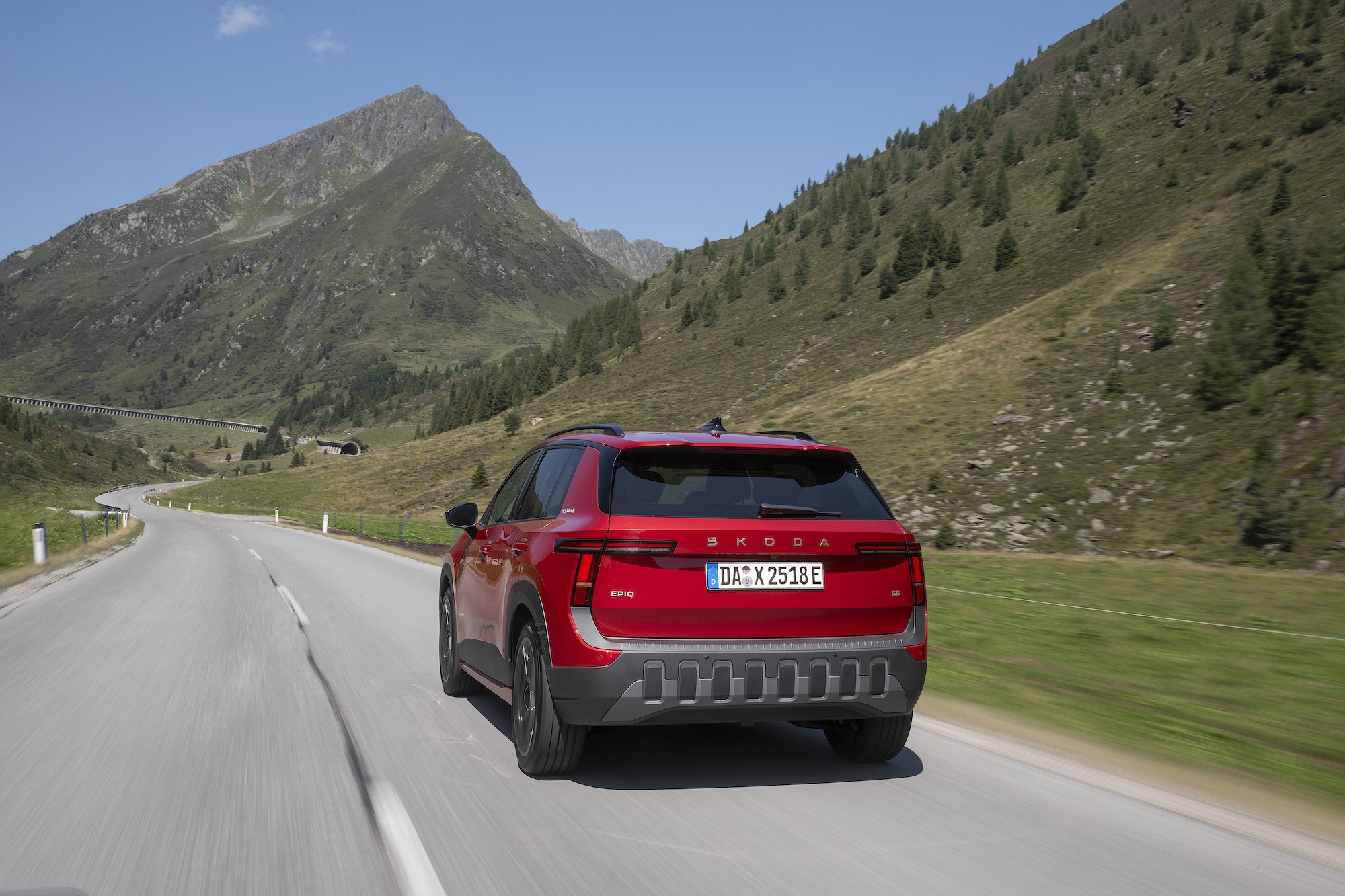
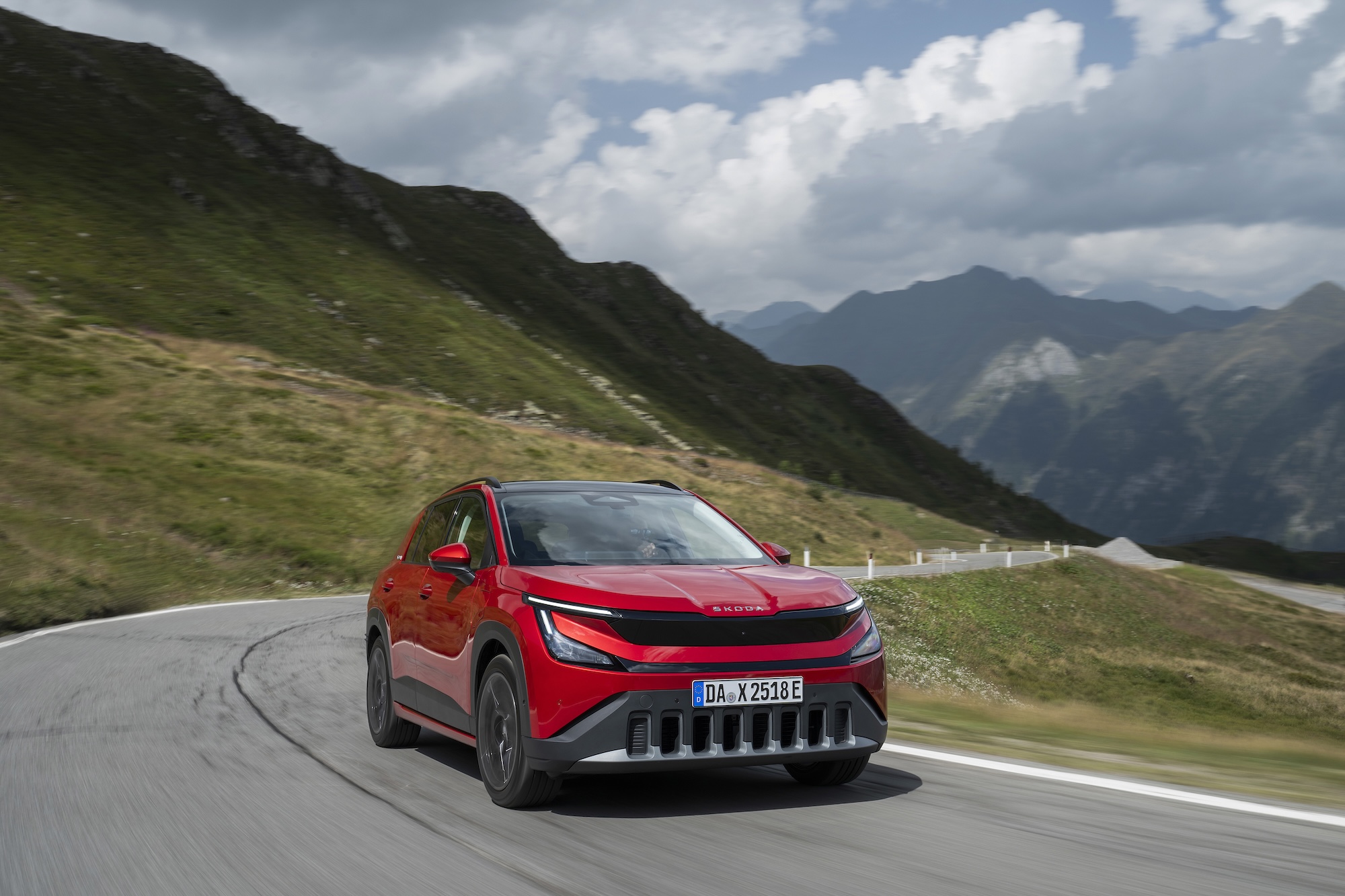
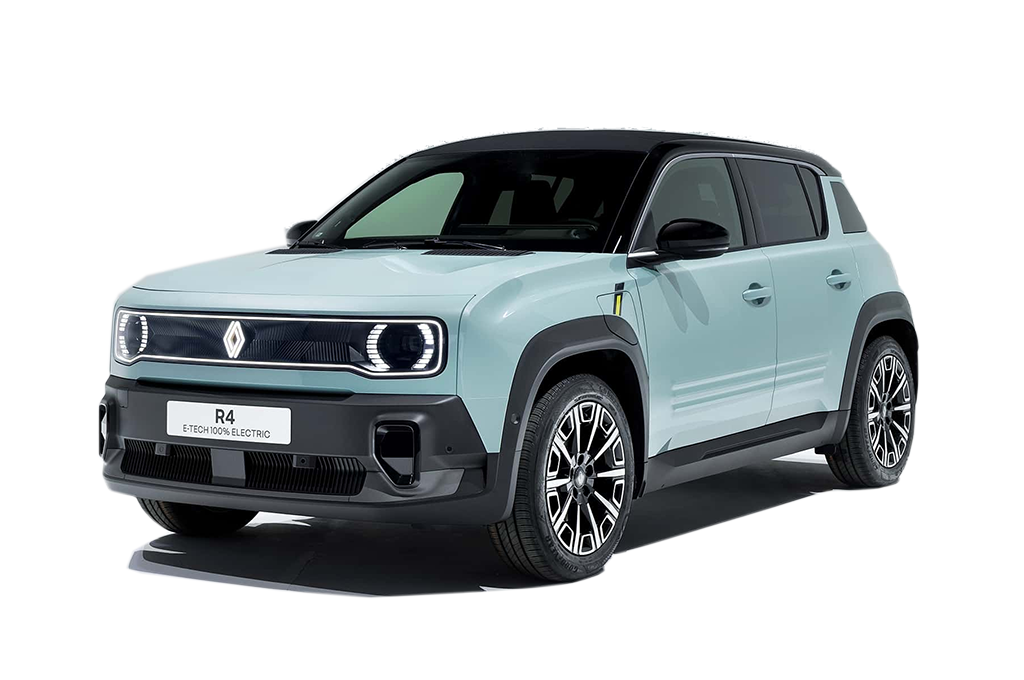
It looks rather nice, doesn't it? But a bit boring, maybe? I’m not sure – I’ve seen it in silver and red, now, and I like the chunky Jeep vibes that you get from the grille and black plastic cladding, but otherwise I suspect it’s lacking the style clout of rivals like the Renault 4. Even so, it’s pretty smart, isn’t it? Clean and modern. Nice.
Pricing is also nice, as the Epiq starts from under £25,000 in the UK – and is also likely to be eligible for the £1,500 electric car grant, although that’s yet to be confirmed. That’s the same price as the Skoda Kamiq, which is the petrol equivalent of the Epiq. Sound good, eh? Read on to find out all about the range, full pricing details and more.
Range, battery and charging
The Skoda Epiq will be offered with a couple of battery options. A 37kWh usable (38.5kWh total) LFP battery will give it a WLTP range of around 190 miles, while the 52kWh usable (56kWh total) NMC battery manages up to 272 miles, which is close – if not a bit longer range with that bigger battery – to rivals like the Renault 4.
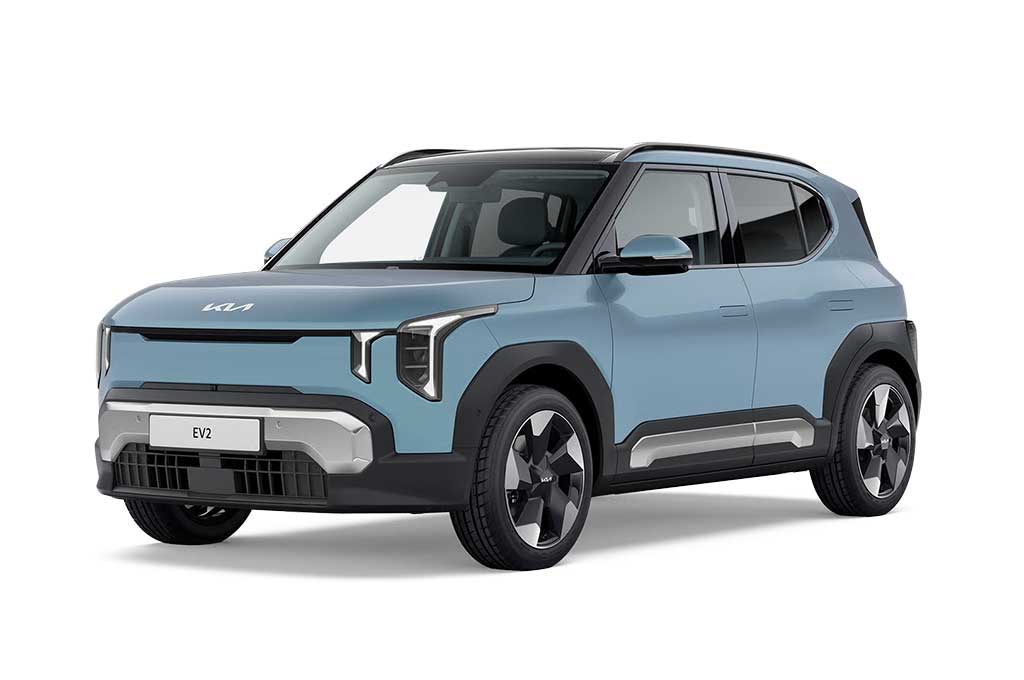
The VW ID.Polo is more efficient in official tests, though, as it manages up to 230 to 280 miles from the same battery options, and the Kia EV2 also goes a bit further. We haven’t spent enough time with the Epiq to get a good idea of real-world range, so come back to us when we’ve driven the finished production car later this year.
For a bit of clarification on those battery sizes, every EV battery keeps a few cells dormant in the battery pack, as it helps with battery performance and longevity. So even though there is a 56kWh battery in the long range Epiq, you can only actually charge 52 of those kilowatt-hours (kWh).
The other 4kWh are just there to give the functioning cells a massage and a snack, to keep them in good condition so that your battery lasts as long as possible. Geddit?
At Electrifying we always state usable because that’s the actual, functioning size of the battery that you’ll be charging, which is the more useful figure.
Anyway, having cleared that up, let’s talk charging! This baby electric Skoda will be offered as the Epiq 40 with the smaller LFP battery, or the Epiq 55 with the bigger NMC battery.
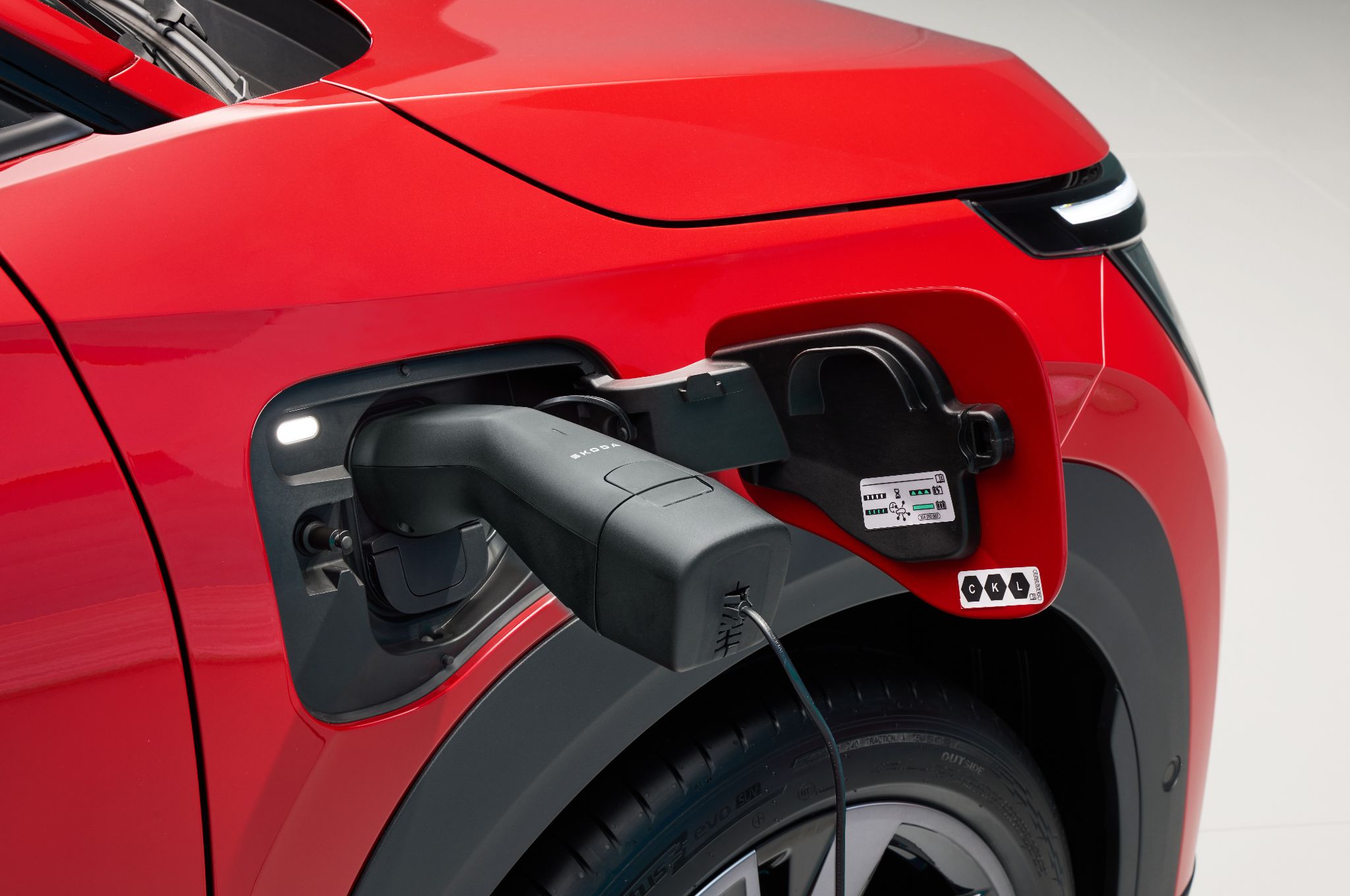
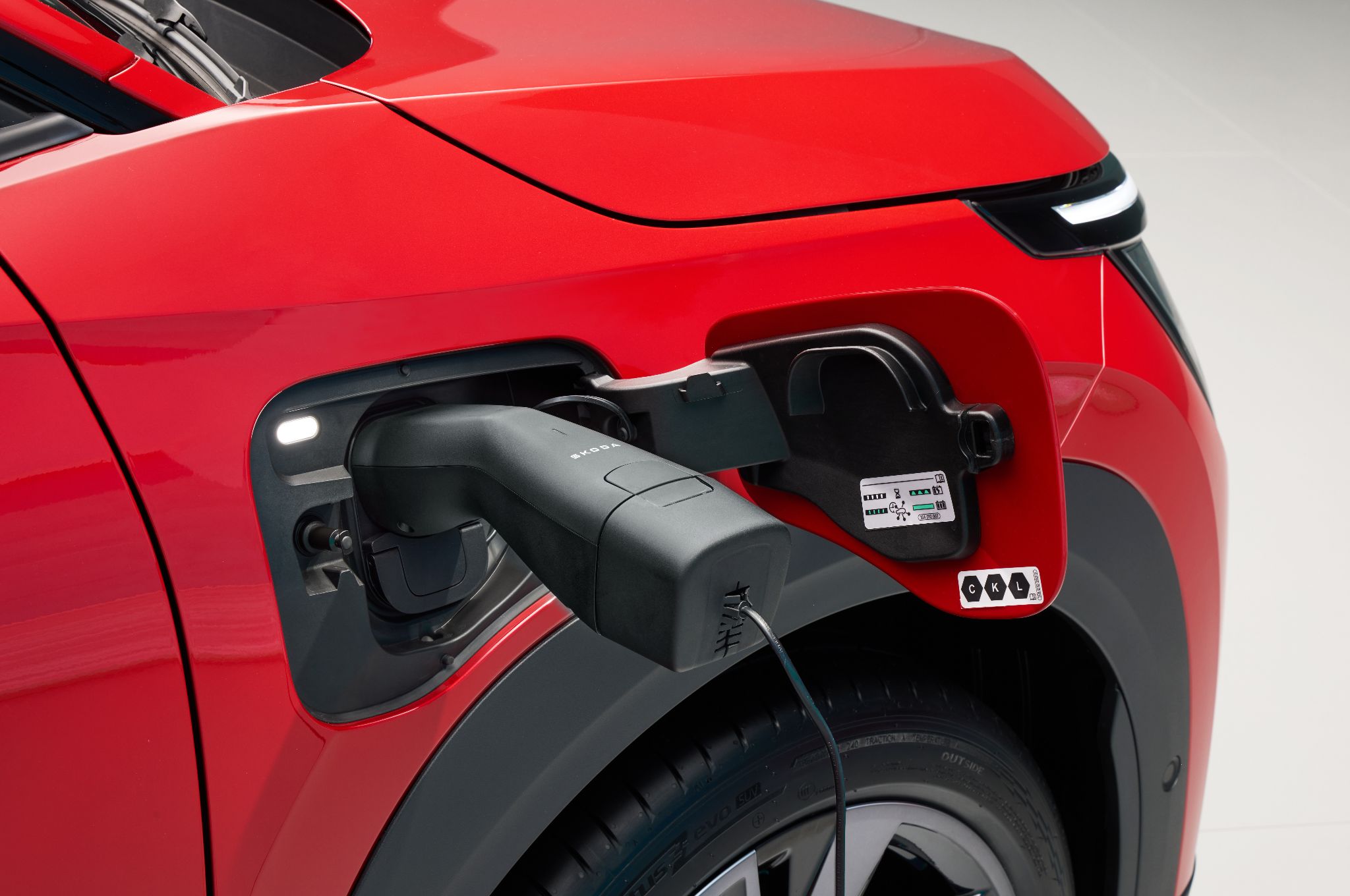
The 40 gets DC rapid charging up to 90kW, meaning that a 100 mile top-up to take around 30 to 35 minutes, which is very close to what you get in the Renault 4, Ford Puma Gen-E and Peugeot E-2008.
The long range Skoda Epiq 55 gets DC rapid charging of up to 105kW, will deliver a 100 mile top-up in more like 20- to 25 minutes. Both the Epiq 40 and 55 will charge from 10 to 80% in under 30 minutes.
The Skoda Epiq 55 will also be capable of vehicle-to-load charging (so that you can charge your electric devices from the car’s battery) if you pay a bit extra for the adaptor.
In the longer term, Skoda told me at the super-secret early prototype drive that it will also be capable of vehicle-to-home charging, meaning that you can power your home from the car’s battery provided you have a compatible home charger. That could be really useful, so I’m excited to see this tech becomes available on affordable EVs like this soon.
Practicality and boot space
Being a chunky yet compact SUV, the Epiq needs to be practical, and I was really impressed when I had a look round.
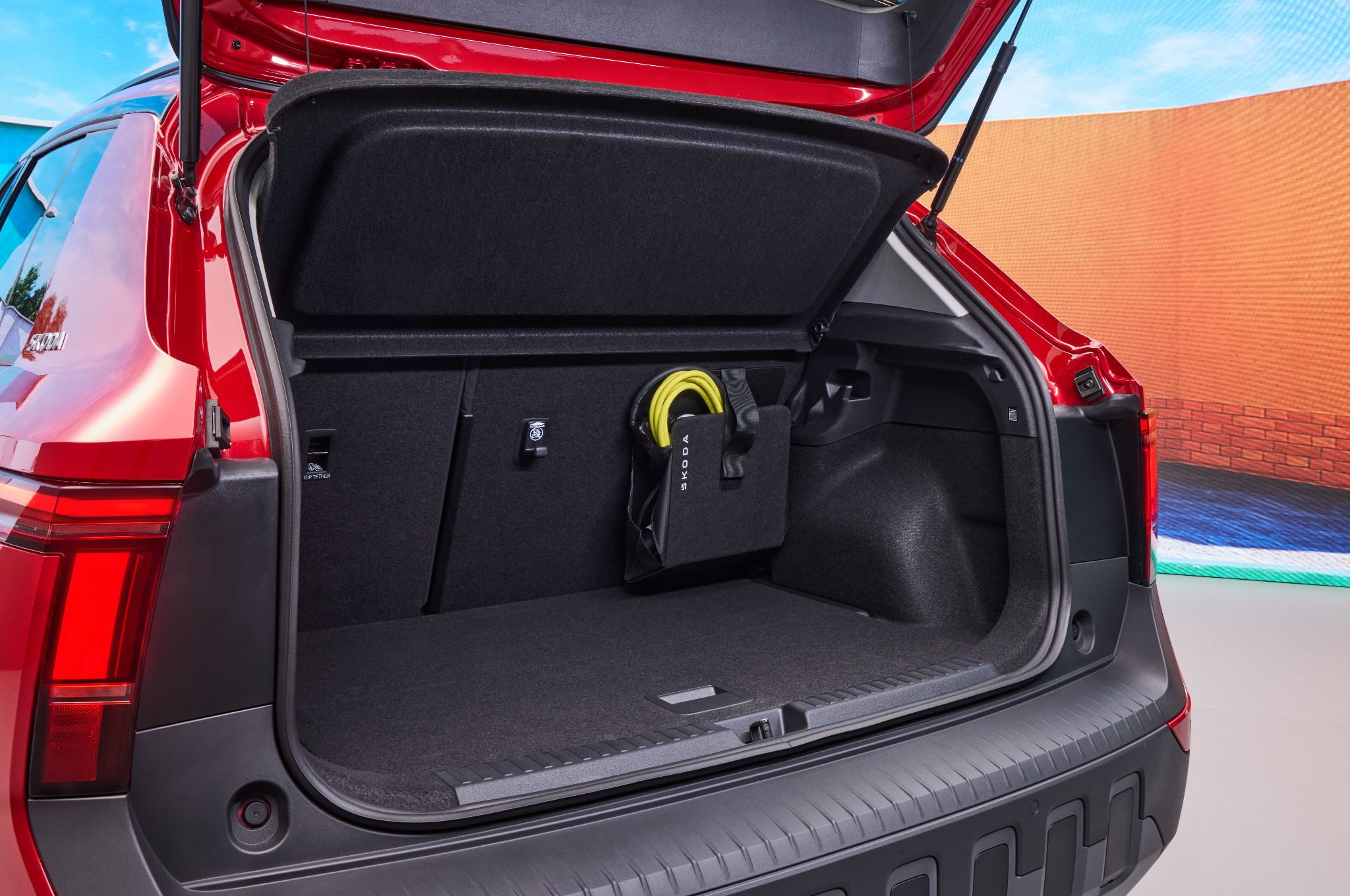
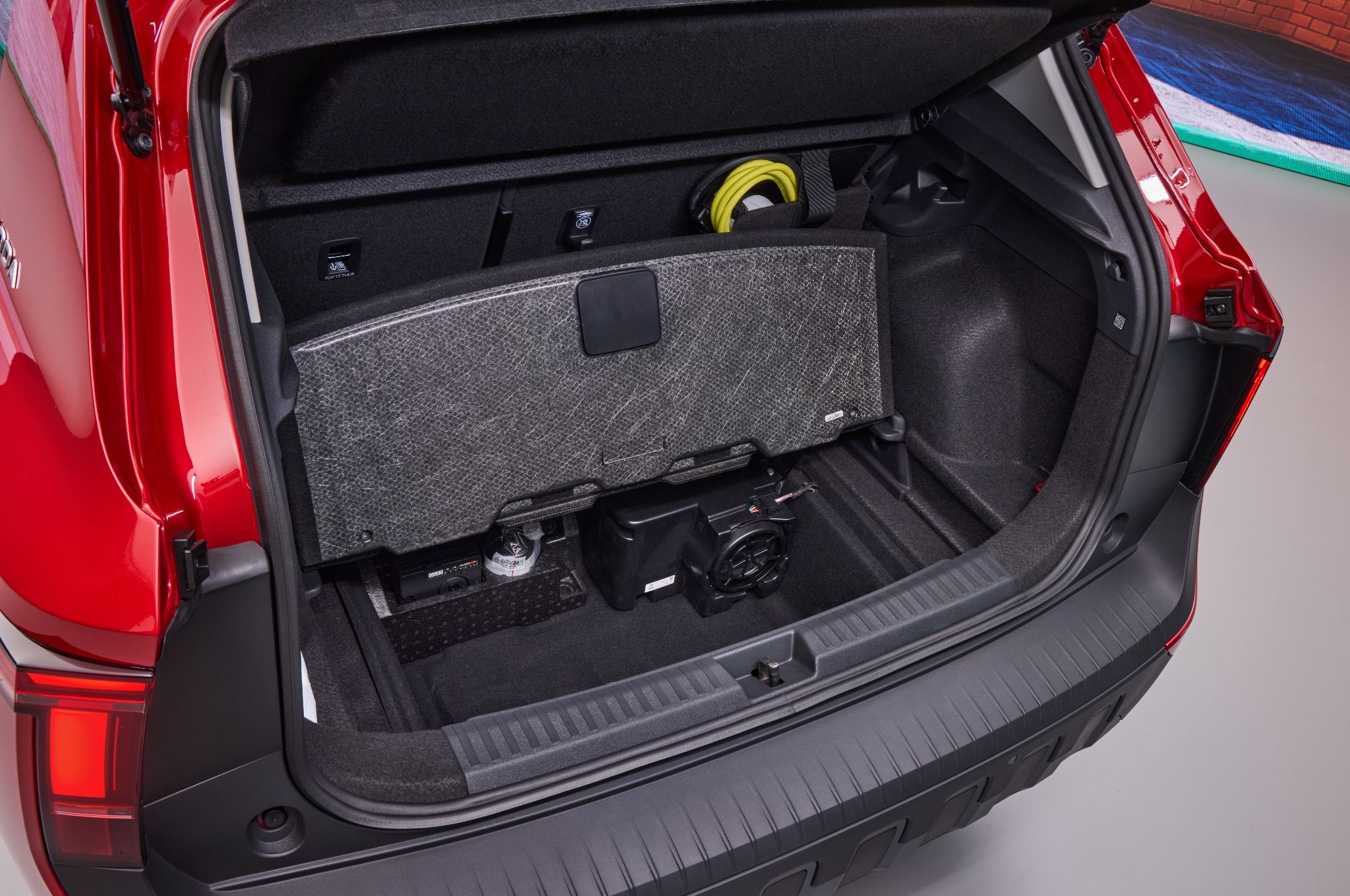
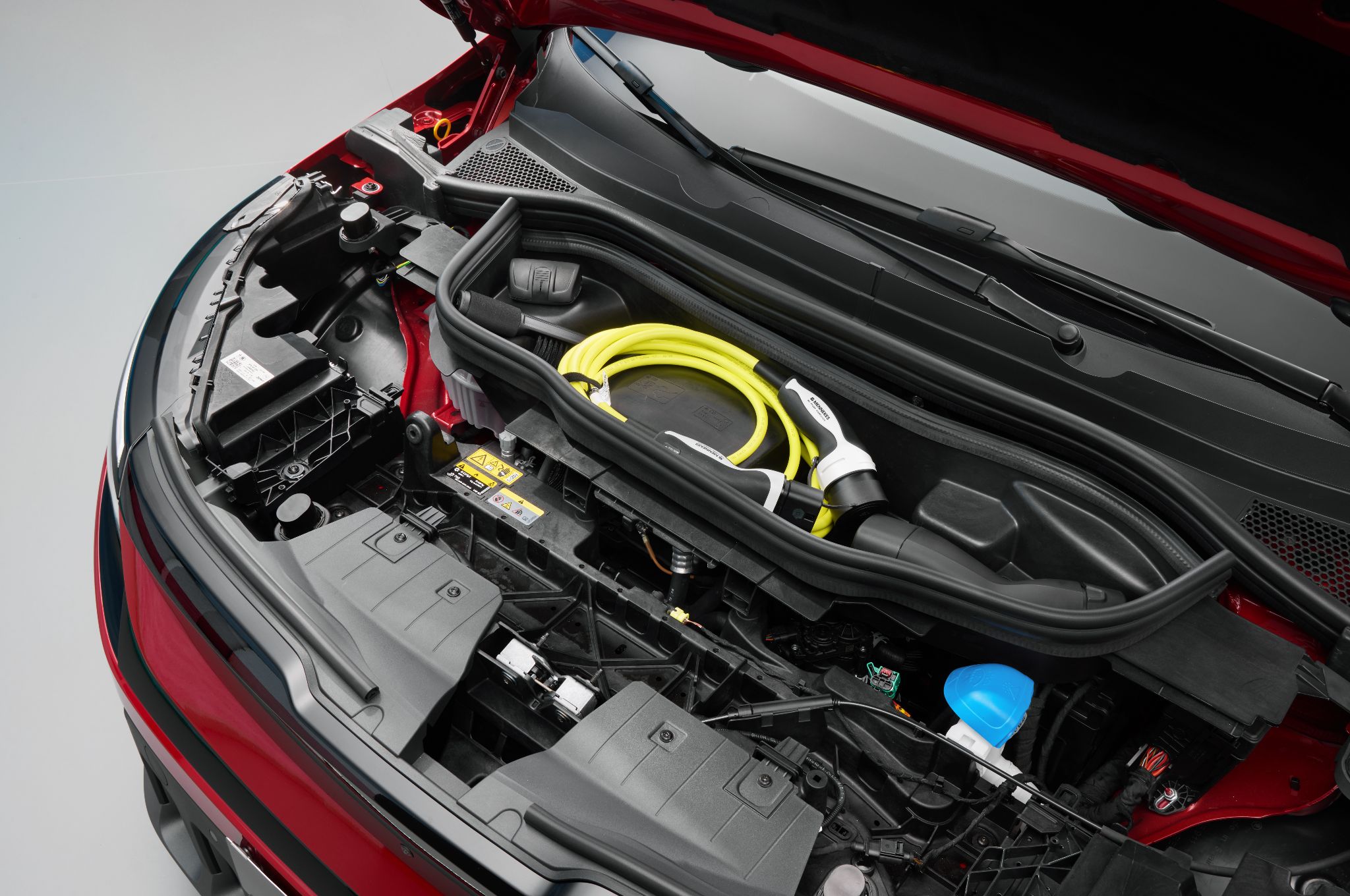
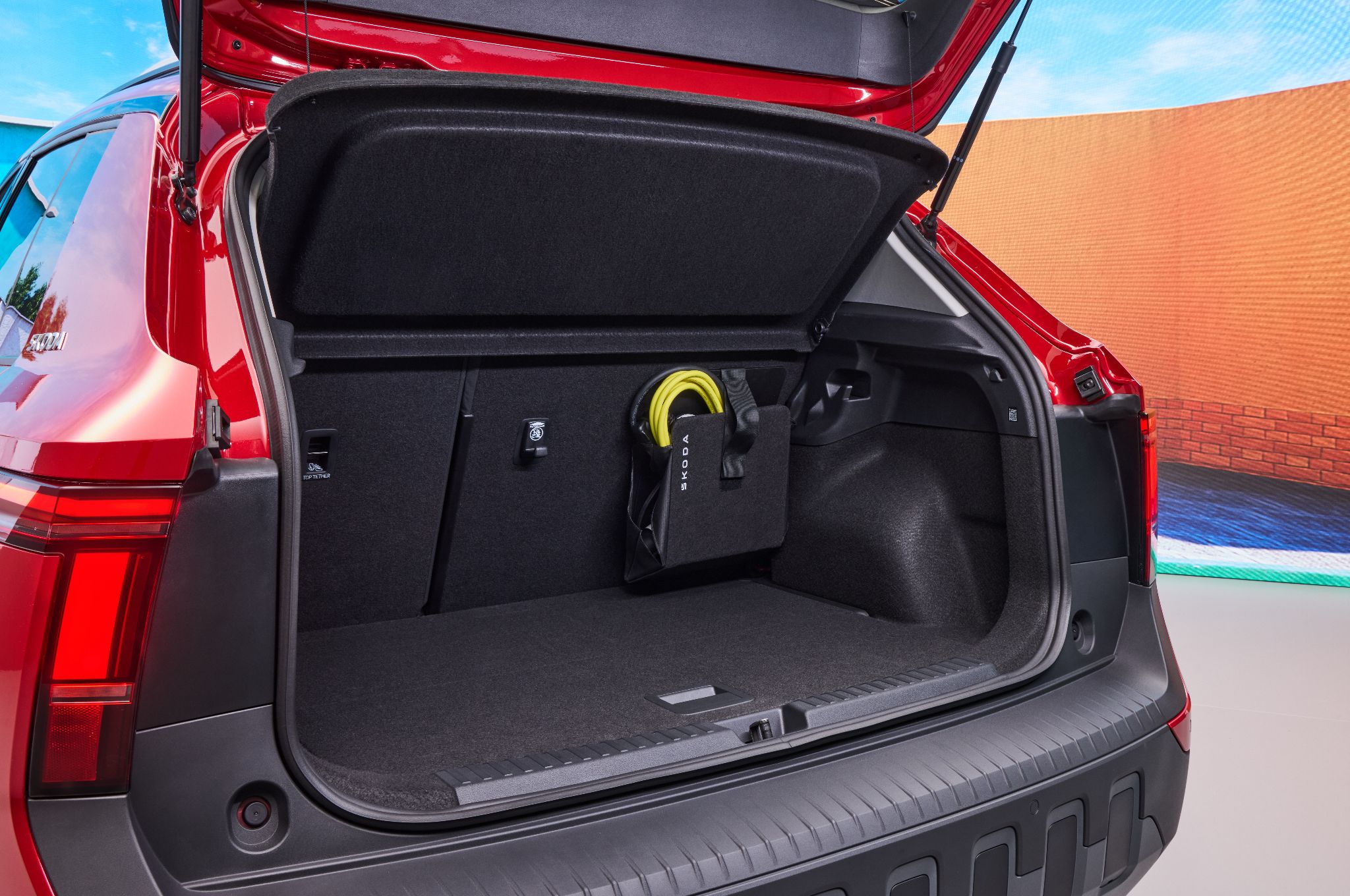
For a relatively small car, the Epiq gets a huge boot space of 475-litres. That’s more than you get in the Renault 4 or Jeep Avenger – only the Ford Puma Gen-E with its enormous underfloor storage can beat that. You’ll also be able to add a small 18-litre frunk to the Epiq, although that’ll be optional.
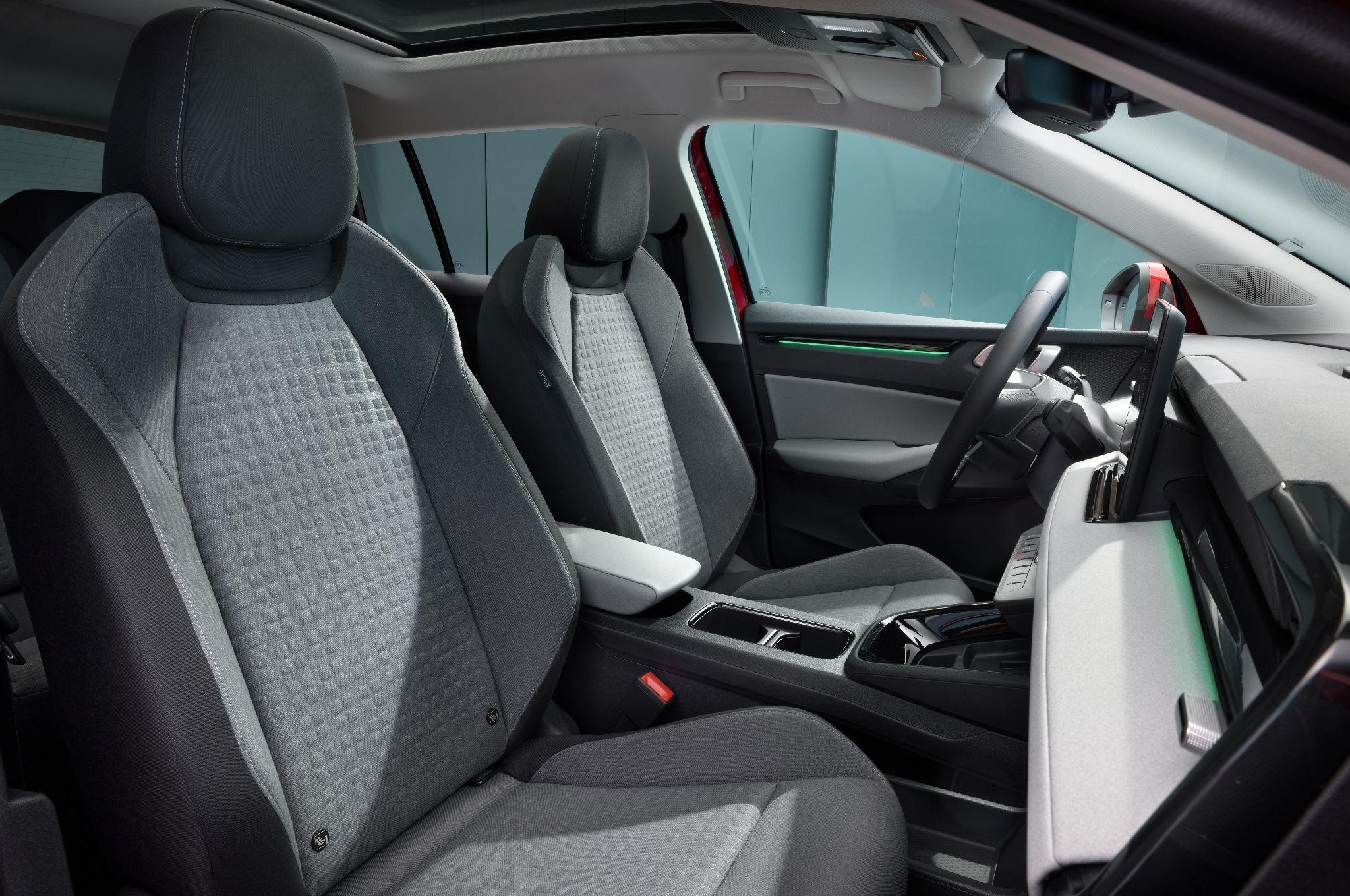
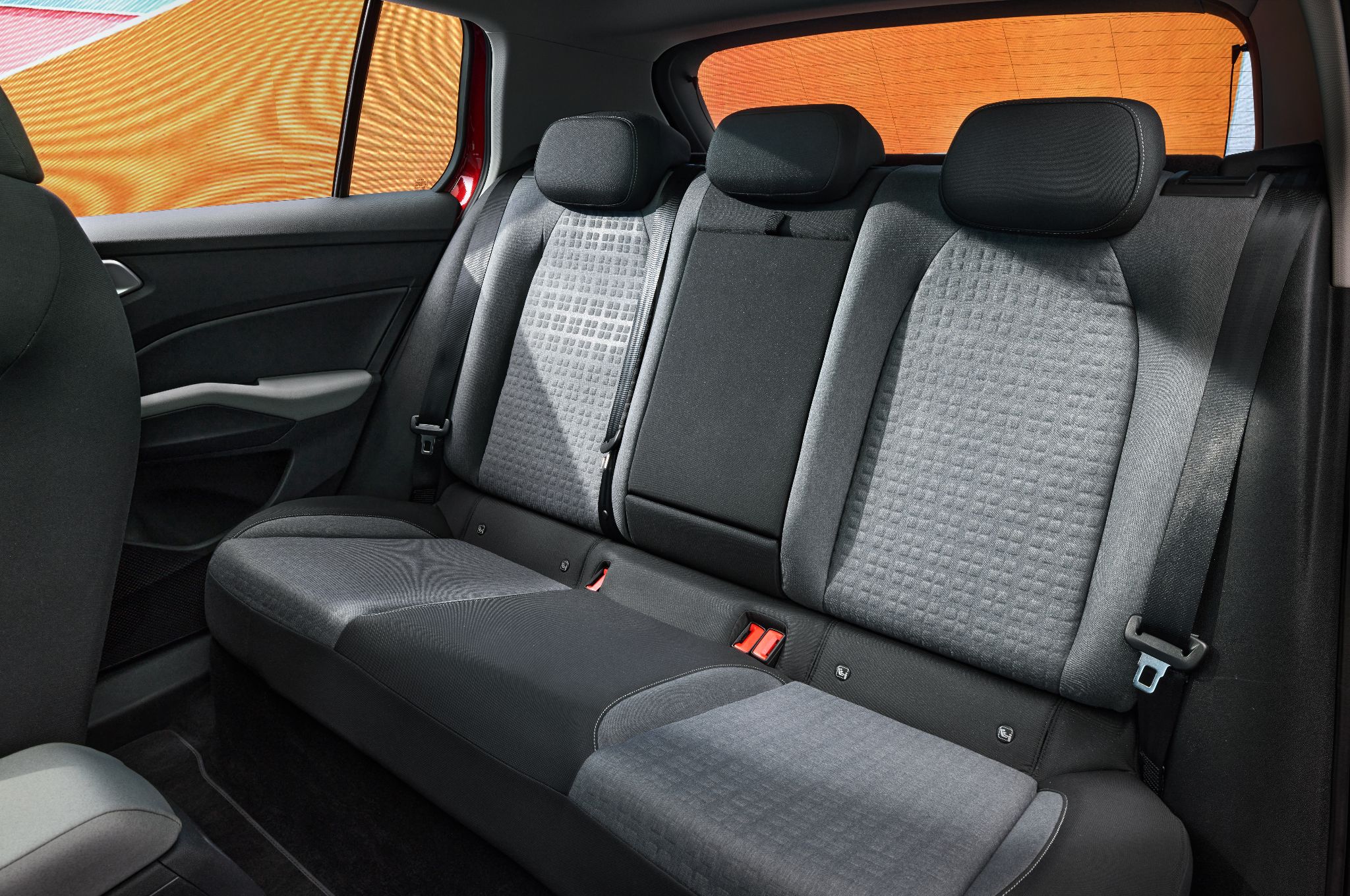
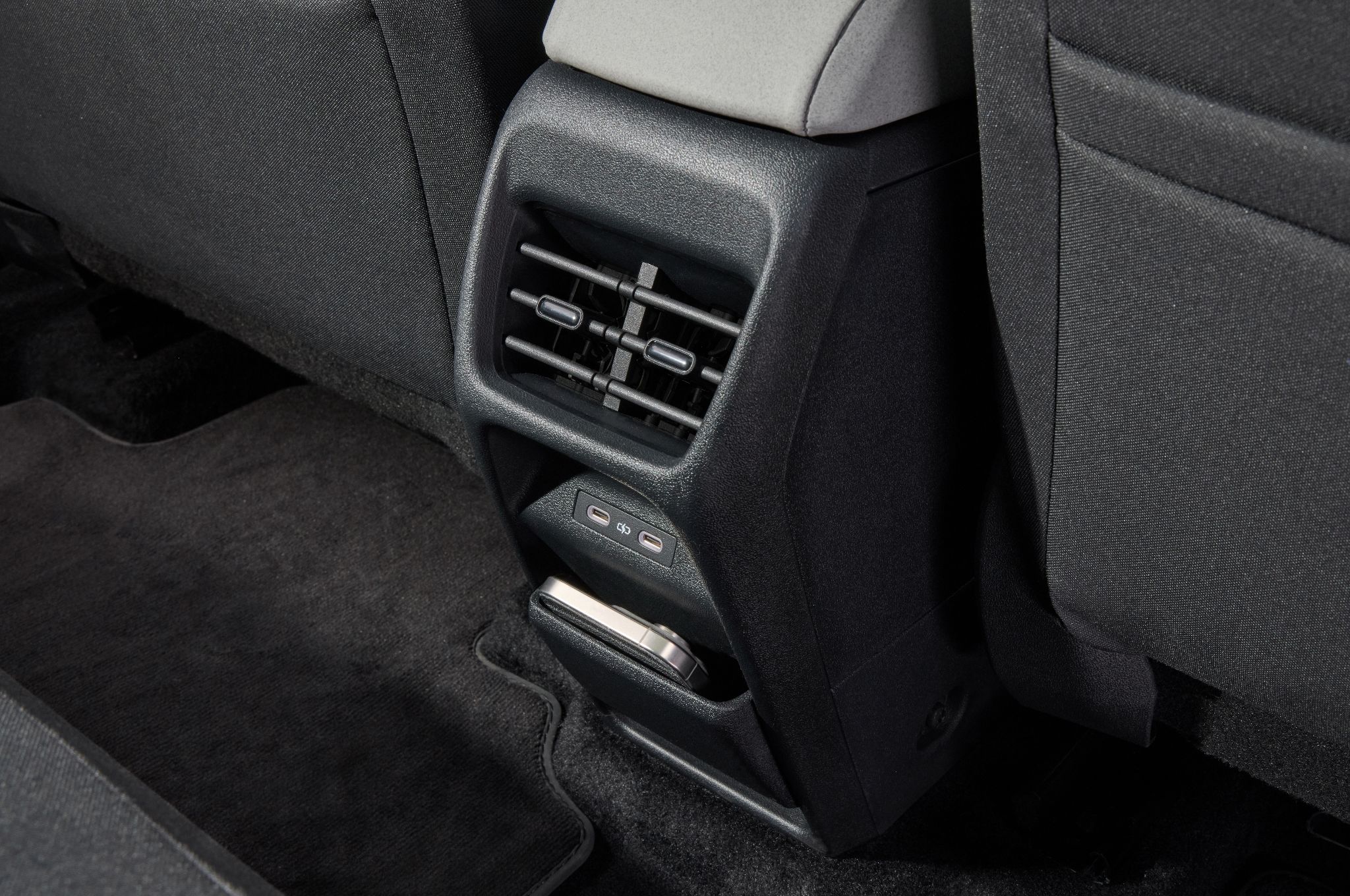
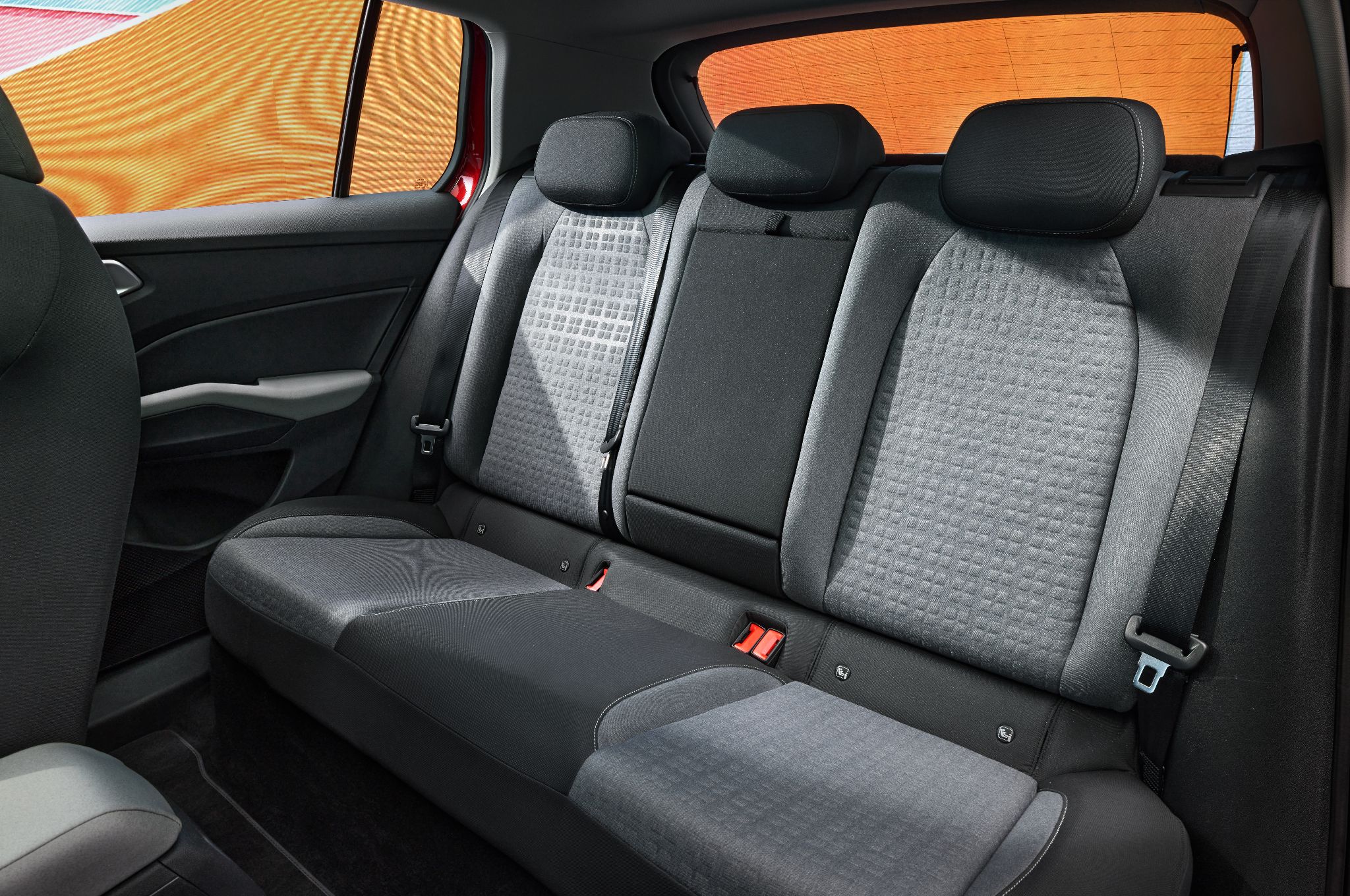
It’s a really nice place to sit, too. Even in the rear seats there’s decent head and legroom, so you’ll be able to get a couple of average height adults back there very comfortably, especially if you’ve got the centre rear armrest for added comfort.
The floor feels a touch high, so very long-legged adults might feel like their knees are bent up towards their chin, but I’d say that this is less of an issue than in some rivals. I’m 5ft 7in tall and I was very comfortable sat behind a taller driver.
There’s lots of space up front, too, and while you sit slightly higher than you would in a ‘normal’ hatchback, the Epiq has a nice balance of offering a lofty view over the bonnet, it still feels low and nimble. Cars like the MGS5 offer a more SUV-ish feel, while the Epiq is closer to the Renault 4 and Ford Puma in its not-quite-an-SUV stance.
Interior, design and technology
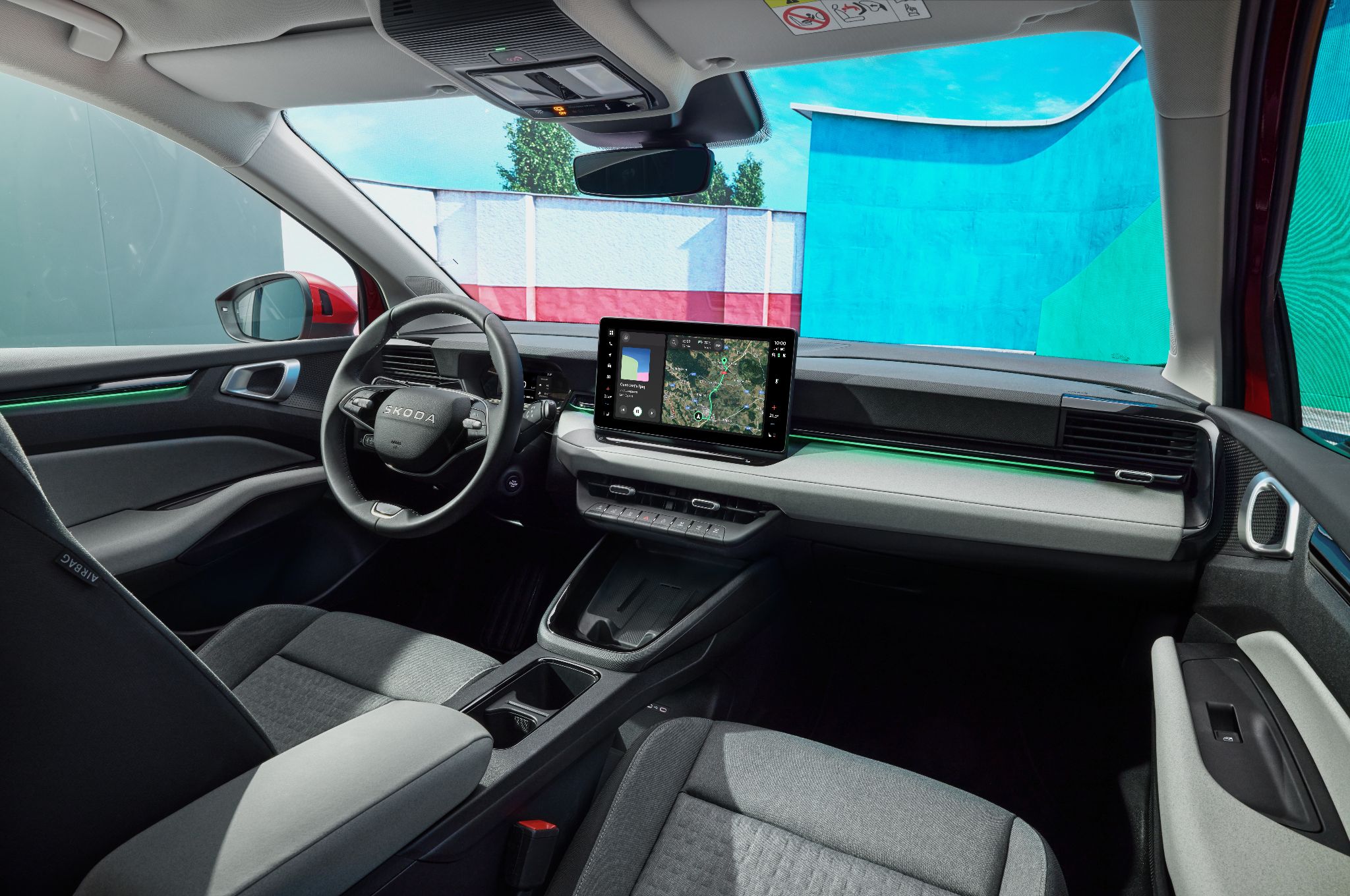
The Epiq will be offered with three different interior ‘Design Selections’ called Studio, Loft and Suite. Entry-level Studio gets upholstery made entirely from recycled plastics, while Loft steps it up with a few more colourful finishes including a mint green option and part leatherette.
Suite is the rangetopper and gets faux suede and leatherette including the option of a brown interior, and you’ll be able to add an optional panoramic glass roof.
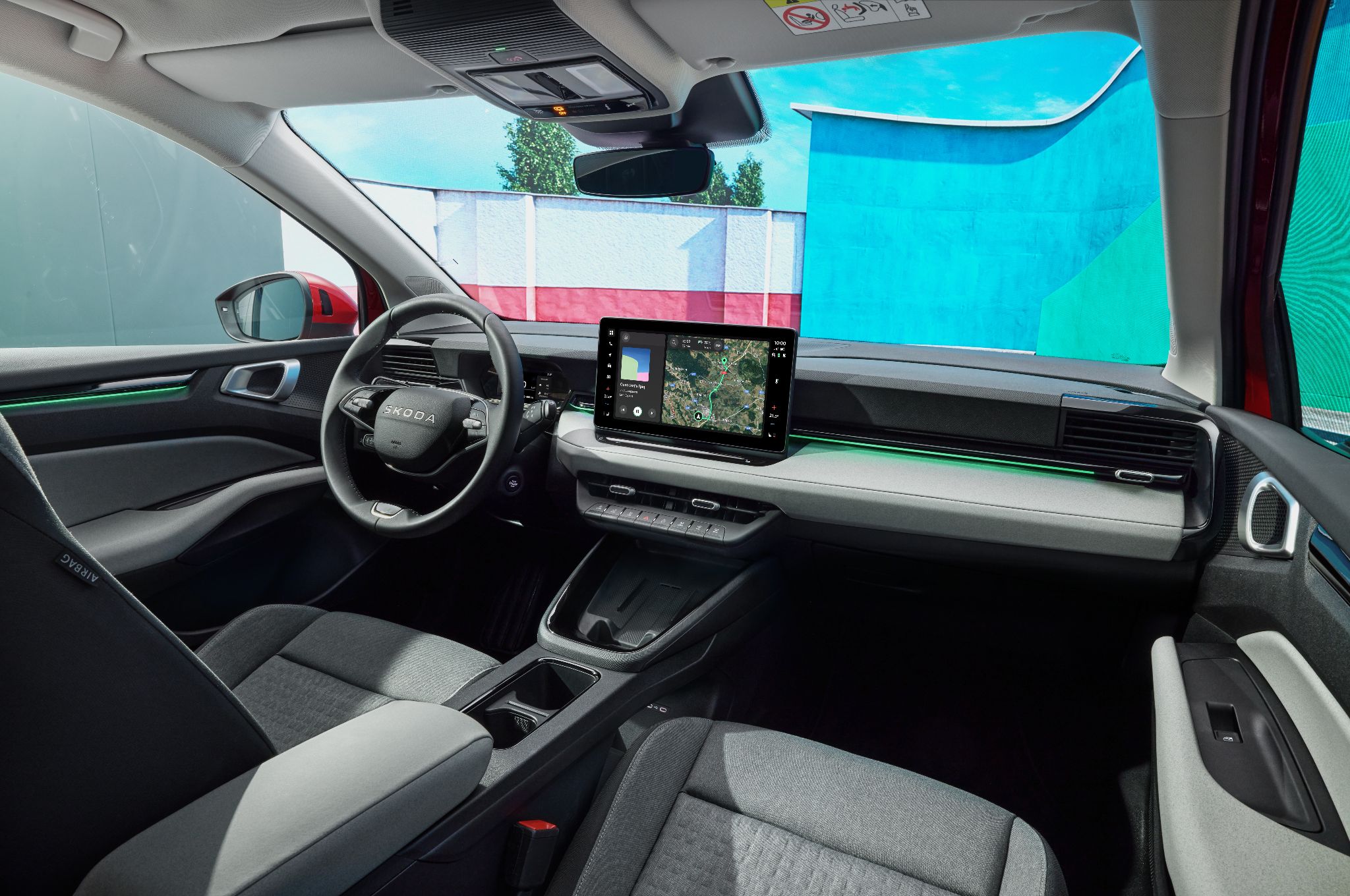
Every Epiq gets a 5.3-inch driver’s readout and a 13-inch infotainment touchscreen, complete with Apple CarPlay and Android Auto. You will have to step up from the entry-level SE L trim to top-spec Edition if you want satnav, though.
There will also be three interior ‘Design Selections’. Loft Grey is the standard option with its grey part-leather upholstery, but having sat in the Skoda Epiq a few times, now, I suspect a lot of buyers will pay the extra for the rather lovely Loft Mint interior.
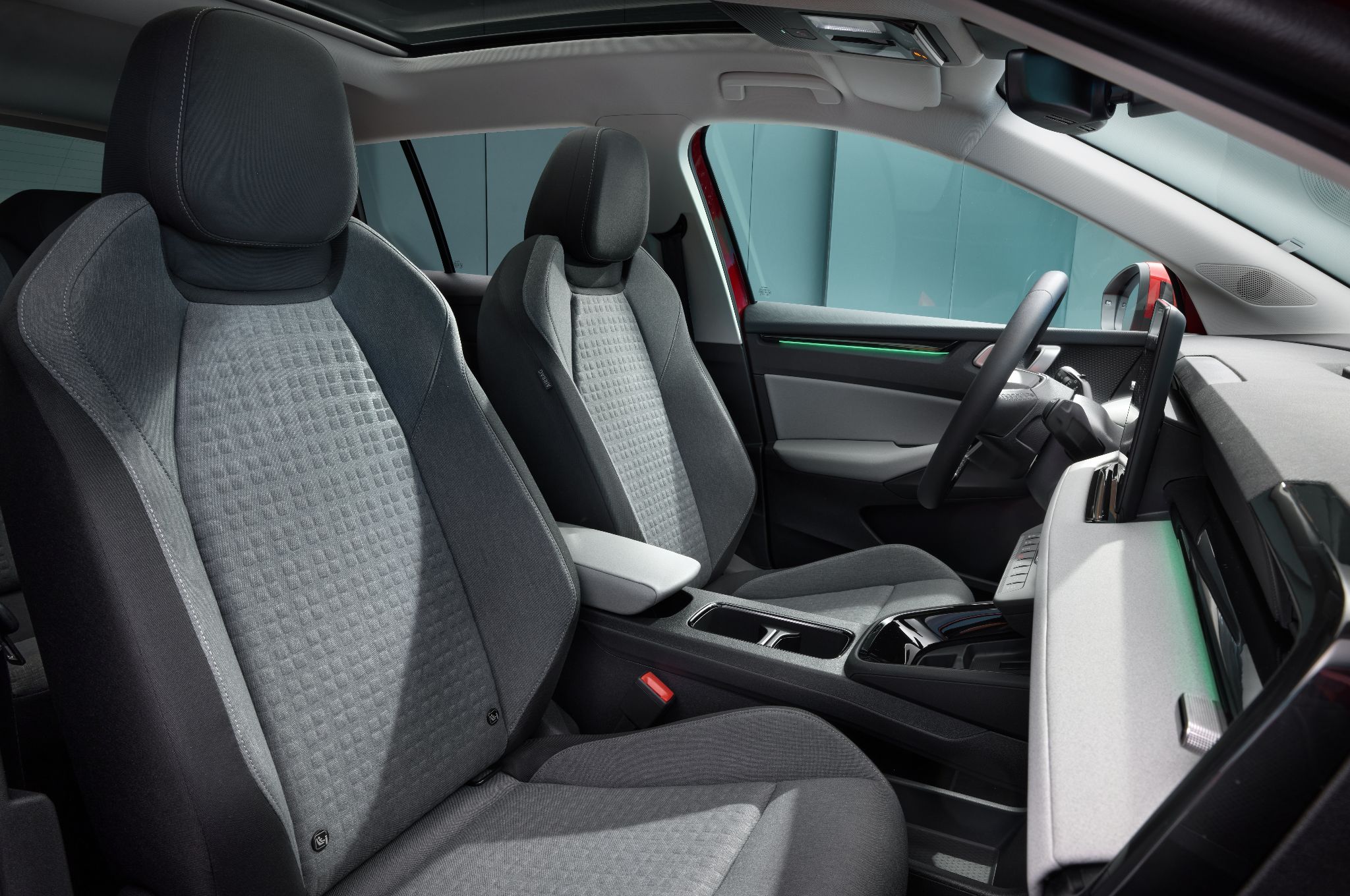
Loft Mint brings a brighter interior with flashes of green fabric, or Suite brings brown leatherette and microsuede. Don’t disregard a brown interior... it sounds a bit odd, but it really does look cool.
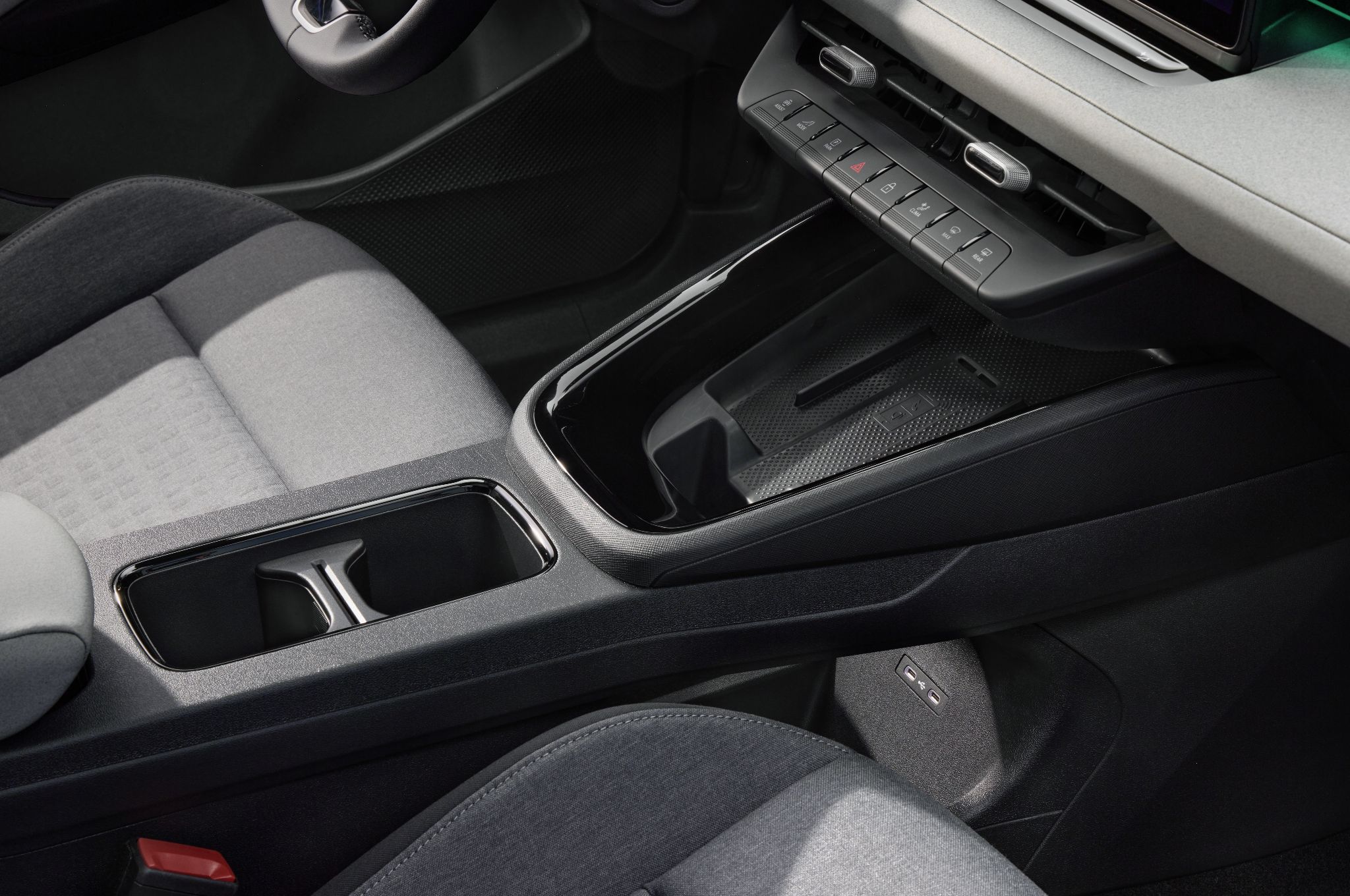
It’s a very smart interior whichever ‘design selection’ you choose, and there’s lots of storage and decent visibility. I just wish it had bigger cupholders up front!
Motors, performance and handling
The Skoda Epiq feels nicely different from its Cupra Raval and Volkswagen Polo siblings – it's the sensible one compared to sporty Cupra and plush Polo.
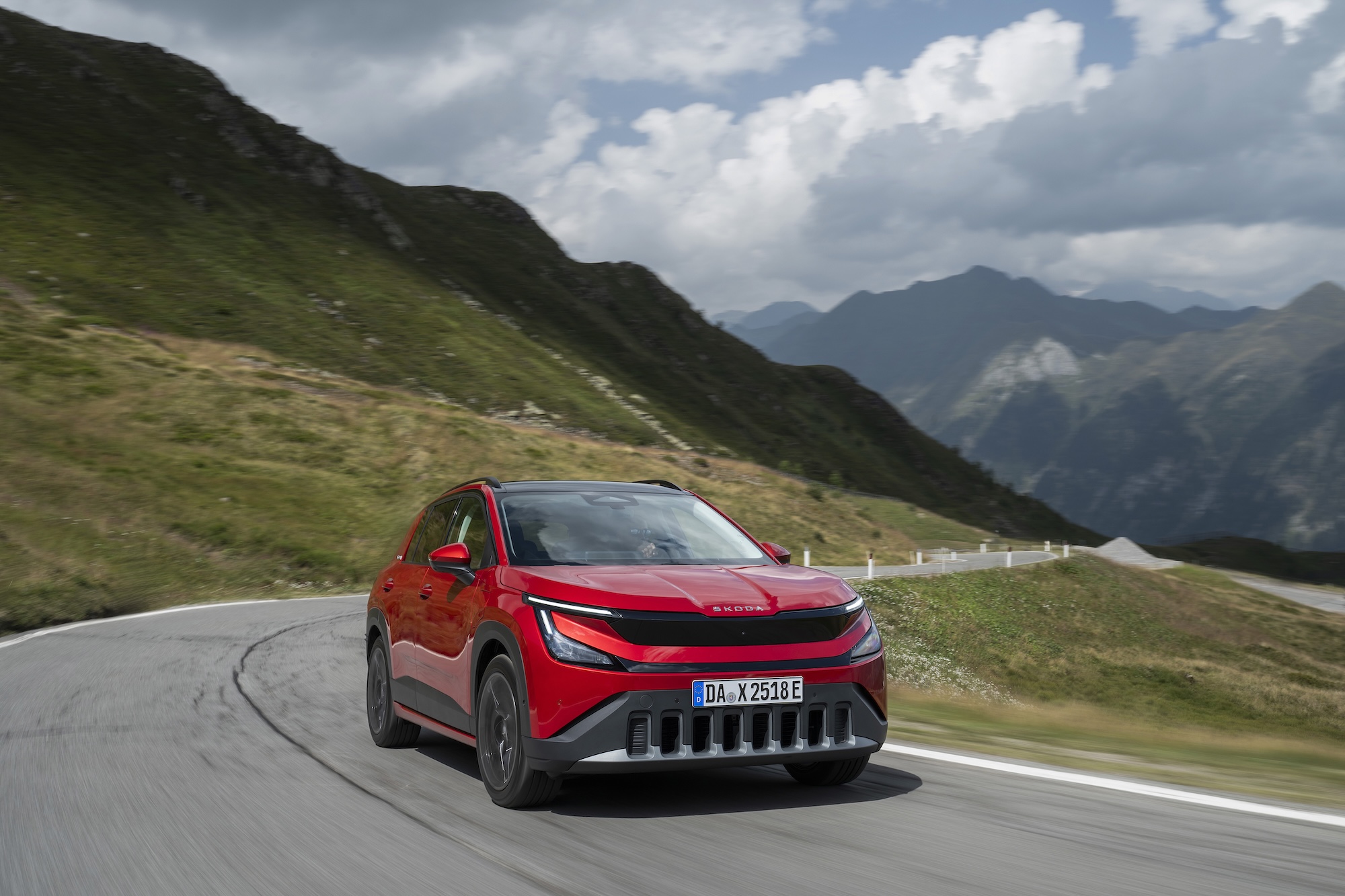
We've only driven the Epiq 55 version so far, and it feels very grown-up. It's comfortable and easy-going, soaking up lumps and bumps with surprising composure for what’s meant to be one of Skoda’s more affordable EVs. It has predictable accelerator and brake responses and nicely judged control weights. Basically, it doesn't feel like a little urban runabout, and instead feels like something you could happily spend hours in.
The 55 has not only the larger battery but also the more powerful 211hp motor and there’s enough shove to make it feel properly punchy. The downside is that, because all of that power is going through the front wheels, they can get a little scrabbly if you put your foot down hard, particularly on less-than-perfect surfaces. The lower-powered 135hp version may actually feel a touch tidier in that respect.
The ride is particularly impressive. It's a little soft and occasionally wallowy, admittedly, but for this type of car it's very good. There’s some tyre and suspension noise, plus a bit of wind noise around the mirrors at speed, but generally it’s refined and calm.
The steering has a nice bit of weight, too. It’s direct enough to inspire confidence but light enough to make mini-roundabouts and tight parking spaces a doddle. Visibility is good and the turning circle is usefully tight.
There are three levels of brake regeneration, including a proper one-pedal mode that will bring the Epiq to a complete stop when you lift off the accelerator. Lovely stuff for stop-start city driving.
Overall, the Epiq feels like a bigger car from behind the wheel – and that could be its cleverest trick. It’s polished and practical enough that I can see plenty of buyers choosing a high-spec Epiq over a basic Skoda Elroq or Kia EV3. And I can absolutely see the logic in that.
Running costs and pricing
There will be two trims available on the Skoda Epiq. Entry level SE L gets standard adaptive cruise control, rear parking sensors, 18-inch alloy wheels and LED headlights, but I suspect most buyers will go for the Edition trim as that gets heated seats, keyless entry, satnav, parking camera, 20-inch alloy wheels, vehicle-to-load (V2L) charging and a semi-autonomous drive mode.
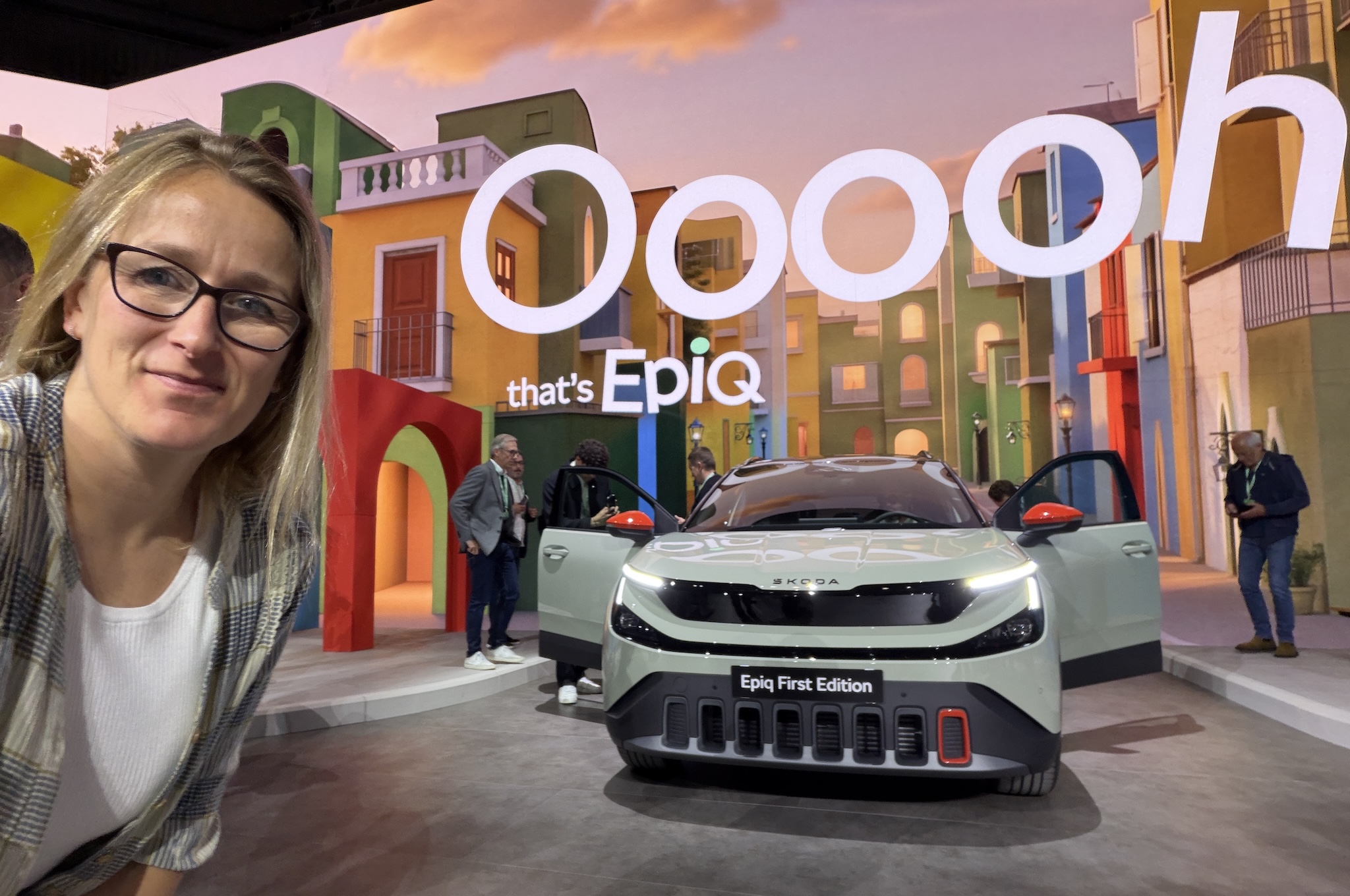
Pricing for the Epiq 40 SE L starts at £24,950, while the Epiq 40 Edition costs £27,700. The long range Epiq 55 SE L costs £27,700 (raising the question – do you want more range or more equipment?!) and the Epiq 55 Edition costs £31,450.
In truth, it’ll be monthly PCP and leasing prices that really make or break the Skoda Epiq’s success, but if Skoda can bring the Epiq in at under £300 per month with a fairly low deposit and interest, I reckon it’ll be a huge hit.
Verdict
I really enjoyed the Skoda Epiq. Maybe it’s not an exciting car to drive or to look at, but it really does feel hugely accomplished for a compact car. There’s all of that Skoda goodness that has already made the bigger Skoda EVs perennial favourites with us at Electrifying (Ginny’s still obsessed with the Enyaq), only in a small-but-still-practical package.
For anyone who wants a compact family EV with plenty of space that’s also efficient, good value and very practical – without being too big to fit into awkward parking spaces – the Skoda Epiq is a great option.

 8
8