





 Battery size: 76 kWh
 WLTP range: 236 - 255 miles (est)
  Real-world range (est): 180 - 210 miles
 Charging speed: 1,500 kW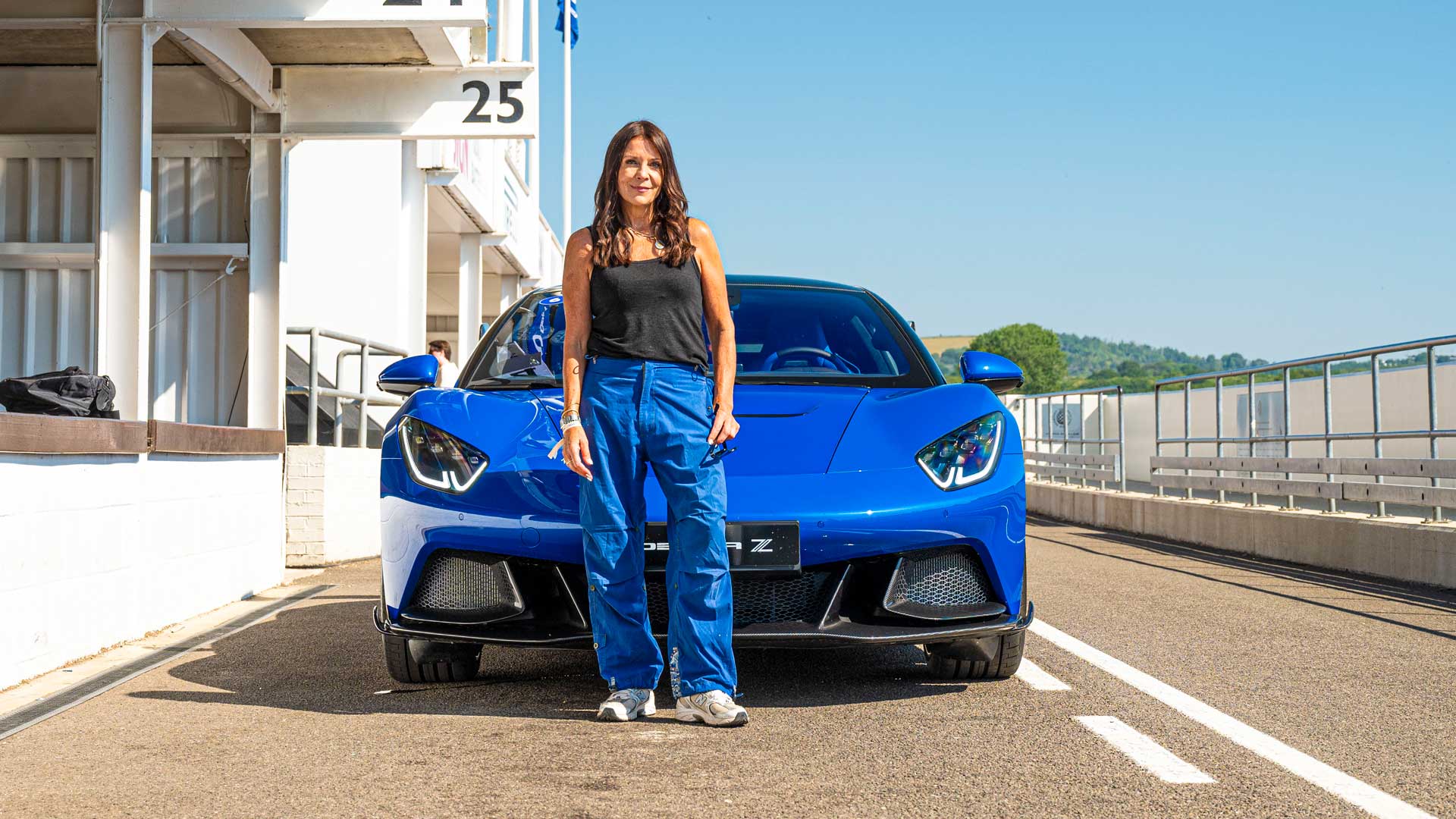
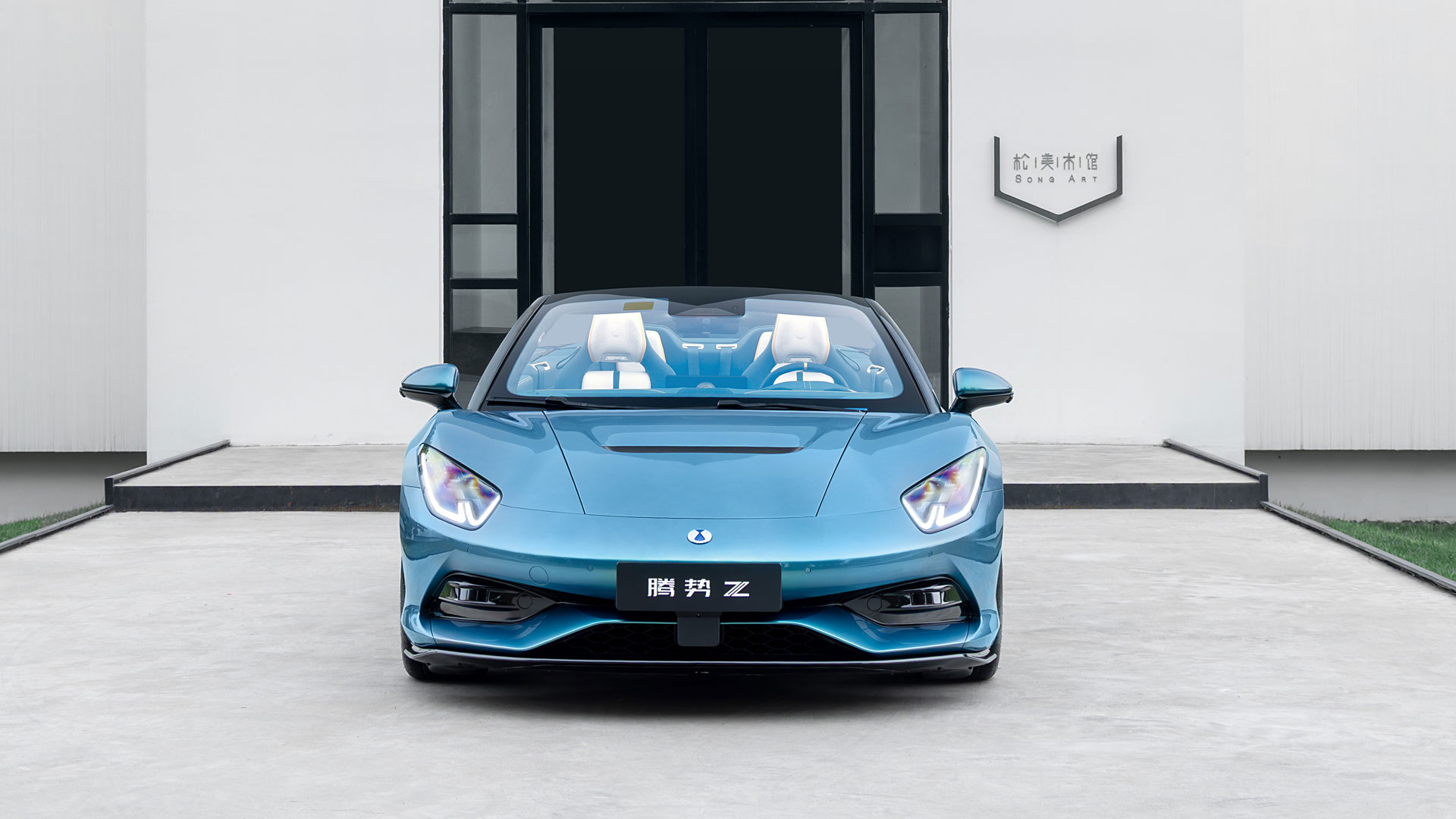
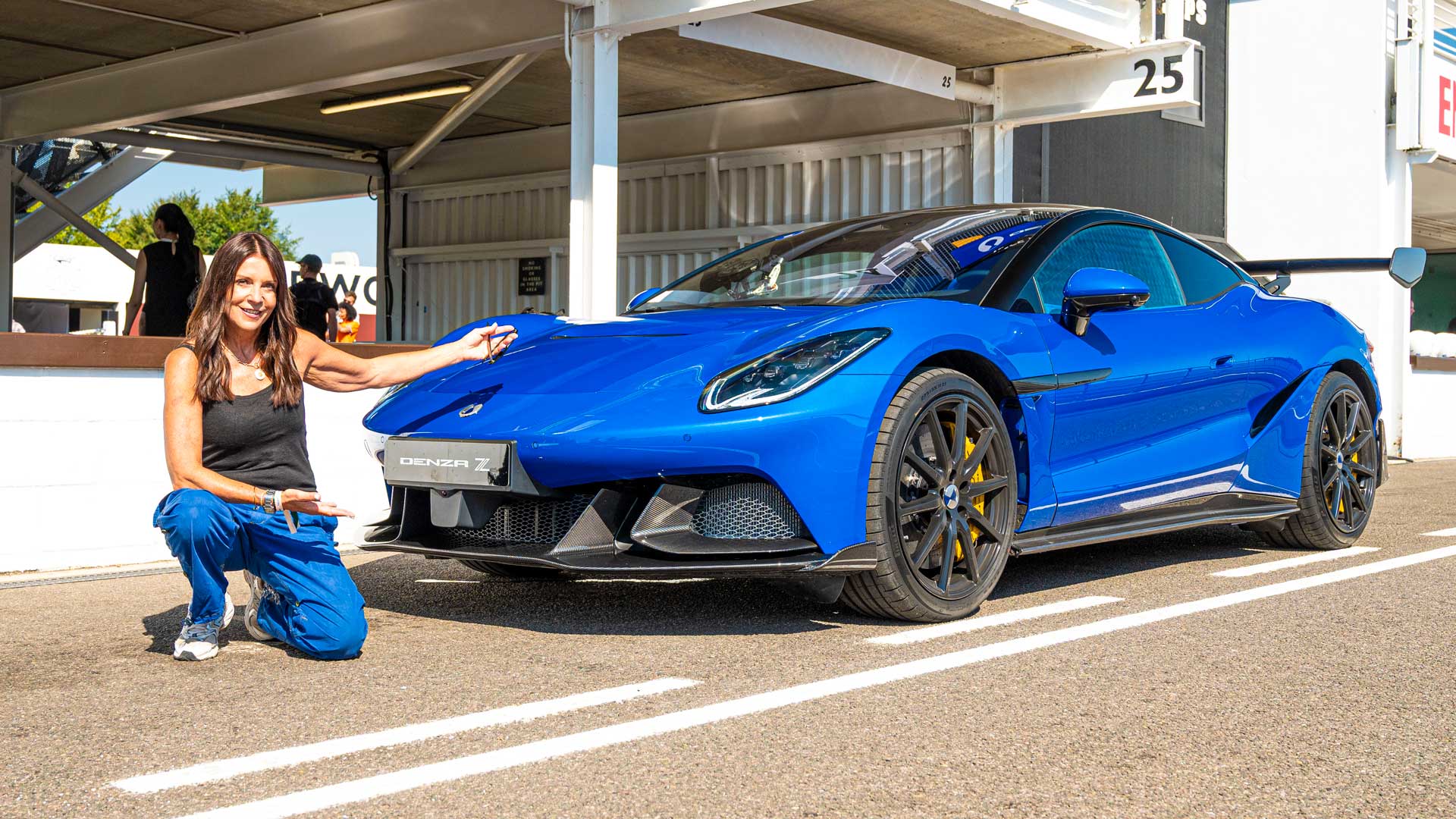
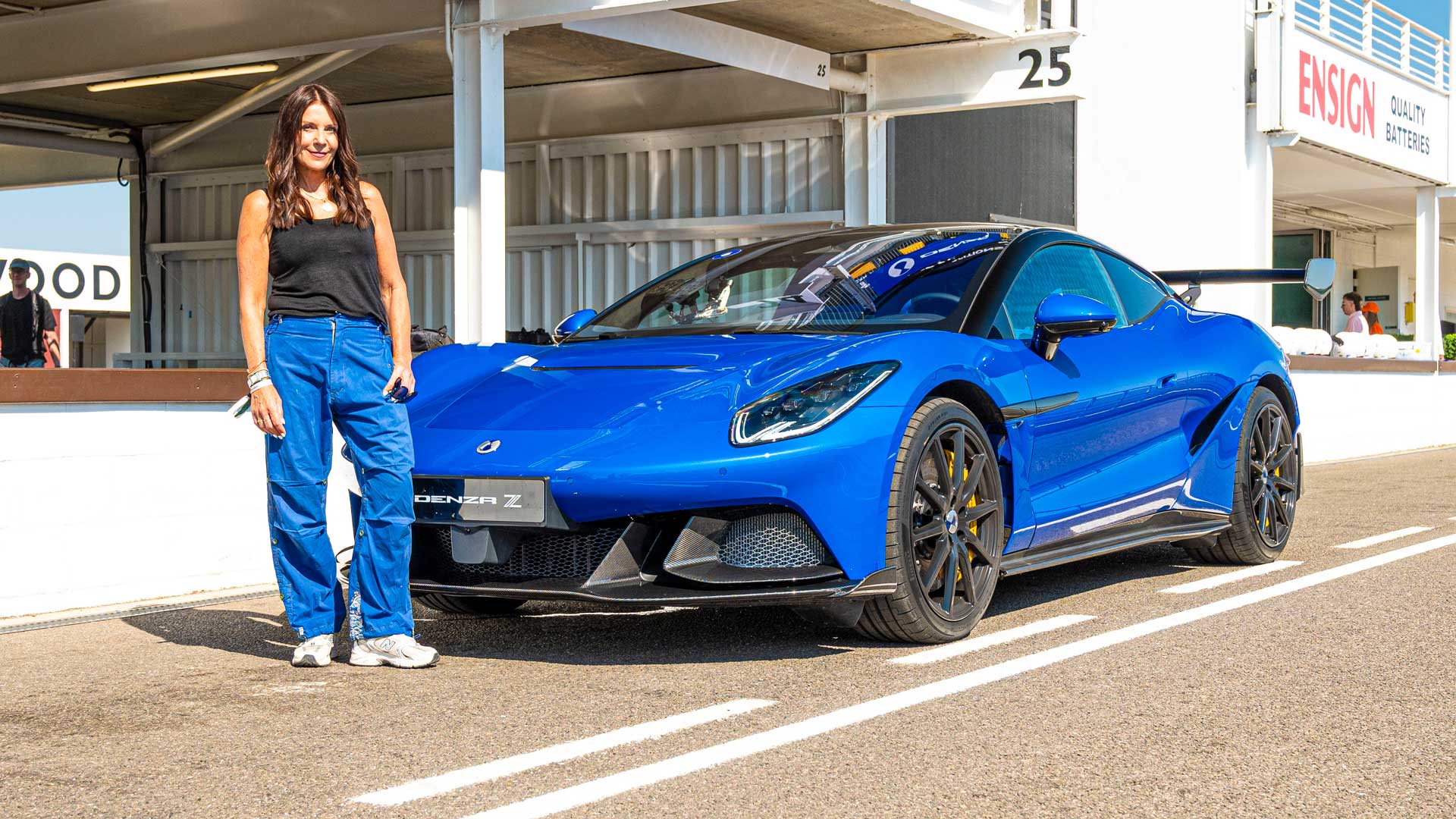



Introduction - new Denza Z
Although the Denza name will be new for most, BYD’s sporting offshoot has actually been in existence for 16 years. Founded initially as a 50:50 joint venture between BYD and Daimler – the parent company of Mercedes – BYD reverted to being sole owner in 2022 when Daimler restructured its operations. Okay, that’s the boring background bit covered in case it comes up in a pub quiz.
BYD describes Denza as a premium, technology-focused brand, and sits alongside Yangwang as a BYD sub-brand. The Z is the first Denza-badged model to come to the European market, and is likely to be followed by a range of other models. While the Z is new to us, a version of it has been on sale in China for a couple of years, marketed as the Z9.
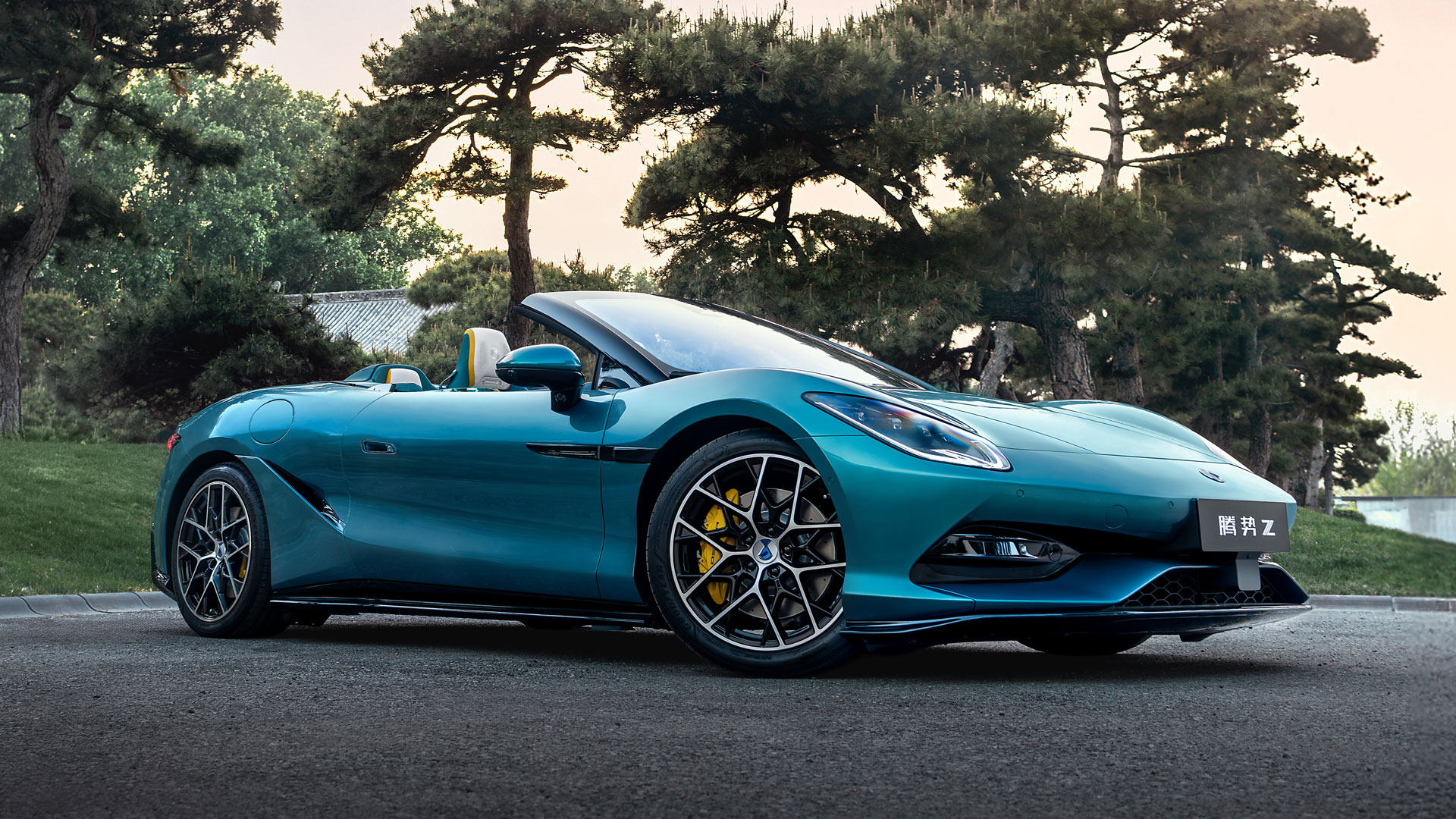
The Euro-spec Z has been extensively reworked for the European market with Denza targeting the end of 2026 for first deliveries - just after the Z9GT sports saloon. The Z will launch no fewer than four versions: Coupe, Spider (convertible), Racing, and a track-focused Special Edition aimed at breaking Nürburgring Nordschleife lap records later in the year.
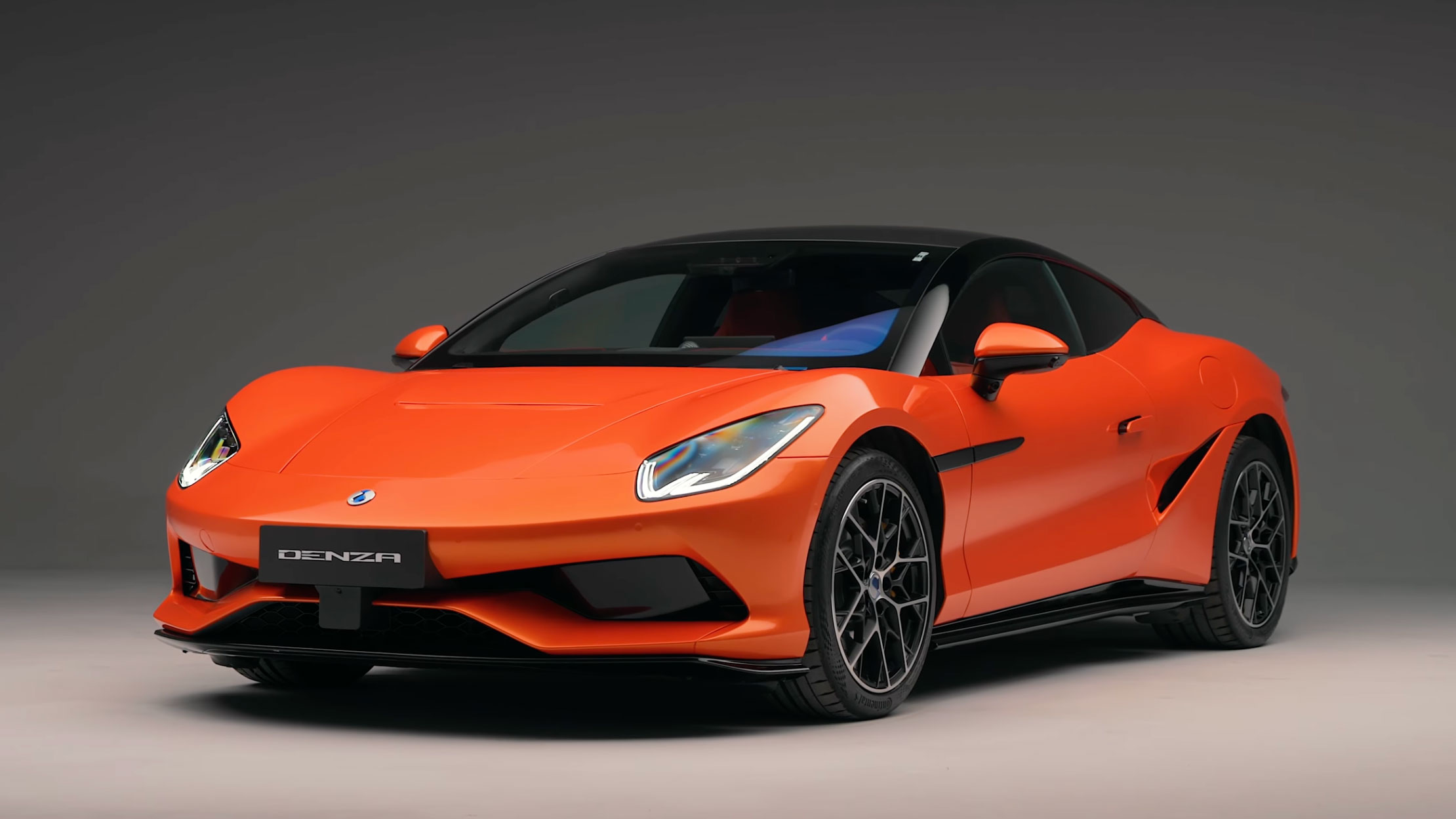
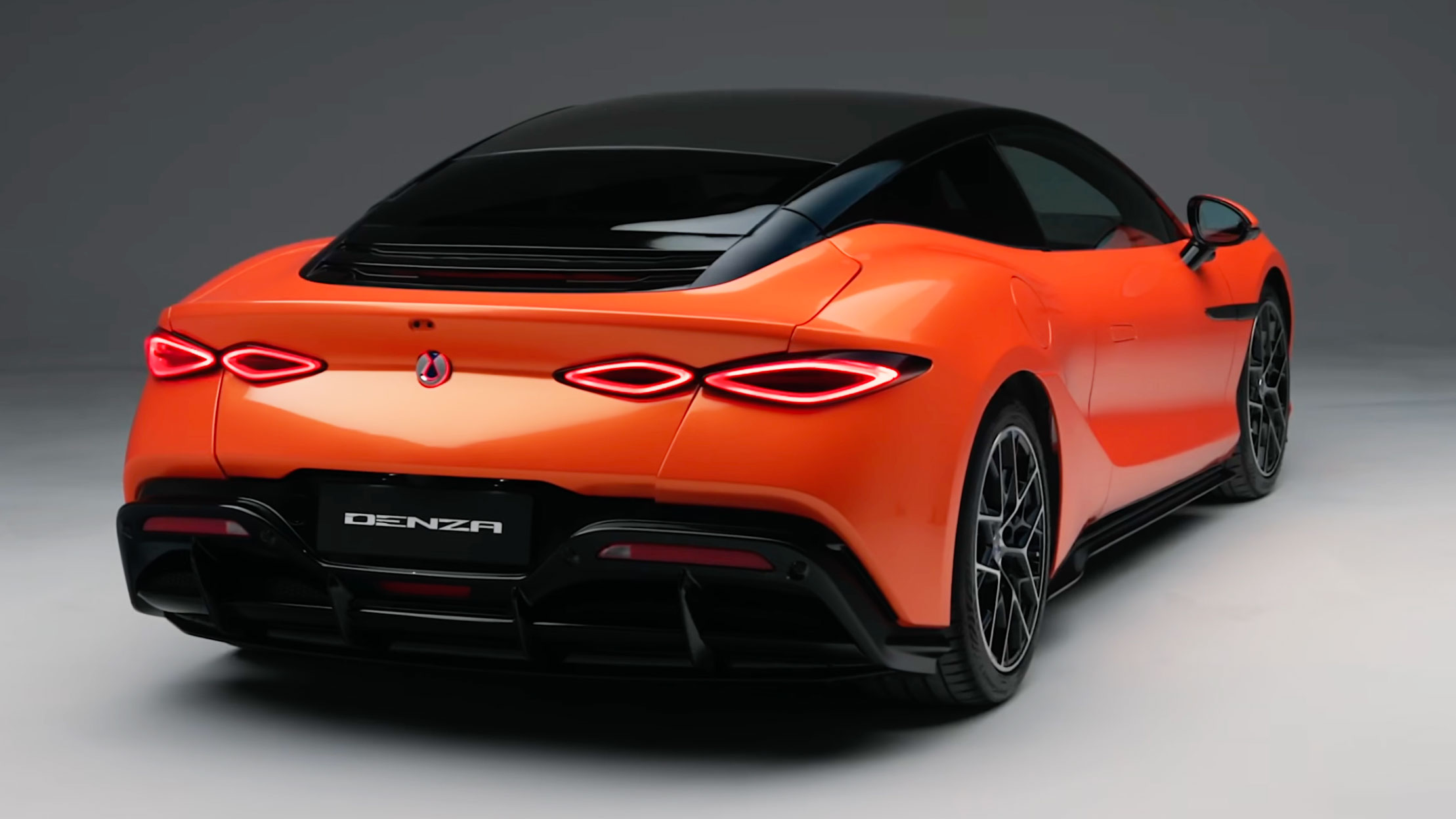
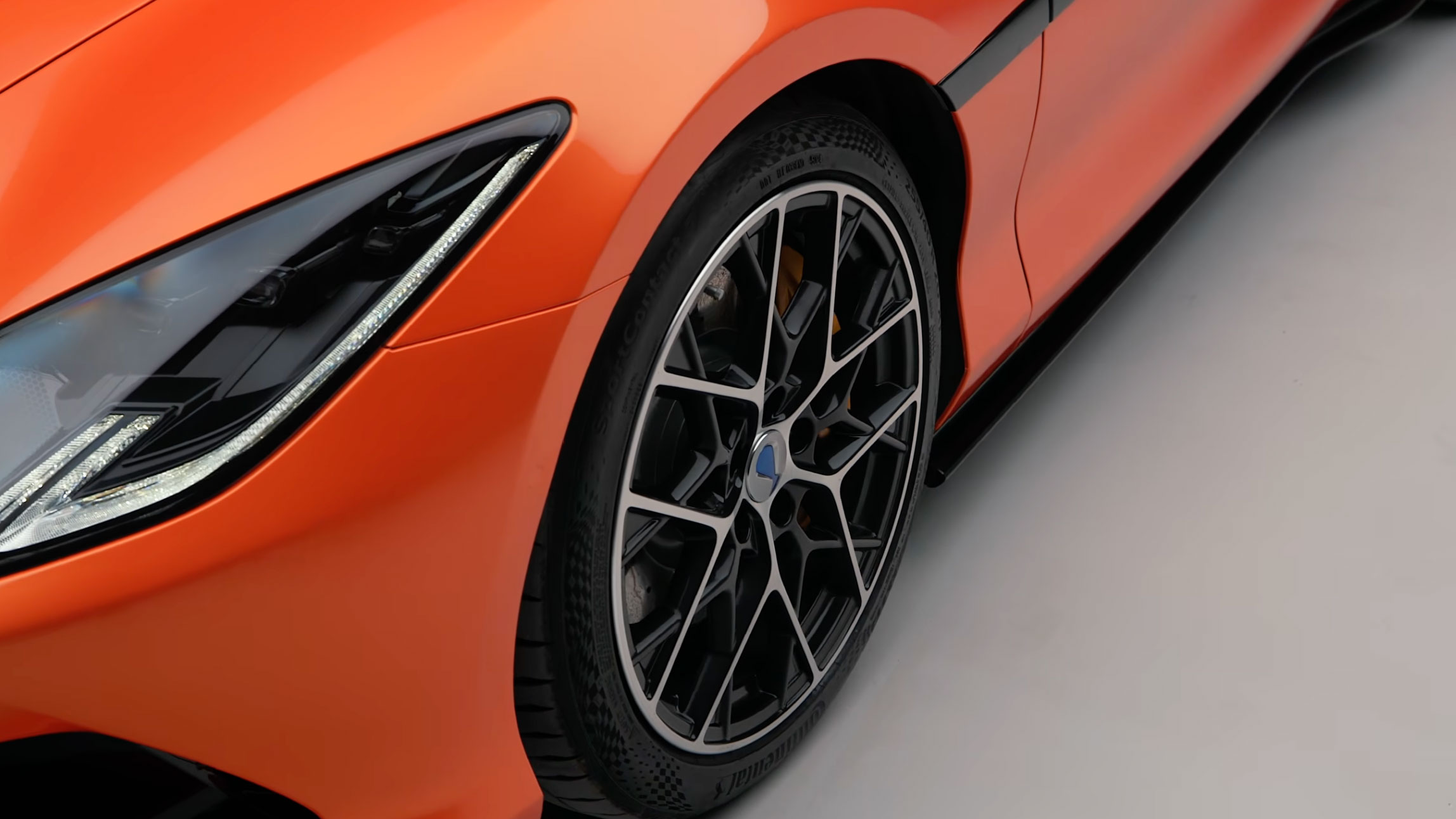
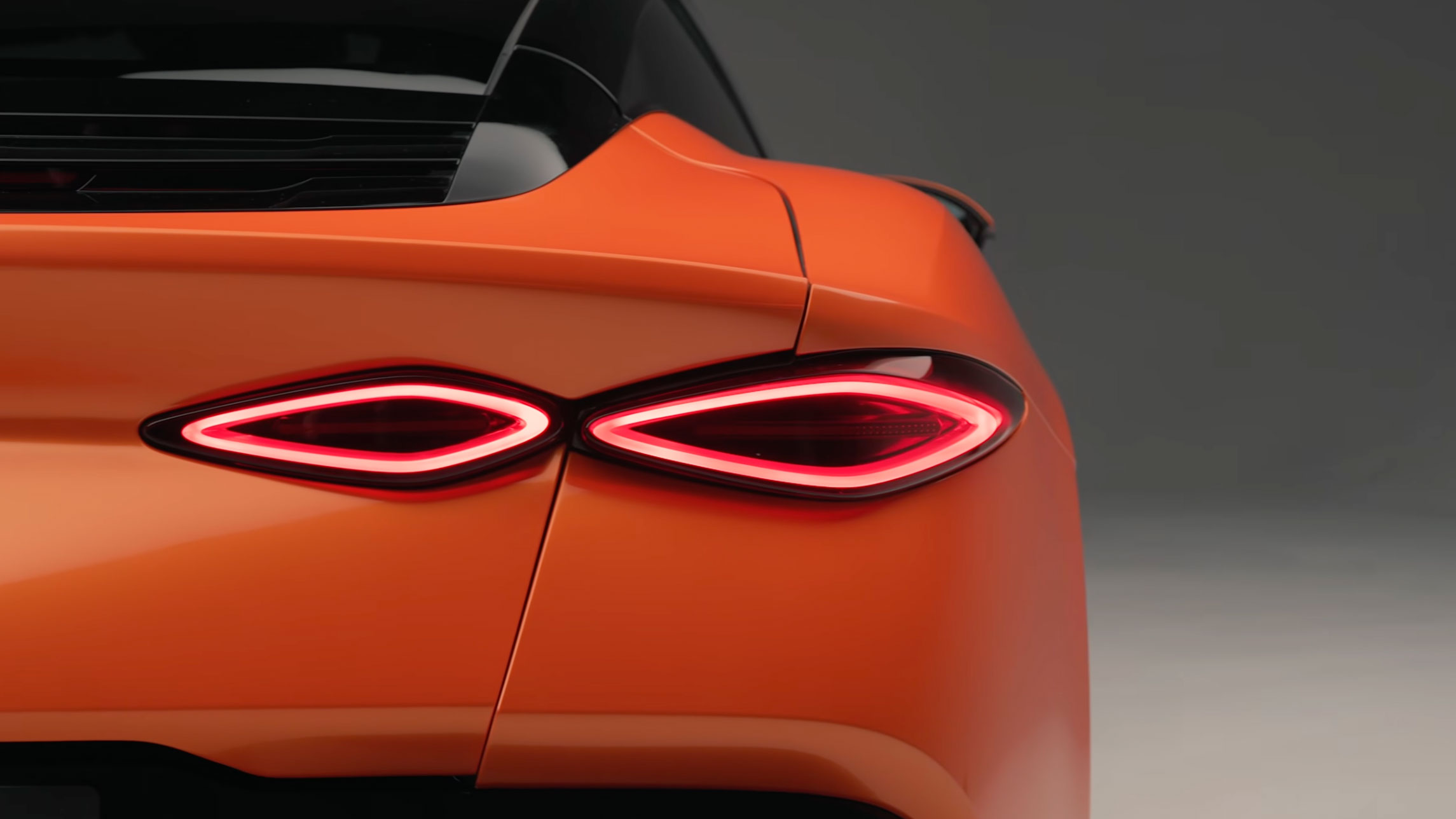
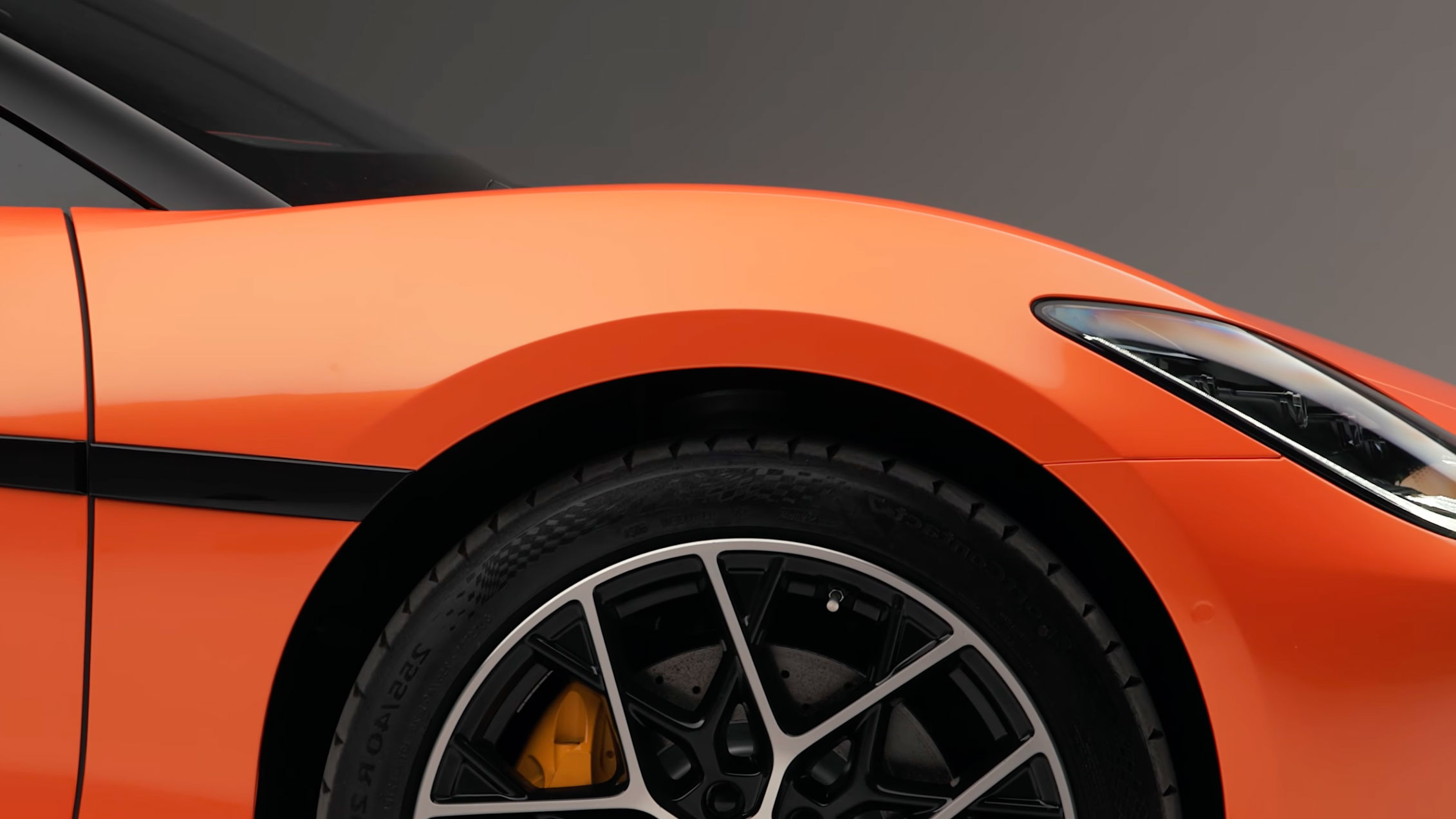
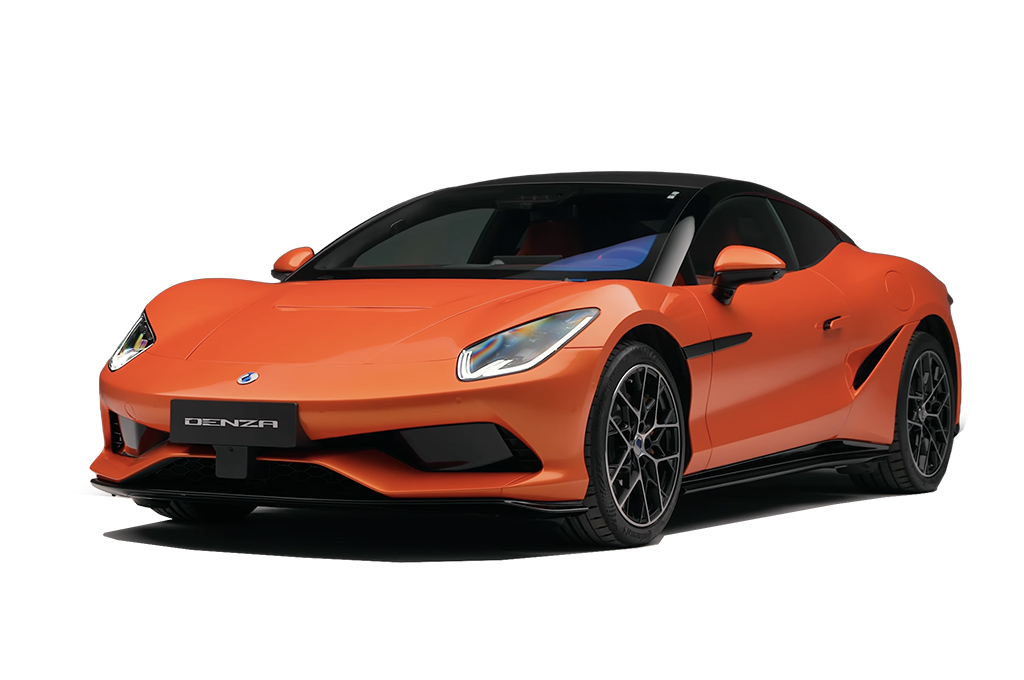
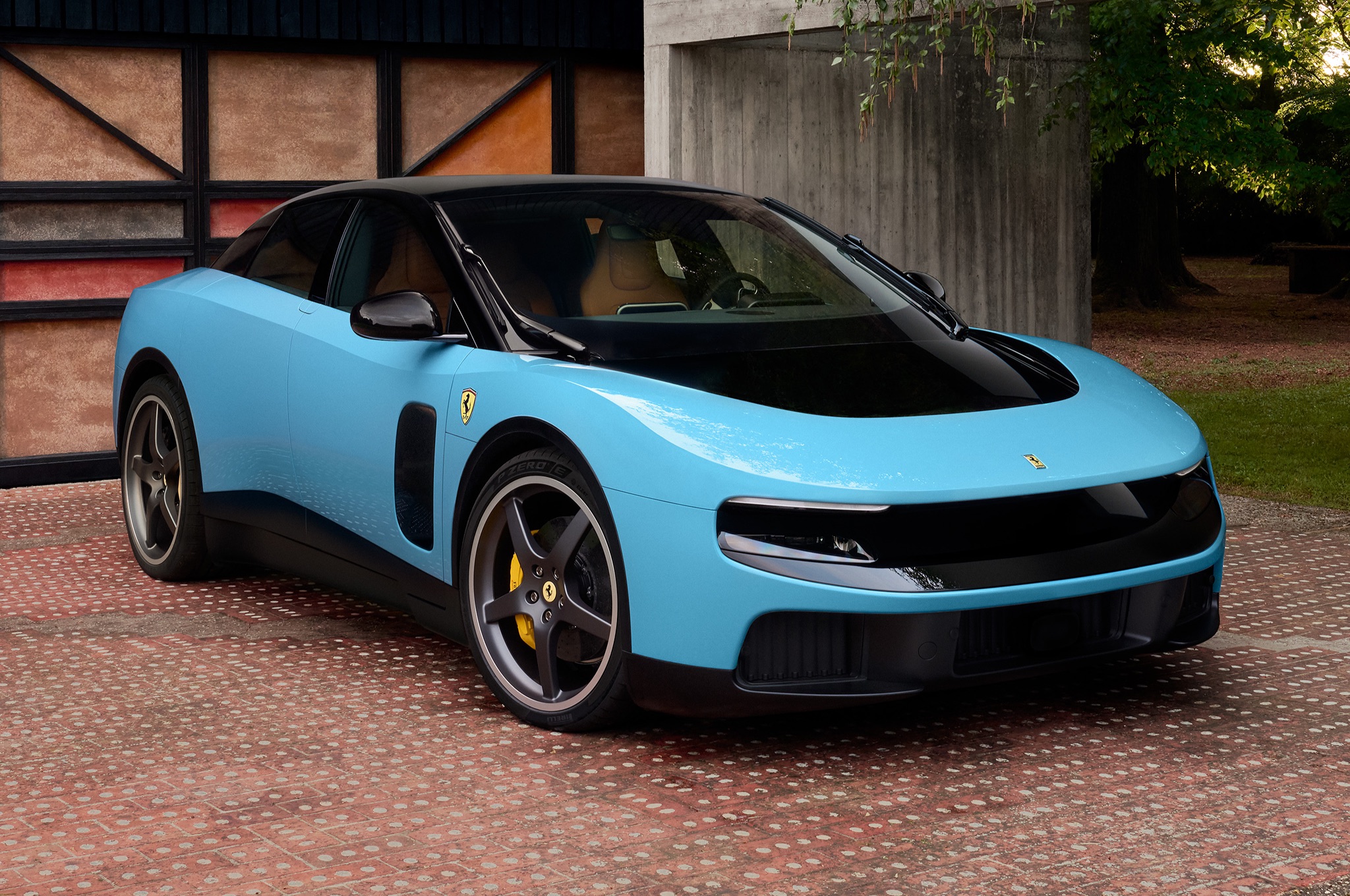
And I mean, look at it! It looks epic, doesn't it? I know it may be coincidental that the Ferrari Luce arrived at much the same time as the Denza Z, but for those who were expecting the electric Ferrari to look like a traditional Ferrari supercar... Well, it looks like Denza has done that, instead?
I think it looks brilliant, personally - especially the Spider. Let us know in the comments what you think.

Range, battery and charging
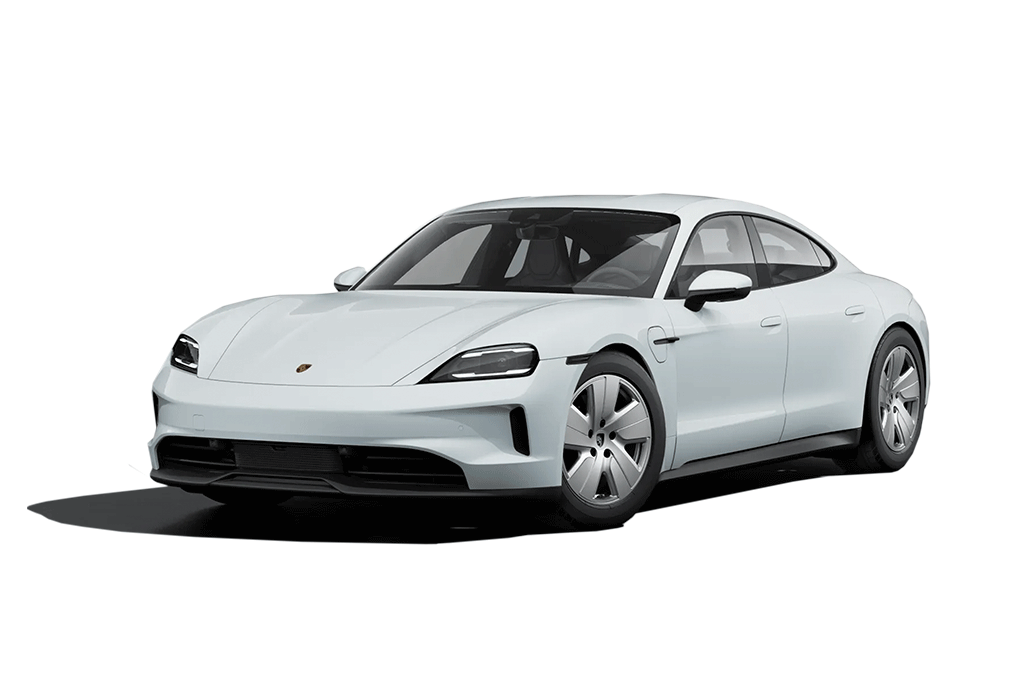
The Denza Z uses a surprisingly modest 76kWh battery pack that uses LFP chemistry and BYD’s clever Blade design. Although that’s a good deal smaller than the 122kWh pack that lives under the new Ferrari Luce or the 105kWh battery that powers the Porsche Taycan Turbo, that also makes it usefully lighter - which is always good when it comes to performance.
As with other models in the BYD stable, the Z’s battery is integrated directly into the chassis rather than in a separate frame. This Cell-to-Body construction saves weight (no frame) and means that it can be packaged more efficiently. Which, in a low-slung sports car, is a pretty good thing to do.

The Z’s party trick is Flash Charging, which allows drivers to recharge their car at ridiculously fast speeds. If you thought the Porsche Taycan’s peak DC charging rate of 320kW was impressive, BYD’s new 1,500kW (or 1.5 Megawatt) system blows it out of the water. The figures – which we’re inclined to believe having witnessed Flash Charging in action in the UK – are remarkable. Drivers can expect a 10-70% charge in just five minutes and a 10-97% charge in only nine minutes. That’s gamechanging stuff and takes away one of the main reasons why drivers are reluctant to switch from petrol to electric.
The snag? As you may have guessed, Flash Charging stations aren’t exactly on every street corner. That said, BYD intends to have around 300 BYD Flash Charging stations across the UK within the next year or two, and some 3,000 across mainland Europe.
It’s also passed BYD’s borderline sadistic nail-penetration test with no thermal runaway after 500 fast-charge cycles. BYD also claims that the second-generation blade battery has a 2.5% reduction in capacity degradation versus the original Blade design.
Oh, and the Denza Z also comes with Vehicle to Load (V2L) as standard - just in case you want to use a supercar to power a set of hedge trimmers or a toaster.
As for efficiency and range, well, that’s slightly harder to deliver real-world figures on. Of the three versions Denza has confirmed WLTP data for, the Coupe has the longest range at 255 miles while the Spider has 249 and the Racing 236 miles. Which sounds about right for a 76kWh battery, but seems somewhat underwhelming if you’re looking at the Z as a cross-continent GT car. Use the power to its full and you’ll be looking at well under 200 miles of real-world range. The Porsche Taycan, Audi e-tron GT, Lotus Emeya and Ferrari Luce all go a lot further than that.

Practicality and boot space
Okay, no surprises here: the Z isn’t the most practical car in the world. The layout is what the car world calls 2+2, which loosely translates as ‘big enough for two front seat passengers and a couple of teddy bears behind’. Technically, you can seat four people legally, and Denza claims the Z to be a ‘genuine four-seater’ but I have to say that the rear pair are for emergency use only. Mind you, it is really useful to have the rear seats for extra luggage space so that you can chuck your bags back there rather than in the boot, when you want to.
That said, the boot capacity is reasonable at 250 litres, and if you opt for the Coupe or the Racing, the rear seat backs fold down to free up 550 litres of space, which is plenty big enough for a couple of lazily packed overnight bags or even a set of golf clubs if that’s your thing. If you do need to carry anything more than a takeaway back, you can probably strike the soft-top Spider off your list because the boot only holds between 131 and 176 litres.
Interior and exterior design
I've noticed that you can’t launch a car these days without having some kind of overarching design philosophy that keeps the marketing folk in work. The Z’s design follows Denza’s ‘Technology Drives Elegance’ philosophy, which, apparently, is immediately obvious in the front air intake that feeds airflow over the bonnet.
To my eyes, it’s just a lovely, coherent piece of design. Penned under the design direction of Wolfgang Egger (ex Lamborghini, Audi and Alfa Romeo), it’s smooth, nicely proportioned and just looks like a sports car should. It’s perhaps a little too generic and simple in places, but overall, it’s a striking package. Which looks better - this or the Ferrari Luce? I mean, I actually like the ultra-modern, unusual looks of the Luce, but I'll let you guys decide on that one.
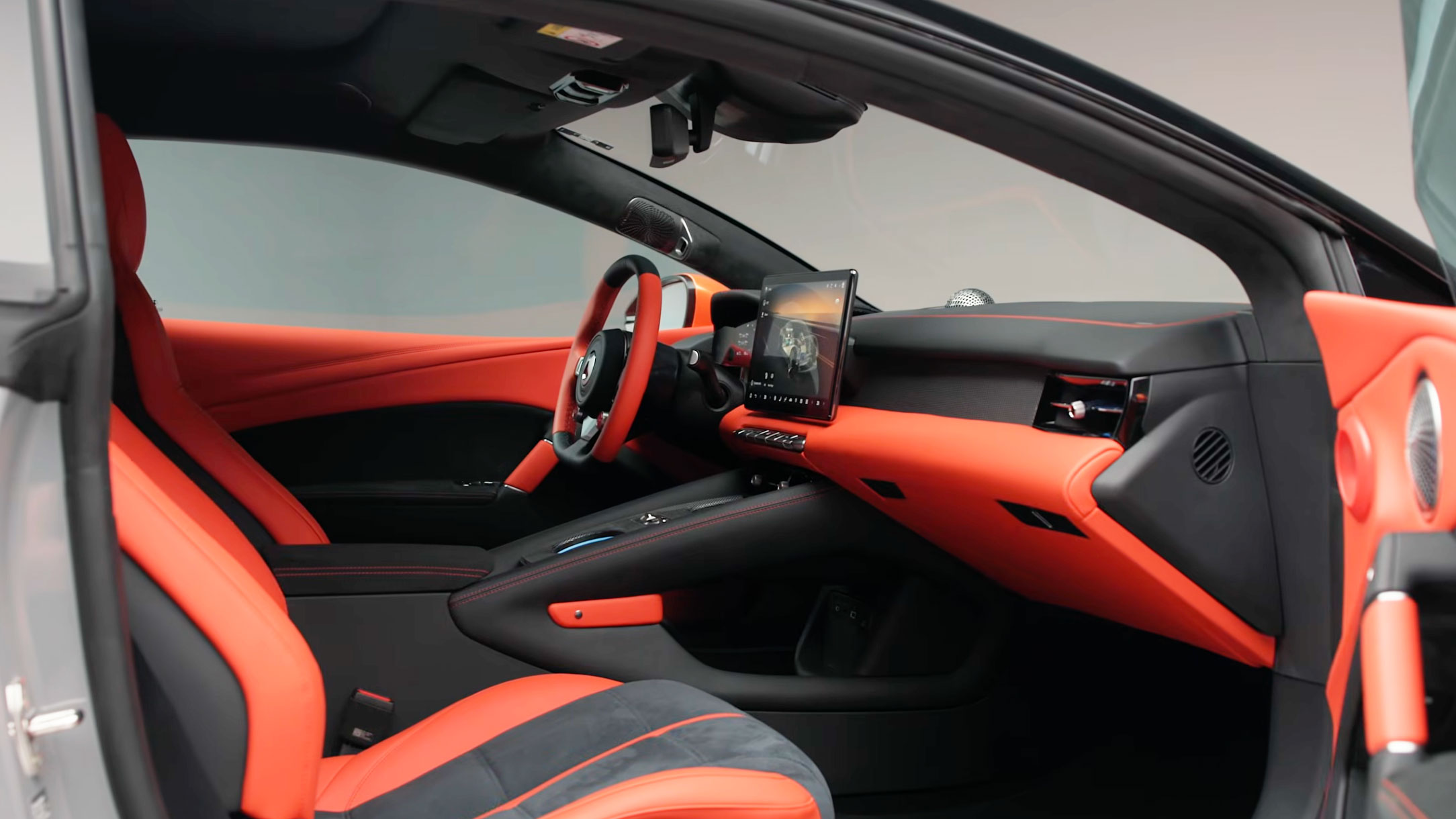
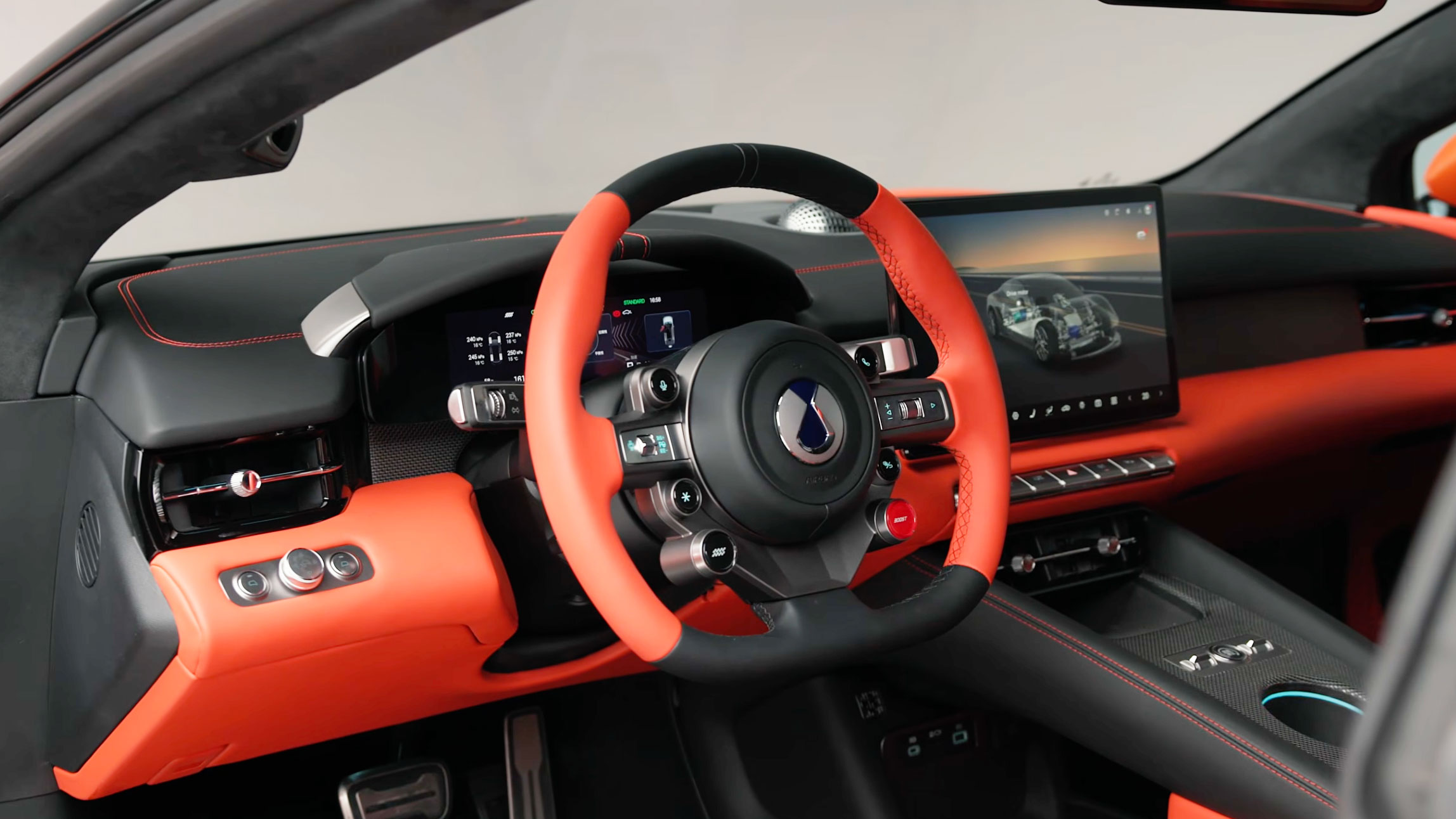
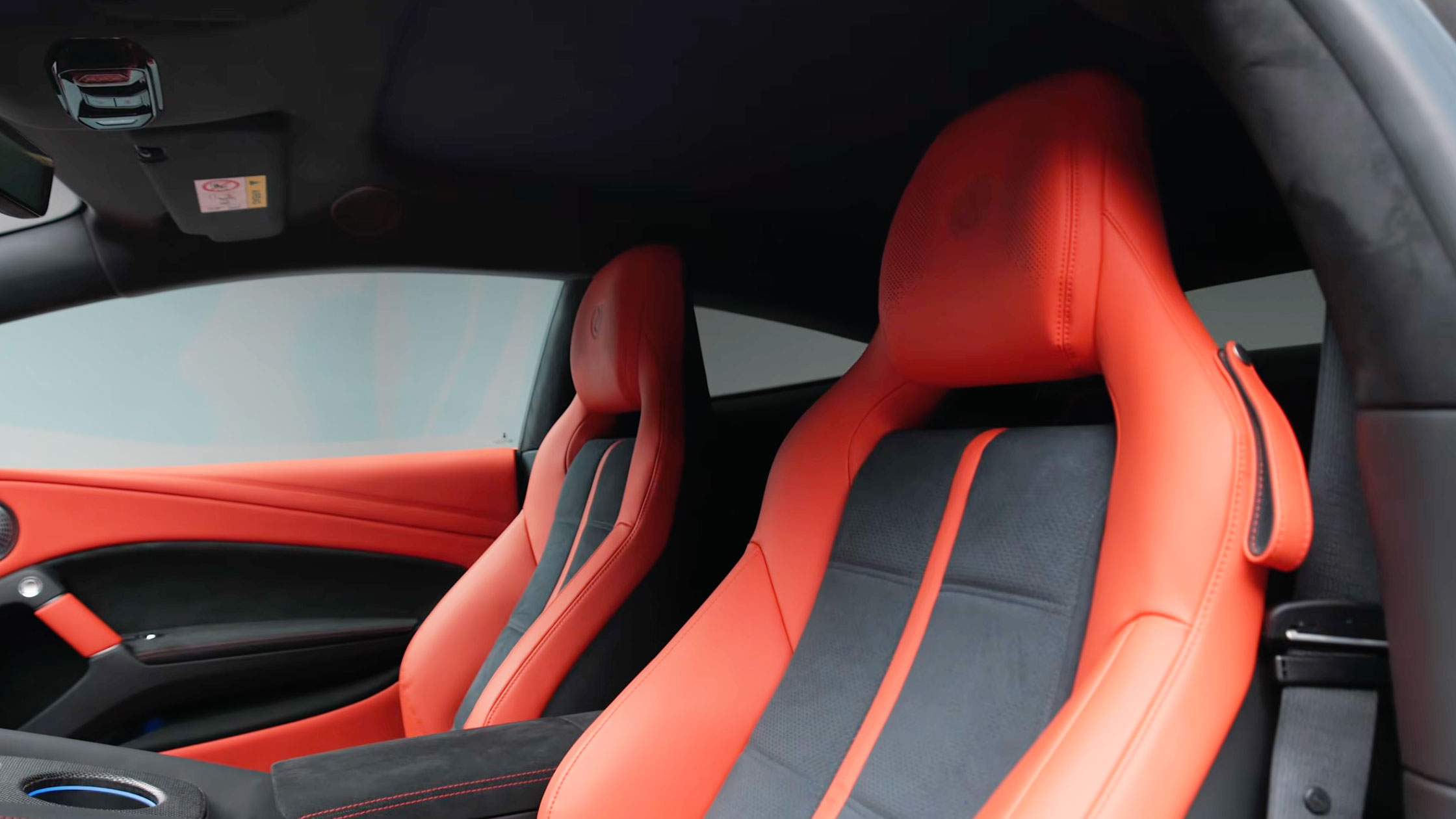
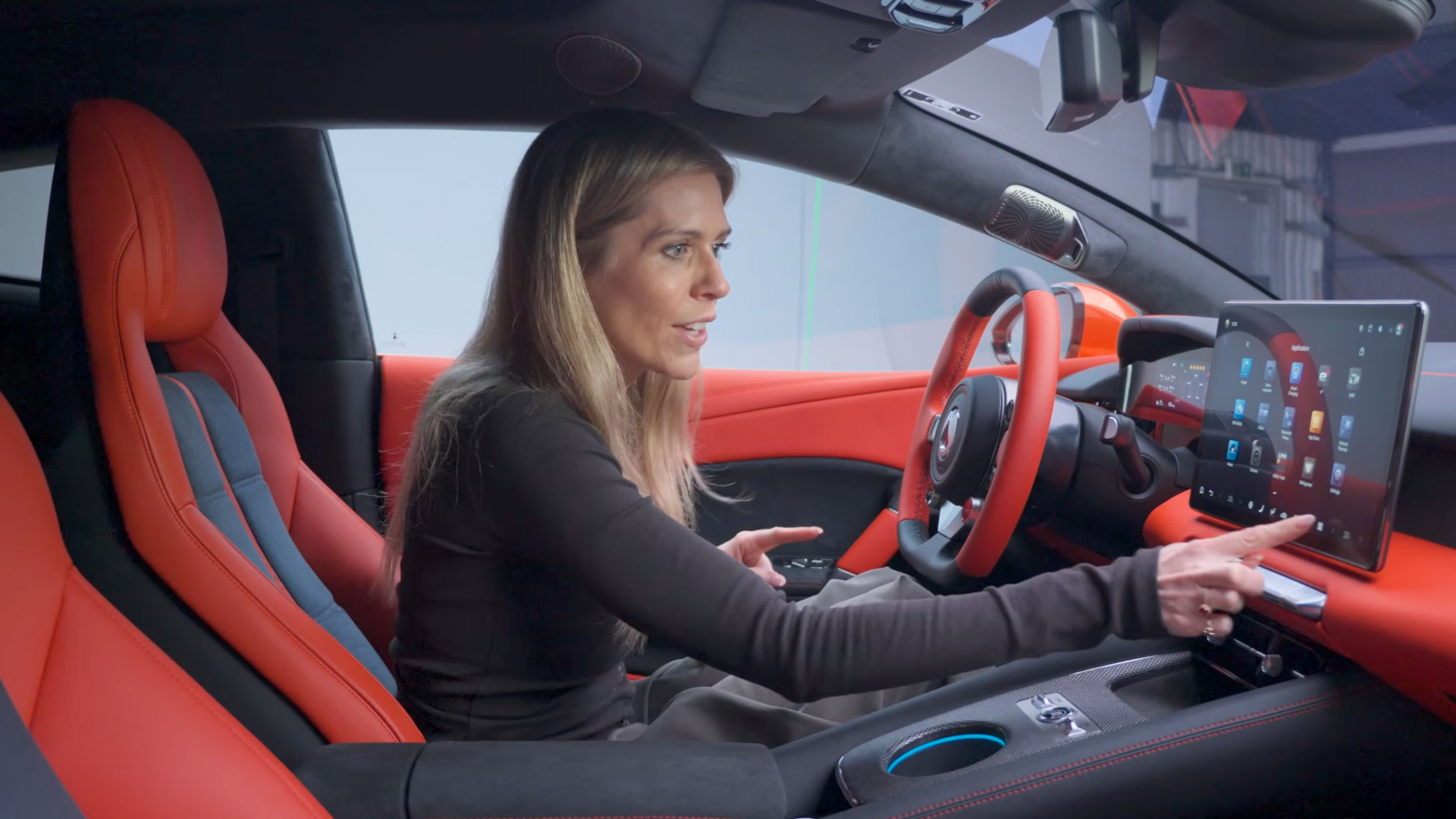
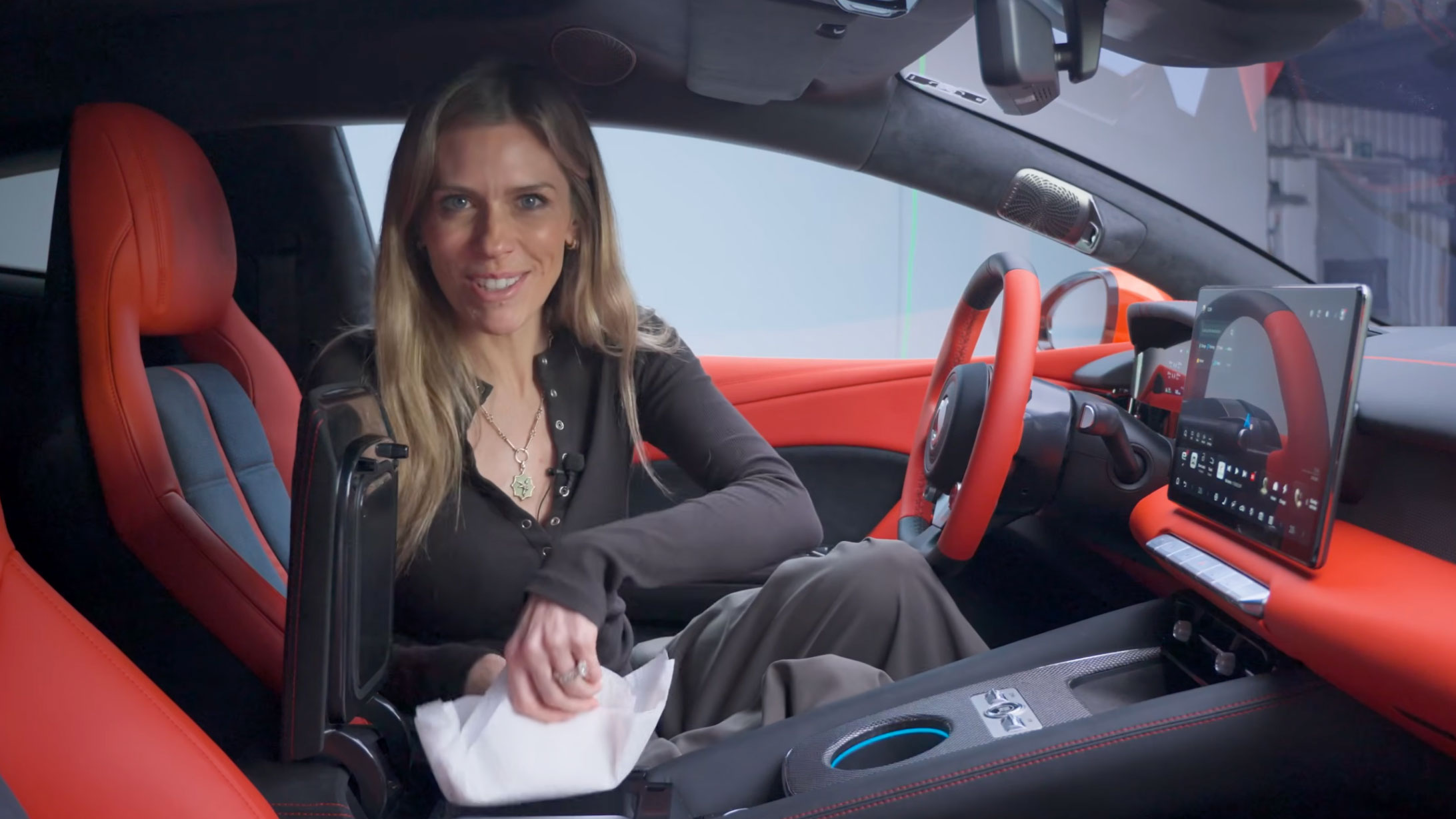
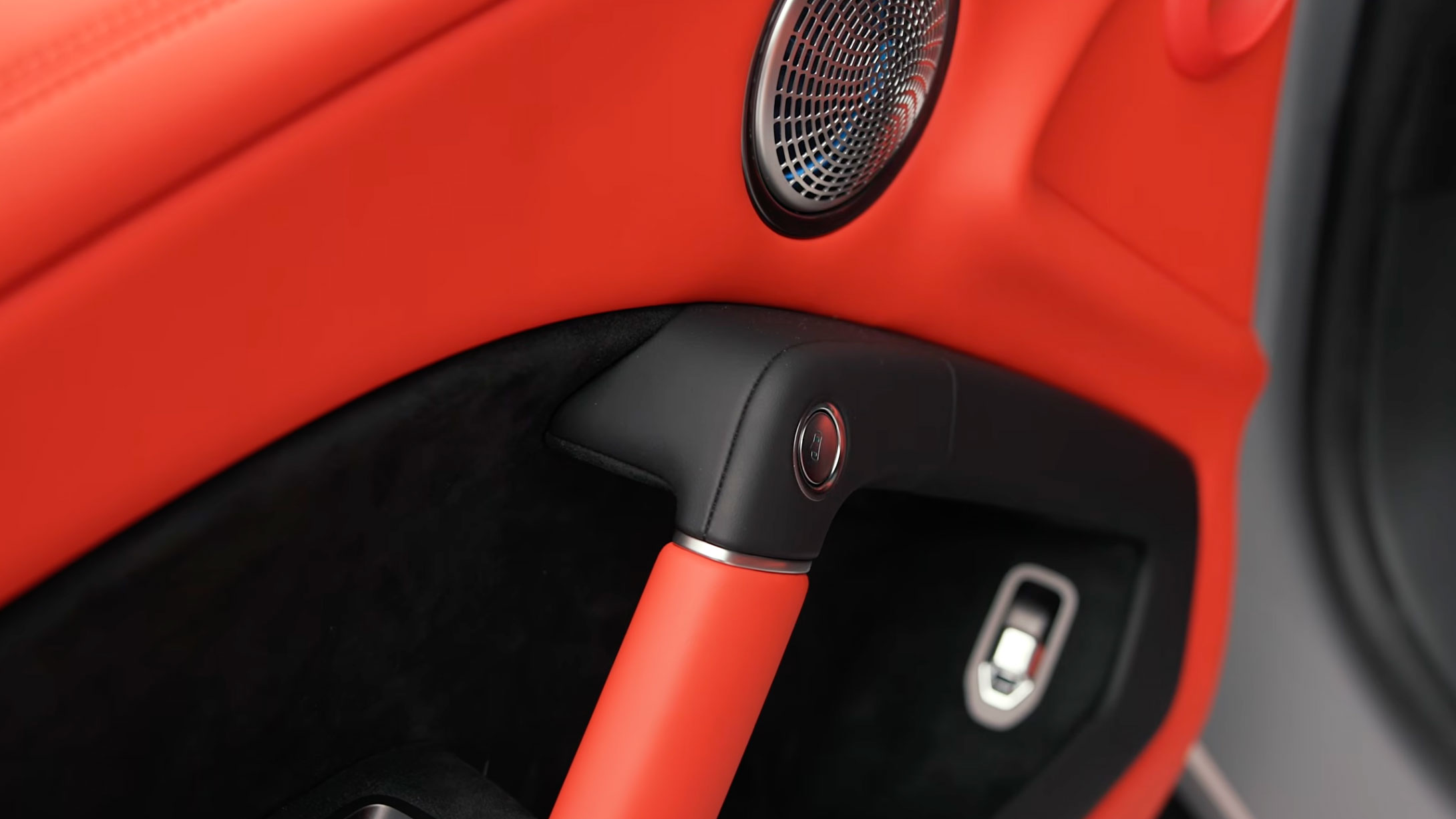
Inside, the Z strikes a good balance between form and function. There are no Atto 3-like guitar strings on the door pockets, which is a bit of a relief. What you do get is a proper supercar interior with some lovely, high-end materials and a snug-but-not-cramped feel. Almost every surface is swathed in carbon fibre, suede-effect fabric or real metal. And, praise be, Denza is planning to offer the Z with no fewer than ten colour choices. I absolutely love the teal and yellow finish in the Denza Z Spider that I sat in at Goodwood!
Tech features include an 8.88-inch digital instrument cluster ahead of the steering wheel and a 12.8-inch infotainment screen with Google built-in. There’s also a digital rear-view mirror, wireless phone charging, and a Devialet audio system with a spherical central speaker module.
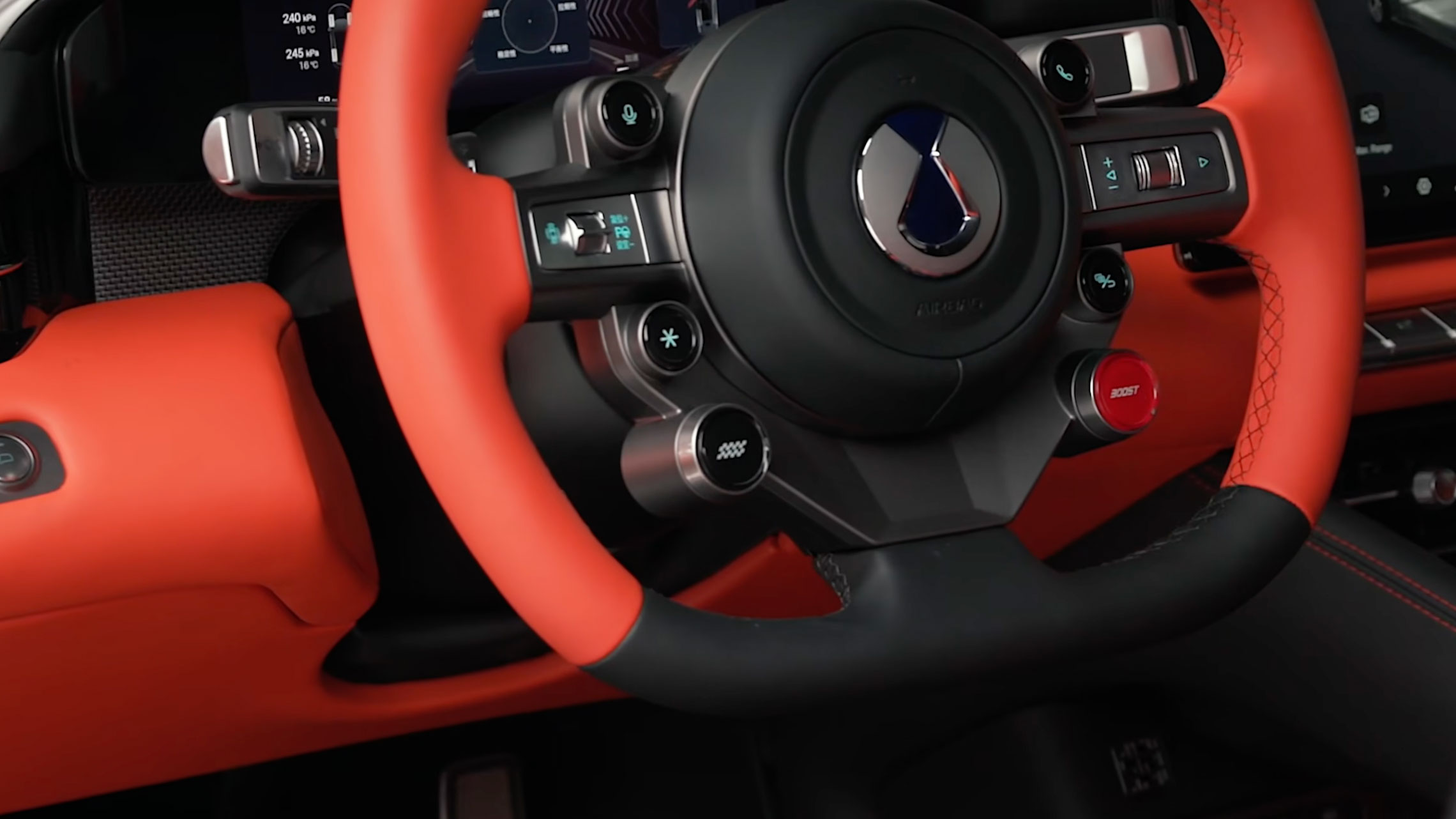
The motorsport-inspired steering wheel is a lovely thing to wrap your hands around and houses physical buttons for functions like Track and Boost modes. The latter adds 30% throttle torque for 20 seconds, while Track mode unlocks lap-timing data logging, launch control, and adjustable drift settings. Yes, it’s a bit busy, and half the controls could easily be located somewhere more sensible, but if you’re looking to channel your inner Kimi Antonelli on every journey, it’s great fun.
The seats offer 8-way power adjustment, ventilation, heating, and massage, plus headrest-integrated speakers. There's also lateral bolster support for cornering, giving you a welcome shove in the kidneys when you enter a corner at speed. Sounds horrible, but actually works surprisingly well.
The Racing variant adds a carbon-fibre front splitter, underfloor vortex generators (sounds very Back to the Future, doesn't it?), and an optional adjustable carbon rear wing, which, according to Denza, generates up to 1,060kg of downforce at 217 mph. If just over a tonne of downforce simply isn’t enough for you, the Special Edition pushes this further with a drag-reduction system and over 2,000kg of downforce at 186 mph. Ridiculous!

Motors, performance, and handling
Here’s where the numbers start to get a little crazy, so you might want to sit down first. All three versions of the Z feature a triple-motor setup with one at the front and two at the rear. Combined, the Z’s three motors deliver a combined 1,604hp and 1,240Nm of torque across all versions.
Performance is best described as savage. The ‘slowest’ of three is the Spider, which takes just 2.3 seconds to hit 62 mph from rest. The Coupe and Racing manage the same feat a quarter of a second quicker. And if that’s not fast enough for you, Denza will sell you a set of optional semi-slick tyres that pull the 0-62 mph time down to 1.96 seconds.
And, just to prove that the world has truly gone insane, the Special Edition variant comes with a power boost that takes the total output to just under 2,000hp. This, according to Denza, is enough to guarantee a 0-62 mph time of under 1.7 seconds.
Key chassis technology includes what Denza calls ‘DiSus-M magnetorheological damping’. In plain English, that translates to an adaptive suspension system that uses a special magnetically controlled fluid in the shock absorbers to instantly adjust stiffness. This, in theory, improves both ride comfort and high-performance handling. The Z also features a new Vehicle Motion Control (VMC) system with 10-millisecond response times.
The Z’s three motors give it another party trick: Compass Turn. Because all three motors can be controlled individually, the Z can effectively rotate around a tight point. This reduces the turning circle dramatically, but obviously comes at the expense of some extra tyre wear as the rubber drags diagonally across the road surface.
Finally, to make sure that the Z stops as effectively as it accelerates, all versions are fitted with carbon-ceramic drilled brake discs (6-piston front, 4-piston rear), which save roughly 30kg of unsprung mass versus conventional discs.
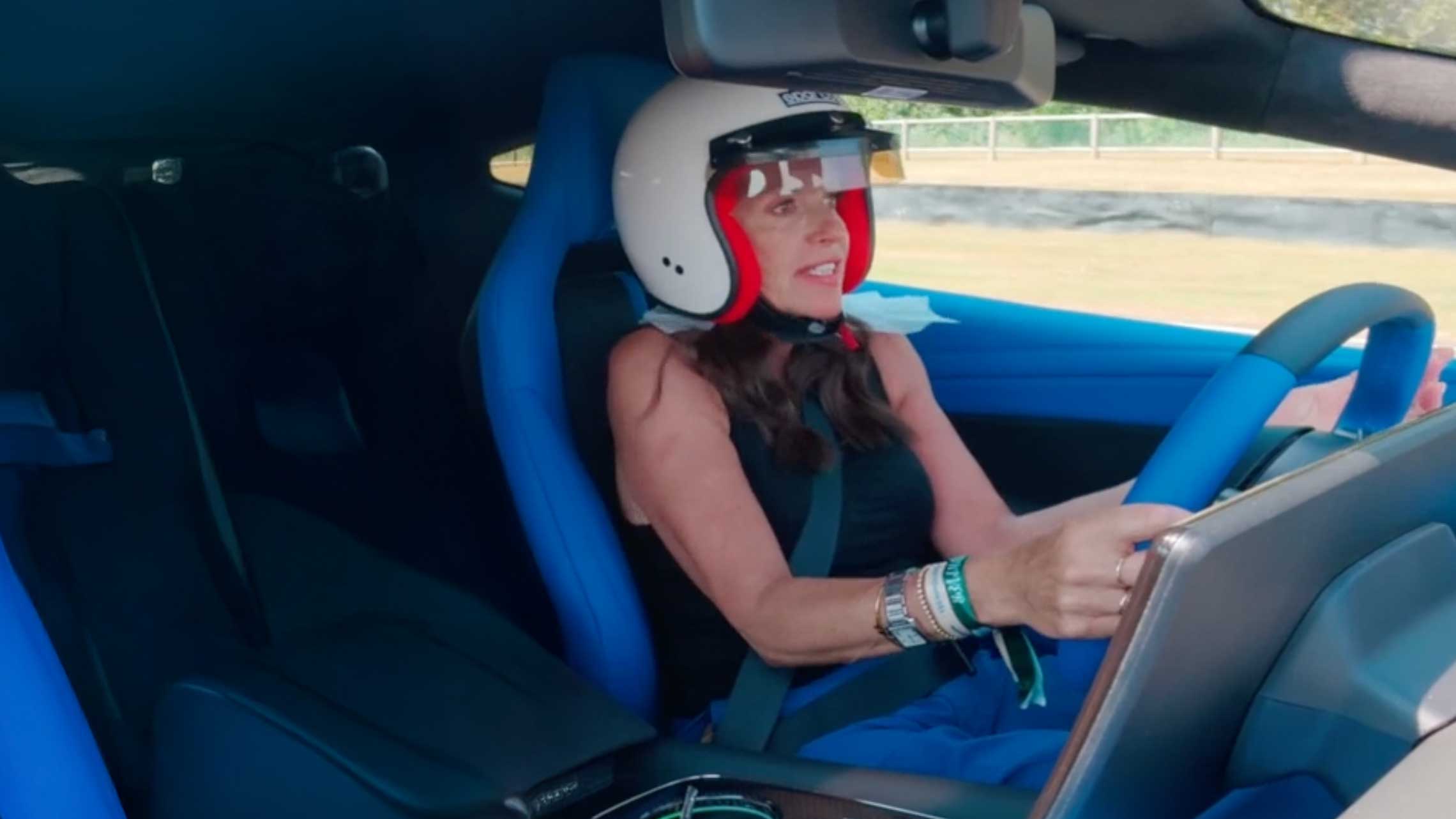
I had a brief drive of the Denza Z Racing around the Goodwood racing circuit - and had the company of a Denza minder in the passenger seat to make sure that I didn’t do anything daft! But despite these restrictions, I was able to get a feel for how the Denza handles and deploys its massive reserves of power.
The thing that strikes you most from behind the wheel is how light and nimble it feels through the corners. It hides its weight really well, and feels so dialled-in and immediate.

It would have been relatively easy for Denza to have built a simple rocketship with just straight-line performance and nothing else. But it hasn’t, and you can really feel the work that has gone into the chassis. The Coupe and Spider both get air suspension, but the Racing that I drove uses coil springs - as well as those fancy magnetic dampers. It still doesn’t feel as firm as some of its competitors, but the soft ride doesn’t come at the expense of body roll in corners. I really felt like it was always super stable and able change direction with a flick of the steering wheel - it was impressively easy to drive yet really engaging and fun. Probably a bit friendlier than you might imagine, for a car with this sort of power!
Track mode is engaged via the steering wheel, and you can select other modes within that for acceleration and drift (if you’re feeling particularly brave). The carbon ceramic brakes are another highlight. They've got loads of feel and do an incredible job of scrubbing off speed. I was fortunate enough to drive the Z for a number of laps and didn’t notice any fade from the brakes after multiple stops.
Pricing
In the UK, the Denza Z supercar starts at £149,200 for the Coupe, £159,900 for the Spider and £172,900 for the Racing. That sounds like a whole lot of cash, but for this sort of performance and spec it's actually pretty remarkable value. Yes, you can get a top-spec Porsche Taycan for that, and I can see why you would! But the Denza has got a huge level of standard equipment, that flash charging tech and proper kerbside wow factor, so the pricing actually feels very reasonable, if you see what I mean!
However, there is still a question mark over when you'll actually be able to get one of these. Denza hasn't even officially launched as a brand in the UK, yet, and while BYD says that it'll be here before the end of 2026, it may be a while before you can pick up your Denza Z from the local dealership.
Even so, it's got to be worth the wait, right?!
Verdict
As a feat of engineering, the Denza Z is remarkable. If one of the established European supercar brands were unveiling a car with the Z’s specification, it would be hailed as one of the most advanced sports cars ever. The performance is astonishing, as is the charging tech, which really does qualify as game-changing. The only downside is the range, which at less than 200 miles in the real world, seems very low. Even if Flash Charging was everywhere, that would still be a low figure – especially on a car that many will want to use on long road trips.

 9
9