





 Battery size: 17.8 kWh
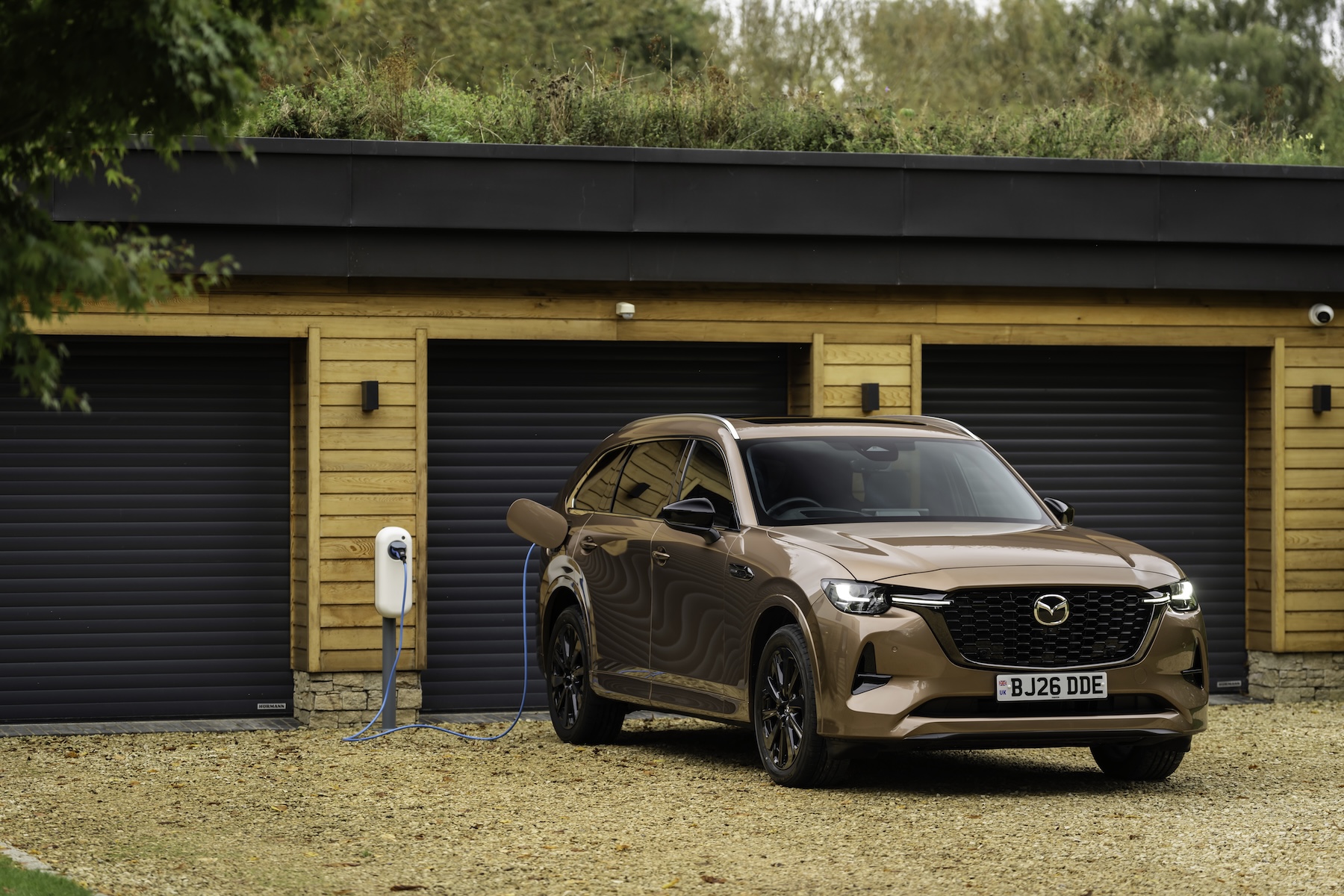
 Max charge rate: 7 kW
 Range: 38 miles
  Company car tax (2025/26): 13%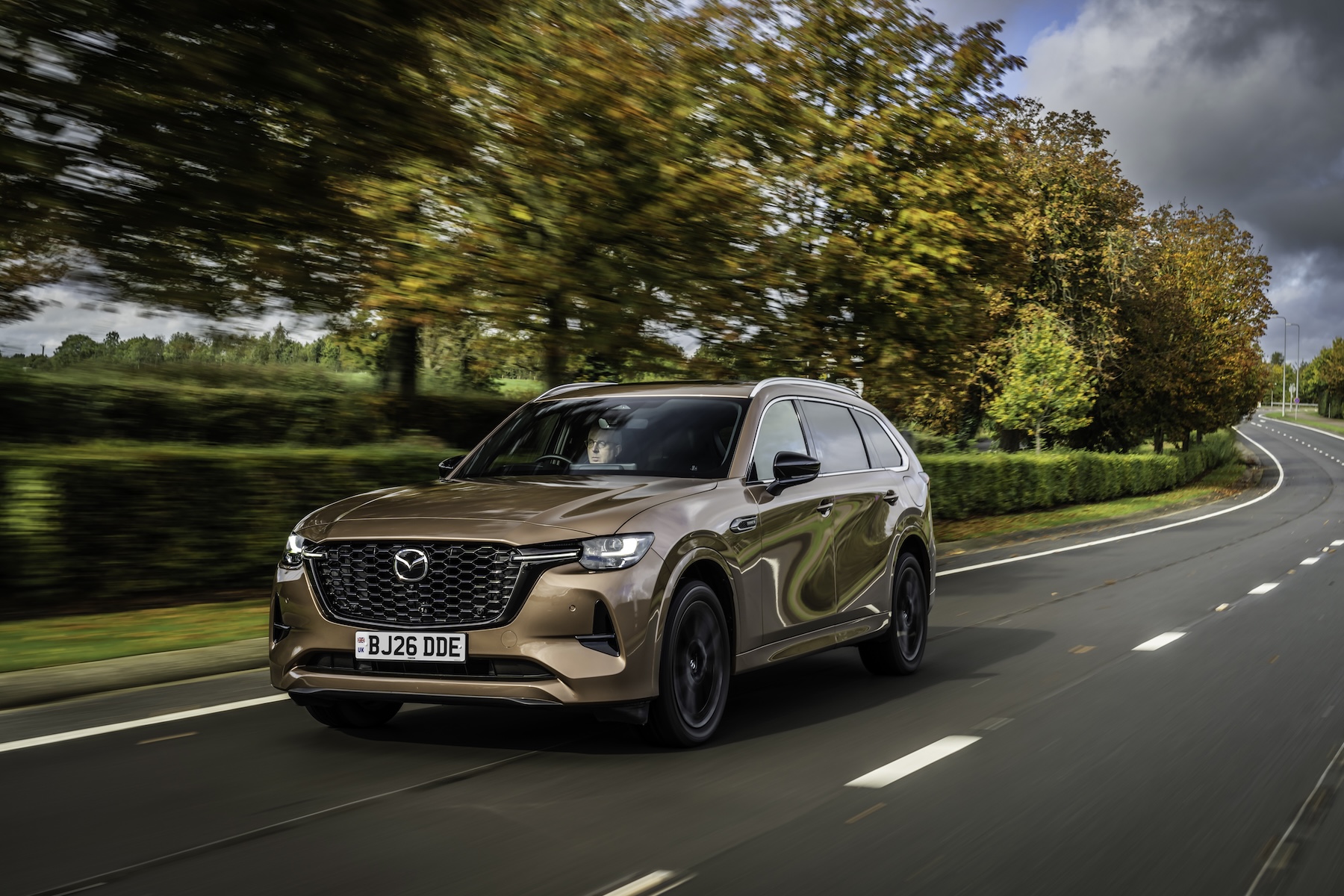



Introduction and model history
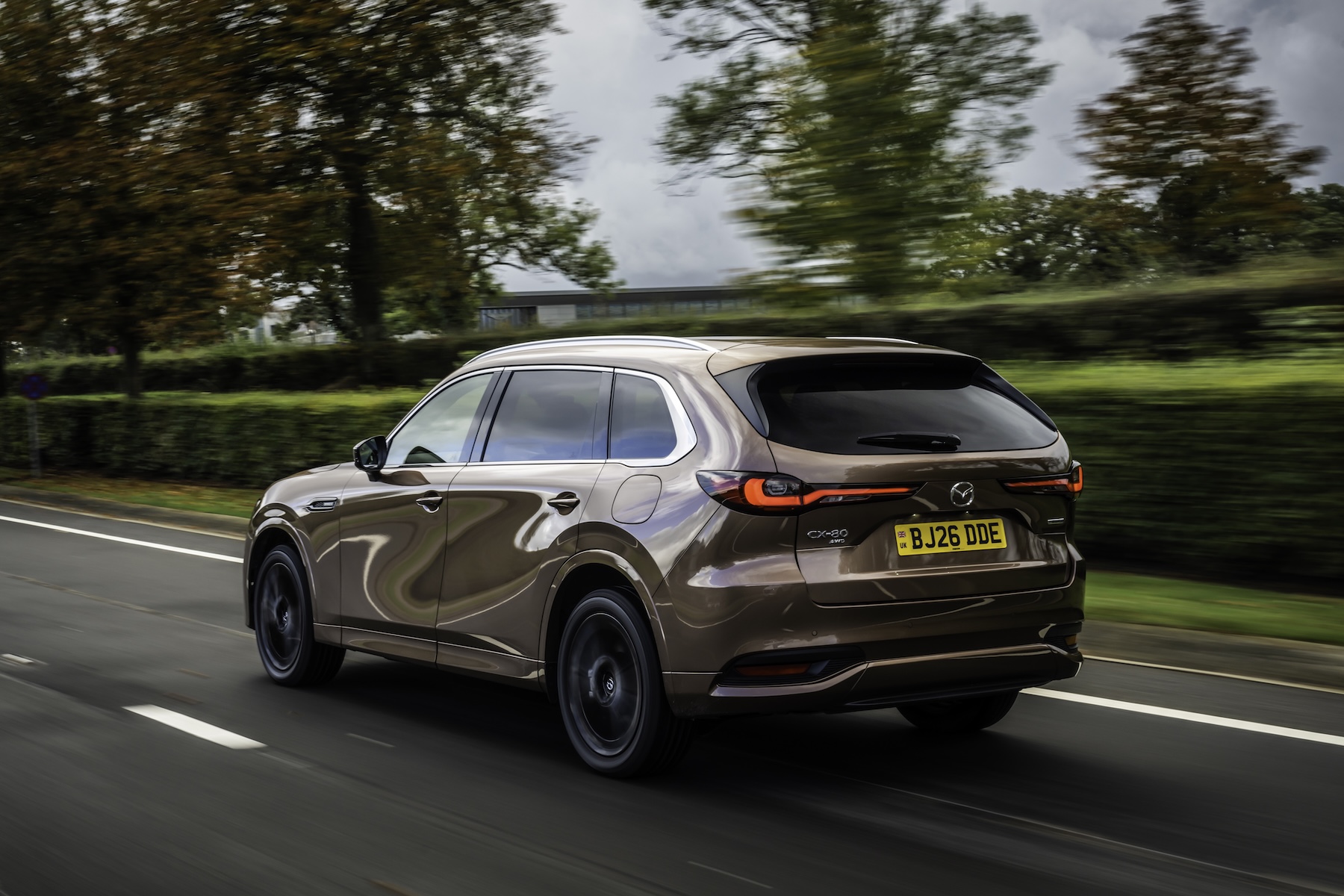
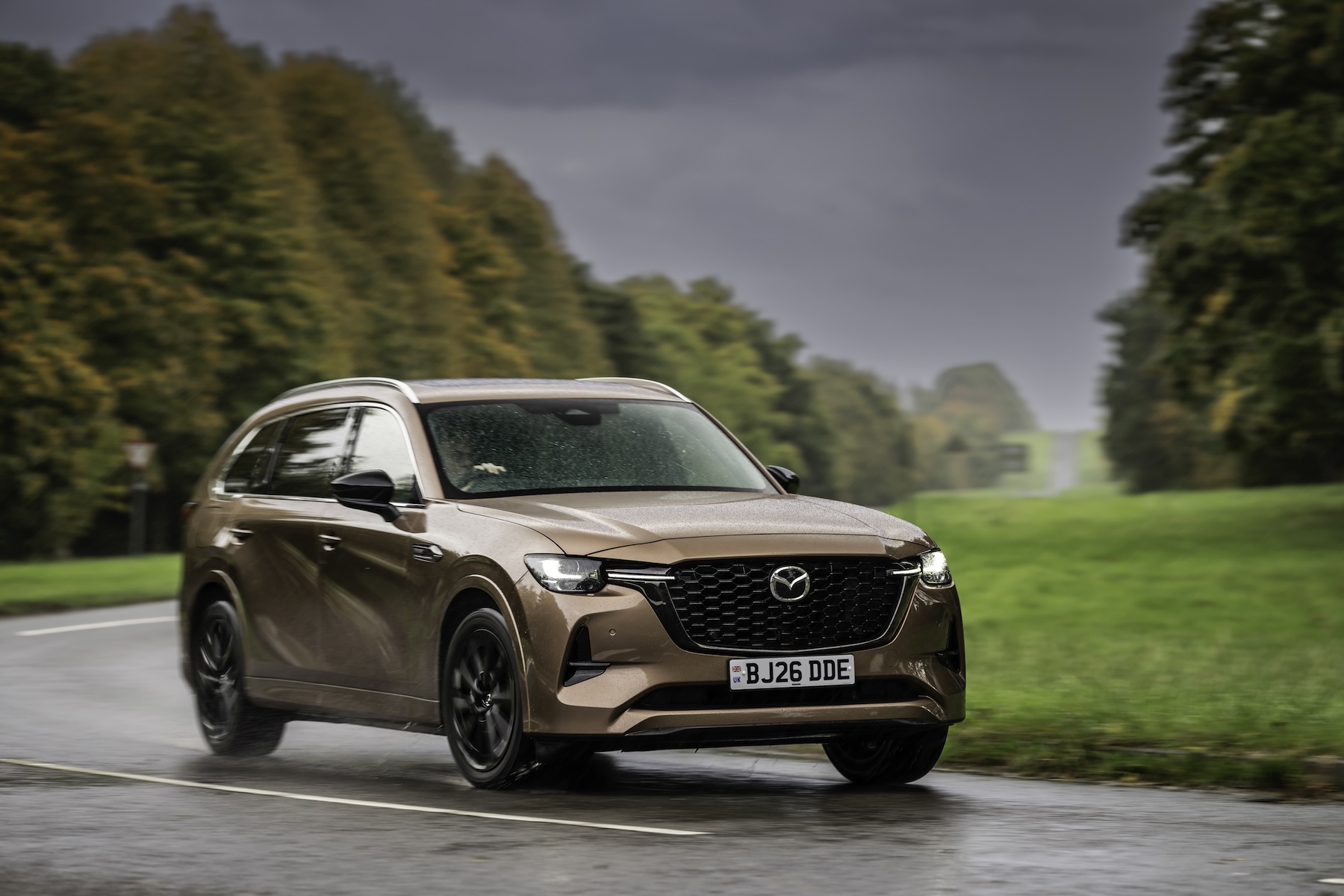
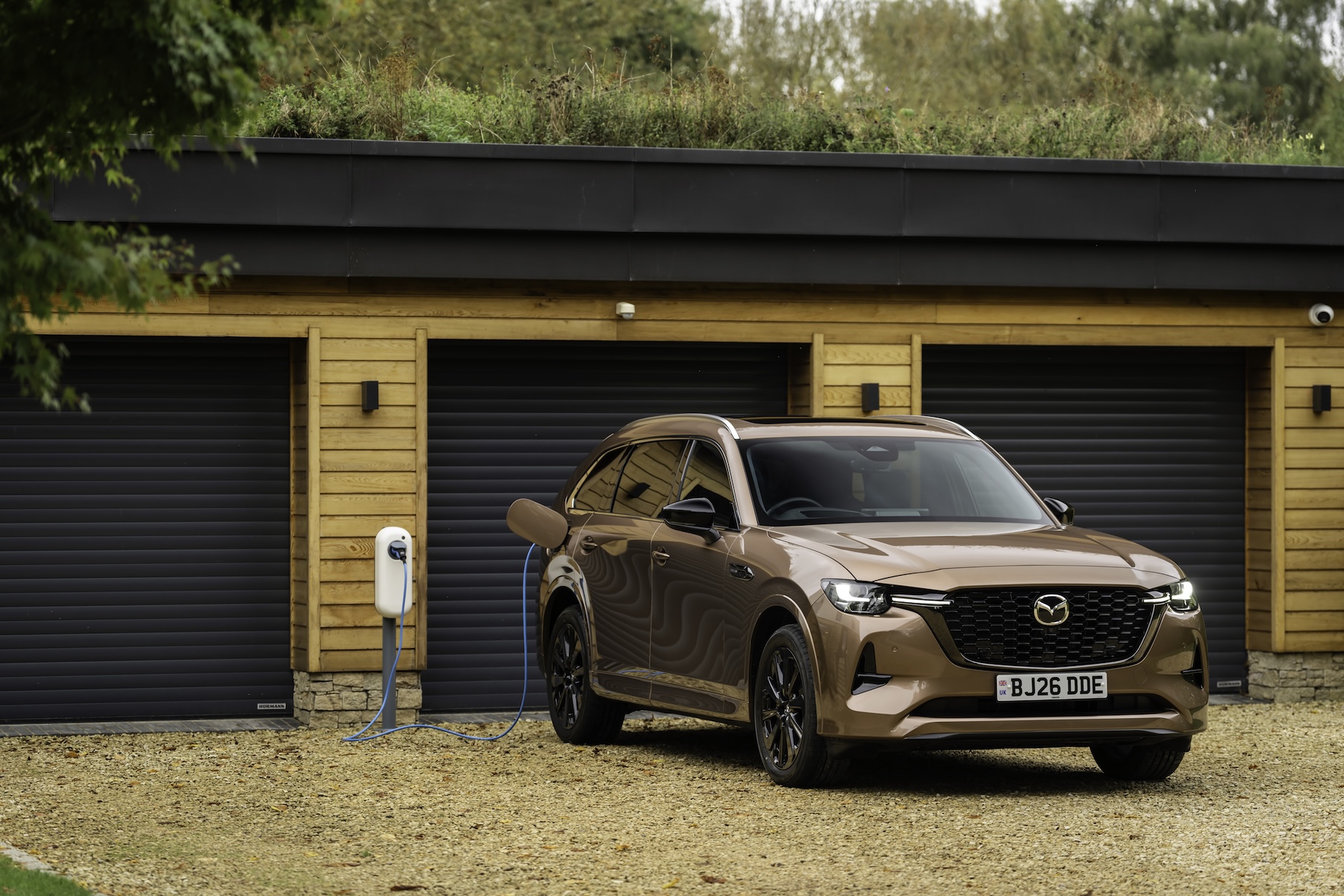
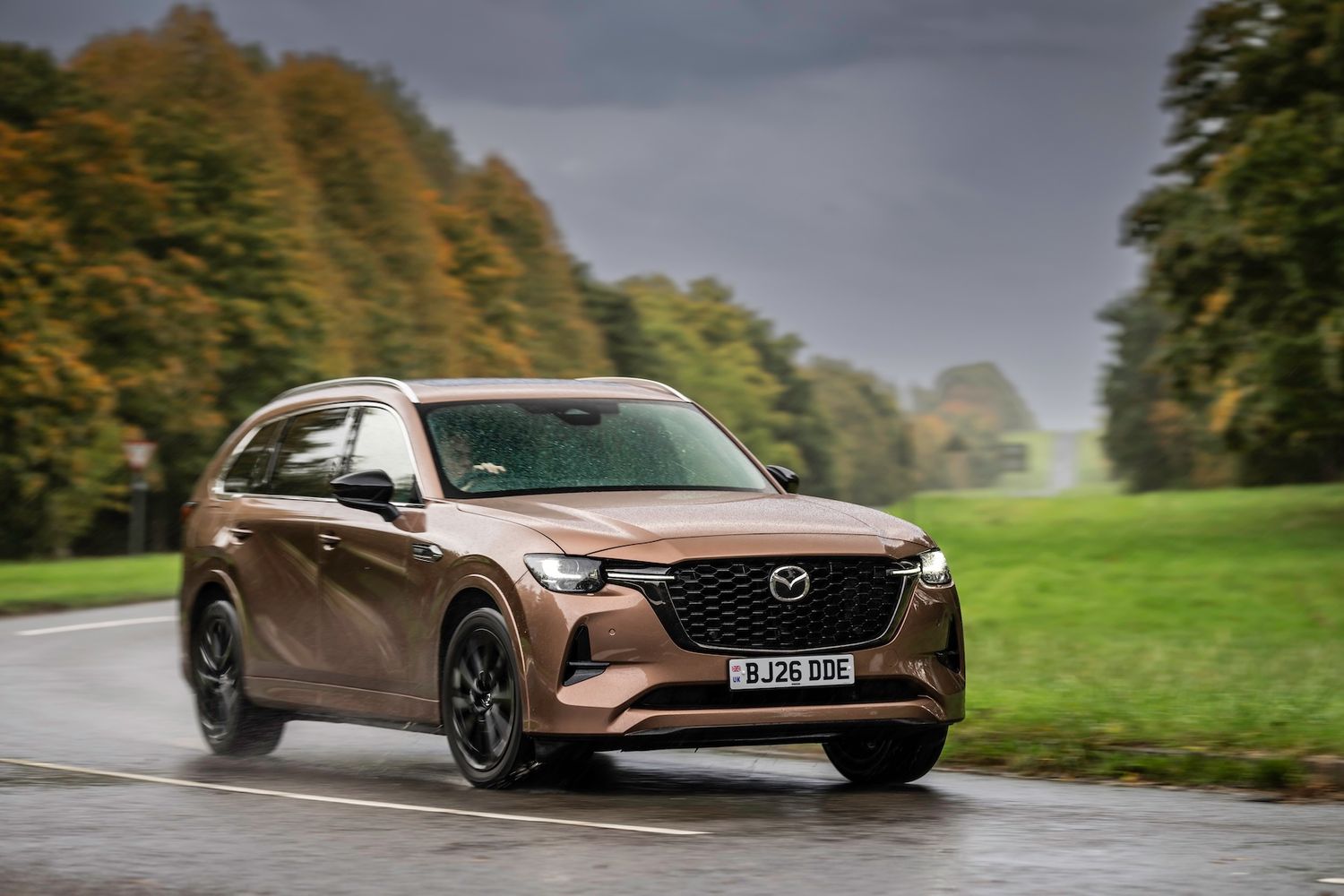
The CX-80, and its smaller CX-60 sister, are the first two confident strides along this road to self-improvement, with the CX-80 representing the big family-focused flagship aimed at buyers who want six or seven seats and something is a little different.
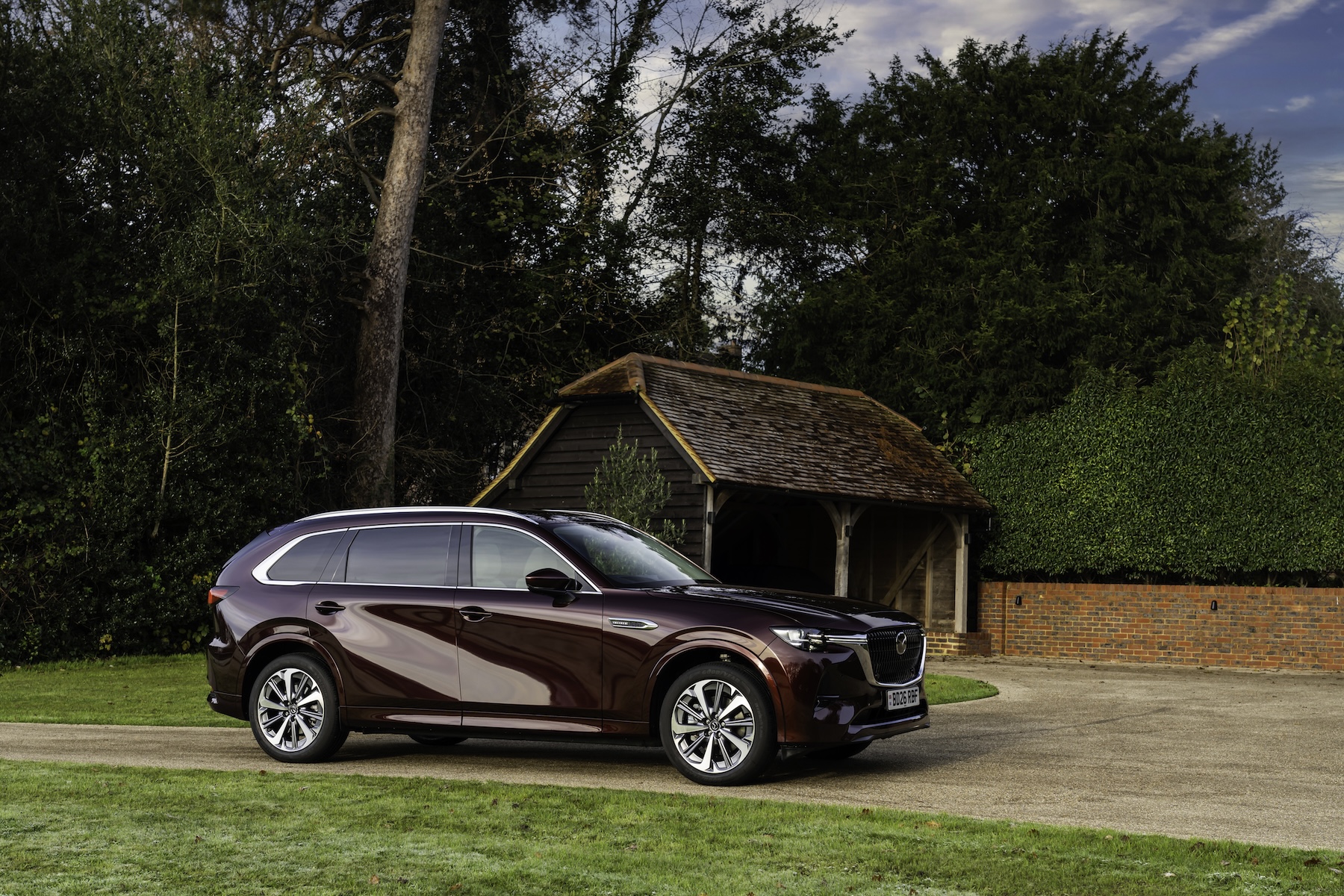
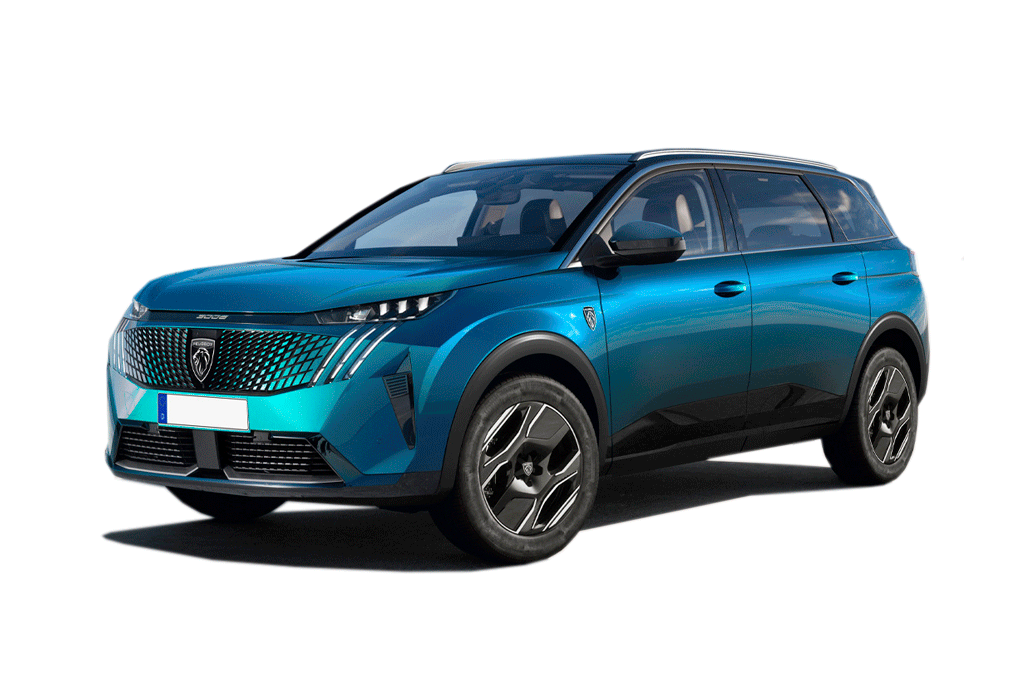
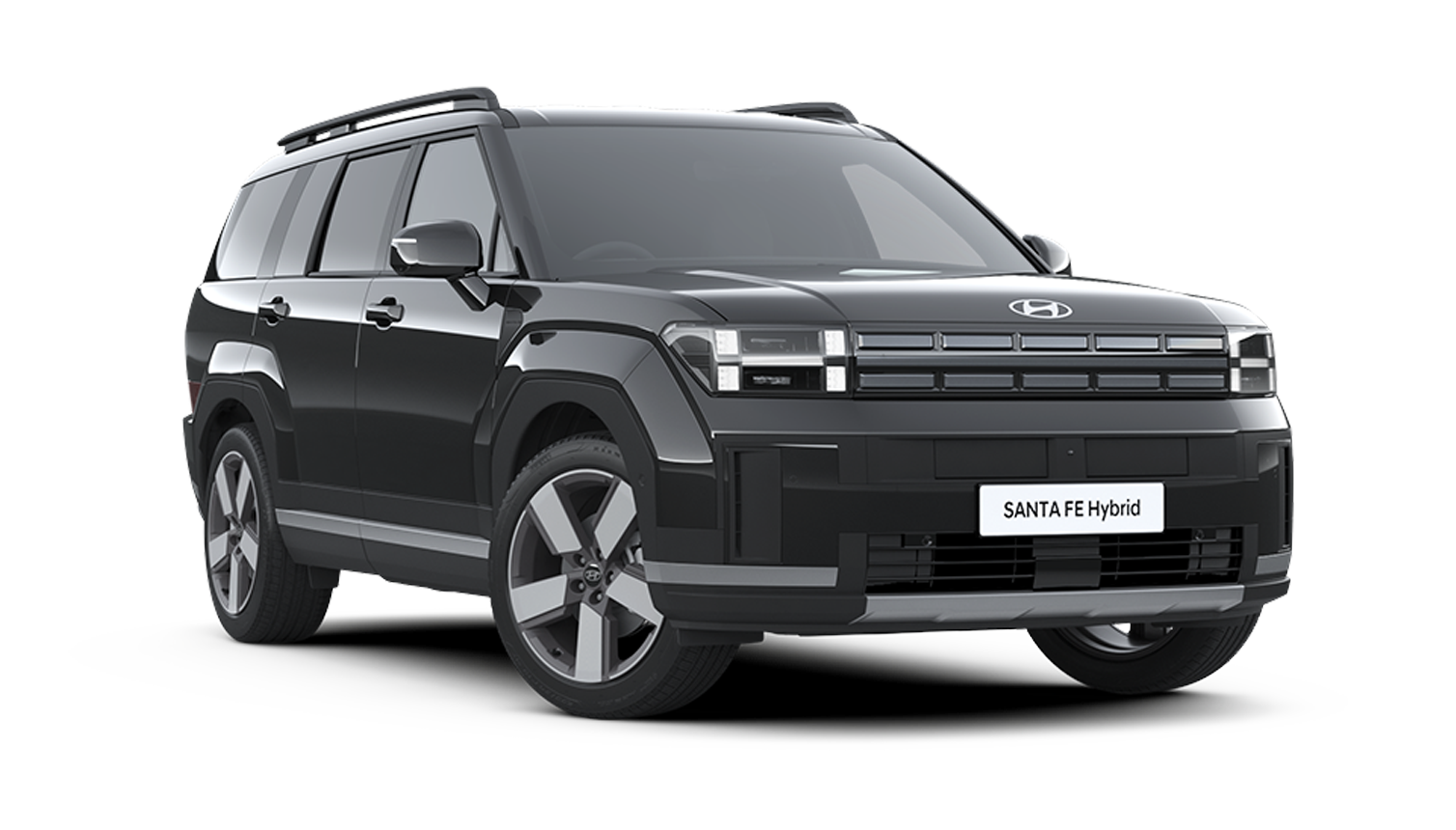
Mazda's new range-topper is a very large SUV. Its wheelbase is longer than that of a BMW X7 and Land Rover Discovery, and it's almost as lengthy as a Range Rover Long Wheelbase. And yet, with prices starting from £50,000, entry-level CX-80s rival the much smaller Hyundai Santa Fe and Peugeot 5008, while higher-spec versions have the Volvo XC90 in their sights.
The CX-80 is a full-sized seven-seater SUV (although it can come in posher six-seater guises) that is family-focussed, but also has an eye on the towing market.
Range, battery and charging
As an example of how Mazda likes to do things differently, the CX-80 comes with a brand new diesel engine, which is unheard of in a time when carmakers are turning their backs on diesel power. Naturally, we are only concerned with the plug-in hybrid, which, interestingly, not only undercuts the diesel by up to £3,300, but, along with the CX-80, is the most powerful production car Mazda has ever produced.
The CX-80 PHEV combines a 2.5-litre, four-cylinder petrol engine with an electric motor and a 17.8kWh battery pack. Total power is a pretty potent 327hp, while the electric range is 38 miles – that's pretty mediocre when you consider a Skoda Kodiaq can manage 75 miles. The CX-80 can manage 7kW charging, which means a charge will take around two-and-a-half hours. That's fine for those who charge at home, but there's no DC rapid charging, which quite a few rivals are capable of.
Meanwhile, Mazda claims up to 176.6mpg fuel consumption, which, like with all plug-in hybrids, is way in excess of what you'll actually achieve in the real world. Having said that, during our tests when charging at the start and end of every journey, we averaged just over 100mpg on short urban drives of less than 30 miles, and around 40mpg on longer drives with an empty battery. That's not too bad for such a large and heavy car.
Practicality and boot space
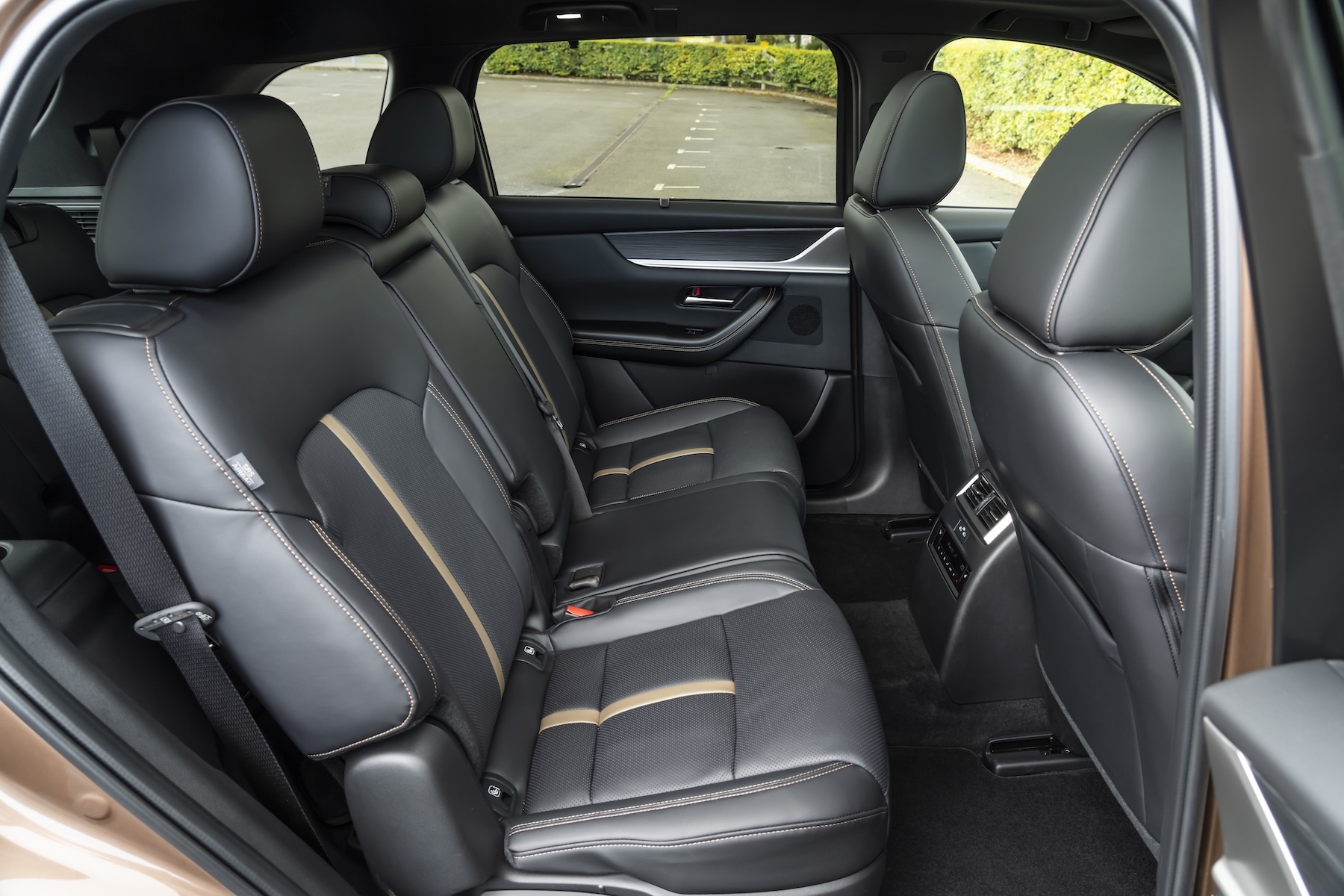
The CX-80 is 250mm longer and 26mm taller than a CX-60, allowing three rows of seats to fit easily. There's loads of room up front, with the wide centre console just adding to the overall sense of space. The middle row offers loads of legroom, meaning even the tallest passengers can stretch out, and, usefully for a family car, the long rear doors open very wide to assist the loading of child seats. Sun blinds on the rear doors are standard equipment, too.
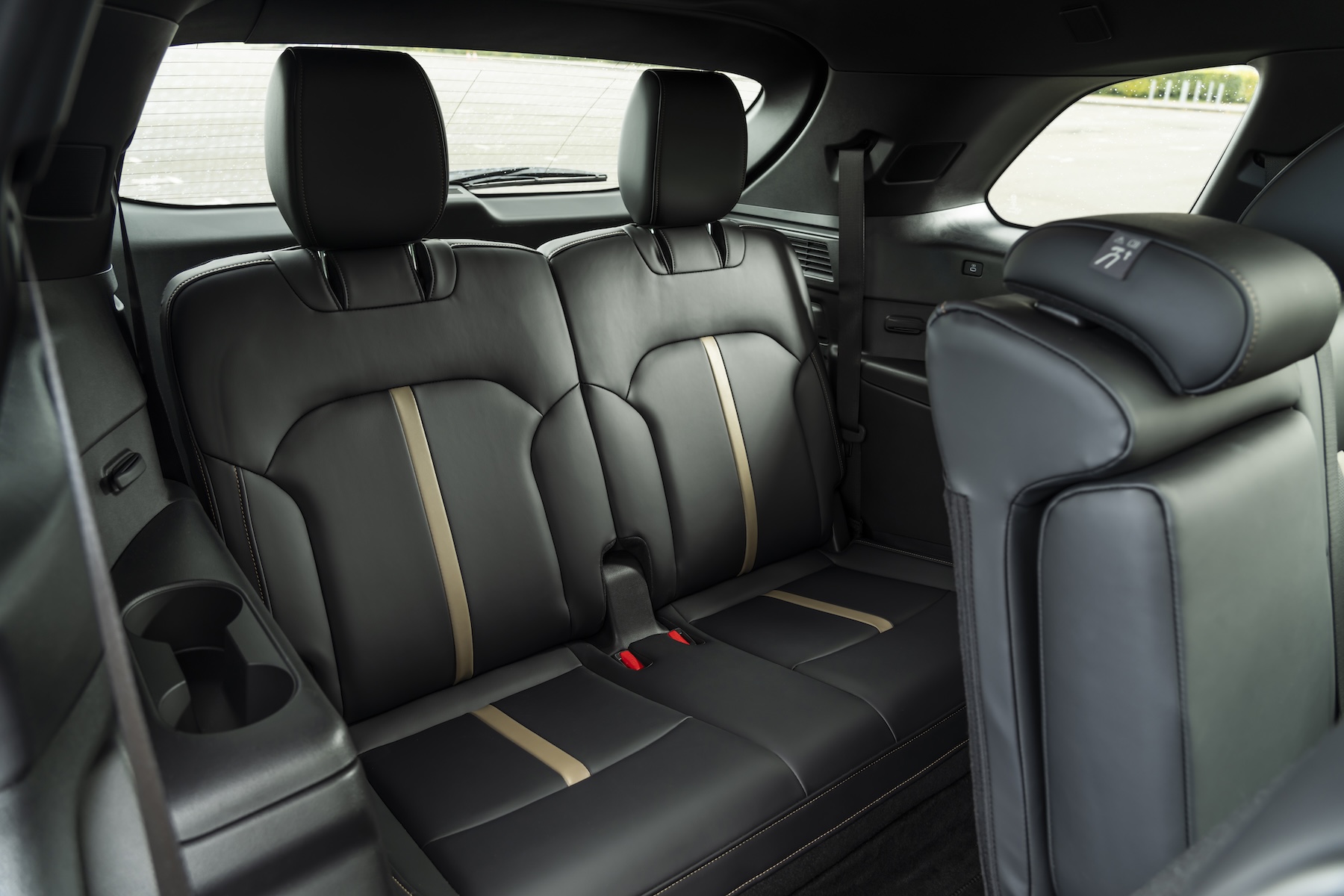
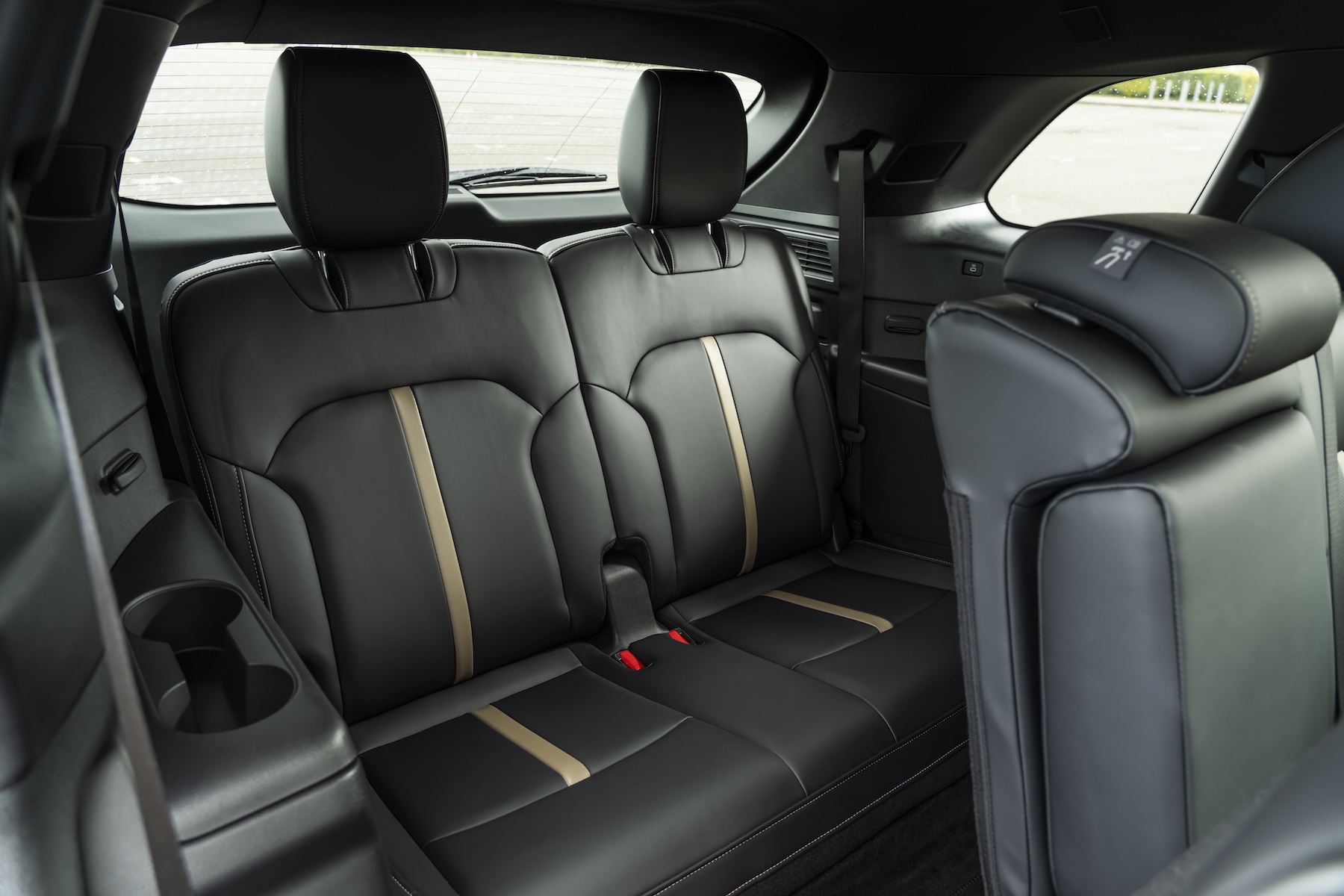
The second row occupants' knee room will have to compromise a little if you want to carry adults in the rear-most seats, but these chairs can carry six-foot adults. The seat bases are flat, so it's not the most comfortable place for adults to be, but they'll be fine for short journeys. But there are vents back there, cupholders and USB-C charging ports for a bit of luxury.

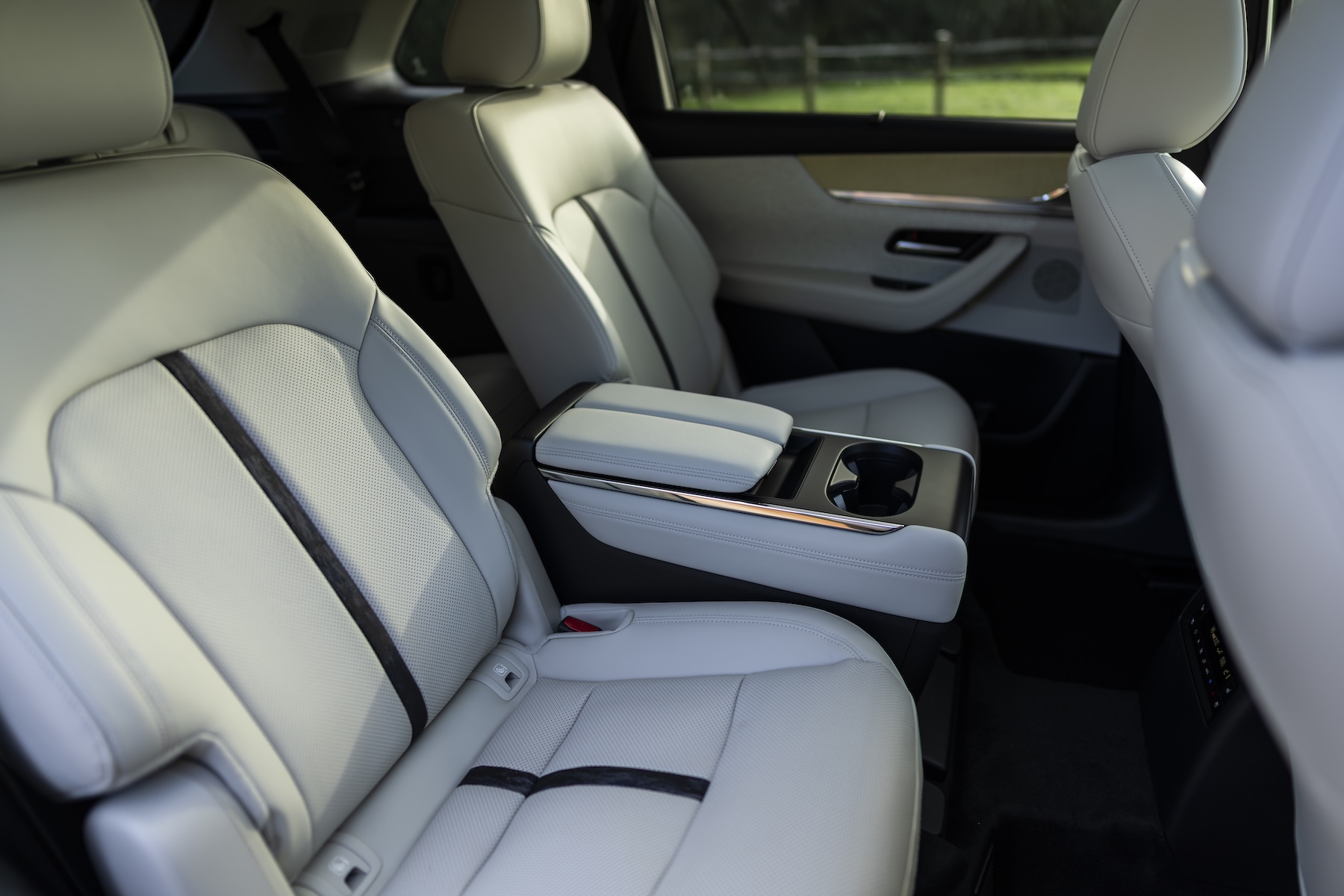
The CX-80 comes as standard with seven seats – two seats in the boot that fold into the floor, and a middle-row bench that splits in a 60:40 fashion that can tilt, recline and slide to aid entry to the rear-most row. But mid-level Homura and Homura Plus models can be converted to a six-seat arrangement, with two 'captains seats' in the middle row with a walk-through to the third row, and is a no-cost option. The top-spec Takumi Plus can come with the six-seat option as well (pictured above), but gets a fixed centre console between the two 'captains chairs' (also upgraded to ventilated seats) with armrests, additional storage and cupholders. It's a £750 option and gives a real Range Rover vibe.
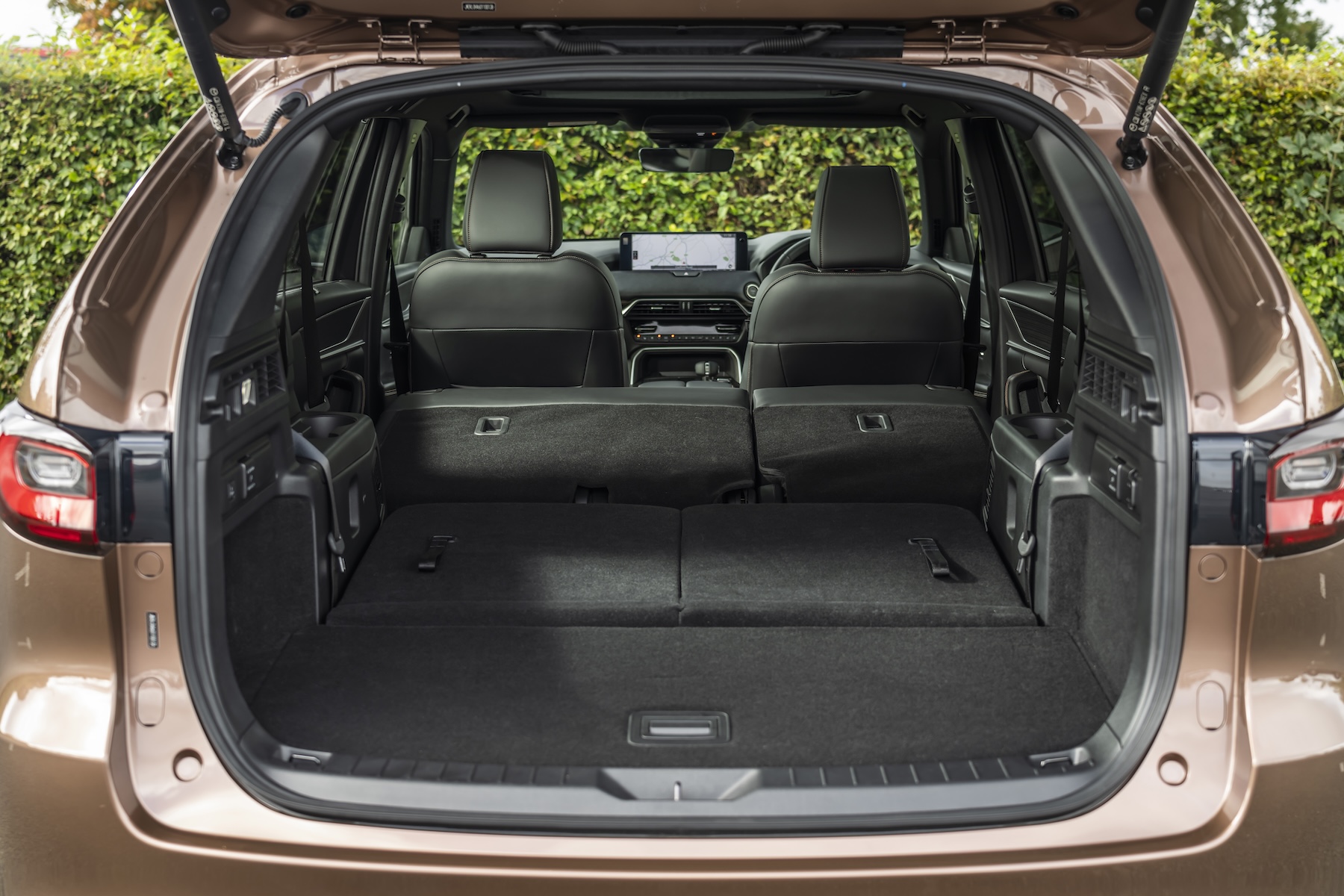
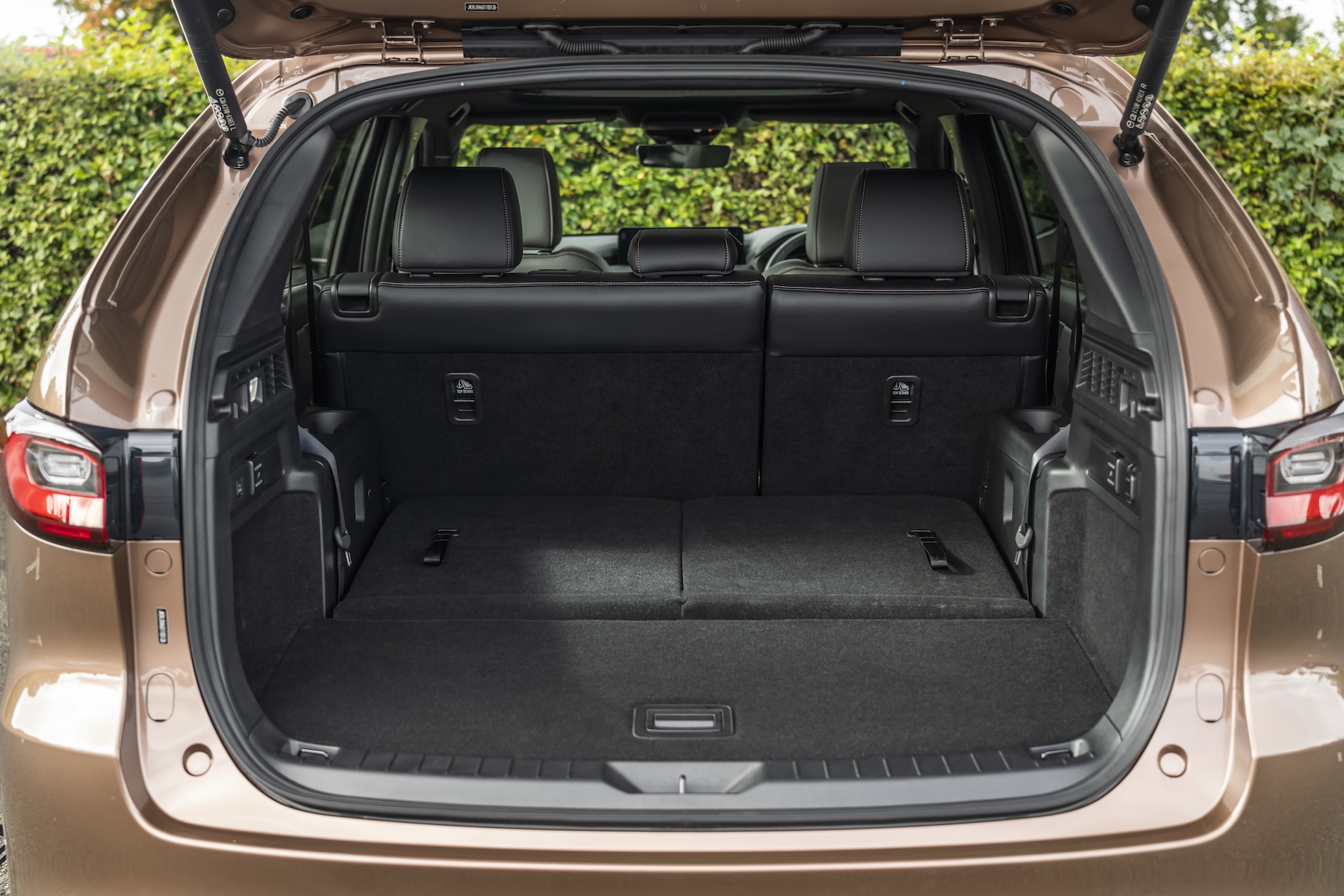
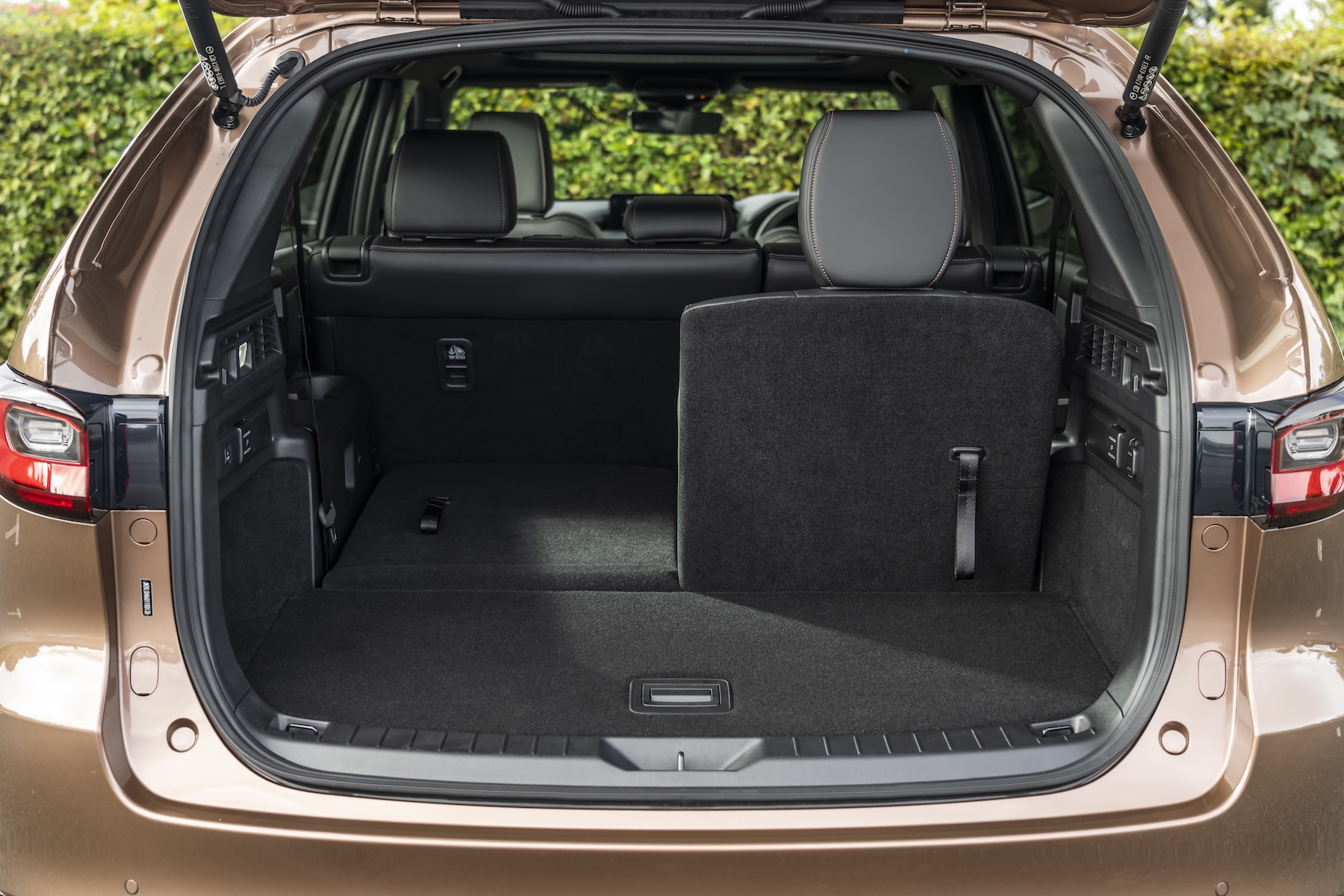
In terms of boot space, there's 258 litres with all seats in place, which isn't too bad for a car like this. Pulling on the straps on the backs of the seats folds them down neatly into the boot floor, opening up 687 litres. Fold all the second and third row down and the space swells to 1,221 litres.

Interior, design and technology
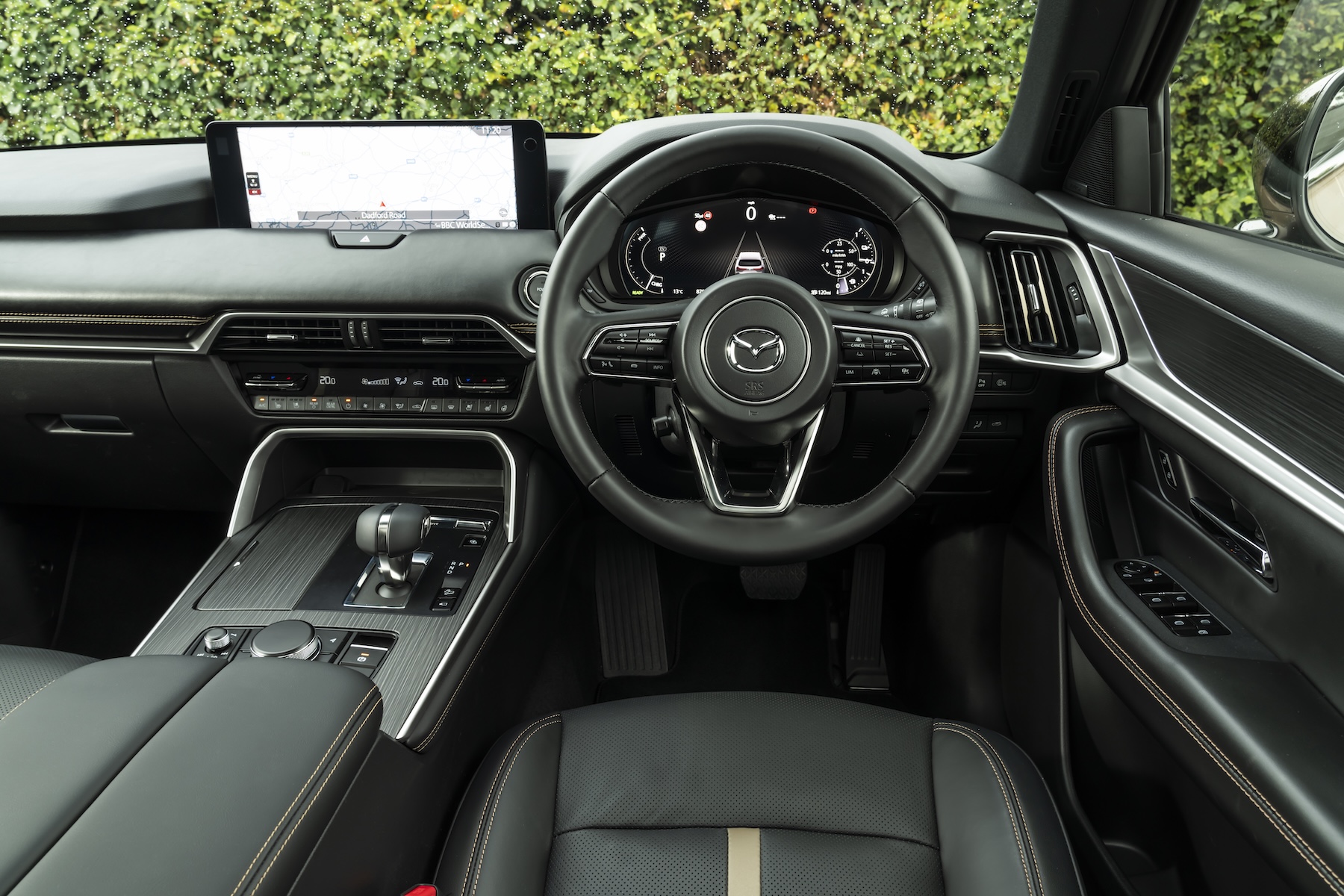
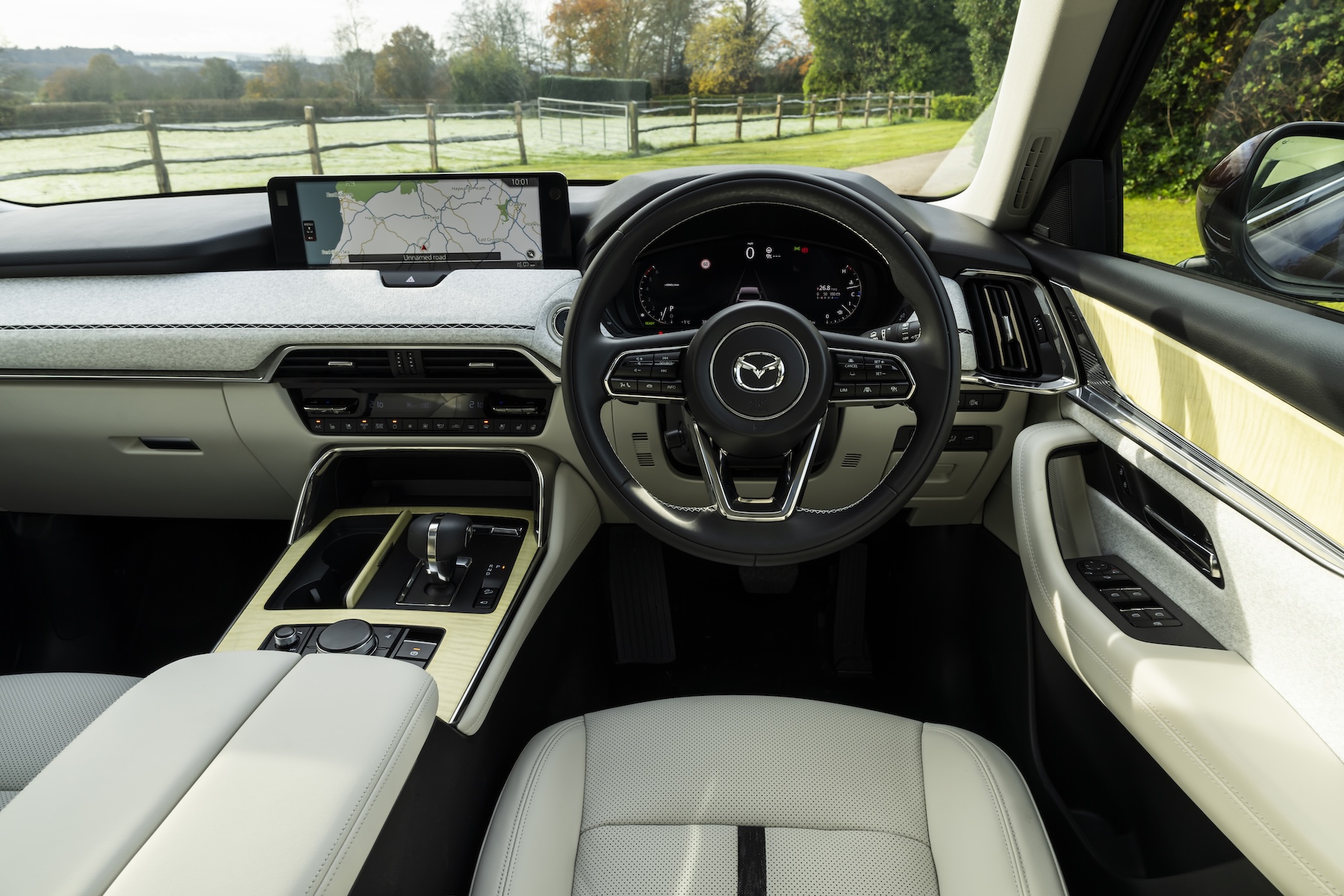
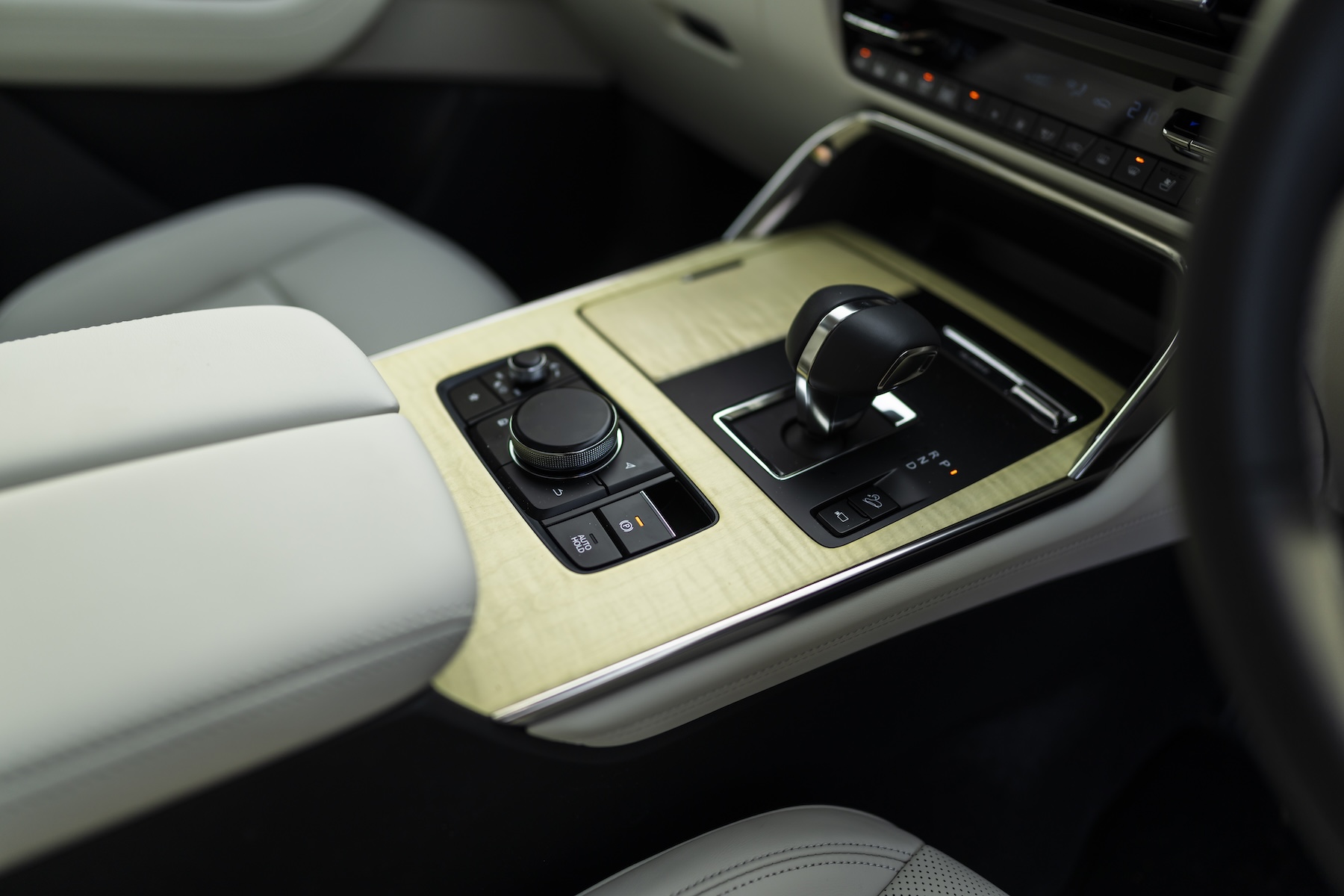
Mazda’s interiors have been excellent for a good few years now, and the CX-80 continues that trend. It feels plush with quality plastics and materials used, while the Takumi models, with their real world inlays, Nappa leather and Japanese-inspired stitching, feel properly Land Rover-like. The design is very understated. Instead of enormous touchscreens and garish ambient lighting, the CX-80's dashboard has a clean, almost architectural approach.
Mazda’s infotainment system is a masterclass in functionality and usability; the screen is tucked away at the top of the dashboard within the driver's eye-line. It's controlled via a rotary controller rather than forcing you to jab at the screen constantly, which can actually be a relief on the move, although when the car is stationary it can be used as a touchscreen with Apple CarPlay. The menus' design are a little dated, but it's an easy to use system.
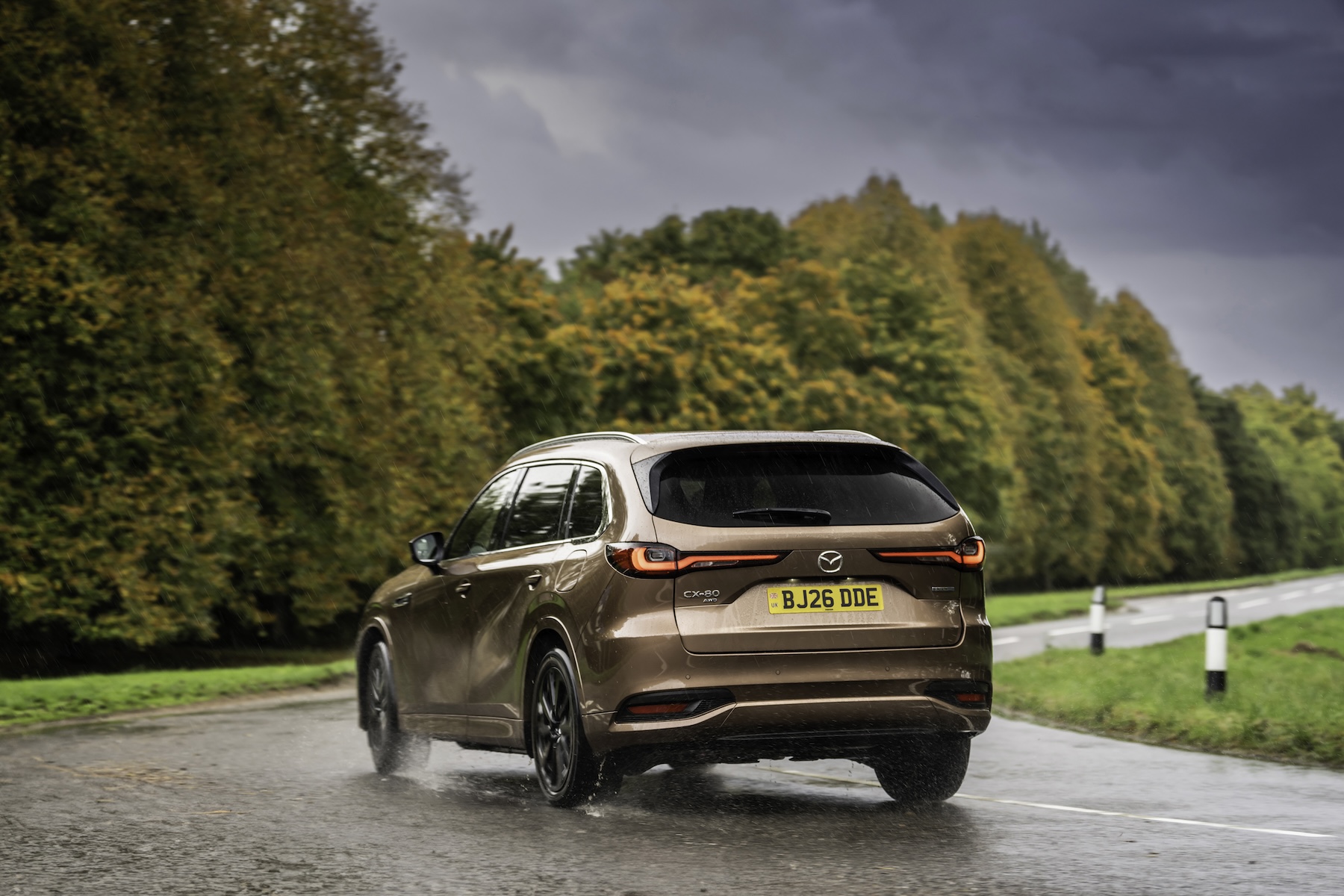
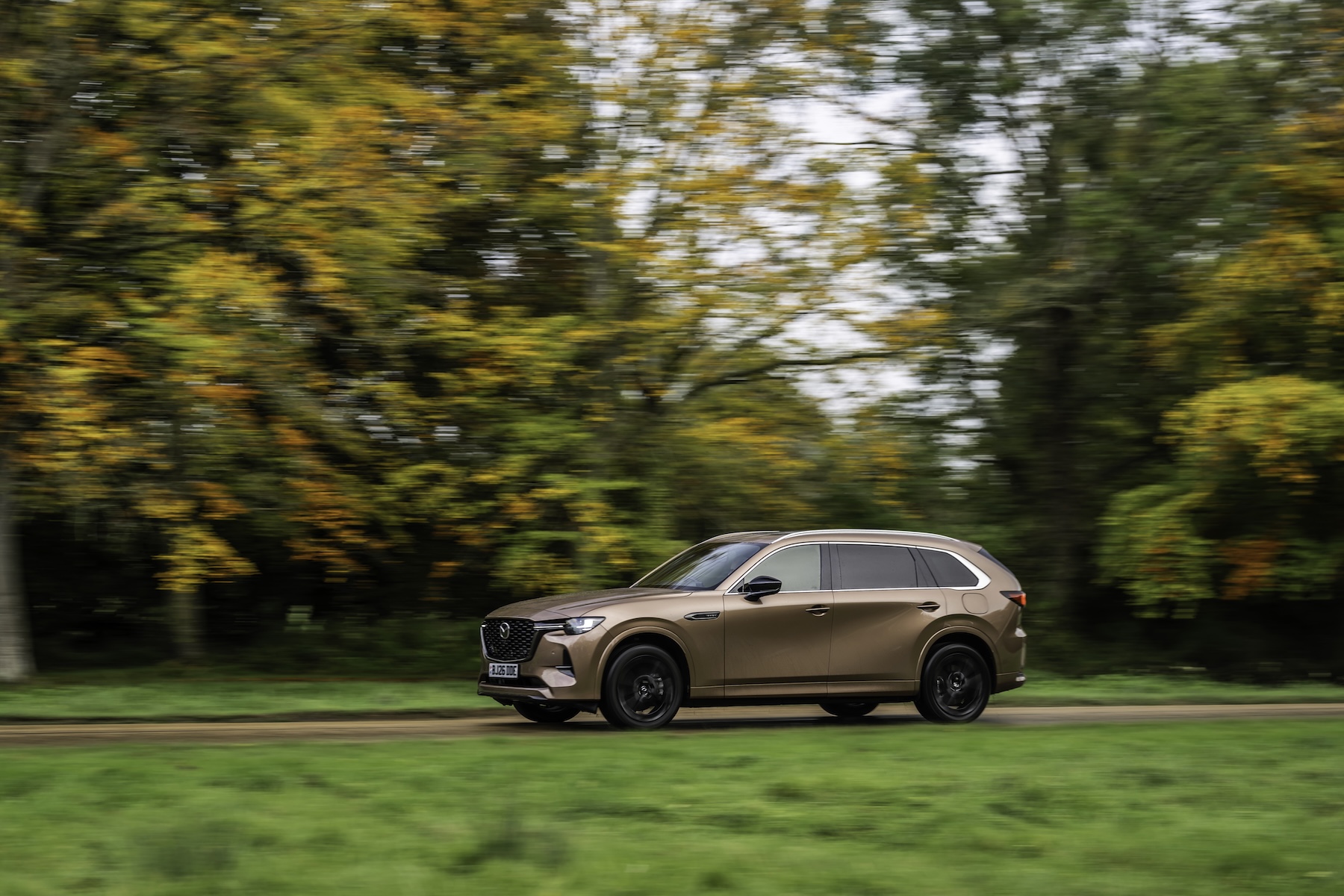
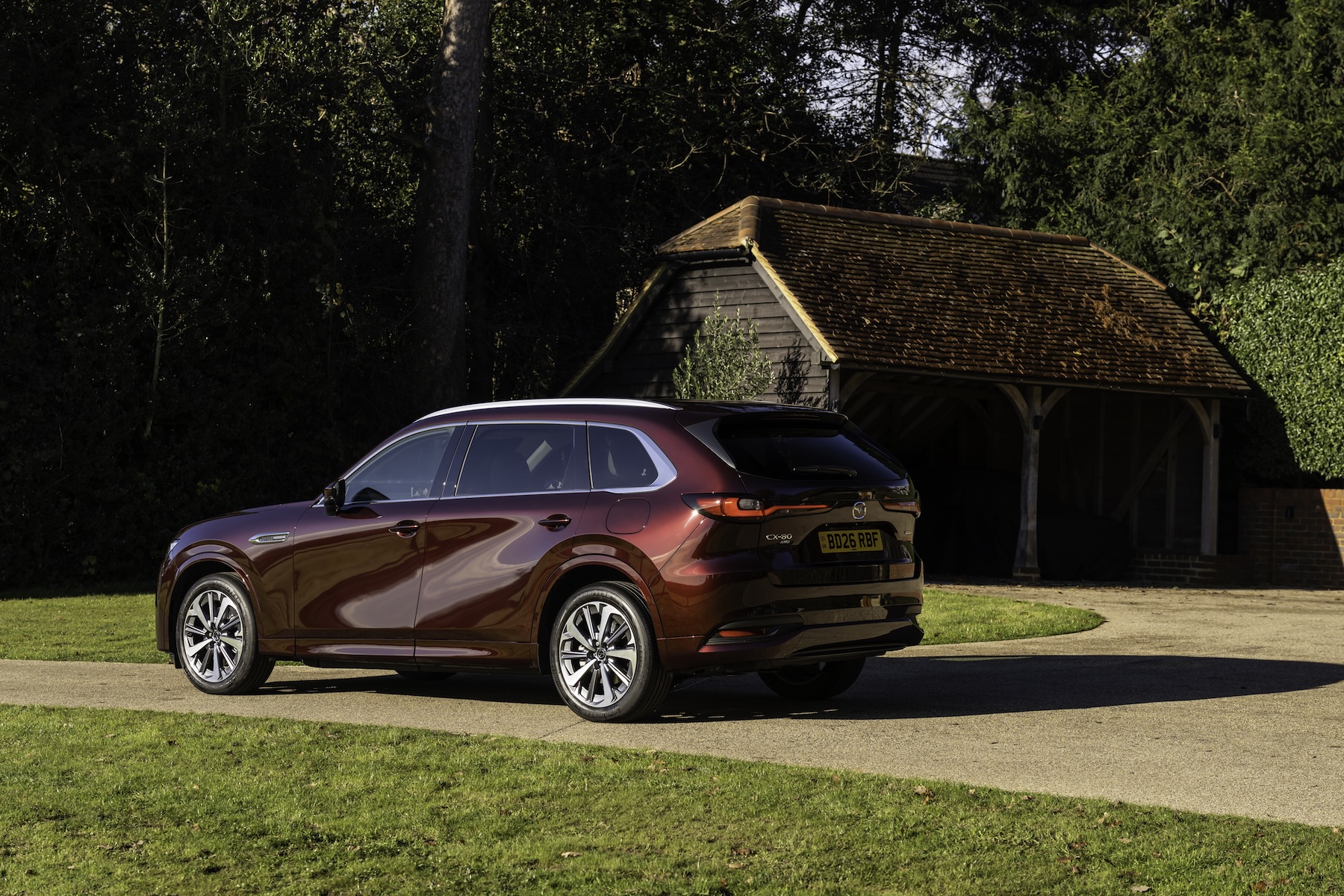
On the outside, the CX-80 is very Mazda: elegant proportions, a strong front end and clean surfacing. The higher-spec models, with their body-coloured trim and larger wheels, look more upmarket than the lower-rung versions, but, from some angles, the CX-80 looks a little awkward. That elongated profile sometimes makes the car look like a CX-60 that's been papped unattractively by a passing Google Maps camera car – stretched.
Motors, performance and handling
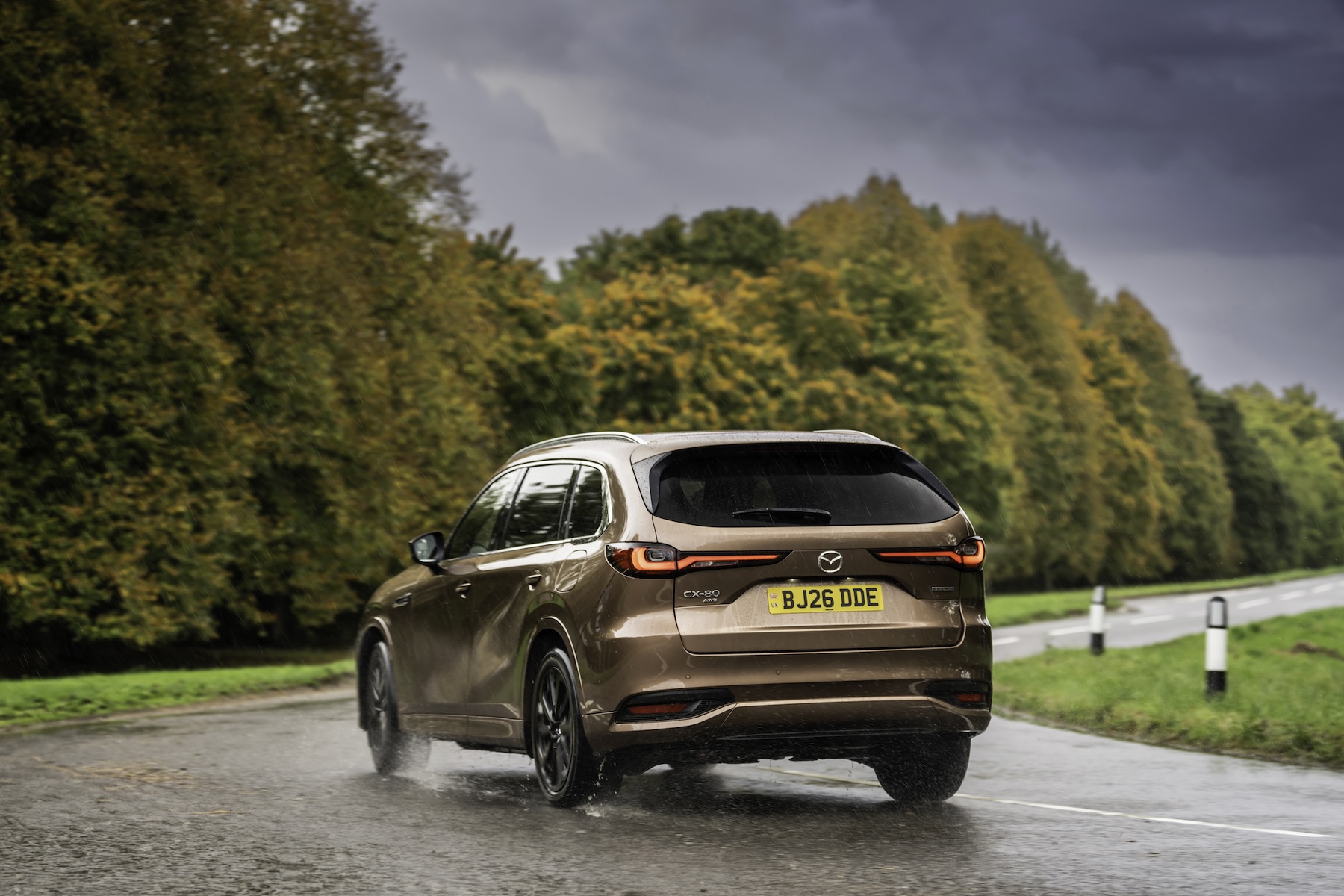
A large plug-in hybrid SUV is never going to feel like a sports car, but the CX-80 does a good job at being one of the more engaging large SUVs around. It's certainly a large car, but the CX-80 feels pretty at home on a twisting country road. Its steering is accurate and well-weighted, and the car doesn't lean or roll around in corners – it feels very secure.
The downside to this excellent body control is a firm ride. Mazda introduced a new rear suspension system for the CX-80 that delivers a smoother ride compared to the first CX-60s on sale (2022-2025), particularly at the rear where the 60 had a tendency to 'hop' and bounce over bumps. The CX-80 is certainly an improvement over those earlier CX-60s, but the ride is still noticeably stiffer and less forgiving than rivals. It's at its worst in the Takumi models with their 20-inch wheels as these tend to thump into pot holes and bumps.
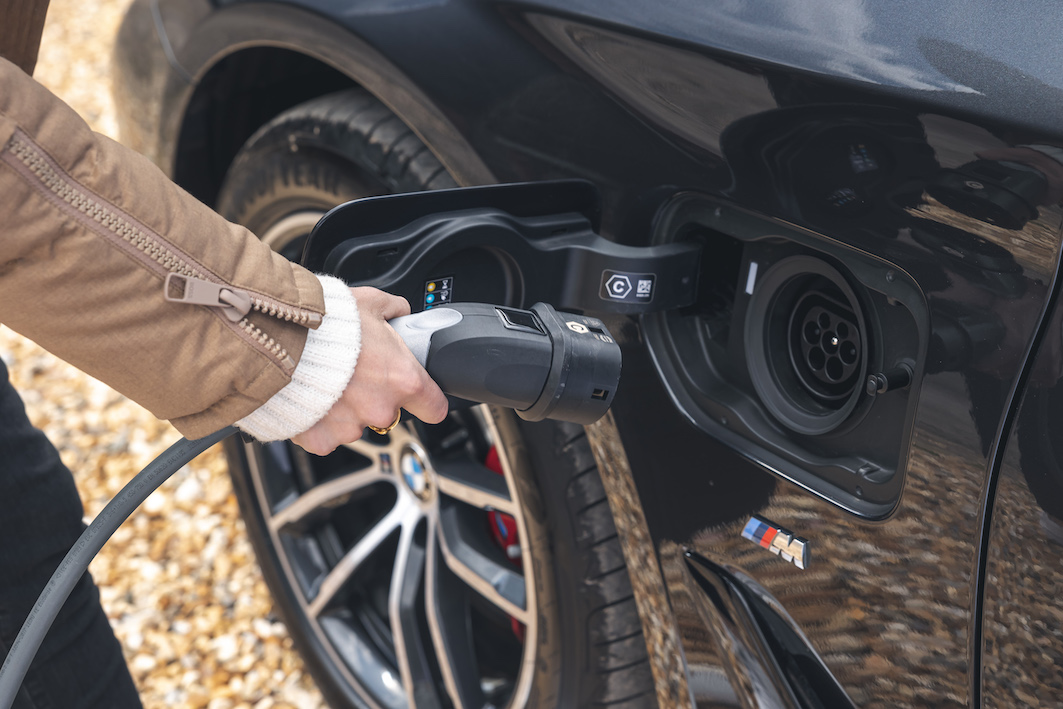

In plug-in hybrid guise, the CX-80 combines a 2.5-litre, four-cylinder petrol engine with an electric motor and a 17.8kWh battery. Total power stands at 327hp, making the CX-60 and CX-80 the most powerful road cars Mazda has ever offered, and it certainly feels a quick car when both the engine and motor are working together. Even when the car is running in EV mode there's plenty of shove; the only disappointments are that the transition between petrol and EV isn't always the smoothest, and when the electric range has run out the petrol engine feels a bit strained.
The towing capacity is 2,500kg braked (750kg unbraked), and it makes the CX-80 a safe and sensible match for most medium to large caravans. When towing, the CX-80 is unflustered and serene.
Running costs and pricing
Running costs are where plug-in hybrids can either look brilliant or a little disappointing, and it's all dependent on how they're used.Charge up the CX-80 regularly and it's entirely possible to over 70mpg; let the battery drain and rely on the petrol engine and 30-40mpg is more likely. That 38-mile electric range also means the CX-80 falls into a moderately low Benefit-in-Kind (BiK) bracket but some PHEV rivals will fall into a usefully lower bracket thanks to their longer electric range, which could make a big difference to your company car tax bill if you're running the car as a company vehicle. The longer electric range offered by some rivals also means that you could save more on fuel; roughly speaking, running a PHEV on its battery should cost around 5 to 10p per mile if you're charging from home, while the petrol engine will cost more like 18 to 25p per mile to run.

The CX-80 is good value on list price compared to similarly-sized rivals like the Hyundai Santa Fe and Kia Sportage, on account of its strong standard equipment levels. The base-spec Exclusive-Line starts at just over £50,000, and gets black leather upholstery, wireless Apple CarPlay and Android Auto, three-zone climate control, a head-up display, and a heated steering wheel. Sportier-looking Homura models cost around £3,000 more, while the ultra-posh Takumi (pictured above) cars start at £54,000.
Verdict
The Mazda CX-80 plug-in hybrid is a refreshingly likeable and appealing take on the seven-seat SUV formula, and is a great all-rounder.
While some three-row SUVs give a third-class experience for those sitting in the rear-most seats, the CX-80 impresses. More than that, it delivers the essentials with real polish: comfort, quality, practicality and a powertrain that can be very cost-effective if you use it properly. The base-spec cars are great family workhorses, while the top-rung models are proper rivals to the likes of Volvo and Land Rover.The

 8
8.jpg?width=300&height=185)