





 Battery size: 56 kWh
 Range: 159 miles
 Real World Range: 150 miles
 Max charge rate: 150kW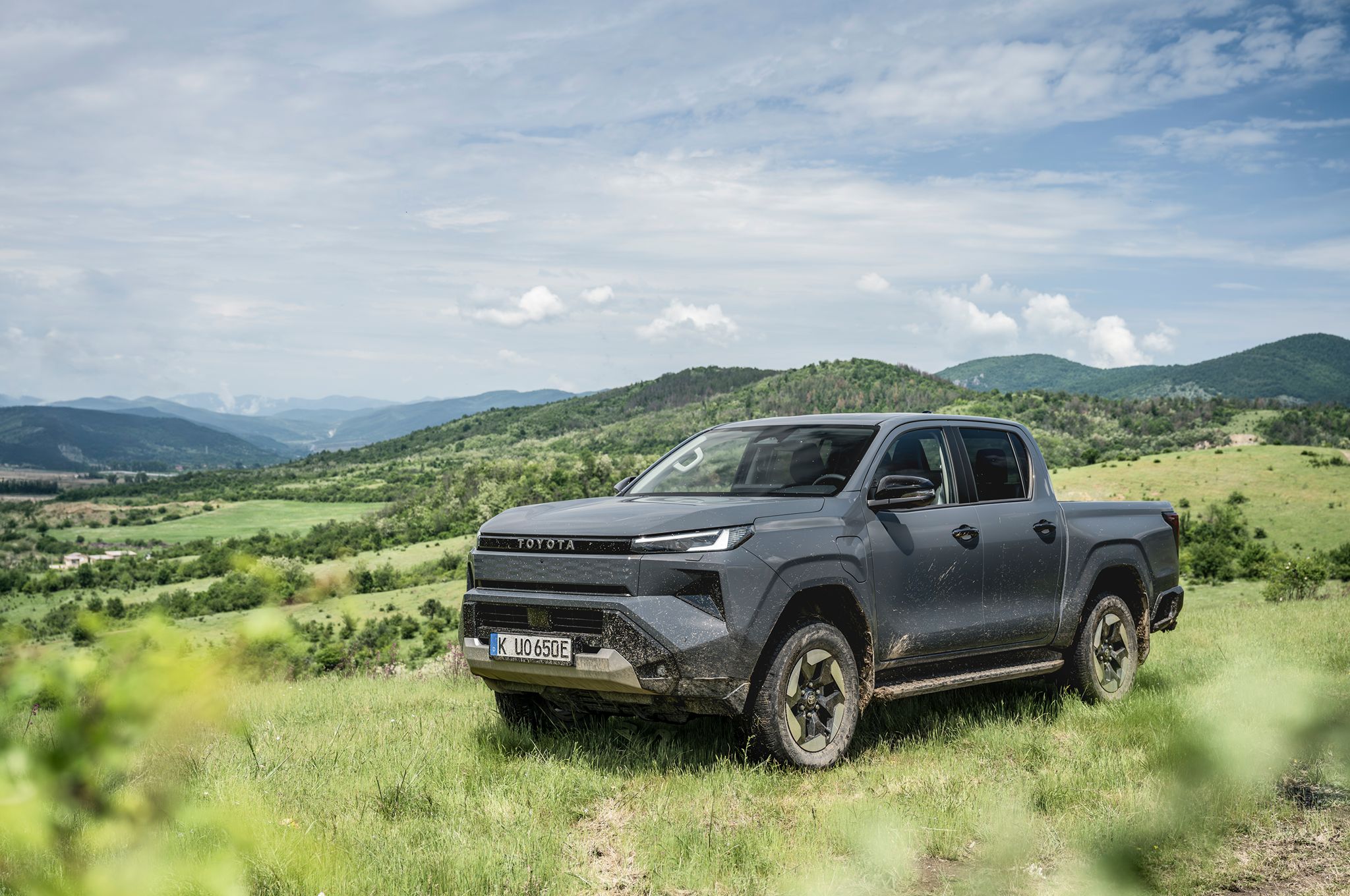

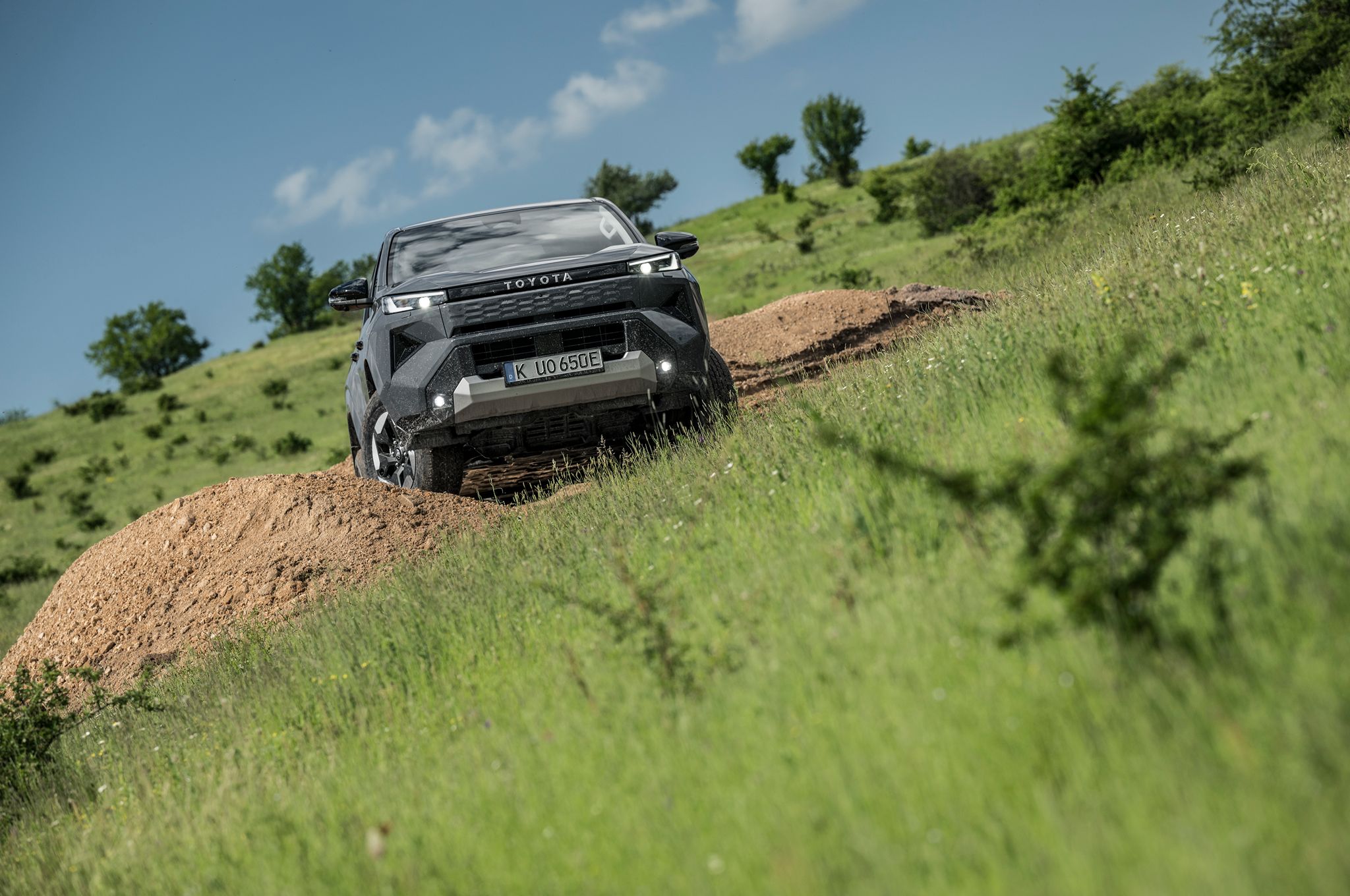
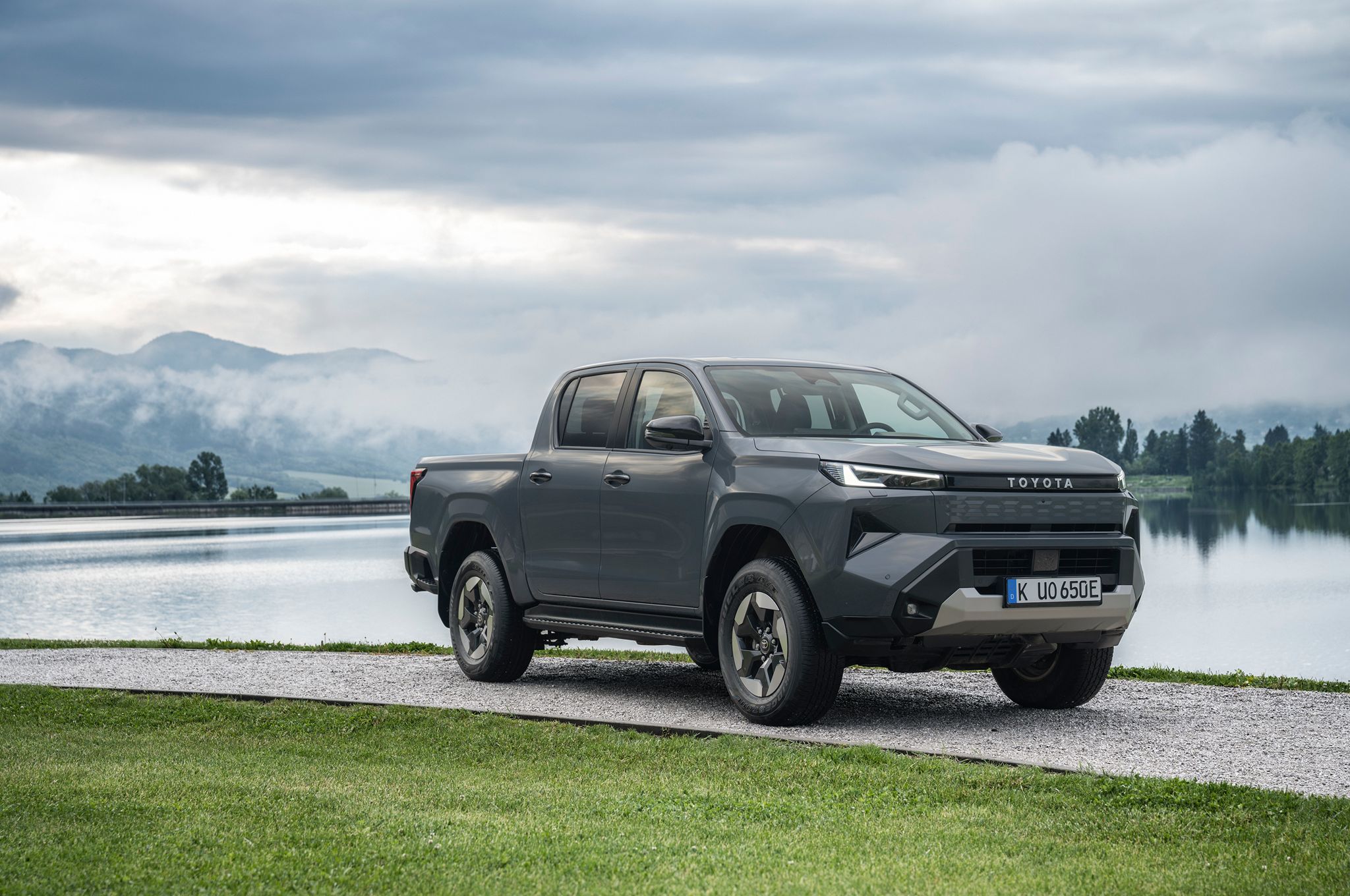
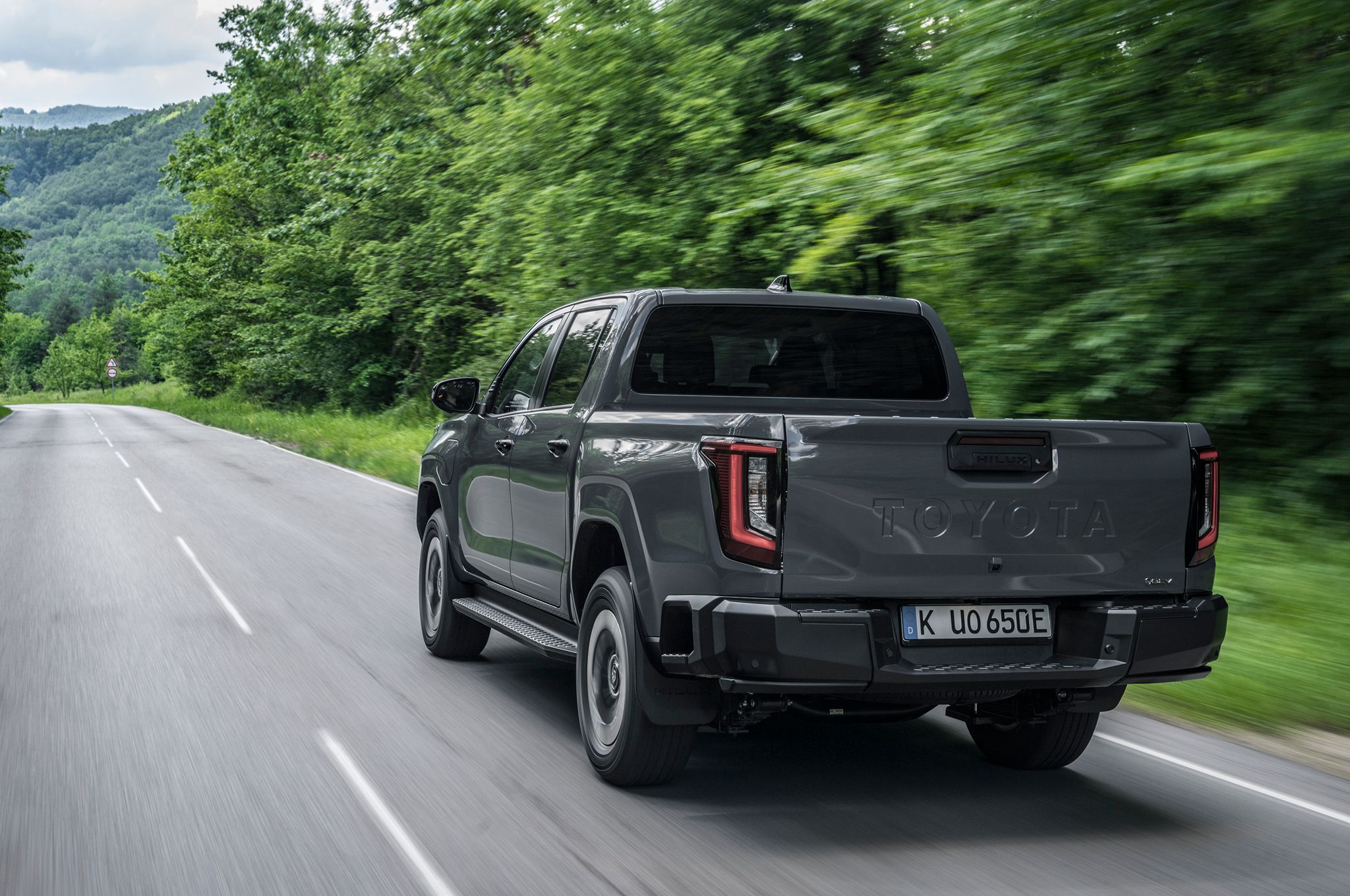
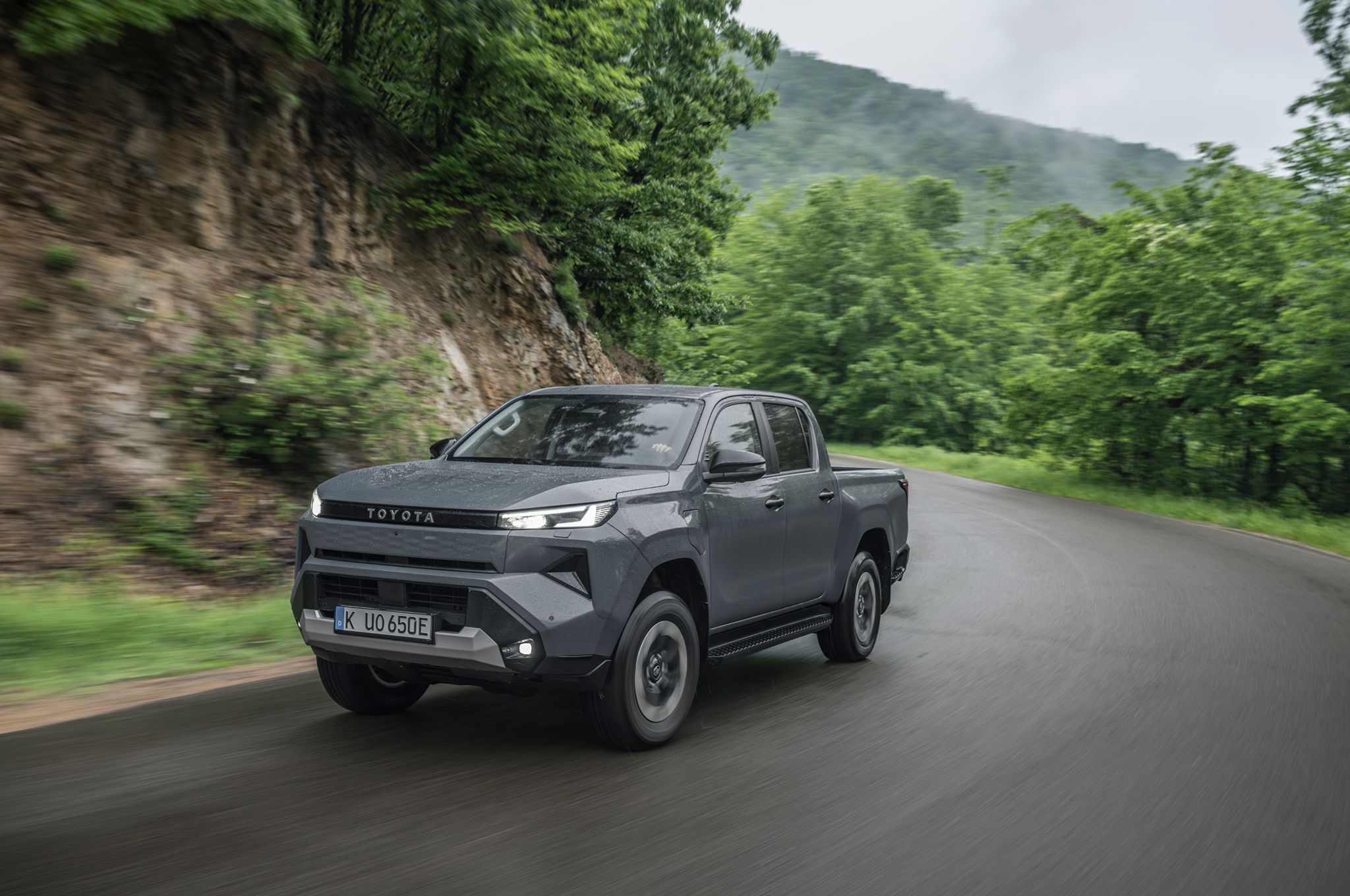



The new Toyota Hilux is fully electric, but it’s a pickup that blurs the lines. So there’s still an old-school ladder-frame chassis with a 59.2kWh battery tucked up underneath. There are two motors to give the usual all-wheel drive, and a possible 159 miles of range. Which these days does NOT sound like much.
But here’s the thing; Toyota is aiming the electric Hilux at fleets, regular urban route users and people who need localised zero emissions - businesses who aren’t constantly doing motorway miles. It’s not been designed to replace diesel, but as another option. So there’ll eventually be combustion, hybrid, electric and even hydrogen-powered Hiluxes. So short range, but still the same capability.
I am not, however, entirely convinced. So let’s have a closer look.
Range, battery and charging
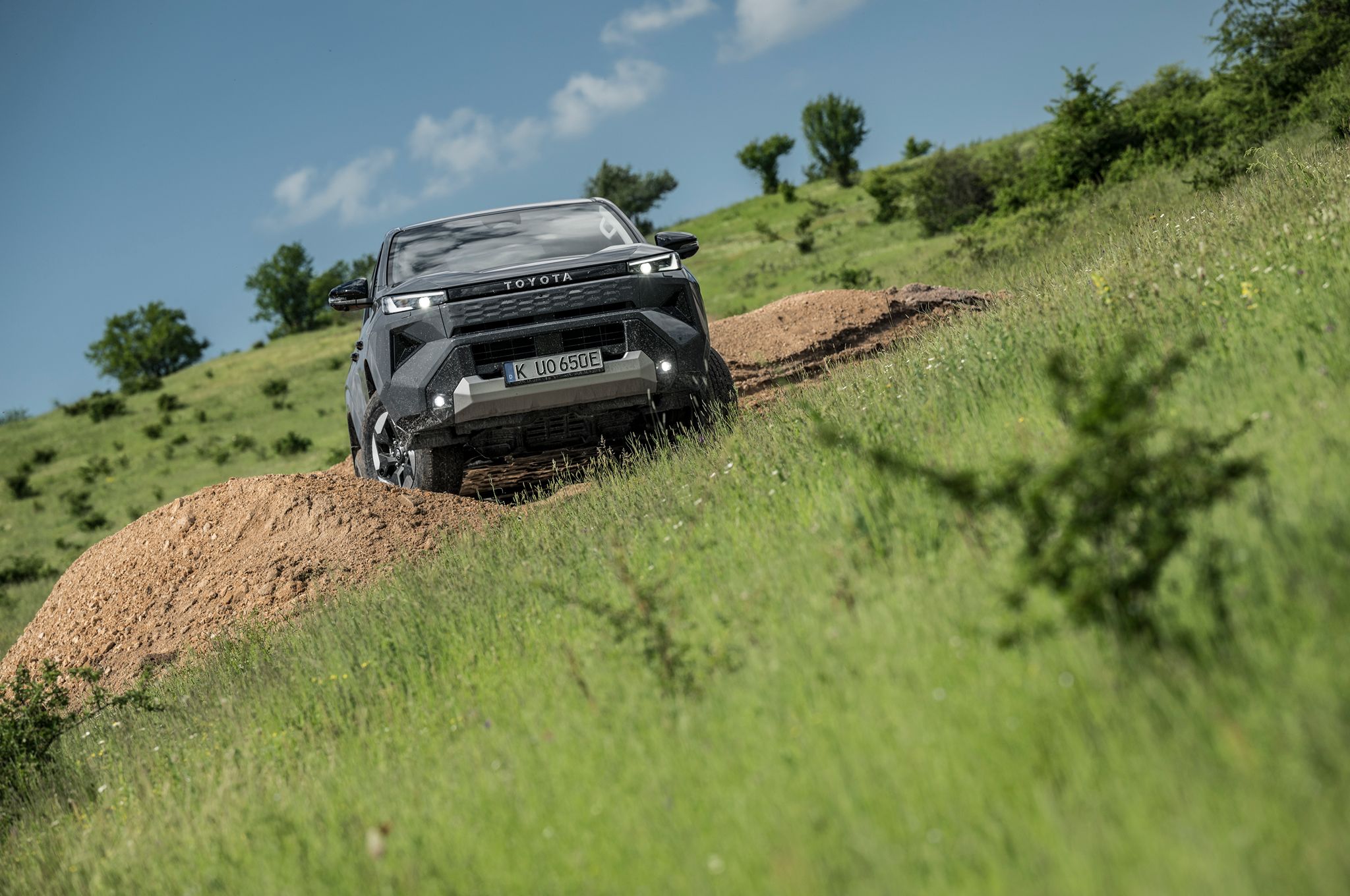
One thing everyone’s probably going to scoff at is the Hilux’s the range. Here are the facts first. It uses a 59.2kWh NMC battery pack with dual electric motors giving permanent all-wheel drive. Toyota quotes a WLTP range of around 255 to 257 kilometres — or roughly 159 miles. And yes, before you shout at me, that isn’t huge. Even competition like the KGM Musso EV and Isuzu D-Max EV can go slightly further, although they have bigger batteries.
The WLTP test takes into account a load and motorway driving, so if you are only doing low speed local trips you might get slightly more. Fill the back, tow a trailer and go fast and you will see even less.
But Toyota has deliberately engineered this truck for predictable fleet use rather than cross-country towing marathons. Buyers who drive known routes and return to base each evening and charge up. But if you find yourself on a public charger, Toyota claims it will manage 10–80% DC fast charging in around 30 minutes, with 10kW AC charging taking about six and a half hours on three-phase power back at base. It’s a shame this isn’t faster, as most commercial properties will be able to supply at 22kW, and halving the charge time would mean you could get a decent amount of miles in a lunch break.
Practicality and load space
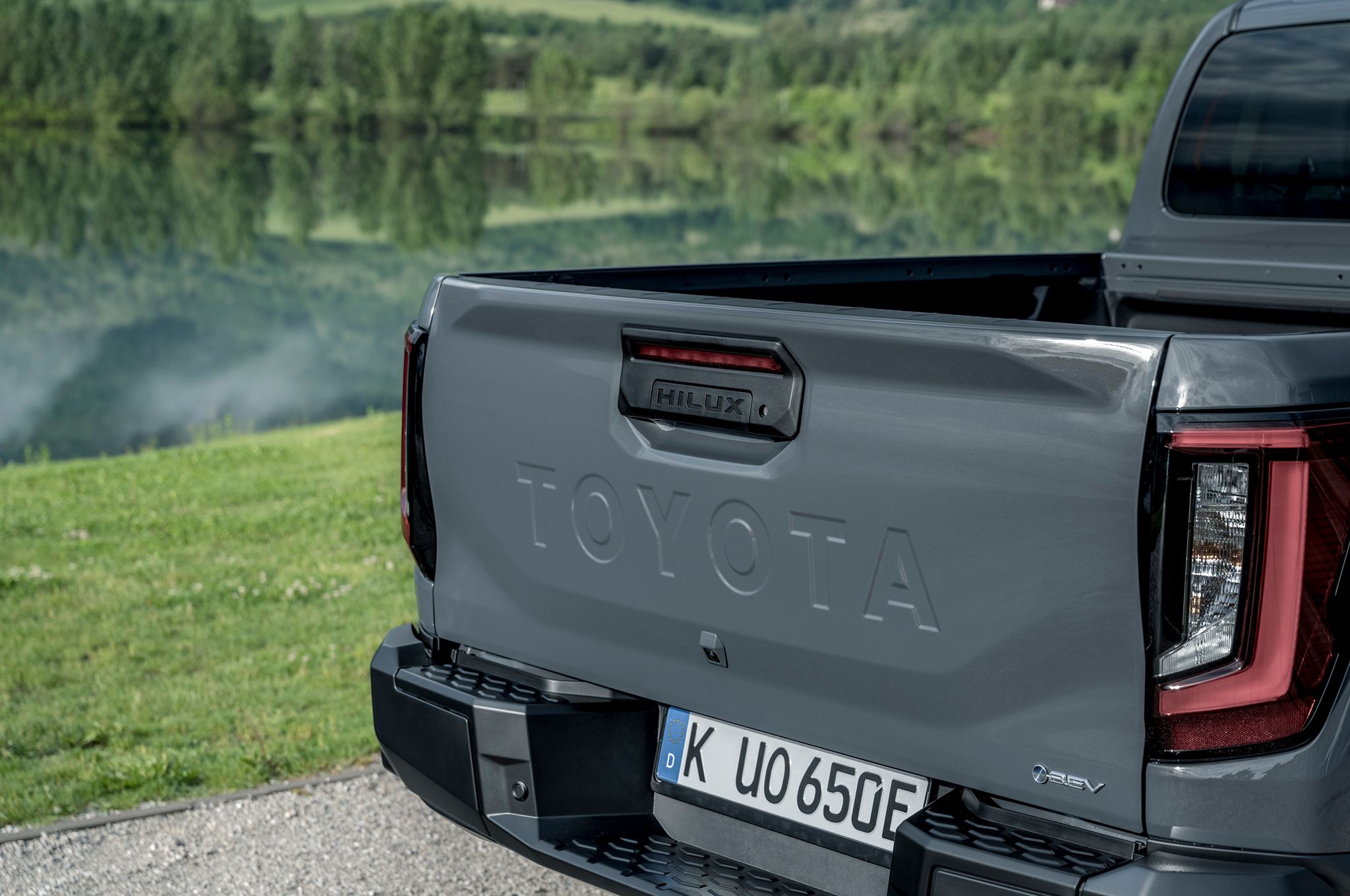
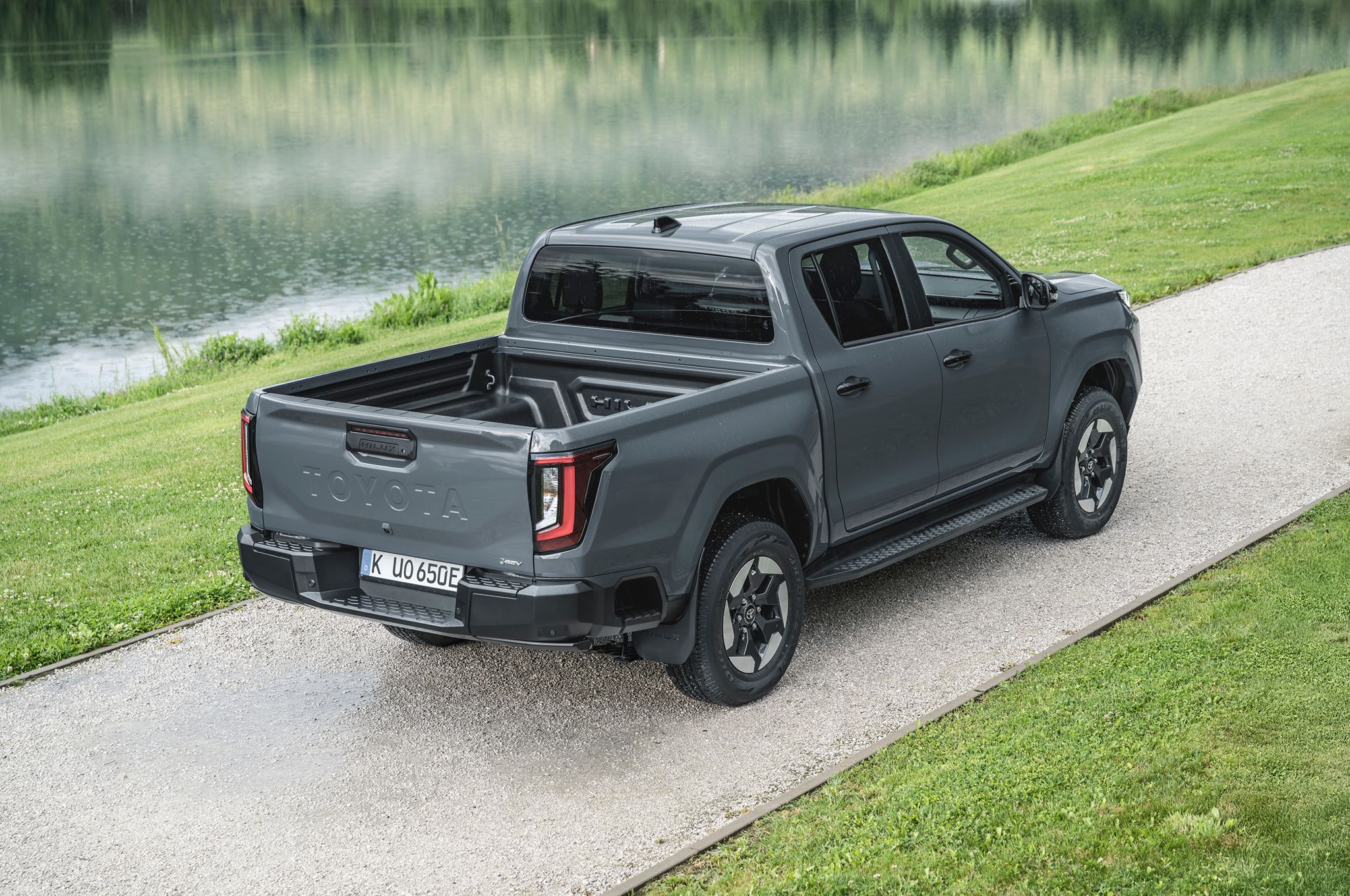
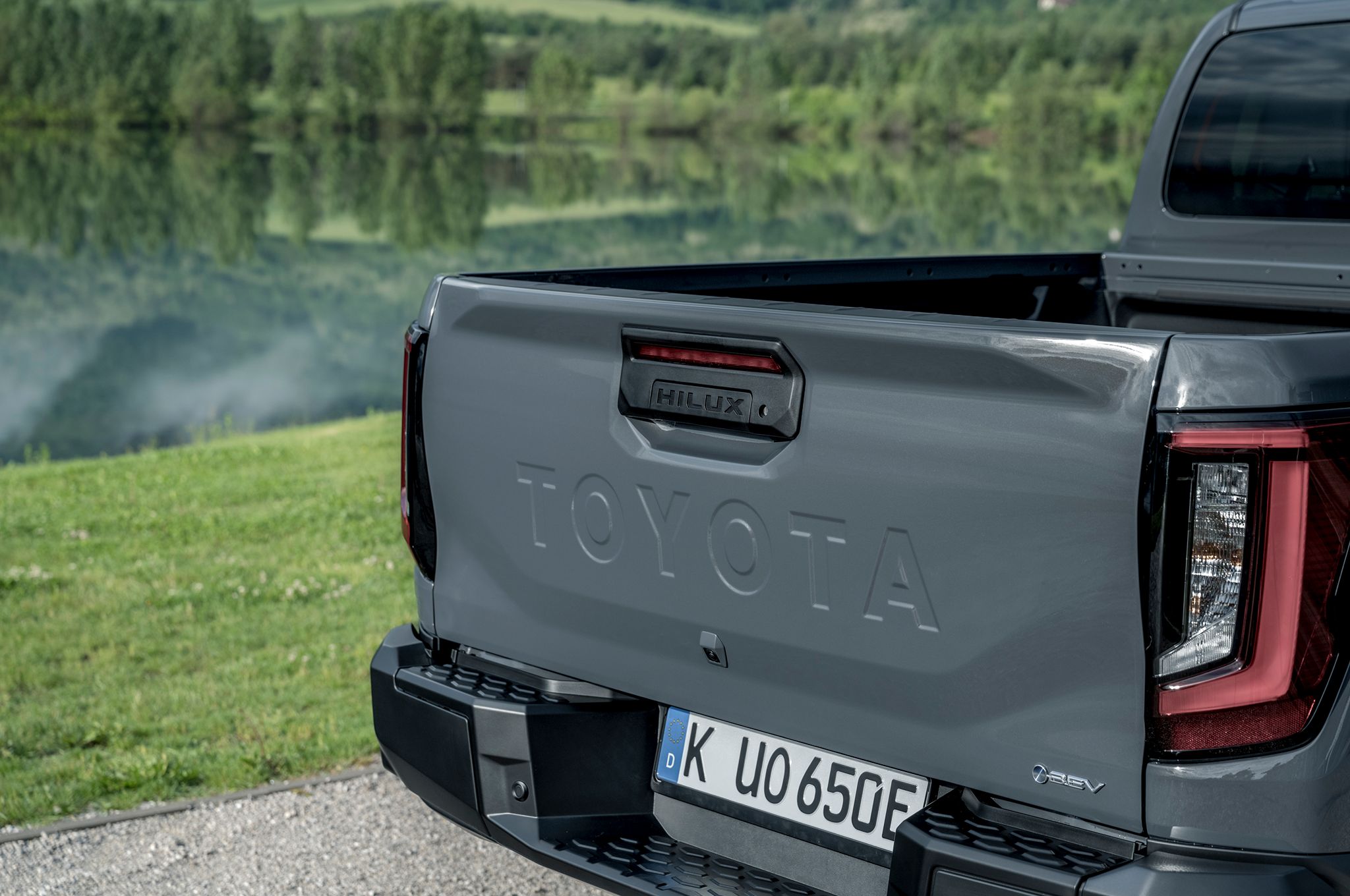
The load bed of the Hilux is 1.5-metres square, which is a good usable space for a double-cab pick up. There are no plans for a single cab version currently.
BUT, it’s worth noting that the extra weight of the battery packs means the Hilux can only take 715kgs of load - more than I’d use on weekend away, less than some farmers might want when hauling a bag of fertiliser.
But there is another bigger elephant in the cargo bed - towing.
A diesel Hilux doesn’t really have range issues. It can tow 3,500kg and haul over a tonne. The BEV? That drops to around 1,600kg towing and roughly 715kg payload in European spec.
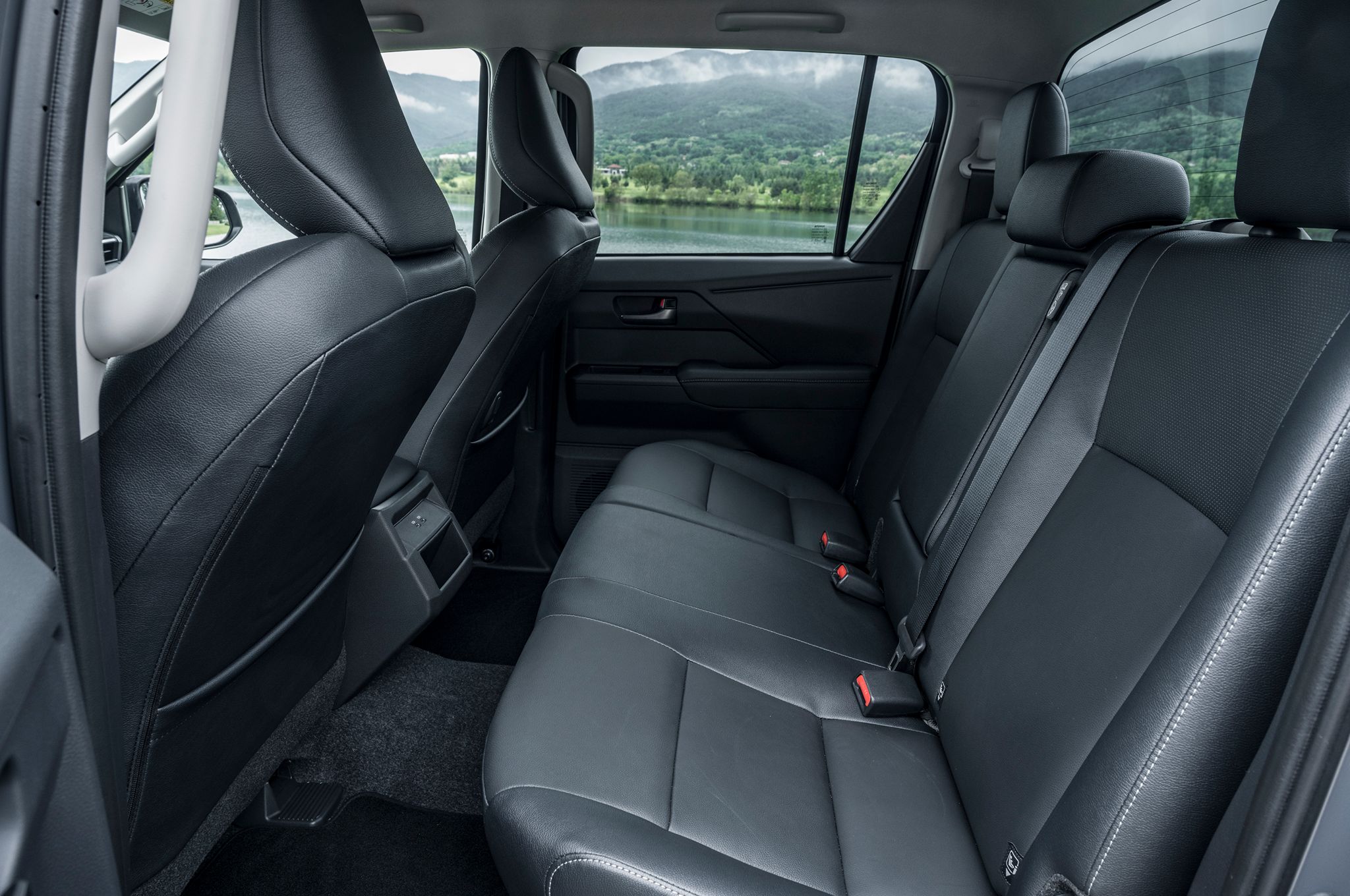
For many traditional Hilux buyers, it could be a dealbreaker. Stick three or four beefy people in it, plus tools and equipment and lunchtime sandwiches, bull bars, roofracks, lights and all that other stuff, and it’s going to be a heavy thing.
Tow a big trailer or piece of plant equipment, and the range is going to fall away like a dropped rock. Not a problem unique to Toyota, but it could be an issue for people who do jobs that require hauling things with a towbar.
Interior, design and technology
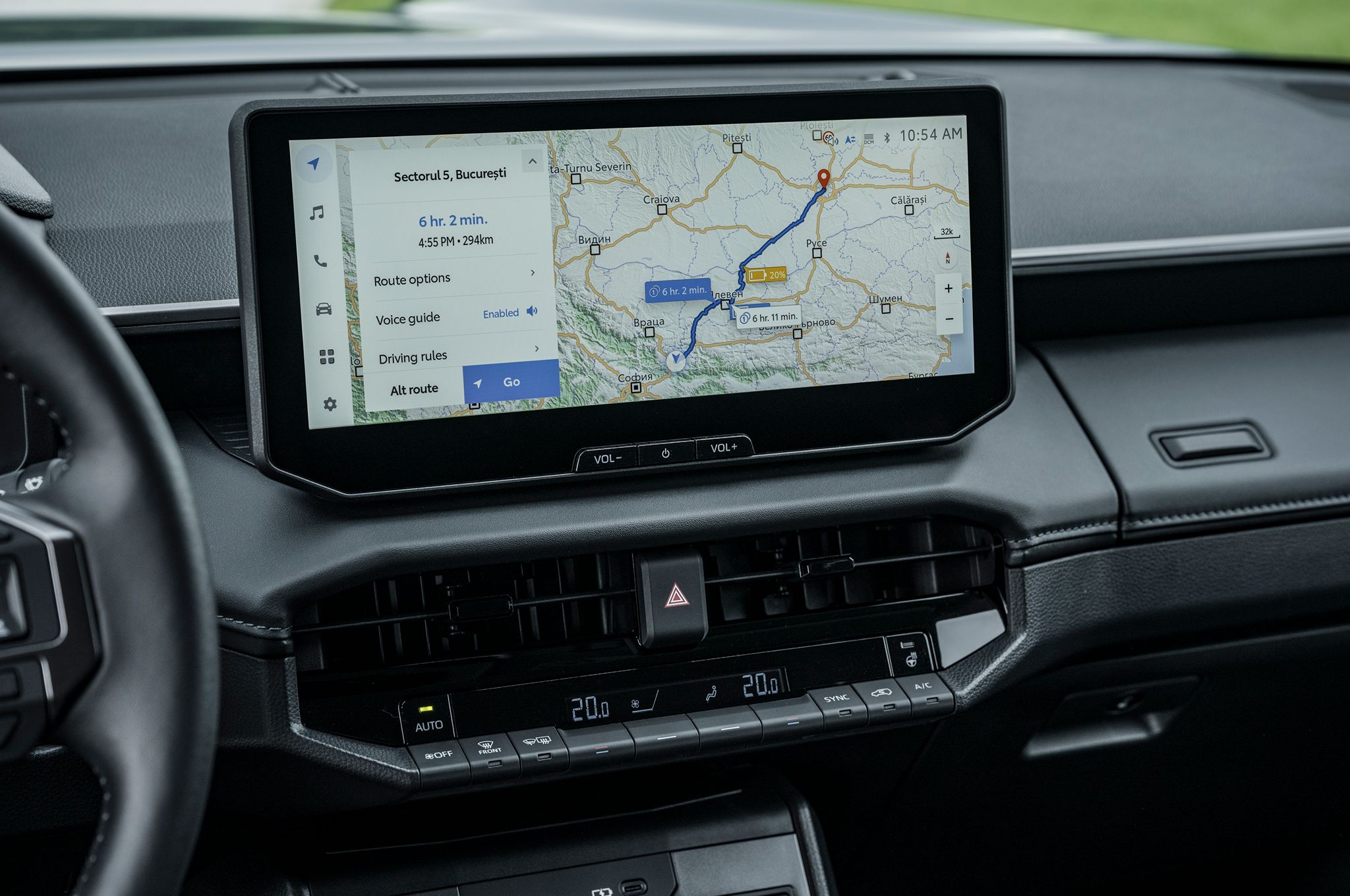
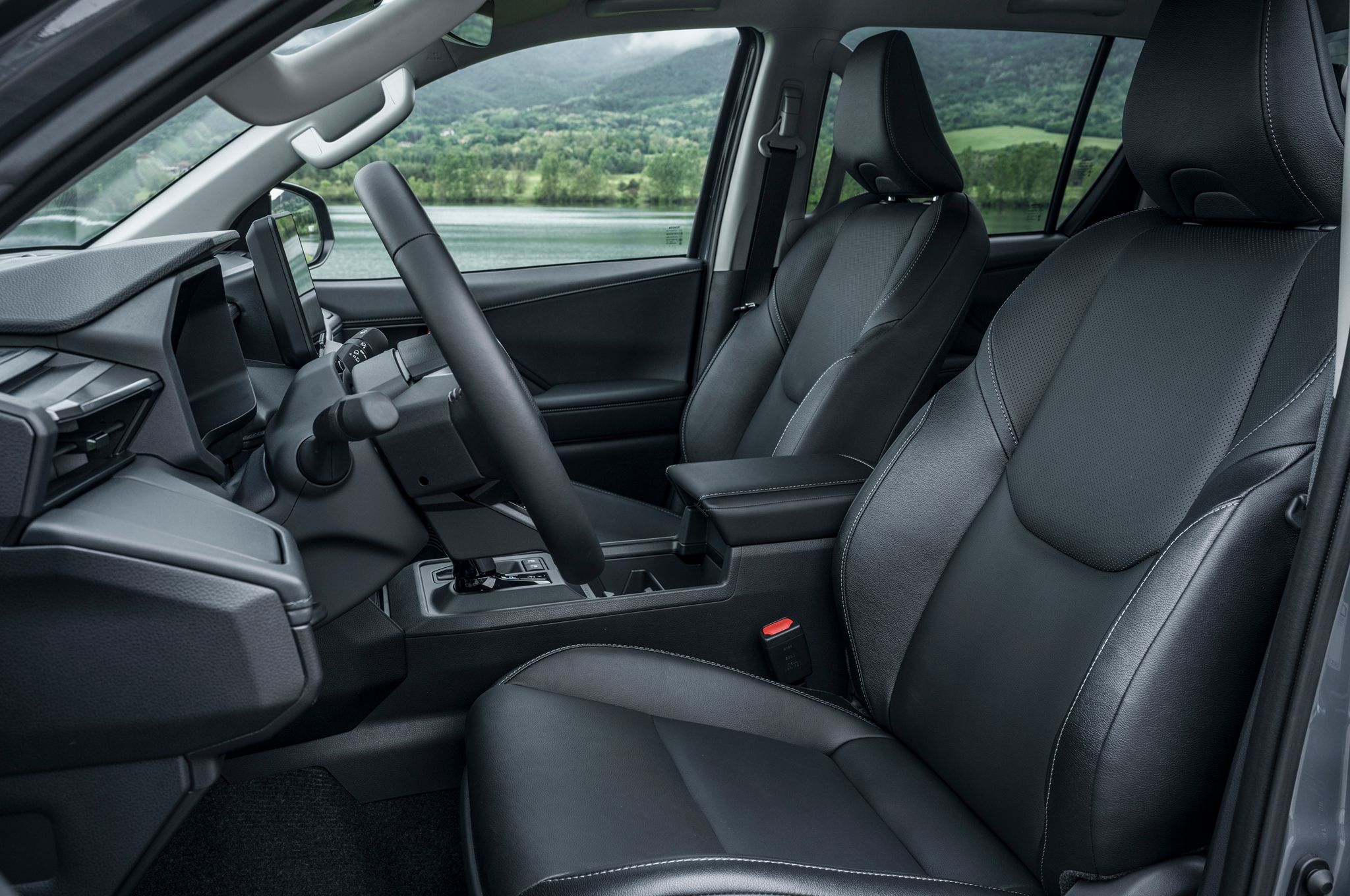
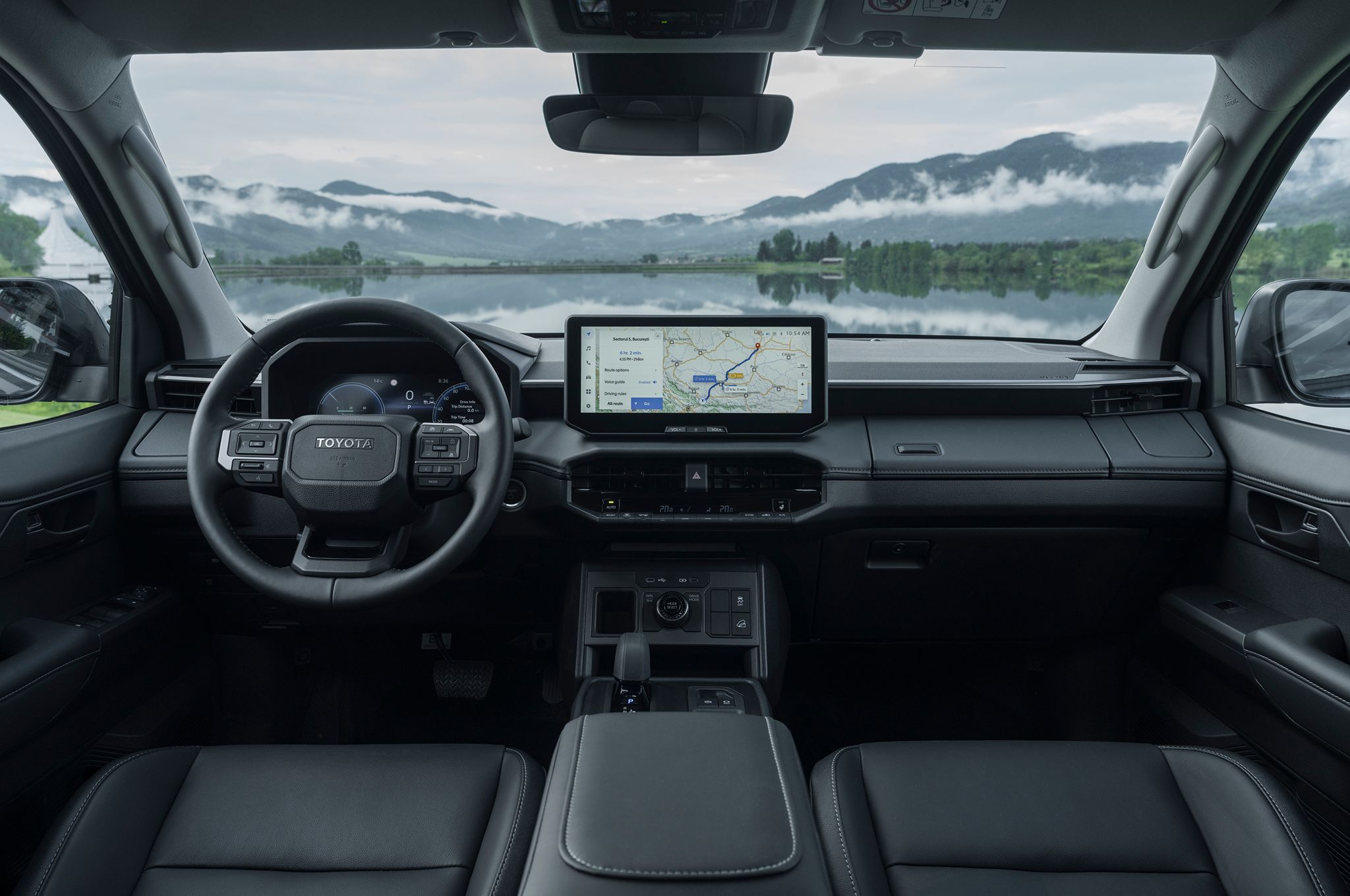
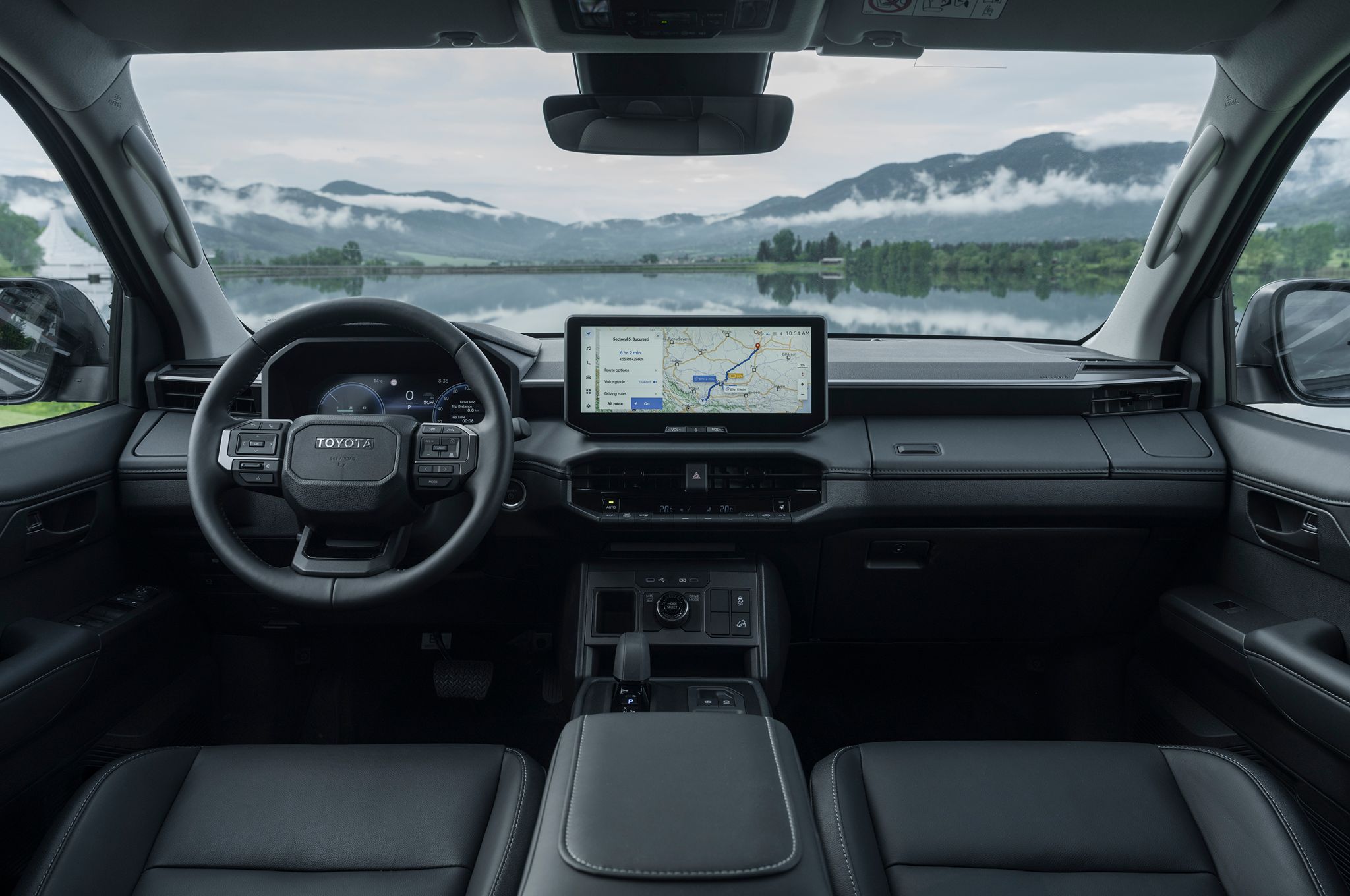
Old Hiluxes used to be more durable than luxurious. And that’s changed a bit. This is more like a modern Landcruiser than a builder’s van, so we’ve got better materials, nicer plastics and lots of screens.
You get a 12.3-inch digital driver display alongside a 12.3-inch central touchscreen, and thankfully Toyota still believes in physical controls for important functions. That means you won’t need the precision of a neurosurgeon just to adjust the cabin temperature while bouncing across a quarry.
Storage is still a major priority. Big door bins, useful cubbies and clever practical touches remain because this is still supposed to be a workhorse first and foremost. Toyota knows many Hilux cabins double as mobile offices, canteens and emergency storage lockers for random screws and bits of power tools.
So generally, the interior gets a big thumbs up from me.
Motors, performance and handling
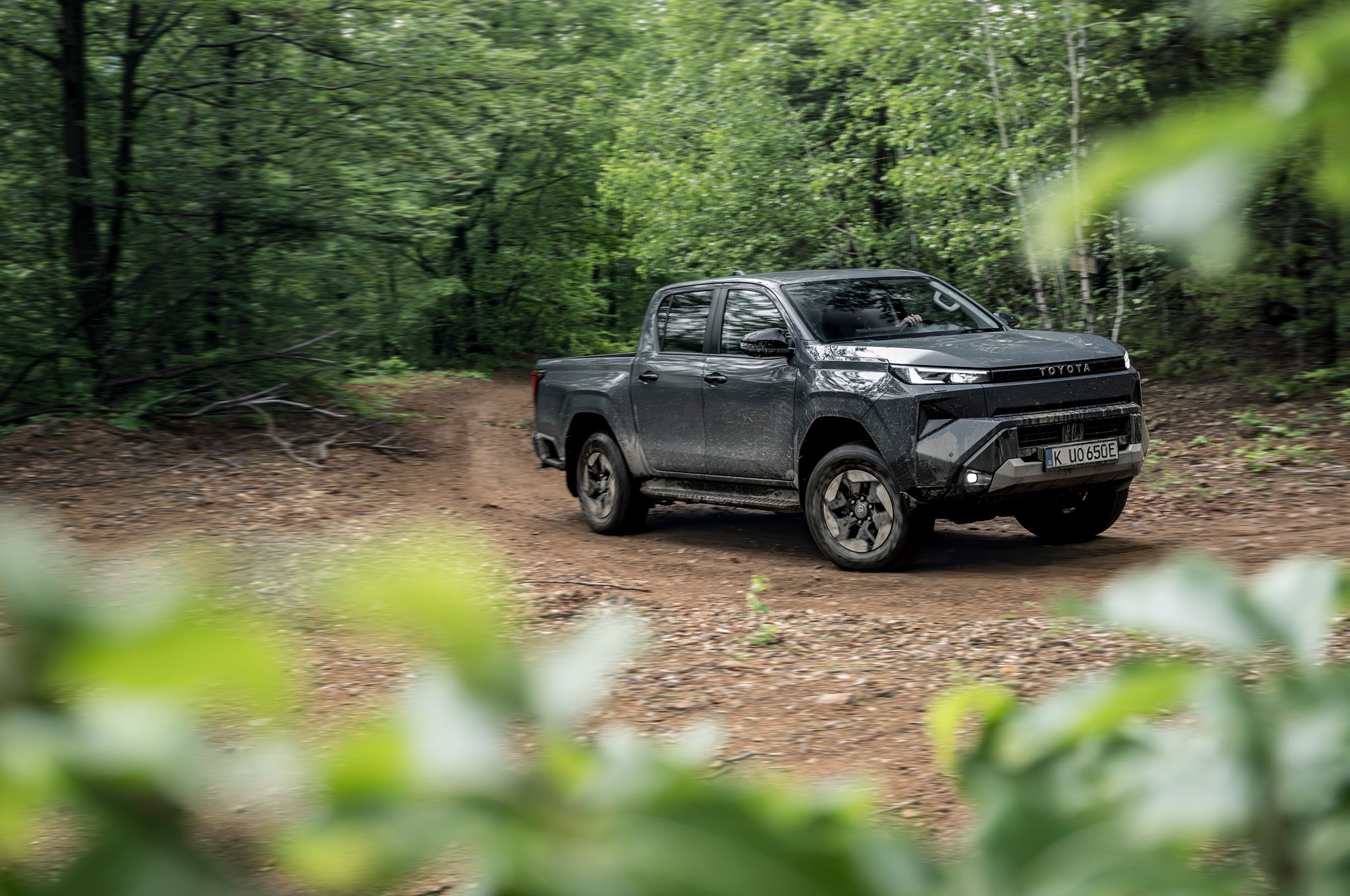
The Hilux has 200-horsepower and just under 350lb ft of torque, plus infinitely adjustable electric traction control for the all-wheel drive. It’s not fast at 9.9 seconds to 62mph and a top speed of 86mph, but that’s not what a Hilux is famous for.
With the battery pack underneath and protected, the electric Hilux should be as good - if not better than - the combustion-powered versions off-road.
First, you need to play with the buttons to reveal modes. There’s the standard stuff for on-road driving - Eco, Normal and Sport. But there’s also the MTS or Multi-Terrain System. Now that’s a set of electronics that senses what surface you’re on, and adjusts the power delivery and traction control accordingly - a cheat code for off-road.
You can still do specific settings like Rock, Sand, Dirt, Mogul and Mud, but the MTS should, in theory, be able to sort all that out for you. By the way ‘Mogul’ you may not have seen before, but that’s for places where you might get cross-axled - big offset lumps - so it manages the traction so you don’t get stuck. Clever stuff!
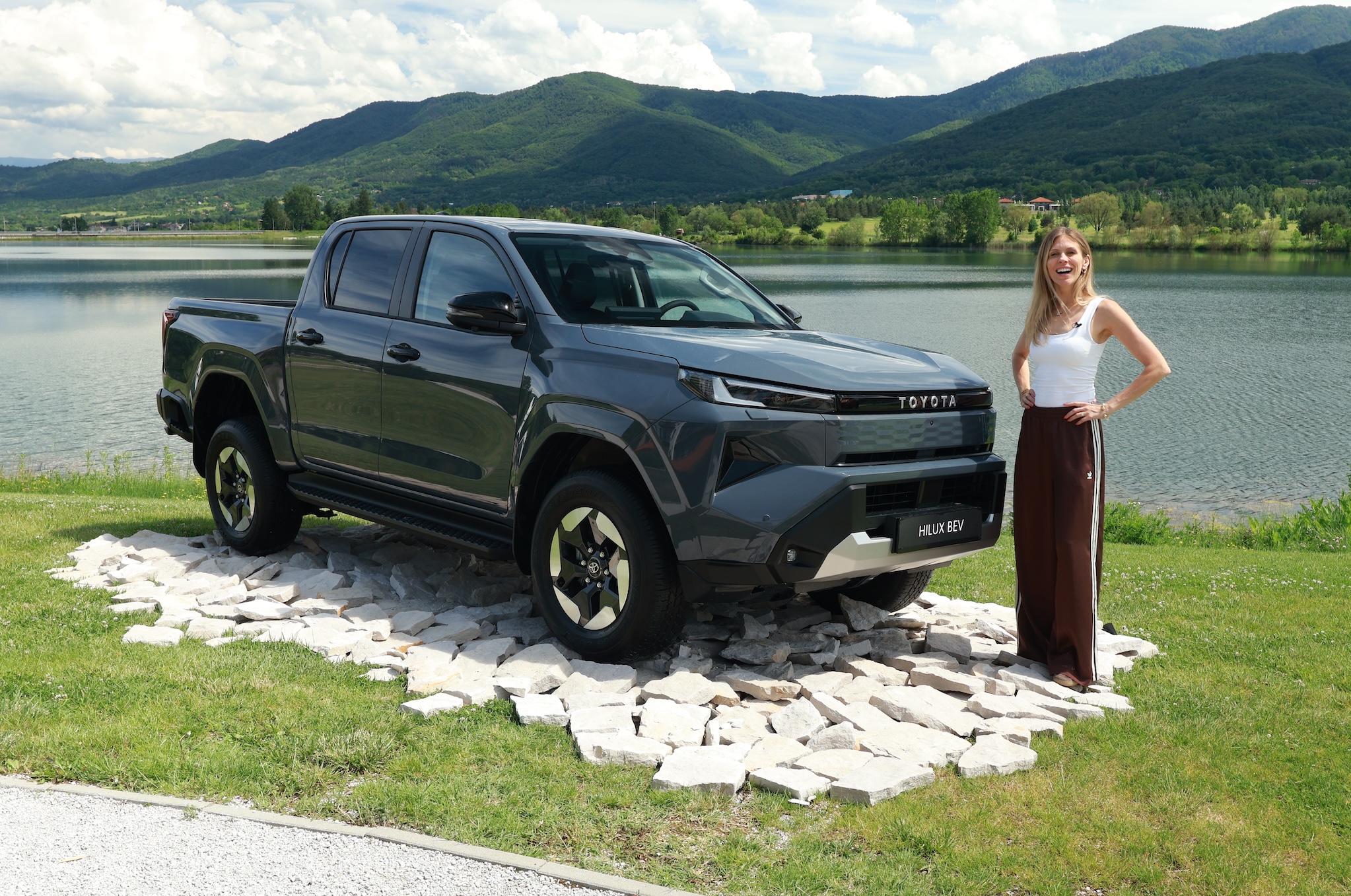
And it all works brilliantly well - the Hilux is virtually unstoppable off road, with instant torque and control for descending hill and reacting to wheel slip which is better than the diesel.
On the road it’s compromised. It’s more refined than a diesel for sure, but despite the extra weight the ride feels bouncy until you are up to speed. It has a lower centre of gravity than the diesel which means it feels stable in corners, but the power steering needs a lot of twirling compared to a normal passenger car, which can become tiresome.
But that’s nothing compared to the safety systems. Manufacturers finally seem to be getting the hang of making ADAS tech work so that it doesn’t irritate and annoy if it thinks you have broken a speed limit or changed lanes without indicating. But sadly, Toyota doesn’t seem to be one of them. The bleeps and bongs are so irritating and poorly calibrated that we turned them off as soon as we got in the cab.
Running costs and pricing
Take a deep breath. The Hilux BEV starts at £57,845, significantly more than the mild-hybrid diesel version. Most buyers are expected to plump for the £60,695 Invincible version that adds some more equipment. That means buyers will need strong business-case maths or tax incentives to justify the jump - it’ll have to make sense for your specific business.
But you can still buy a 48-volt hybrid diesel Hilux - so it’s not an either or scenario. That tells you something important. Even Toyota doesn’t believe one powertrain fits everybody - yet.
To be registered as a commercial vehicle in the UK and get the tax back, the Hilux BEV’s payload would need 1,000kg. But, under the latest rules, the fact that it’s a dual-cab rules it out anyway. So HMRC thinks this is a car and will tax it as such. That’s good news if you are comparing it to a diesel double cab as the BIK will be much less, but its not as efficient as having a zero emission commercial vehicle.
But for businesses operating in cities, emissions-controlled zones and predictable daily routes, the Hilux BEV could make sense.
Verdict
There’s something deeply fascinating about the electric Hilux. Lower running costs, quieter operation and zero tailpipe emissions wrapped inside one of the most trusted pickup names ever.
It’s just a Hilux with an electric powertrain, which means it has some great qualities - but some big restrictions. Will hardcore towing enthusiasts stick with diesel? Almost certainly. Will rural buyers in remote areas remain sceptical? Probably. But it will no doubt find its place in the market among businesses who need off road ability but are never far from a charger. Toyota reckon there are enough of them to make business sense.
 8
8