





 Battery size: 50 - 51 kWh
 Miles per kWh: 4.64
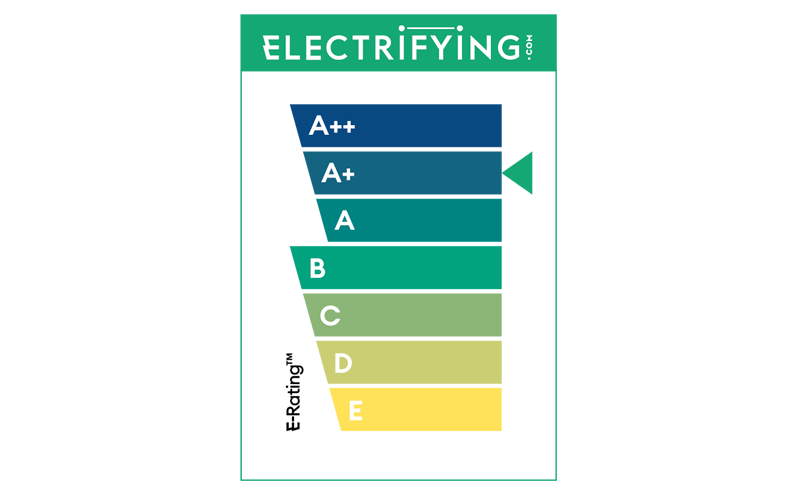
 E-Rating™: A+
 Max charge rate: 100 kW
 Range: 222 - 264 miles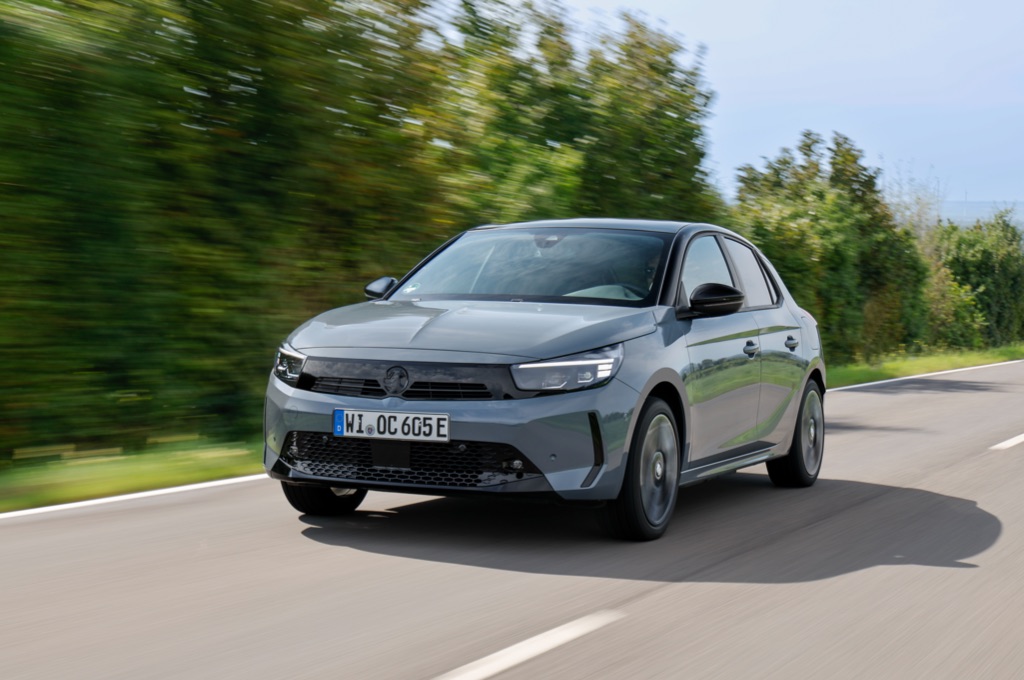




Intro/Background
The Corsa is one of the bestselling cars in Britain, around 2.1 million of us drive one. Vauxhall knows that to keep that status, the Corsa needs to move with the times. That means going electric. And it has! But will it be held back by its combustion car underpinnings?
Gone is the diesel option but you can still buy a petrol or hybrid version too. The 100% electric option has been added just as though it were one of those powertrains.
The Corsa has also had an update to its battery pack – older models came with 46.3kWh of usable battery capacity, but since 2025 the Corsa offers either 50kWh or 51kWh of capacity.
That’s good enough for an official range of 220 miles with the older 50kWh version or 264 miles from the more efficient 51kWh model, but more on that later. Once the battery is exhausted you can ‘fill up’ faster by using the new upgraded 11kW AC or 100kW DC charging.
If the Corsa’s handsome looks and specs seem eerily familiar to you, that could be because it shares the same platform as Peugeot’s offering, the e-208. And thankfully, while the Corsa Electric was originally only available in the top two trims, it now matches the Peugeot proposition and offers an electric choice on all three of its trim levels.
Is it worth it? The Corsa is a thoroughly competent hatchback packed with sophisticated technology and an impressive ability to drive long distances and then charge quickly. Those prices will cause a sharp intake of breath though, especially when compared to bigger rivals from Asia.
Range Battery Charging
In ideal conditions, the Corsa Electric should be able to go at least 200 miles on a single charge and has a maximum charging speed fast enough to keep stops reasonably short. Of course, if you are worried about long journeys, the larger battery is the choice for you.
The distance the Corsa Electric will drive depends largely on your mood and, by virtue, your choice of driving mode. If you know your journey will be short and there will be a charger at the other end of it, flicking the switch into Sport unlocks the motor’s full power but will knock the range down to somewhere between 150 and 170 miles.
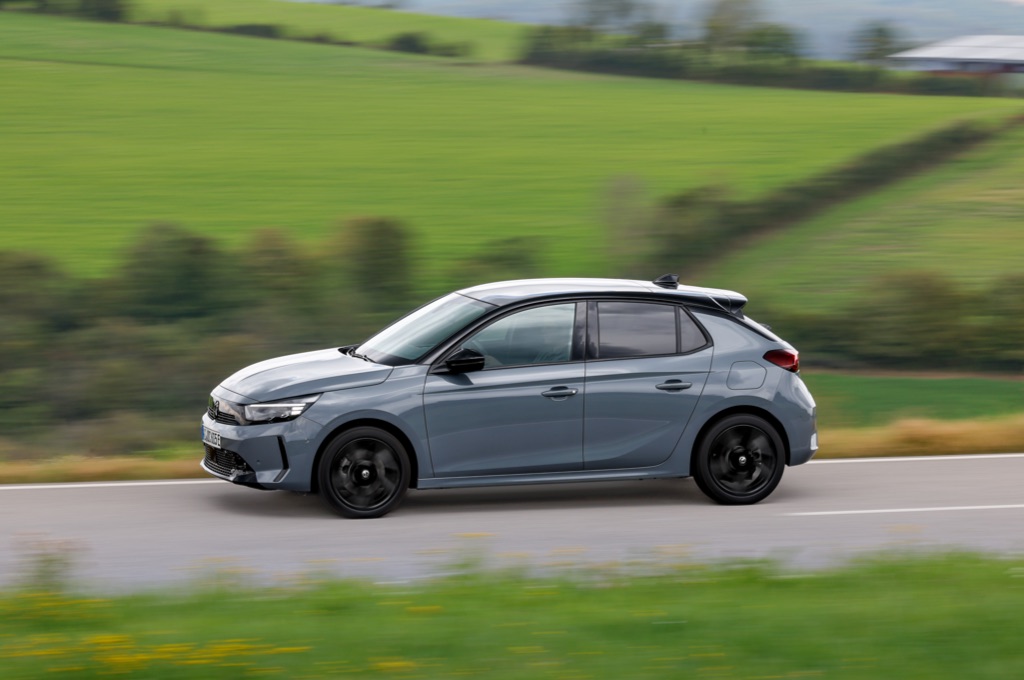
If you need to extract as much range from your battery as possible, or you’ve just forgotten to charge, Eco mode will be able to get you up to 250 miles of range if you’re gentle. That would make a journey from Yorkshire to Heathrow comfortably within reach.
Even the cheapest Corsa's battery is a generous 50kWh, which is about on par with rivals. For example, the Renault 5 E-Tech has a 52kWh battery, while a Citroen e-C3 has 44kWh and the MG4 EV has a 64kWh battery. The newer and more expensive versions use a new 51kWh pack mated to a more efficient motor, giving extra range.
As the Corsa Electric shares its bodyshell with a petrol version, the battery has been cleverly packaged to fit into the available space without eating into the room for passengers or luggage. The cells are split into two main sections under the front and rear seats with a few more linking them in the space usually occupied by the exhaust pipe.
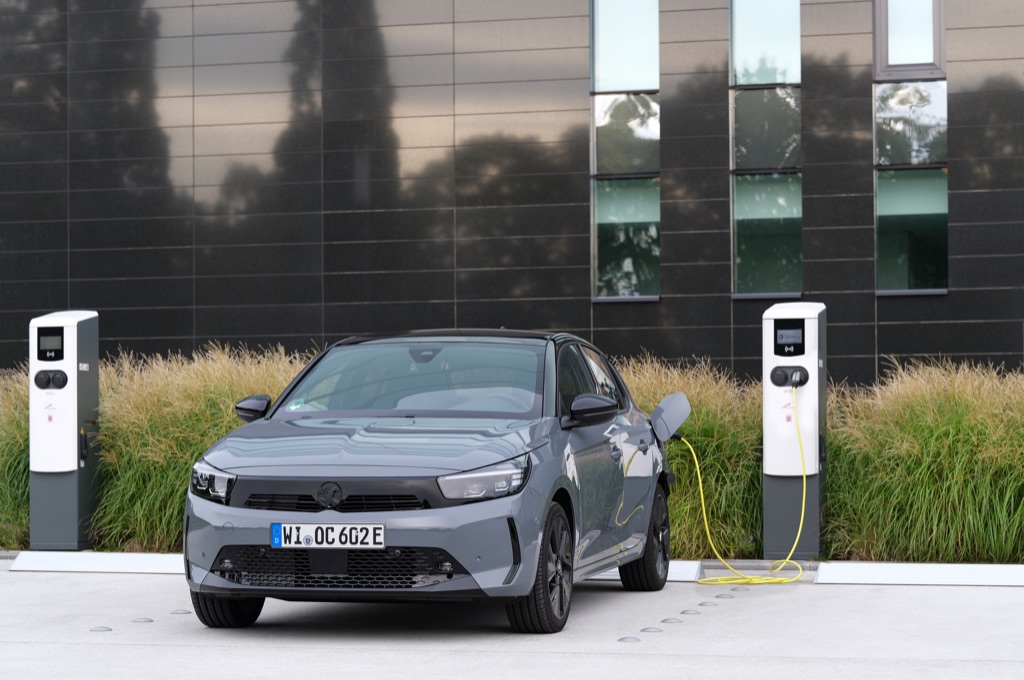
For those of us who don’t have access to chargers at home, the Corsa can rapid charge over CCS at up to 100kW, much faster than the 50kW speeds of EVs a generation before it. That means you can go from 20–80% in just half an hour, or from empty to full in an hour.
At home or work, the Corsa can also take an 11kW charge rather than the more standard 7kW which means if you plug into an 11kW on-street charger a full charge should take five hours. Plug in to a 7kW home wall box and it'll take seven hours 30 minutes.
Practicality and boot space
The Corsa is more spacious than you might expect for a small car and going electric doesn’t compromise that.
Since the electric motor is hidden under the bonnet and the batteries have been squeezed under the seats, the Corsa Electric has exactly the same space as the petrol variants.
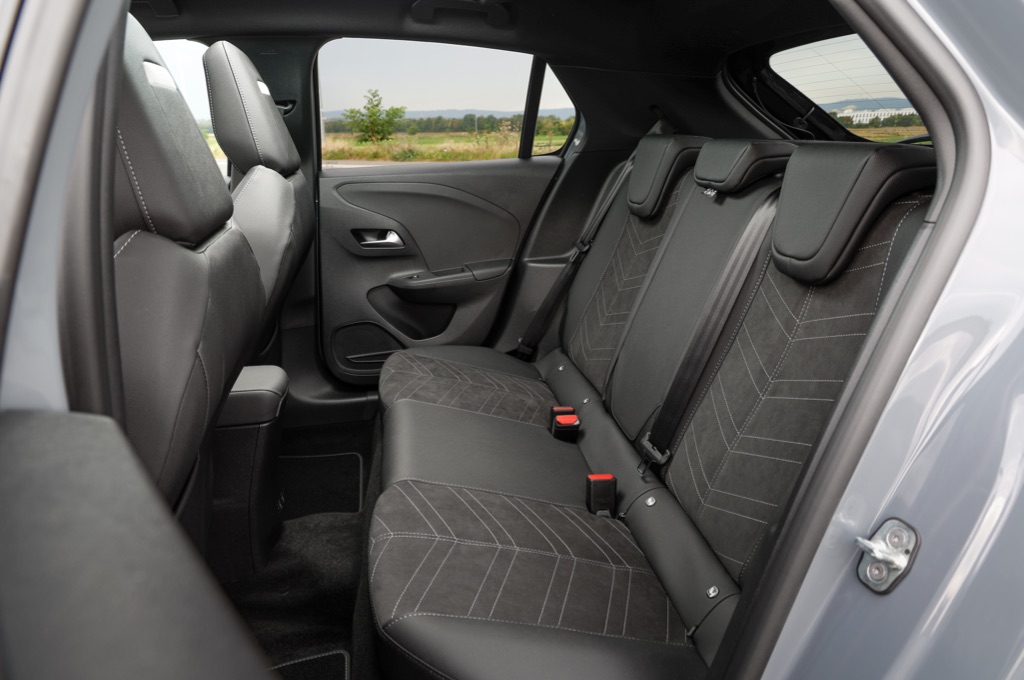
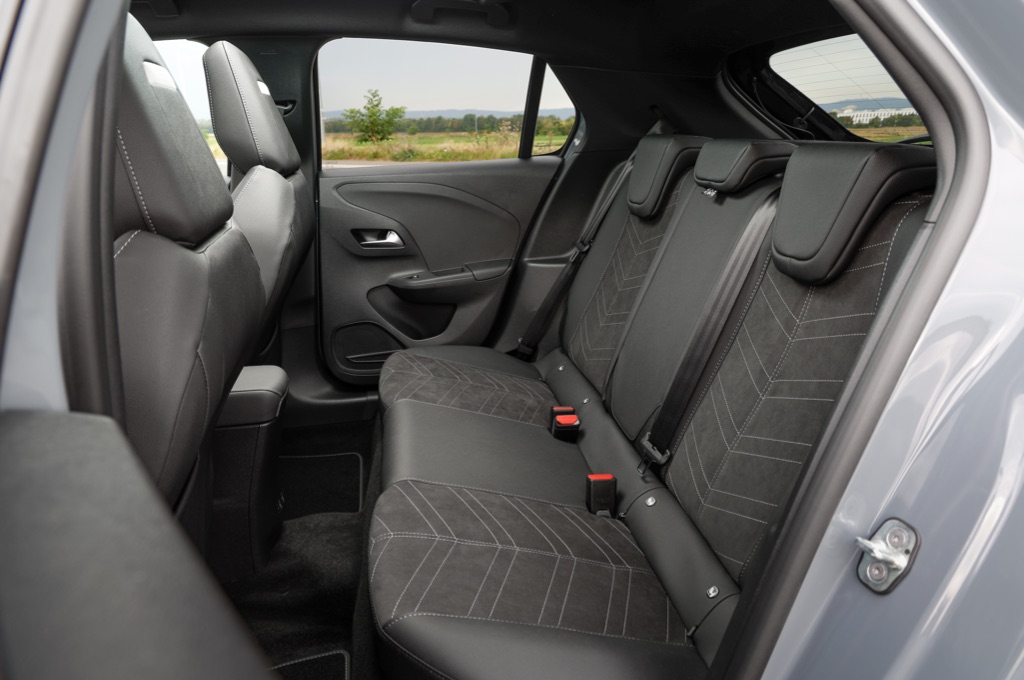
That means it has enough room for all but the tallest drivers in the front and just about enough for adults to be comfortable in the rear too, at least on shorter journeys.

There’s only a five-door option available, so it’s more practical than a Mini on the school run, but the Corsa sits quite low compared to cars like the Hyundai Inster. This makes it more aerodynamic but does mean the back seats can feel a bit cramped for lanky teenagers. The doors are quite small too, which means taller passengers have to fold themselves a little to get in.
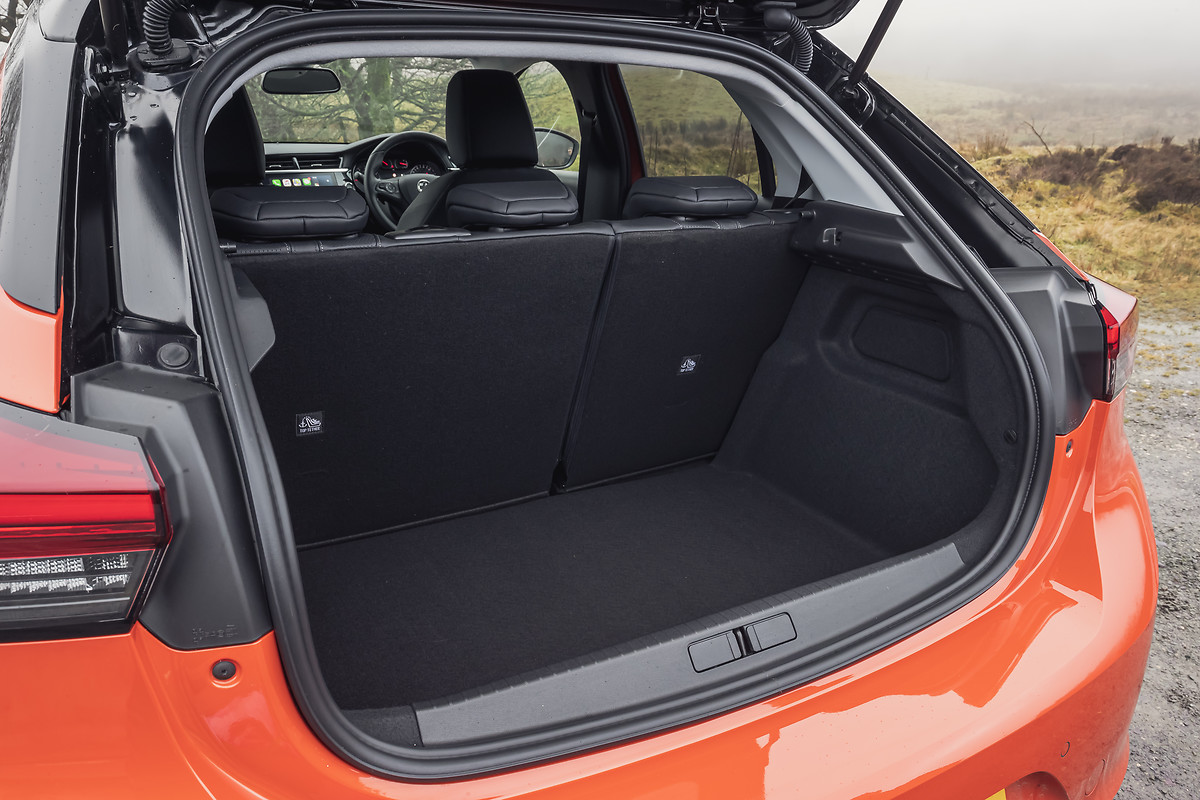
The 309-litre boot is bang on the average for a supermini of this type. A Renault 5 e-Tech is 326 litres for example, while a VW Polo’s is bigger at 350 litres. Fold the seats down for the trip to Ikea or B&Q and the Corsa’s available space expands to 1,118 litres. Oddly, these figures are marginally smaller than the Peugeot e-208 with which it shares its engineering.
Interior, design and technology
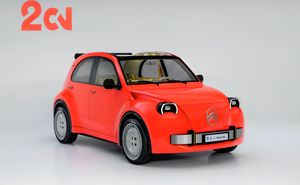
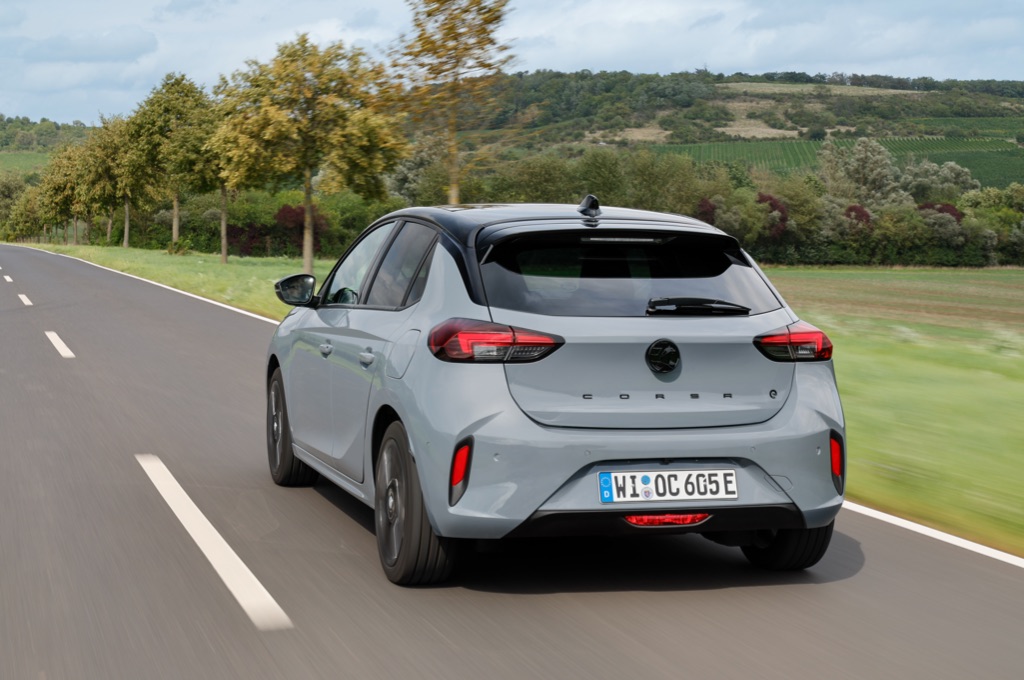
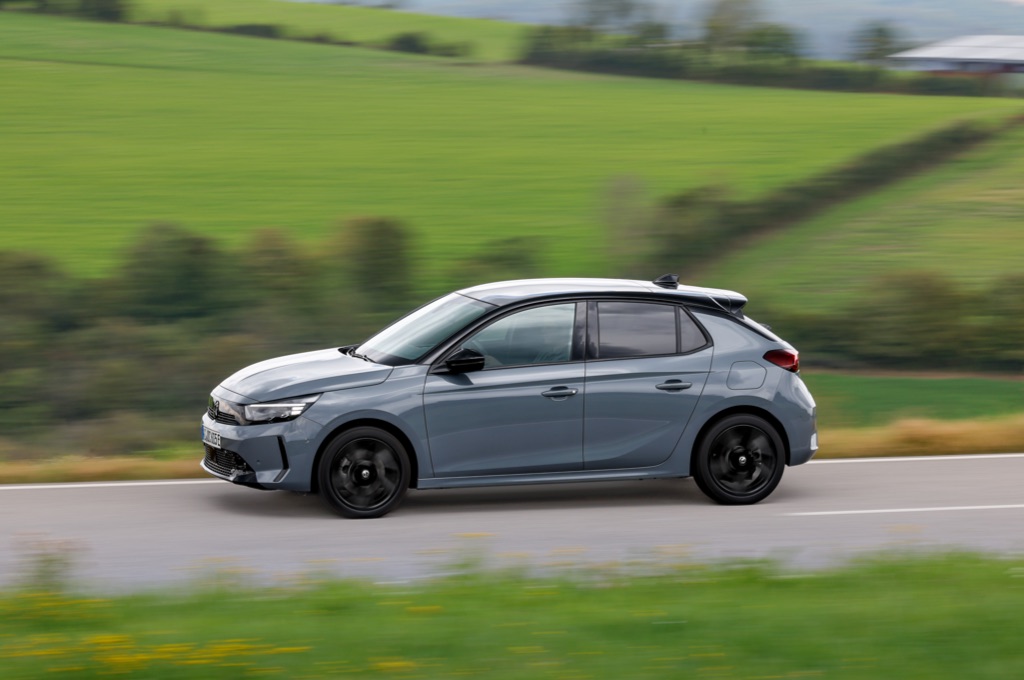
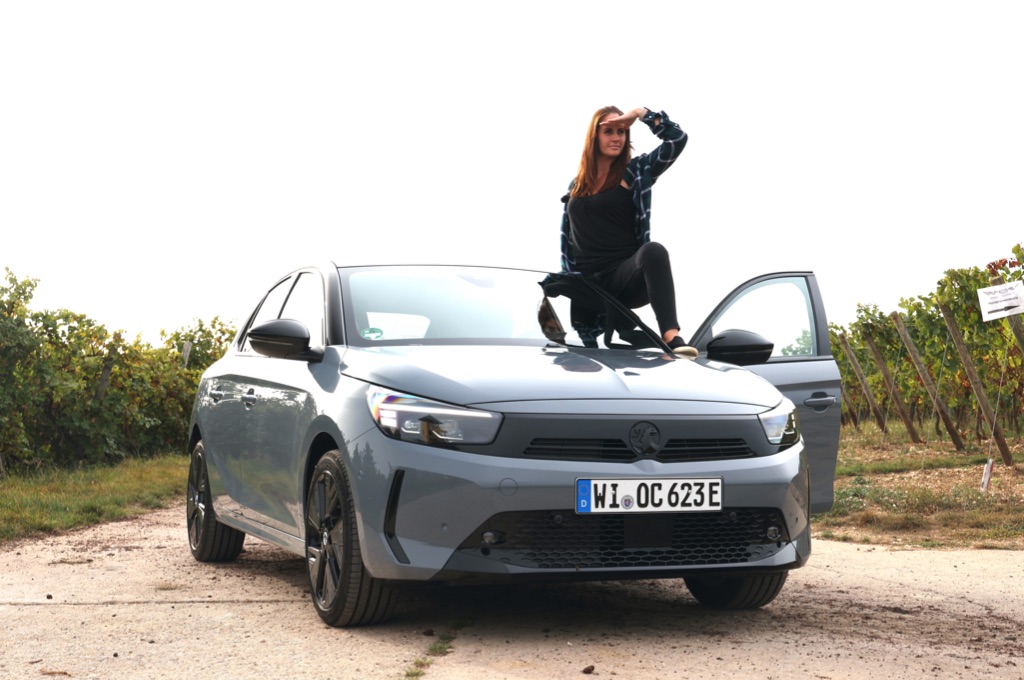
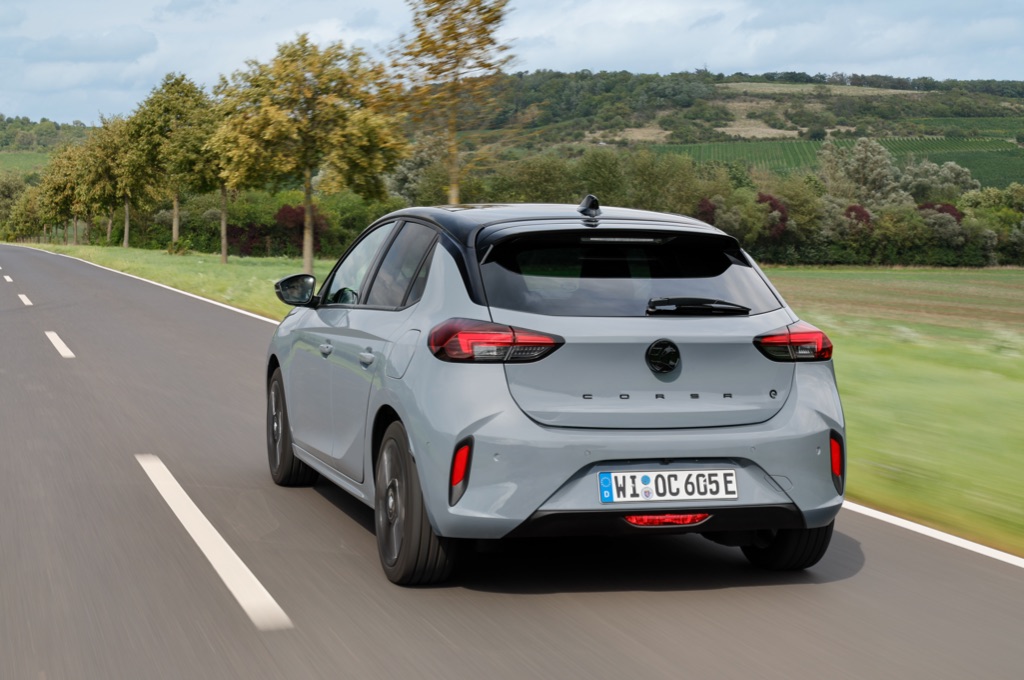
From the outside, the Corsa is a very good looking thing indeed, it strikes a fine balance between its rounded shape and its angular details, a small spoiler juts out from above the rear windscreen to give it a bit of a sportier look too. It’s not quite as handsome as its sabre-toothed cousin, the Peugeot e-208, but won’t get any complaints. That’s for sure.
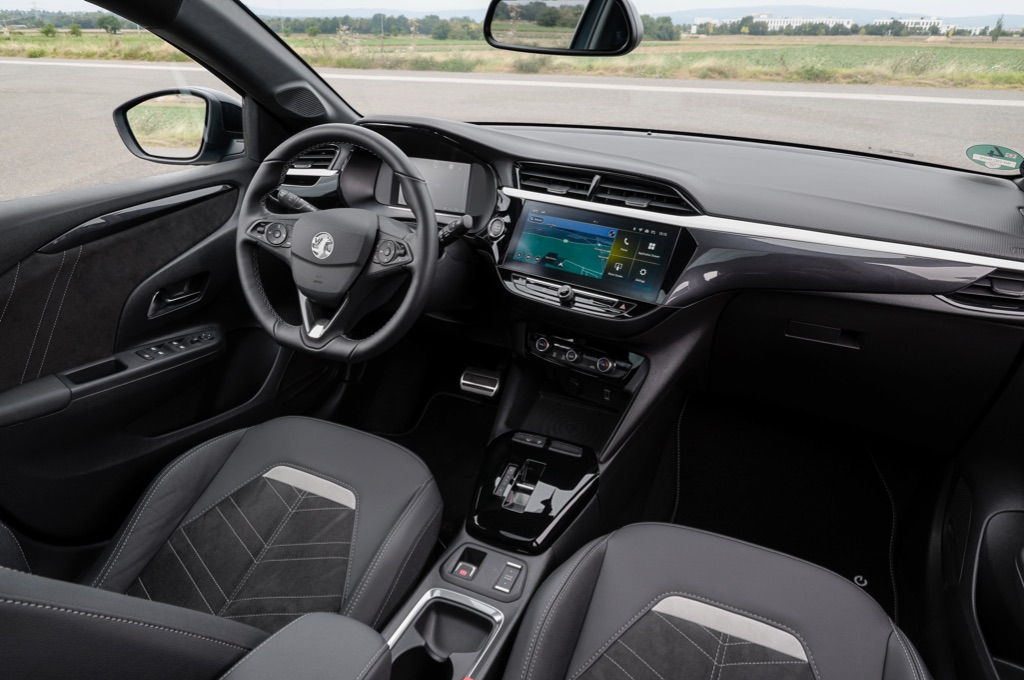
While in previous years, the Corsa-e was a high-spec car only, you can now go as low as the base Corsa Yes trim with either of the two available electric powertrains. The chances are you won’t even need to spring for the top trim Ultimate model because the Corsa comes with heated seats, a heated steering wheel, and the full complement of screens (7.0-inch digital dash, 10-inch central display) across the range!
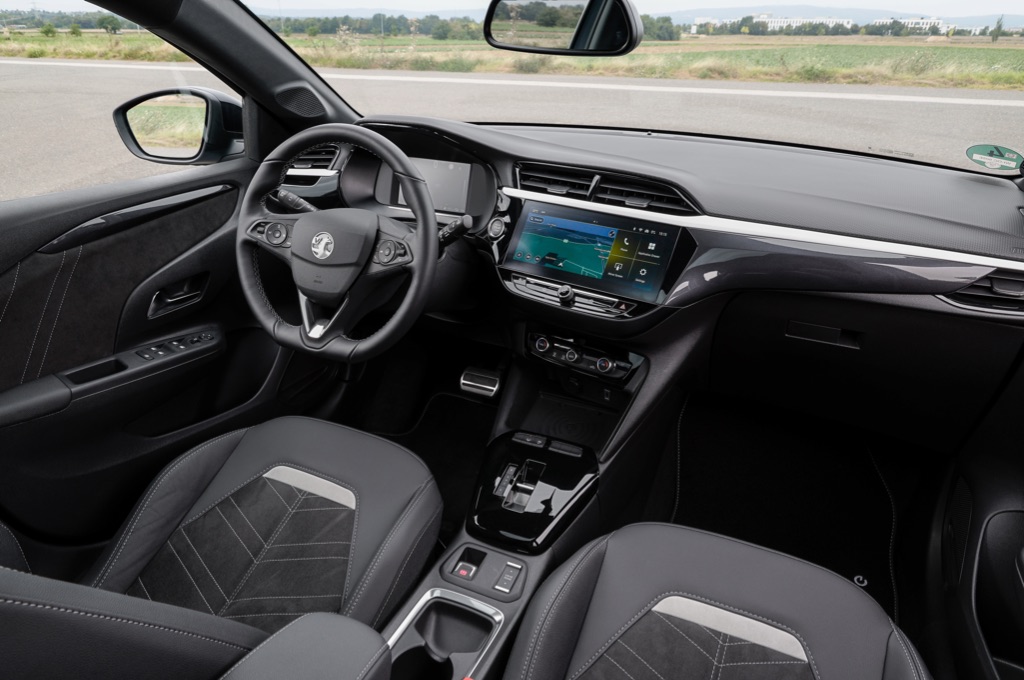
Treat yourself to the top Ultimate model and you’ll get keyless start and clever LED headlamps which adapt their beam pattern to give the best visibility while not dazzling other drivers. If you live in the countryside or drive on unlit motorways they make a real difference.
I must note that the current Corsa/e-208 platform is getting a little long in the tooth, the pre-facelift version of Corsa released all the way back in 2019 and while the exterior has been heavily updated since, inside, things are starting to feel a little out of date. The central display, for example, isn’t excessively slow but the graphics and interface feel very simplistic by current standards. Thankfully, the new Corsa is set to be unveiled in 2027, so this shouldn't be a problem for long.
The same can be said for the interior plastics, which feel a little light and hollow. Those of us who enjoy rapping a rhythm on the roof with their fingers will be surprised by the lack of sound-deadening up there as the panel rings out with each tap. There are numerous small details like this throughout the cabin which don’t sound like much in isolation but when combined, contribute to a sadly cheap feel.
The Corsa also uses an app to give access to navigation services and even allows you to unlock the doors remotely. If you’re letting your (older) kids use the car and are nervous about what they’ll get up to, you can even use a Digital Key to restrict when and where they can drive.
The Corsa is also packed with the latest safety kit. However, there must be some gnashing of teeth in the safety department at Vauxhall. The new Corsa missed out on getting a full five-star rating from Euro NCAP by just one point.
It doesn’t mean the car is less protective in an accident either, as the lost point was in the safety equipment category where the car is scored for its crash prevention technology. In the other three areas of assessment, including adult and child protection, it performed above the five-star level. Weirdly though, the score for adult occupant safety is lower than the structurally identical Peugeot e-208 (84% versus 91%).
That missed point for safety equipment must be doubly annoying, as the Corsa is packed with accident preventing gadgets. It has Lane Keep Assist which will actually gently nudge the car back into lane if the driver starts to wander across the road markings. Blind Spot Alert checks for cars which might be hidden from view and Forward Collision Alert uses radar to reduce the car’s speed to avoid collisions with vehicles, pedestrians, bikes and motorbikes.
Motors, performance and handling
The electric version is actually the fastest new Corsa you can buy – beating even the turbo petrol engines. And the gap is set to grow even wider when the 281hp GSE is unleashed in September.
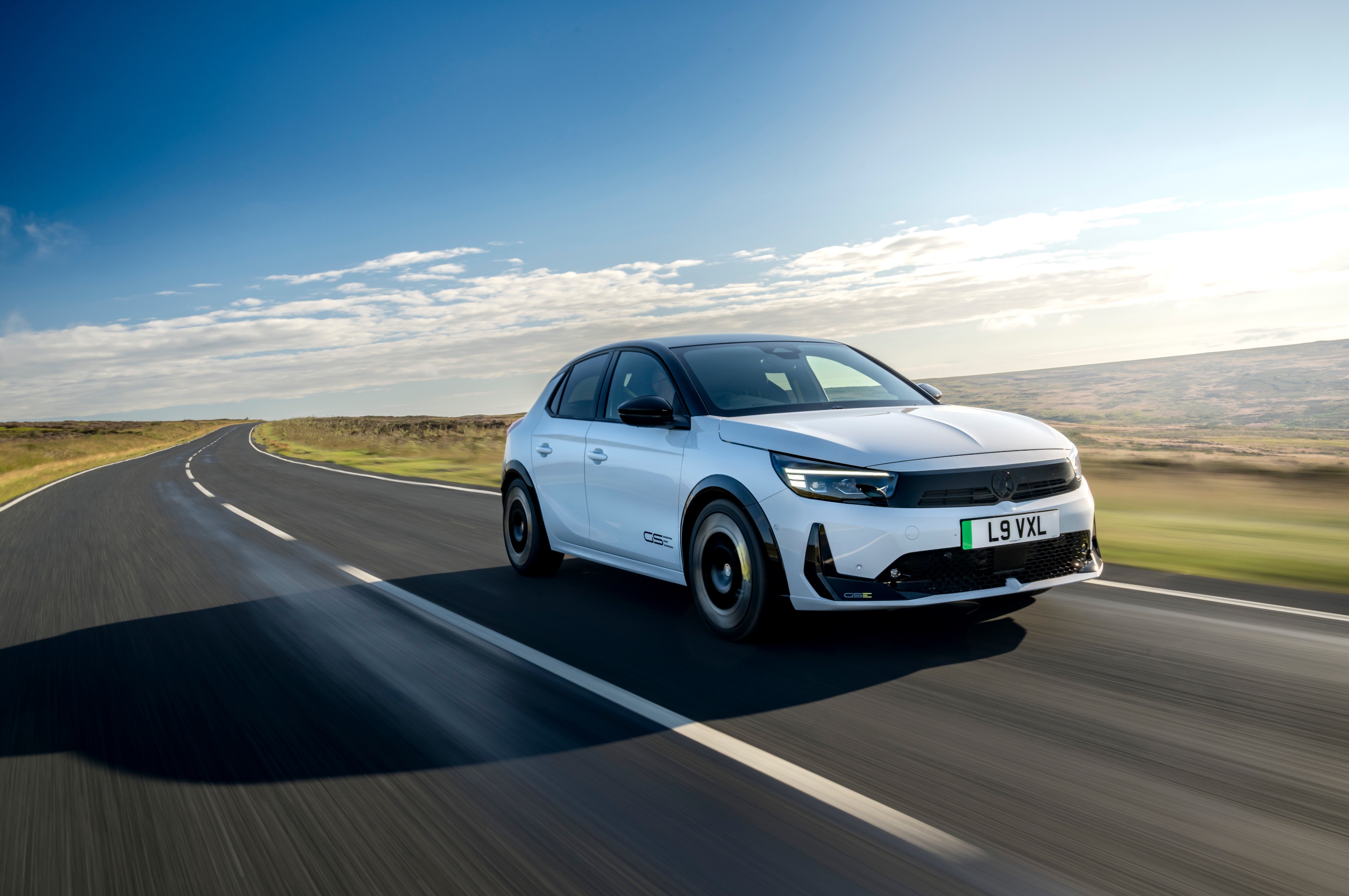
There's lots to like here. The Corsa Electric’s smooth, serene electric motor puts out a total of 134bhp with the older model or 154bhp with the upgraded powertrain. This is good enough to send it from 0–62mph in an adequate 8.2 seconds. That makes it the fastest new Corsa you can buy – beating even the turbo petrol engines. You’re left in little doubt when you floor the accelerator away from the line on a wet road, mind: the front wheels scrabble and spin alarmingly before the lazy traction control catches up. The wrong sort of electrifying.
There’s a reassuring amount of surge at all speeds, right up to the restricted 93mph top speed. A button next to the oddly-shaped gearshifter lets you choose one of three modes – normal, eco or sport. All give different power outputs. The default is normal, where you have 107bhp. Eco cuts it back further, to just 80bhp. Only sport gives you the full 134bhp.
The idea is to let people conserve the battery’s power – the response of the accelerator pedal even changes (it’s super lazy in Eco mode, for example). Vauxhall doesn’t overcomplicate things though. There are no steering wheel paddles to alter how strongly it slows down when you lift the accelerator, for example. The only regen option is pulling the gearshifter back from D into the B setting. It’s just enough to be useful, without jarring necks when you take your foot off the accelerator.
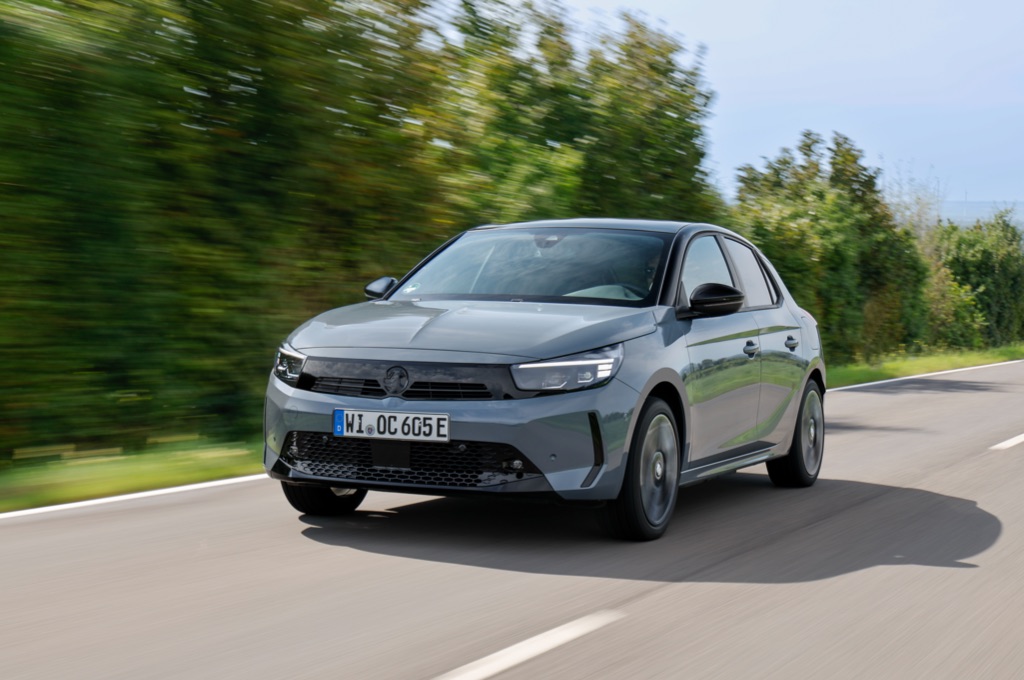
The Corsa is a grown-up car with a big car feel. The suspension is firm, which can make it a bit jittery on city streets, but it comes into its own once you start to gather speed. It gives the driver lots of confidence, particularly in the way it tackles corners: the batteries are mounted nice and low, so it doesn’t lean over in bends, and feels nicely planted.
Like most electric cars, it’s a fair bit heavier than a regular Corsa (not that you’d know it from the performance). The benefit of this is how it seems to soak up bigger bumps nicely. It rarely becomes crashy or harsh, which again bolsters its miniaturised big car credentials.
The Corsa Electric is more refined than a normal version, and feels suitably more sophisticated (whether it’s enough to justify the price hike over a regular Corsa is another matter…). Perhaps the most impressive aspect, though, is exactly how normal it all is. This is an electric car without the fuss or fanfare. It’s just like any other automatic Corsa. Just one that’s nicer to drive than any Corsa before it.
Running costs and pricing
The Corsa Electric's list price is enough to make some buyers wince, but it looks more palatable on finance deal rates and once you start adding up the total cost of ownership.
At launch we criticised the electric Corsa for being a very expensive car. Since then, the price has fluctuated wildly but has since settled down to £33,720 for the maxed out 51kWh Corsa Ultimate I had on test for this review.
If you’d rather not tick every option box available, the cheapest Corsa Electric you can buy is the 50kWh Yes trim at £27,505. Though the sweet spot is probably the Yes with the updated 51kWh battery – that will cost you £28,900.
Vauxhall and its dealers are experts in making new cars affordable, so it’s worth doing some research and calling a few showrooms to see what current lease deals are available, PCPs and PCH. There have also been a couple of special editions which throw in extra equipment.
Without those deals though, there's no doubt the Corsa Electric looks pricey. You’re talking about a £33,720 Ultimate, and there are a lot of very good cars near that price. The Renault 5 may be a smaller car with reduced rear legroom, but it’s a much newer platform with a superior fit and finish, and better efficiency. Even the very top end Roland Garros trim can be had for just £26,945 in the UK. If you don't fancy that, the Hyundai Kona electric starts from £31,250 and the Jeep Avenger starts at £33,599.
A Vauxhall Corsa has always been one of the cheapest cars to run, and the electric version makes it even more affordable – once you’ve taken the initial purchase price into account.
First the fuel costs: plug in at home, where you’re paying the average amount of about 26.1p per kWh and a Corsa Electric will cost about £12 to charge. That should be good for 200 miles, which works out to about a half the cost of a petrol car which is managing about 50mpg. Multiply that over a year and 10,000 miles and it’s a £400 saving.

As Vauxhall is heavily geared to fleet customers, servicing and insurance rates tend to be cheaper than most rivals and the Corsa Electric will need less attention at the workshop than a conventional petrol or diesel.
Talking of fleets, like many EVs, having a Corsa Electric as a company car will make huge sense. You’d pay just 2% benefit in kind tax. The trouble is, you'll be taxed on that high list price, so you'll pay more than rivals. If you’d like to get a better idea of the benefit in kind tax you’ll pay on any electric company car, check out our handy guide.
Verdict
Overall then, the Corsa Electric started out as an expensive car at launch. Since then, mercifully, the price has fallen at the top end, and the opening up of the electric powertrain to lower trims has made the Corsa Electric more accessible than ever before.
However, with rivals coming in both less expensive and with better build quality, the Corsa Electric is still a difficult option to justify in the current market. The spec sheet looks strong, with competitive range and charging, and strong mod cons. But when you’re sitting in one, the Corsa Electric really begins to show its age.
If you can find a cheap finance deal that sits within your budget then, we’d recommend giving it a go. But, if you’re lucky enough to be buying your next car outright, there are much better options out there.
 8
8