





 Battery size: 110 kWh (106kWh est. usable)
 Range: 343 - 367 miles
 Max charge rate: 540kW



Introduction - Xpeng G9L
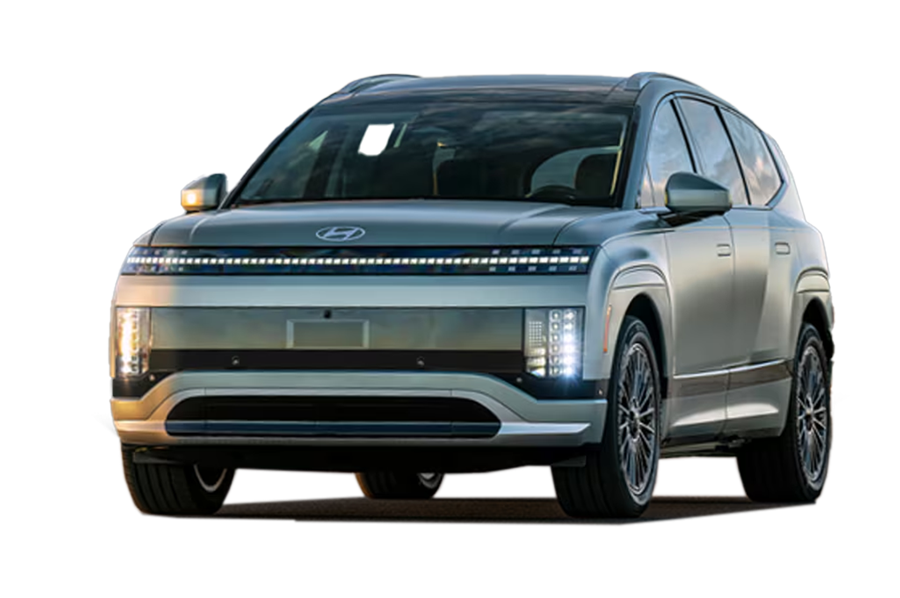
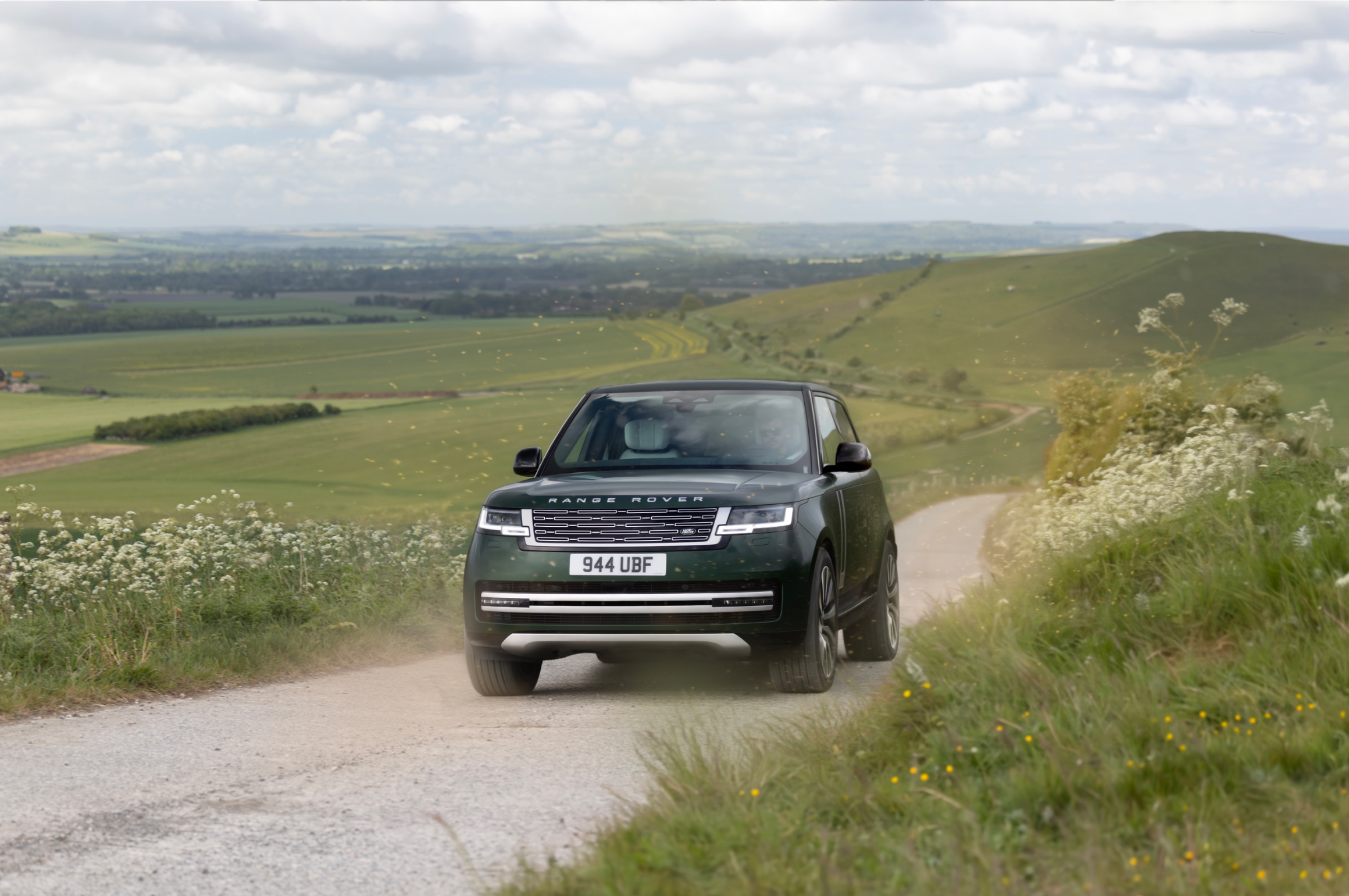
The Xpeng G9L is a large, six- or seven-seat electric SUV that claims to offer more tech, equipment and safety than just about anything it competes with, including the Kia EV9 and Hyundai Ioniq 9, and even the electric Range Rover and Range Rover Sport if you overlook the fact that they cost almost twice as much.
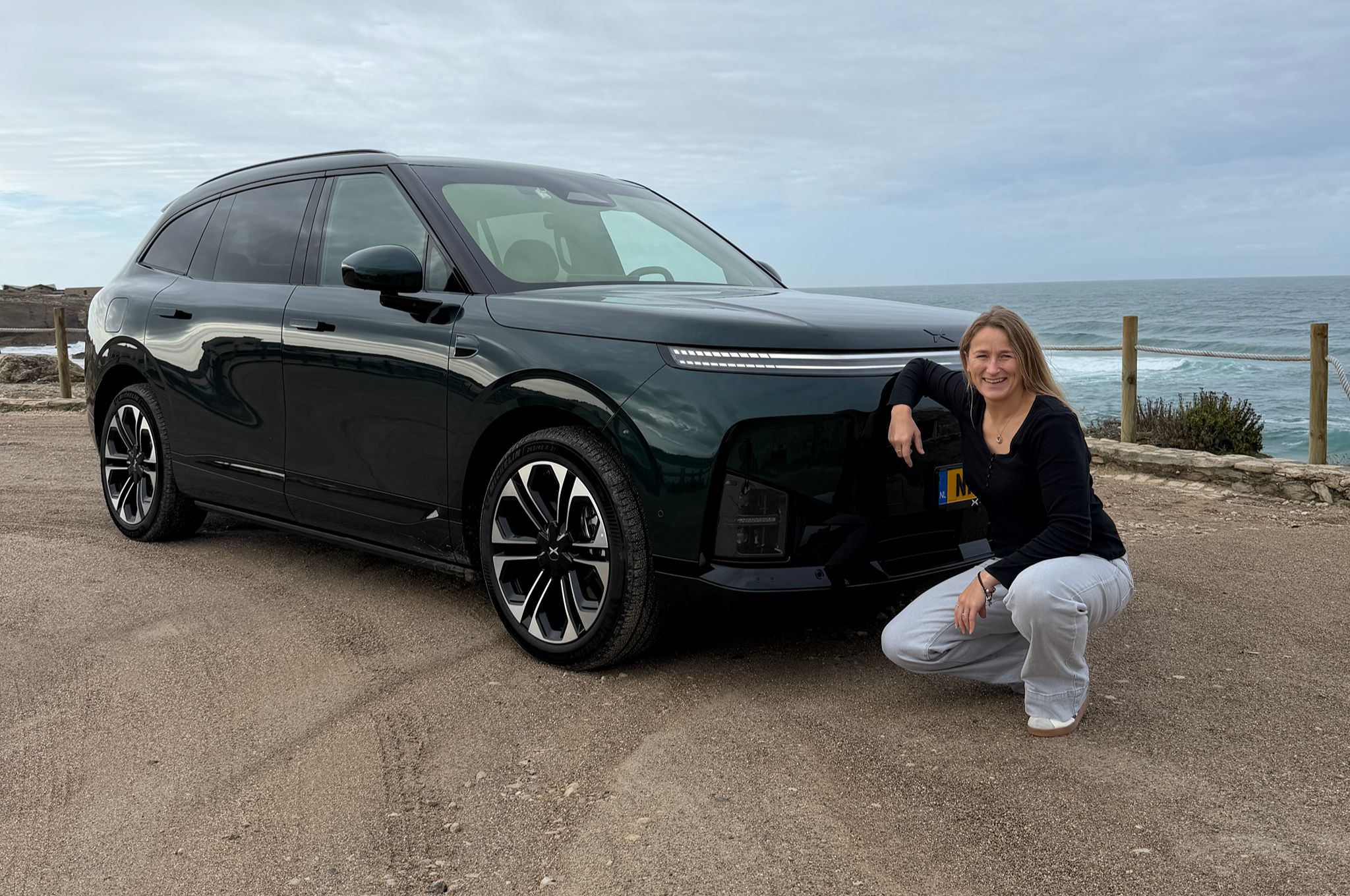
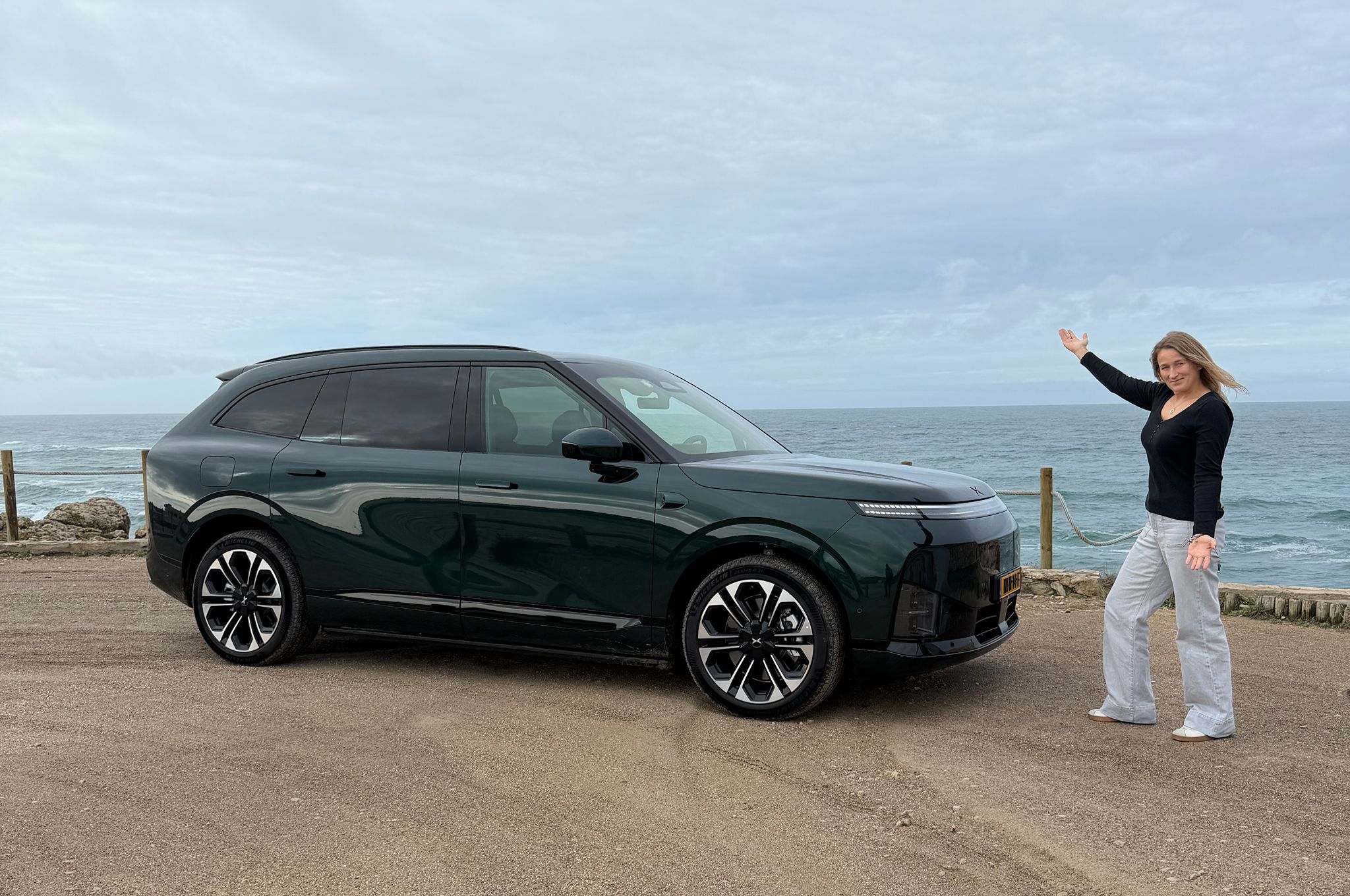
And when I say that the Xpeng G9L is large, I mean… really large. Bigger than the Kia EV9, sort of large. The G9L measures 5.12m long, 2.0m wide excluding the mirrors and 1.79m tall, but it’s that width that you feel on the road. Xpeng hasn’t stated width including mirrors and sadly I forgot my tape measure when I went out to Portugal (you think I’m joking, but I have been known to whip out a tape measure on a car launch…), but it’s that width, rather than the length of the car, that you’ll be most aware of.
Having said that, the G9L comes with cameras absolutely everywhere, as well as four-wheel steering as standard, so it’s far more manoeuvrable and easier to judge in a tight spot than you might expect. More on that in the driving bit of this review further down.
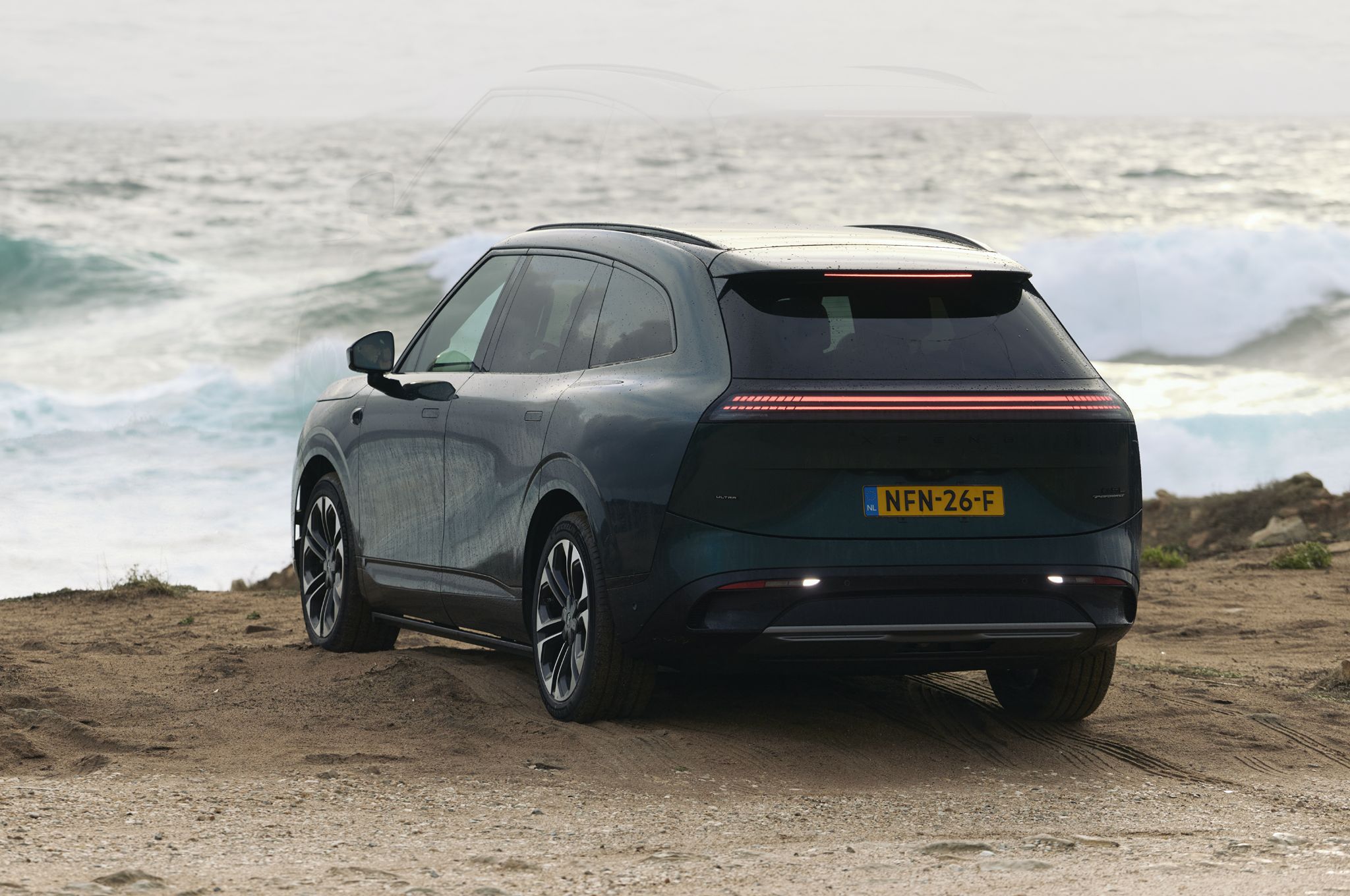
What do you think of the way the Xpeng looks? The Chinese manufacturer describes the G9L as having an ‘emotional robot face’, which I particularly like. Overall, I think it looks clean and modern but a bit derivative of lots of other SUVs – and are we all a bit bored of the smooth panel surfacing and full-width LED light bar design combo, now? I think I might be. There are definite echoes of Range Rover to the bonnet-line of the G9L, although the rear of the car looks more distinctive.
The metallic green of our test car is particularly lovely in direct sunlight and is one of few options that you can add, costing £950 over the standard white paint finish.
Range, battery and charging
The Xpeng G9L comes with a 110kWh NMC battery, and while Xpeng doesn’t state usable capacity (which is the battery capacity that you can actually charge and discharge), we’d estimate it to be around 106kWh.
That delivers a WLTP range of up to 367 miles (591km) in the rear-wheel drive G9L, while the all-wheel drive Performance model that I drove out in Portugal manages 343 miles (552km). That’s all very competitive with the Hyundai Ioniq 9 and Range Rover Electric, and is a little better than the range you get in the Kia EV9. If you don’t mind having your luxury electric seven-seater in van shape rather than SUV shape, you can get longer range in the Mercedes VLE – which is actually quite close to the G9L in terms of the luxury and space that it offers.
Charging on the G9L is as good as it gets. The 800V 5C charging system offers ultra-rapid charging speeds of up to 540kW, and if you can find a charging station that supports those speeds then the G9L is capable of a 10-80% charge in under 12 minutes. However, chargers that can support these speeds or virtually non-existent in the UK right now, but if you plug into one of the 350kW chargers that feature in most motorway services you’ll still get a 10-80% charge in roughly 20 minutes, or a 100 mile top-up in under 10 minutes.
The Xpeng G9L also supports 22kW AC charging as standard, which is useful for making the most of three-phase kerbside and destination chargers. A full charge on a standard 7kW home charger will take around 17 hours.
You also get vehicle-to-load (V2L) charging, with a domestic socket in the rear seat space so that you can power any of your electrical devices from the car’s high voltage battery.
Practicality and boot space
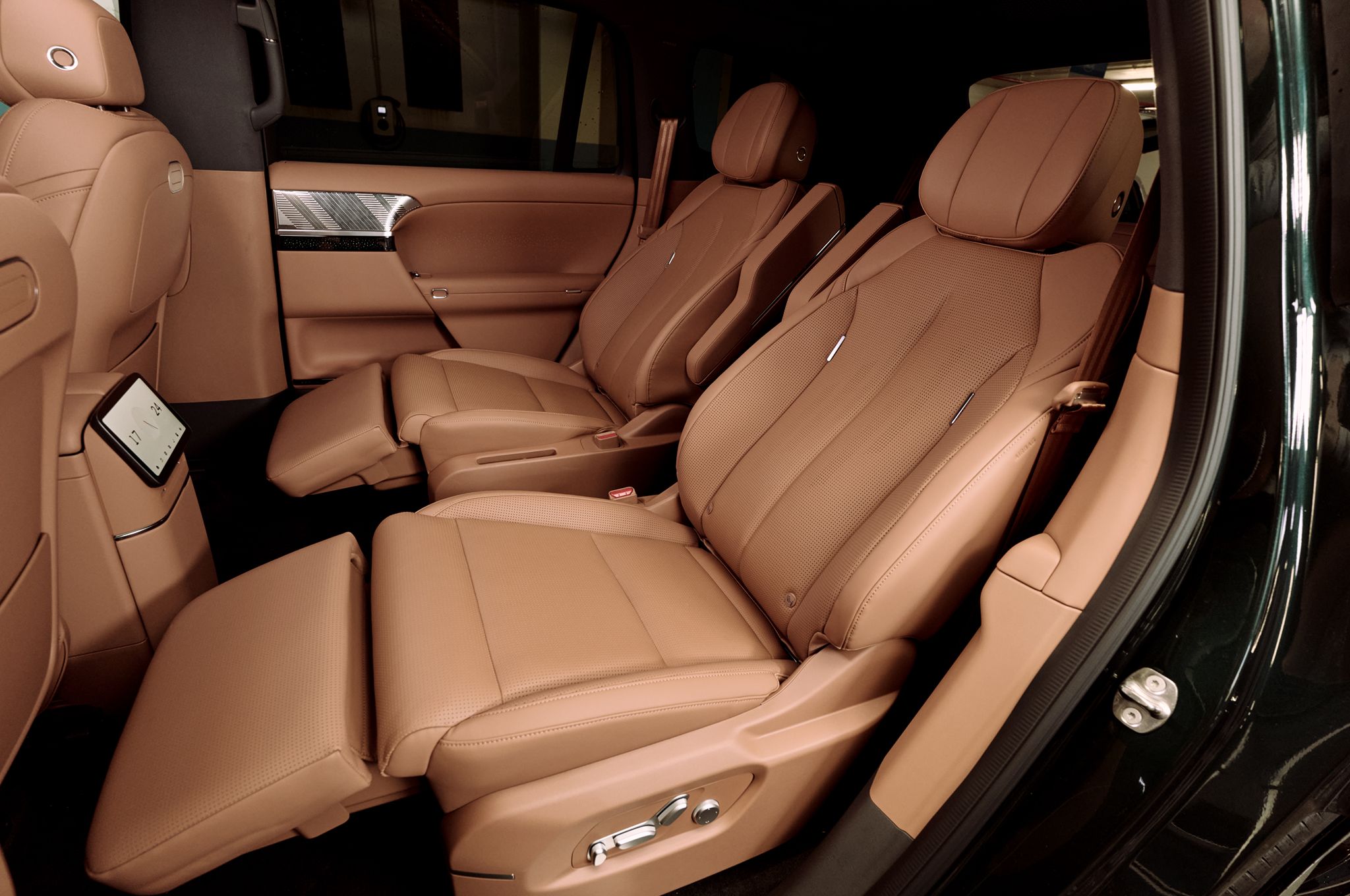
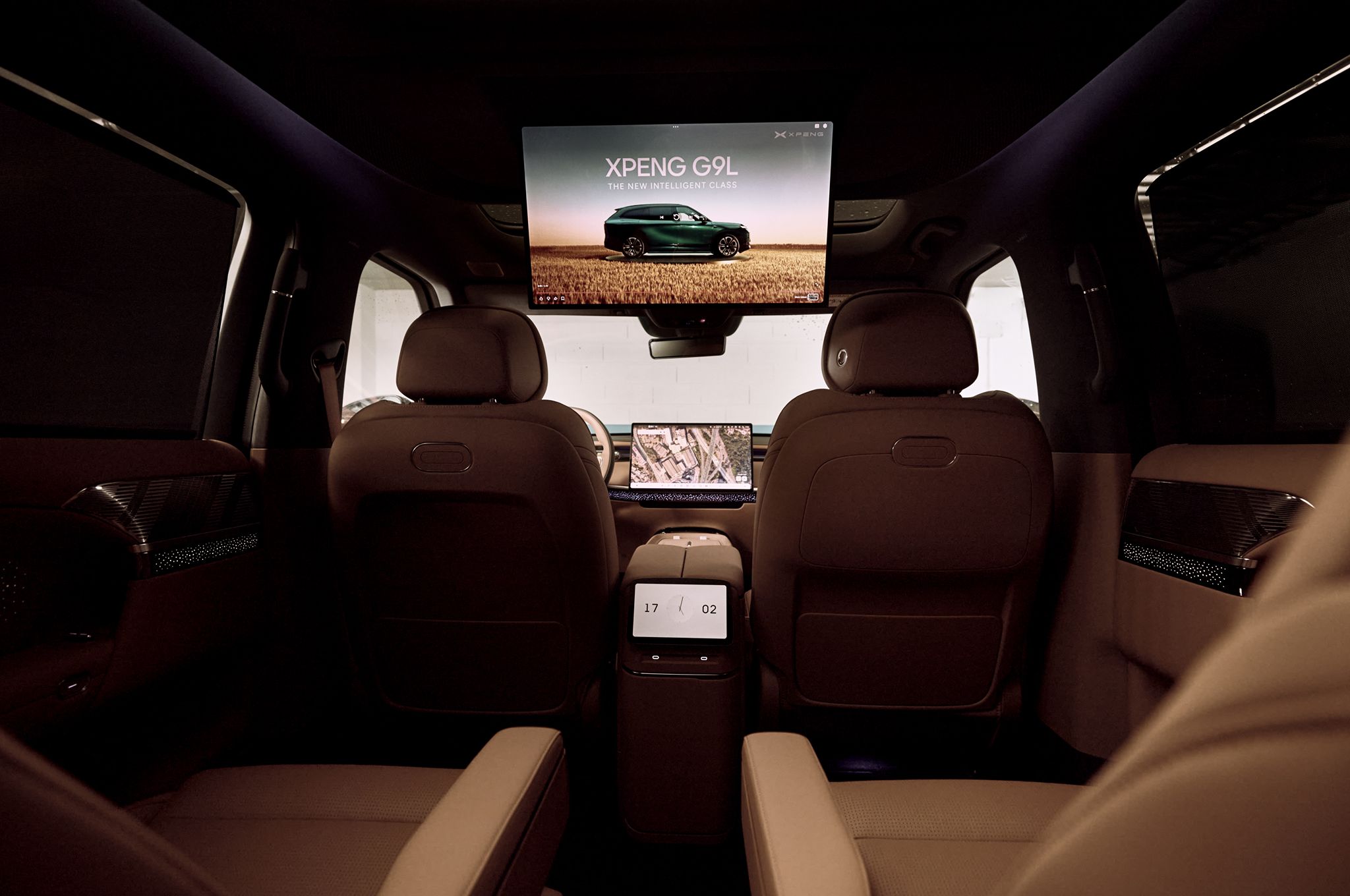
The Xpeng G9L is available with a six- or seven-seat layout - and there are rumours of a five-seat version coming to the UK, but no confirmation as yet. Most buyers in the UK will go for the seven-seat setup, which has a conventional three-person bench in the middle complete with heated seats, charging ports and a centre armrest. The six-person layout is a £5,000 option, and gets two reclining executive chairs in the centre, which are heated, cooled and have a massage function, not to mention a huge television screen that drops down from the car’s roof so that you can Netflix and chill while you’re on the road. Nice.
Up front you do, of course, get a massage seat as well as heated and cooled seats, and the seats will even automatically sense your body shape and size and adjust to a position it thinks will suit you. I can’t say it did a great job for me – it seemed determined that I should be much closer to the wheel than I wanted to be, but you can switch all of that off and just adjust the seat yourself, and save the position to the memory function.
In the six-seat layout that I’ve tried out, the Xpeng G9L really is more of an electric limo than a family SUV. It’s hugely spacious, seriously comfortable, eerily refined and sumptuous in all the ways that expect, from the 23-speaker system and swanky ambient lighting to the sheer amount of space, comfort and entertainment on offer.
I didn’t get to explore the seven-seat version, but it gets a more conventional layout with a middle row that can be dropped. Every G9L gets a completely flat floor, not to mention cupholders, charging ports, privacy glass and window shades.
It is a comfy place to be, even in the rearmost seats, where there’s space for an average-sized adult to sit very comfortably. The third row seats are surprisingly wide and cushy, and your knees don’t feel bent up towards your chin, as is often the case in the third row seats of a lot of SUVs. In the six-seat version, you even get heated seats in that third row, as well as cupholders and charging ports. There are even some removable window shades that pop out of the window recess, and remind me of staying in a campervan. If your kids are anything like mine, these will be lost or broken within a day of you receiving the car.
If you are considering the Xpeng G9L as a family SUV, it’s going to be a good one. There are four sets of Isofix – regardless of whether you go for the six- or seven seat model, and the G9L is rated very highly for safety with ten airbags and all the autonomous aids that you can think of.
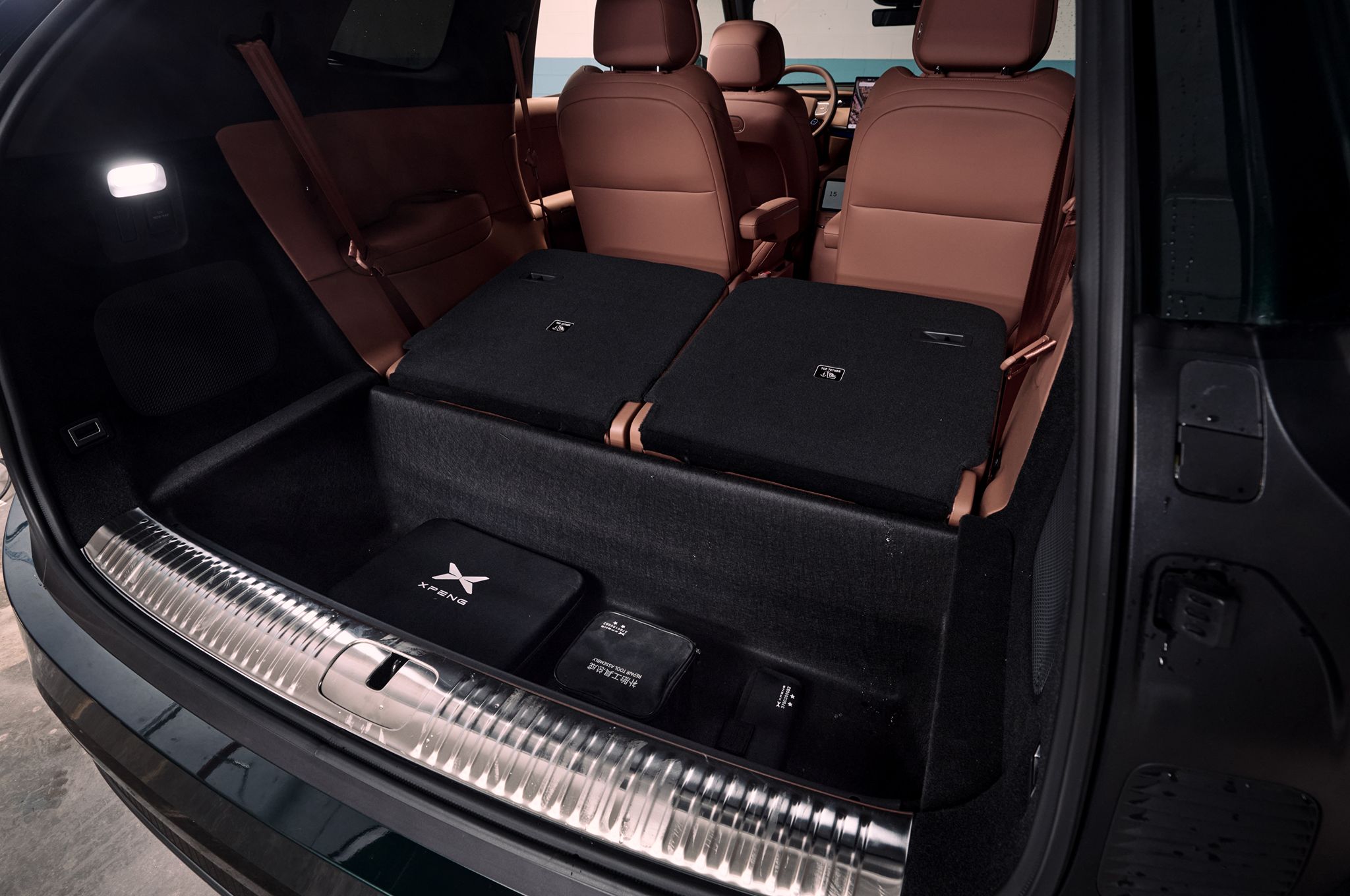
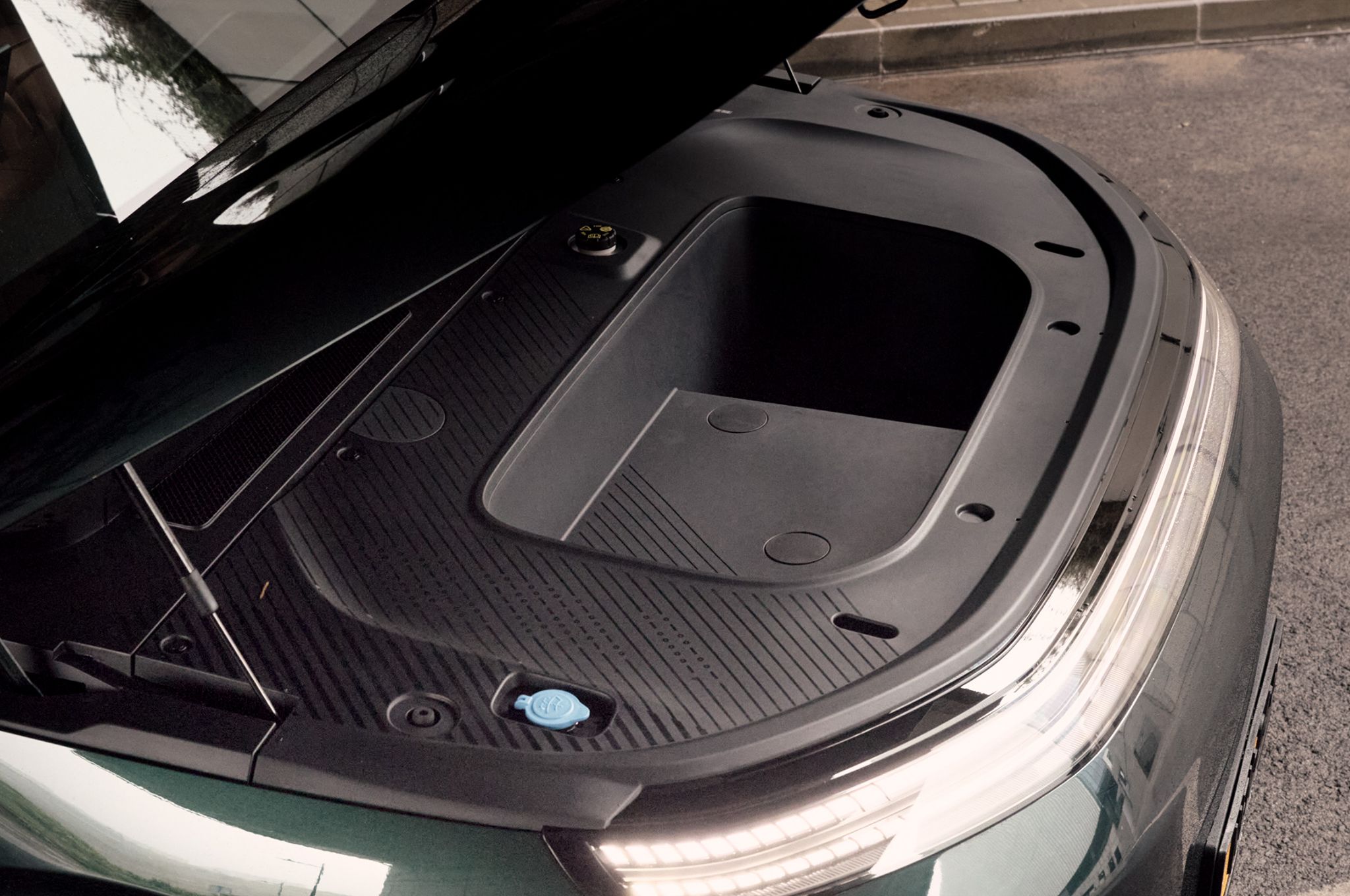
Plus, there’s space for a light buggy behind that third row, in the 367-litre boot – although that capacity includes the deep underfloor storage space. Drop the third row and you get 1,330 litres of space, although that’s measured to the roof rather than to the windowline or parcel shelf, so isn’t directly comparable to boot figures in the obvious rivals. Suffice to say that the G9L’s boot space is huge, and will be great for families and outdoor enthusiasts. There’s a 67-litre frunk, too, which is quite shallow and wide so will be fine for a cable but may not be as useful for chunky stuff; you might struggle to get your wellies in there.
Easily the worst thing about the G9L’s practicality is its powered doors. The doors open electrically when you push a button, but obviously you’re often in the way so they don’t open fully, and then you push the button again when you’ve moved out the way – and they close. Sometimes they shut when you’re not expecting them to, as well. Sadly they are standard, and I find them utterly infuriating - but you may be more tolerant than me, and it is a fun party trick that'll impress the kids the first few times you use it. I'd pay money to have normal doors on the G9L, although I'd keep the soft-close feature, which is rather nice.
There is also an extending running board that drops out from beneath the car when you open the door, making it easier to get in. Which is fancy, but they are also very easy to smash your shins on, and they extend when you’re getting out of the car – and can be quite awkward to step over. It’s the ultimate example of tech that’s trying to make your life easier, but is doing exactly the opposite.
Interior, design and technology
Interior materials are area where the G9L falls a touch short of expectations. It’s a very straightforward dash design and while the materials feel fine, it’s all a similar, smooth texture and looks underwhelming for a car that can cost close to £80,000.
Having said that, it all feels solidly put together, and there’s a choice of black or orange (which looks a bit more like an orangey-tan in reality) interiors.
The 17.3in touchscreen that controls almost everything gets Google maps, which is a pleasingly familiar interface for most of us, and there’s a really useful shortcut menu that you access by swiping down. Most of the features you want can be accessed and controlled from there, or the AI voice control is pretty good at sorting cabin controls including air-con temperature changes. Anything more complicated than that, and I found the voice control disappointingly unresponsive. Maybe it’s my impenetrable British accent that confused the American AI bot in the Xpeng, but she really wasn’t very helpful at anything other than turning the seat heating on or changing the temperature, and my recent experience of the voice control in Mercedes and BMW’s latest EVs definitely puts it to shame.
Mind you, the system itself has been thought out. Some of the icons are a bit small and the sub-menus that allow you to control the car’s dynamic features are too well hidden and hard to find, but there are some nice touches. If the speed limit warning sounds, the screen automatically asks if you’d like to turn it off, which is really useful.
In fact, Xpeng has done a good job of calibrating its driver assistance systems. I was happy to leave them on in the G9L most of the time, and while the lane-keep assist was intrusive occasionally, the car didn’t tell me repeatedly that I was tired or not looking at the road. BYD and Stellantis could learn quite a lot from Xpeng when it comes to integrating systems that are useful rather than just plain irritating.
The co-pilot driving system is one of the best semi-autonomous systems I’ve tried, too, and is up there with Tesla’s systems for following a lane neatly, and responding to its surroundings. It still uses more steering corrections than a good human driver, but Xpeng’s ‘VLA 2.0’ autonomous tech is seriously good. Xpeng even claims that it’ll be able to read what’s going on around the car, and predict what’s going to happen up to six seconds in advance, which makes this... a psychic car? I can’t say it did anything like that when I drove it, but it did stay in its lane without pin-balling off the white lines, and I really like that you can use the scroll wheel on the wheel to easily change the speed in 1mph increments.
Over the air software updates mean that the G9L will even be able to support Level 3 (hands off in certain road conditions) and Level 4 (take a nap and let the car drive you to work on approved roads and geofenced areas) autonomous driving in future, too, apparently. When legislation allows, anyway, but that's still a long way off in Europe, although there are various pilot schemes running autonomous cars right now.
Motors, performance and handling
The Xpeng G9L is available in two models. The rear-wheel drive Long Range gets 373hp and – as the name suggests – has a single electric motor powering the rear wheels, which will shove this 2.7-tonne beat up to 62mph in 7.0 seconds.
The all-wheel drive Performance Ultra gets (you guessed it) dual electric motors for four-wheel drive, plus a whopping 585hp and a 0-62mph of 4.9 seconds.
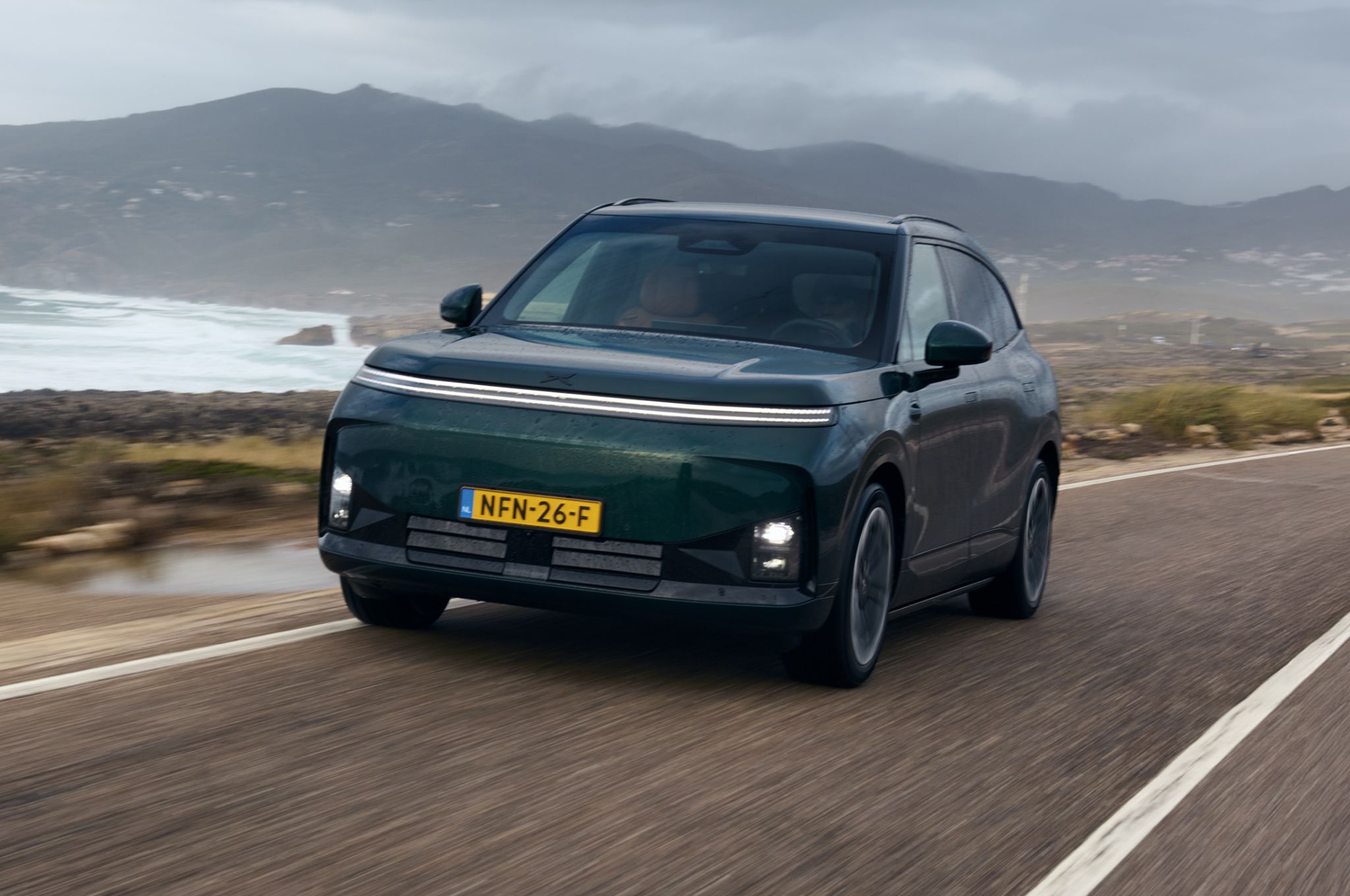
I have only driven the all-wheel drive model, and I can tell you now that it’s not the performance that characterises the car – it’s the air suspension and rear-wheel steering. Sure, it’s fast, but even in Sport mode this isn’t a car that feels like you want to drive it in a sporty fashion because it’s HUGE. And it feels it. This is a big, slushy barge, and a Sports mode doesn’t change that. And I like that. That’s fine.
Because Sports mode does at least tame some of the fairly heavy body lean, and there’s plenty of grip and it all feels tidy and smooth. The G9L does wallow a bit – I’d say more so than the Kia EV9 and Hyundai Ioniq 9, both of which ride beautifully despite lacking the air suspension of the Xpeng. I’d say they both have more steering feel, as well, although the Xpeng’s steering is nicely weighted and makes it easy to drive the car smoothly and confidently.
The rear-wheel steering is a big benefit in the G9L, though. In a car of this size, it reduced the turning circle to a very reasonable 11.0-metres, and (together with the forest of cameras) makes it surprisingly easy to park up and manoeuvre through tight spaces. You’re always conscious of how big it is, especially on narrow roads, but getting into a parking space actually isn’t the issue you might imagine - provided you can find a space big enough.
Ride comfort is very good, with that adaptive air suspension soaking up scruffy road surfaces and keeping things feeling very zen in the cabin.
Brake regen is controlled through the screen, which is annoying – I prefer regen modes that are controlled by paddles as it’s much easier to change modes when you want. Still, the G9L gets three fixed levels of regen including a one-pedal driving mode, and they’re generally smooth and easy to get used to. It’s not quite as easy to modulate on the throttle as the regen in a Kia, Hyundai or Tesla, but it’s perfectly fine.
- Power: 343hp - 585hp
- 0-62mph: 4.9 – 7.0sec
- Powertrain: 4WD/RWD
Running costs and pricing
The Xpeng G9L costs from just under £65,000 for the RWD Long Range, which is not bad given that you get all the equipment you could want. It’s only the metallic paint, and the £5,000 upgrade to the six-seat cabin, which are your available options. Everything else including the 21-inch alloy wheels, electric seat adjustment, co-pilot semi-autonomous driving systems and more is all included.
The AWD Performance Ultra costs from £73,000, or you can go for the range-topping AWD Ultra Performance 6st for £79,000. That’s competitive with the EV9 and Ioniq 9, but it’ll be lease and PCP prices that really matter for G9L buyers, and we’re yet to see those figures.
A seven year, 100,000 mile warranty is standard on the Xpeng G9L. Do also check where your nearest Xpeng dealer is, too, as there are only around 100 in the UK so it might be a bit of a journey to get to your local service centre.
Verdict
The Xpeng G9L is an impressive beast. If you ever needed a car to convince you that China was coming for the luxury end of the market as well as the more affordable brands, this is it. It really is a convincing alternative to the Kia EV9 and Hyundai Ioniq 9. Dare I say it – I can see why you might choose to save the cash and go for this over a Range Rover or Land Rover, too.
It’s smooth and confident to drive, it’s got enough tech to make some other EVs look like they’ve been manufactured by Steptoe and Son, and it’s got space and luxury to spare. If Xpeng would just put normal doors on it, it’d be even more appealing. Would I buy it over the Kia EV9 or Hyundai Ioniq 9? Hmm. Tricky. If it came down to a similar cost per month, I would probably still go for one of the Korean options, but that’s chiefly because I’m not personally swayed by autonomous driving features and the super-luxury features that set the G9L apart. If you are – and I can absolutely see why you would be – then the Xpeng G9L is a properly excellent option. Just mind out for those doors…
Like the Xpeng G9L? Try these...


 9