





 Battery size: 74–97kWh
 Miles per kWh: 4.4
 E-Rating™: C
 Max charge rate: 160kW
 Range: 320–421 miles






Introduction
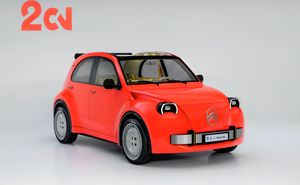
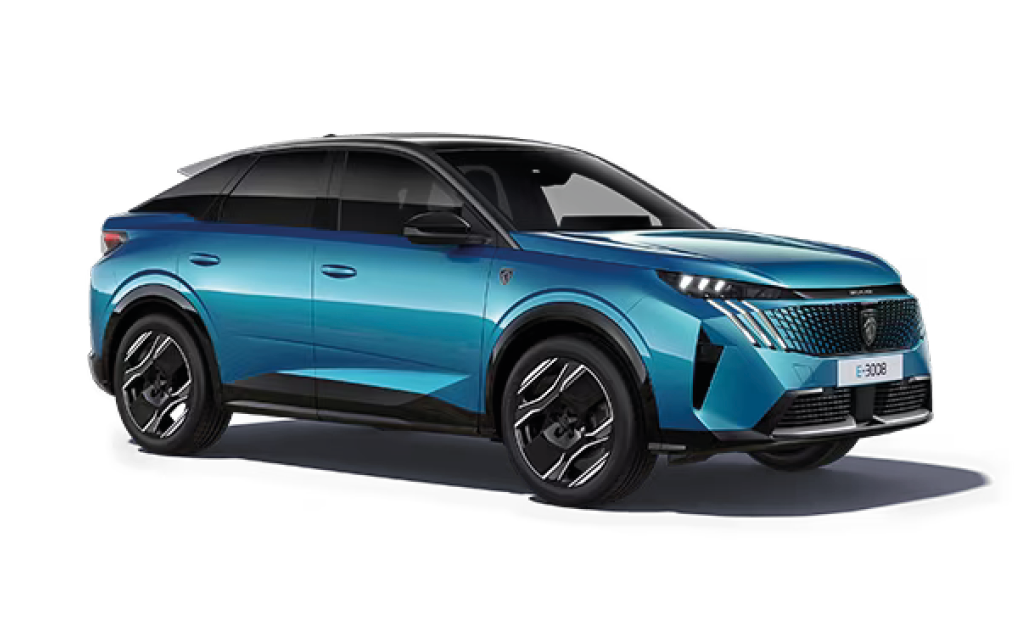
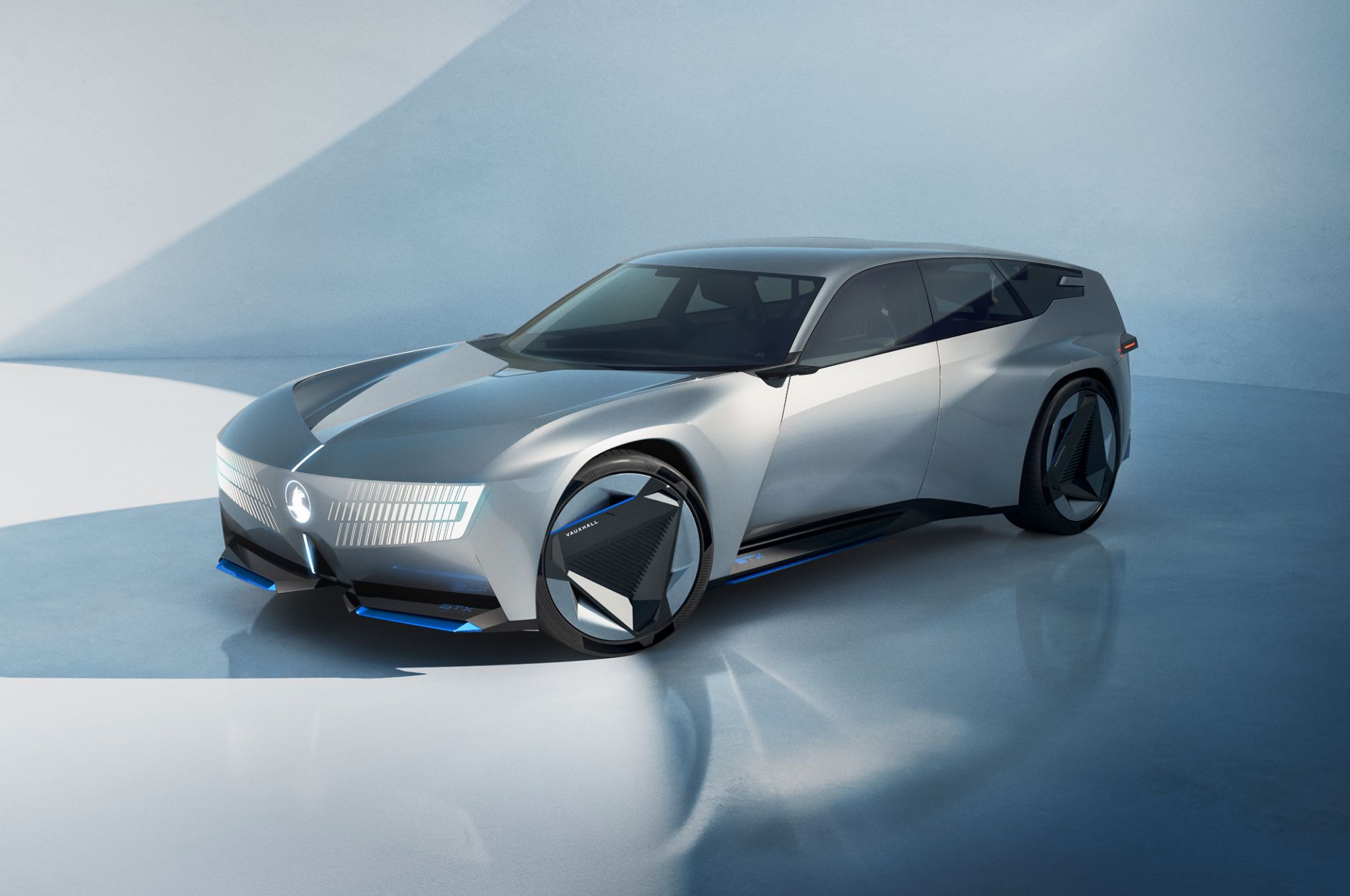
This is Citroen’s first car using the STLA Medium platform from parent company Stellantis – the same underpinnings as you'll find in sister cars like the Vauxhall Grandland, Peugeot E-3008 and E-5008, the new Jeep Compass and a couple of DS models in future too. Its main offering is electric, but there's a mild hybrid and a plug-in hybrid version as well, which offers a reasonable electric range of up to 53 miles.

The electric model is the one we're interested in now, and the e-C5 Aircross has two batteries on offer with 73.7kWh or 96.9kWh (let's call it 74 and 97kWh for the rest of this though) that come with official WLTP range figures of 320 and 421 miles.
Power comes from an electric motor operating the front wheels, and it delivers 213hp in Comfort Range guise or 231hp in the Long Range car. It's six of one and half a dozen of the other here – the Comfort Range car does 0–62mph in 8.9 seconds and the Long Range version manages it in a blistering 8.8 seconds. They're both limited to a 106mph top speed.
Every e-C5 Aircross model also gets the company's trademark ‘Progressive Hydraulic Cushions’ for super smooth ride comfort. There's no four-wheel-drive version of the car available at the moment (that might change) and no seven-seat version either (that definitely won't change). A bit of a shame for a car that majors on family practicality and comfort, but at least you can get the Peugeot E-5008 or Mercedes EQB if you’re after a seven-seat SUV that’s a bit less pricey than the Hyundai Ioniq 9 or Kia EV9.
Range, battery and charging
You've got two choices of battery size with the e-C5 Aircross, though Citroen has largely made the decision for you by assembling the larger batteries at its factory in France while the smaller pack is made in China. Which means that the Long Range car qualifies for the full £3,750 of the electric car grant, while the Comfort Range is only in the cheaper £1,500 band. This really closes up the pricing between the two models (see below).
While the official WLTP range stands at 320 and 421 miles for the two battery sizes, when we drove the smaller batteried car on a mixed route through cold, rainy conditions our trip extrapolated to a 214-mile range. We could have driven more economically, but it's a significant gap. We’ve struggled with the everyday range on our long term Peugeot E-3008, which uses the same platform and running gear as the e-C5 Aircross, so it's clearly something that Stellantis EVs struggle with.
The trip meter indicated 3.5mpkWh from our drive, which was on the slightly optimistic side, as was the range readout, which dropped by nearly 50% more than the mileage we drove. We've not had a proper drive of the Long Range model in the UK yet – that battery uses a different chemistry, so it'll be interesting to try that one out and see if it's any different.
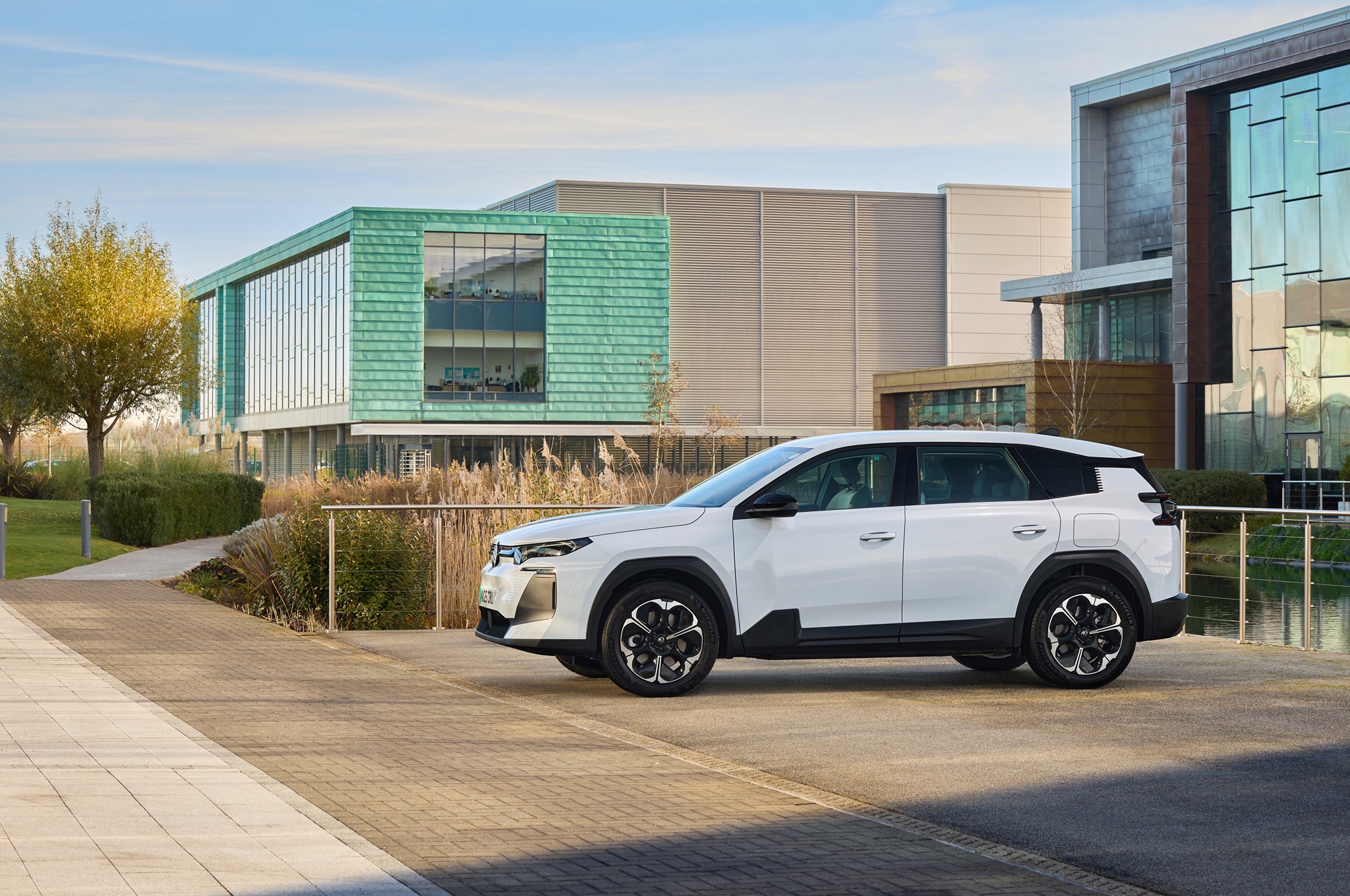
Citroen has also finally caught up with the likes of MG, Kia and Hyundai, and will be offering vehicle-to-load (V2L) charging on the new e-C5 Aircross, as standard. This means that you can use the car’s high voltage battery to charge other devices – maybe you want to run your strimmer from it, down at the allotment. Or keep a portable fridge cold while you’re camping. You get the gist. It’s a really neat function to have.
As for charging, AC charging is up to 11kW, which is useful for making the most of faster kerbside chargers that you often find in town. At home, most owners will charge using a 7kW home charger, which will full charge the e-C5 Aircross in around 12–16 hours depending on which battery you’ve got.
Rapid charging is up to 160kW, which is good for a 10–80% charge in around 30 minutes. There's a heat pump available for the car, but only in the top spec Max trim, which is a bit of a shame for overall efficiency across the range,
Practicality and boot space
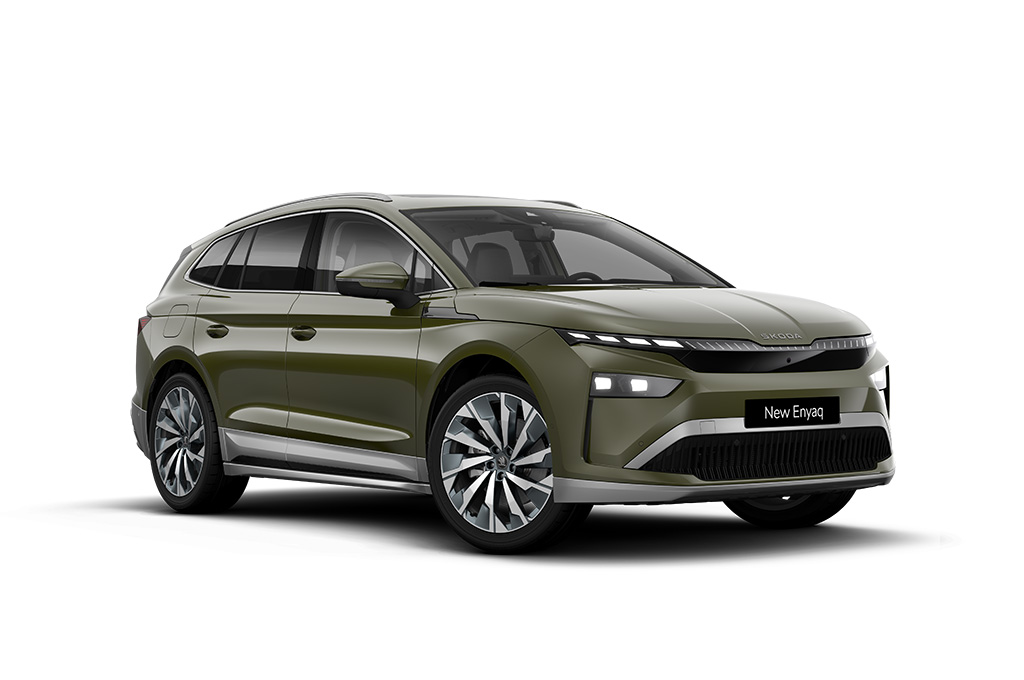
Boot space is very decent in the e-C5 Aircross. With 565 litres of space on offer it’s not quite as big as the Skoda Enyaq, but still massive and there’s underfloor storage for the cables. Unfortunately (as with most of the cars on the Stellants STLA-Medium platform) there’s no ‘frunk’. You can fold the seats flat in a 40/20/40 split, though, so that you can get your skis through the middle of the rear bench while still comfortably carrying four passengers.
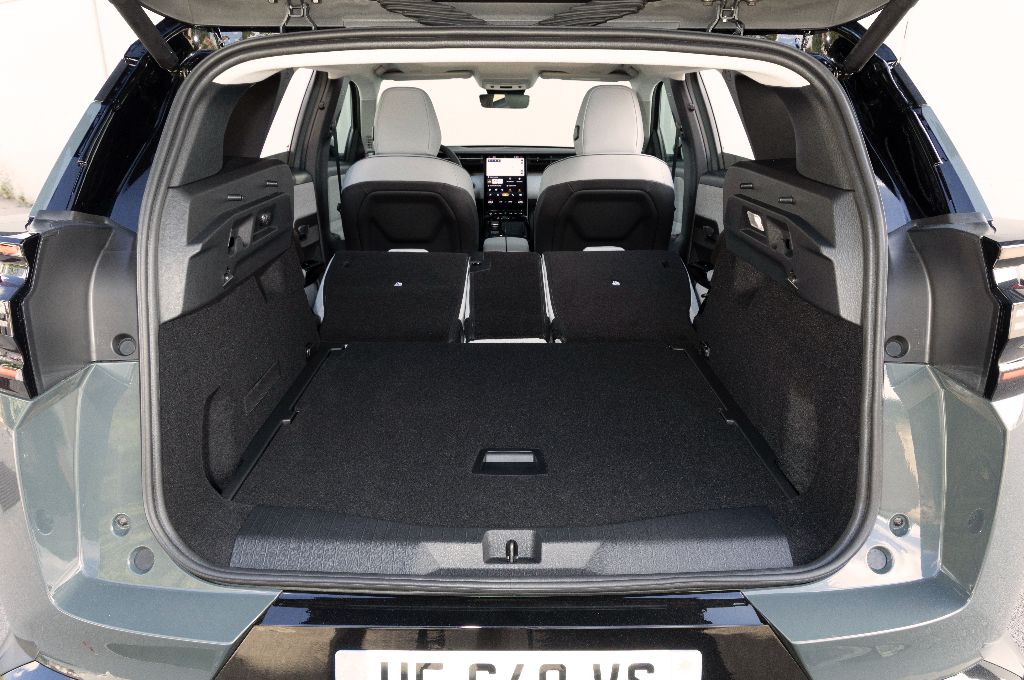
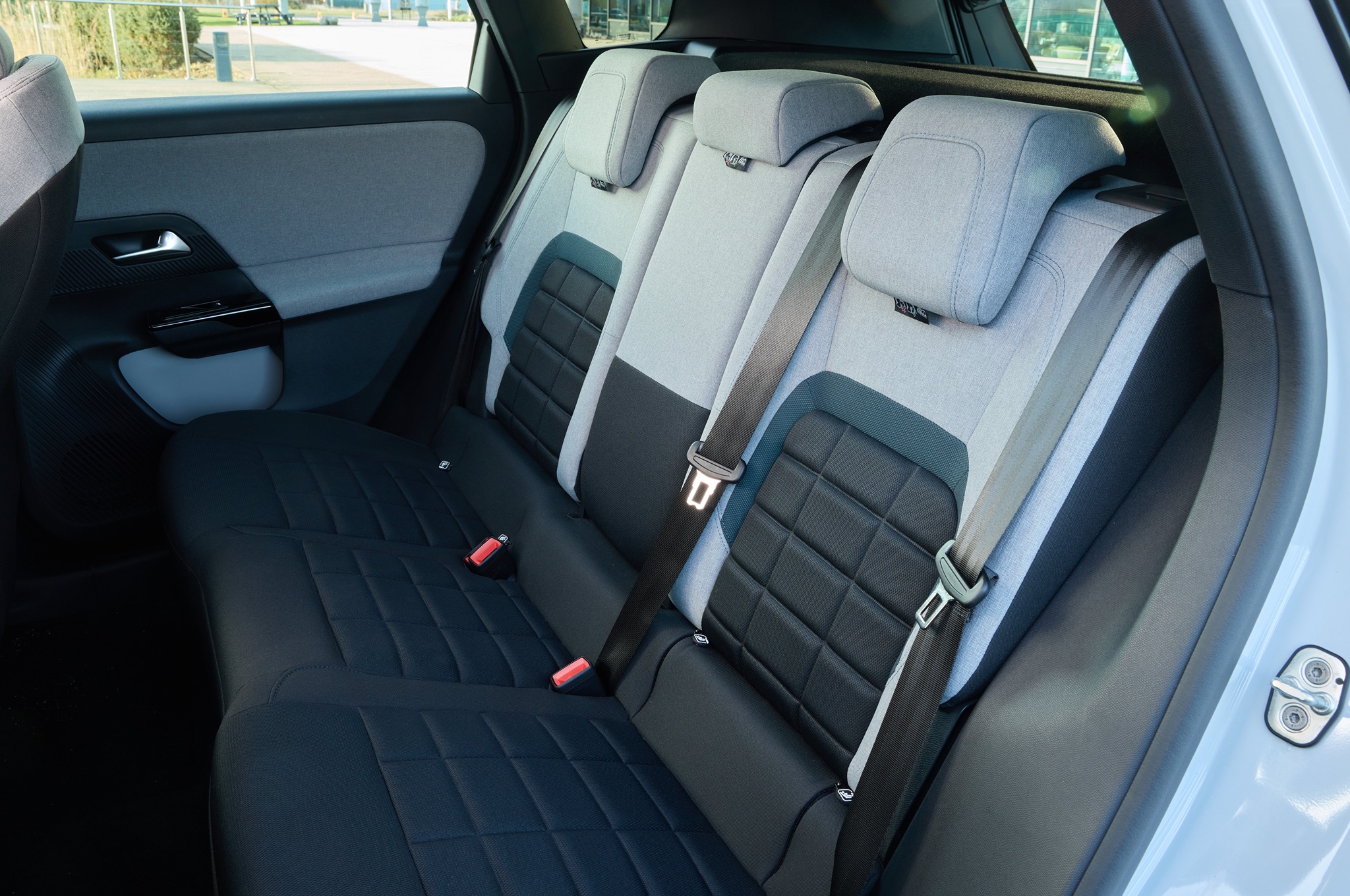
It’s roomy and comfortable in the back seats, too – there's masses of legroom, though you might feel that it's a bit wasted on the kids. There's plenty of room to carry adults in the back, though sadly Citroen has done away with the three individual seats and replaced them with a bench featuring two sculpted outer seats that offer more room for two at the expense of an occasional middle passenger.
Citroen says it made the change because it asked buyers and found that they barely used the three seats, but we can't help but feel that it has taken away something that set the car apart even in a small way. The seat backs do still recline for that lounge experience, though, and on the top trim the outer rear seats are also heated. Very swish.
It really is a very smart interior in the e-C5 – especially the lighter colour scheme. Mind you, that pale textile finish might not be so great when it comes to removing chocolate and grubby fingerprint stains...
Interior, design/styling and technology
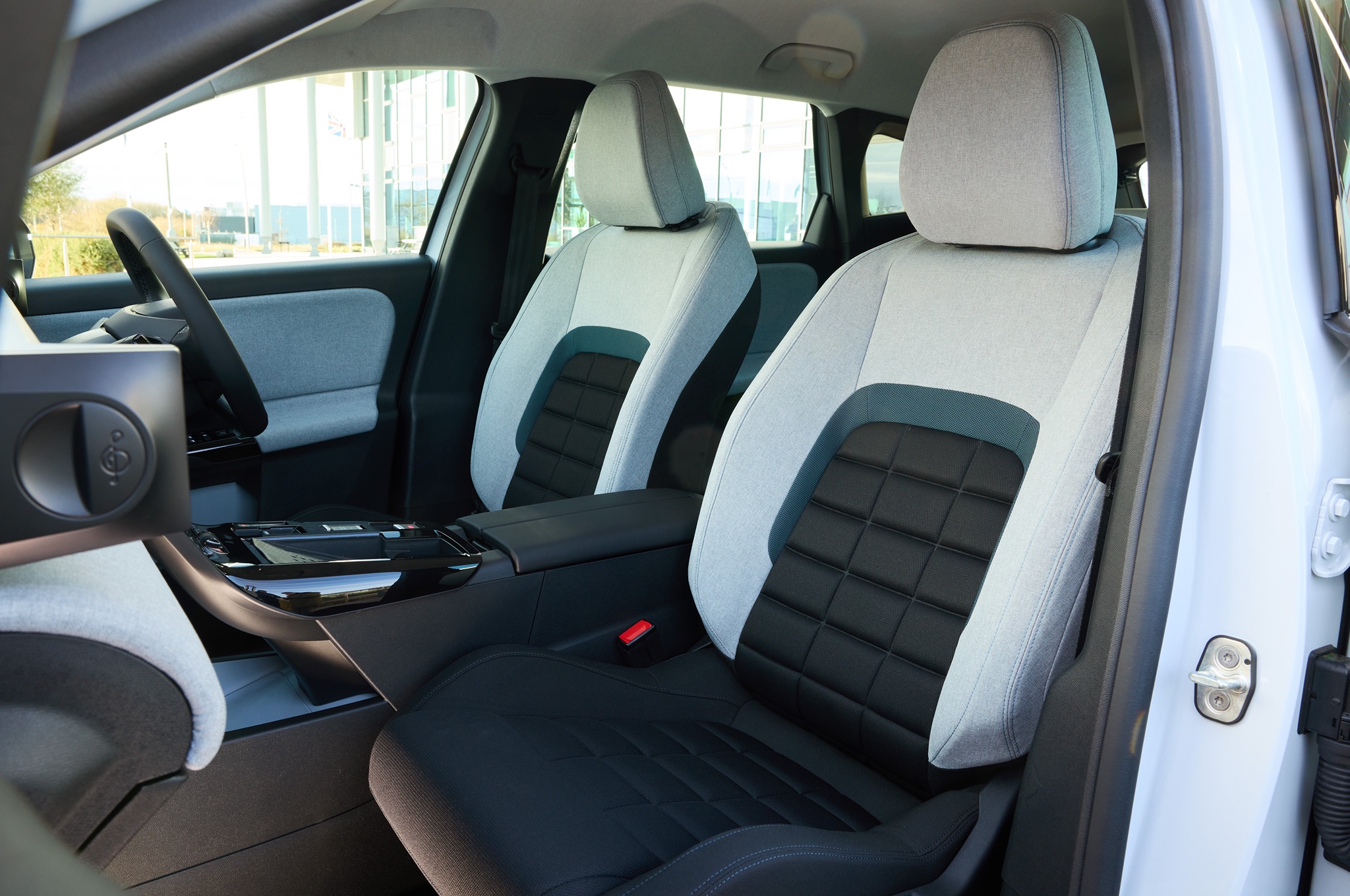
Citroen is very proud of its Advanced Comfort seats and what’s been dubbed ‘Sofa Zen’ interior, and rightly so. The seats are super-cushy and comfortable, with more squidginess than you’ll find in any rival I can think of. There’s even a pleasantly squidgy finish on the centre armrest and around the doors, so it does all feel very cosseting.

If you get the full electric adjustment on top-spec Max cars, you also get tilt adjustment for the driver’s seat base – meaning that you can adjust the height of the seat base under your thighs or under your bum, rather than it just lifting up- or down by one axis point. Sounds like a minor thing, but I find that tilt adjustment really helps me to get comfortable when I’m driving.
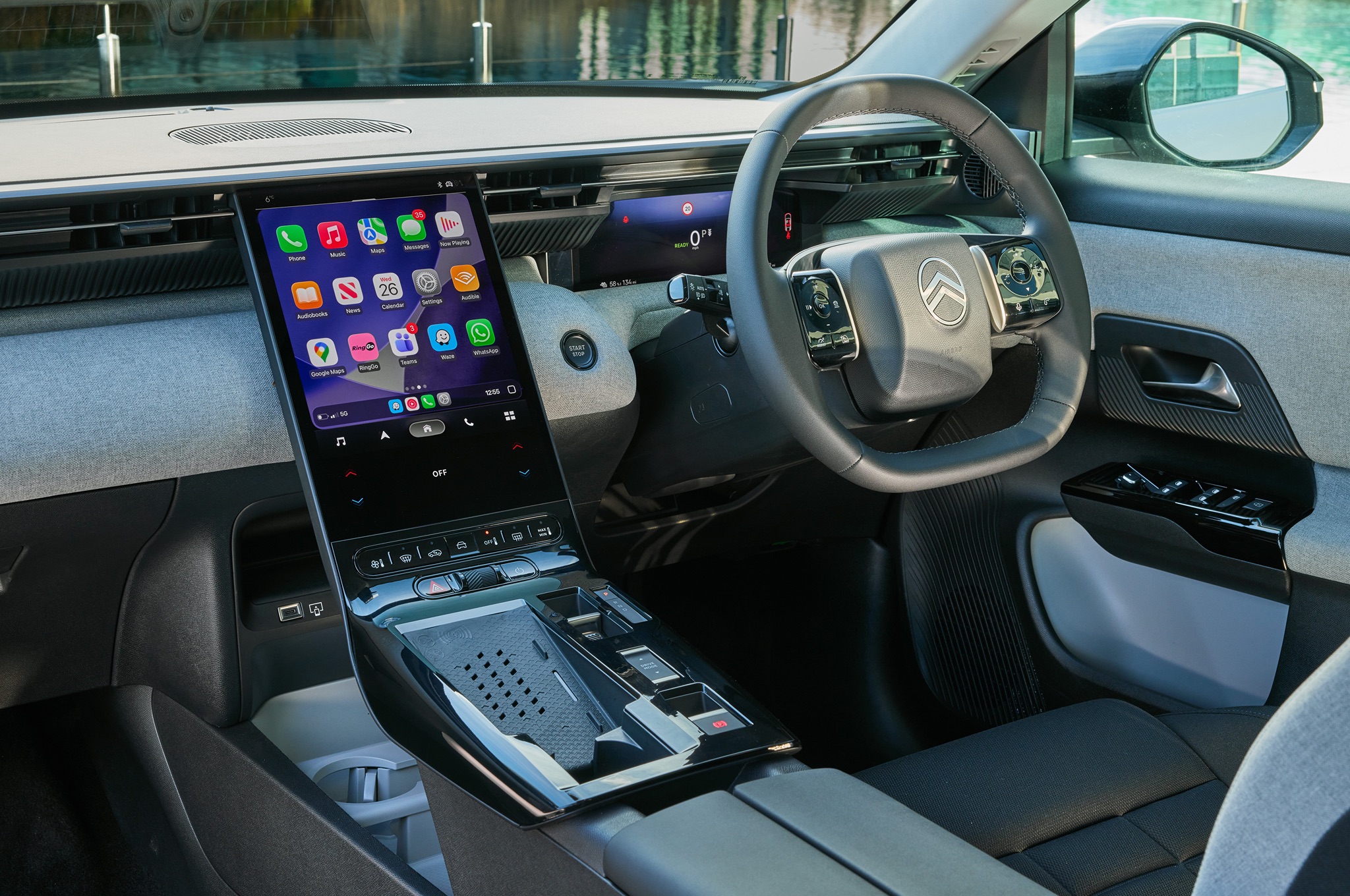
Probably more important for most is that there’s a new central ‘waterfall’ touchscreen infotainment system that Citroen says 'cascades' down the dashboard. Which is a more creative description than merely plonking the screen on the dashboard. It’s a very different setup to the infotainment that you find in the Peugeot E-3008 and E-5008, or the Jeep Compass that also shares this platform.
In fact, the Citroen’s system is a bit more reminiscent of the screen in a Tesla Model Y or BYD Sealion 7, and I rather like it. Even though the aircon temperature controls are integrated into the screen, they’re permanently visible and absolutely massive, to make them easy to hit on the move.

You can also set the screen to a subtle, uncluttered view so that it’s not distracting at night, and it’s pretty easy to navigate. It’s a huge improvement over previous Citroen infotainment systems, I’d say, and would be pretty easy to live with. Naturally, you get voice control, as well as wireless Apple CarPlay and Android Auto.
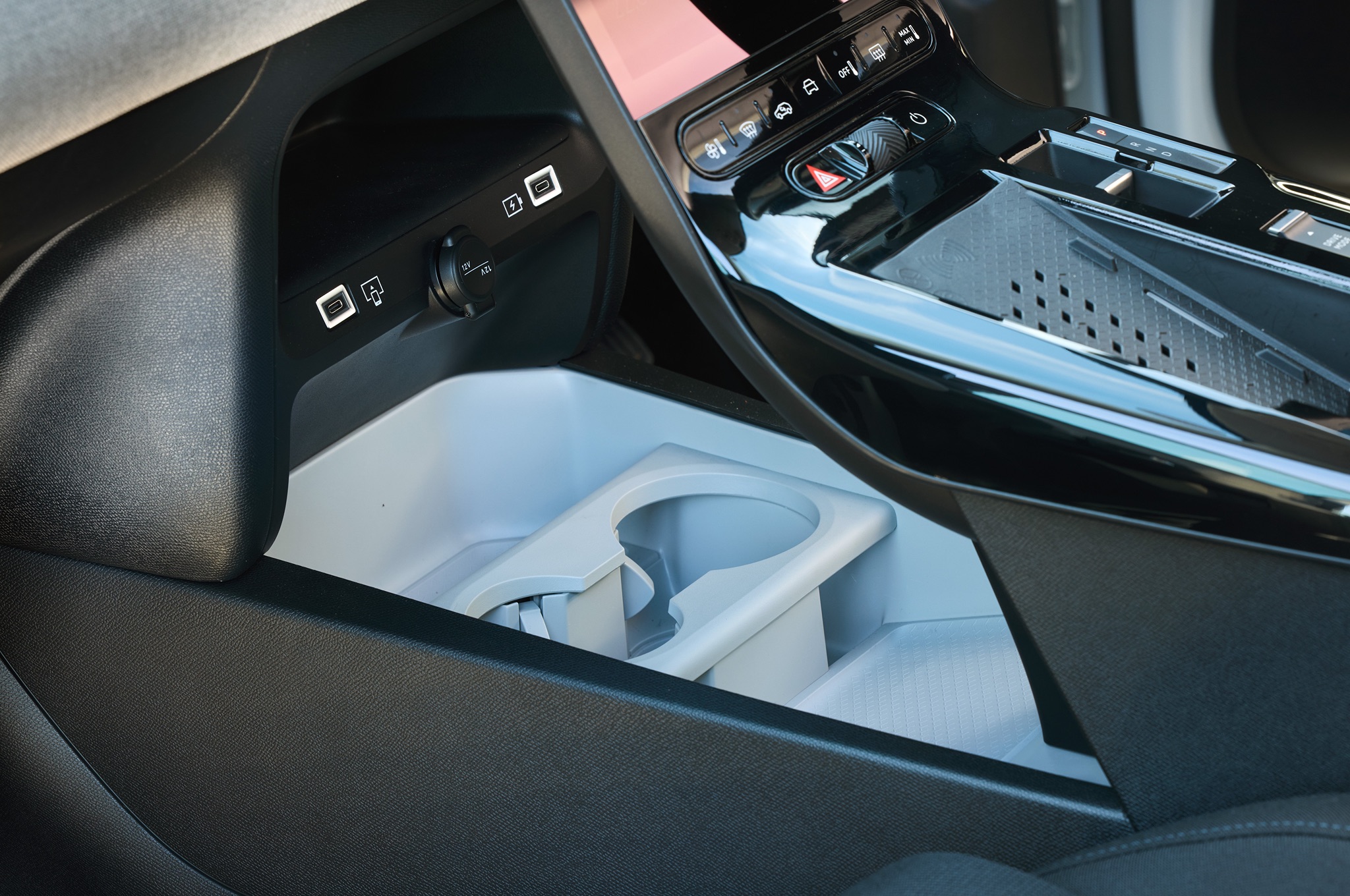
There’s also a head-up display available, as well as tons of storage space, a sunglasses holder and big door bins. Maybe there’s a bit too much gloss black, but generally the e-C5 Aircross feels great inside. If we've one complaint it's that the cupholders will be tough to get your coffee cup in and out of – they're secreted underneath the main part of the cascading dashboard, and you'll probably have to wait until traffic lights to access your drink because your legs are in the way while driving.

Motors, performance and handling
The Citroen e-C5 is an easygoing car to drive, as you’d expect. It feels comfortable, but there’s not quite so much body wobble when you brake hard or go through faster direction changes as there is on the Vauxhall Grandland (another car that shares its platform with the e-C5 Aircross).
Citroen is fitting its hydraulic damping system as standard across the range, which gives the car a bit of float when the suspension is working hard over undulations. There's almost a boat-like quality to it, that makes the car feel more like an old school 1990s SUV. It's not a bad thing, though – we'd certainly rather it was like this than trying to be sporty and coming out brittle and thump.
The top spec car comes on 20in alloys that can make the ride feel a bit fussy over unkempt roads around town, but by and large the e-C5 Aircross is a very comfortable car to be in.
Performance is fine even in the lower powered 210hp model with the 74kWh battery. The 0–62mph of 8.9 seconds sounds a bit lethargic on paper but in practice the Citroen feels responsive enough to give you confidence even in faster motorway merges or the odd overtake. It’s no sports SUV – even the normal versions of the Skoda Enyaq (never mind the hot vRS) have a bit more gumption to the way the car goes down the road.
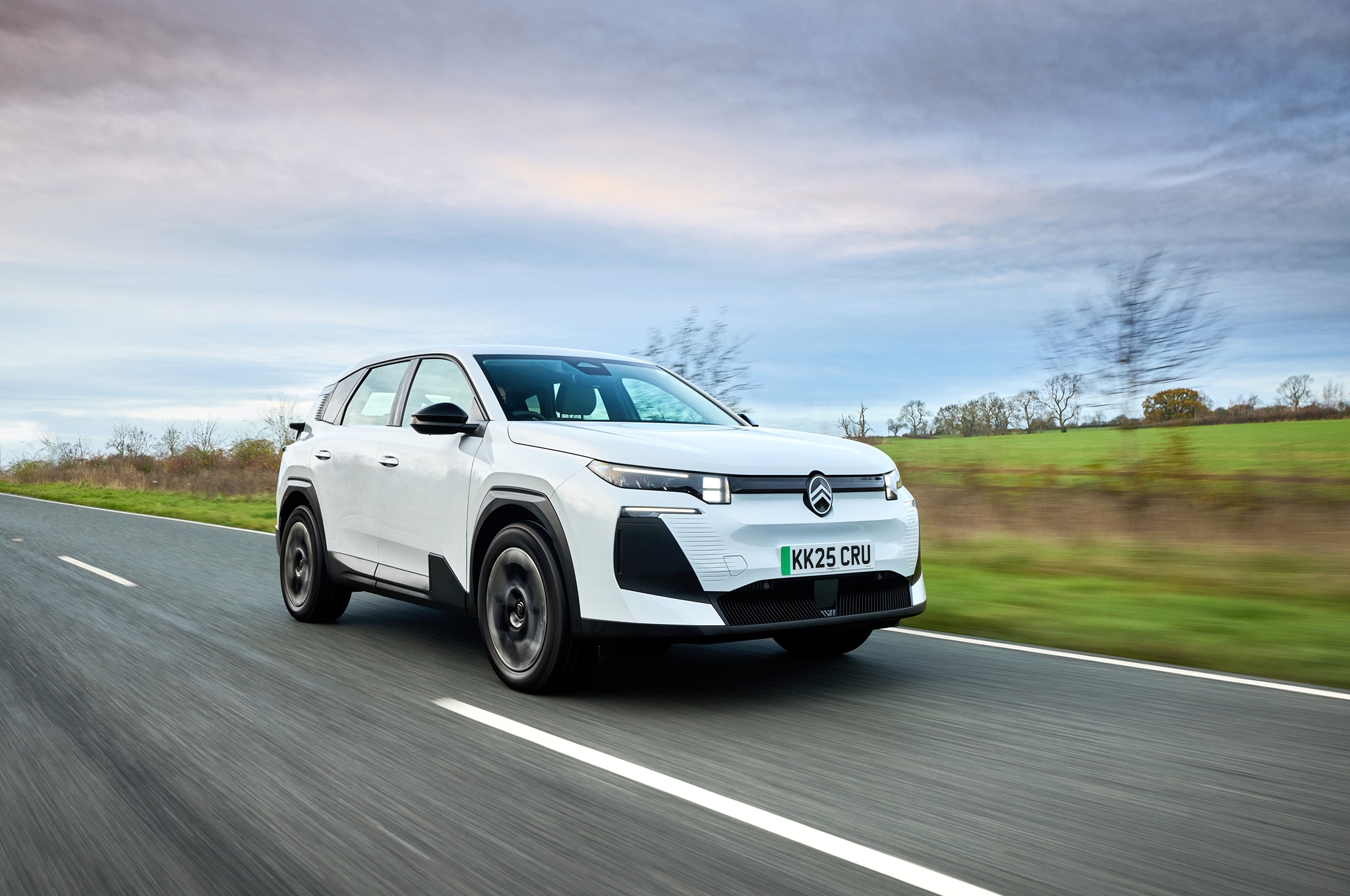
Not that we want speed from this car – the Citroen has a rather peachy, gentle attitude that eases you through the journey. It’s intuitive and relaxing, and that’s fine by us. There's a Sport mode you can select that changes the driving characteristics, but it leaves the car feeling a bit frenetic, the e-C5 Aircross is far better in its Eco mode with a more fluid sense of pace.
The brake regen system is paddle controlled with three different modes plus an adaptive setting. It’s really good to have such easy control of the regen – all the modes are smooth and predictable. We'd like a bit more beef to the strongest mode, or a B setting on the transmission, but it works well enough. And while we're griping, what do Stellantis brands have against an Auto Hold function? It feels like a basic thing to lack.
Running costs and pricing
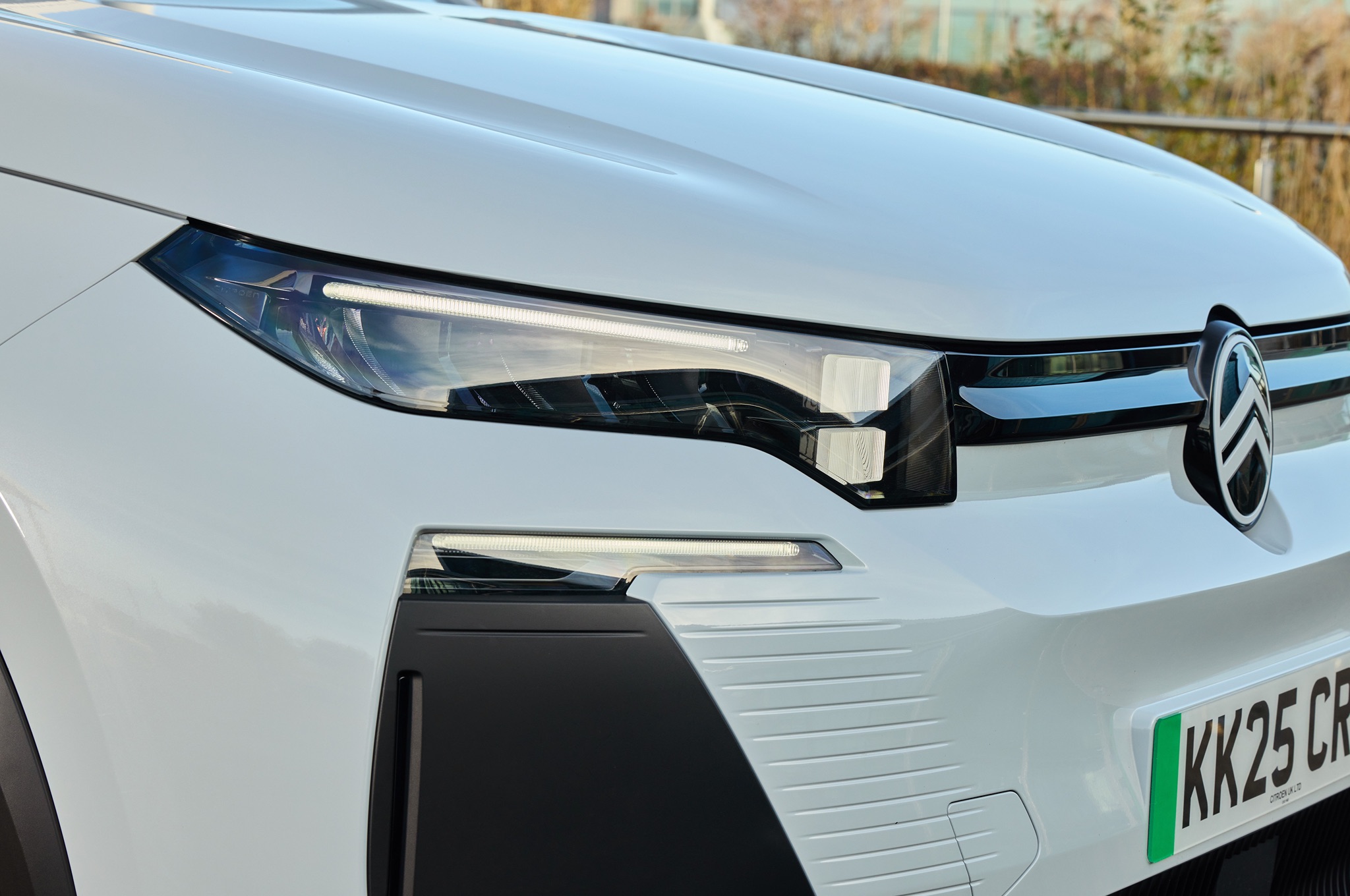
There are three trims available – You!, Plus and Max. All the cars get satnav, wireless Apple/Android connectivity and phone charging, adaptive cruise, auto lights and wipers and rear parking sensors (rear visibility is poor, incidentally – test drive the entry version before you commit). Plus adds ambient cabin lighting, keyless entry, front parking sensors and a rear camera, while the top trim Max models get the head-up display, heated seats and steering wheel, electrically assisted tailgate, fancier cruise control and a heat pump.
Prices in the UK start at £34,065 for the You! spec Comfort Range car – an extra £2,620 gets you into the Long Range car on paper, but in reality once you factor in the electric car grant both cars cost a smidge short of £33k and there's only a few hundred pounds between them. Seems like a no brainer. Citroen's planning to make more of a differentiation between the two when it comes to finance packages, probably so it actually sells a few of the Comfort Range cars.
It's also a £2,640 gap between trims, so £36,705 for the Comfort Range Plus and £39,345 for the Comfort Range Max, plus more or less the same again if you want to upgrade to the bigger battery. If you can make the sums work then the Long Range Max is the car to be in – and fairly compelling at just over £38k with the grant applied. It means the top spec e-C5 Aircross is about on par with the entry level Skoda Enyaq and not much more than the entry level Peugeot e-3008 even.
Verdict
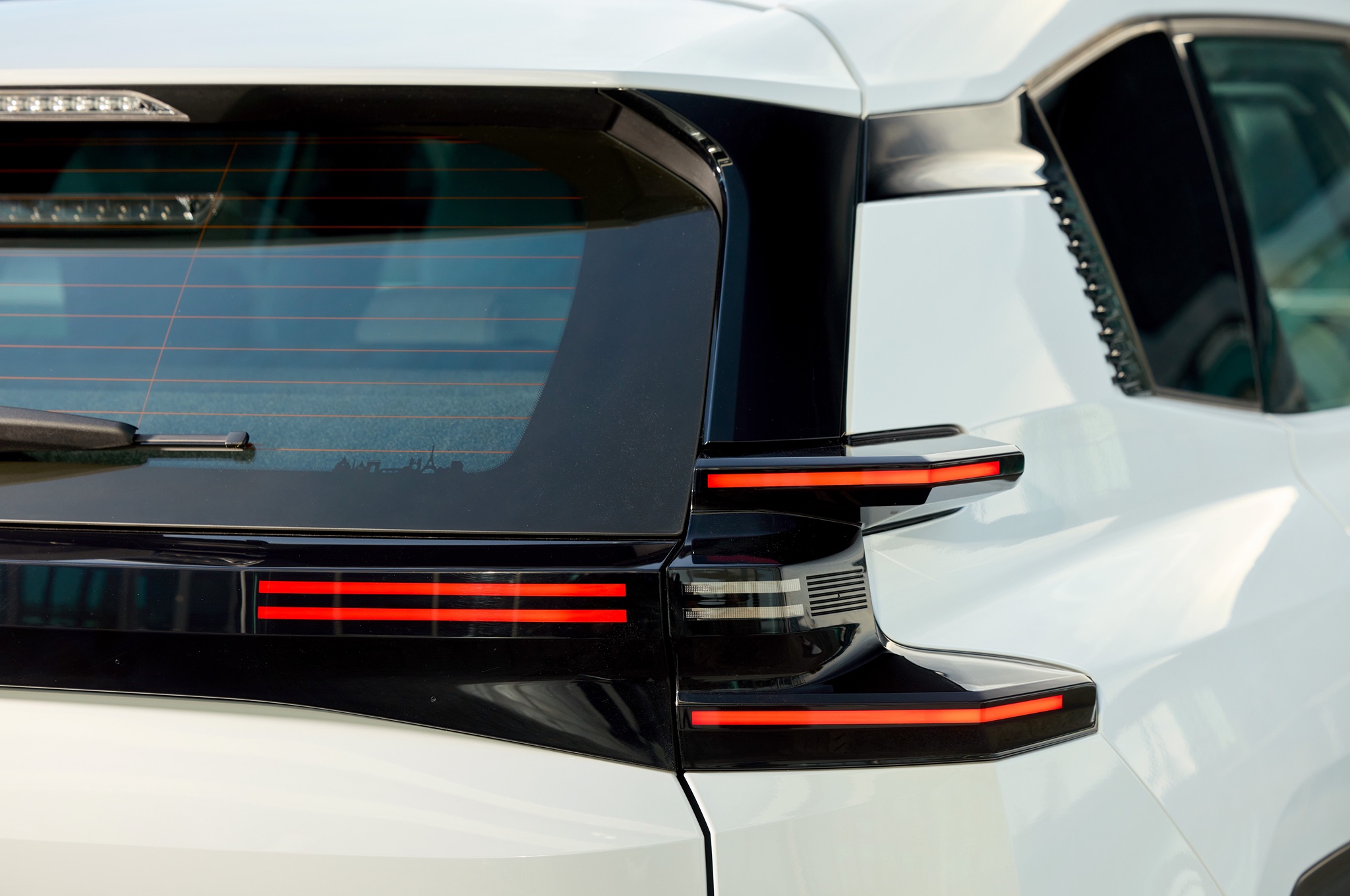
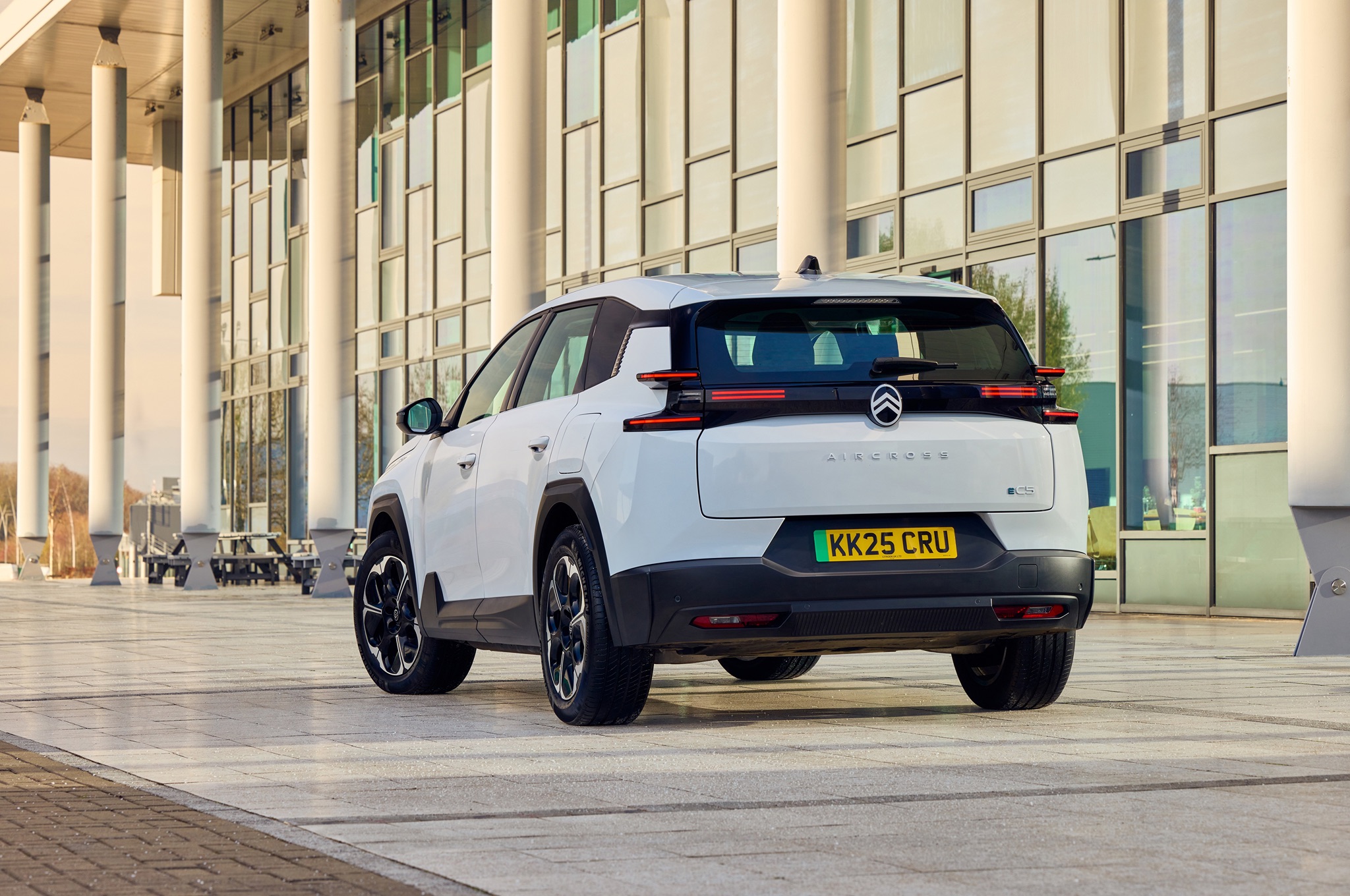
I like the Citroen e-C5 Aircross. I think it looks pretty cool, with its ‘light wing’ rear cluster design. It looks a bit wacky, but it needs that differentiation, given how much competition it’s got. It’s certainly more interesting than the Tesla Model Y, isn’t it? And much comfier, too, while prices are very competitive. Overall it's a really likeable and kind of funky family electric SUV. I do think Citroen would do well to add a seven-seat version to the lineup, to give the e-C5 a bit more of a USP against some of its rivals, as it really is swamped with competition. Overall, the e-C5 is a rather nice way to travel, and a very recommendable family EV.

 8
8
.jpg?width=300&height=185)