





 Battery size: 73 - 98kWh
 E-Rating™: A
 Max charge rate: 160kW
 Range: 329 - 446 miles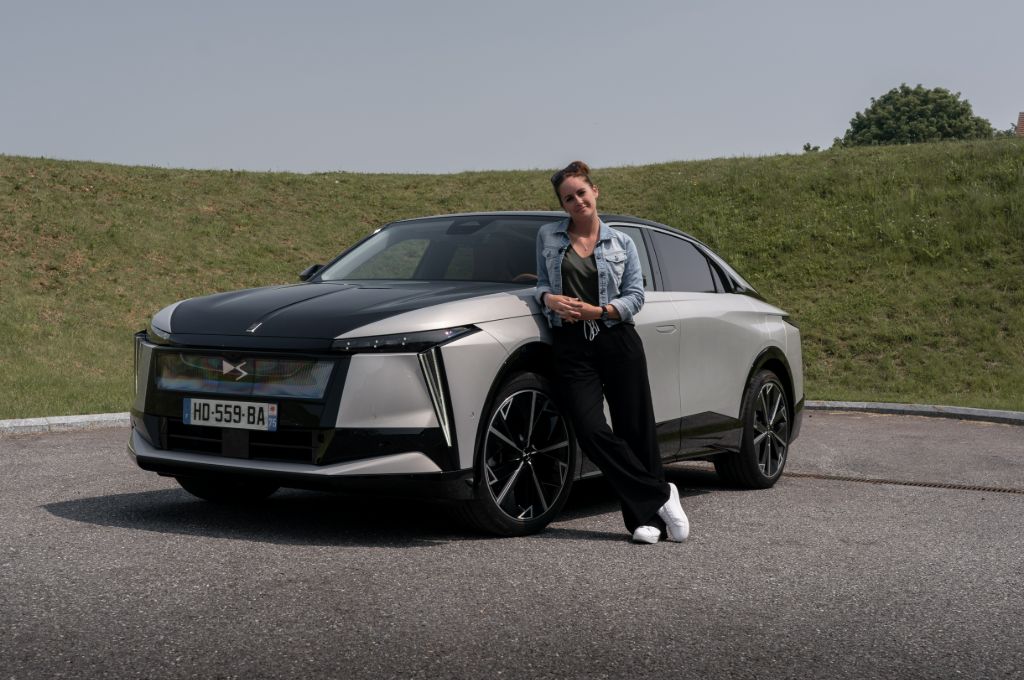
.jpg)
.jpg)
.jpg)
.jpg)
.jpg)
.jpg)
.jpg)
.jpg)
.jpg)
.jpg)
.jpg)
.jpg)

It’s fair to say that the DS brand hasn’t been a runaway success in the UK. Or anywhere, really, except in the car park of the French embassy.
Could the DS No 8 change that? Well, the new naming strategy is part of the plan, with the ‘Number 8’ clearly meant to mirror some other luxury French brands, such as Chanel’s perfume.
There are some other numbers which make the DS look seriously tempting. Like a WLTP range of 446 miles - not far of the range of the Mercedes CLA that'll no doubt be a popular alternative to the DS - and a price which undercuts most German rivals and take on that other curveball choice, the Polestar 4.
.jpg)
Range, battery and charging
Getting the 446 mile range requires the big, 98kWh NMC battery (which is also in the Peugeot 5008 and a few other Stellantis products). There's also a 74kWh NMC pack which gives a 329 mile range, but both are very competitive in terms of efficiency.
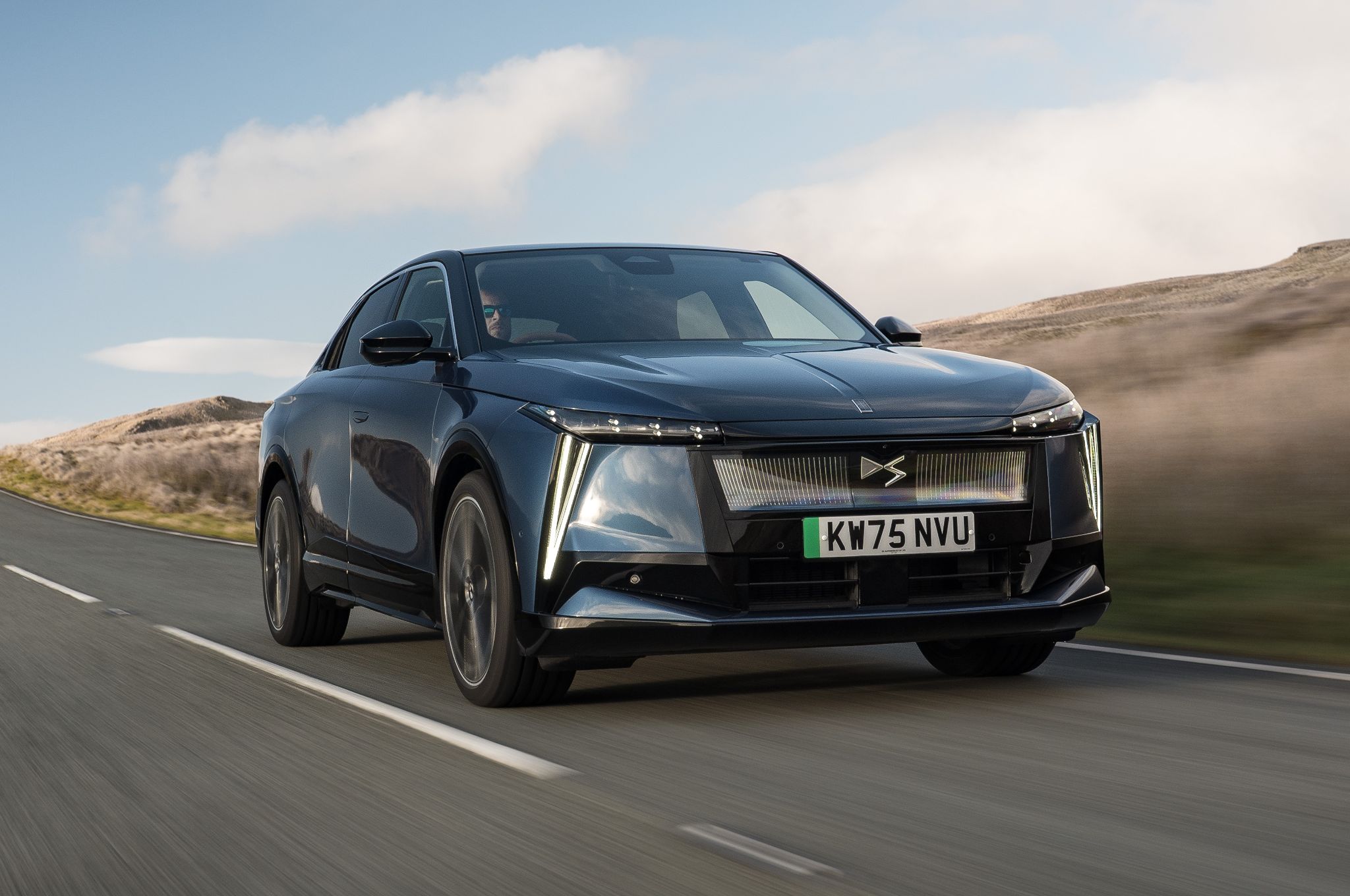
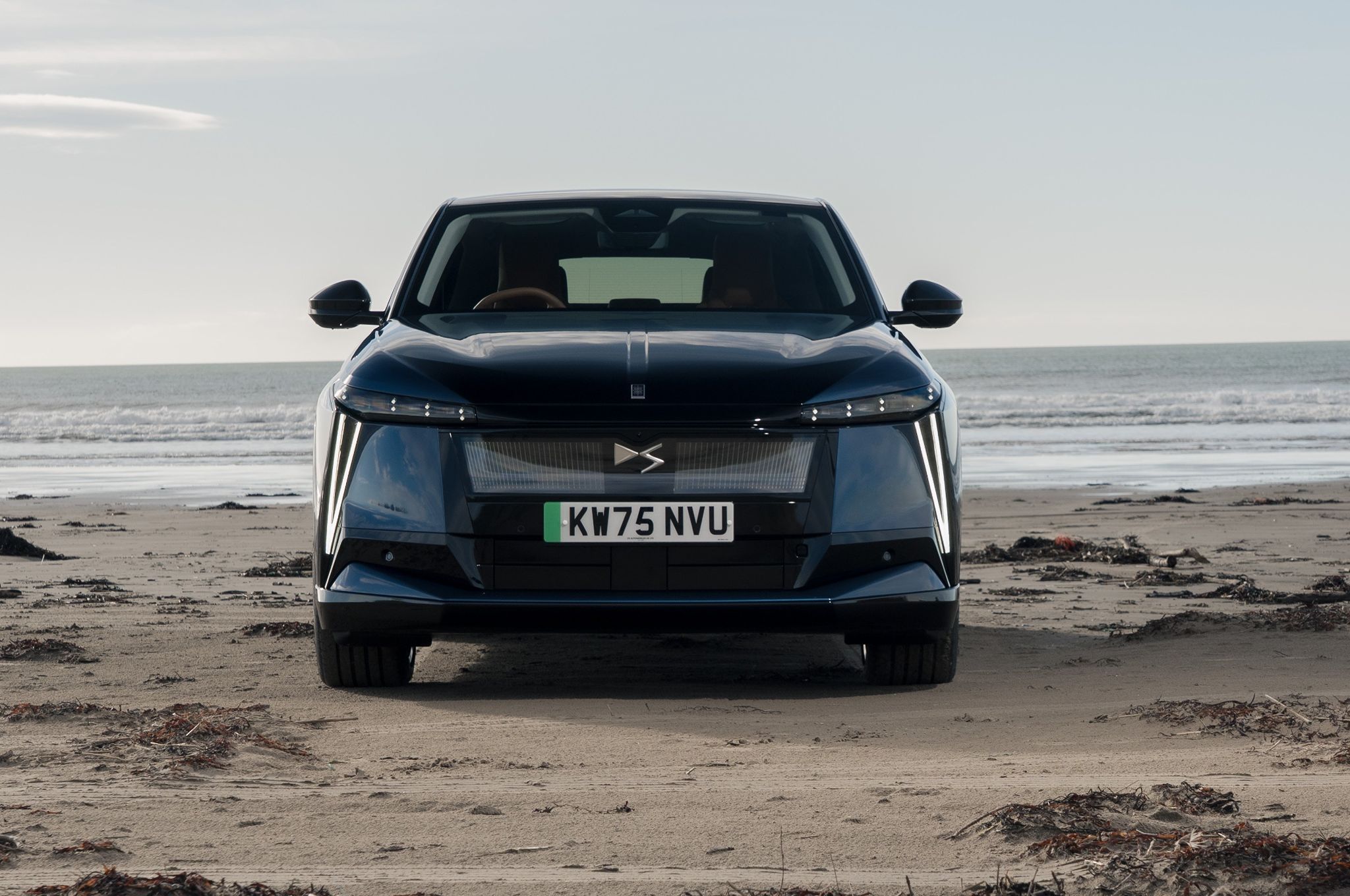
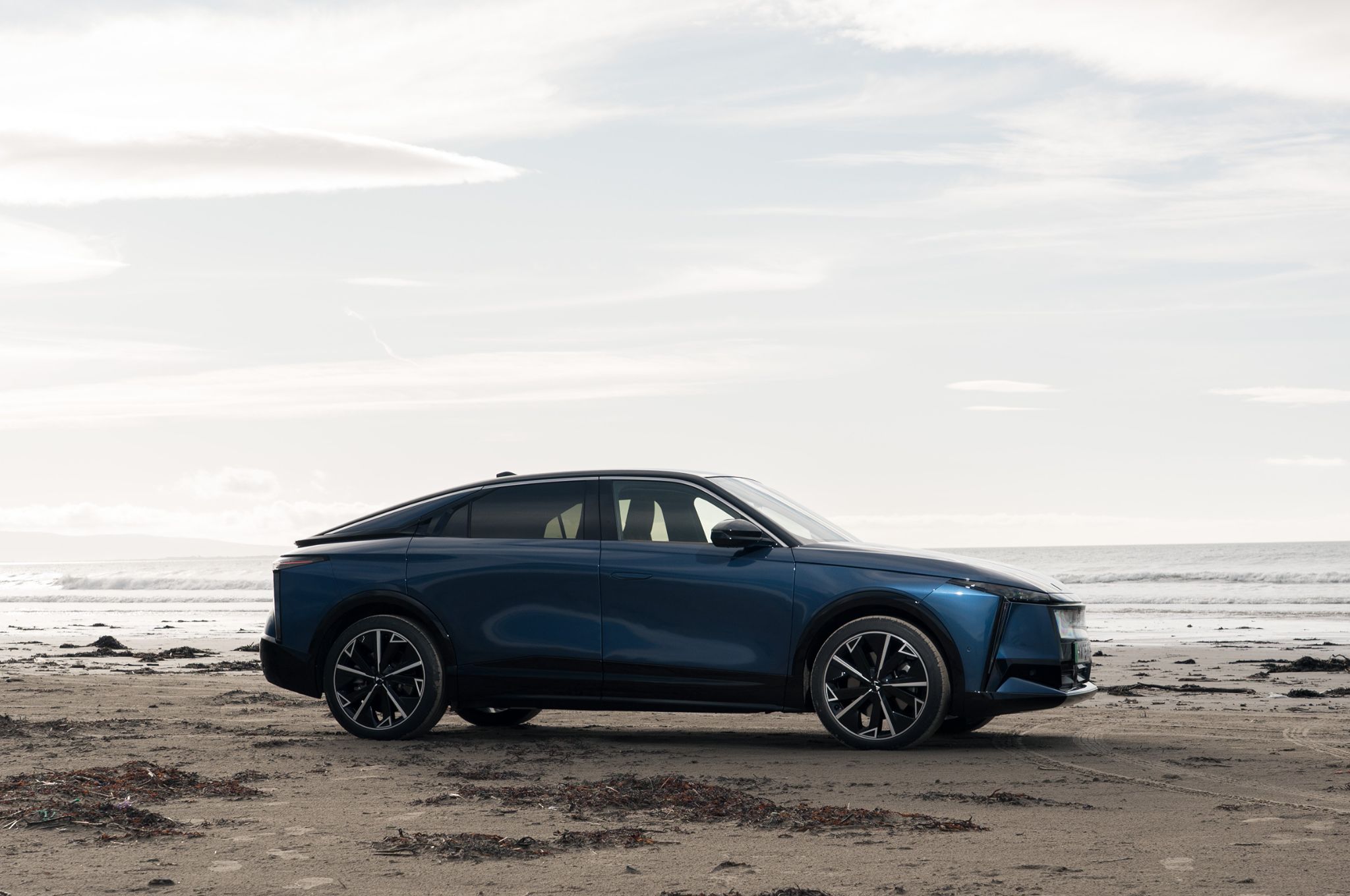
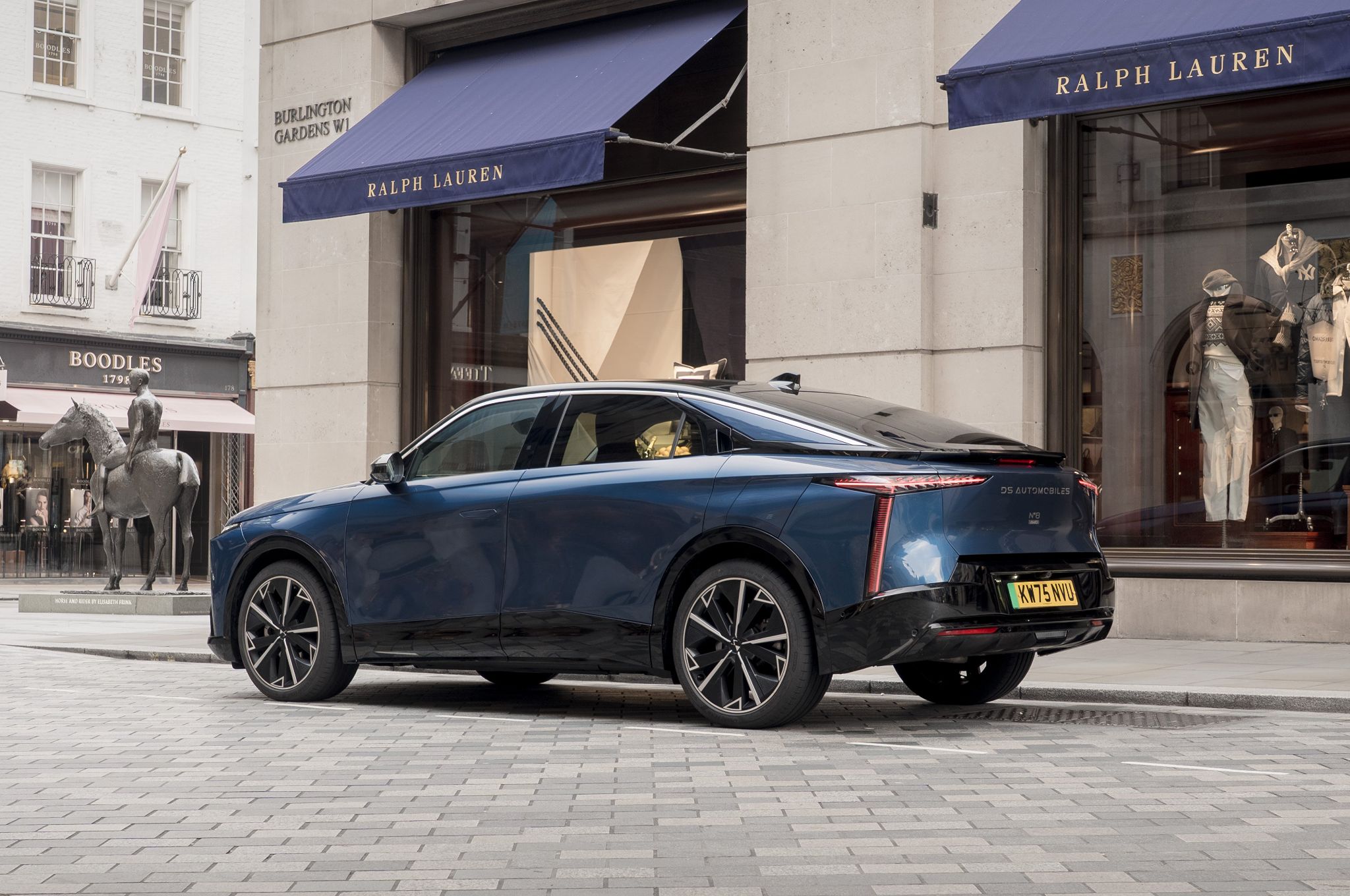
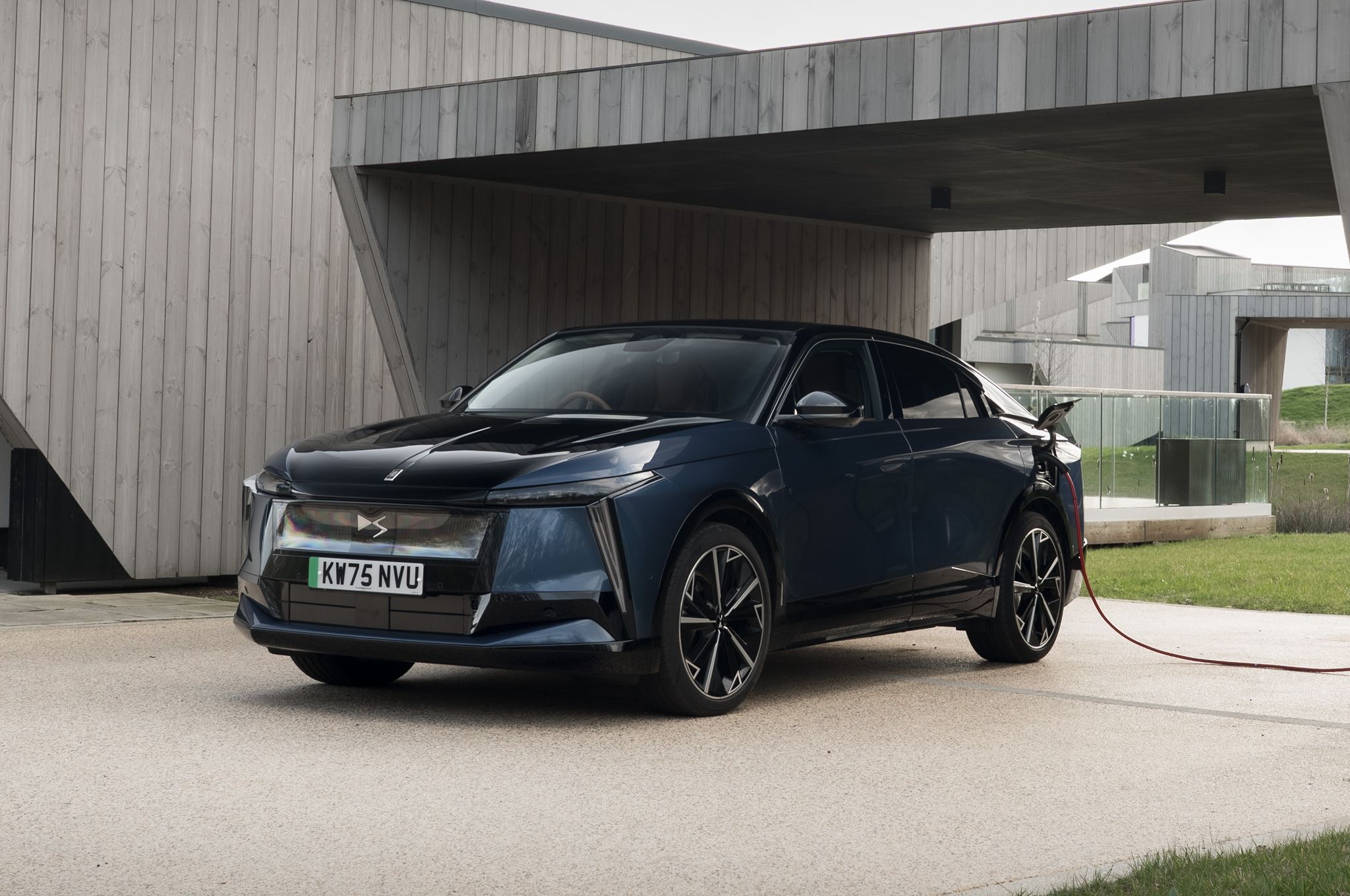
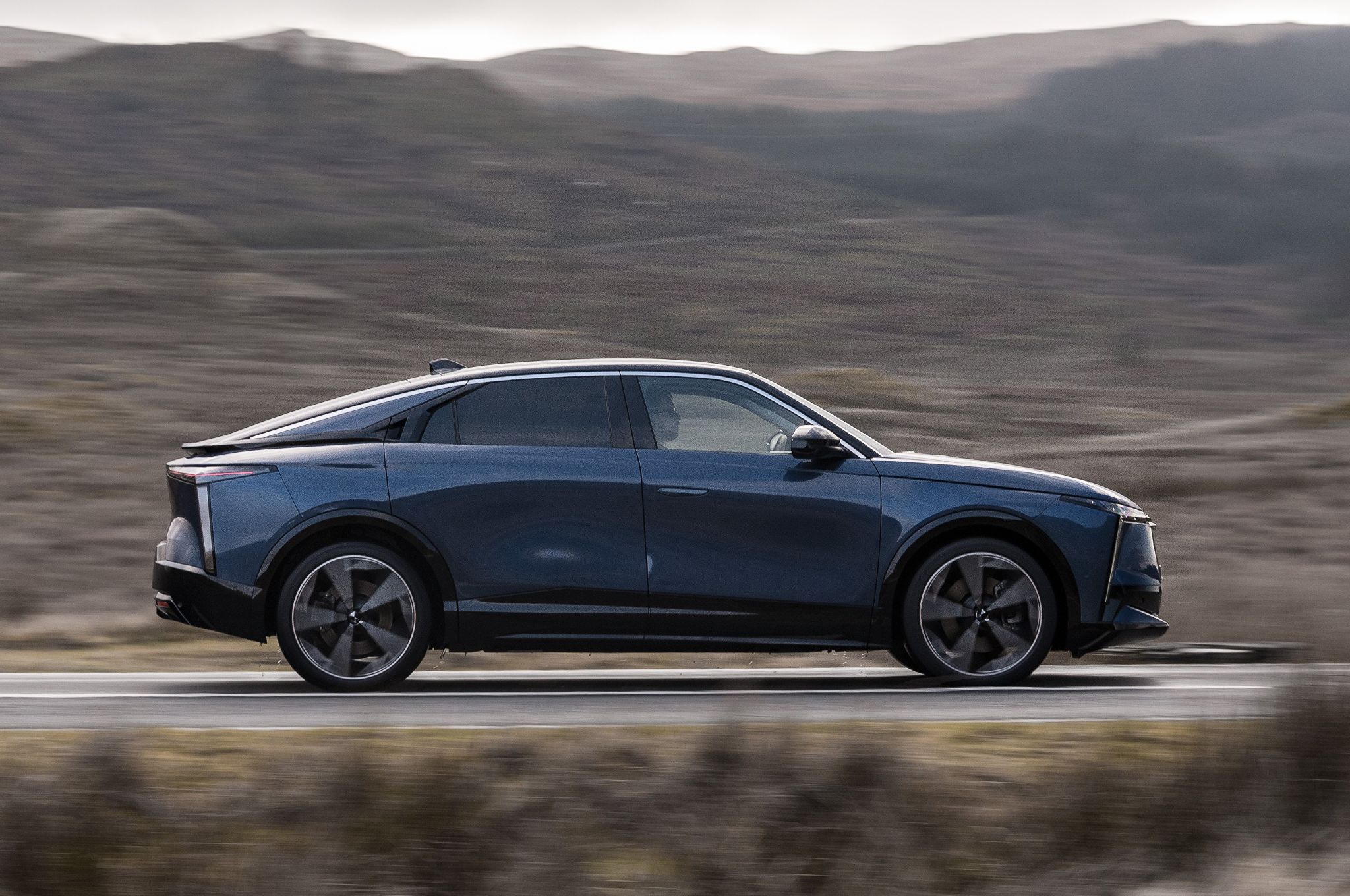
A key part of this is the aerodynamics. The DS No 8’s shape and active cooling flaps give it a low drag figure, improving the range on the motorway especially. Do you like the way it looks? It's a divisive one, isn't it, but I rather like the fact that it's just so different from anything else. That individuality and boutique, almost art-deco feel is very much the chief selling point of the DS cars.
Anyway, back to efficiency, it's worth noting that the big, range-topping DS gets an energy-efficient heat pump as standard too, which DS tells us can save as much as 40% of the energy that the cabin heating would use were it not fitted.
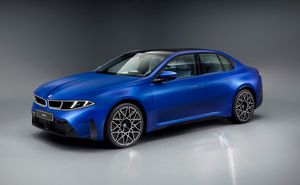
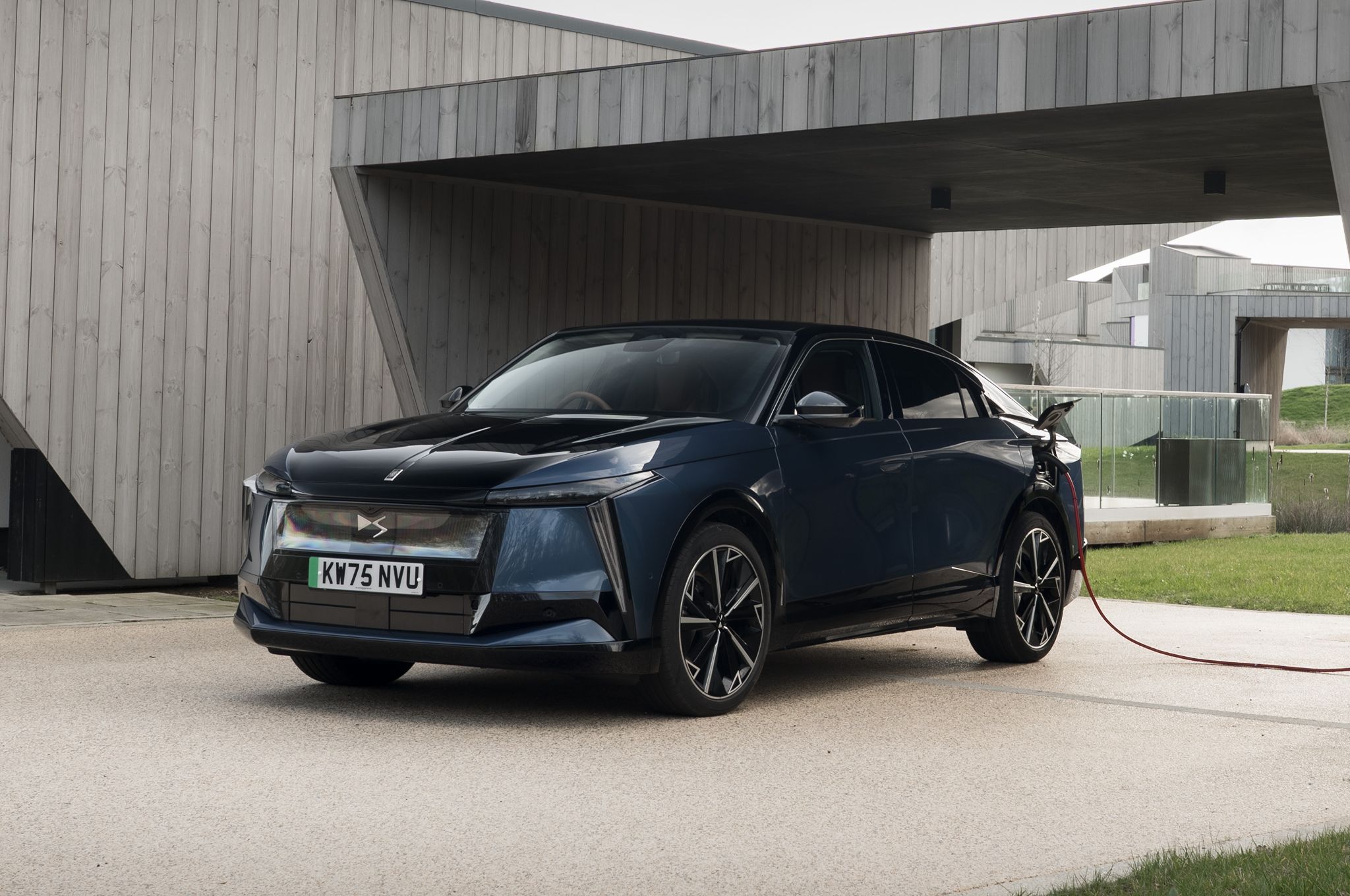
Charging? Well that’s not the fastest, at a maximum of 160kW, but DS say it will hold that peak while charging from 20% to 55%. That results in a 27 minute time to get from 20 to 80%. Still a little underwhelming given the BMW i3, Merc C-Class and CLA all charge at around 350- to 400kW.
The DS N°8 has an 11 kW on-board AC charger, with an optional 22 kW available at a later date. Standard V2L (Vehicle to Load) allows an external electrical device to be plugged in.
Practicality and boot space
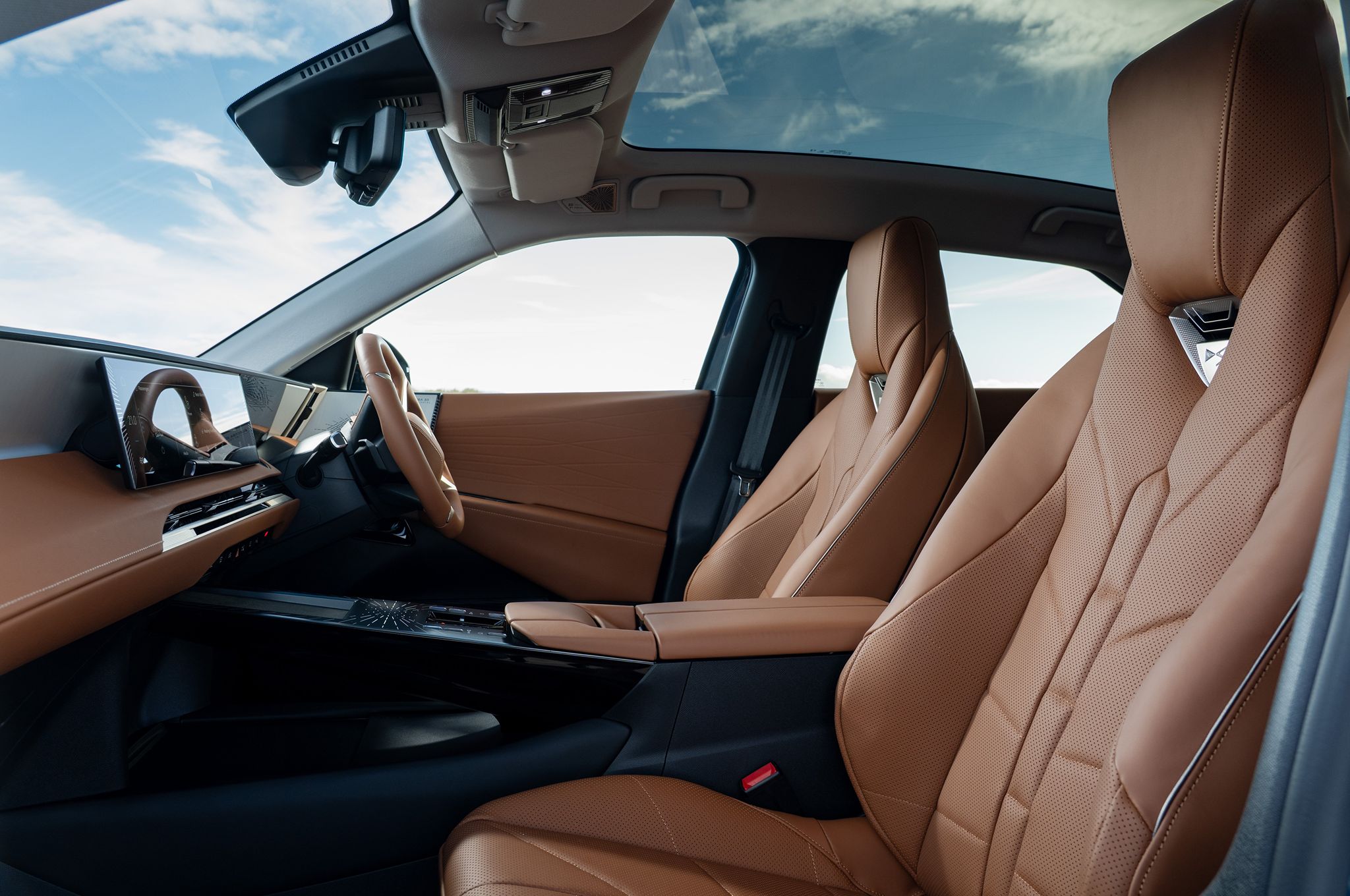
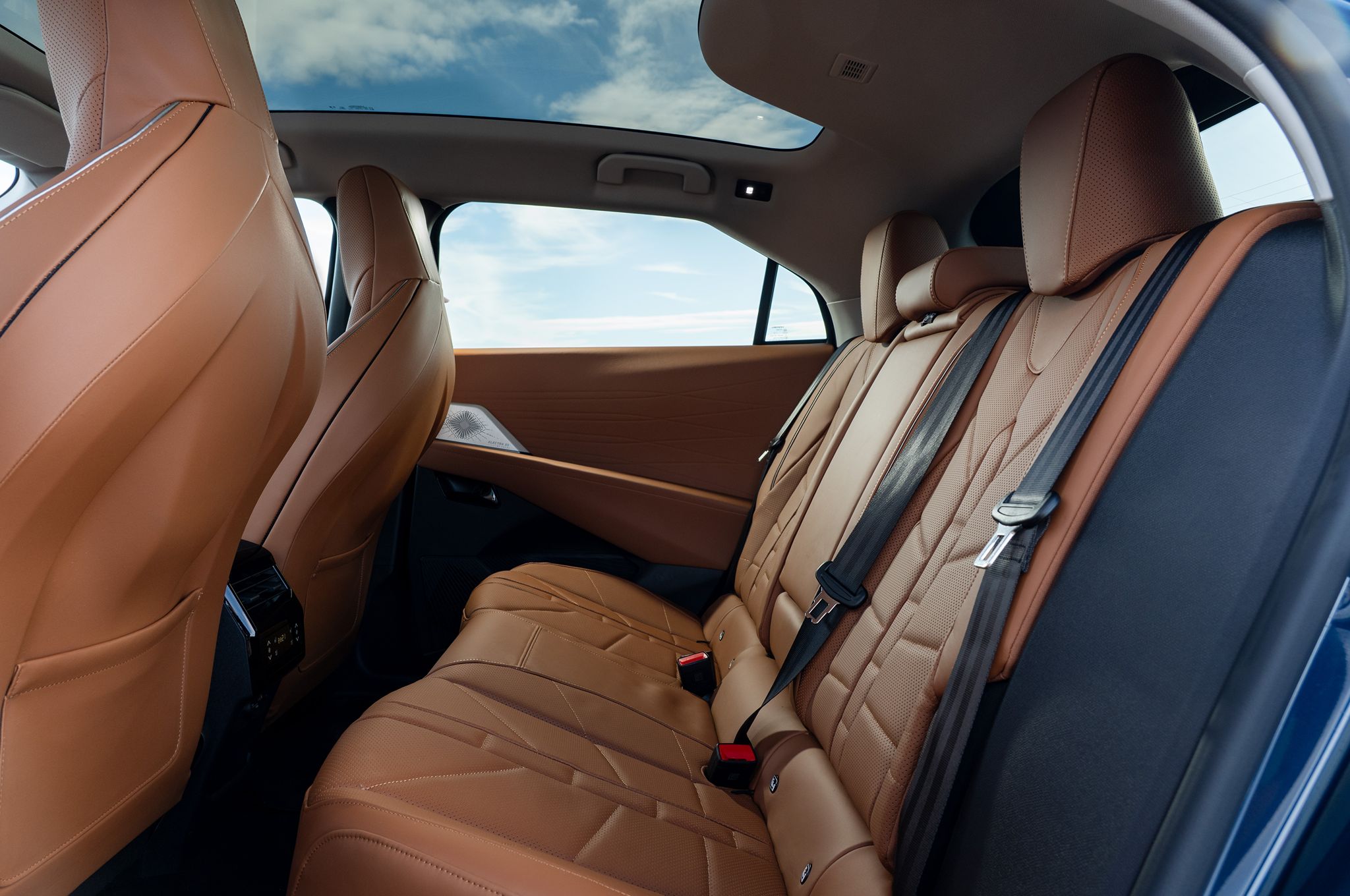
The DS No 8 is a big car. At 4.8m long its main competitors are cars like the Polestar 4, Tesla Model 3, Audi A6 e-tron, Merc CLA and BMW iX3 or i3. It’s not as tall as some of the more SUV-like rivals though, so interior space is more reclined than you might expect. This isn’t a problem in the front seats, where there is plenty of room and storage space dotted all around the cabin.
In the back it is more noticeable however. While knee room is fine for most people, the floor is raised higher than you might expect and there is little space to put your feet under the front seats. Optioning the big panoramic glass roof will maximise headroom, though, and will make it feel so much brighter inside - so I'd definitely go for the pano roof, if you can stretch to it.
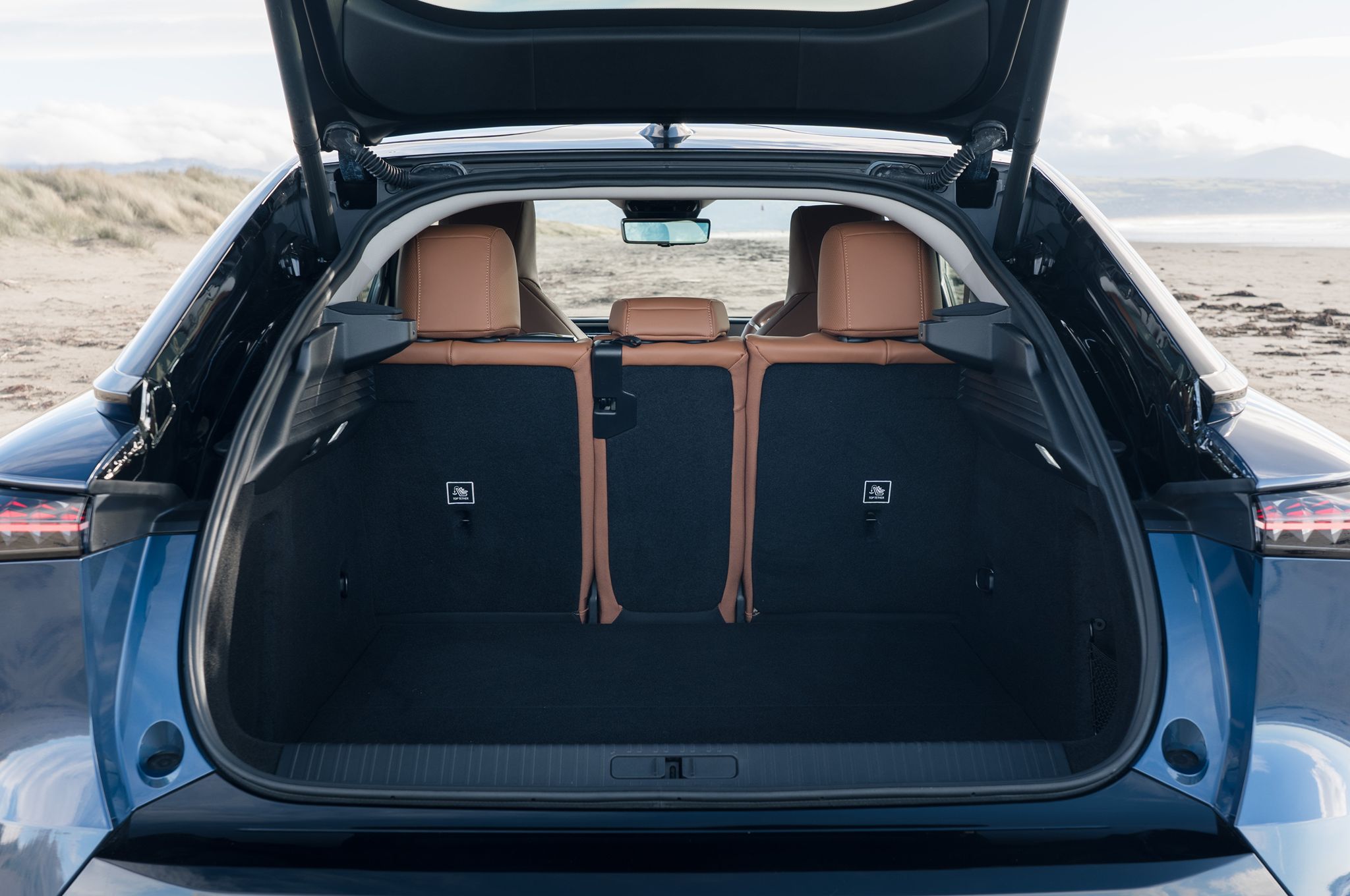
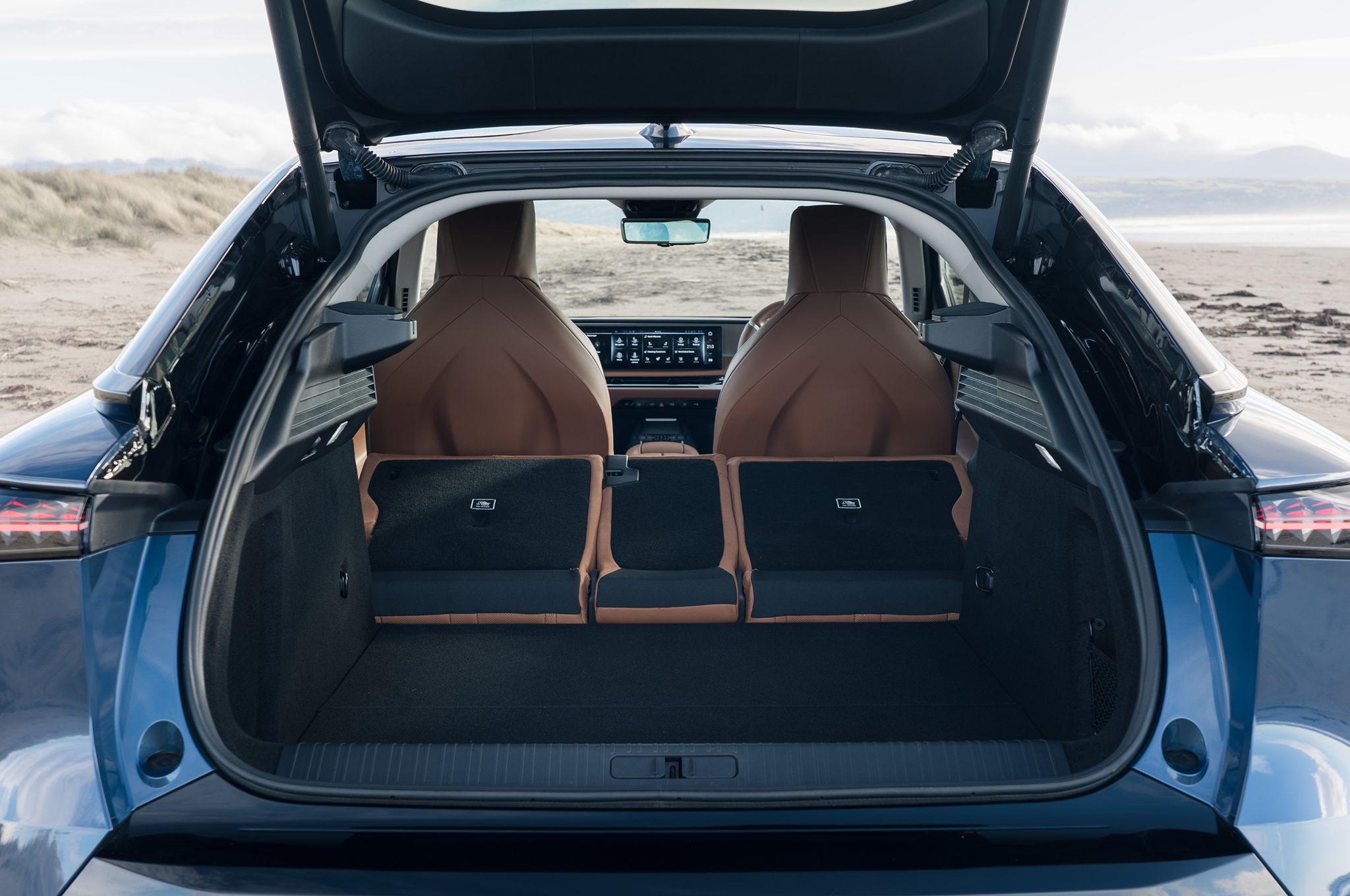
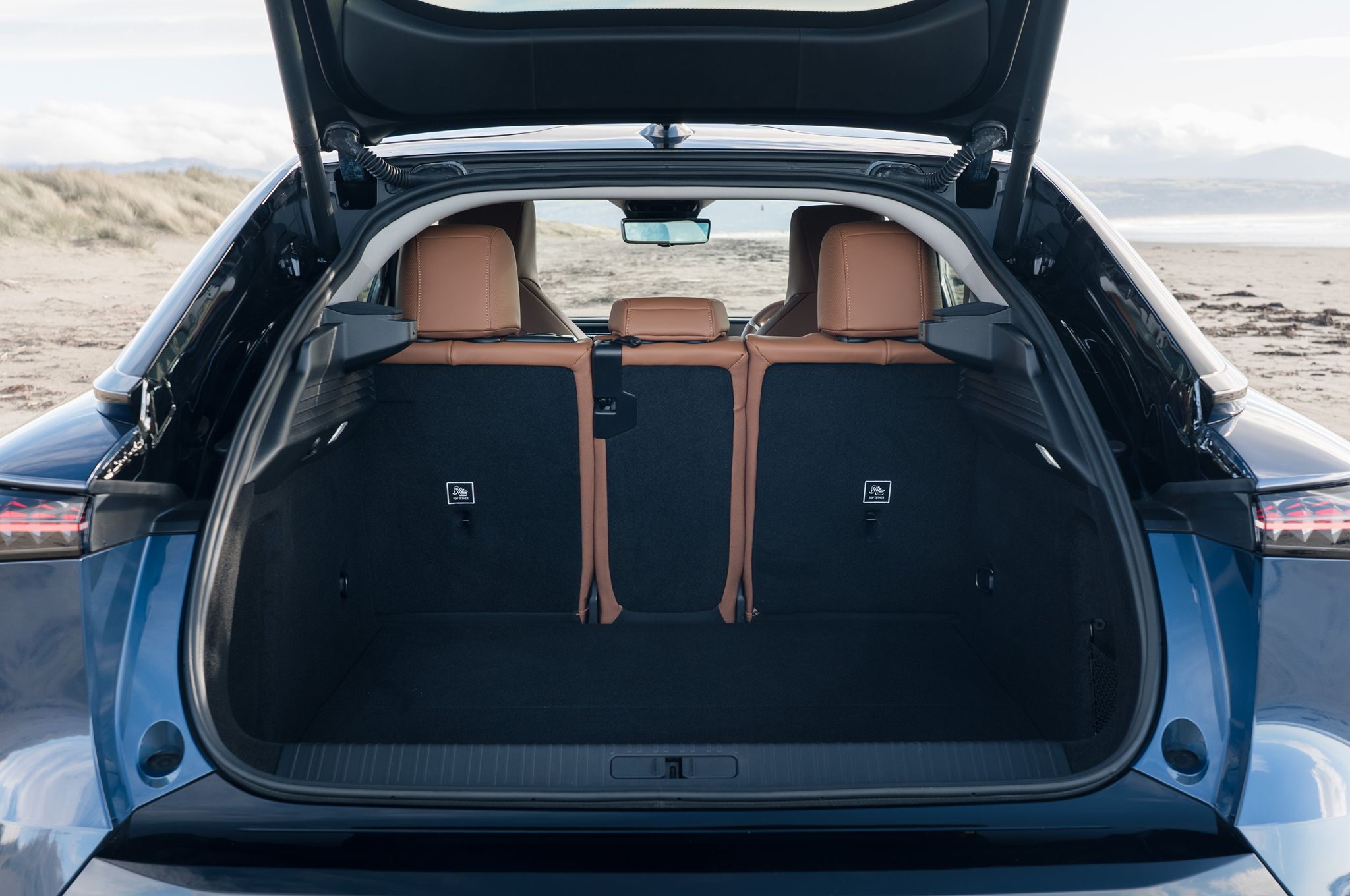
Round at the boot, the news is much better. There is 620-litres of space, split above and below a false floor. You can even option a space-saver spare wheel, which I am personally a fan of. I hate that most cars today get tubes of gunk instead of a proper space-saver tyre. Anyway, I'll stop ranting! The DS No 8's boot is more than a metre deep from the tailgate to the backs of the seats, which makes it more practical than estates such as the Audi A6 e-tron Avant and BMW i5 Touring. It's actually an even bigger boot than the Skoda Enyaq, which is my benchmark for 'big boot' goodness.
.jpg)
Interior, design and technology
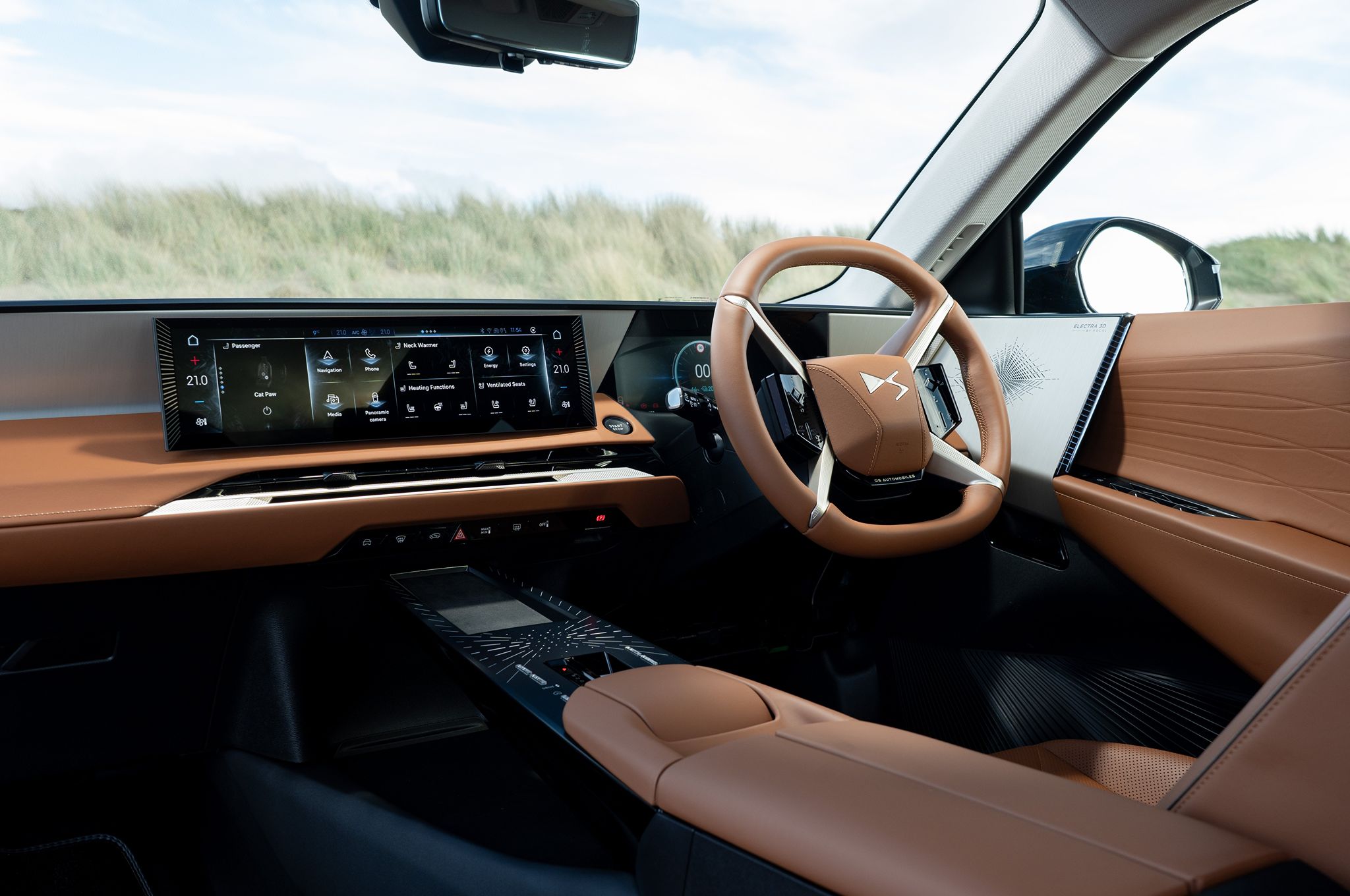
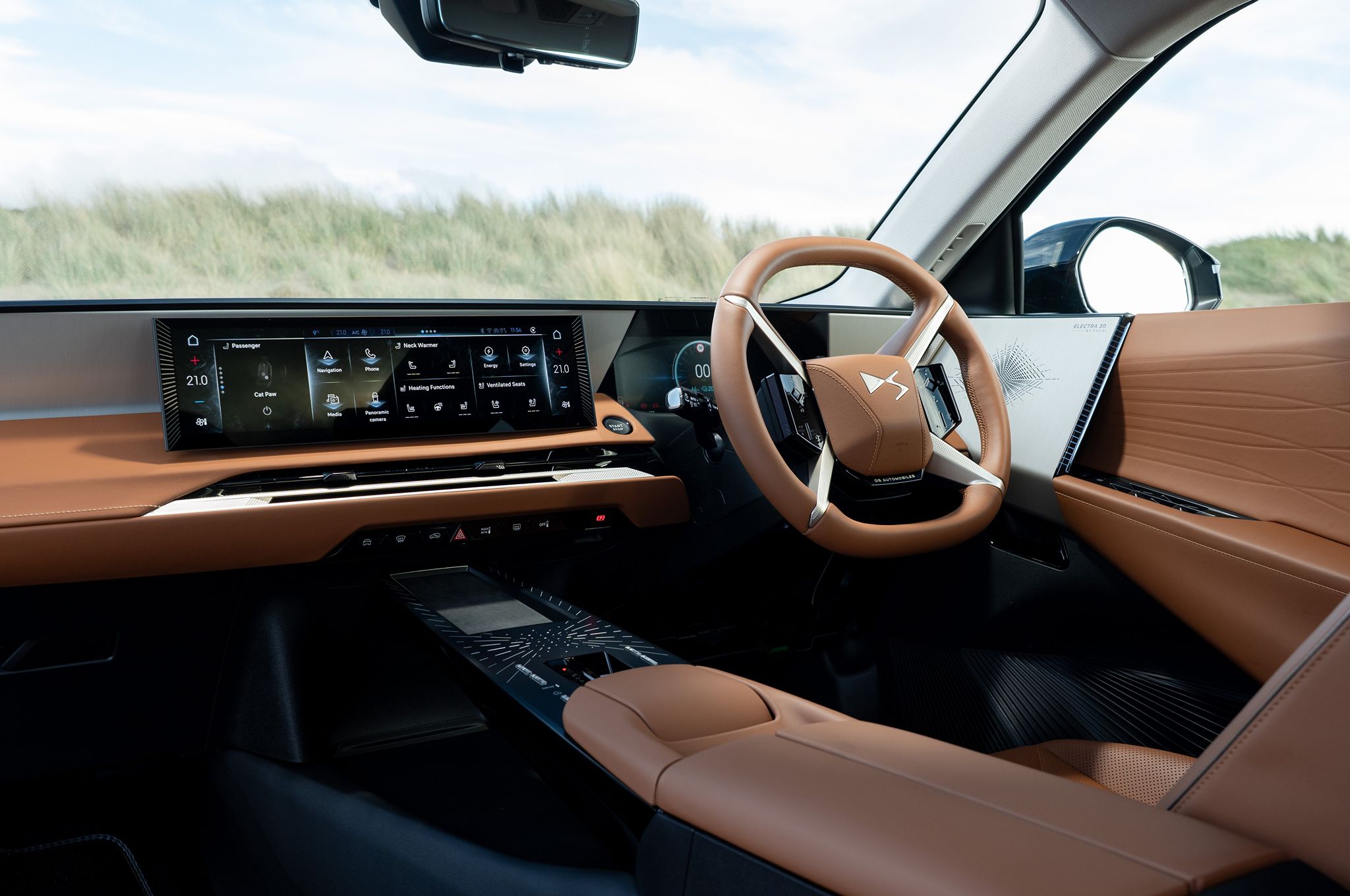
Inside, the styling is just as bold as the exterior, with interesting use of metal finishes, lighting and soft materials. The colour choices make a welcome change from the blacks and greys of rivals too.
There is some space age tech too, like Active Scan Suspension, which uses cameras to scan the road ahead and spot when things are going to get rough. It then softens the dampers in a fraction of a second to make it feel smoother.

The cruise control also talks to the navigation so it knows when you are approaching a roundabout or sharp curve and will slow down automatically.
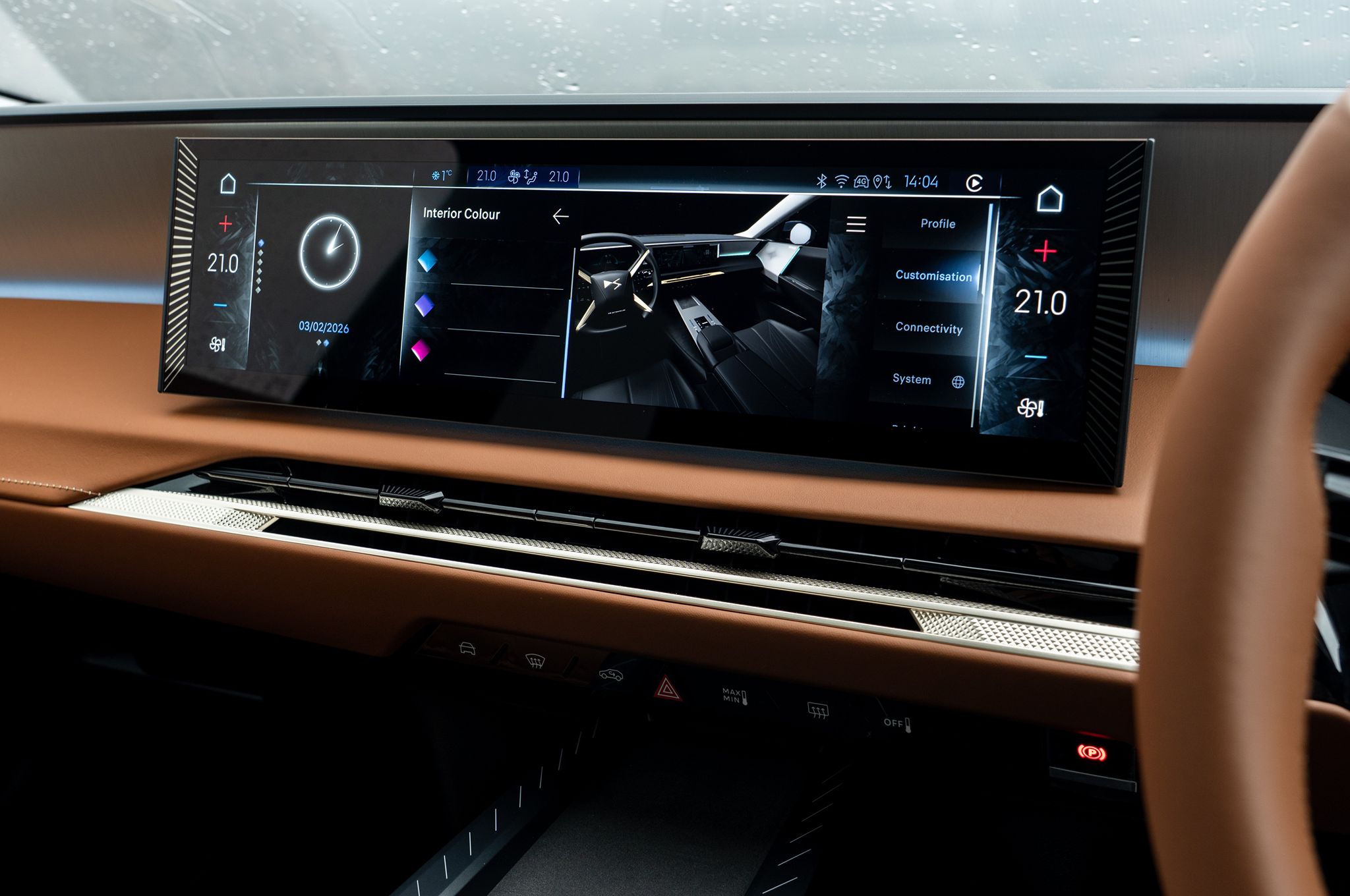
Talking of navigation, it’s all controlled via a 16 inch- screen which DS say is big enough to be used by the passenger as well as the driver. Which might cause the odd marital row.
If you want to settle an argument, the DS also has Chat GPT built in, so you can ask the car to search the internet and find the height of the spire or Salisbury cathedral. Or anything else. Clever.
If you want to listen to some music to calm you down after the row, DS and premium French audio specialist FOCAL have joined forces to develop a 14 speakers system with a power output of 690W.
Motors, performance and handling
There are three models on offer in the DS No 8 range, starting with the smaller battery and a 230hp, front-wheel drive setup. Or the bigger battery is offered with either 245hp and front-wheel drive, or a 350hp dual motor. The car will add another 30hp for short periods if you boot the throttle because you need to overtake.
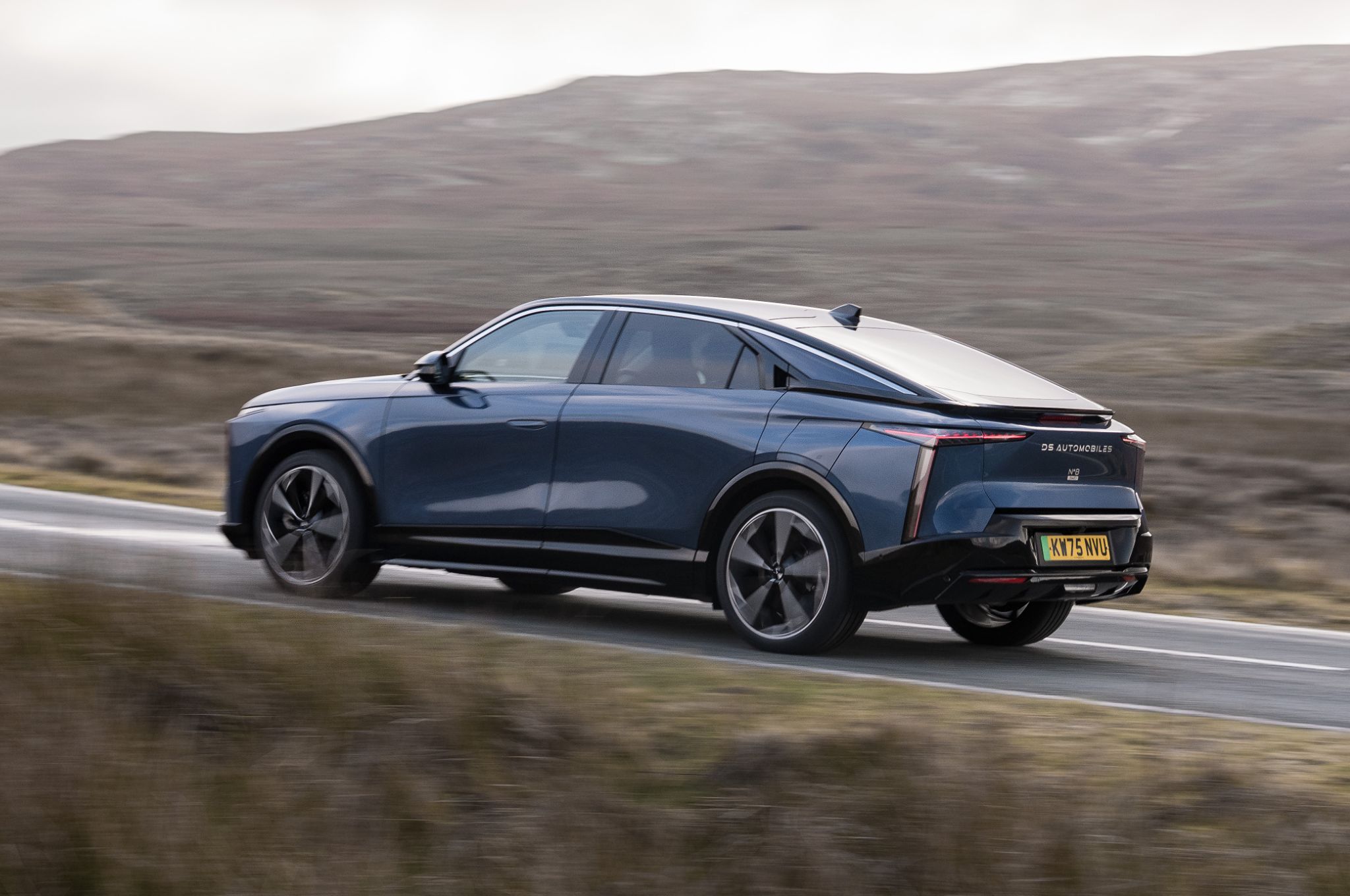
That means 0-62 times of between 7.7 and 5.4 seconds. Not bad, even if Tesla owners may find that a bit tardy. DS wants to prioritise efficiency, and i can tell you that the DS No 8 feels more than fast enough for most drivers.
.jpg)
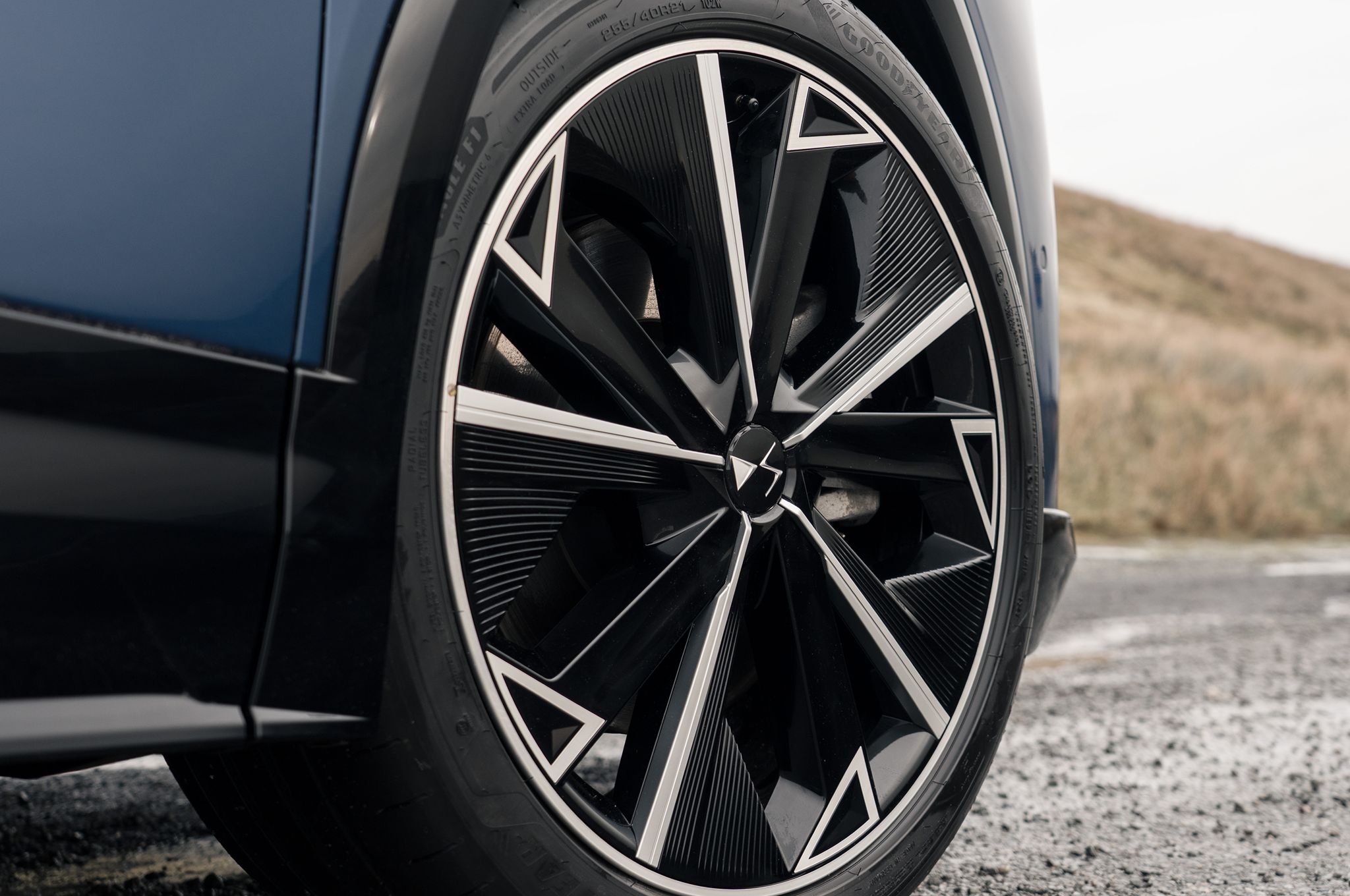
As for how it drives? Smoothly. That's how it drives. I prefer the four-wheel drive version, which - yes - is the more expensive one! But it just feels smoother, and that extra performance suits the luxury feel of the car. So if I were splashing out on a DS, I'd go for that one. And it'll be extra peace of mind in that British weather, too. I was a bit disappointed with the ride comfort, though. On big 21-inch alloys you still notice the No 8 bump and shudder over the UK's scruffy roads. It settles at higher speeds, and makes for a truly brilliant, refined long-distance EV, but ride around town could definitely be a bit better - despite my test car having the 'predictive' adaptive suspension.
The brake regen' is really good, though. You can use the flappy paddles on the steering wheel to adjust it, allowing you to hop easily from free-wheeling mode to one-pedal driving, with all the useful middling levels of brake regen' in the middle. It's slick, and easy to predict and I always find having the regen' on the steering wheel useful as then I can adjust it for the road I'm on. Nice!
.jpg)
While we're talking about the steering wheel, the very stylish four-spoke wheel is one of the more divisive aspects of the DS. I think it looks really cool, and very in keeping with the dense materials and blingy finishes around the cabin. But it's not actually great to use, as the spokes are kind of where your hands want to be. I do know some others who've driven the DS and don't mind it, and I know some who really don't like it (myself included). So this is just another aspect of this luxury French fancy that seems to be a love-it or hate-it situation.
Overall, the DS No 8 is very quiet, very calm and very swooshy - and it does feel rather special. Does it handle as well as the Audi A6, or BMW i5? No. But it does just feel... a bit different. And rather lovely for it. I just wish that ride comfort was a touch better.
Running costs and pricing
The DS No 8 starts from just under £51,000 for the smaller battery car, with its 329 mile WLTP range, but most will go for the long range DS No 8, which costs around £55,000 - £63,000 depending on whether you want front-wheel drive and a bit less power, or the full-fat, all-wheel drive version.
Let's face it. That's not cheap! But it is cheaper than the Polestar 4, and taking into account the range and equipment, it's also competitive with rivals like the BMW iX3. But, yeah... Even with DS throwing in all kinds of luxuries, like neck-warmers and massage seats, you have to really want the DS' style and attitude to justify this over some of its newer rivals. Of course, a lot of DS No 8s are going to be company cars, which makes it a whole lot easier to justify. If it wants to tempt retail buyers, this bougie French brand is going to have to offer some very tempting monthly finance and lease deals.
.jpg)
DS provides a vehicle warranty for three years and 60,000 miles, while the battery is covered for 100,000 miles and eight years.
Hmm. That's comparable with most of the premium German brands, but DS is kidding itself if it doesn't think that it's also competing with sister-brand Peugeot (which has an eight year warranty), not to mention Tesla (four years), Kia (seven years) and MG with its IM cars (seven years). It's just another ownership detail that DS should address if it really wants to tempt retail buyers away from more mainstream alternatives.
Verdict
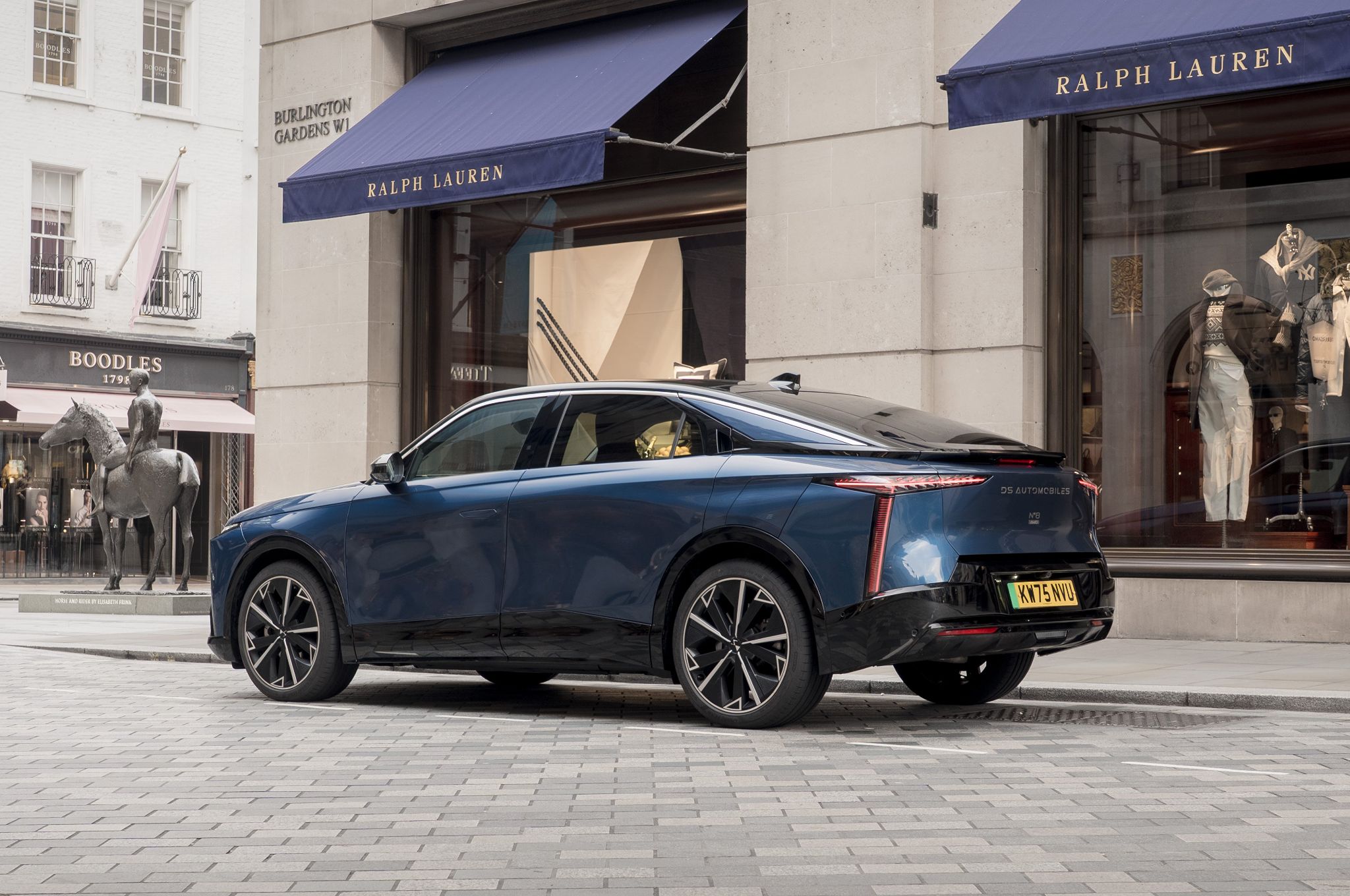
DS seems to have thrown everything it’s got at the No. 8. In terms of technology, range, performance and tech it’s a match for best competition, while the styling is divisive enough to make it a ‘must have’ for some buyers. And the interior design and finish really is something else; It's like driving a boutique cocktail bar. The charging speeds are a bit underwhelming, though, and I wish it had a more comfortable ride quality over UK roads.
Personally, I like it and think it offers something truly different in a market where a lot of cars can feel very samey. If DS can just bring in lower monthly costs and a longer warranty, I think the No 8 could do well.
.jpg)
Like the DS No 8? Try these...

 9
9