


 Battery size: 118kWh
 Miles per kWh: 3.6 (est)
 E-Rating™: A
 Max charge rate: 350 kW
 Range: 440 miles WLTP (est)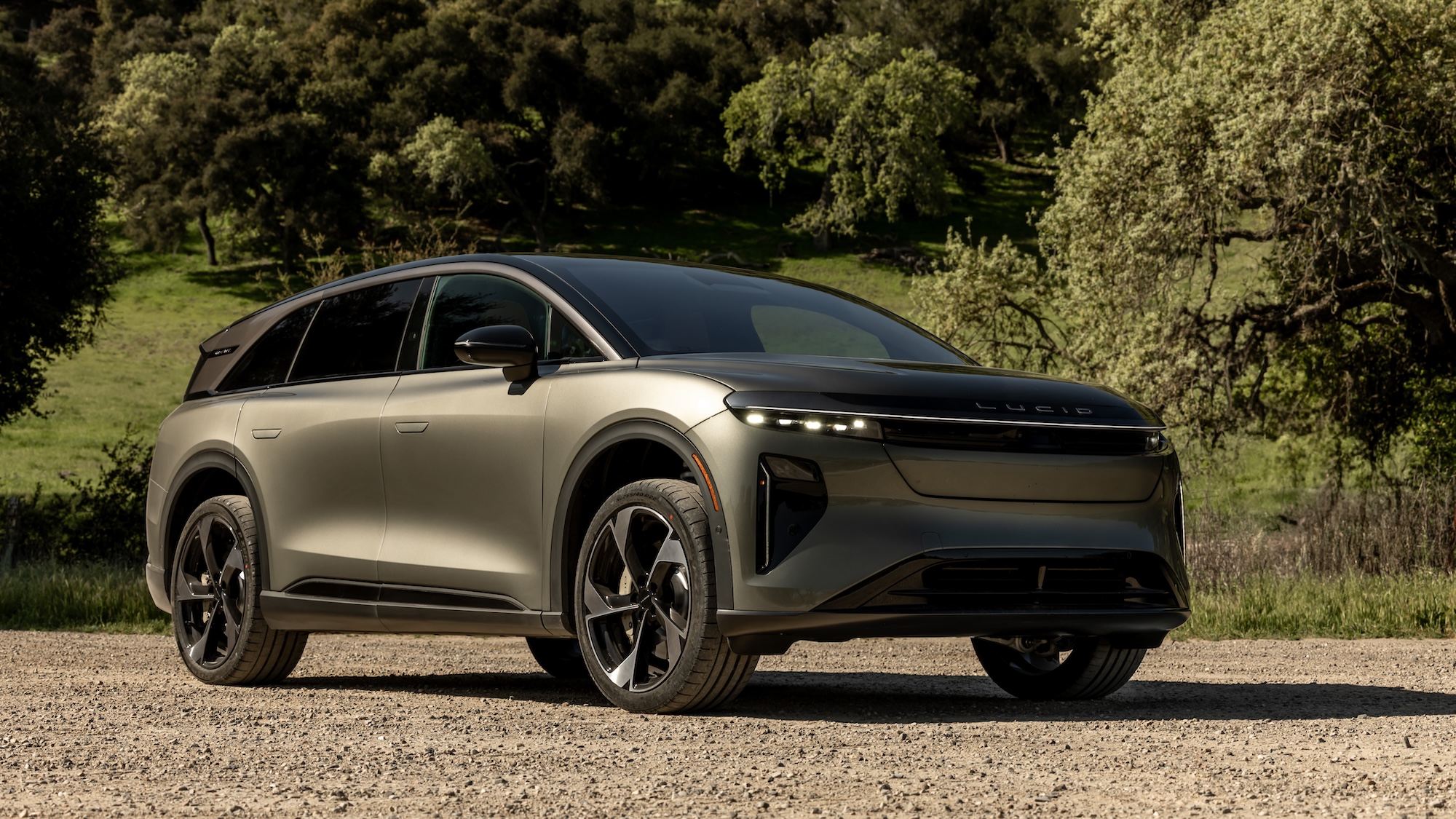





Introduction and model history
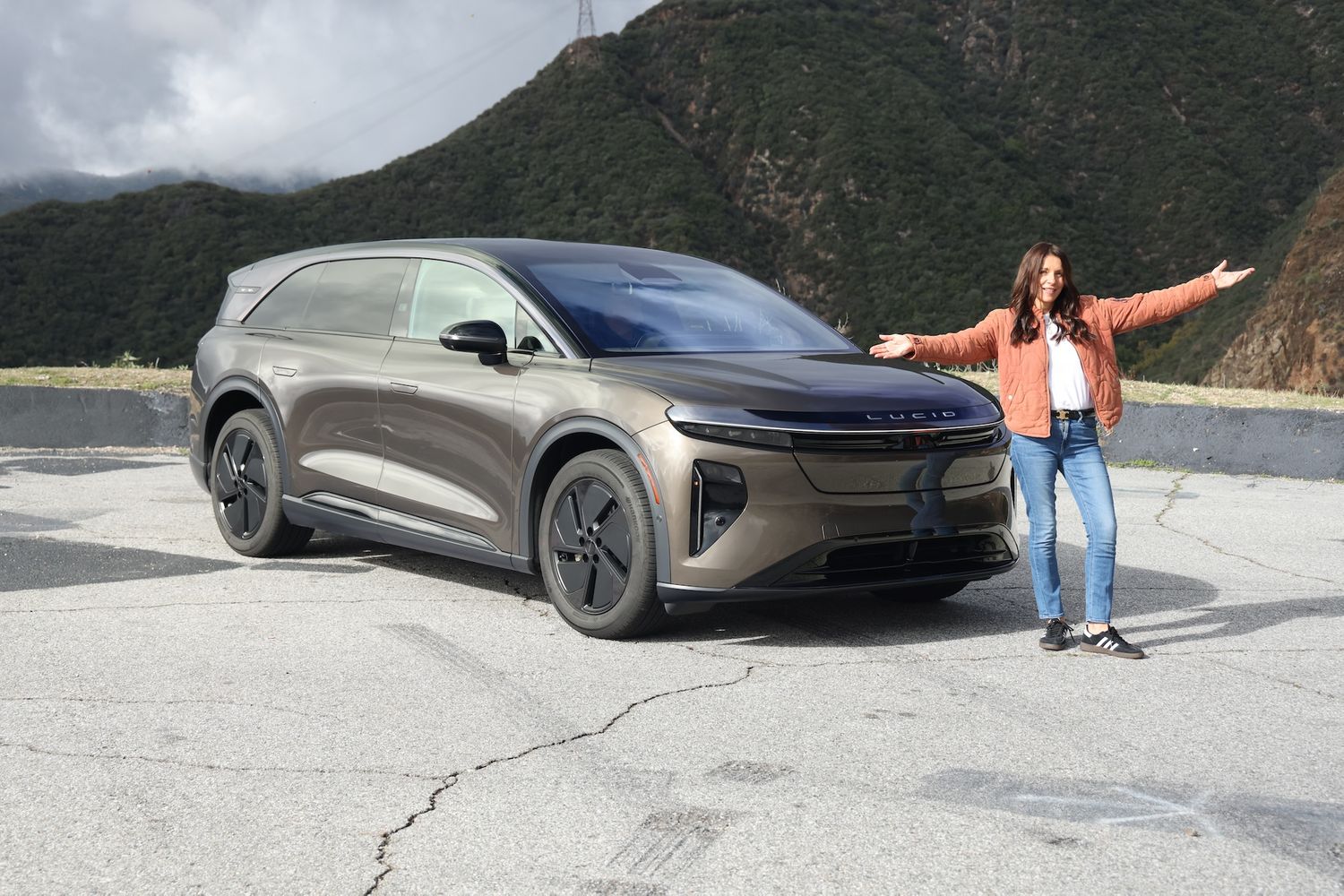
Lucid is one of those names that proper EV fans in the UK might have heard of, but to a wider audience, the brand has an unfamiliar mystique about it. It's a California start-up and was founded by a group of very talented EV experts, one of whom was Peter Rawlinson, Tesla’s former chief engineer. Rawlinson, now Lucid CEO, headed the launch of the Air – a big, low-slung luxury electric saloon with a long range and high efficient credentials, which immediately impressed as it was crowned 2023 World Luxury Car of the Year.
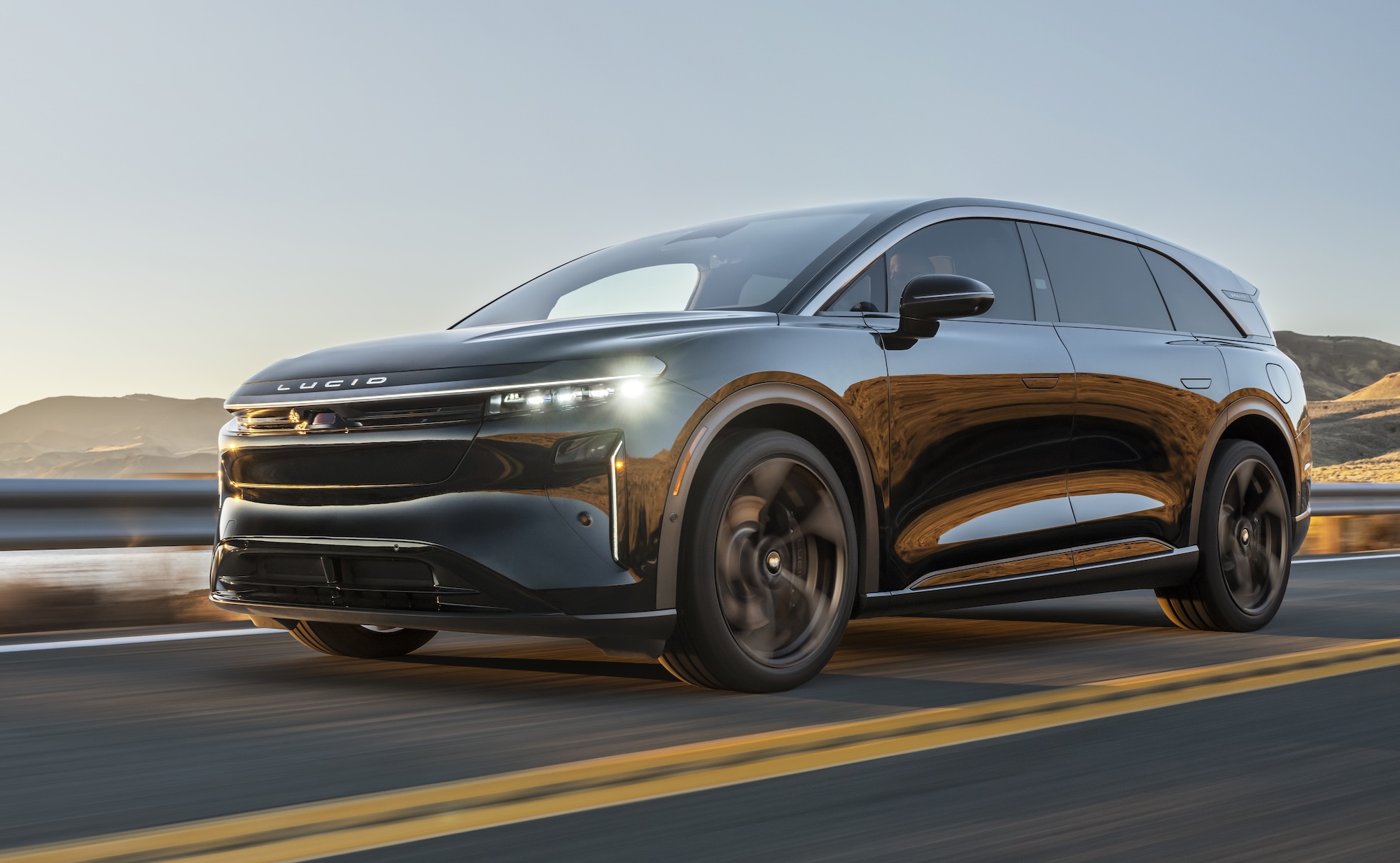
The Gravity is the tricky, second-album follow-up act, taking the Lucid brand into the oh-so-fashionable electric SUV market. The Gravity is a large, high-end, seven-seater gunning straight for the likes of the Tesla Model X, BMW iX and Mercedes-Benz's EQS SUV. What might surprise you, though, is that the Gravity packs a pretty normal-sized battery; it isn't trying to beat those cars on pure Top Trumps numbers. Instead, Lucid has focussed on outright efficiency and impressive charging capabilities, so that's why its design is super sleek and it has a 900-volt electrical system.
Up to now Lucid has been an American-oddity for Brits, but that's set to change. The Gravity is planned for right-hand-drive markets, but not immediately. Rawlinson has been clear that Lucid won’t sell left-hand-drive cars in the UK, but will wait until it can supply proper, UK-suitable cars and support customers. That launch date could be late 2026, and I for one really hope the Gravity does arrive on these shores as it is a genuinely exciting proposition.
Range, battery and charging
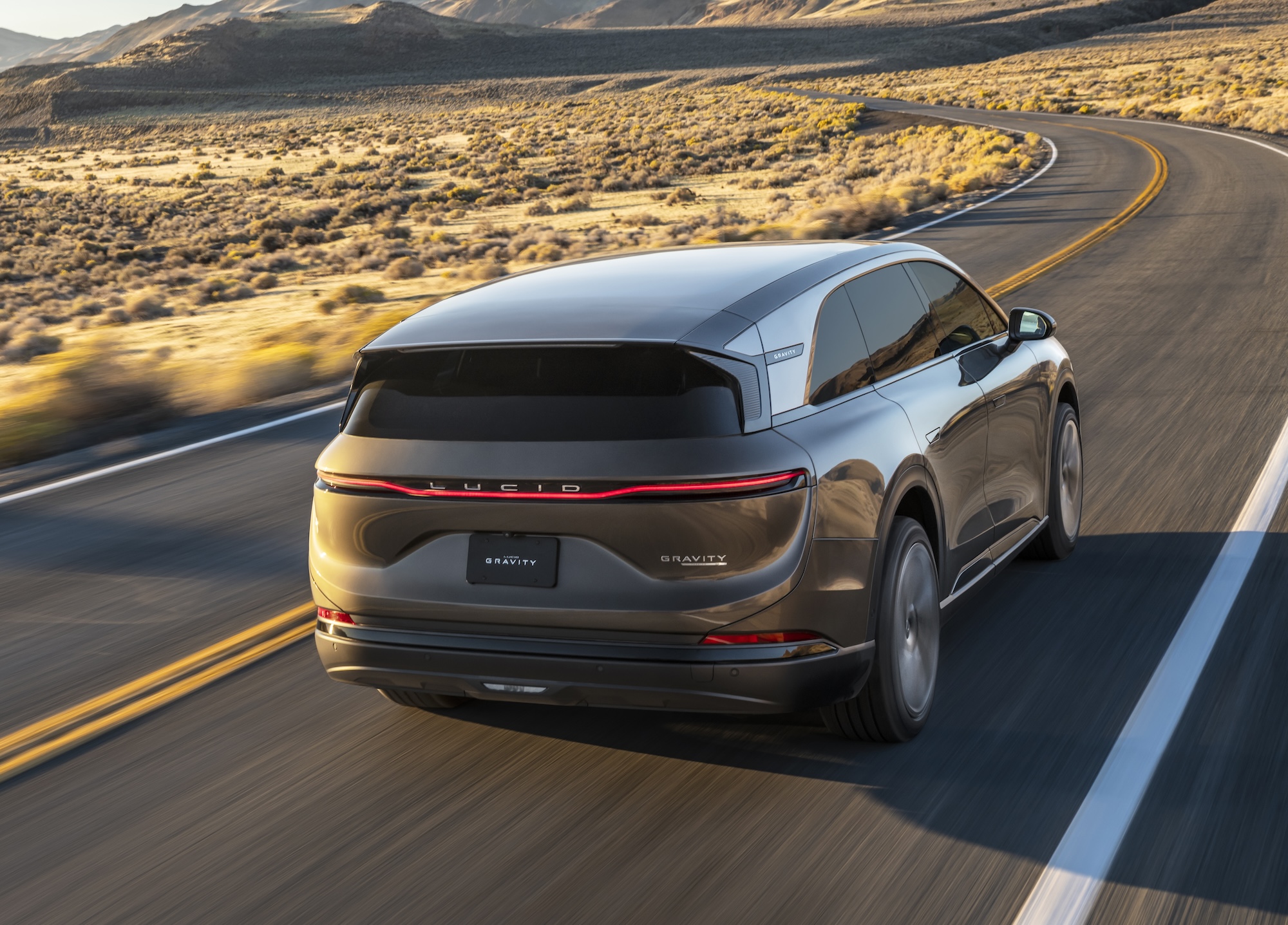
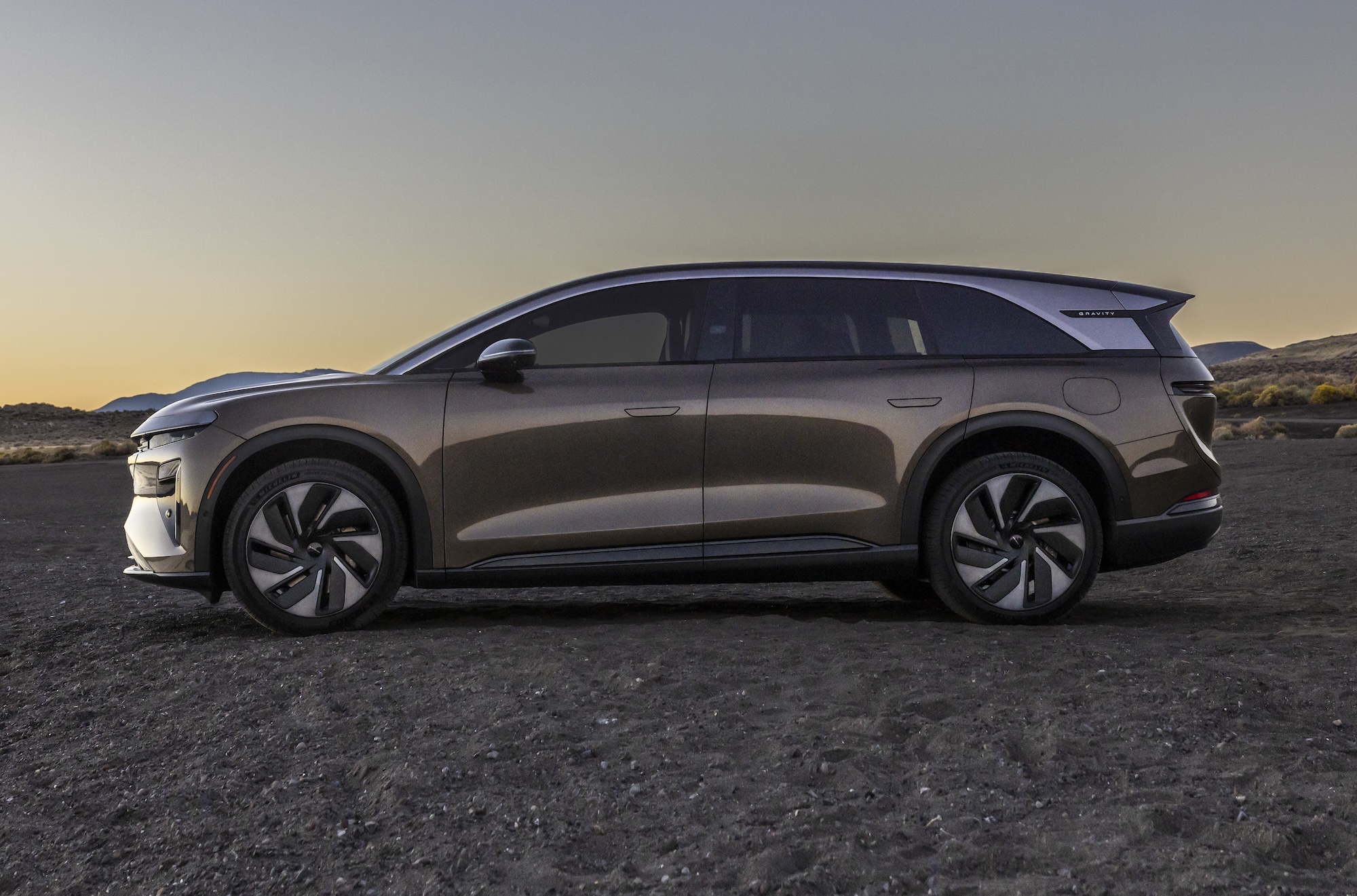
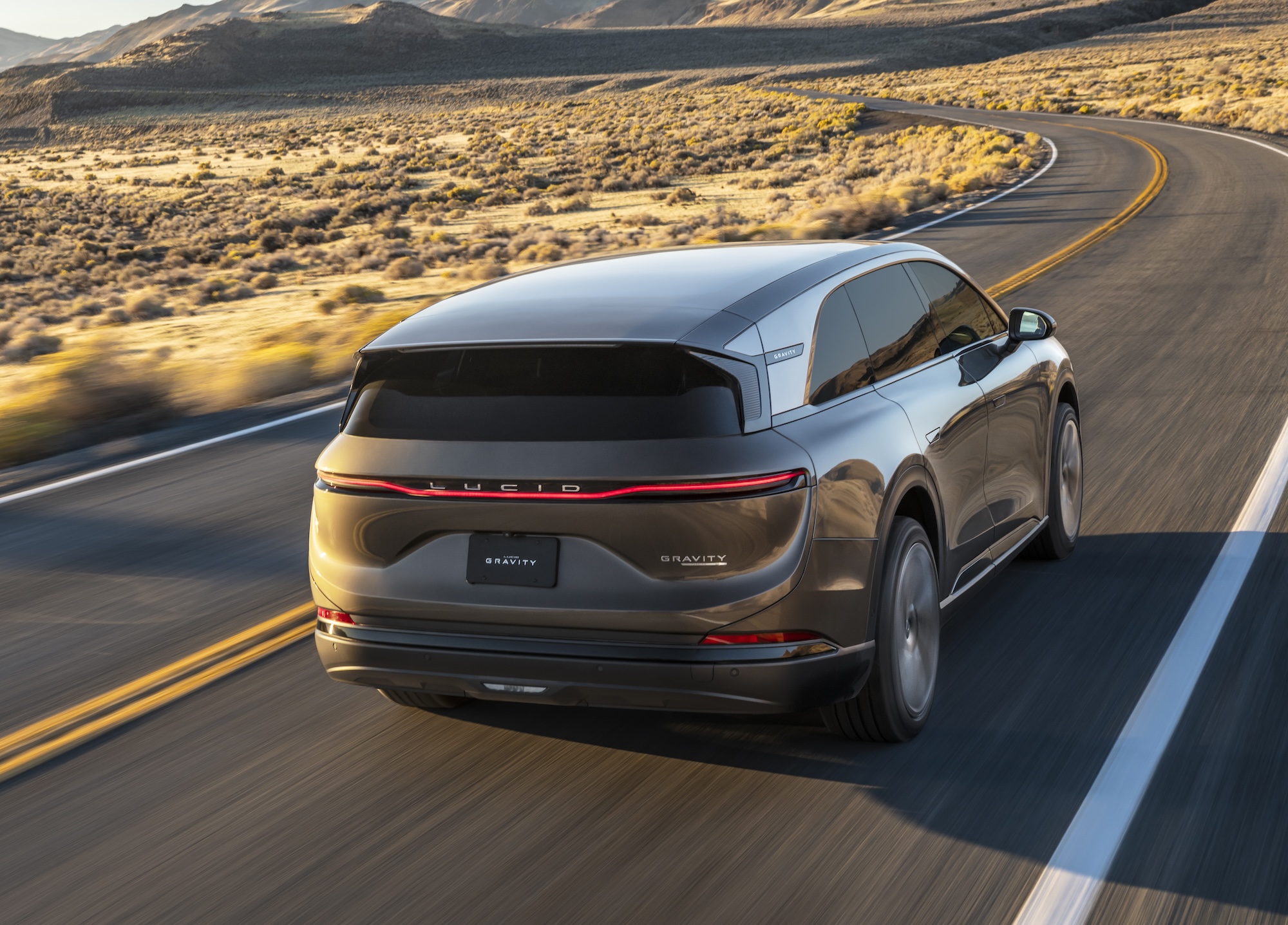
The Gravity's big showstopper is the battery and charging architecture. Although not WLTP-tested yet, the 118kWh battery is expected to offer around 440 miles before needing to be topped up. If it does, it should be class-leading, as rivals like the Tesla Model X and BMW iX tend to sit nearer the 330–380 mile WLTP mark.So, how does the Gravity manage this from such a modestly-sized battery? Well, it's down to aerodynamics. The Gravity has a 0.24Cd coefficient, which, in industry jargon, means it's super-slippery through the air. And super-slippery means less drag, which in turn means better efficiency. Lucid told me it expects figures as high as 3.6 mi/kWh, and if true that's seriously impressive for such a large car.
When you do have to charge up that battery you won't be waiting around for long (providing you plug into a suitably hefty charger). The Gravity has a 900-volt electrical system and DC rapid charging of up to 350kW, allowing around 200 miles to be added in about 15 minutes. That beats all nearest rivals.
Practicality and boot space
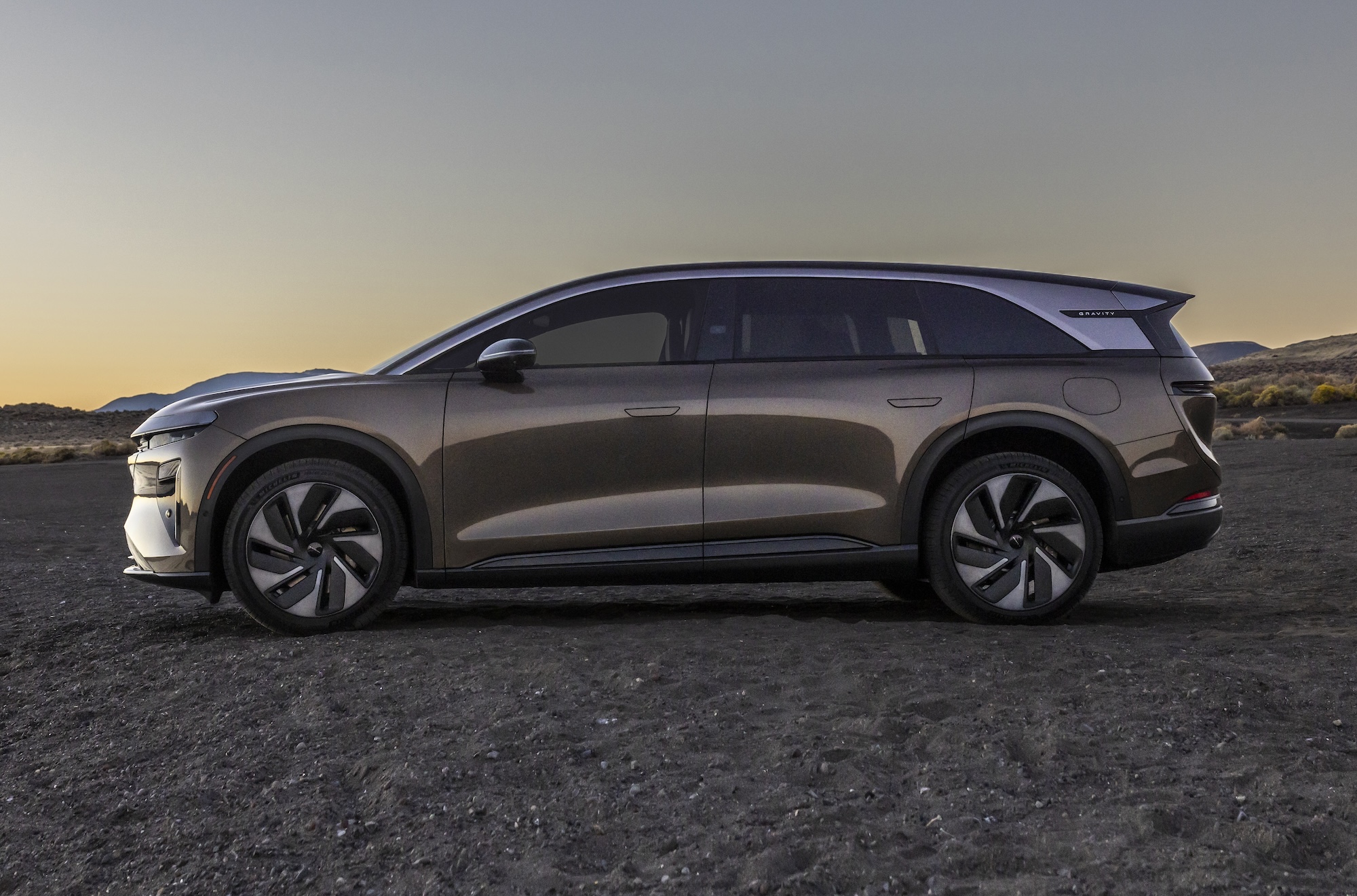
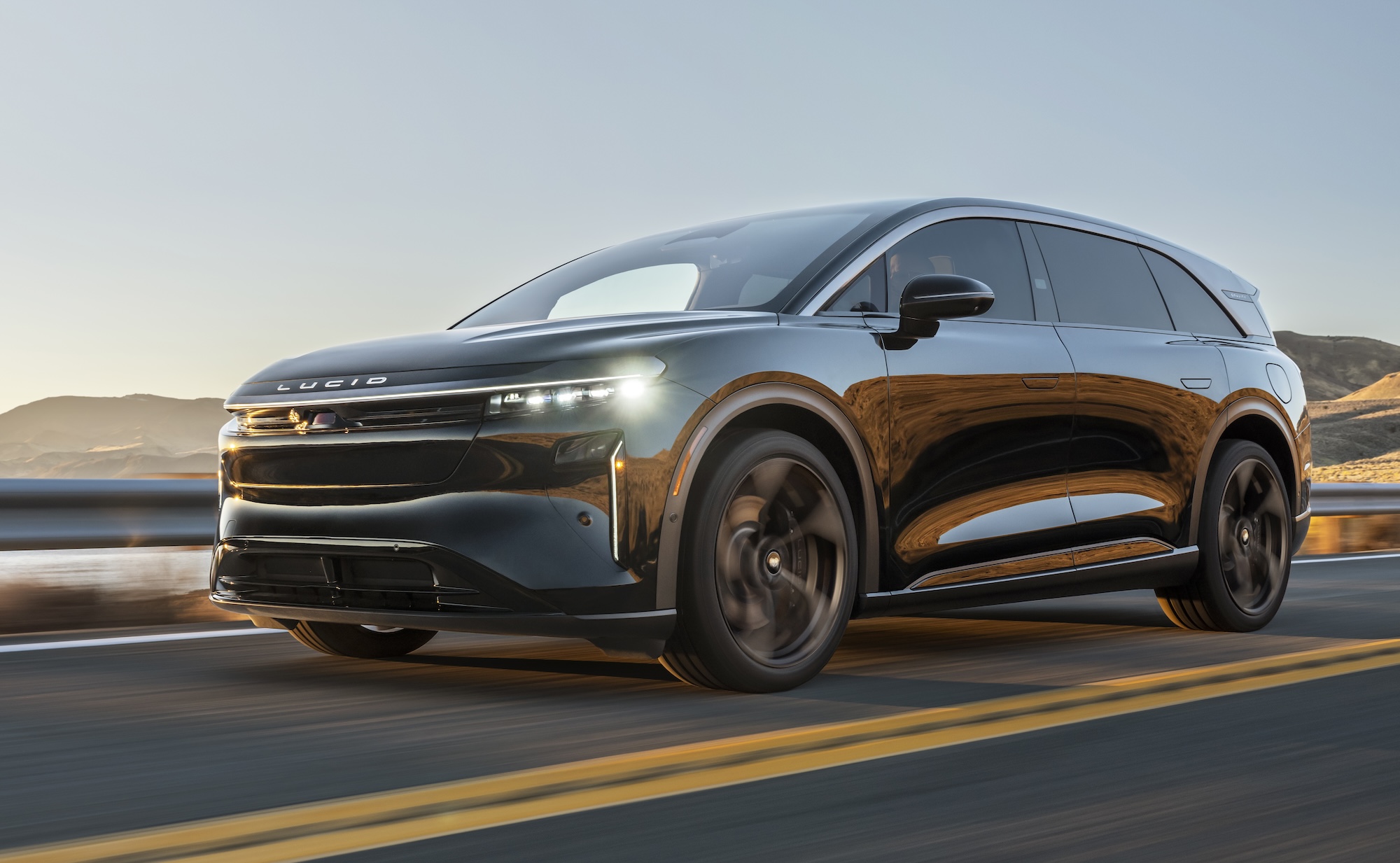
Many seven-seat SUVs like the Kia EV9 and Hyundai IONIQ 9 are rather boxy in their designs. That's understandable as this is the most sensible shape for a car that needs to carry many people, but this is where Lucid has been clever. It has a very sleek shape with a sloping roofline, that really doesn't follow the "cube on wheels" designs of other electric SUVs. Amazingly, this rounded shape doesn't impinge on interior space, as there's masses of it. Lucid says it spent 18 months optimising the seat configuration to make the most of interior room and comfort, and they've succeeded.
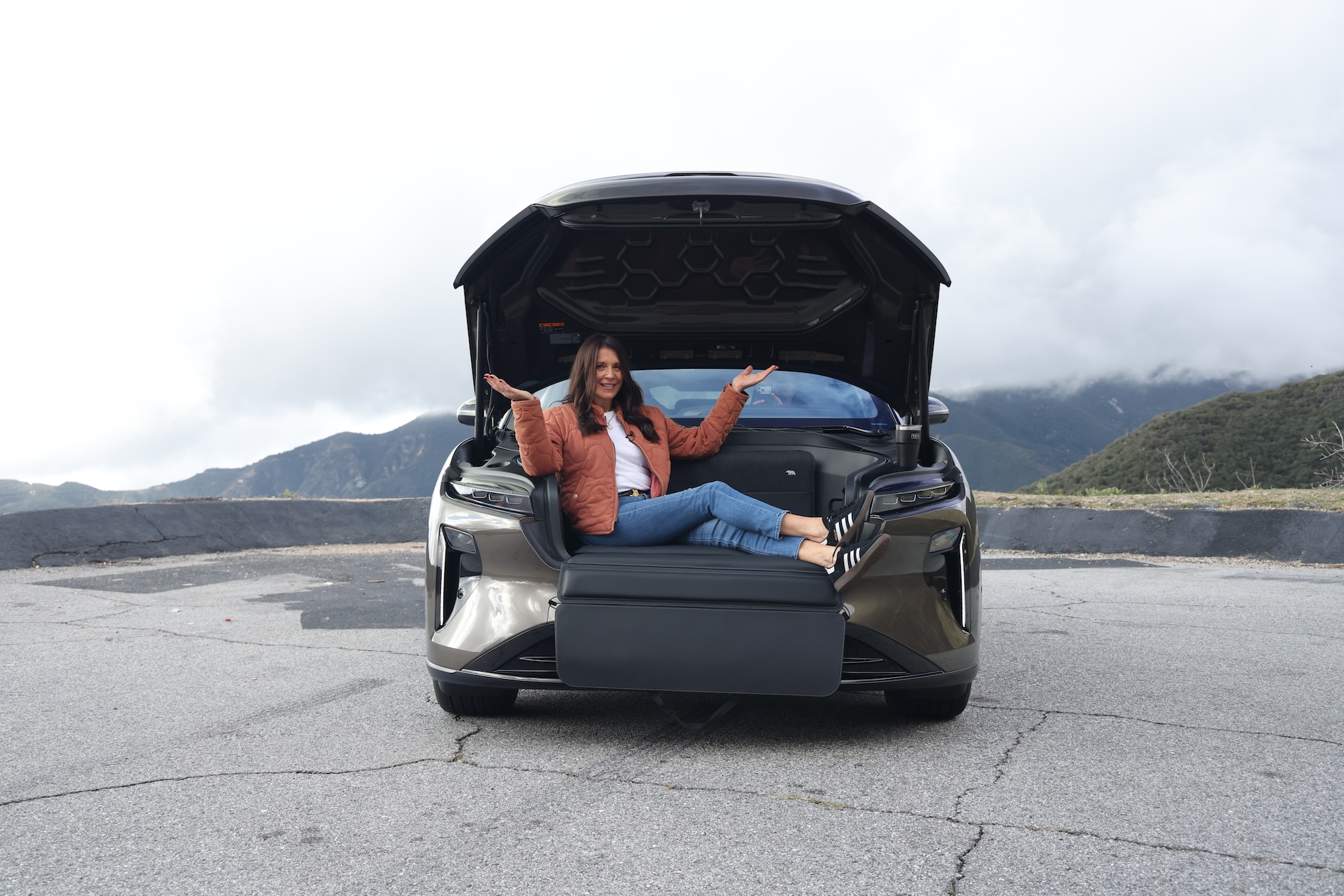
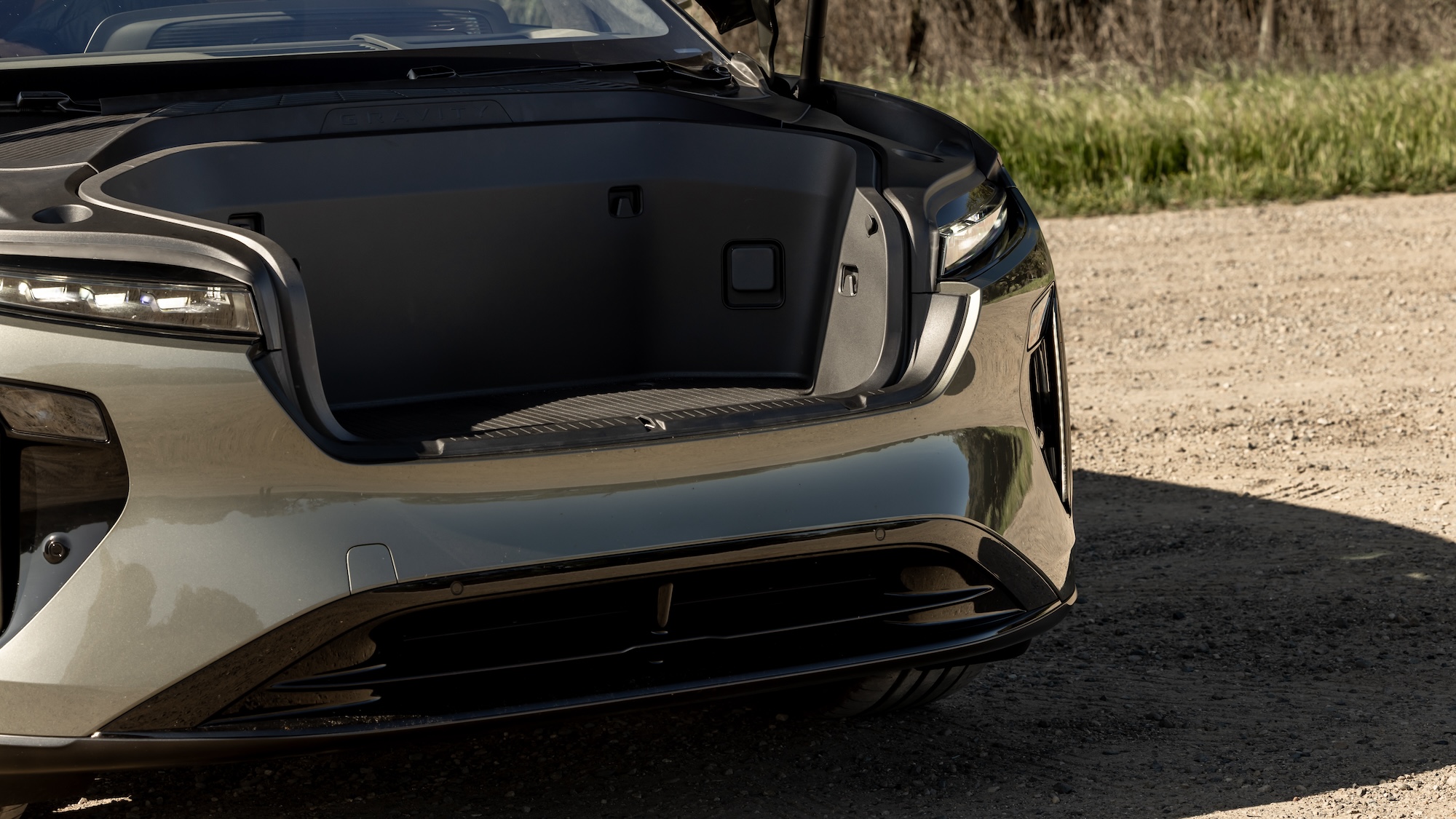
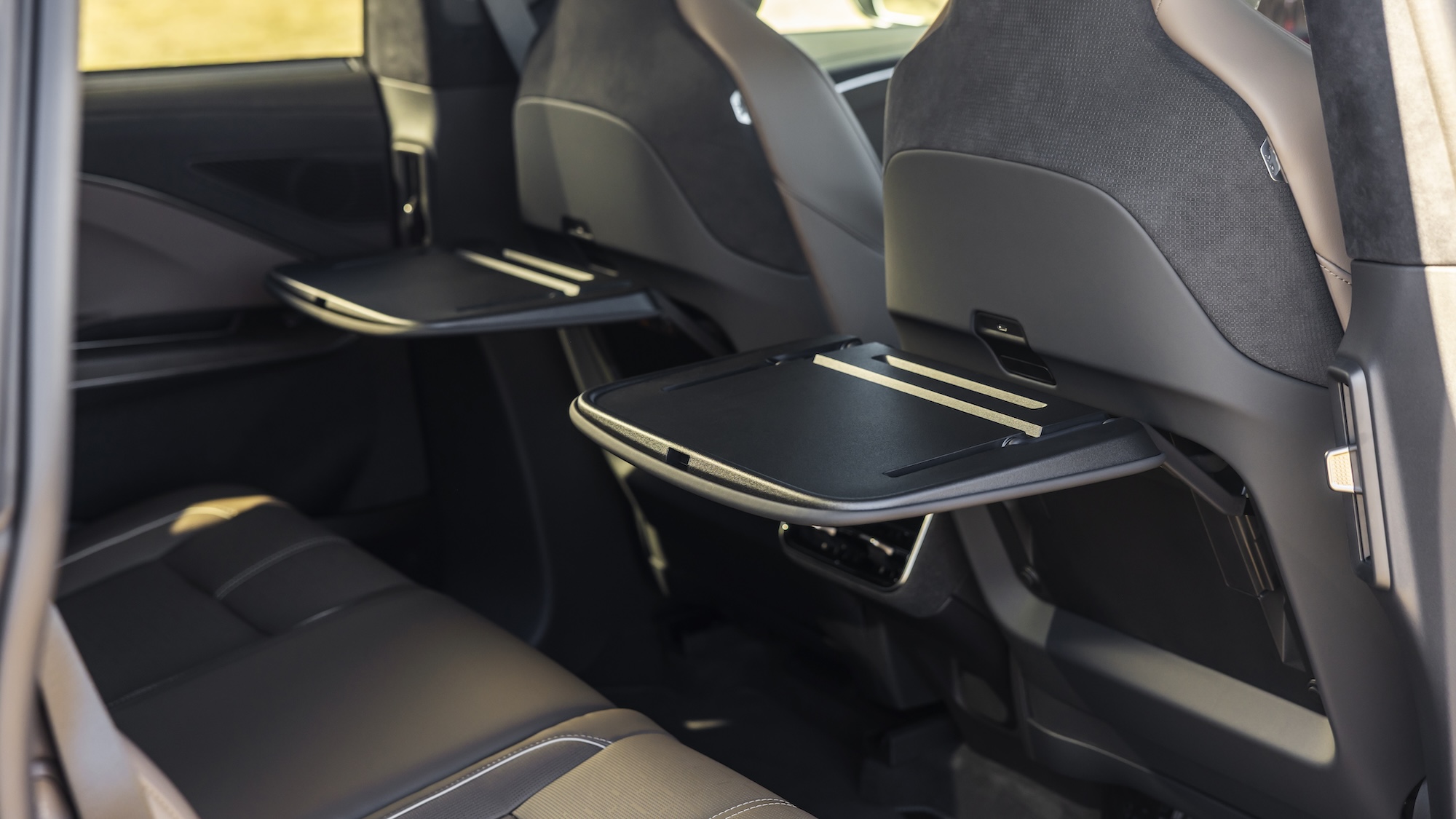
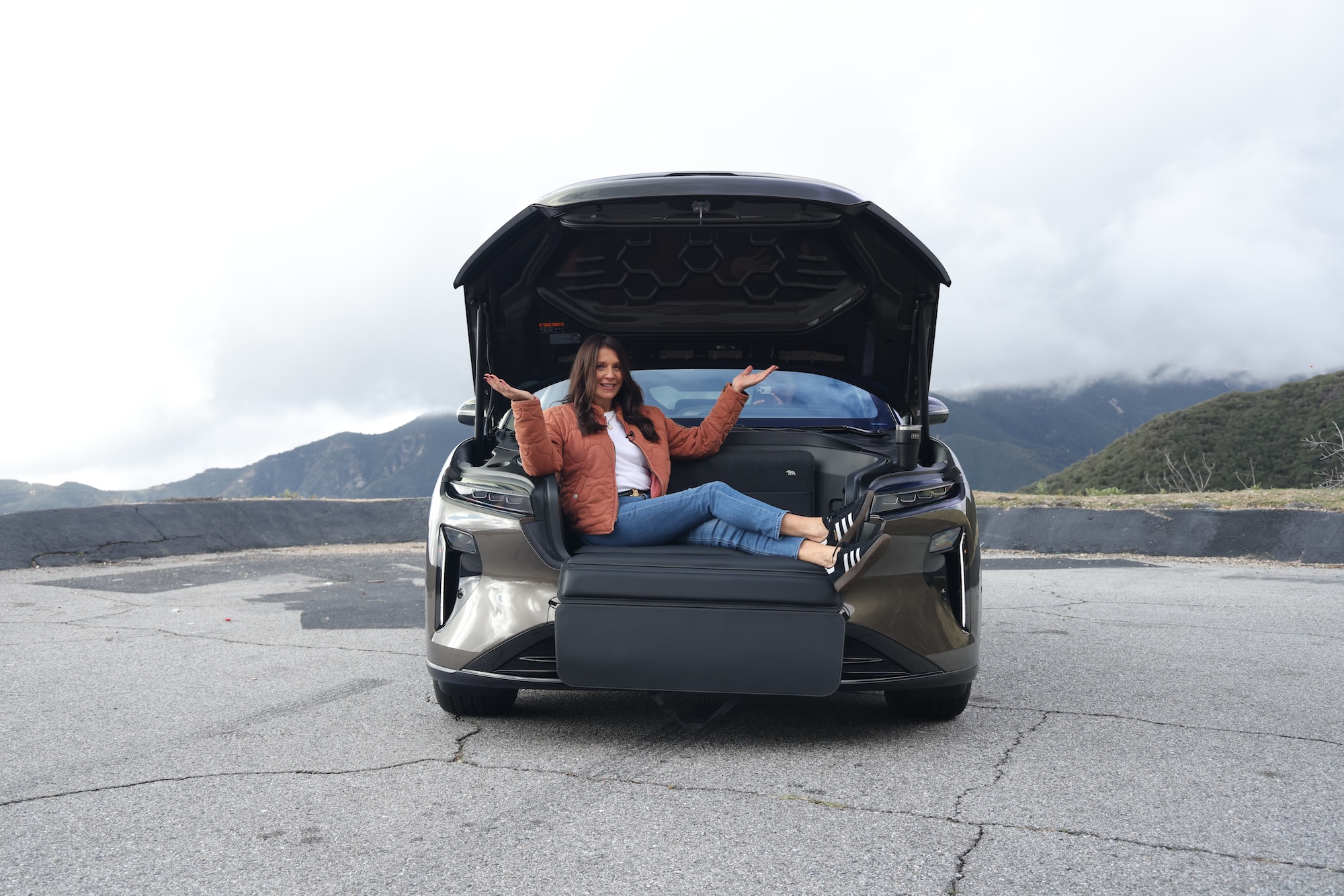
The second row slides to balance legroom between the second and third rows, and in the rear-most row there's room for adults, not the "kids only" perches found in some rivals. Both rear rows fold flat to create a huge load bay for bulky kit like bikes or surfboards, and there are fold-out tables integrated into the backs of the second-row seats. Then there’s the frunk: Lucid says it’s massive, and even usable as a seat for a couple of people when parked.
Interior, design/styling and technology
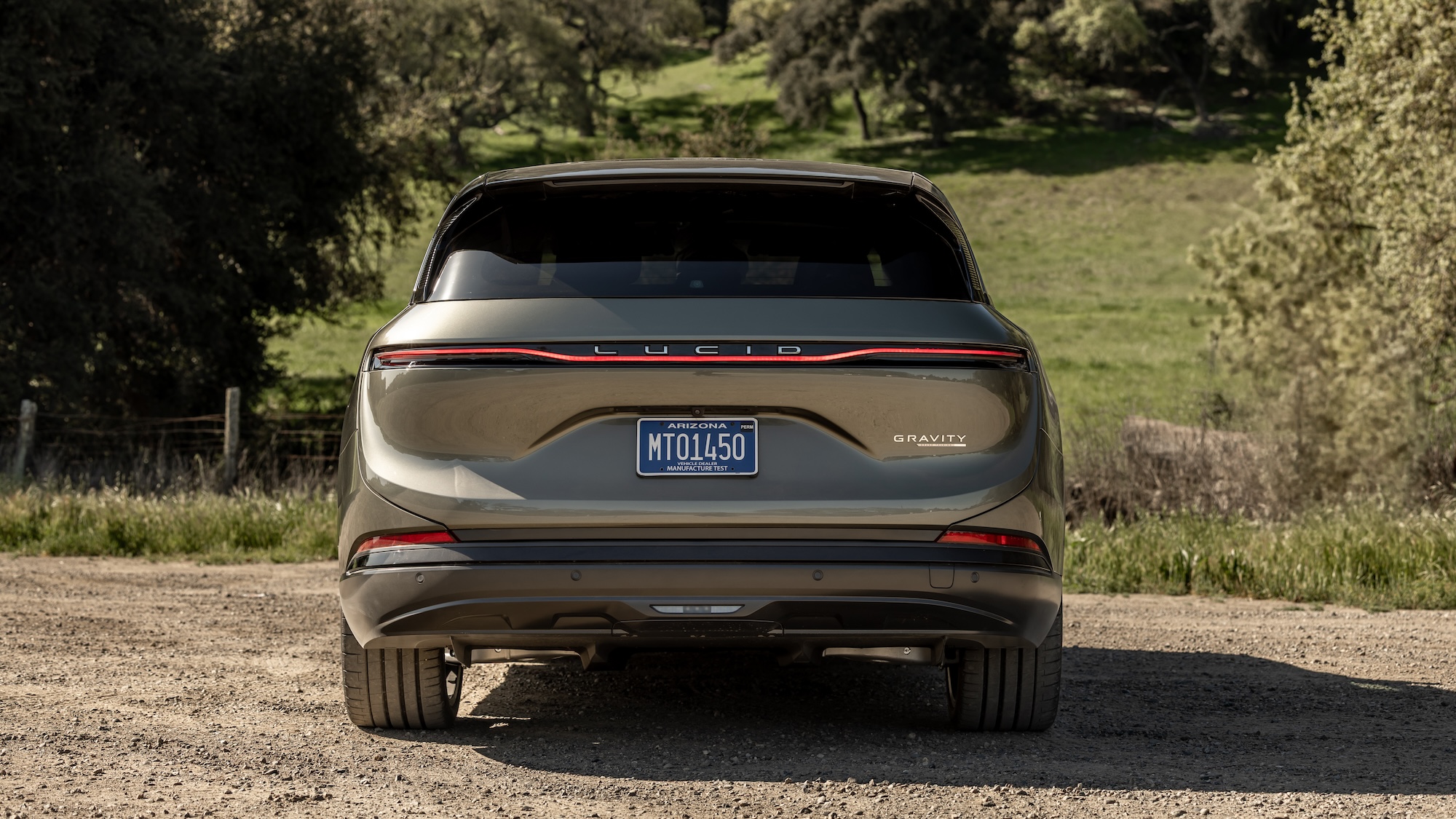
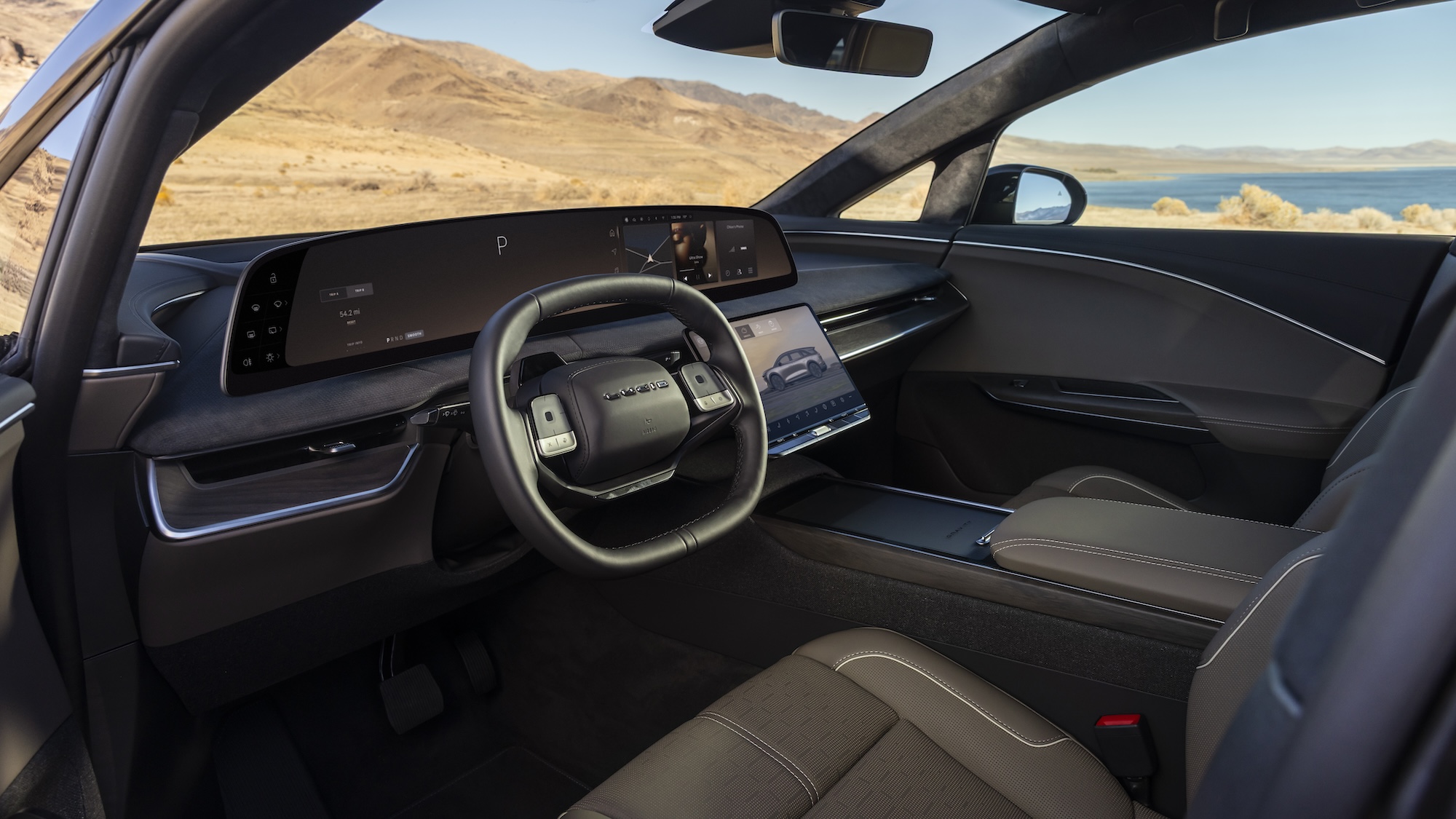
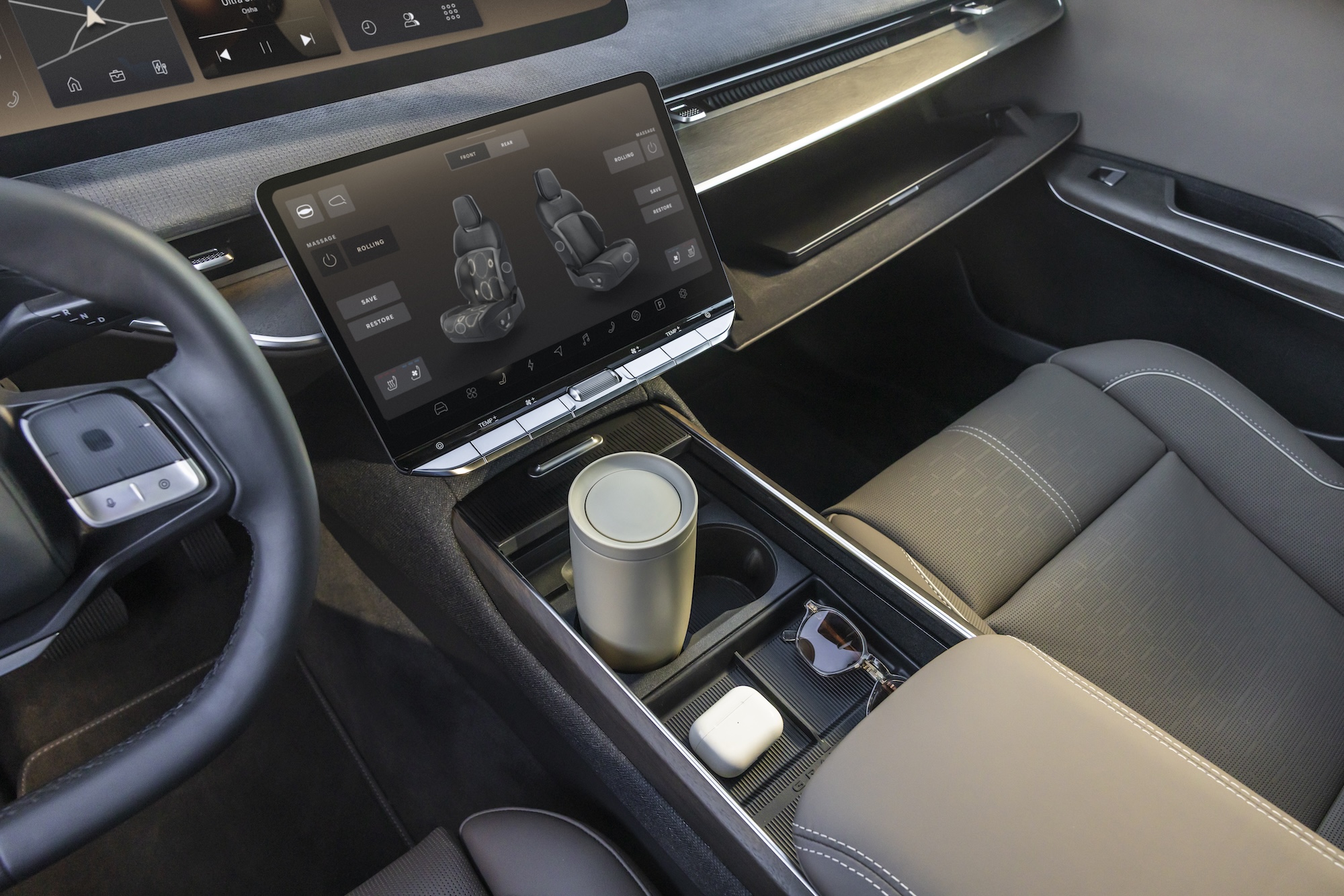
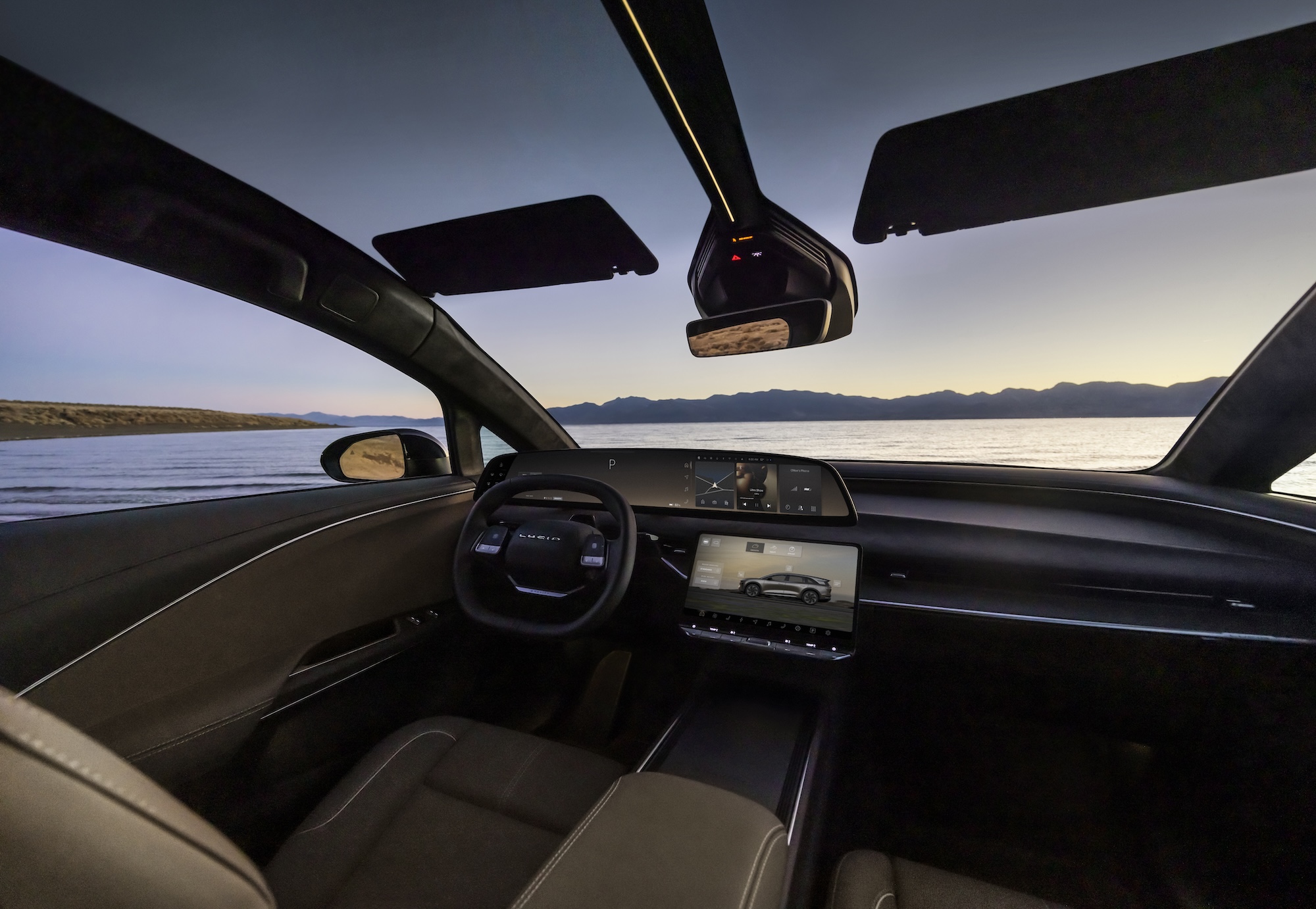
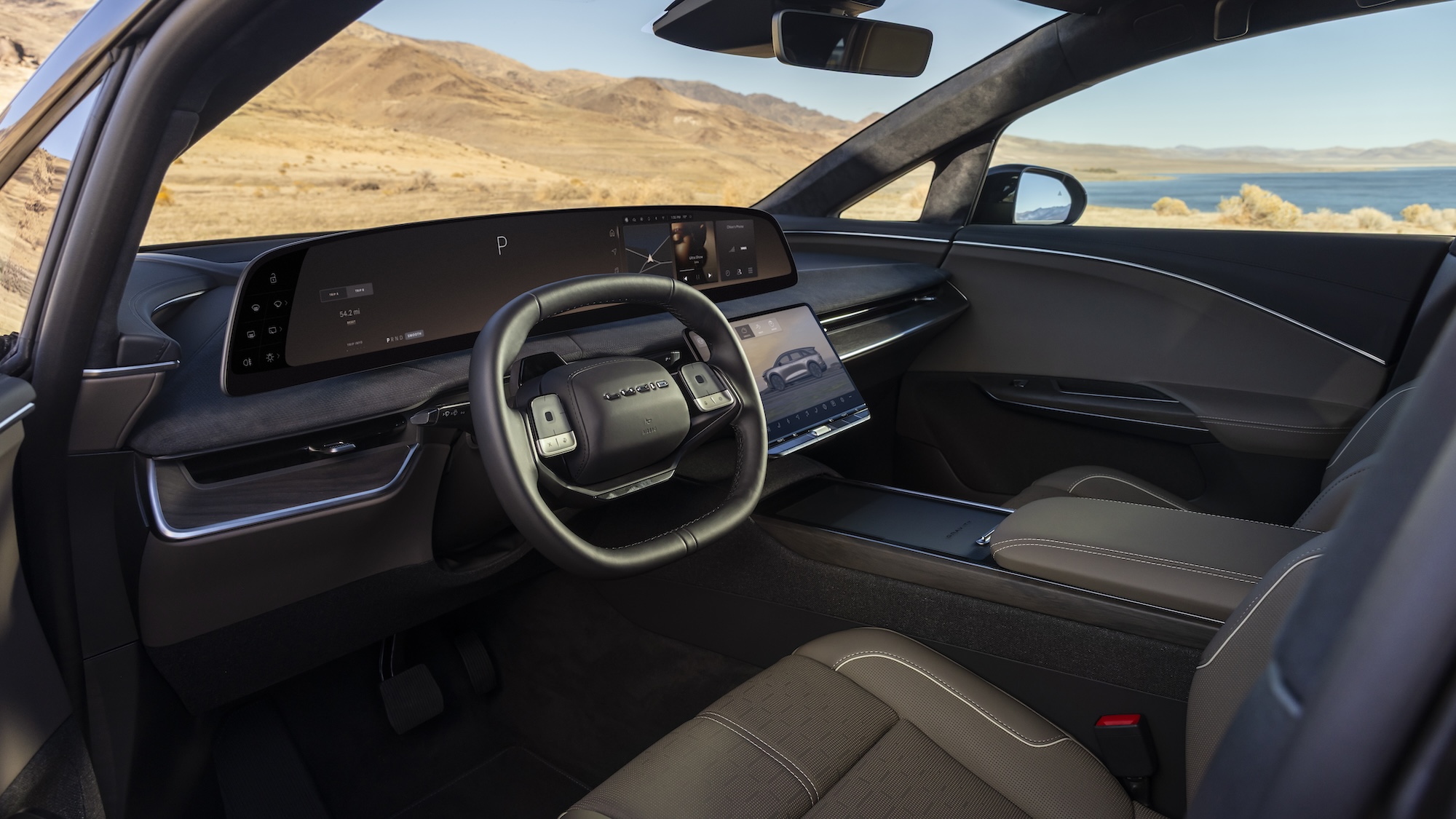
Not only is the Gravity's design sleek and stylish, but it has genuine wind-cheating abilities. The whole car has a very low drag-coefficient of 0.24Cd, meaning it can slip through the air, boosting efficiency. Inside, it's an airy and modern place to be. I love the interior's centrepiece – the Clearview Cockpit. It's an evolution of the Air’s system, and features a huge 34-inch curved OLED display that floats ahead of the driver. Cleverly, it just kind of hovers in the driver's sightline, and doesn't obscure the road ahead. There’s also an easy-access touch bar for key functions and a sliding glass centre console that adds a bit of theatre.
In true California style you can opt for different driving “moods” and immerse yourself in the atmosphere of places like Lake Tahoe or Joshua Tree or select guided meditations, developed with mental health specialists Meditopia, which could be handy to help you chill out while you’re charging.Lucid also brings some California quirk: “Lucid Spaces” lets you switch ambient moods inspired by places like Lake Tahoe or Joshua Tree, and you can even choose guided meditations via Meditopia — a neat way to pass charging stops. The whole interior feels luxurious without being over the top and overbearing. It's refreshingly different.
Motors, performance and handling
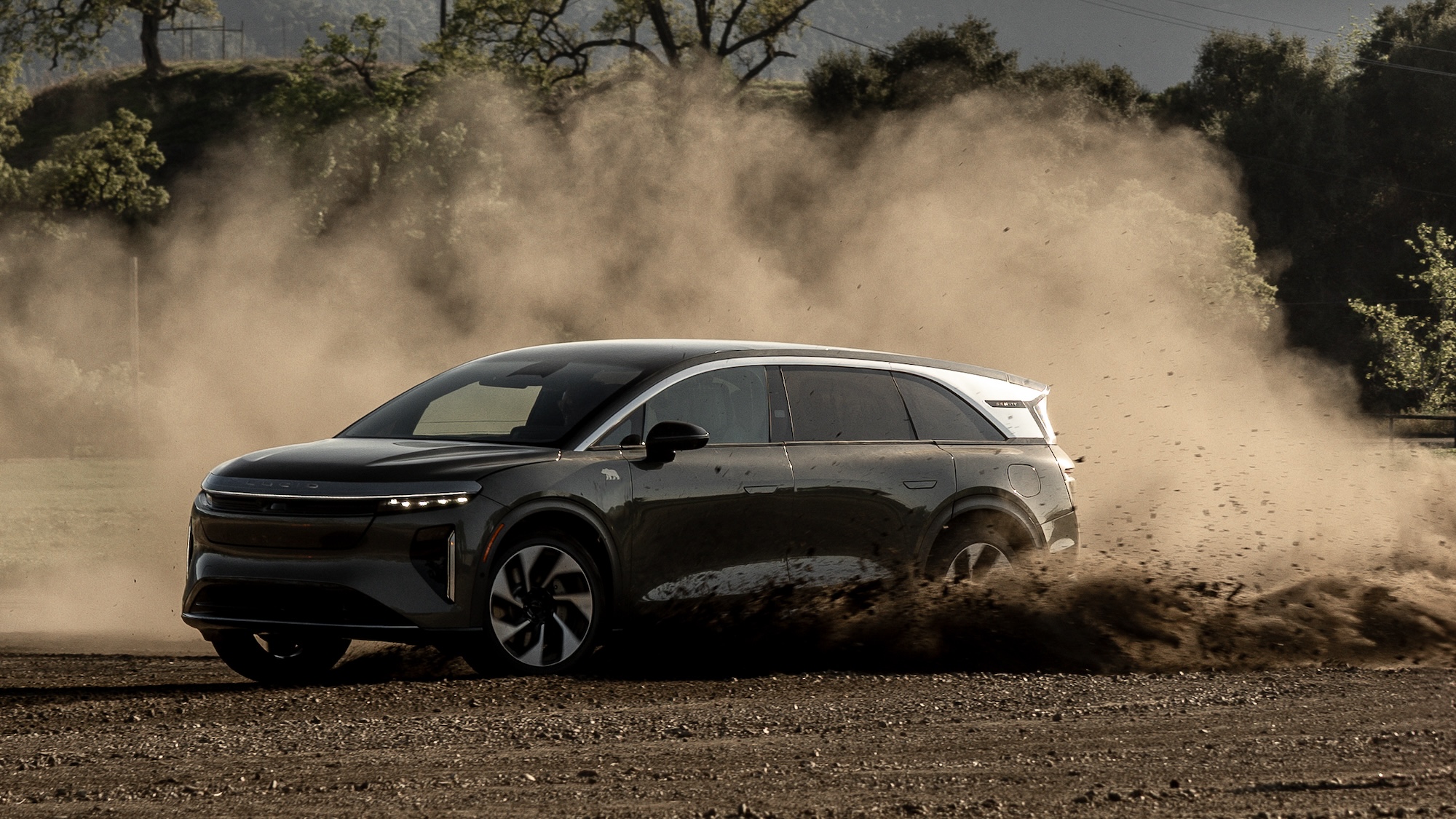
It may have a luxurious vibe inside, but the Lucid Gravity has some proper supercar-baiting performance on tap. It'll hurtle from zero to 62mph in just under 3.5 seconds, putting it in Tesla Model X Plaid territory, and ahead of many other large electric SUVs.
This performance is from exceptionally power-dense motors (already a highlight in the Air) and a suspension system called “Zero Gravity”. It adapts automatically to road conditions and can raise for off-road clearance or lower for efficiency and handling. Lucid says the real party-trick with this system is that it allows the Gravity to cruise softly, corner neatly, and still sprint like a true performance when needed.
I should add in here that its list of abilities also includes towing. Lucid claims the Gravity has around a 2,700kg towing capacity, which is more than a Model X and roughly double a BMW iX.
Running costs and pricing
A launch date in the UK hasn't been confirmed yet, let alone pricing. But, if you take today's US starting price of the Gravity in its home US market of $80,000, that gives a UK price of £64,500. The Gravity will undoubtedly cost a little more once right-hand drive and import costs are factored in, so we think around £75,000 is likely, putting it in line with the rivals like the BMW iX. If we're right that will make the Gravity seriously tempting, especially when you factor in its long range and ultra-fast charging. Lucid’s predicted 3.6m/kWh efficiency would be impressive for a big seven-seater. If real-world results follow the Air’s pattern, motorway economy should be a genuine strength.
Verdict
The Lucid Gravity could be one of the most complete premium electric SUVs on the market. It mixes a seriously long claimed range, genuinely rapid charging, and real seven-seat versatility with performance figures that sound more a supercar than family car.
However, there is a "but". Lucid has said it will bring the Gravity to the UK, but there's no definite time-line for that. We know it could be late 2026, but that's it. Pricing will be key to the car's success, too, not to mention a a sales and service network that can really look after customers. Other start-ups have launched in the UK in recent years, but ultimately failed for this very reason. The hopes are high, and I really do hope we Brits get our chance to get the Gravity. It's one of the most exciting new EVs on the horizon.
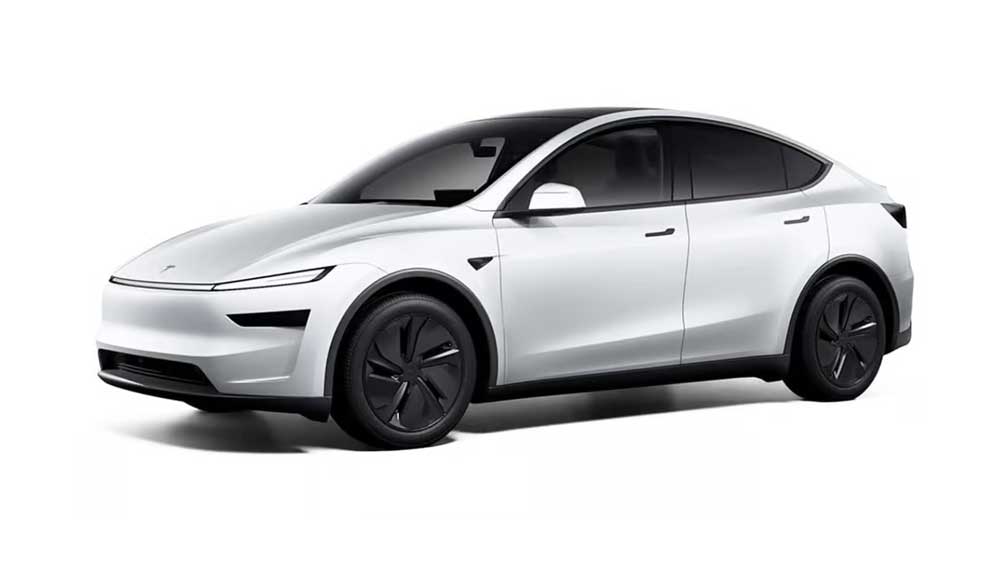
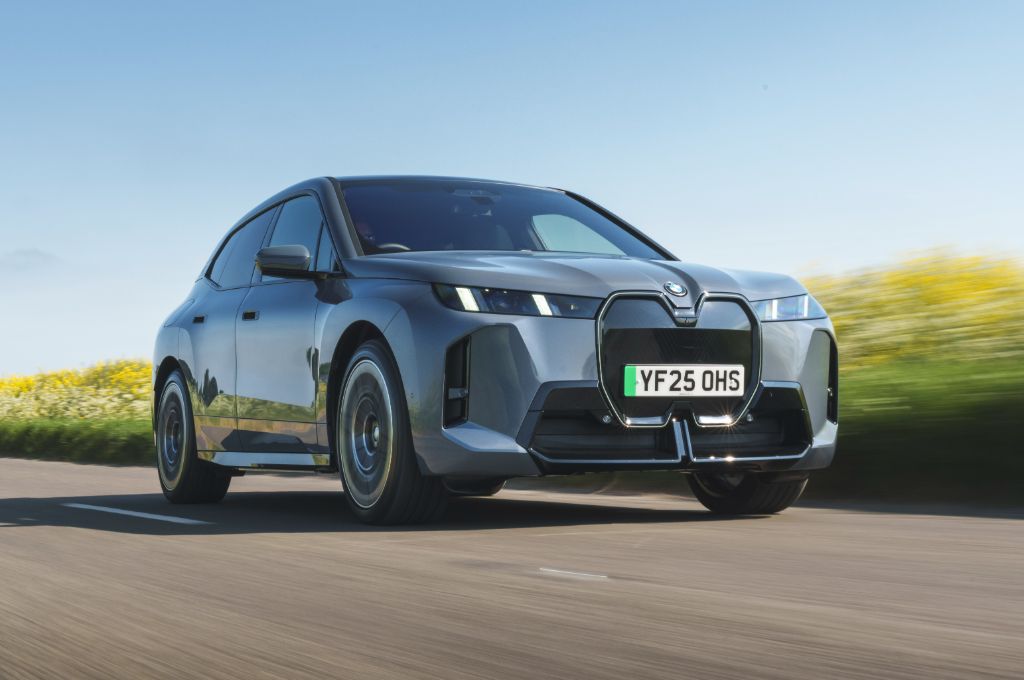
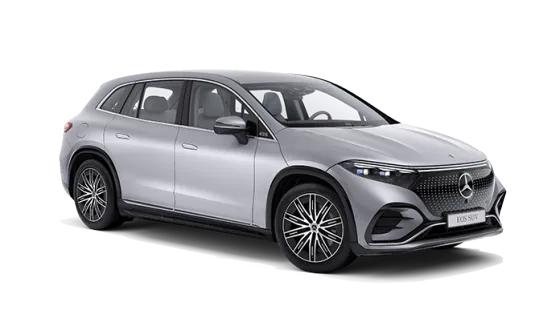
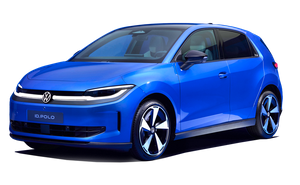
Like the Lucid Gravity? Try these...

 8
8