





 Battery size: 54 - 69 kWh
 Range: 274 - 352 miles
 Company car tax: 3% (4% – 2026/27)
 Max charge rate: 150kW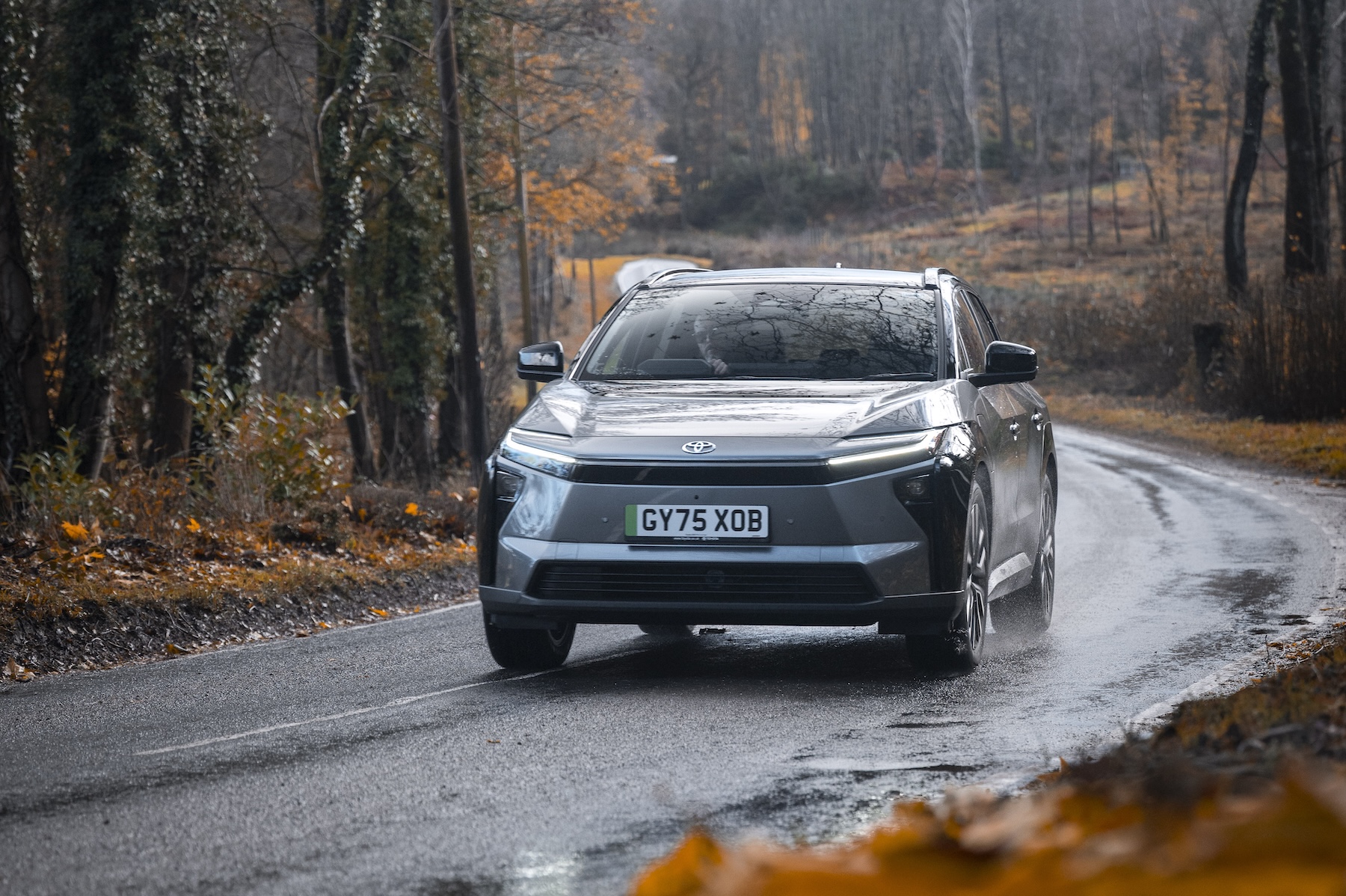



Introduction and model history
Toyota has been busy developing and improving hybrid cars for the last 25 years or so. As a result, it has been slow to switch on to pure-electric cars.
The curiously-named bZ4X was its first and arrived in 2022, with Toyota hoping its SUV-shaped first-ever EV would make up for lost ground. It gained praise, particularly from us here at Electrifying, for its quirky looks, which helped it stand out in a sea of similar-looking SUVs, its quality-feeling interior, and high comfort level. The trouble was it wasn't all that efficient, and considering the bZ4X was a family SUV, below-par efficiency made it difficult to recommend.
Now Toyota has updated the bZ4X. Naturally, there's been a bit of work carried out to the styling, but there's also a new dashboard and tech. Crucially, though, Toyota has listened to the criticism and spent some time on improving the bZ4X's battery technology.

Range, battery and charging
The outgoing bZ4X came with just one battery option. Rated at 64kWh usable capacity (71.4kWh total), it was mated to either a single or a pair of electric motors. In the latter combination the bZ4X was pretty impressive, delivering very competent four-wheel drive abilities. The range was either 317 miles in the single-motor car or 286 miles for the dual-motor car, with a claimed 4.4 miles per kWh. As for charging, early cars were rated for 6.6kW AC, while later ones were boosted to 11kW.
That 4.4m/kWh on-paper efficiency figure was pretty impressive. But, in the real world, owners couldn't get anywhere near this. We ran a bZ4X as a long-term test car, and the best efficiency we ever saw was 2.9m/kWh during a mild autumn; when the temperatures plummeted in winter, the bZ4X struggled to better 2.4m/kWh, which equated to a 170-mile range. It was disappointing to say the least.
Thankfully, it's in the battery department where Toyota has concentrated its efforts for the 2026 update. There are now two NMC battery packs – a 54kWh usable (57.7kWh total capacity) unit for the entry Icon trim, and a 69kWh (73.1kWh total capacity) pack for the posher Design and Excel trims.
Toyota has also fitted new 'eAxles' that also contribute to the increase in range; speaking of which, the smaller battery manages a claimed 274 miles, and the larger one 352 miles. A four-wheel drive dual-motor model returns, which uses the larger battery, and can manage 292 miles. The dual-motor has also had a substantial hike in power to 343hp.
The range-topping Excel gets 22kW AC charging, while the maximum DC charging rate stands at 150kW like before, which is good but not exceptional. Toyota claims efficiency of 4.5m/kWh for the both batteries when 18-inch wheels are fitted and 4.3 for the all-wheel drive model, and 4m/kWh for the larger battery when 20-inch wheels are fitted and 3.9m/kWh for the all-wheel drive. A heat pump is standard on both batteries.

Practicality and boot space
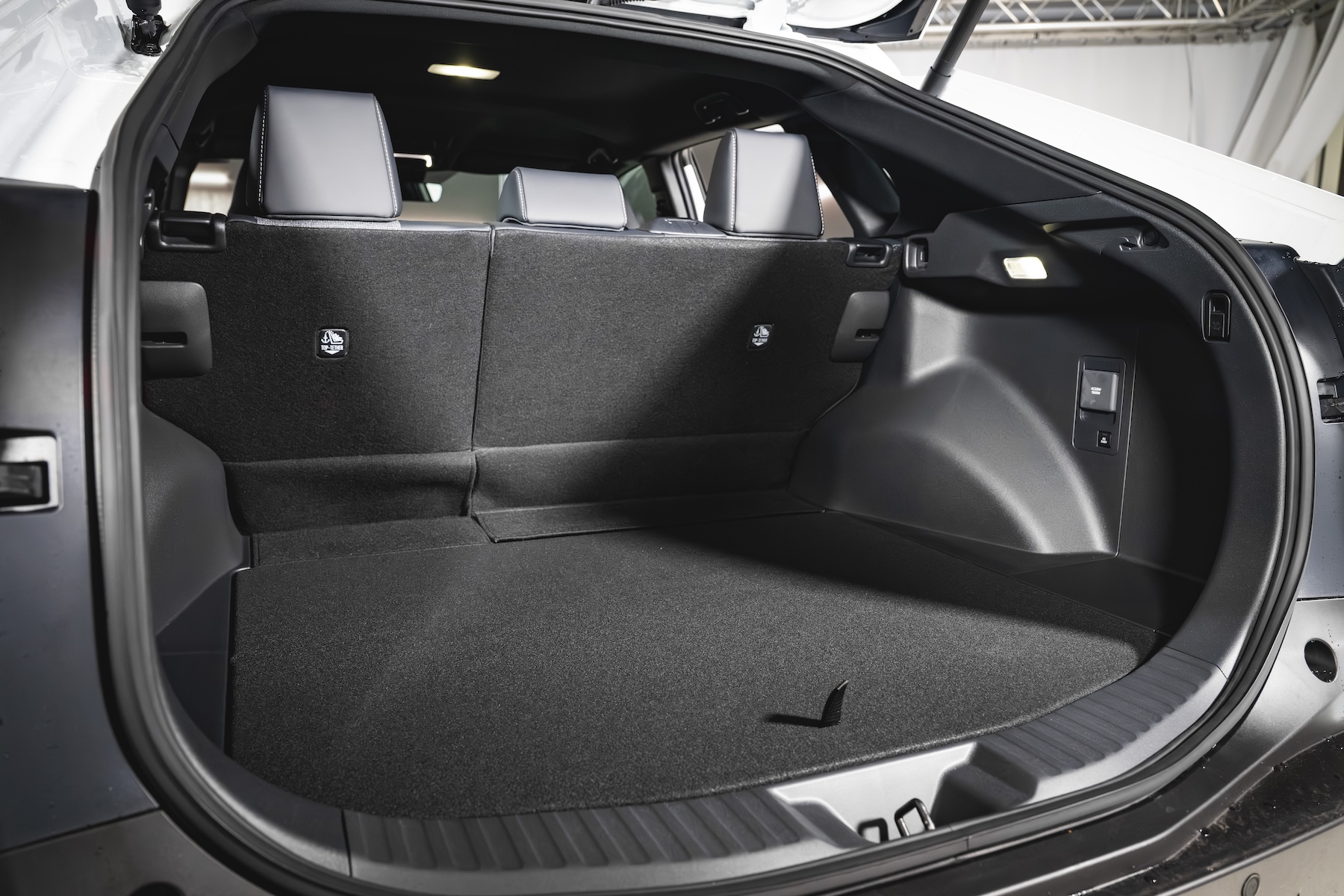
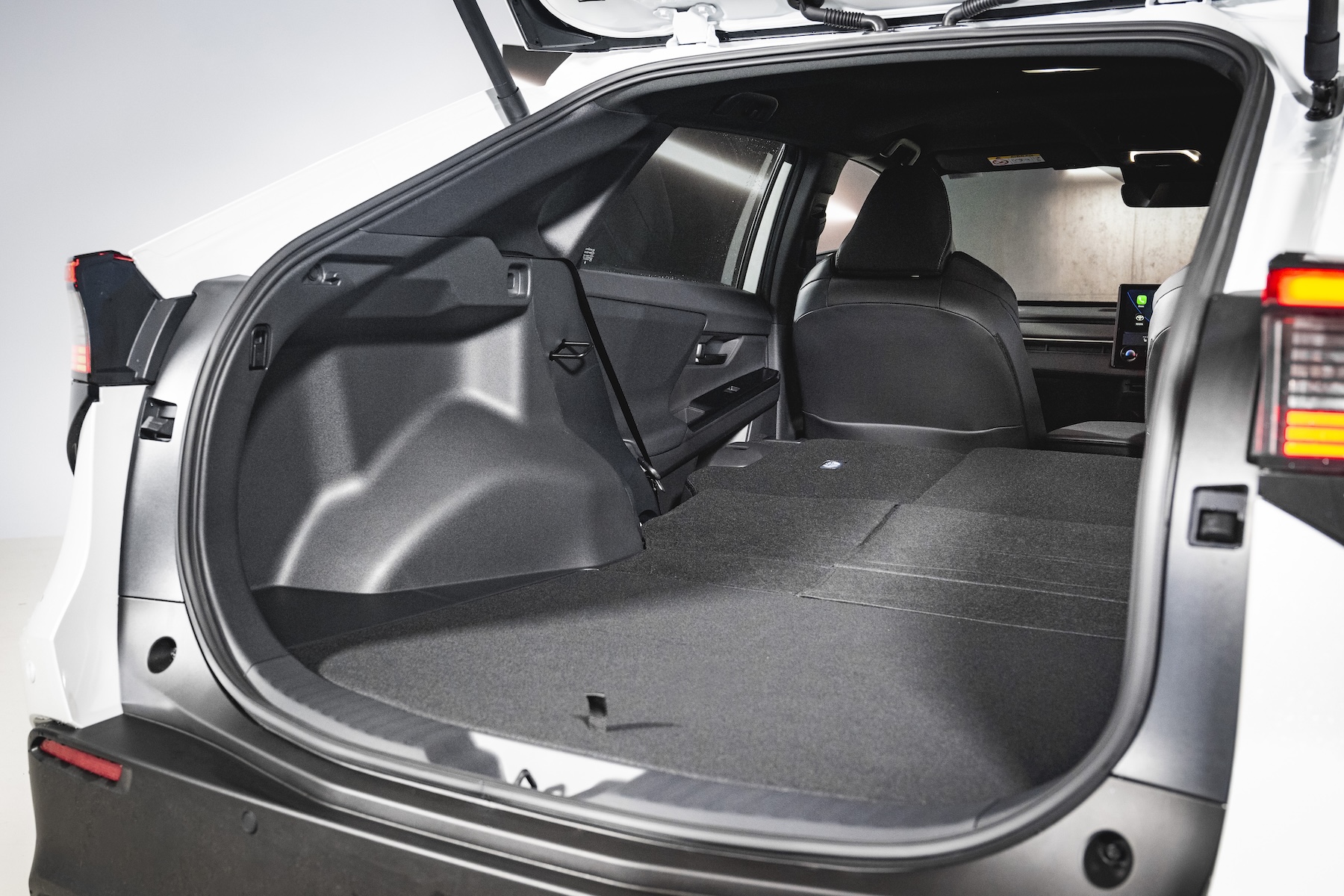
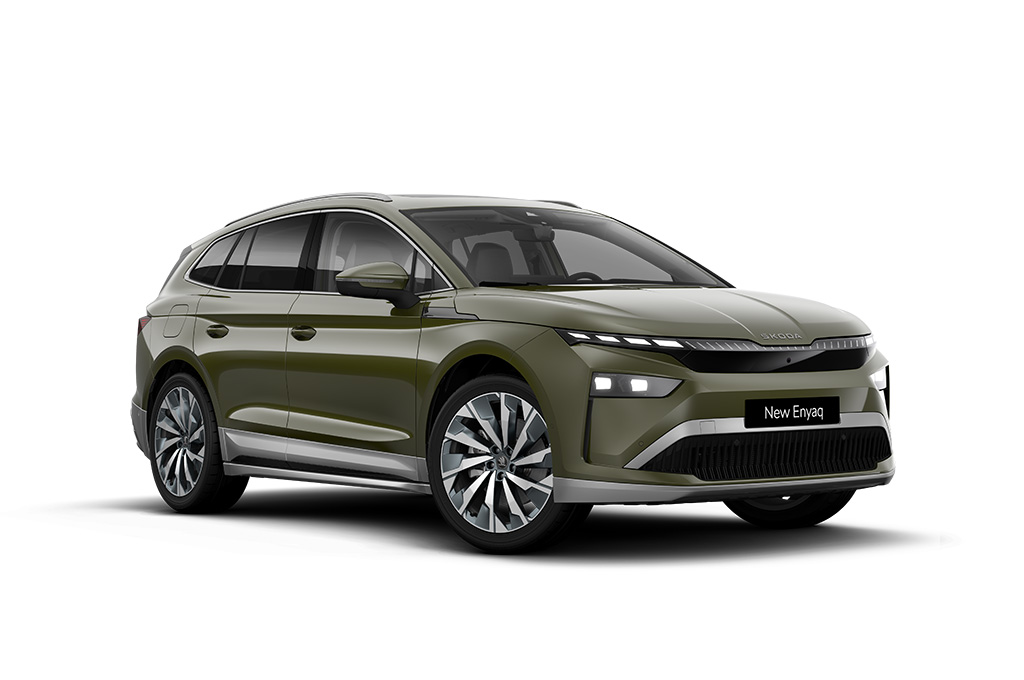
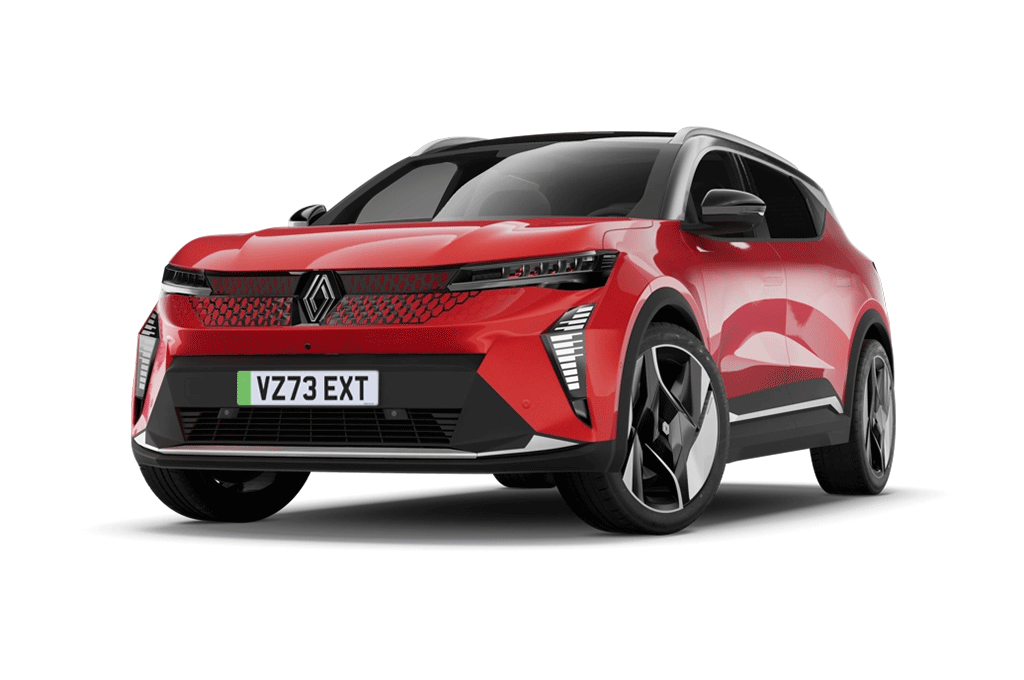
Like before, the bZ4X offers nothing particularly remarkable when it comes to carrying luggage. At 452 litres, boot space is nothing to write home about, and is bettered by the likes of the Renault Scenic (545 litres) and Skoda Enyaq (585 litres), and even more coupe-like rivals such as the Kia EV6 (490-litres). But the tailgate opens to a pretty wide loading area, and the space itself is well-shaped – even the rear wheel arches don't impinge too much. There's also some hand underfloor storage that's large enough to store the car's charging cables.
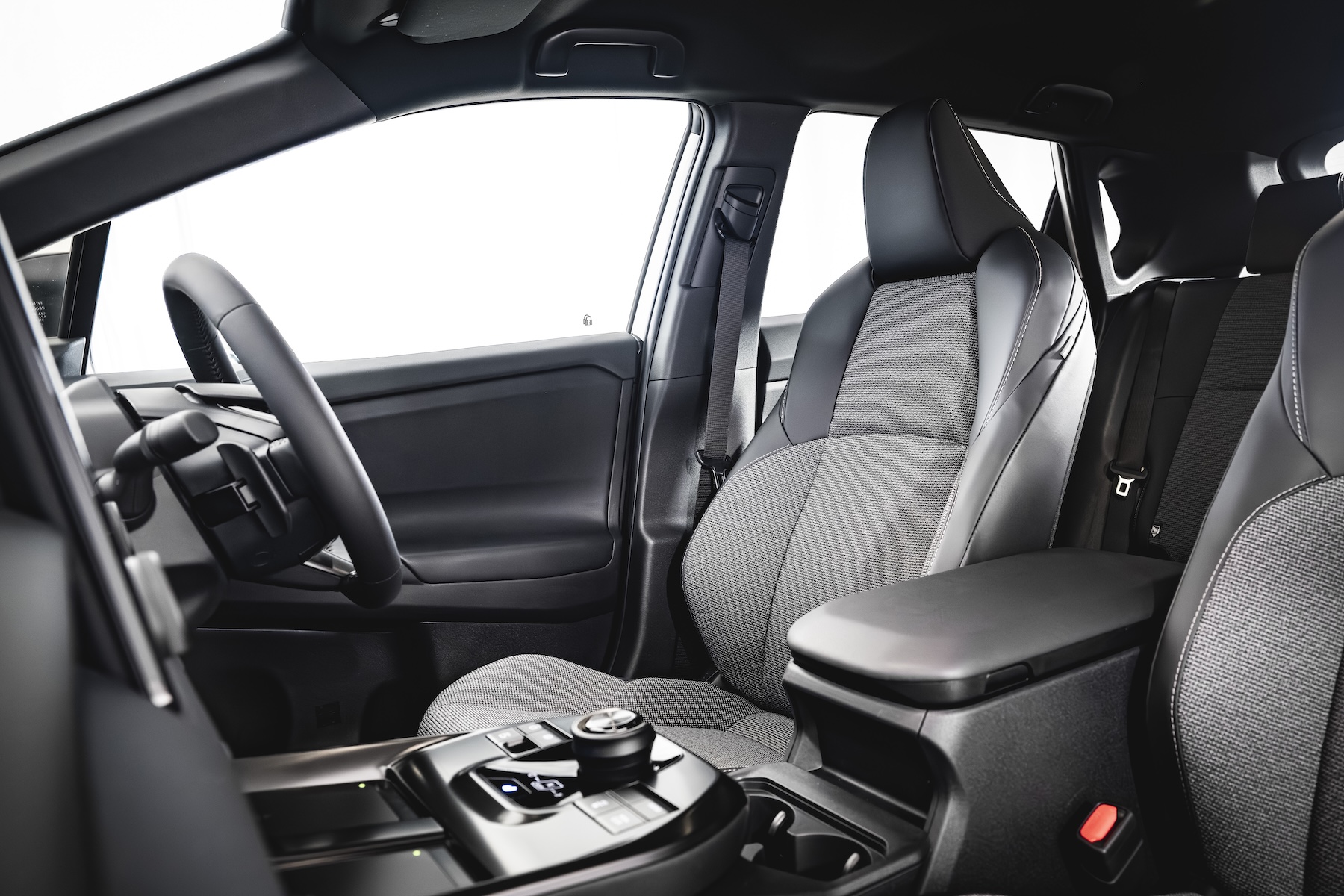
While luggage space is on the middling side, interior space is far more pleasing. Room up-front is excellent and it's very easy for tall drivers to get a comfortable driving position, while there are several handy storage places, including a large tray under the 'floating' centre console. The facelift doesn't address a curio with the old model – there's still no glovebox!
Room in the back is the party-piece. While headroom is a little tight for six-footers, rear legroom is enormous. Long-legged people can easily stretch out, and three people can fit across the seat. The seat backs recline for a little extra comfort, too.
Interior, design/styling and technology
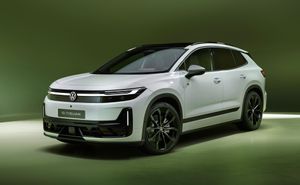
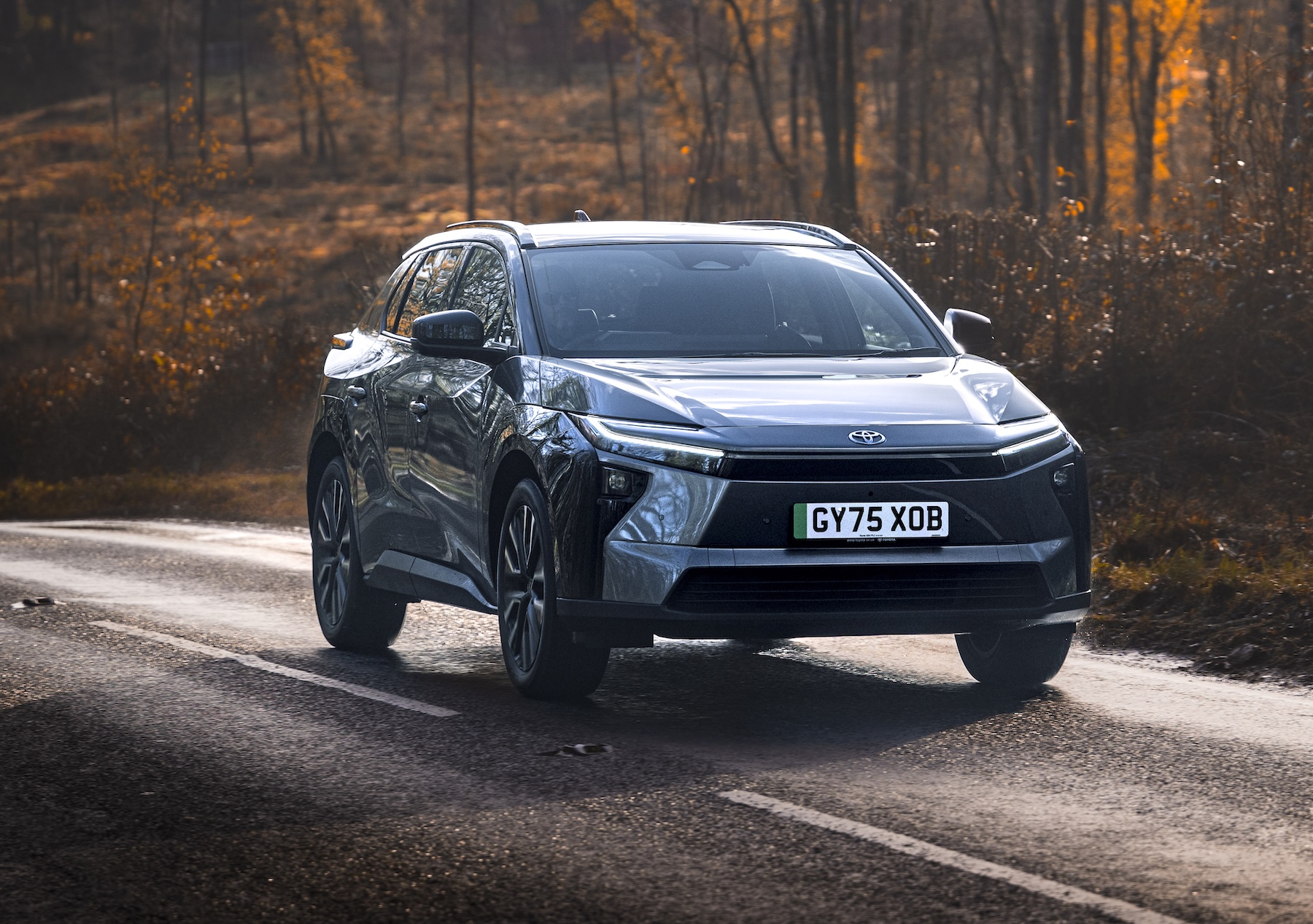
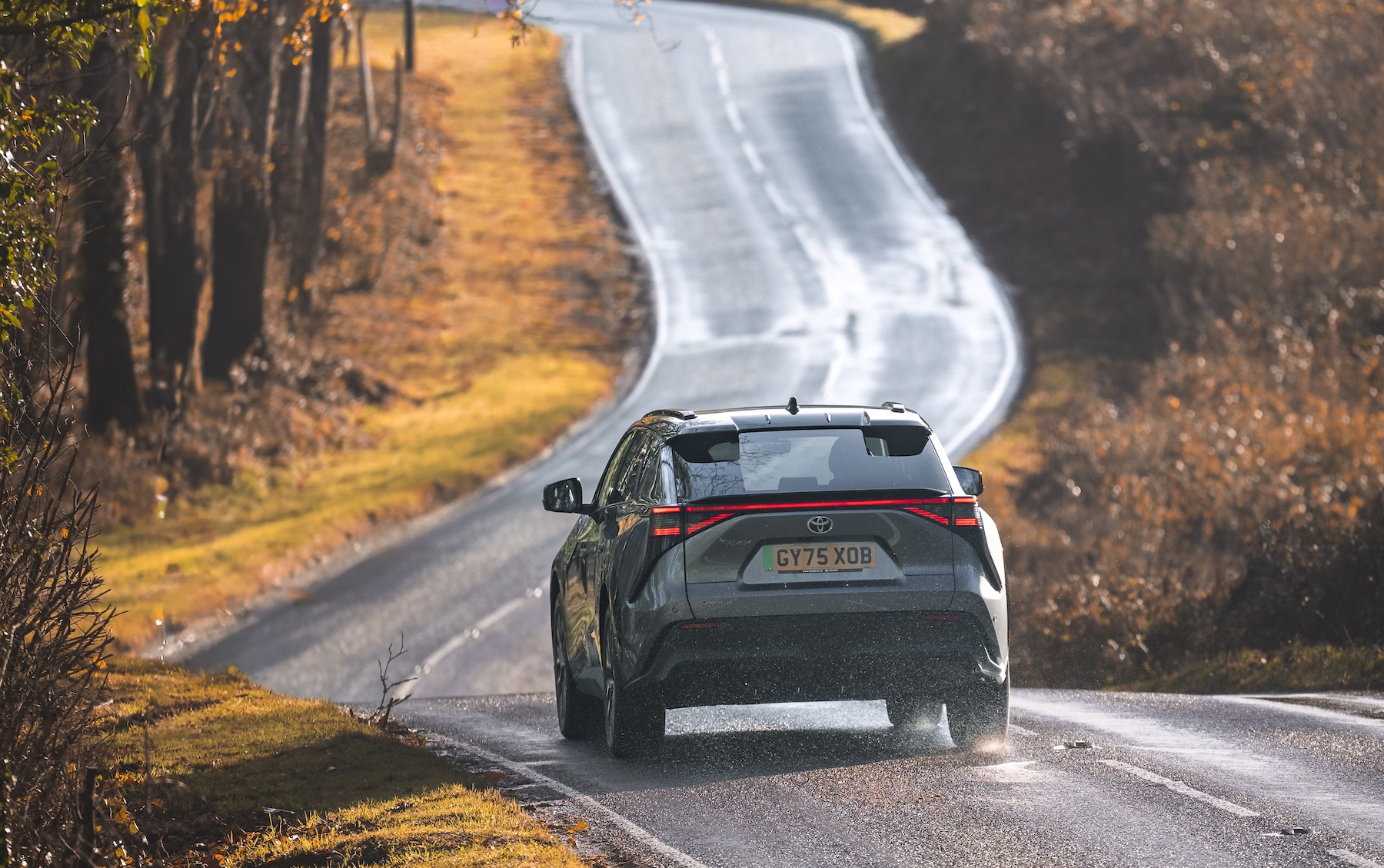
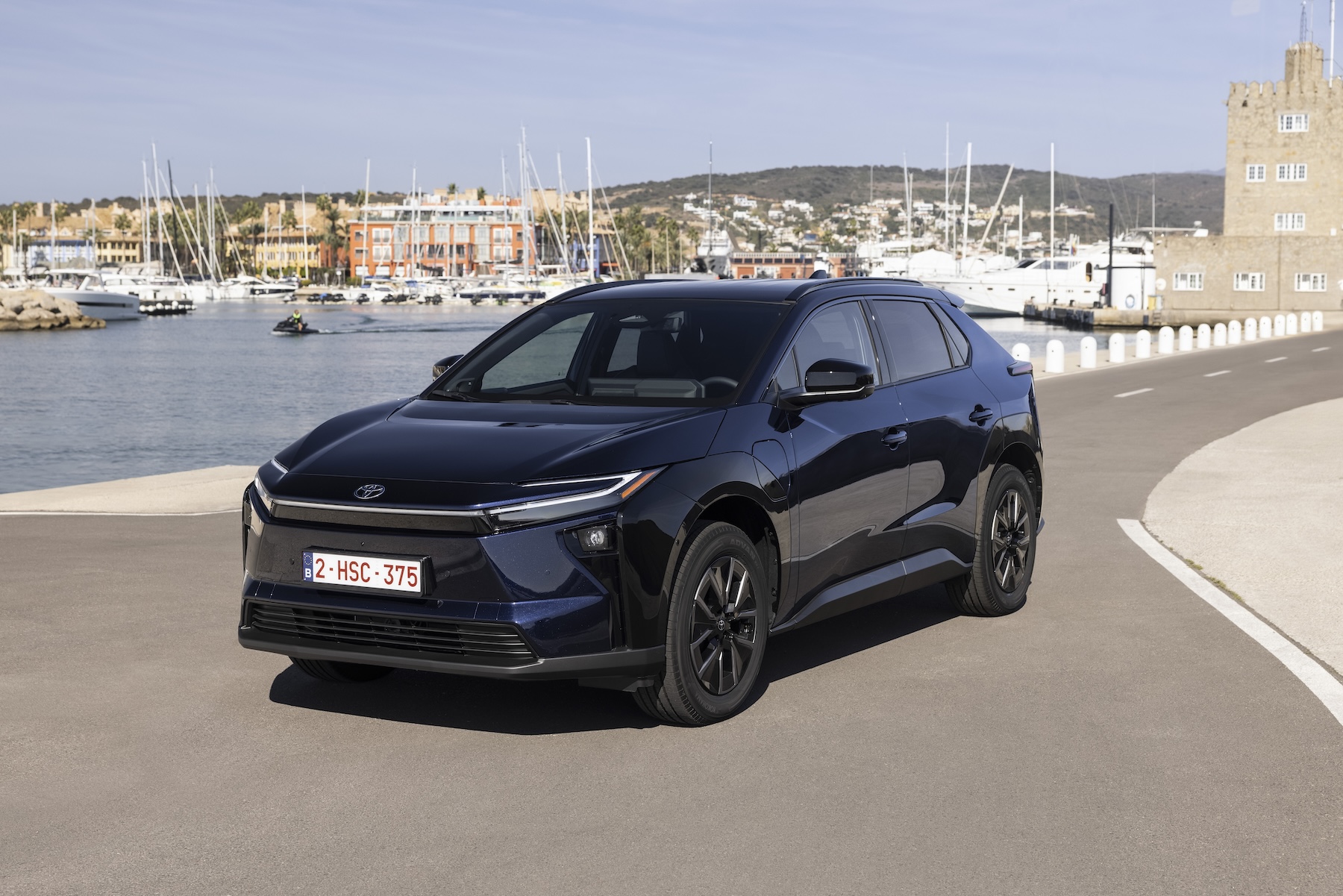
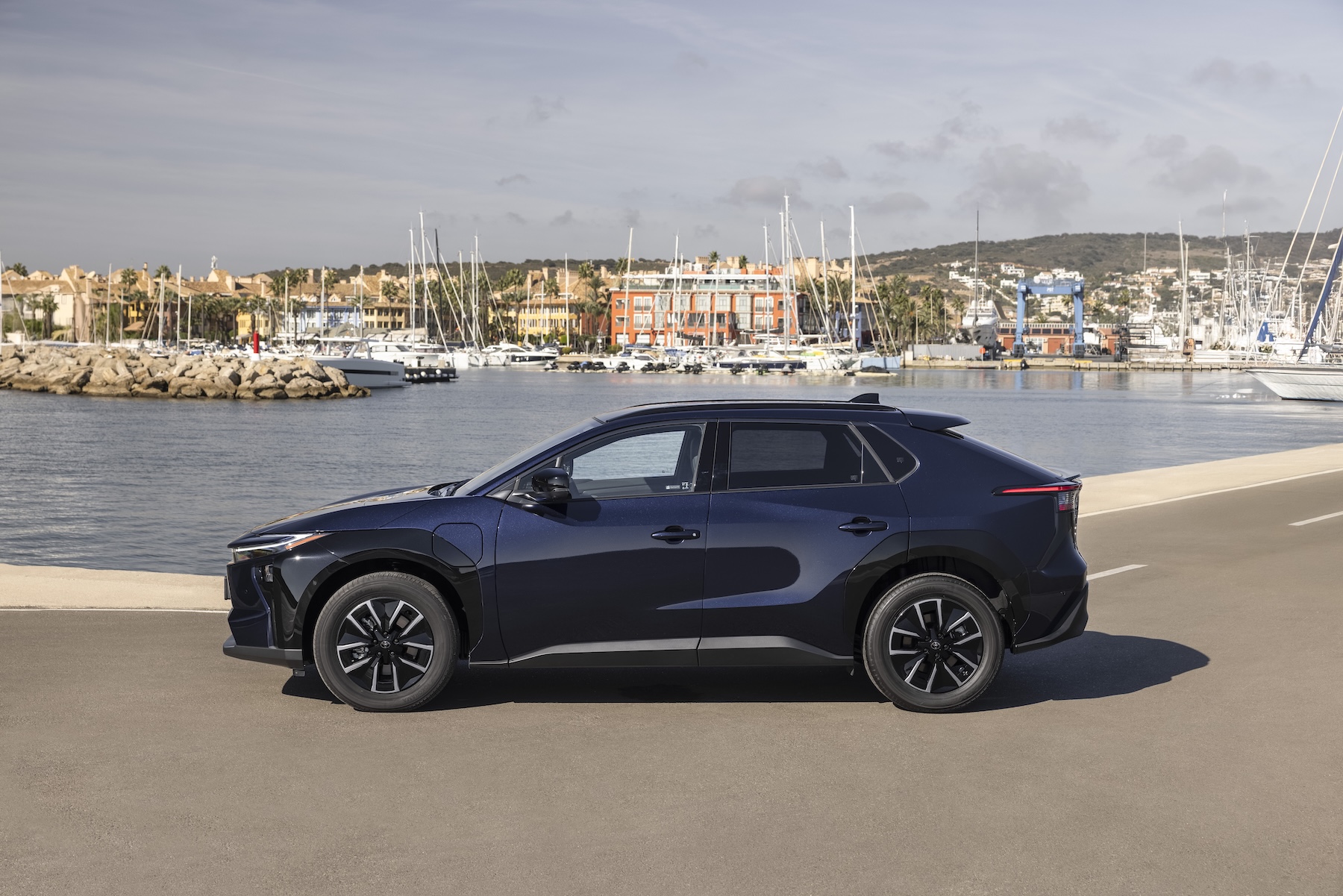
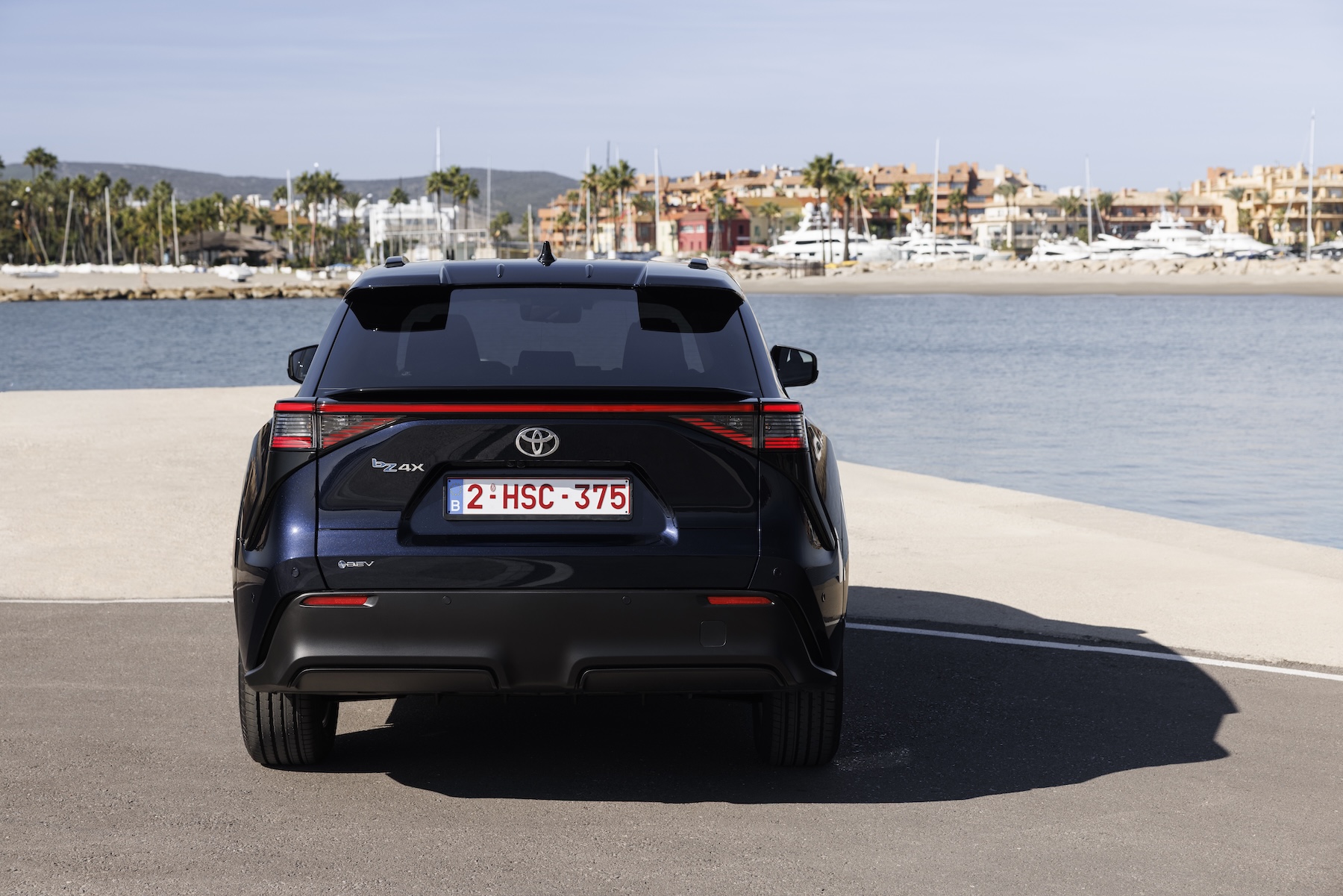
The bZ4X gets a subtle makeover in the looks department, gaining a new day-running light design as seen on the Prius and Toyota's second EV, the Urban Cruiser. The headlights are now lower down in the bumper, which itself is of a smoother and simpler design than before and now generates less drag. Meanwhile, the previously unpainted panels around the wheel arches are now painted in gloss black, the 'duck tail' spoiler (the lip that's on the boot and above the light-bar) is slightly higher, and there are new paint colours and wheel designs. Subtle, like I said.
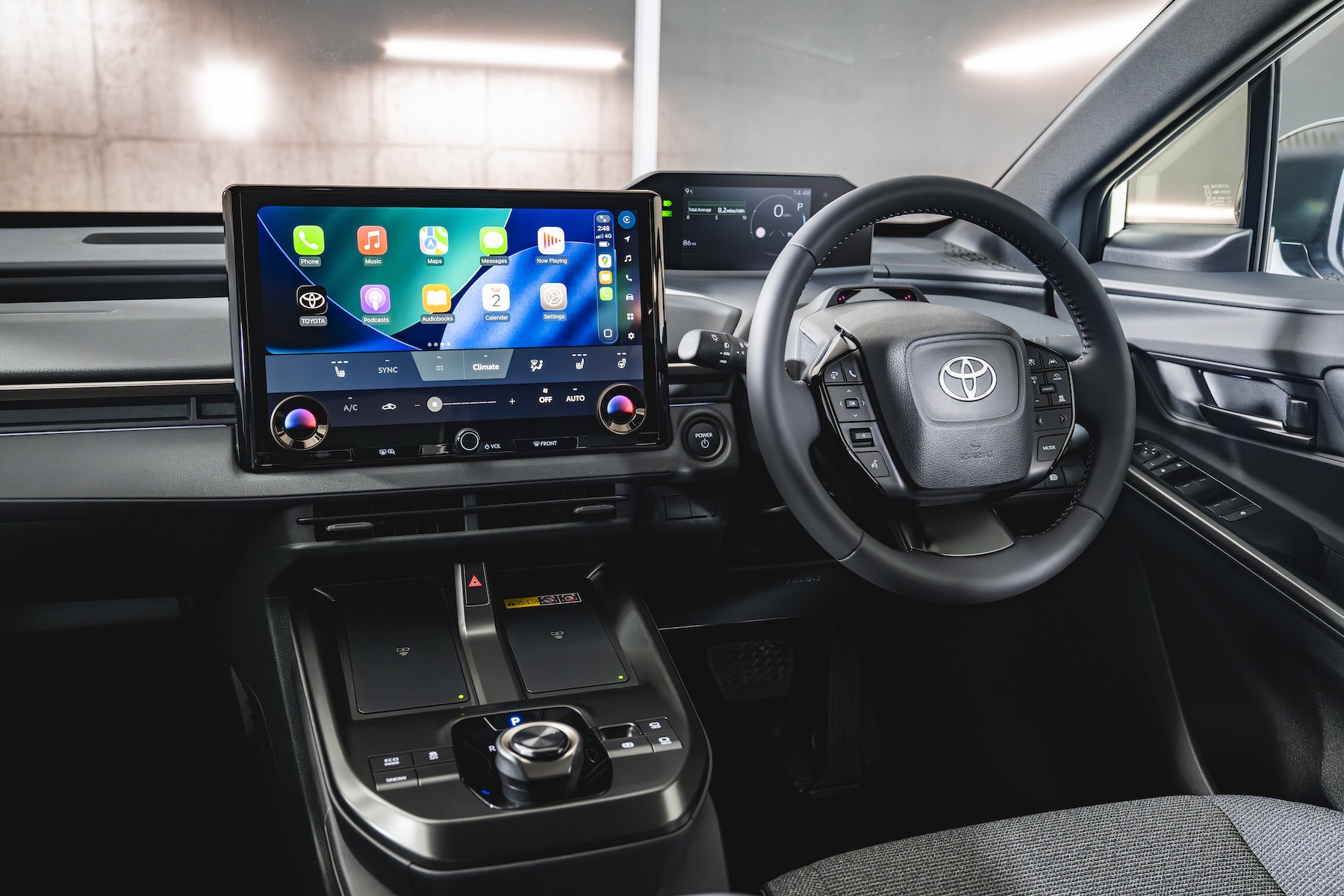
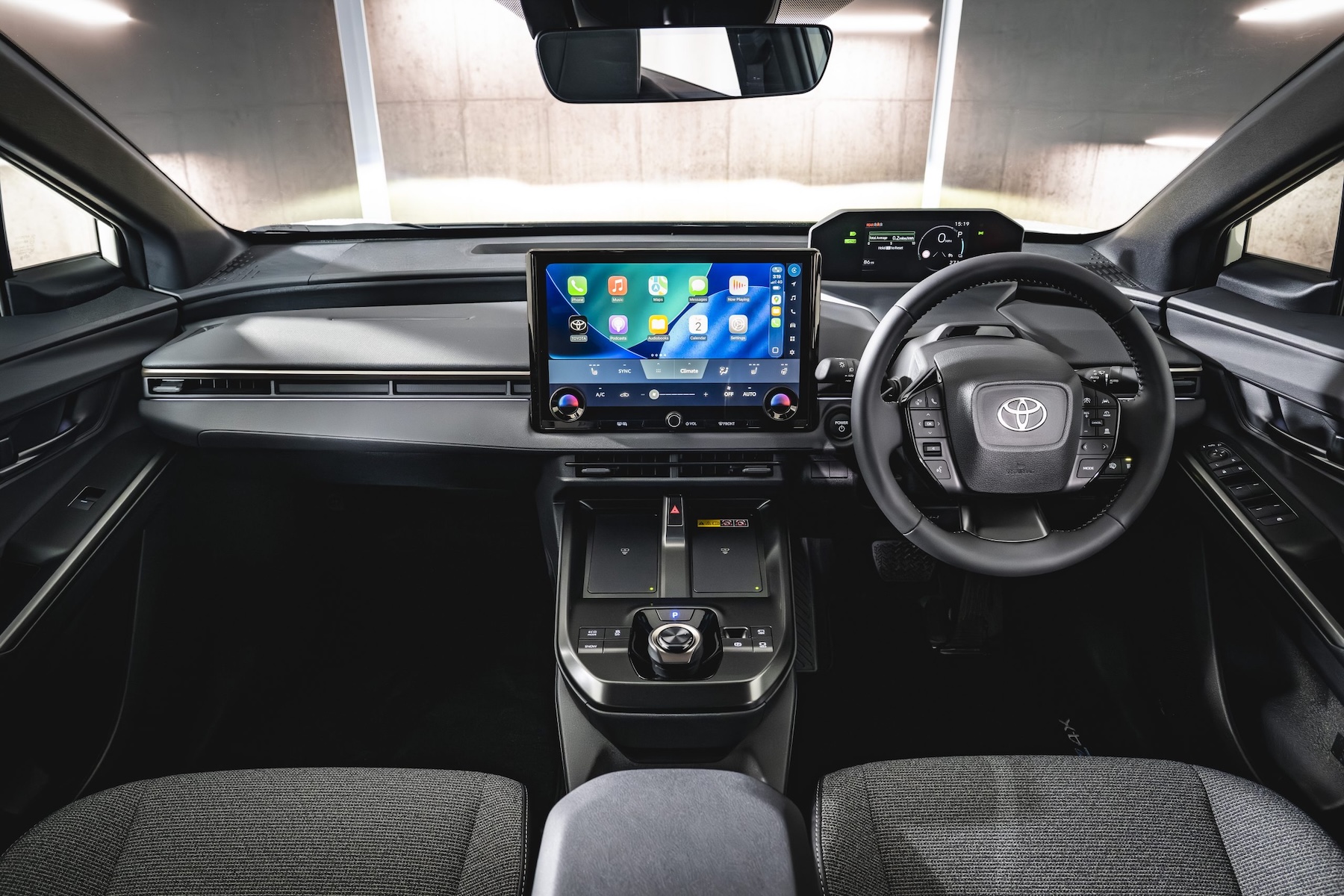
I had expected the interior to be carried over from before, especially as it looked modern and was reasonably well put together, but I was wrong. There's a whole new dashboard, again with a subtle new look, that probably requires you to compare and contrast, but when do you notice there's quite a different new design.

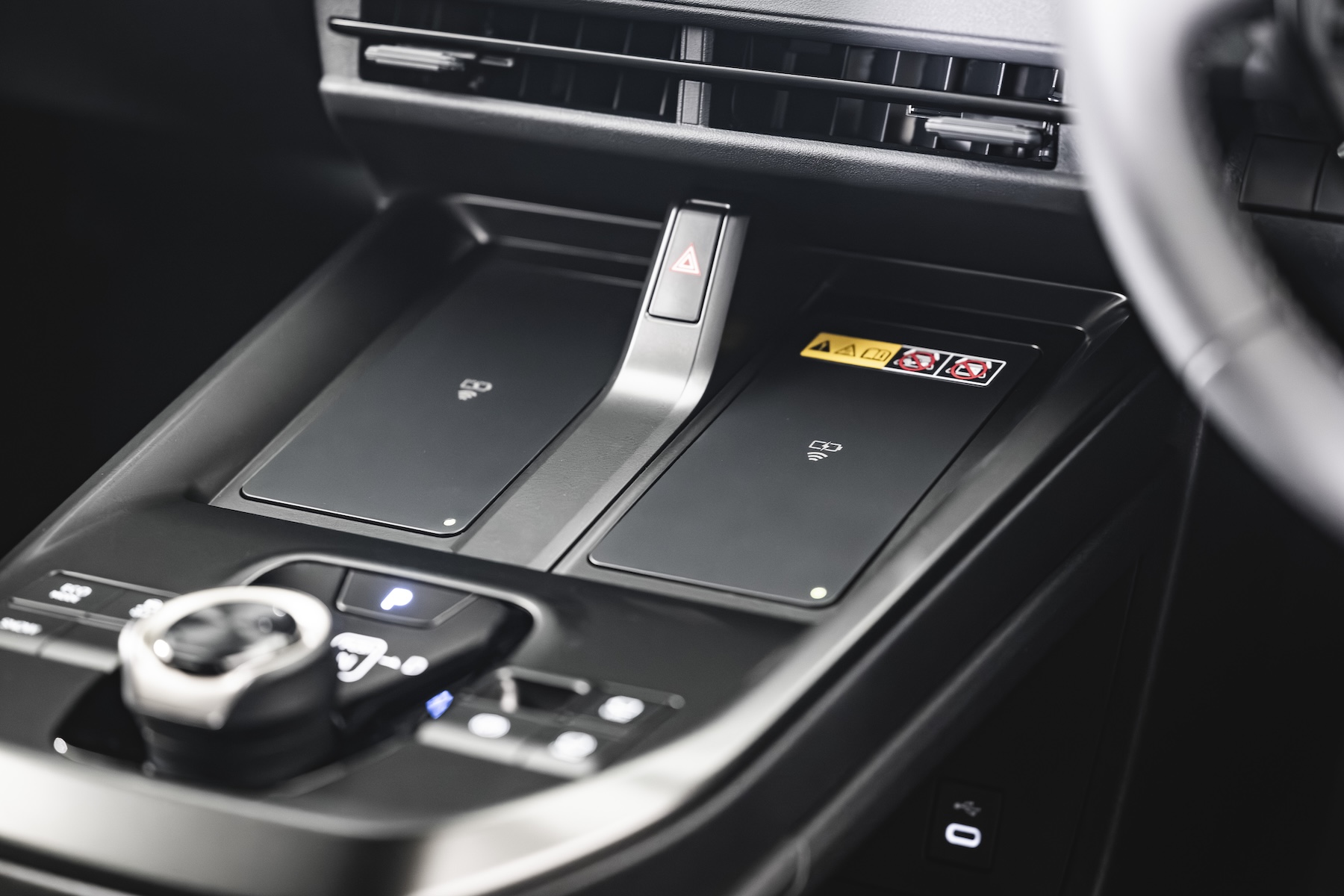
The driver's display, for instance, used to have wings that stretched back the steering wheel, but these have now gone. The touchscreen is now larger at 14-inches, and consequently dominates a lot more than before, the fabric that used to stretch across the dashboard has also been ditched, and the central air vents have been relocated. The 'floating console' no longer connects the touchscreen to the centre console, and instead juts out from the dashboard. It's a small change but is all the better for it, as there are now two smartphone charging pads side-by-side, and the console's plastic construction feels a bit more robust.
Interior quality is perfectly fine, but a Peugeot E-3008 or Skoda Enyaq manages to feel more plush, and despite Toyota redesigning the driver's display, the steering wheel can still get in the way of it depending on your driving position.
While the new touchscreen is a bit too large, in my opinion, it is easier to use than before. The graphics are sharp, and new EV-specific info in the sat-nav – such as public chargers and battery pre-conditioning – is really useful. But some of the menus are a little slow to respond.
Motors, performance and handling
There was never any real problem in the way the previous bZ4X drove, but the latest version feels noticeably more accomplished. Revisions to the chassis and suspension have sharpened the car’s responses; the ride quality is particularly impressive, striking a nice middle ground between comfort and control. It deals with poor surfaces well, yet never feels soft or floaty when the road begins to twist, and it’s all very quiet – eerily quiet, sometimes.
On more demanding roads, the bZ4X feels surprisingly engaging for a family electric SUV. The front end responds keenly to steering inputs, giving a real sense of confidence. Power delivery is equally well judged, arriving smoothly and progressively rather than in an abrupt surge.
While it's not the quickest family SUV out there, the bZ4X is more than quick enough. The front-wheel drive models manage between 7.5- and 8.6 seconds depending on which battery you go for, while the four-wheel drive, dual-motor bZ4X does the same 62mph dash in 5.4 seconds. Even the single motor models are more than fast enough in everyday driving, so the all-wheel drive bZ4X is only really necessary if you want it for the all-weather peace of mind or for the extra towing capacity that it offers - which has now gone up to 1,500kg (over the 750kg that the single motor models can tow).

Running costs and pricing
The 2026 bZ4X range starts at a fiver under £40,000 with the Icon model, but it only comes with the smaller battery. It's well-equipped, though, with features like the 14-inch touchscreen with in-built sat-nav, wireless Apple CarPlay, ambient lighting, 18-inch alloys and a whole host of safety equipment all coming as standard.
I expect many buyers will pay the extra £5,800 (or likely reasonable extra monthly payment on PCP finance or lease) for the Design as this adds the larger battery. Excel, from £48,995, brings more equipment such as 20-inch wheels, heated, ventilated and power adjustable front seats, heated rear seats, a digital rear-view mirror and synthetic leather seat upholstery.
Be careful though as going for Excel trim and choosing options such as the panoramic glass roof, contrasting black roof and JBL premium sound system pack will push the car's list price to over £51,000, meaning it'll be clobbered with the Expensive Car Supplement. Consequently, for the car's first five years, owners will have to fork out £620 a year in road tax – £195 standard rate VED plus £425 supplement.
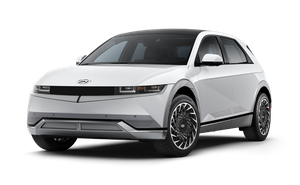
That aside, like all Toyotas, the bZ4X comes with the Toyota Relax warranty - it's a ‘service activated’ warranty that kicks in every time you have the car dealer-serviced, and gives up to 10 years' worth of coverage. No other manufacturer can match that length of cover, but there are alternatives including the Peugeot E-3008, which gets an eight-year warranty, and the Kia EV5, Hyundai Ioniq 5 and MGS6 all have impressively long standard warranties as well.
As for efficiency, I’ve only driven the larger-battery model in front-wheel drive Excel trim, which means it comes with 20-inch wheels. And there’s some good news. Toyota claims a WLTP-tested 4m/kWh for the Excel model, and on rain-soaked roads in December and in eight-degrees weather, I averaged 3.8m/kWh – that equates to 262 miles. That’s some way off from the 319 miles Toyota claims, but that isn’t too bad on a cold, blustery and rainy winter’s day. On this basis, warmer summer weather could yield pretty good efficiency.
Verdict
The old bZ4X was a perfectly nice electric family SUV, but was let down badly by poor efficiency. This 2026 update has, on initial impressions, addressed this, but we'll update you with a fuller evaluation when we get the chance to test the car for longer. The first signs are, undoubtedly, encouraging, and coupled with the bZ4X's comfortable interior and relaxing driving dynamics, Toyota might just have raised the car into being a contender in the highly competitive family SUV class.

 9
9