




If you’re keeping up with the deluge of Chinese car brands arriving in the UK then you might be aware of Xpeng. Imported here by International Motors, which looks after GWM, Isuzu and Subaru, Xpeng is only just over a decade old and so far has brought us the Tesla Model Y rival, the G6, with an updated version heading here this year.
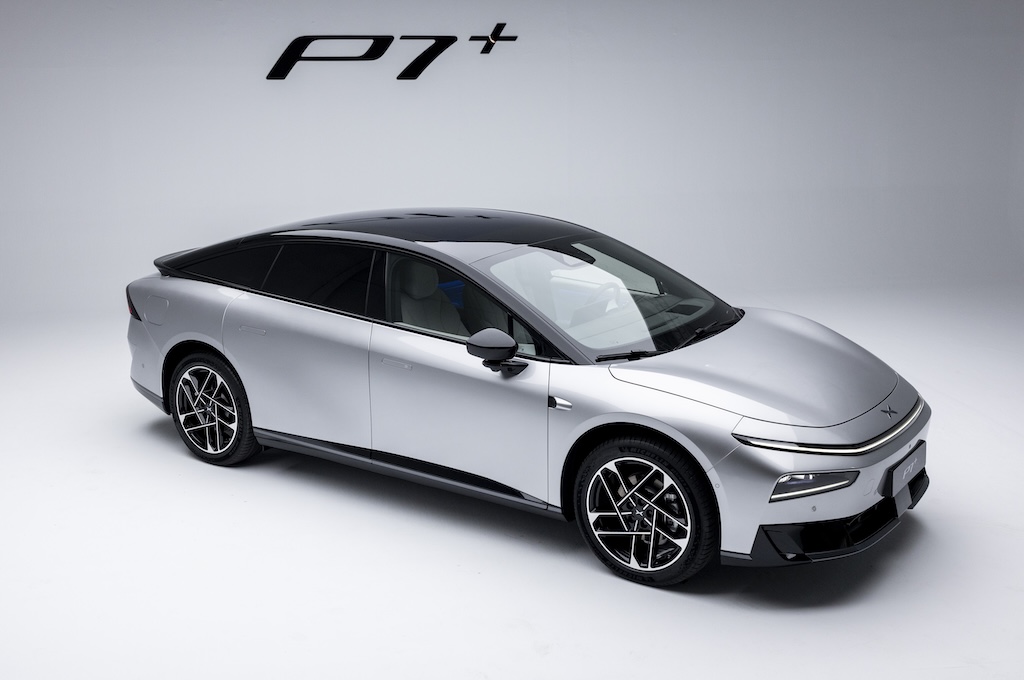
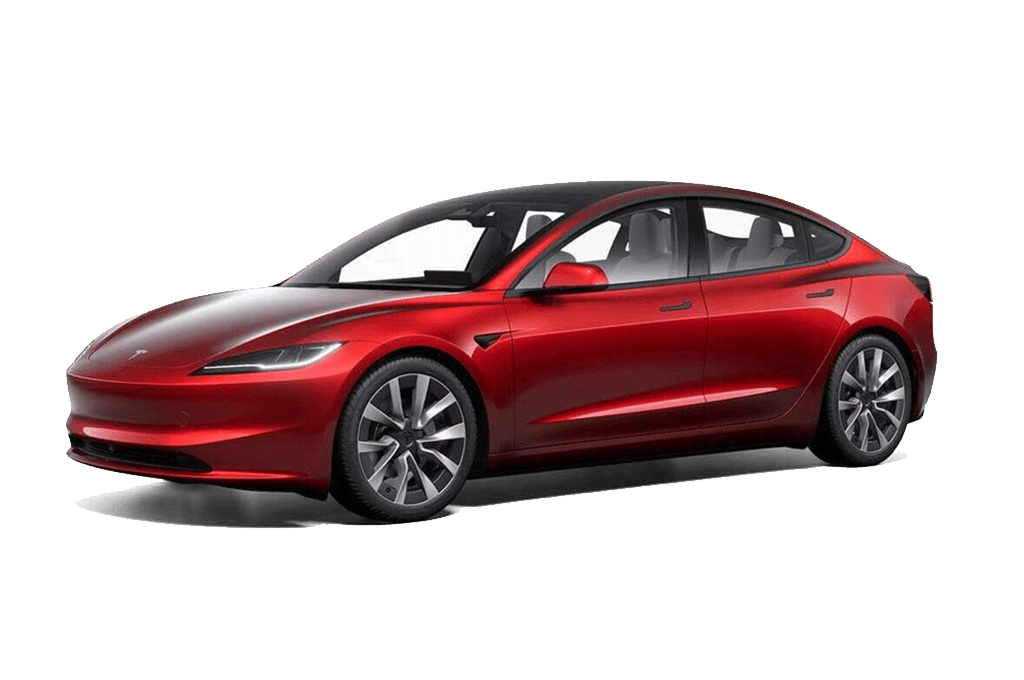
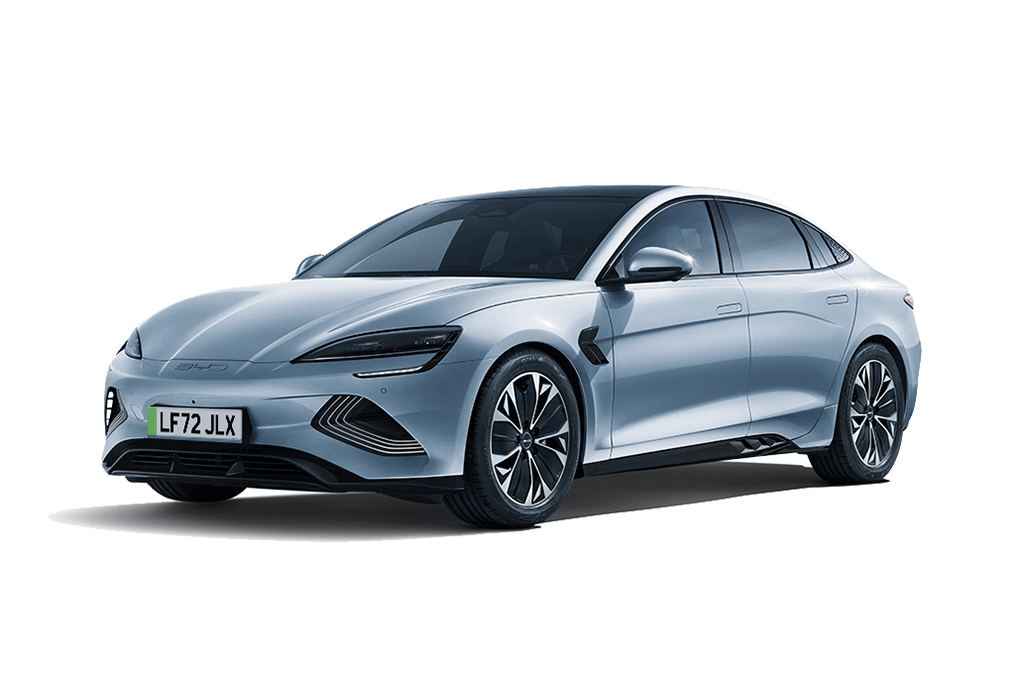
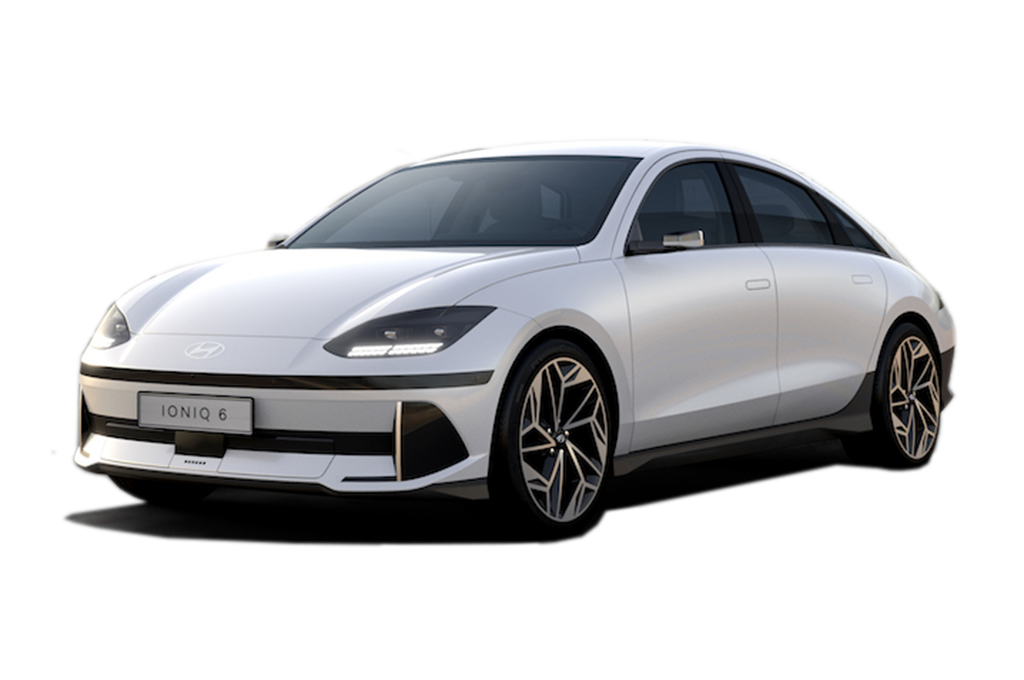
We went and visited Xpeng's HQ in Guangzhou, China, which revealed a young tech company that's invested in the future of flying cars and humanoid robots (no, really, it is...) but its true passion is cars. Xpeng built its reputation on the P7 saloon and while the next generation, aptly called the Next P7, has just gone on sale in China, the UK will be getting the Xpeng P7+ later in 2026 to take on the BYD Seal, Hyundai Ioniq 6, Polestar 4 and Tesla Model 3.
It doesn’t have the 509 mile range of the Next P7, but it still has lots to shout about including its ability to charge from 10-80% in only 12 minutes, massive interior space and its cool fastback tourer looks.
Range, battery and charging
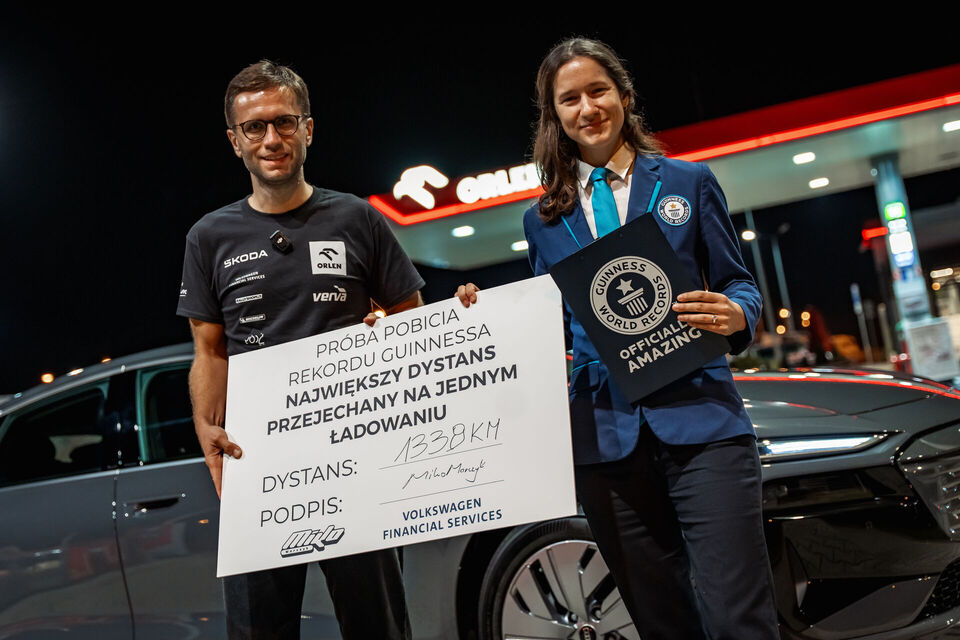
Xpeng set a 24 hour endurance record for mass-produced EVs in August 2025 when the Next P7 covered 2,461 miles in 24 hours with multiple fast charges. It wasn’t even going slowly, hitting 130mph along the way. The Xpeng P7+ that's coming to the UK later in 2026 can’t match the 509 mile range of that car, though.
Instead the UK model with its 61.7kWh or 74.9kWh (gross battery capacity) 800V 5C ultra-fast charging LFP batteries, promises up to 341 miles for the single motor, rear-wheel drive version and 311 miles for the all-wheel drive, dual-motor model.
More exciting is that the P7+ will be the fastest charging EV in Europe, capable of adding 1km per second, or to put it another way, a 10–80% charge in only 12 minutes.
You’ll need to find a charger capable of delivering its maximum charging speed of 451kW for that, of course, but the ultra-rapid charging that the Xpeng delivers does mean that you'll also see speedy charging at the 350kW rapid chargers that are becoming common on UK motorways.
In ideal conditions, a 350kW rapid charger will still manage a 10–80% top-up of the P7+ in around 15 to 20 minutes.
Vehicle to load (V2L) capability of 3.3kW allows you to power stuff from the charging port towards the rear and it has a heat pump to keep things cosy during winter too.
Practicality and boot space
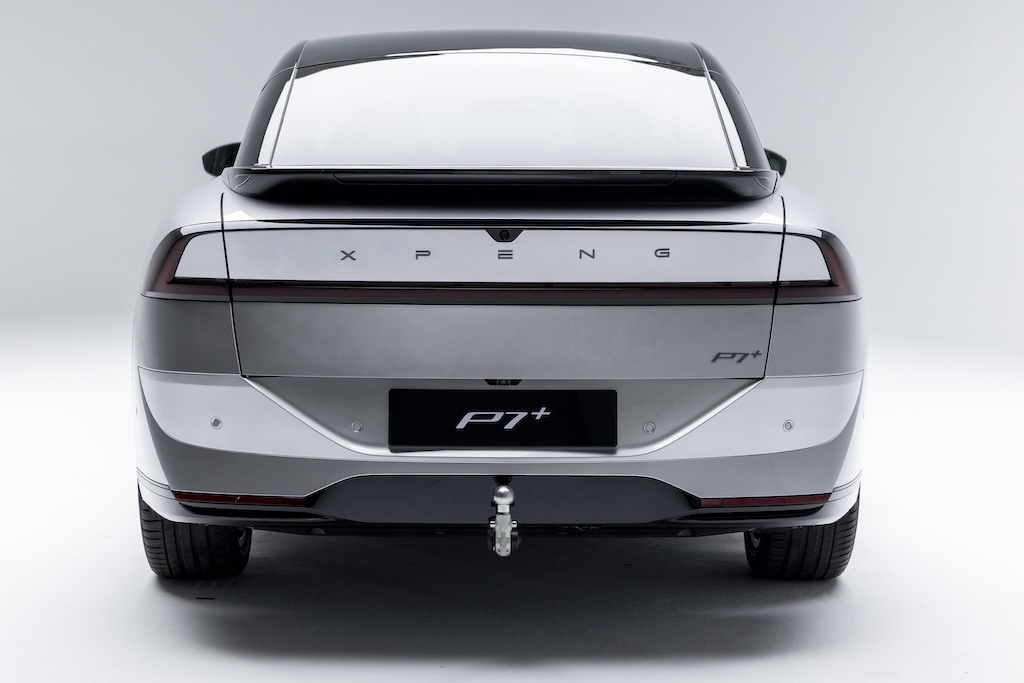
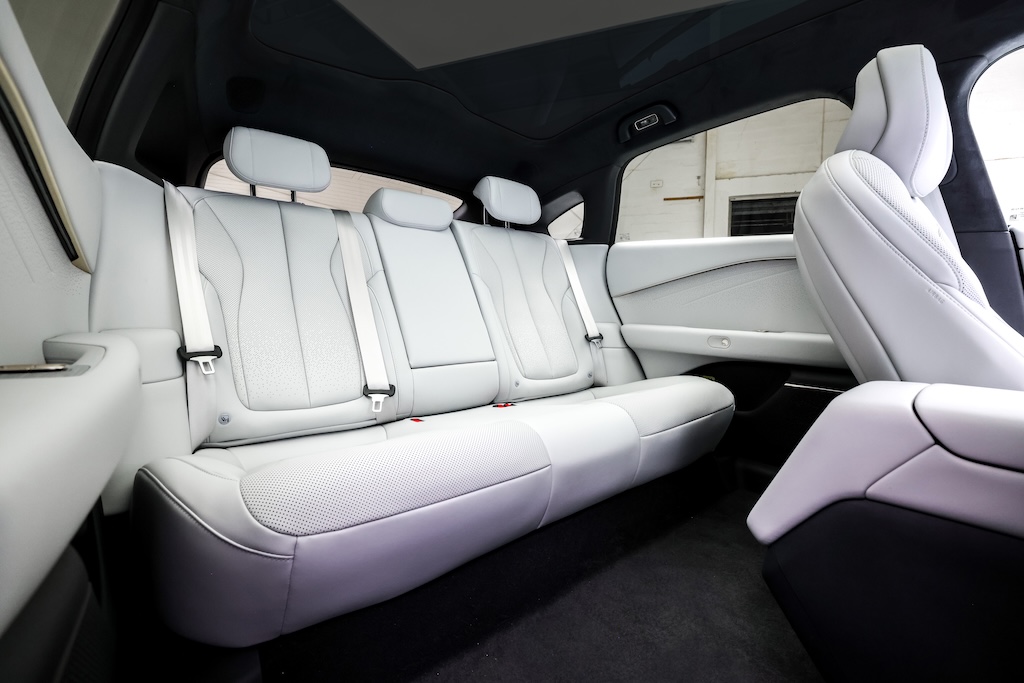
The Xpeng P7+ is described by its designers as a fastback tourer, which means that it looks like a sleek saloon but the boot has a useful, hatchback style opening. A bit like the Polestar 2, MG IM5 and Audi A6 Sportback. It’s just under 5.1m long and the 3.0m long wheelbase (which is the distance between the front and back axles) means loads of room inside, with a massive 573 litres of luggage space – 72 litres more than an Audi A6 Avant e-tron, if not quite as much as you get in the Volkswagen ID.7 Tourer.
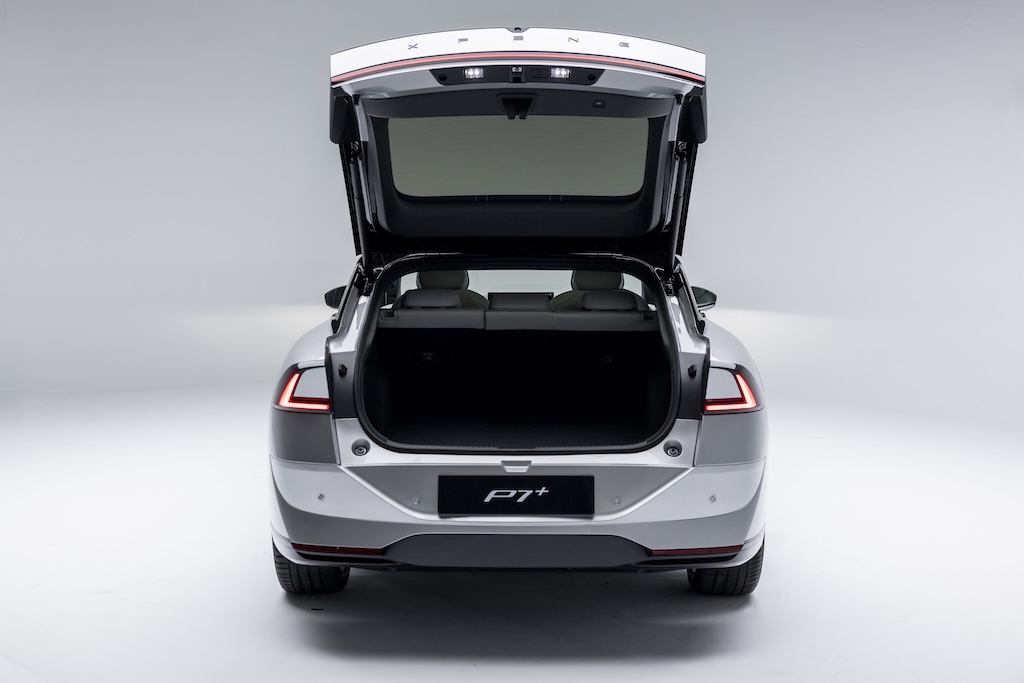
Chinese buyers often want to prioritise rear passenger space, which is why it's common to find new Chinese cars with masses of rear legroom. The Xpeng is no different, so the rear seats have plenty of headroom and almost a metre of legroom.
Needless to say that I had no issues getting comfy when I spent a bit of time looking around the car during my trip to China. The kids will have no excuse for leaving stuff lying around, either, because there are 35 storage spaces around the interior. The P7+ even ticks the box for those who need to tow, with the option of an electrically operated tow bar and a towing capacity of 1,500kg.
Interior, design/styling and technology
Xpeng’s design team has been careful not to overdo things in the interior, which has a premium feel with stylish minimalism and useful tech. That tech includes a narrow 8.8-inch digital instrument cluster, an 8.0-inch screen for those in the back seats and head-up display.
Then there’s a fairly easy to use 15.6-inch infotainment screen, which gives you access to all the settings, Apple CarPlay, Android Auto and various modes. These include Comfort, Standard and Sport driving modes, as well as 'pet space', 'meditation space' and 'sleeping space' where the front seats recline flat. We didn’t spend much time in the seats – definitely not enough to have a nap or do some meditating – but they seem comfortable and all are heated or ventilated with massaging functions, even in the back.
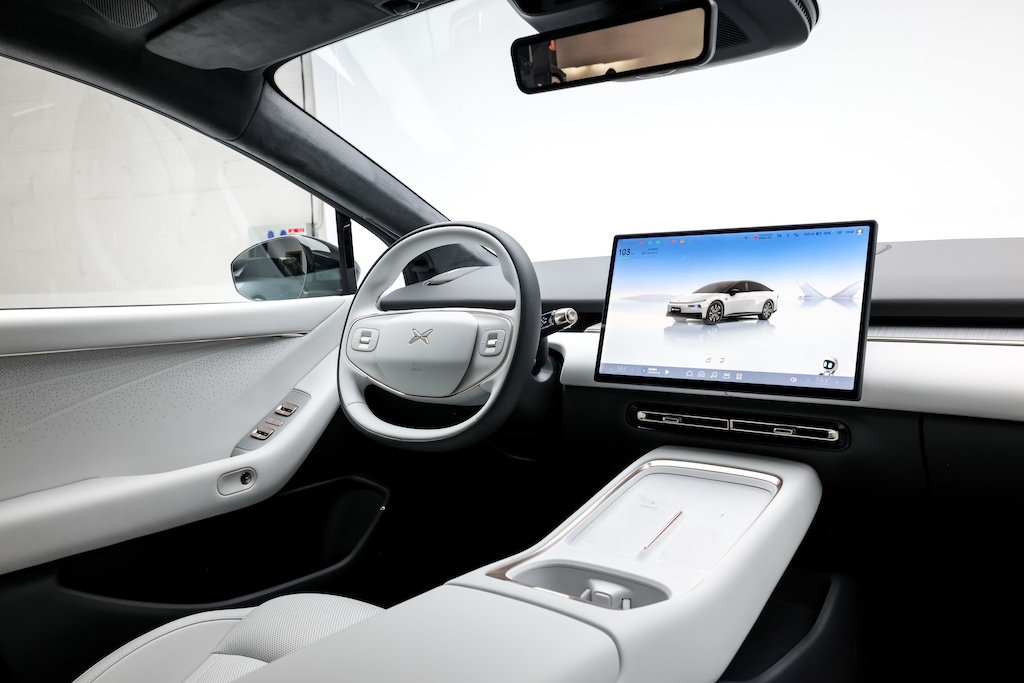
Other tech includes over the air software updates, an AI personal assistant, remote diagnosis and Level 2 autonomous driving capability (which is the same level of autonomy that Tesla offers, in case you're wondering) thanks to the brand’s clever new Turing processor technology.
We tested the system when we had a drive in the outgoing Xpeng P7+, and as self-driving systems go it’s right up there with the best, even in manic Chinese city traffic.
Motors, performance and handling
The Xpeng P7+ Standard Range will get a single electric motor, rear-wheel drive and 241hp for a 0–62mph of 7.9 seconds. The Long Range version boosts power and performance to 308hp and a 0–62mph time of 7.4 seconds.
The best performance will be in the all-wheel drive, dual-motor model with 496hp and 670Nm and a reasonable 0–62mph sprint of 5.1 seconds.
All models get a full suite of electronic driving systems, including Dynamic Chassis Control, as well as suspension engineered to provide comfort and good handling.
Unfortunately, we haven’t driven the new P7+ yet, but our experience with the outgoing model in city traffic showed a decent everyday drive.
Running costs and pricing
We expect the P7+ to arrive in the UK later in 2026, so for now both International Motors and Xpeng Europe have said it’s too early to give an idea on price. Based on the price of the new Xpeng G6 and the prices of the Next P7 in China, we’d estimate that pricing will start at around £45,000.
We haven’t driven the new P7+ yet, so for now it’s all about our first look and the results of that are that it seems quite impressive. The P7+ has some nice features to make it stand out slightly from the crowd and the interior gives off a luxury feel with tech that's usable and a bit of fun, too.
The biggest issue with the new P7+ is that while it all seems cool and new, it’s actually more a facelift of the car that has now been replaced by the Next P7 in China.
Xpeng told us that the new Next P7 model not only has longer driving range but is also engineered to be a better car to drive – which is something that really appeals to us Brits and European drivers. I rather like the P7+ as a tech-filled Tesla Model 3 rival, but even so – it may be worth waiting to see if the Xpeng Next P7 might supersede the P7+ in the UK before long, too.



.jpg?width=600&height=600)