





 Battery size: 29.3 kWh
 Max charge rate: 50kW
 Range: 128 miles
 Real-world range (est): 110-160 miles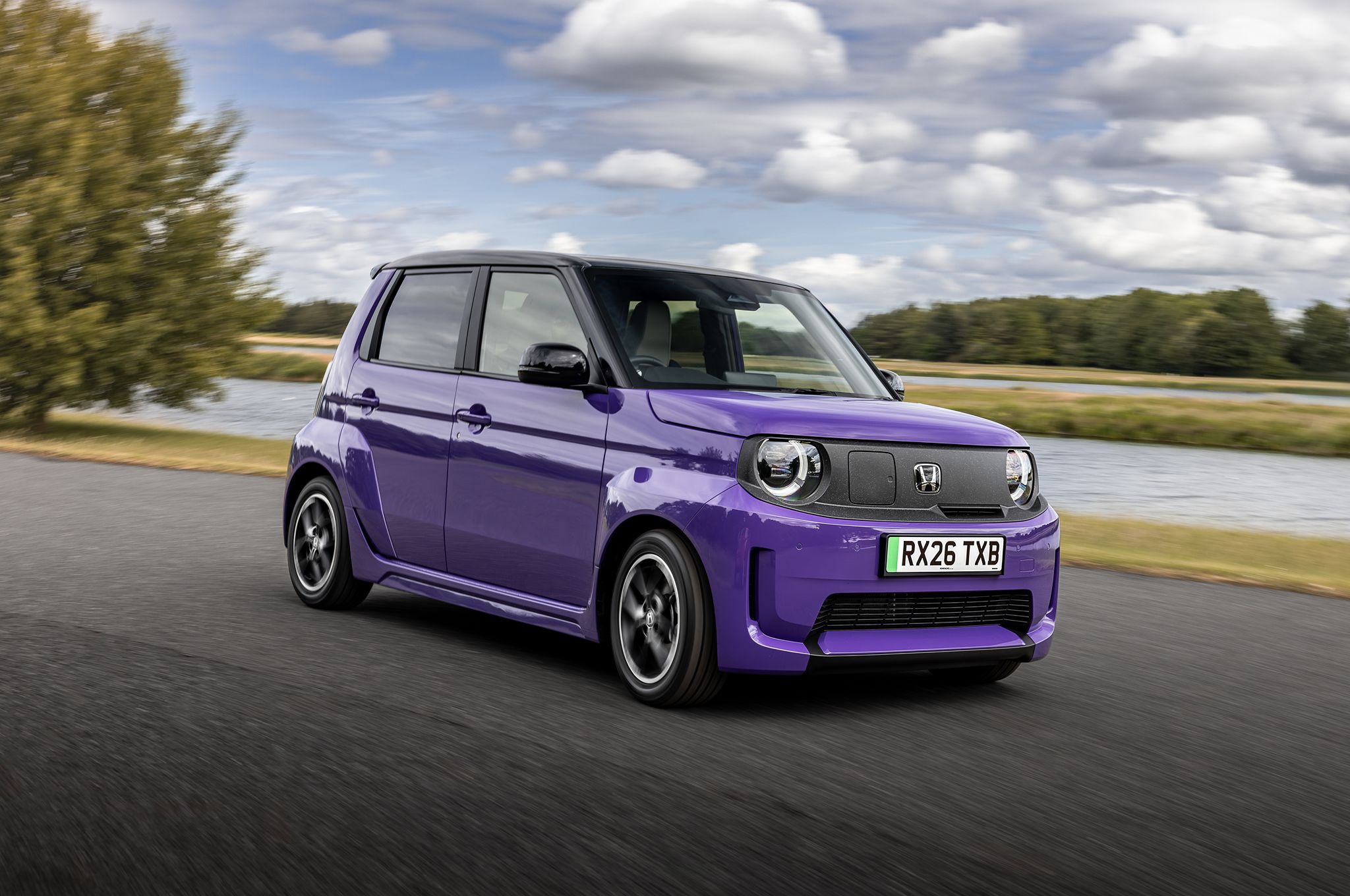



Introduction
We’ve been pleased to see a trend towards cheap EVs lately. The Renault Twingo E-Tech is currently one of the most hotly anticipated cars out there and the BYD Dolphin Surf has been bringing electrification to the masses since 2025.
Honda’s entry, the Super-N, is smaller and lighter than the e and e:Ny1 before it and takes a very different approach to either of those cars.
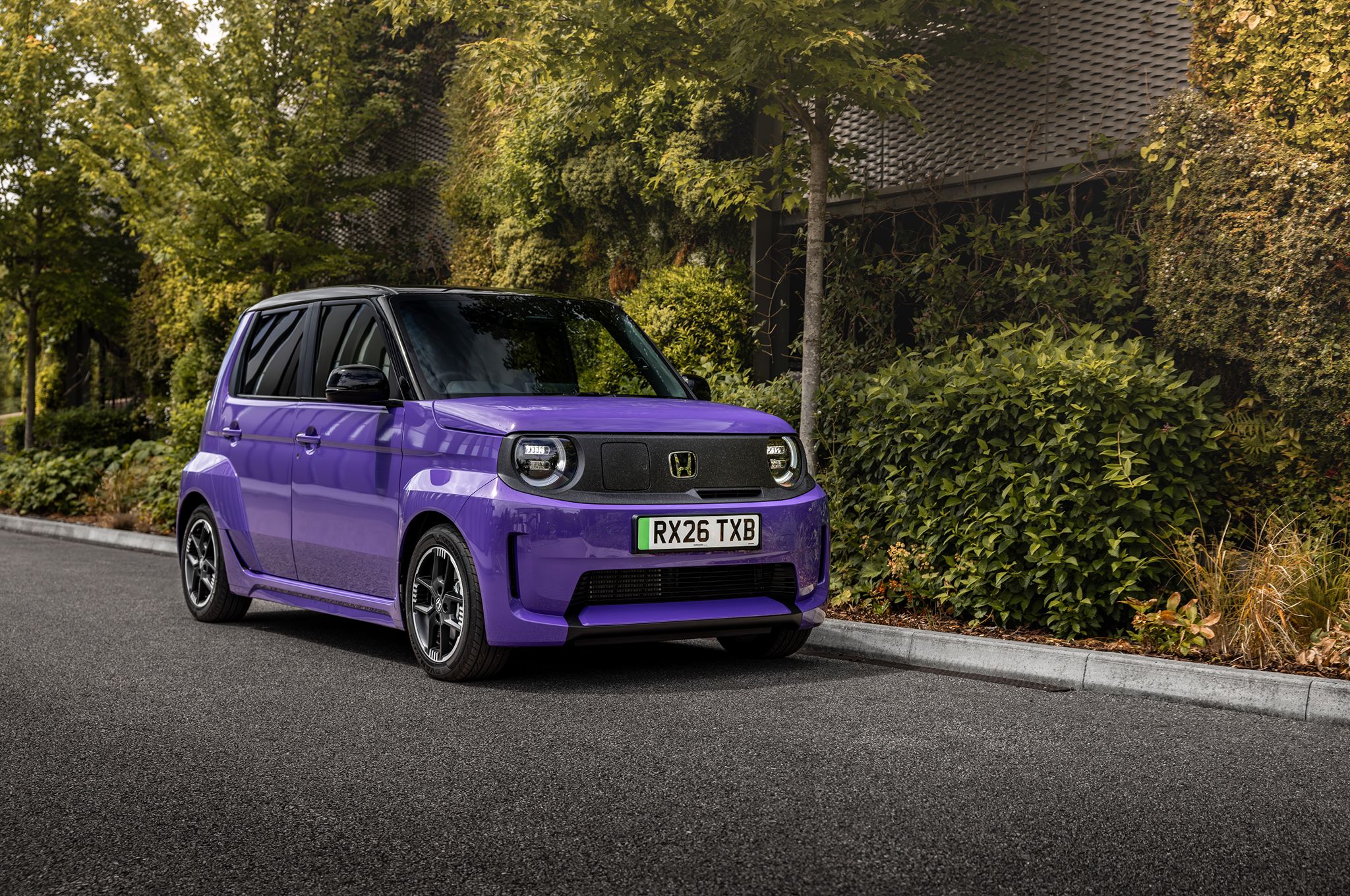
It’s the latest in a growing trend of small, affordable EVs and Honda’s taken the small part to the full extent of its definition. The Super-N is based on a kei car, the smallest class of car available in Japan, albeit ever so slightly embiggened for the European market.
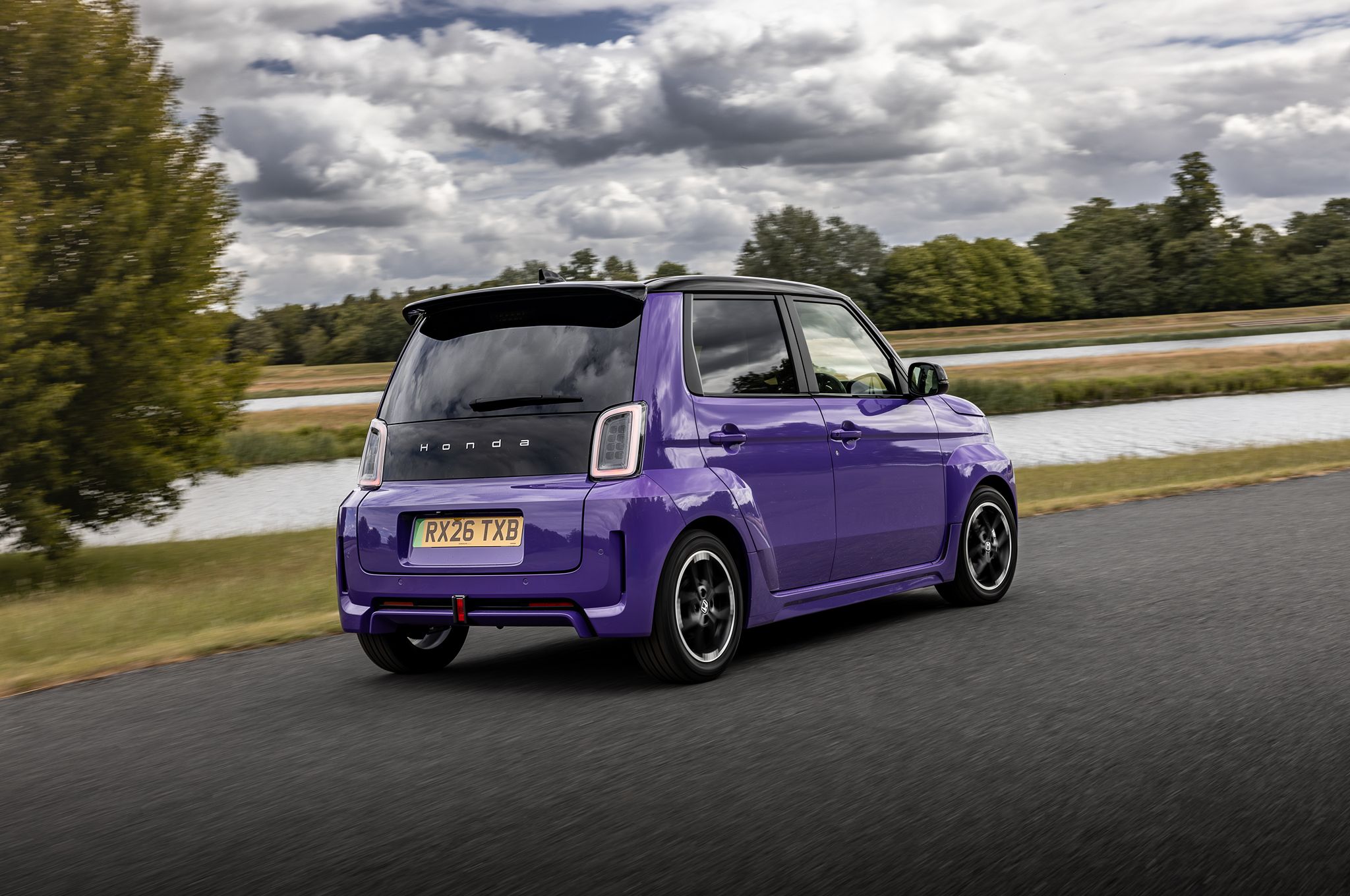
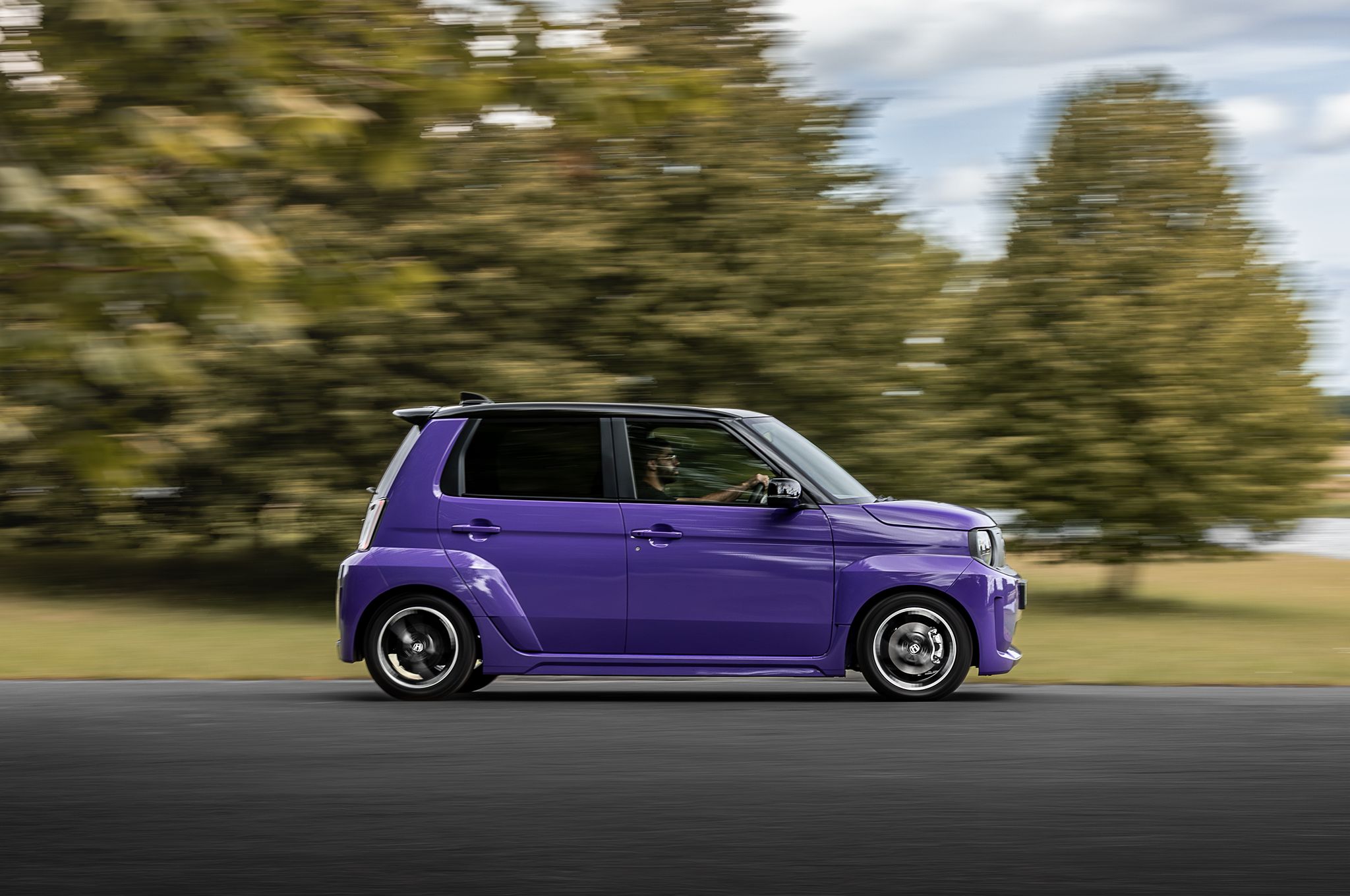
Approaching the Super-N is a delight, the purple car we had for testing certainly stands out but even in a less bold hue, the swollen arches and rear wing make it look like a baby rally car.
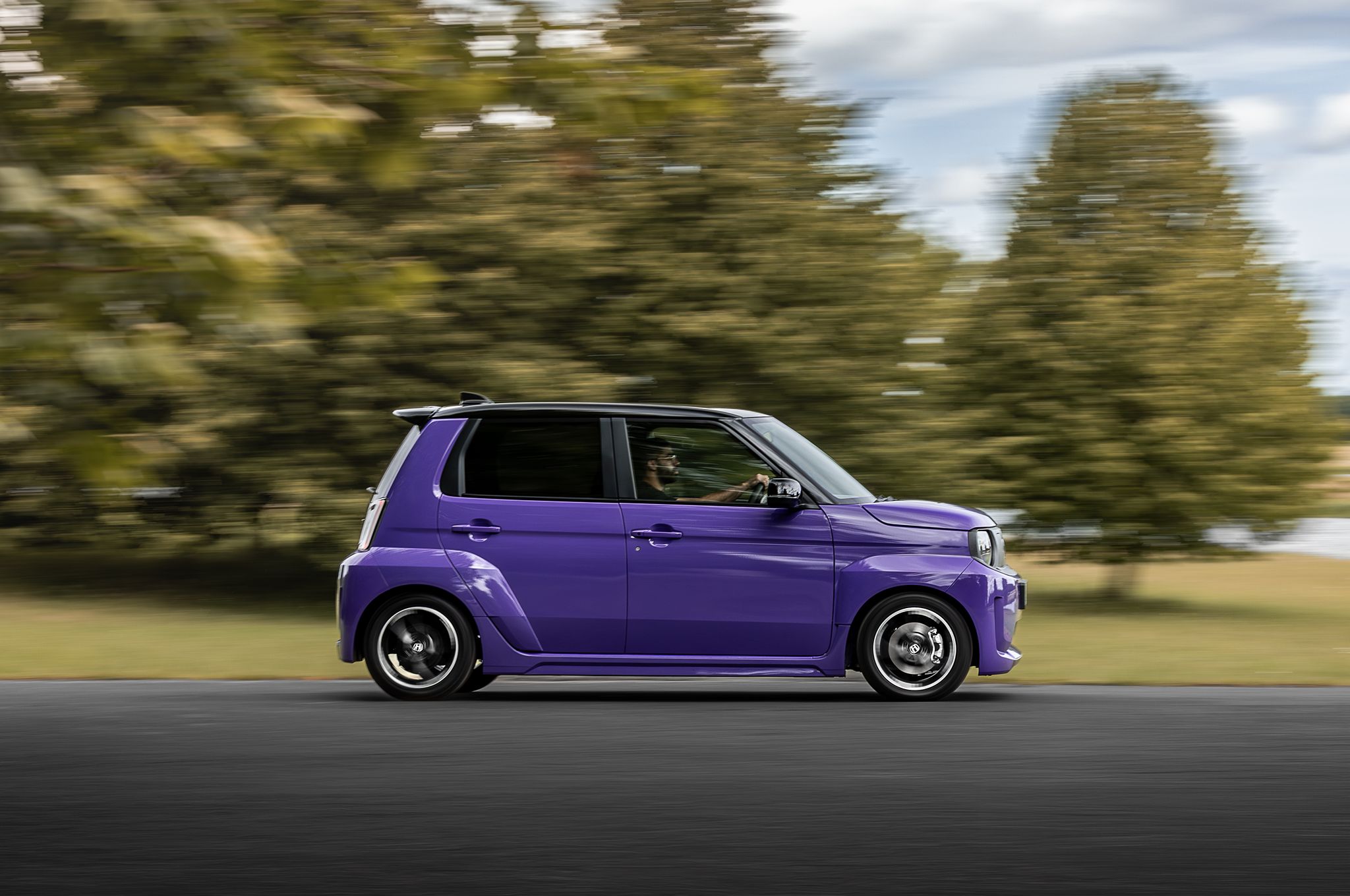
It measures in at a hair under 3.6m but still manages to comfortably seat four adults, plus while boot space is limited with all the seats in place, the Super-N has a few tricks up its sleeve to fit items as big as a washing machine. How? Read on to find out.
Range, battery and charging
Despite its efficiency-boosting air vents, the Super-N is still just a box so efficiency at motorway speeds is pretty poor. It gets a combined WLTP range figure of just 128 miles (206km) or an urban range of 199 miles (320km).
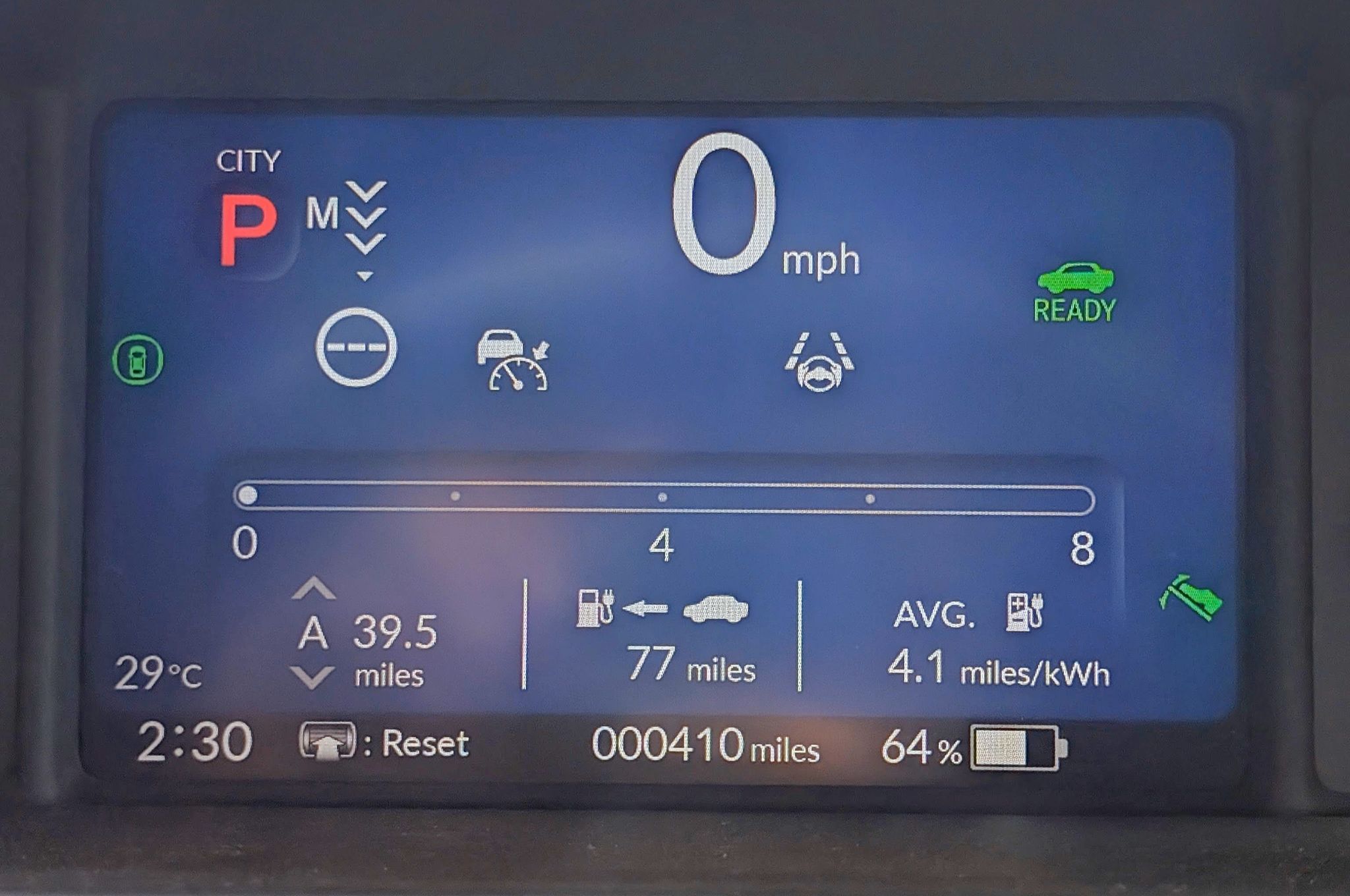
In my time stretching the Super-N’s legs on some fast B-roads, I returned to base with an efficiency rating of 4.2 miles per kWh only just short of the 4.3 miles per kWh required to achieve that 128-mile range.
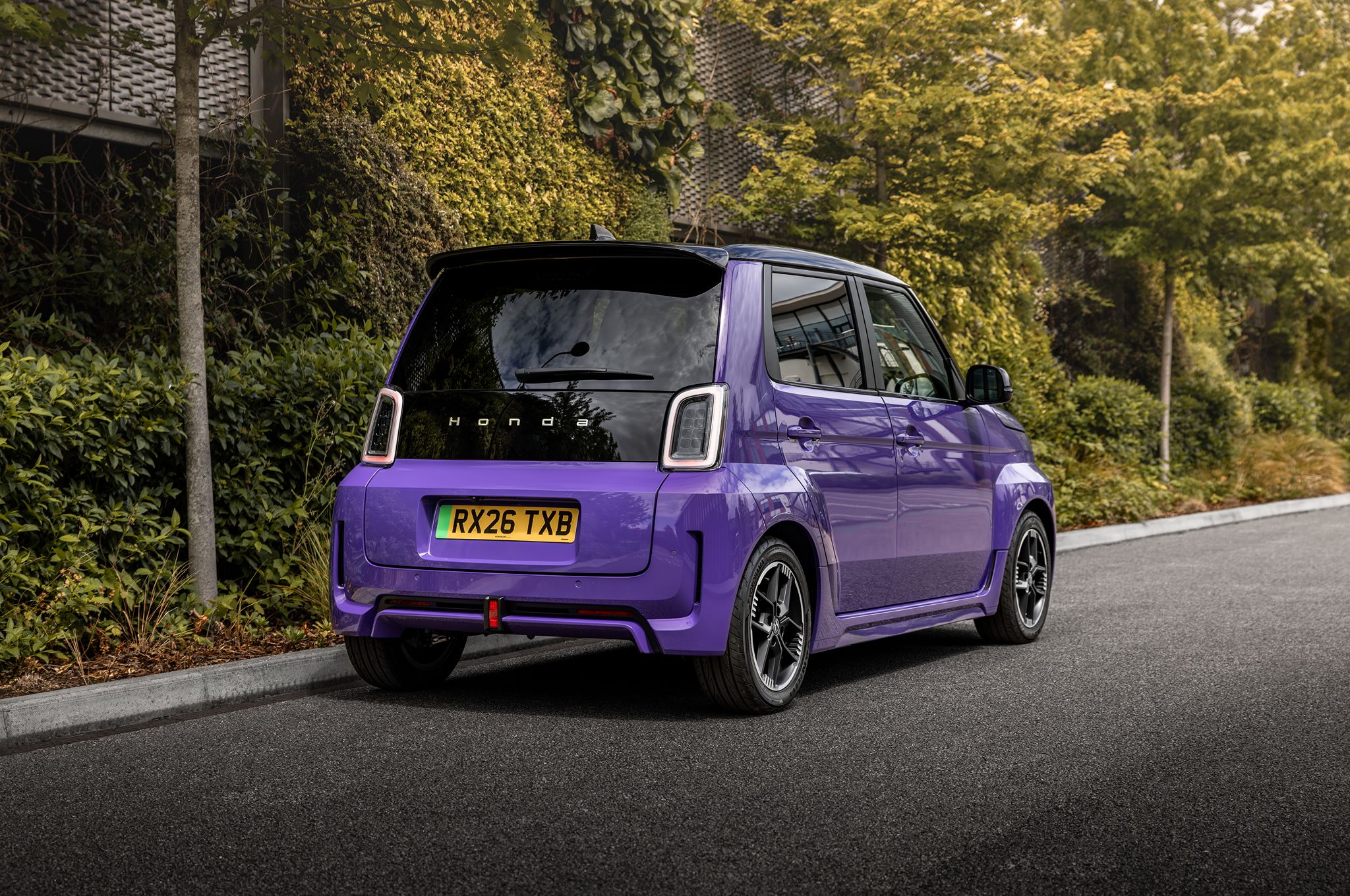
While shooting our video review, I made a more concerted effort to drive more efficiently and found myself with a rating of 5.6m/kWh on a mix of urban streets and country roads.
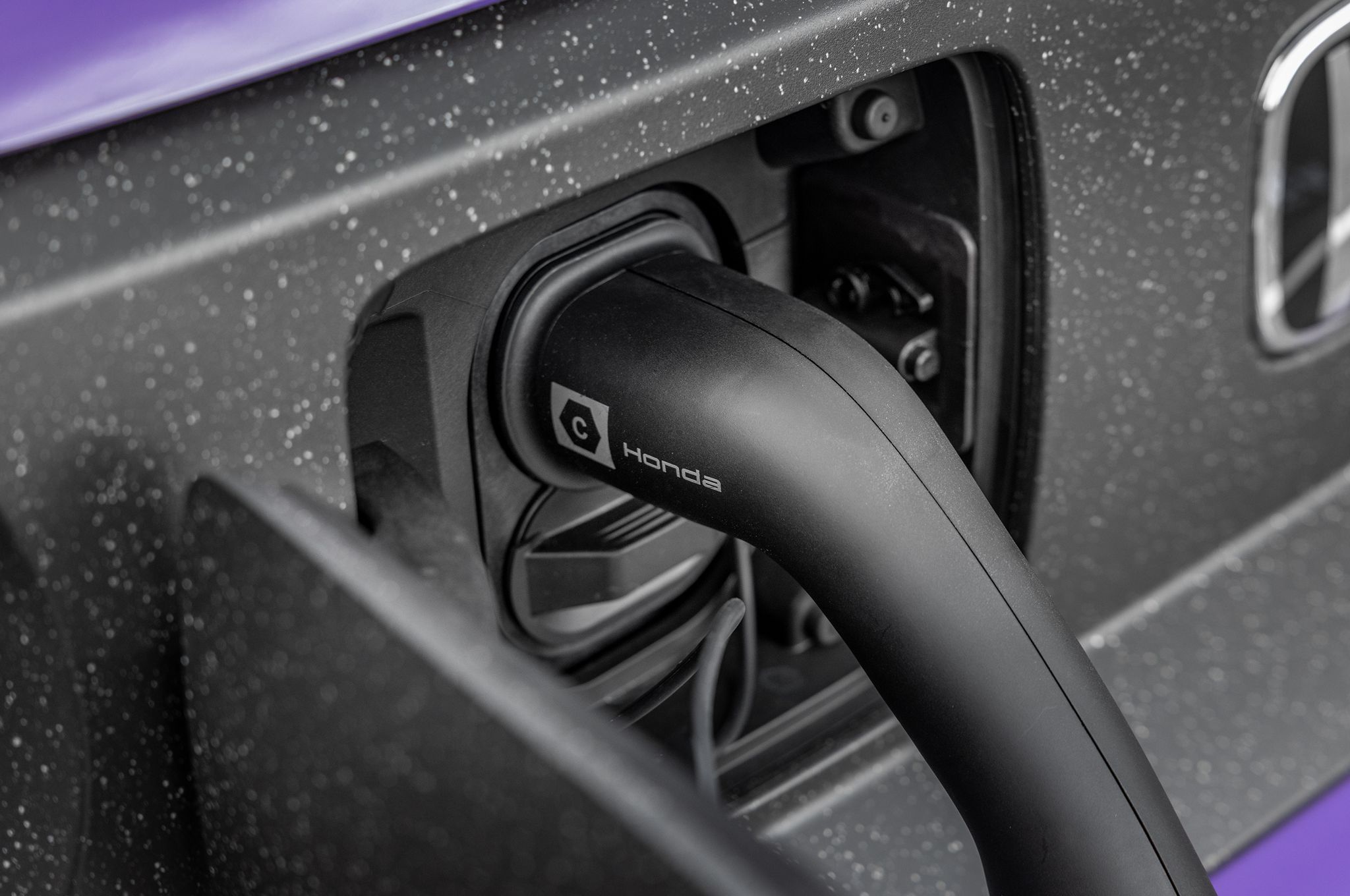
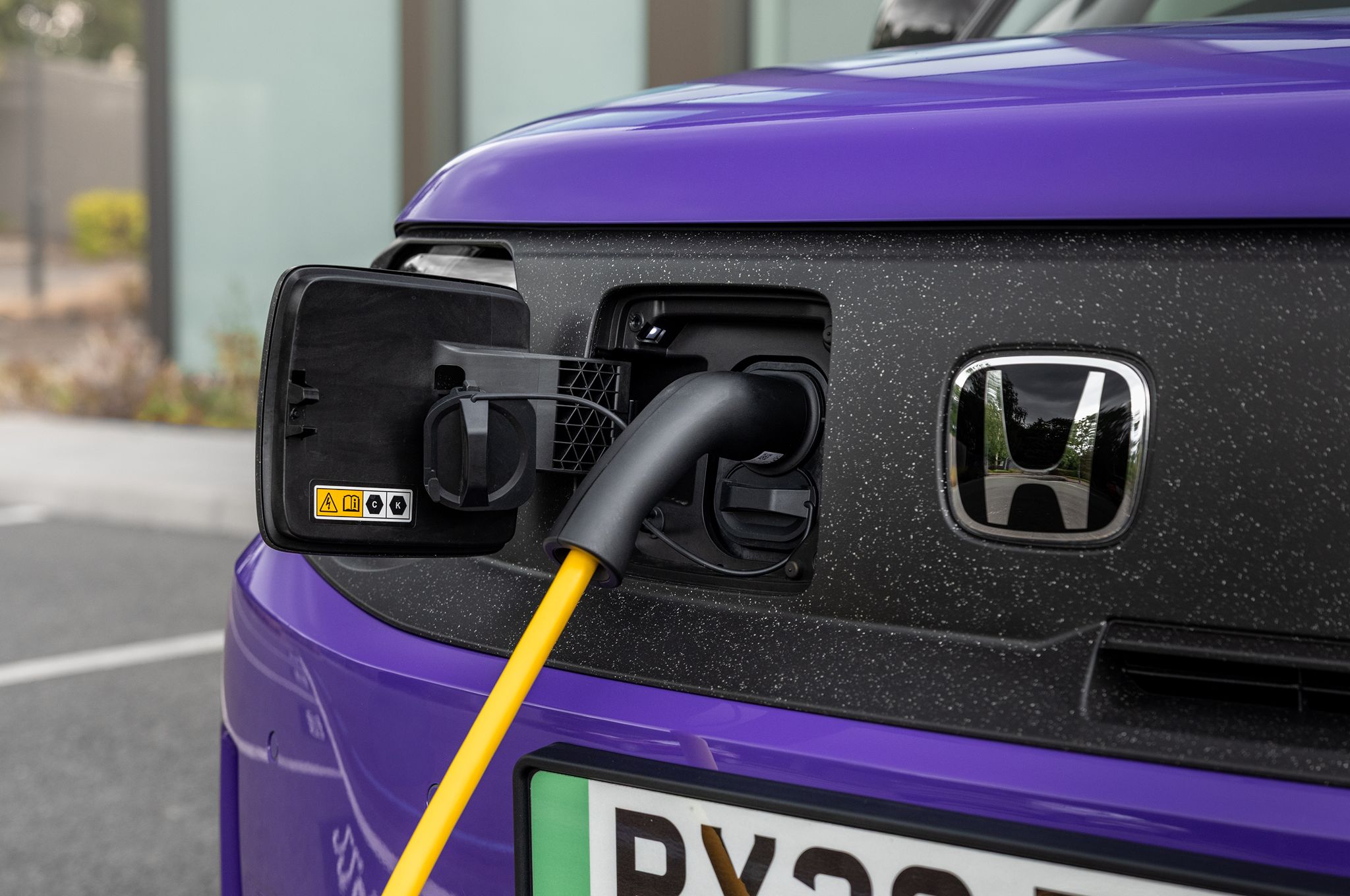
Charging on par for a car of this size with up to 50kW of rapid charging and 7.4kW of AC charging capacity. The former is enough to charge from a sneakily quoted 15–80% state of charge in 30 minutes. Expect the standard 10-80% test to take a little longer.
Practicality and boot space
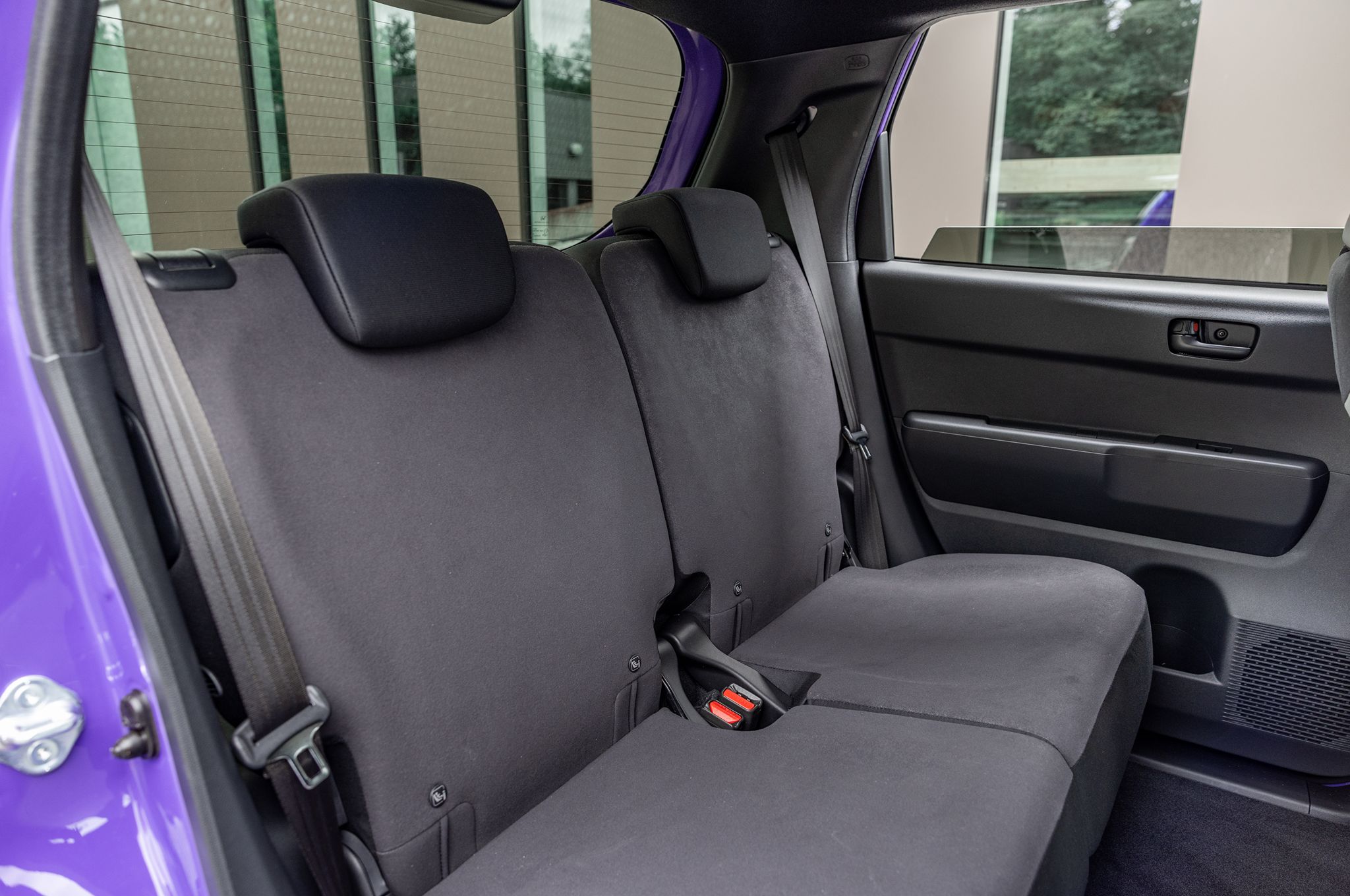
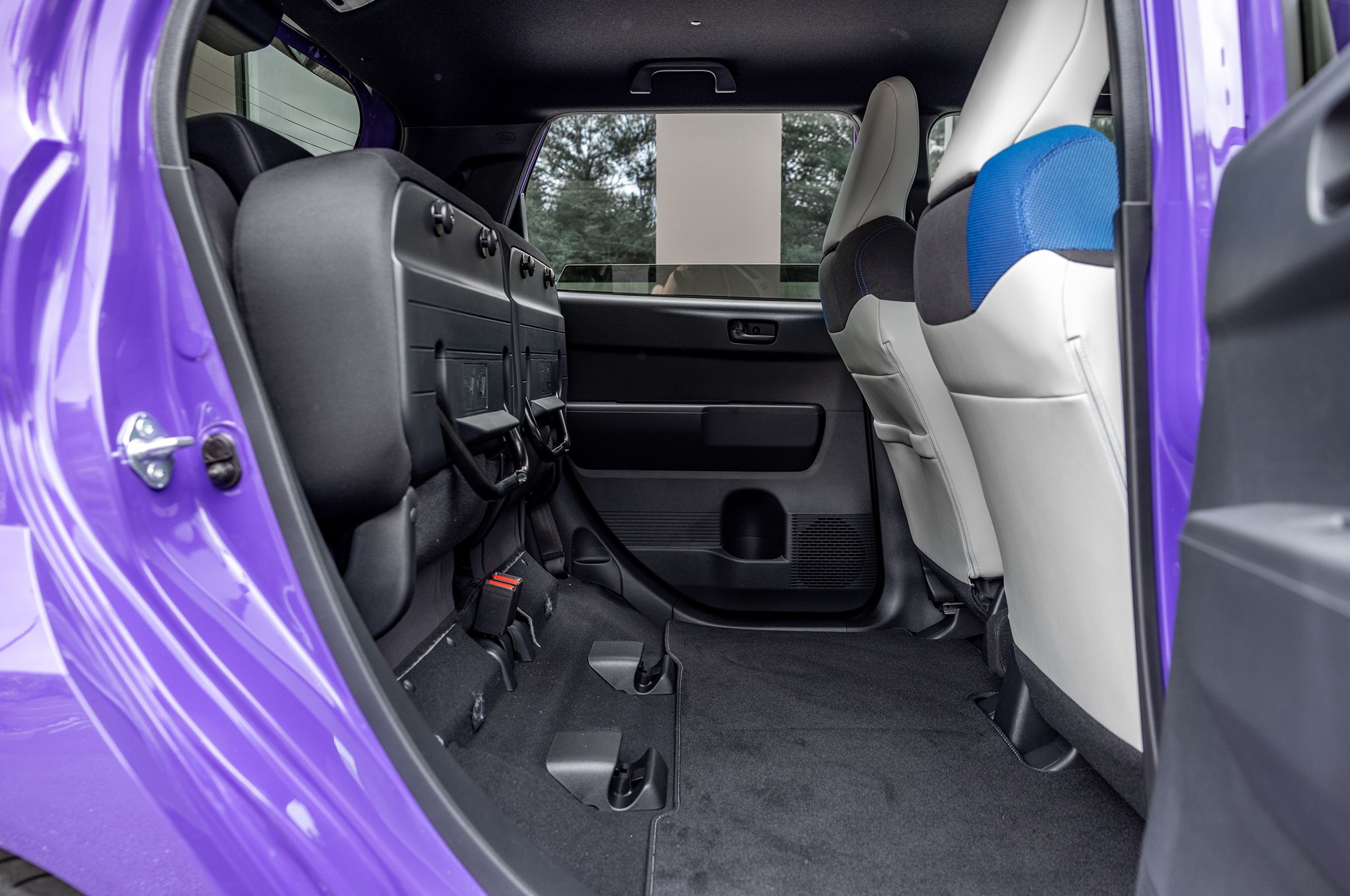
For a car this short, the Super-N is incredibly spacious on the inside. The age-old Japanese tradition of extracting every cubic centimetre of space from a tiny car is paying dividends as even I’m able to fit my leggy 6’3” (191cm) frame behind my own driving position.
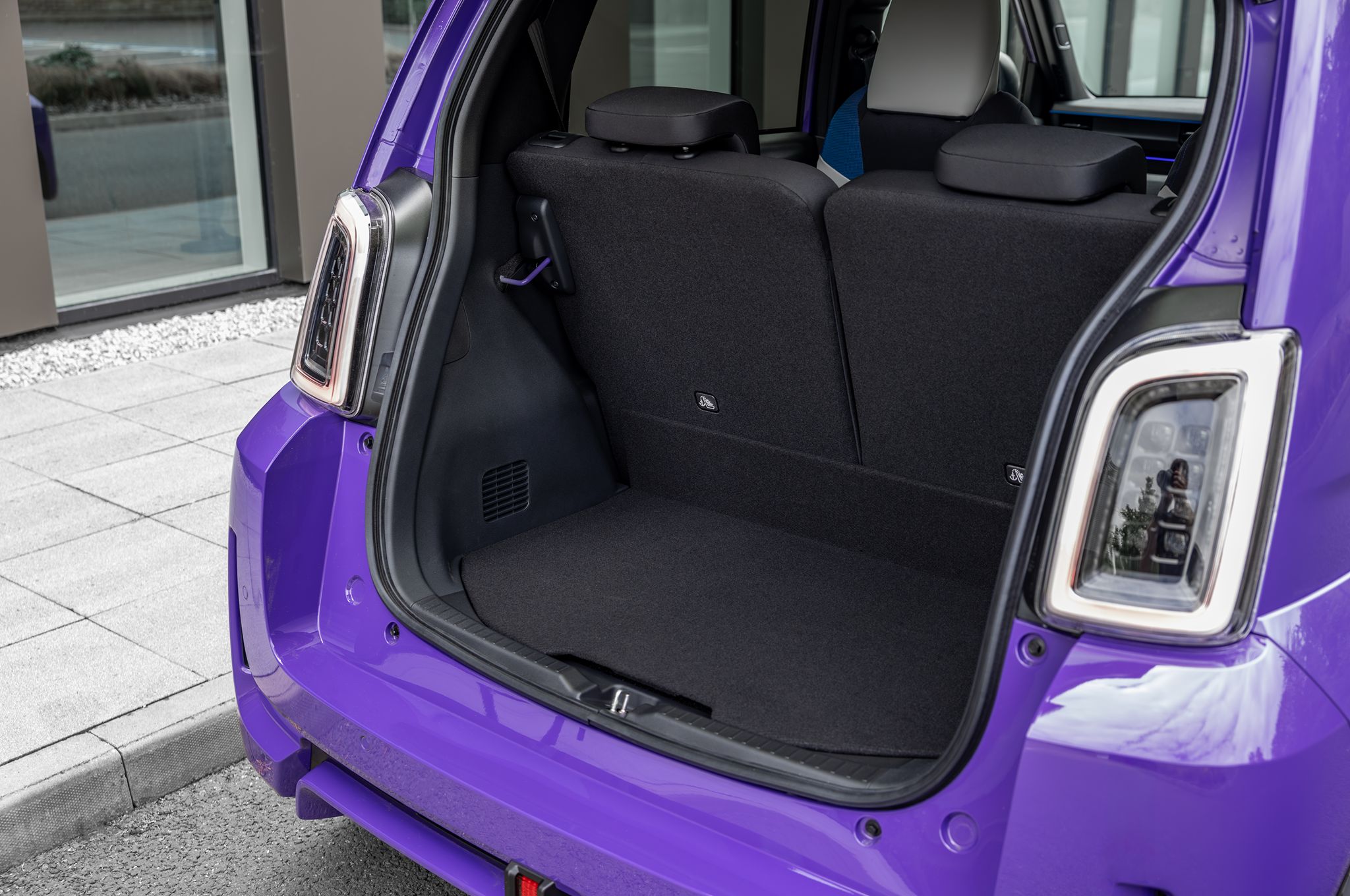
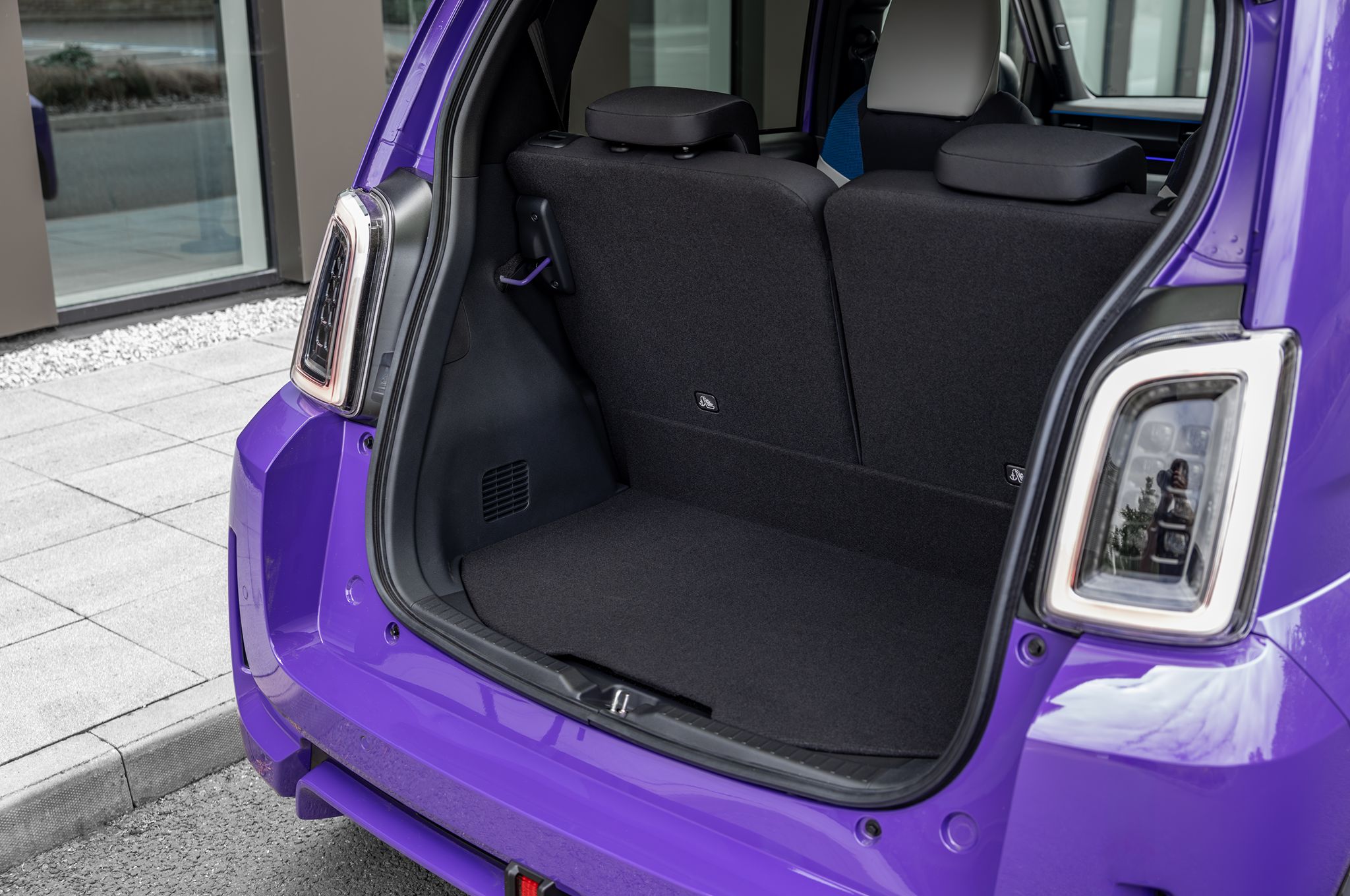
Boot space does suffer if you aim to regularly seat four, with the rear seats in place, there’s just 162 litres of space on offer. However, instead of a sliding-seat setup like you might find in a Renault or Kia, Honda has opted for its magic seat system that allows for the rear seat bottoms to fold up for extra shopping space without having to fold the rear seat backs.
Should you chose to fold the seat backs down, you’ll find 967 litres of room and a flat load floor. Combine that with the large boot opening and low lip and with a little help from a friend, you could get that aforementioned washing machine in there.
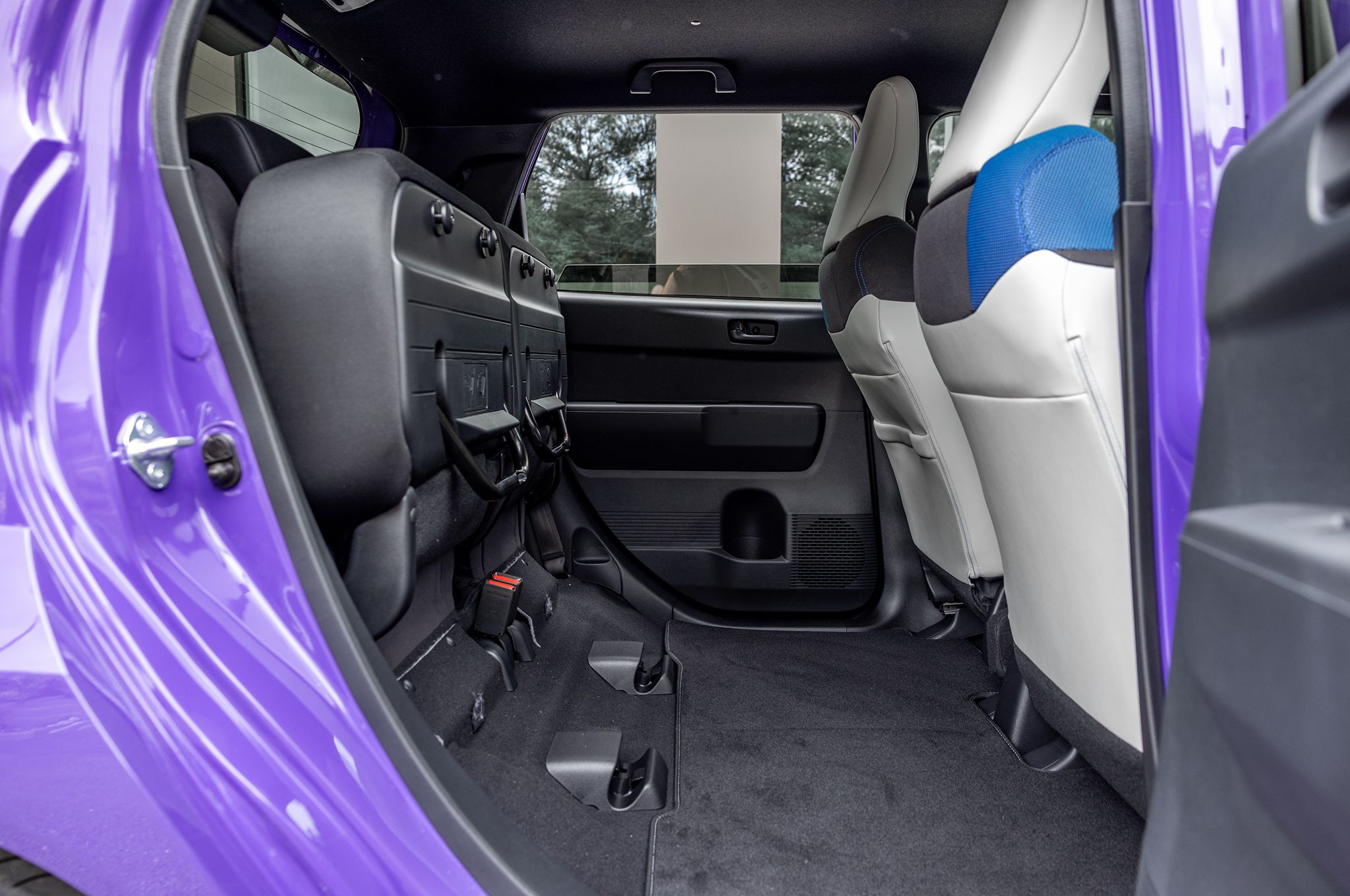
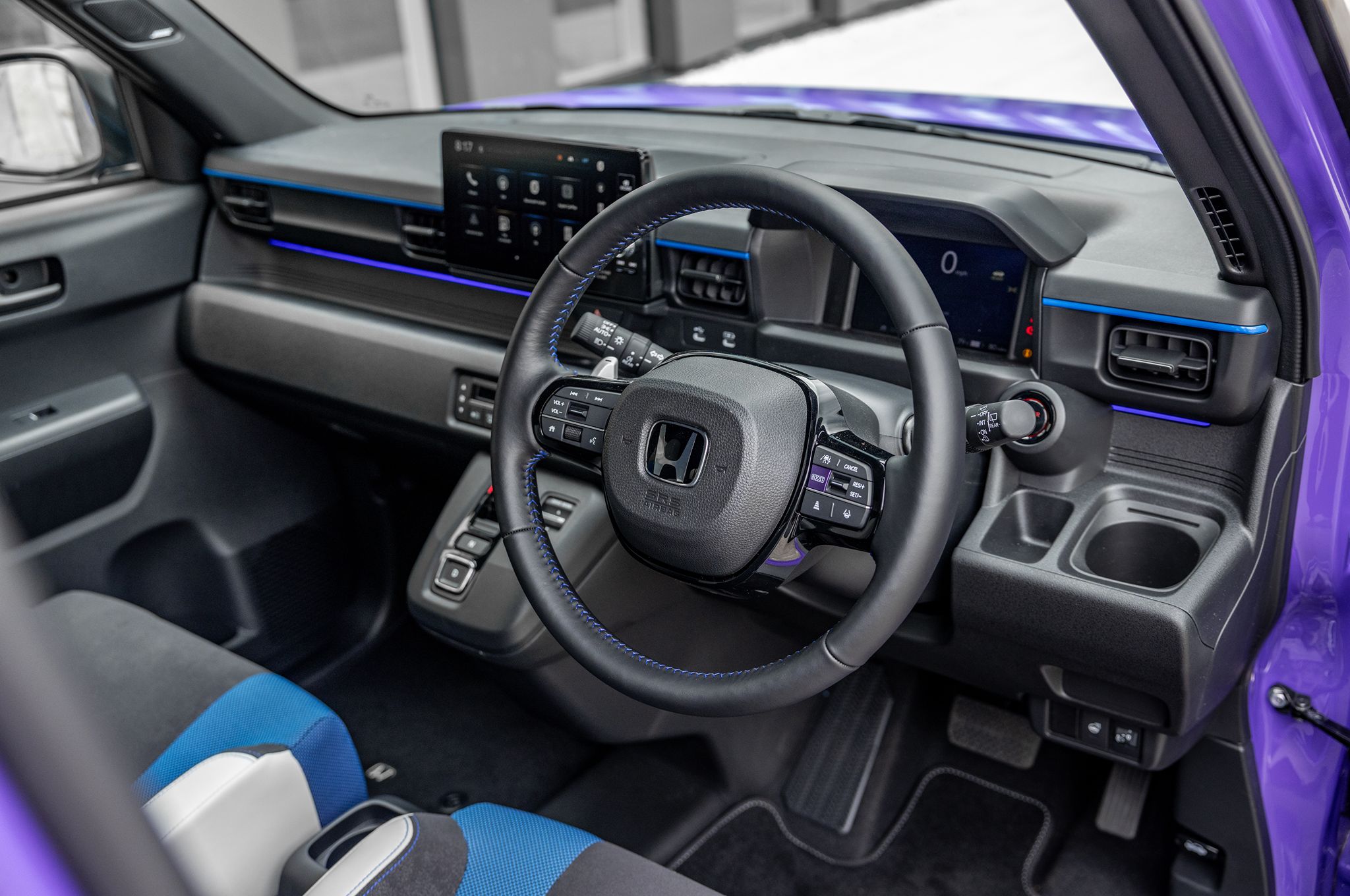
Other storage spots around the interior are somewhat limited. There’s a decent glovebox but no central arm rest up front, in its place, a much skinnier tray and single cupholder. Luckily, there are bottle holders moulded into all four diminutive door bins and an extra cupholder next to the steering wheel.
- Dimensions (L/W/H): 3,590mm/1,570mm/1,610mm
- Max towing capacity: tbc kg
Interior, design and technology
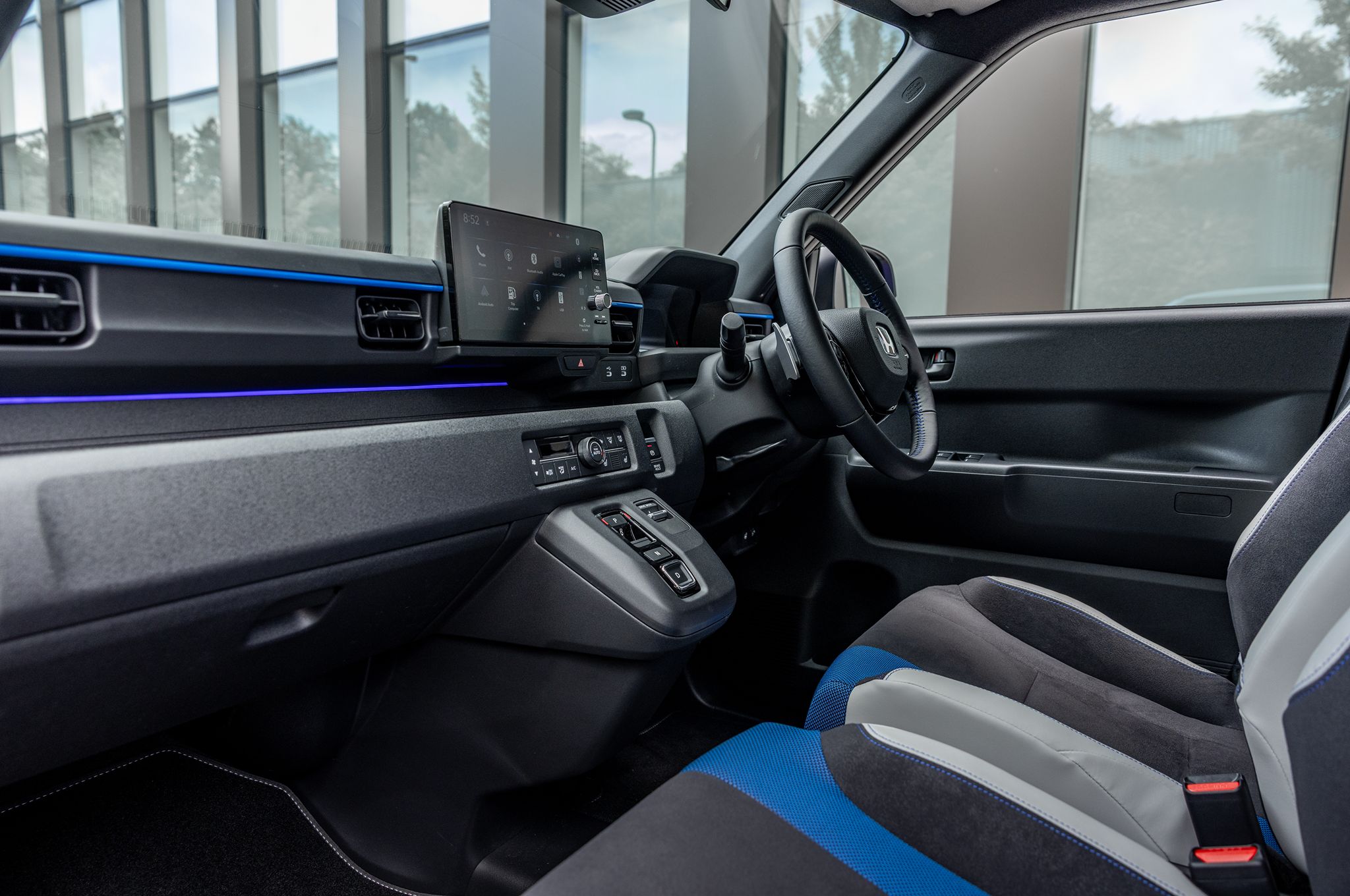
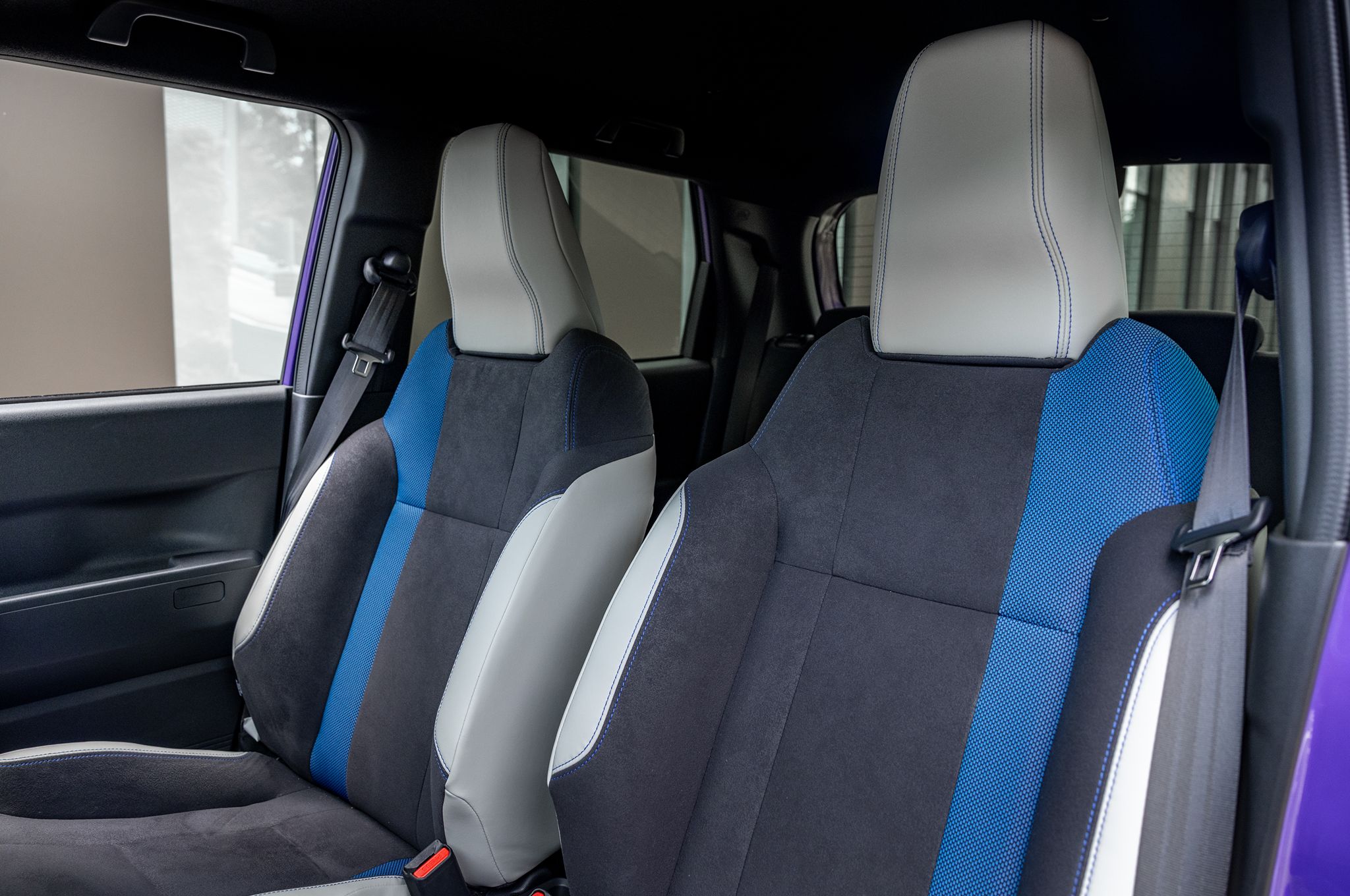
Interior materials are far from luxurious but the build quality is excellent. There’s even an exposed screw in the interior door pull like in the Twingo. The seats echo the design of those in the 1980s City Turbo II and are made from recycled recycled Honda employee uniforms. Nevertheless, they’re soft to the touch, comfortable to sit in, and supportive.
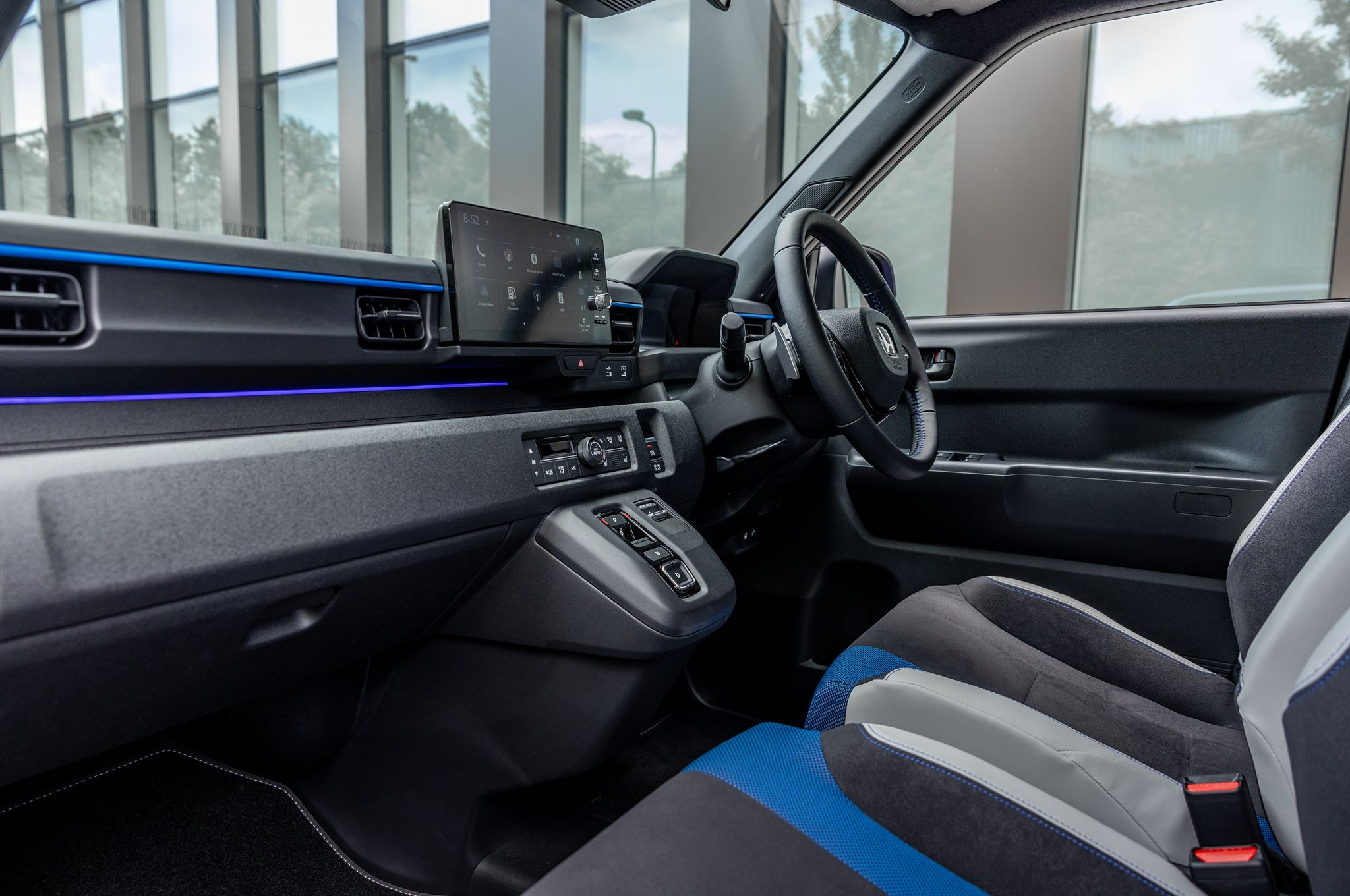
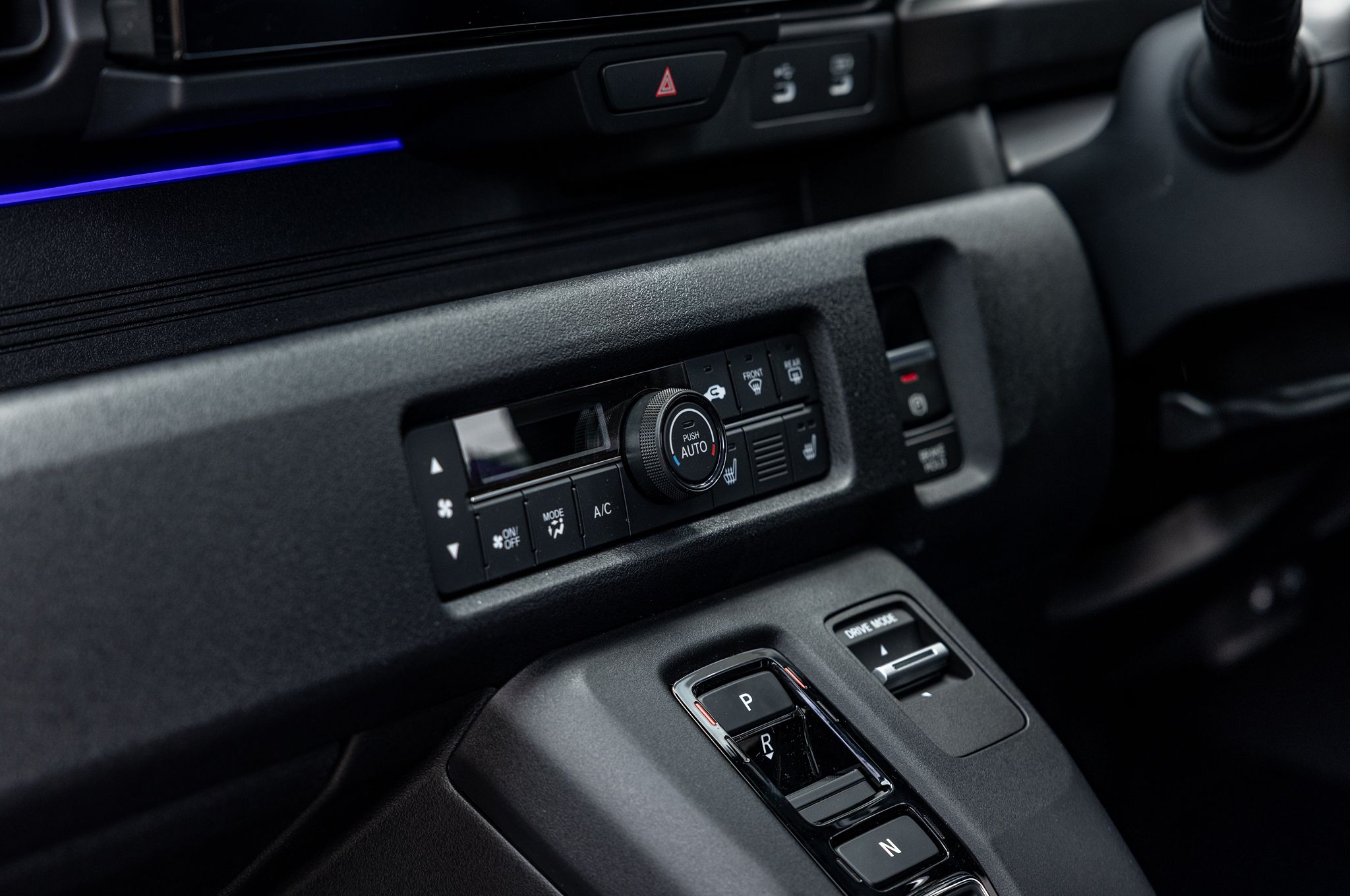
The dashboard and infotainment are refreshingly simple to look at and operate. The gear selector and drive mode selector are about as basic as they come and the climate controls are right in the middle of the dash with a full set of physical controls including some for your heated seats. Rejoice!
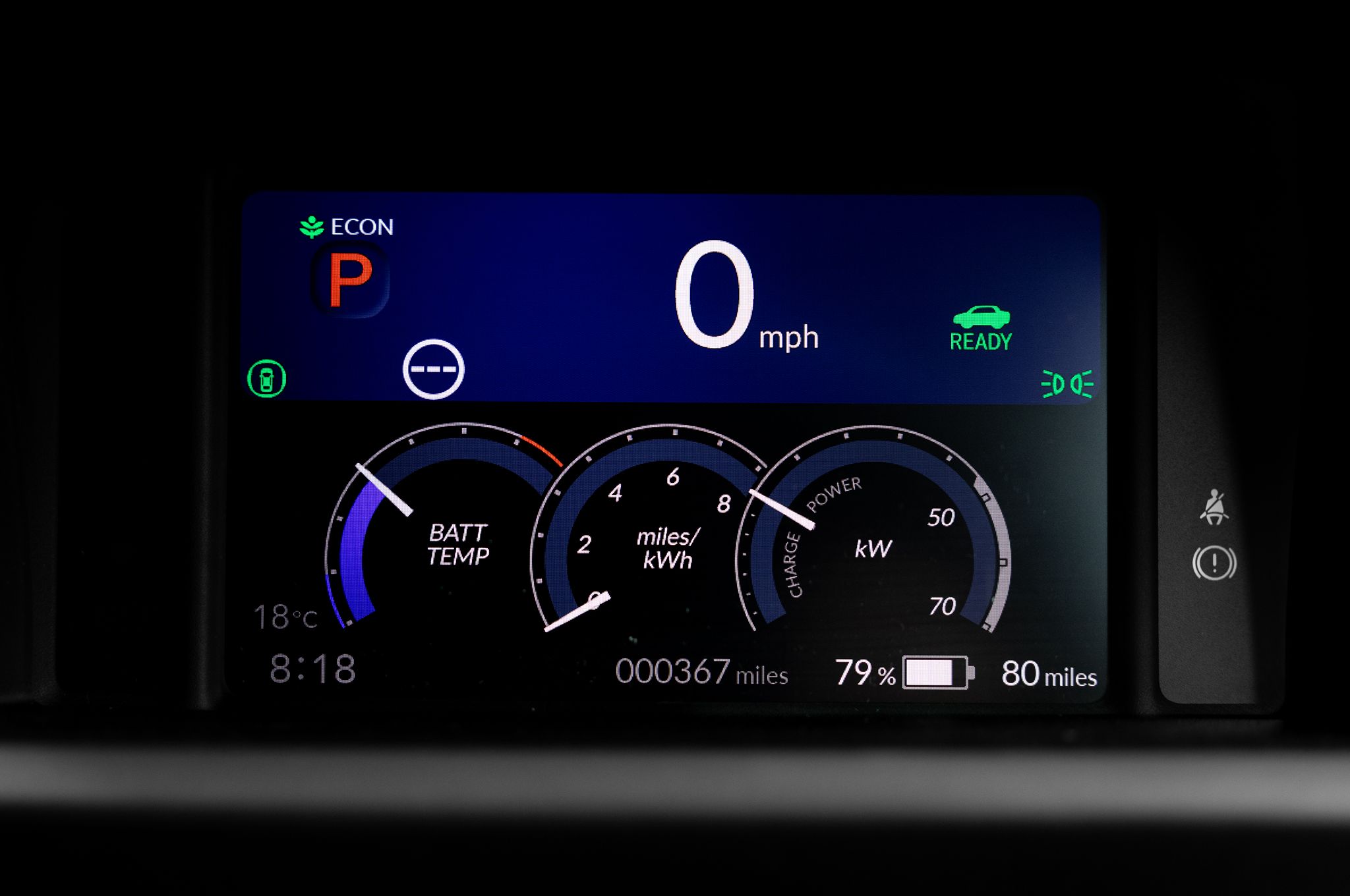
The screens are excellent too. The 7.0-inch driver display features very basic graphics. The solid blue background reminds me fondly of MS-DOS interfaces of old but still pulls turn-by turn directions from Android Auto / Apple Carplay. Speaking of which, the 9.0in infotainment screen is large enough to be easily legible without dominating the interior.
.jpg)
We don’t have Euro NCAP figures for the Super-N just yet but it has a full suite of ADAS features and airbags. The tightly packaged driveline components under the bonnet are also engineered to pass by each other in the event of a collision and avoid intruding on the interior space.
Motors, performance and handling
Straight-line performance is not the Super-N’s forte. Owing to its kei car roots, power is limited to 63hp CITY, ECON and Normal modes. That power is sent to the front wheels and while not blistering, is still enough to dart around town with ease.
One-pedal driving is reserved for CITY mode but the paddles mounted to the back of the steering wheel adjust regenerative braking in all modes except for one.
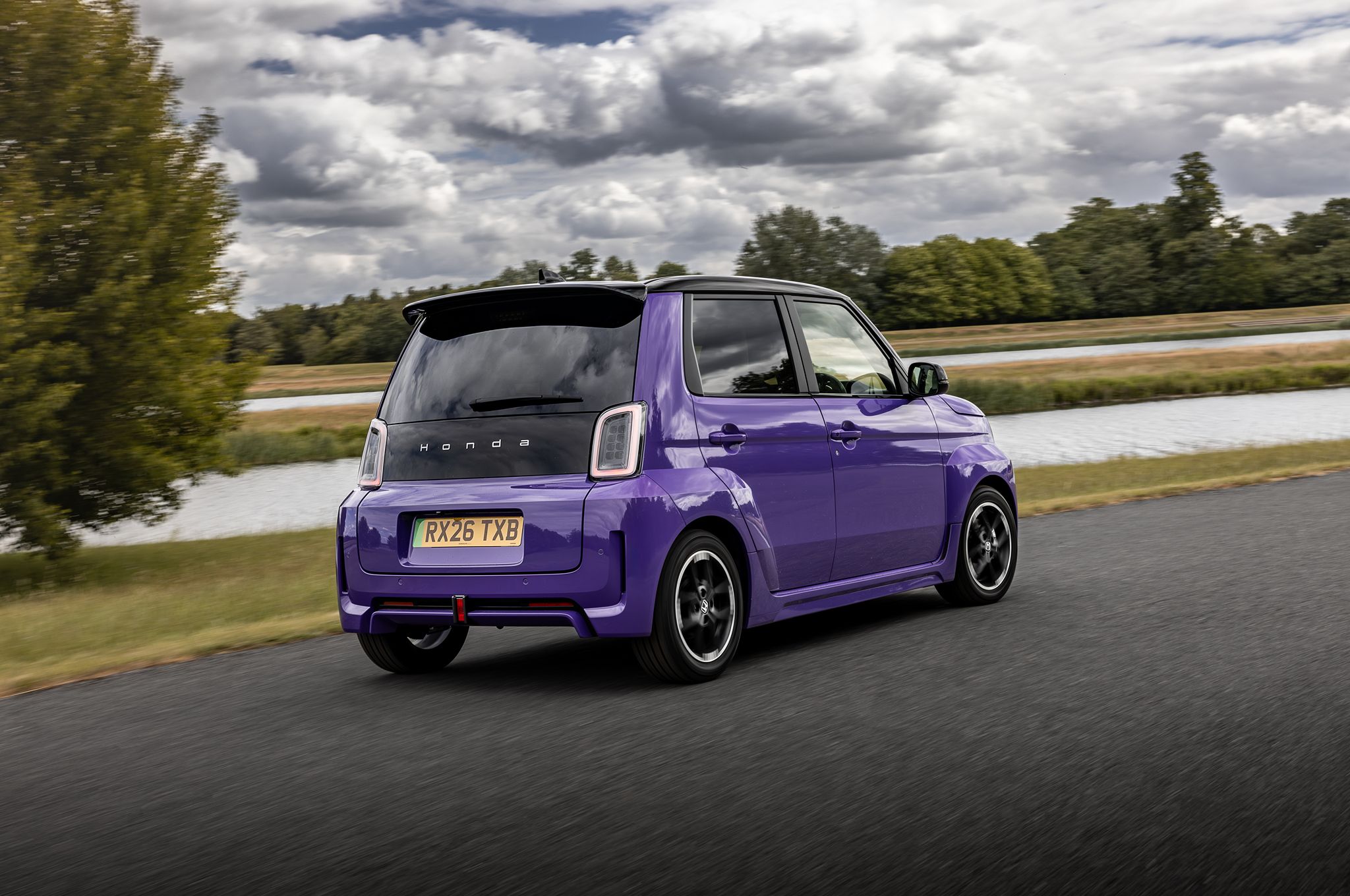
The fun starts when BOOST mode is engaged, available power jumps to 94hp and 0–62mph shrinks from 14.5secs to 10secs. BOOST also enables pumped in engine noises and the Super-N’s party trick, a simulated paddle-shifted seven-speed gearbox not dissimilar to that you’d find in a Hyundai Ioniq 5 N.
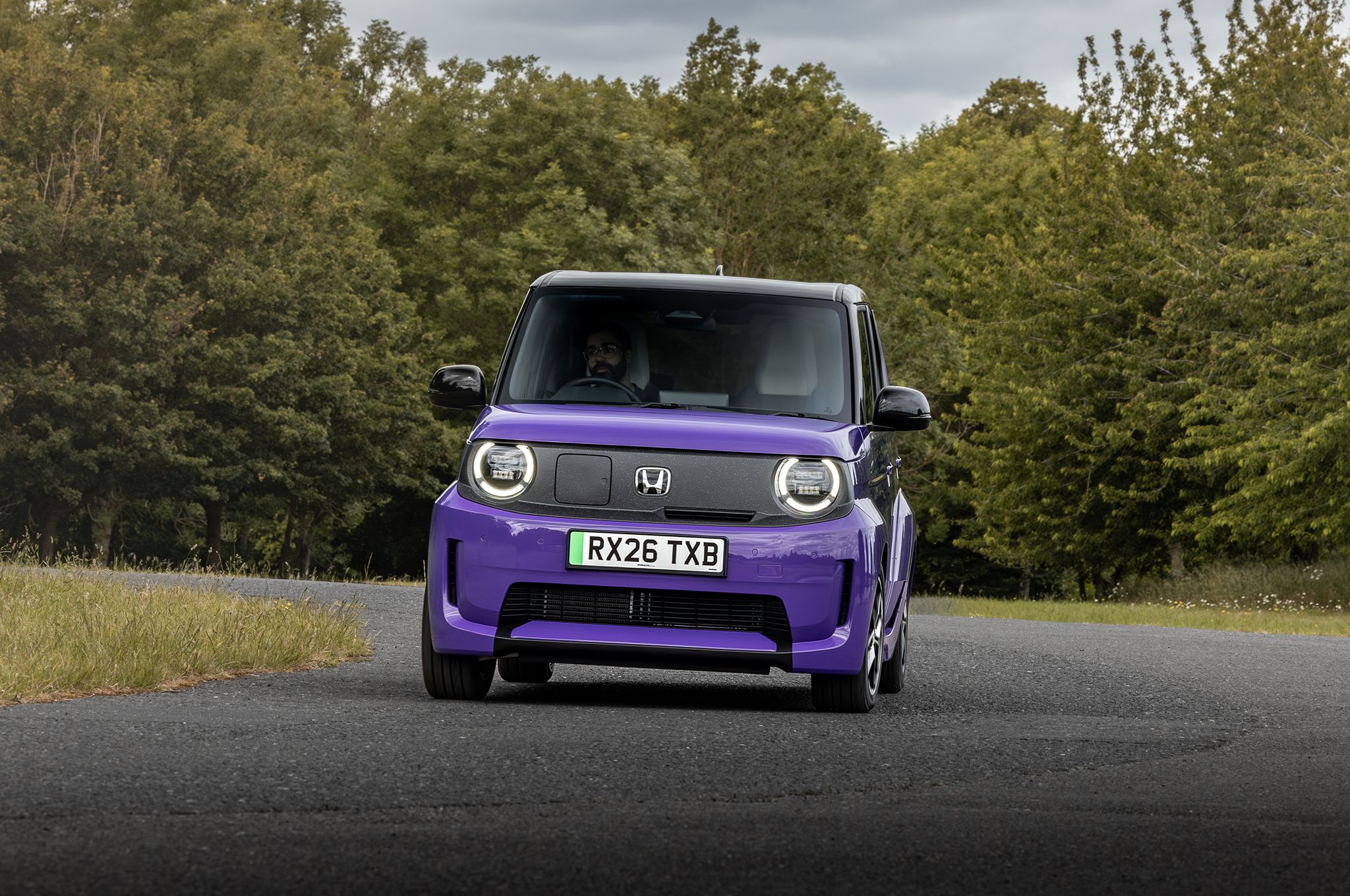
The Super-N gets upgraded suspension for tighter handling and a trade-off in ride comfort. Thankfully, it was tuned and tested on British roads so despite a more tactile ride than a Twingo, it never felt crashy or unsettled.
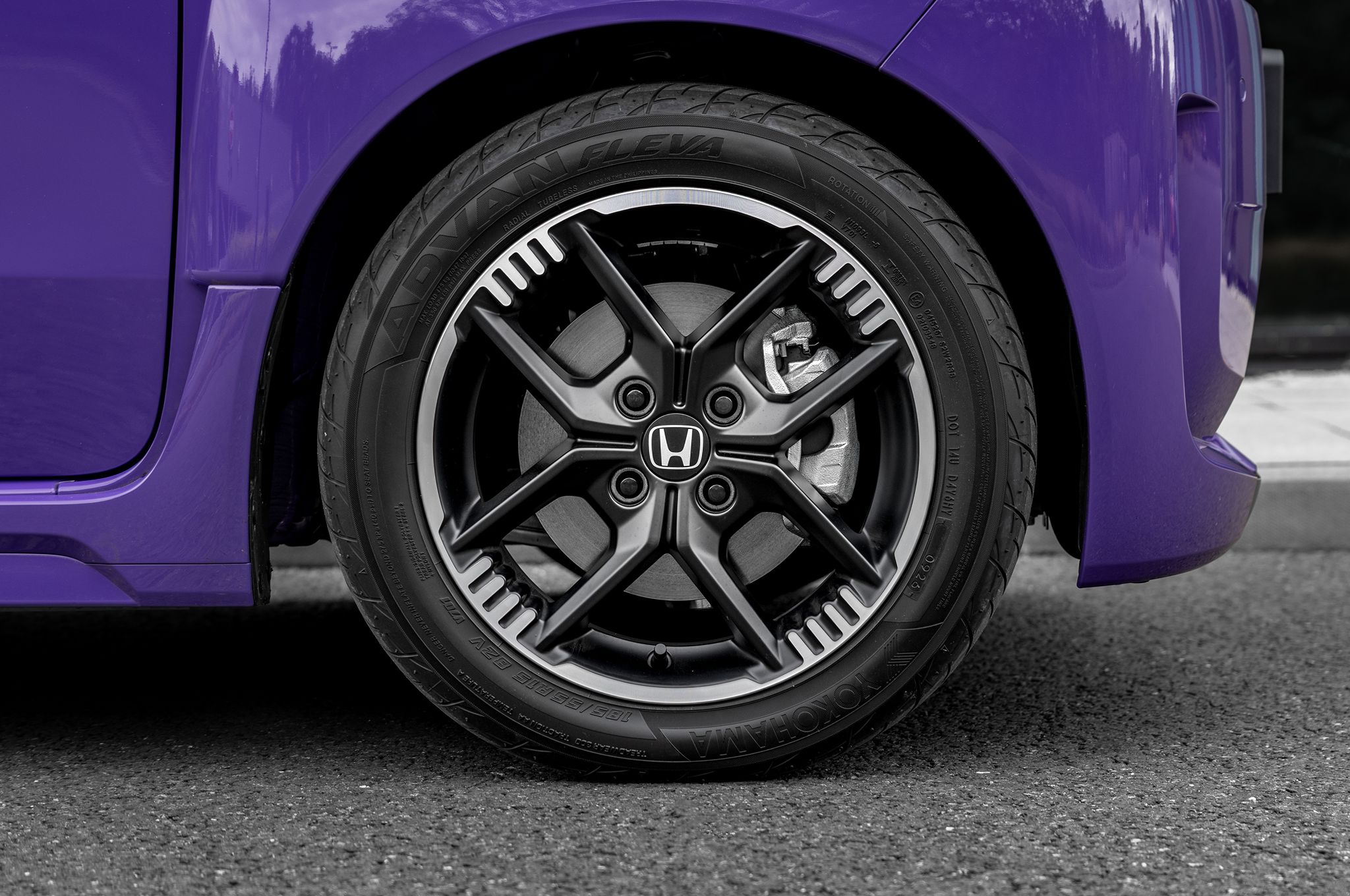
Furthermore, the Super-N’s wheels are pushed right out to the furthest corners of its tiny chassis which lends it remarkable poise and composure. Despite its light weight and thin panels, the interior remains quiet at urban and country road speeds. We haven’t yet tested it on a motorway but we’ll update you as soon as we get our hands on an example for longer than a few hours.
Running costs and pricing
Price is a standout feature for the Super-N, there’s only one trim available and that comes in at £18,995 outright. We expect that to be a little more expensive than an entry-level Twingo but crucially, that price brings an impressive amount of equipment.
From the Bose sound system to the heated seats and steering wheel and even its fabulous purple paint, the Super-N is equipped like a car from several classes above. The only optional extras available are cosmetic items like exterior stripe decals and blacked-out exterior badges.
PCP figures aren’t quite as competitive as something like a Dacia Spring but more or less the same as a Hyundai Inster at £199pcm with a £549 deposit. Though bear in mind, we don’t have details on the term or mileage allowed with that deal from Honda yet.
There’s also a service-activated 8-year warranty available if you keep up with Honda services with three years standard warranty.
Verdict
The Honda Super-N, or purple blur as I’ve taken to calling it, is Honda’s third attempt at an EV for the European market. It’s most comparable to its first attempt, the Honda e. That car was beloved for its design and features but was a commercial failure due to its poor range and exorbitant price.
The Super-N on the other hand, while not much further-reaching, costs almost half the money and still manages to pack just as much charm and character while retaining standard features that people actually want.
It’s not built for long journeys, despite claims of ECON mode being suitable for motorway journeys. But if you stick to the Super-N’s urban natural habitat, it’s pure joy. It’s small enough to dodge potholes without breaching any lane lines and can be parked on a postage stamp thanks to its tiny footprint.
The purple blur may not be the all-rounder that many expect from their only car, but for young drivers, city dwellers and those of us lucky enough to be looking for a second car, it could be perfect.
 8
8.jpg?width=300&height=185)