





 Battery size: 72 - 86 kWh
 Range: 248 - 304 miles
 Company car tax: 3%
 Max charge rate: 80kW
.jpg)





.jpg?width=1500&height=1000)
Introduction and model history
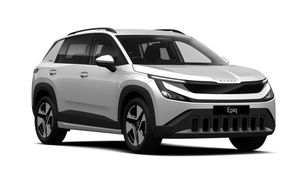
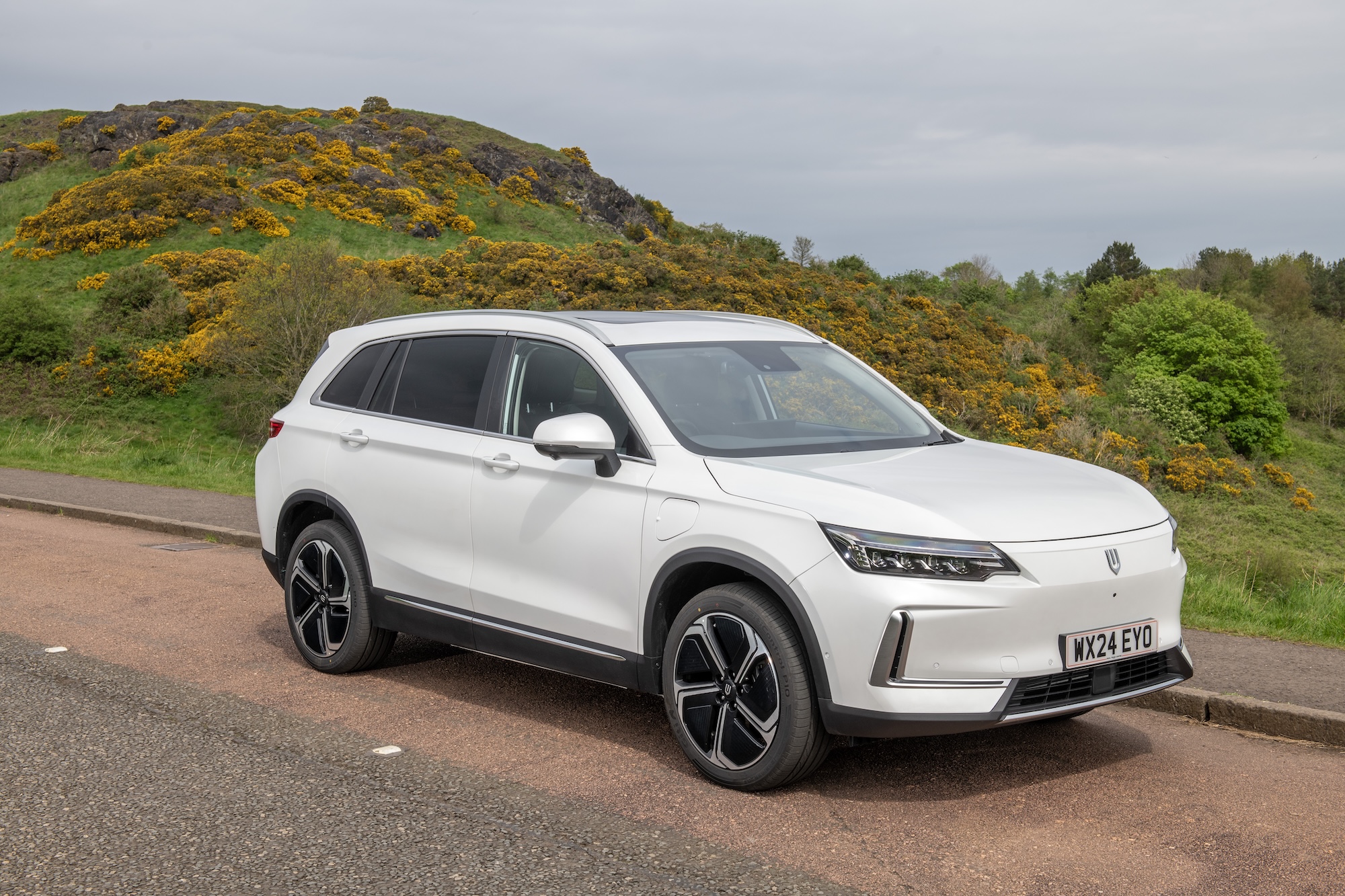
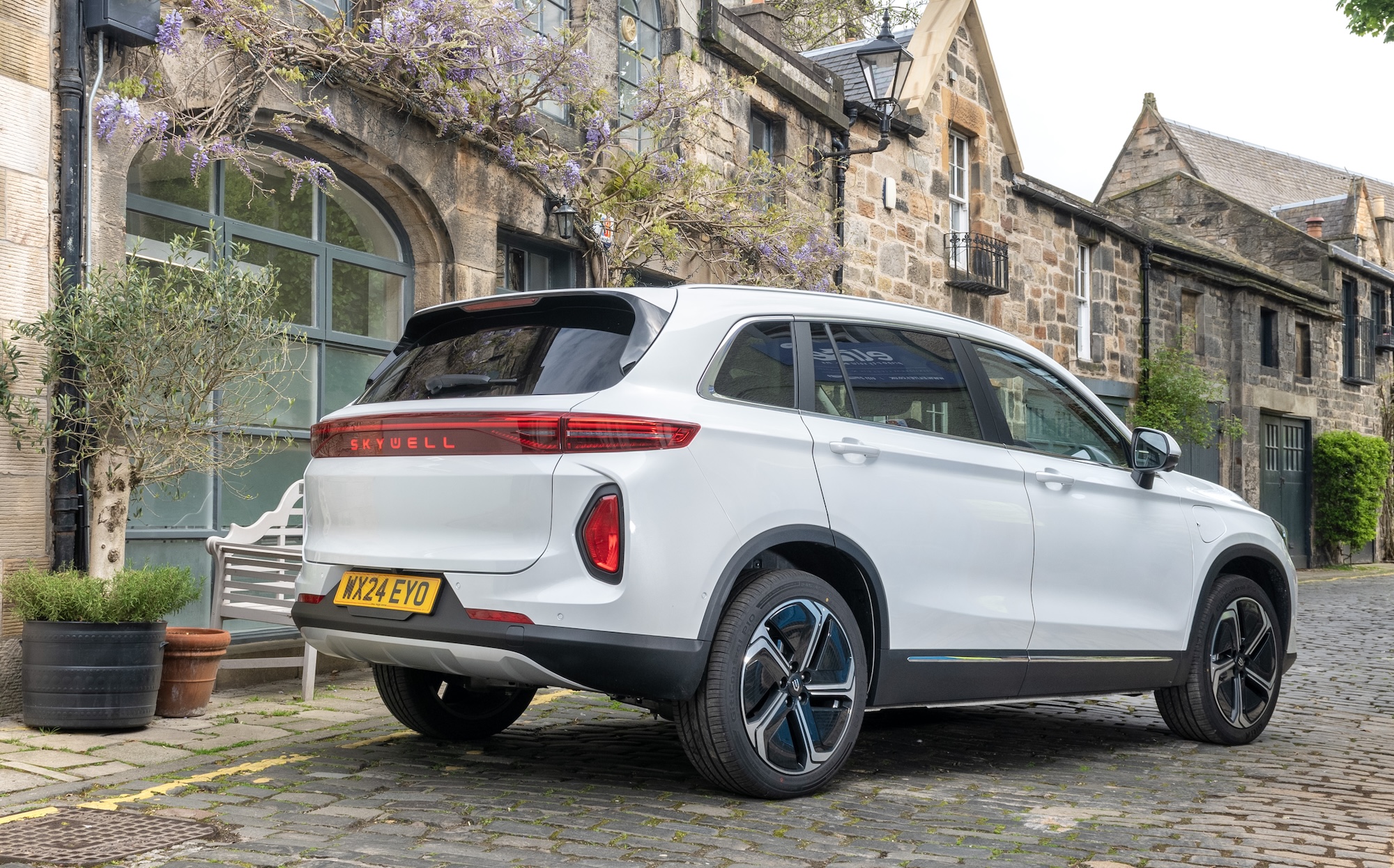
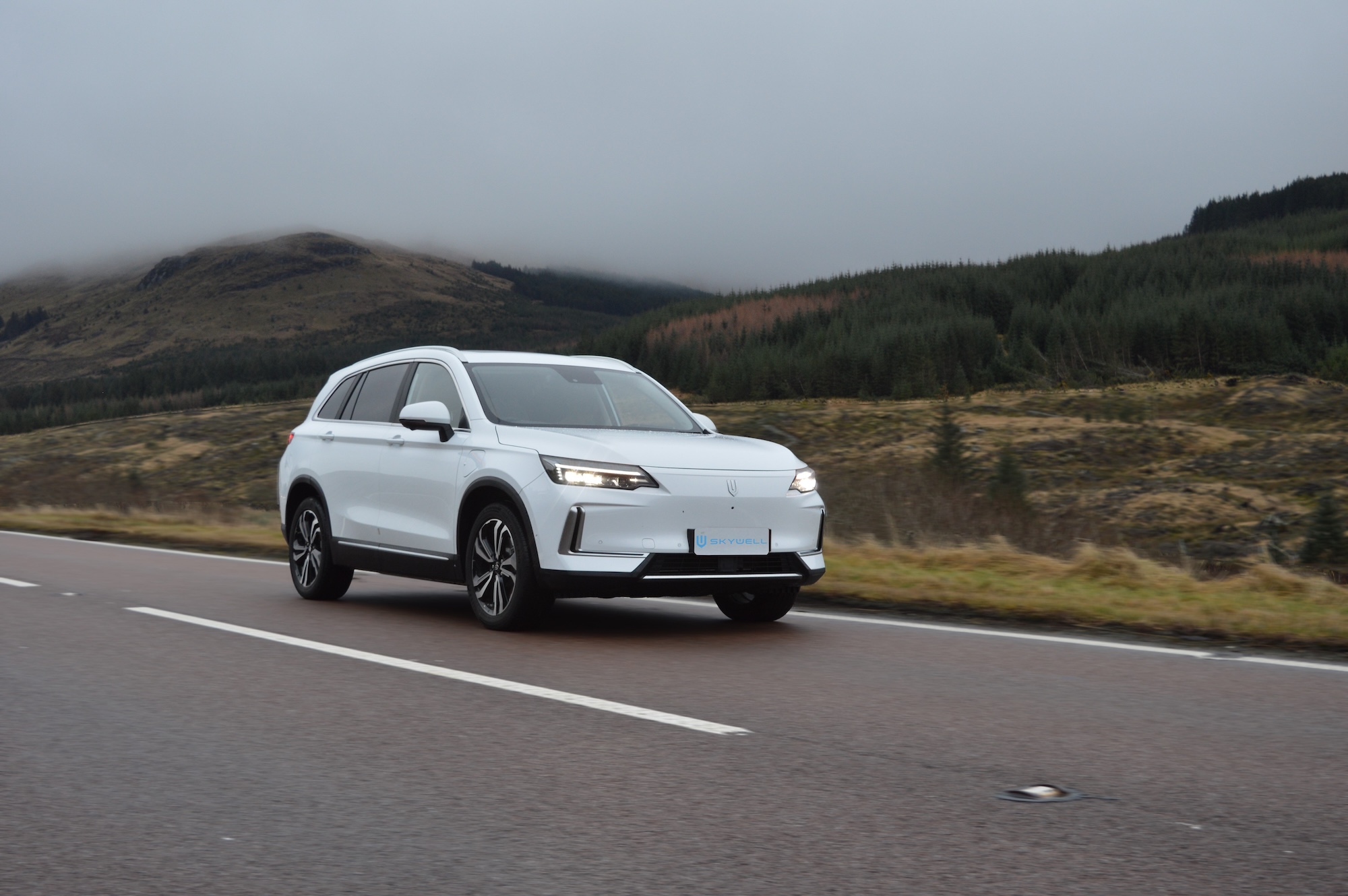
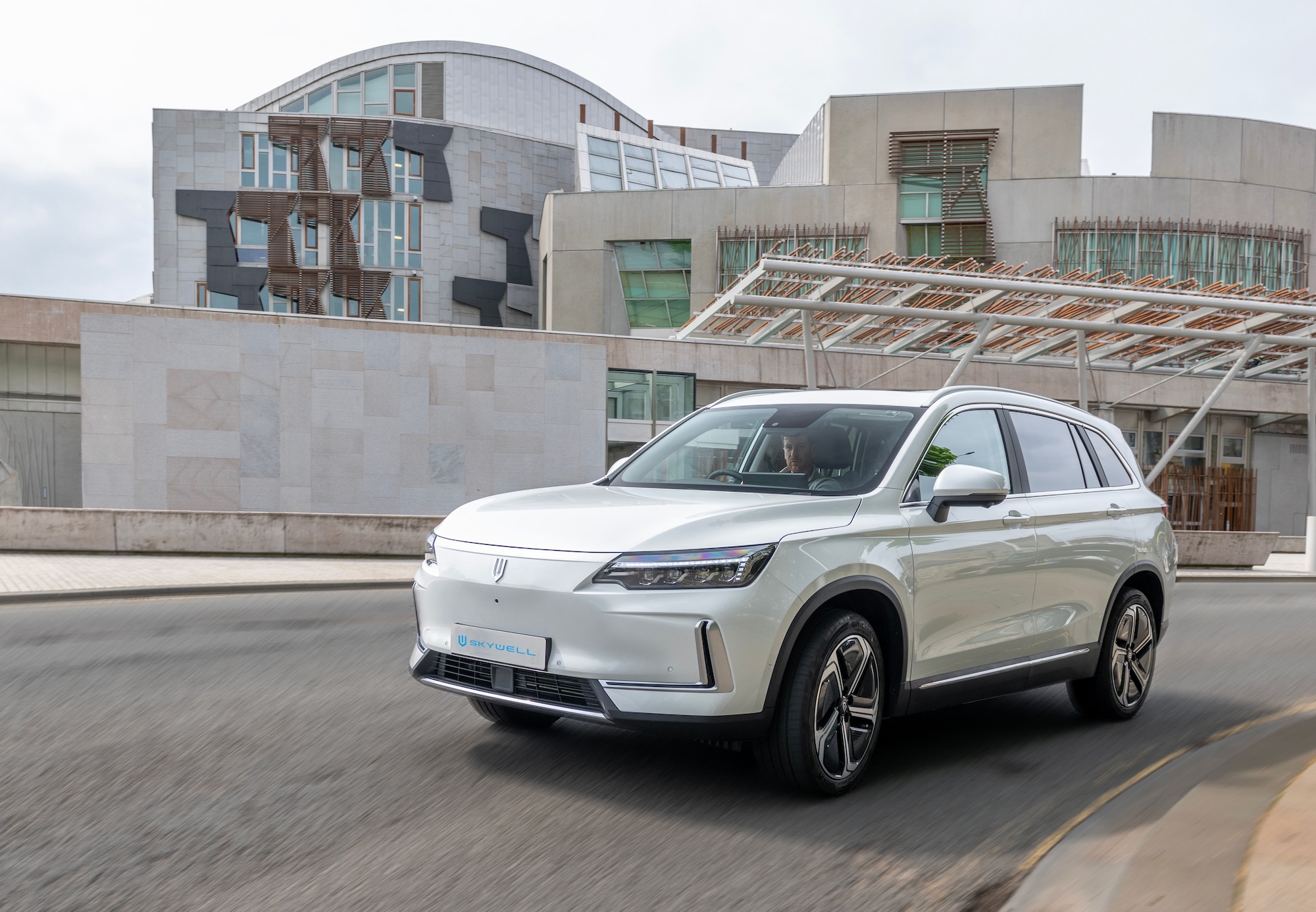
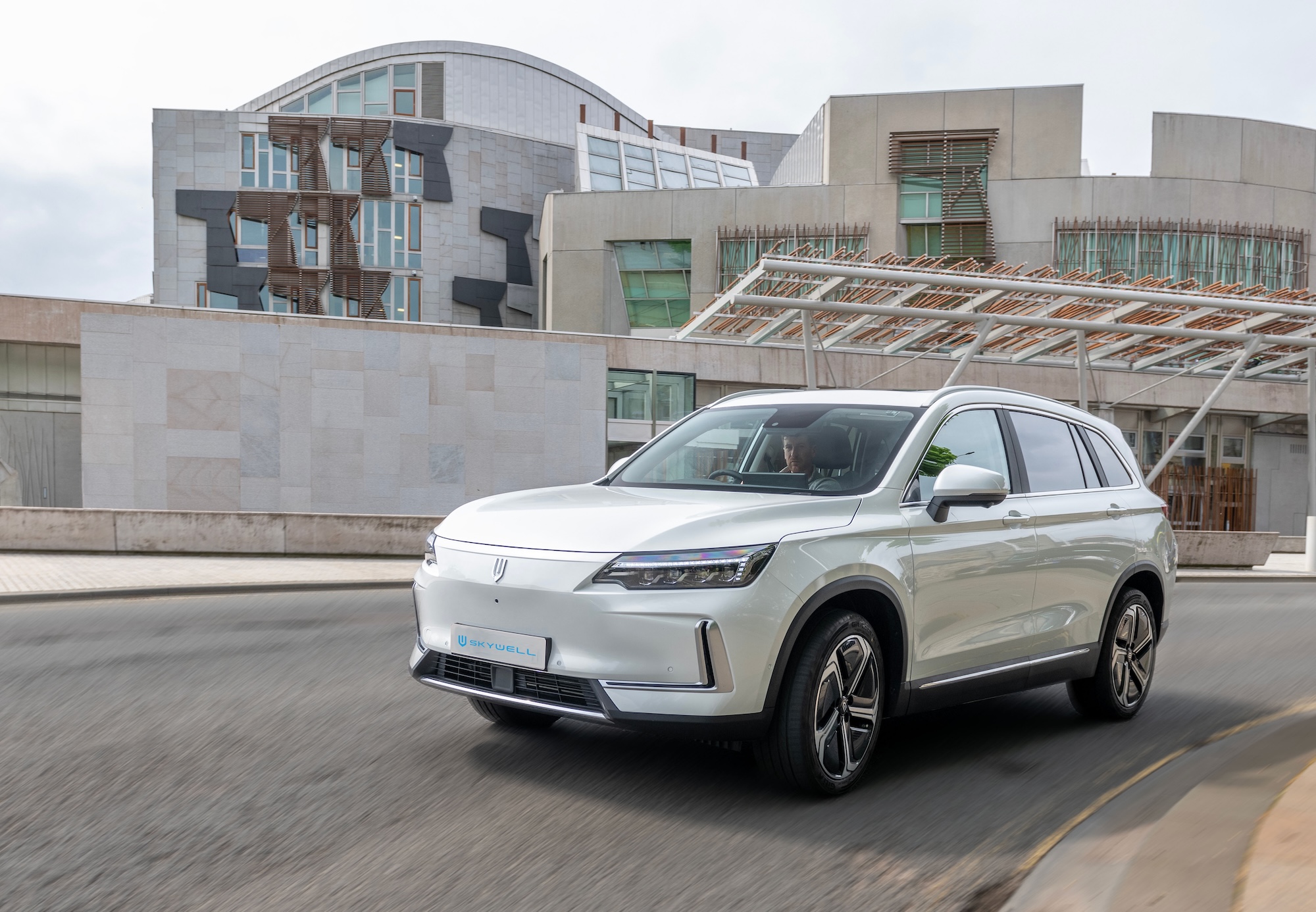
Britain is being barraged by new Chinese car brands offering high tech levels and scintillating value for money. What started as a trickle has become a flood, and one brand that has appeared in recent times is probably one of the least well-known. Skywell is the result of a consumer electronics company (Skyworth) joining forces with a bus manufacturer (Nanjing Golden Dragon Bus Company), and it has decided to start building electric cars. And the first car it thinks it can woo UK buyers with is the BE11 – a mid-size SUV that is aiming straight for top-sellers like the Skoda Enyaq, Peugeot E-3008, Nissan Ariya, and Renault Scenic. Why aim small when you can aim big?
Just like BYD, Omoda and Jaecoo and other Chinese car brands that have arrived on UK shores, Skywell has had to build a UK dealer network to sell and service its cars. So far, at the time of writing, only 19 dealers are on Skywell's books, despite the firm promising to have 50 by the end of 2025. Skywell is also promising that the BE11 is just the start, as it has bold plans to have a range of models in the UK, comprising a Volkswagen ID.3-sized hatchback, a saloon, and a Kia PV5-rivalling van.
Range, battery and charging
The Skywell BE11 comes with two batteries, Standard Range 72kWh and Long Range 86kWh, giving it WLTP ranges of 248 miles in the former and 304 miles in the latter. That would have been good a few years ago but the game is moving quickly in the electric car world, particularly in the electric family SUV class, and the BE11 is behind the competition.
For comparison, a Toyota Urban Cruiser with a 61kWh battery can return a claimed 265 miles, and that's a smaller car from the class below, while an entry-level Skoda Enyaq with a 59kWh pack manages 260 miles. As for the larger 86kWh battery version, it's a little lagging too – a , for instance, manages a claimed 382 miles from a similarly-sized battery.
In my time with the BE11 and driving it on a variety of roads in the summer, I averaged 3.4 miles per kWh, which gives a real-world range of 290 miles. That's not too bad, but there's no option to specify a heat pump, so winter driving will likely see efficiency drop considerably.
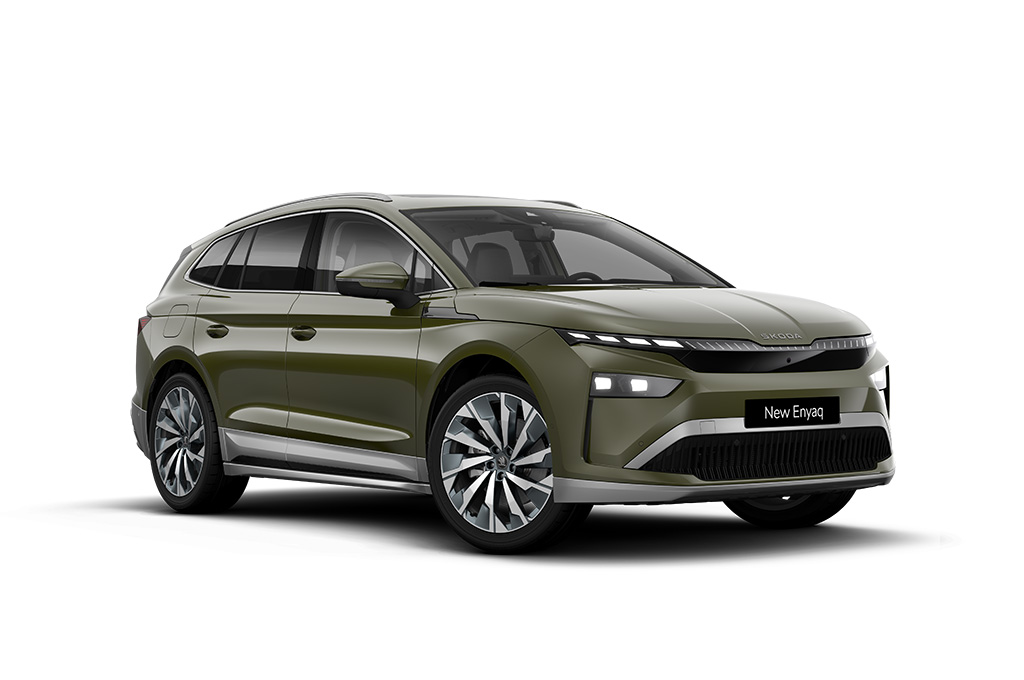
The most disappointing aspect of the BE11's repertoire, however, is its rapid-charging capabilities. Maximum DC rapid charging peaks at 80kW, meaning a quick top-up at a motorway services will take longer than rivals. Rather tellingly, Skywell only gives quotes a 20-70% charging time, not the usual 10-80%, underlining how slow the BE11 is to charge. Going by Skywell's data, a 20-70% top-up will take 36 minutes in the smaller battery car and a whopping 45 minutes in the larger-batteried model. To give some perspective, a maximum DC charging speed of 80kW is significantly slower than most key rivals, many of which can comfortably manage 130kW or more – the Skoda Enyaq 85, for example, can take up to 175kW.
Practicality and boot space
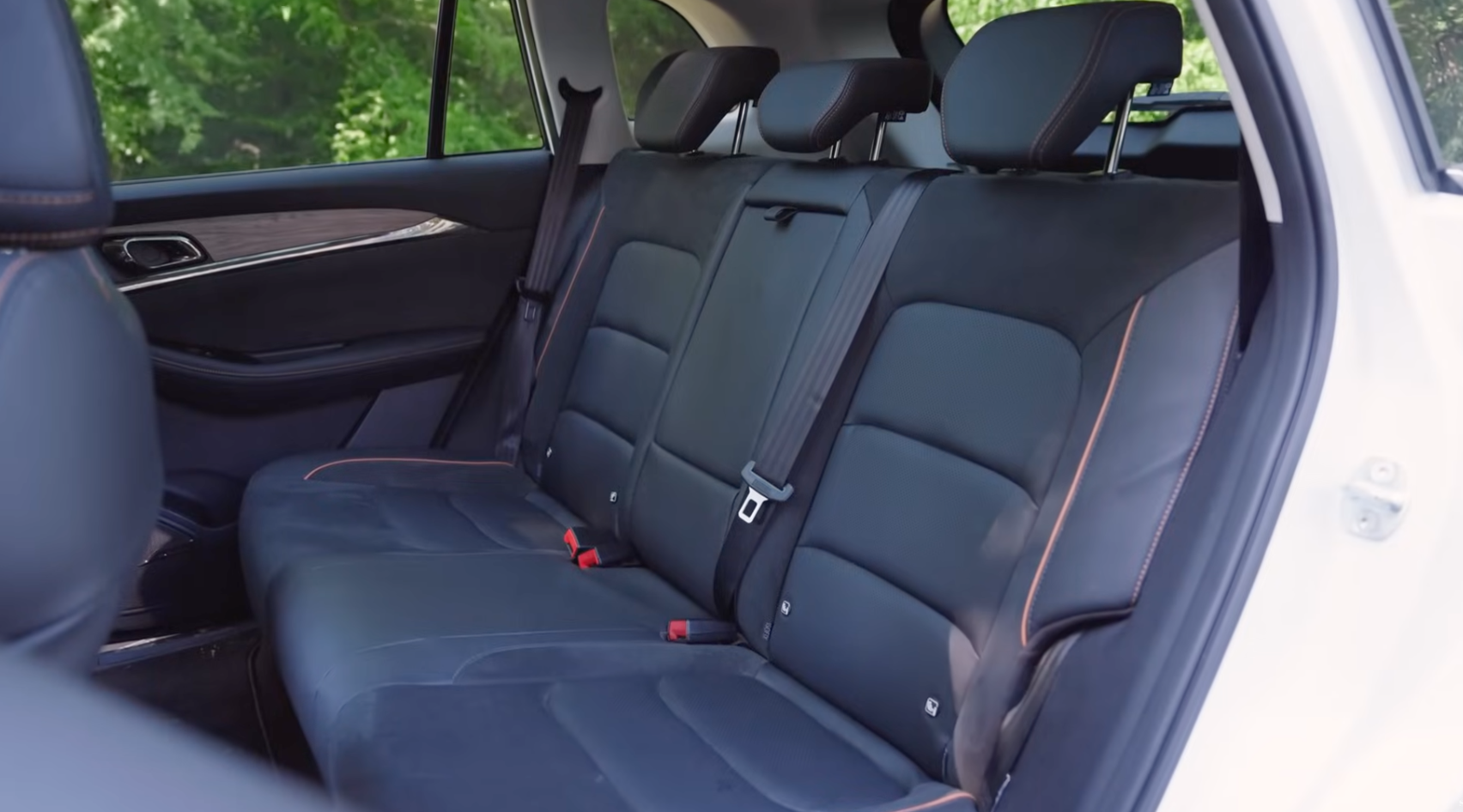
While charging is a massive disappointment, there is some better news when it comes to interior space. There's near limousine-levels of rear legroom, and even six-footers will have plenty of headroom thanks to the BE11's boxy shape, despite the car getting a panoramic sunroof as standard. The rear floor is flat, making it easy to fit a third passenger on the rear bench, and the seats can even tilt backwards and forwards.

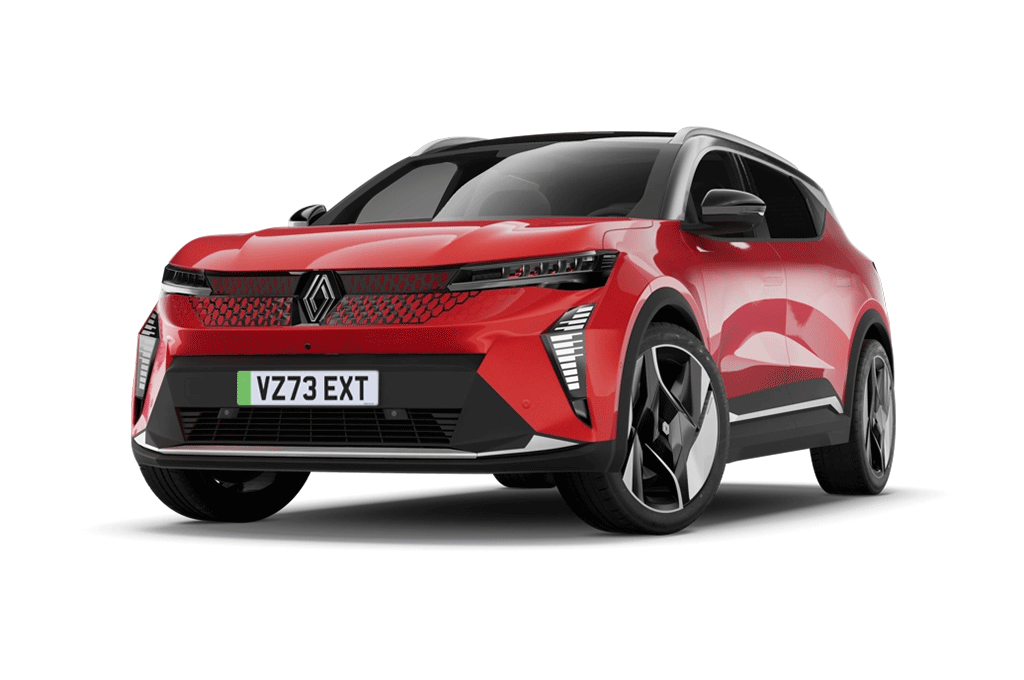
However, things take a familiar negative turn when you dig a little deeper. Admittedly, at 467 litres, the boot’s size isn’t too bad, and the standard-fit electric tailgate opens to reveal a usefully square loading area. But a Renault Scenic has even more space at 545 litres, while a Skoda Enyaq has a whopping 585 litres. There's no front boot (or 'frunk') either, but neither do many of the BE11's rivals.
Oddly, the rear seats don't fold completely flat – and when I say not completely flat I really do mean it. Fold down the back seats in many electric SUVs and they will lie a little proud, not giving a totally flat loading space, but near enough. But, in the BE11's seat-backs sit really high when folded. To have a flat loading area in the Skywell you need to flip up the seat bases against the front seats, and then lie the seat backs down. It's a very old fashioned process. Also, lifting the seat bases reveals all kinds of wires and electrical connections, which unbelievably snapped when I tested the seat-folding process.
Interior, design/styling and technology
Let's start off with the good bits. You sit up nice and high in the BE11, giving that elevated SUV driving position that many buyers crave. There's decent adjustment in the driver's seat, which impressively is electric. The front seats are supportive, too, and the steering column adjusts well for height but not reach.
If you're a little tired of most Chinese SUVs all adopting the same minimalist interior design, then the Skywell BE11 will please you. It's all rather traditionally-looking, and reminded me of a Mercedes from around 10 years ago. Interior quality seemed pretty good, too, and the seats are attractively trimmed in faux-leather and suede and stitched with orange thread. But just don't go touching the fake wood that adorns the dash as it feels like vinyl flooring from a bathroom, and the rose-gold-like shiny trim that wraps around the dashboard had a habit of shining right into my eyes when I was driving the car.
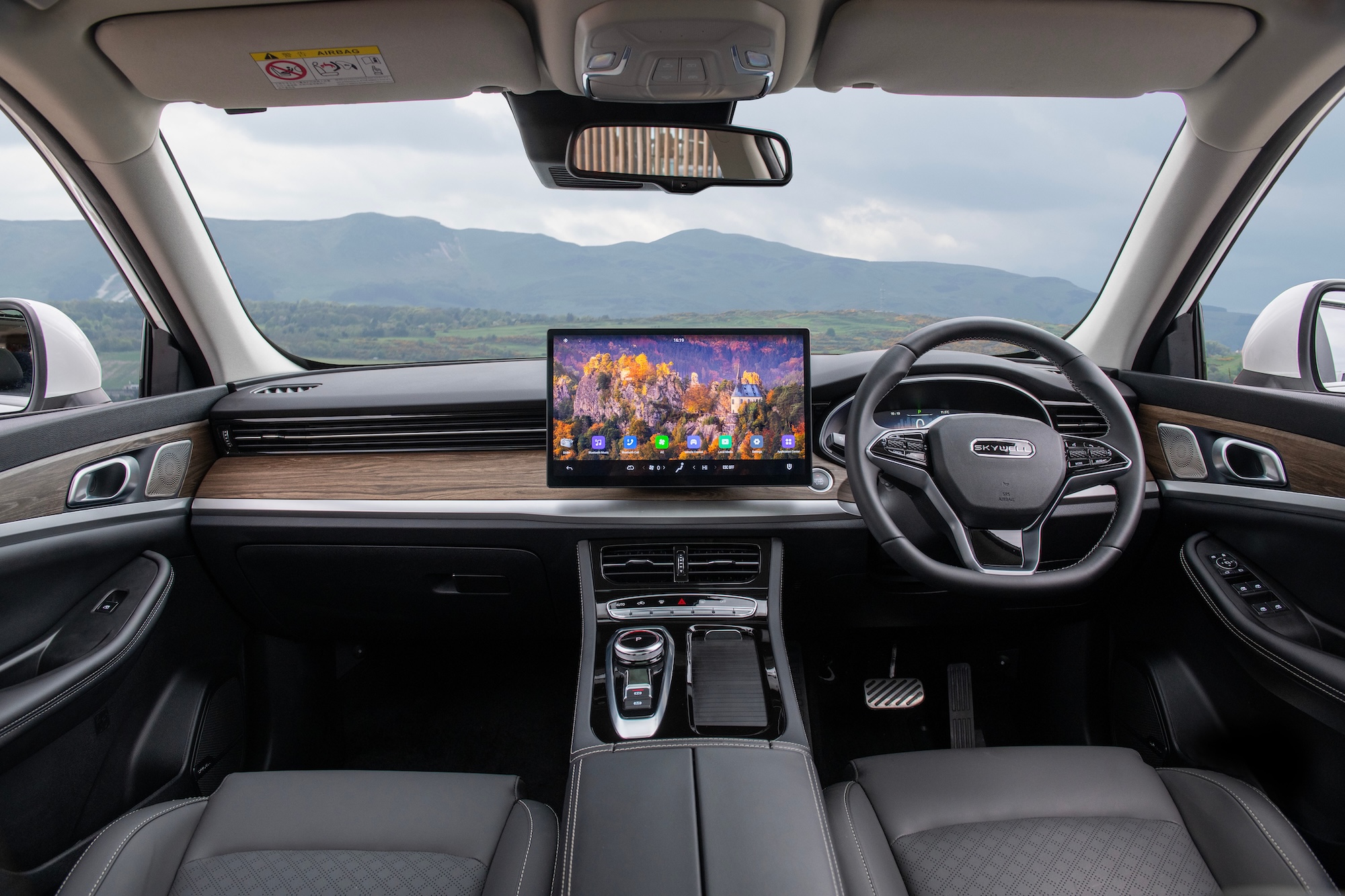
The BE11 gets a 12.8-inch touchscreen as standard, but it's not the easiest system to use. The software is laggy and very clunky, which is especially frustrating as everything is controlled through the screen. There are no shortcut buttons, nor even a knob to control the volume for that matter, with most tasks requiring you to shuffle through various menus and sub-menus. The in-built sat-nav – which is hilariously called TurboDog9 – is equally unfathomable, and even though there is Apple CarPlay and Android Auto connectivity, in a week of driving the BE11, I couldn't make CarPlay work once.
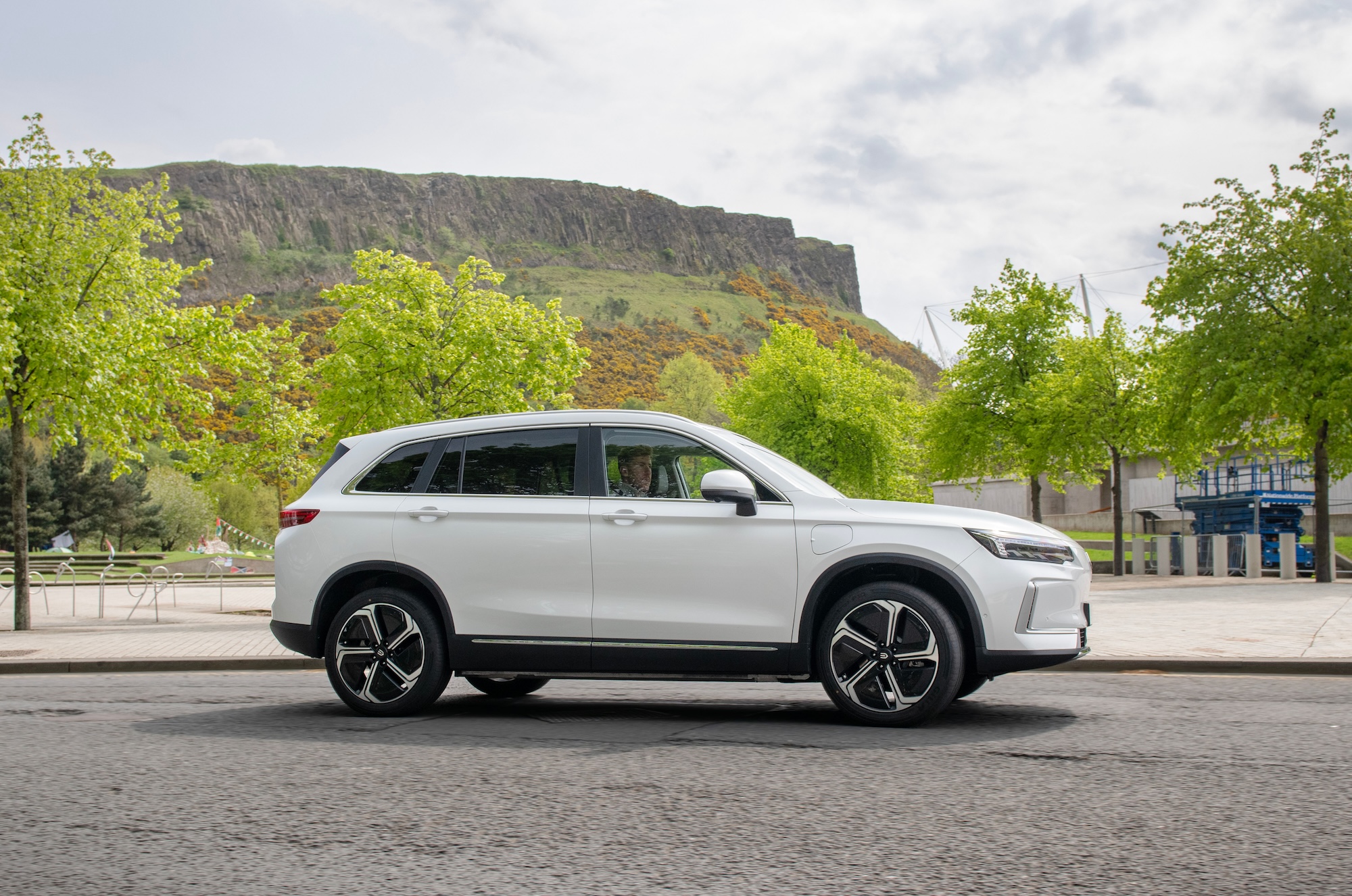
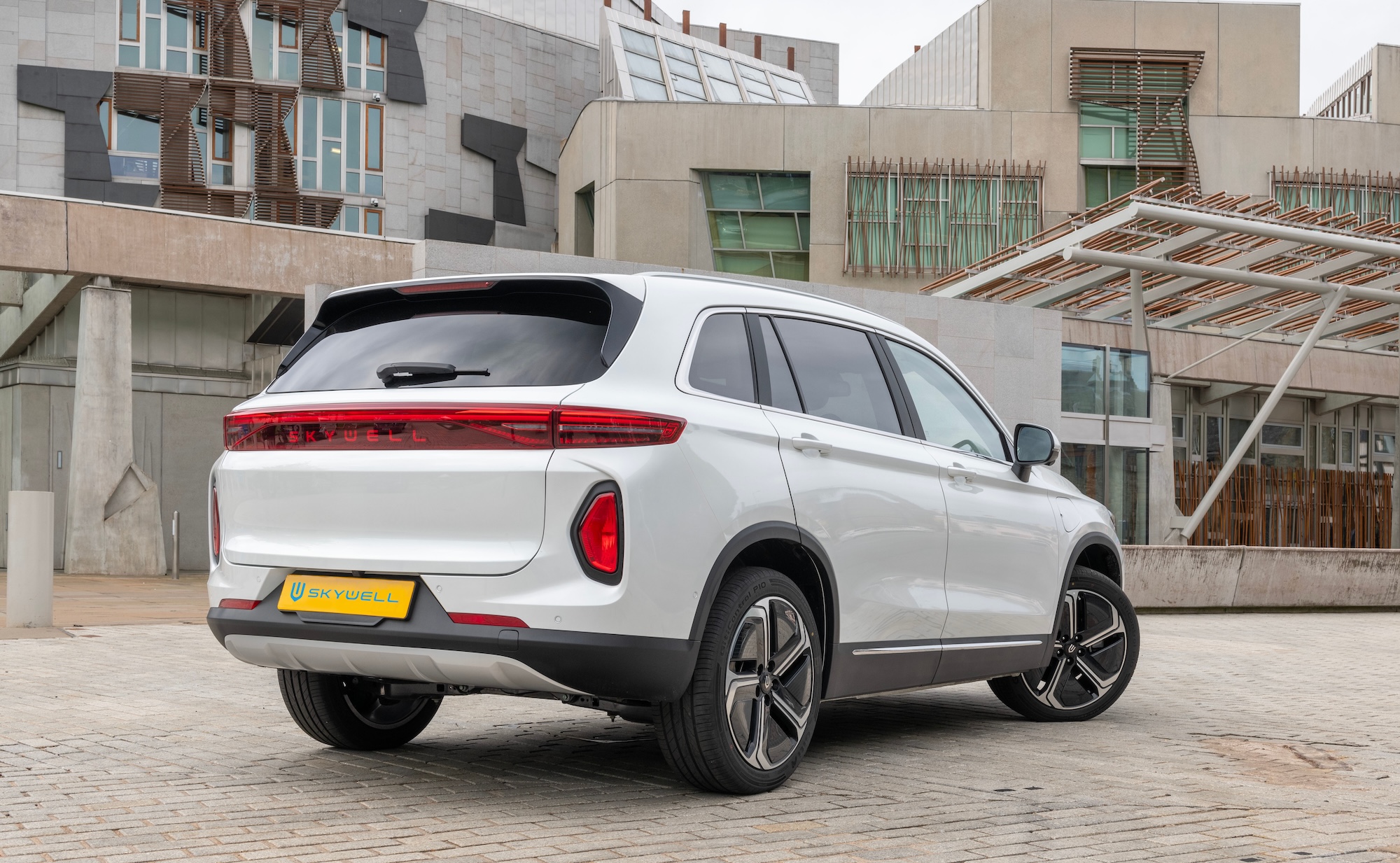
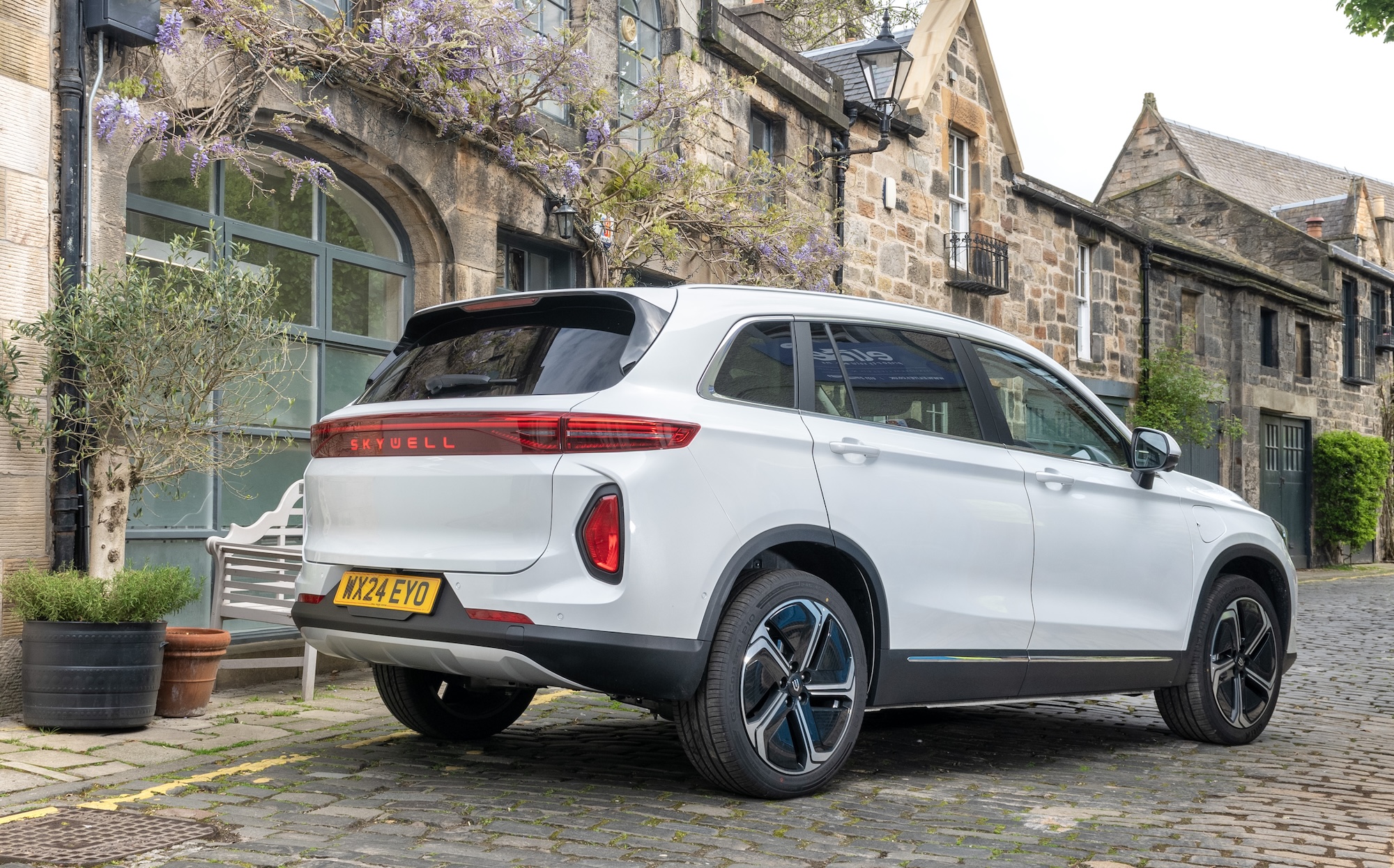
Overall, the whole system and user experience is not user-friendly at all.As for styling I'll let you make up your own mind, but in a class that is brimming with crisply-designed SUVs like the Peugeot E-3008, Renault Scenic and Nissan Ariya, the BE11 looks blank, generic and utterly forgettable.
Motors, performance and handling
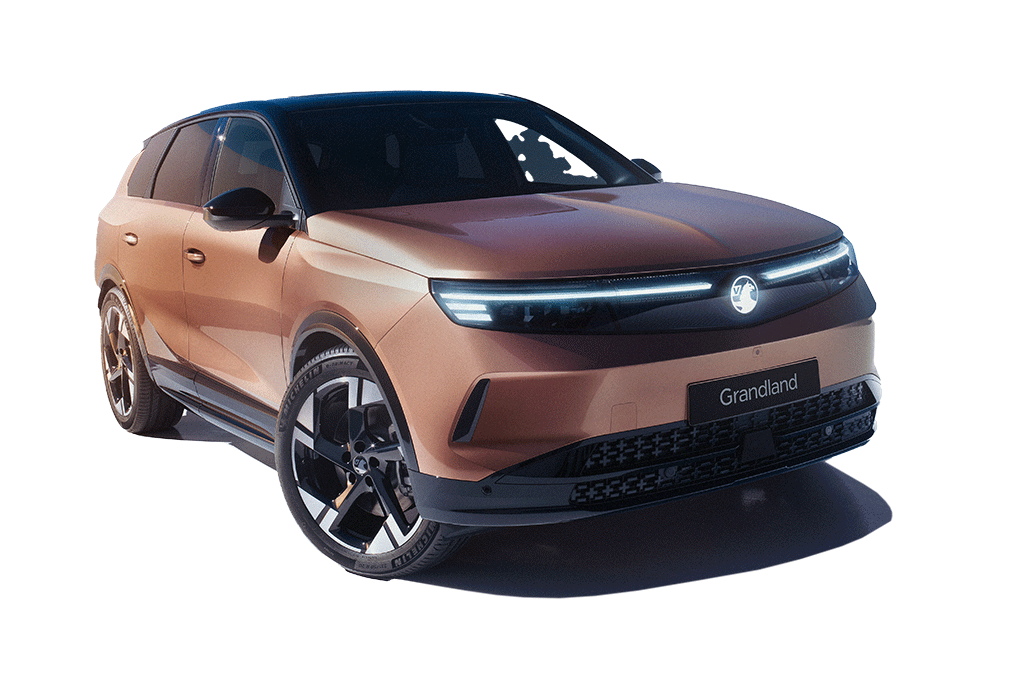
While there's the choice of two battery sizes, there's only one power option – a 201hp motor that powers the front wheels. This serves up 0-62mph in 9.6 seconds, and while that's slower than a Renault Scenic and a Vauxhall Grandland Electric, it's more than respectable enough for a family car.
However, the BE11 is a difficult car to drive smoothly. While it isn't graced with huge power levels the throttle pedal is very sensitive, meaning it's easy to spin up the front wheels when moving off from a junction. The brake pedal is very spongy in feel, and while you can change the brake pedal feel through the touchscreen – again, requiring numerous prods of the screen to do so – changing from Comfort to Sport only makes the braking experience sharp and grabby. Bizarrely, you can adjust the brake regeneration – yes, you guessed it, after navigating through several menus – from zero to 100%. How odd.
To make things even worse the steering is too light and numb, the car is very noisy on the move, and while the suspension does a good job of gliding over potholes in town, it's unbelievably soft and uncontrolled at higher speeds. It means the Skywell leans and lurches into corners – in fact, to be frank, it made me feel travel sick while driving. That's pretty impressive.
Running costs and pricing
A lot of the BE11's problems could be overlooked if the car was cheap, especially as it comes with a seven-year/100,000-mile warranty like you get on MGs and Kias, but it isn't.
There's only one trim specification, so the only choice is which battery size you want. On paper, equipment levels are high, with the BE11 getting a panoramic sunroof, an electric tailgate, wireless smartphone connectivity, 128-colour ambient lighting, and electrically-adjustable seats, all coming as standard. But Skywell charges £36,995 for the Standard Range 72kWh car, and £39,995 for the Long Range 86kWh, putting the car right in the heartland of the electric family SUV class. The 87kWh Renault Scenic, for example, starts at £35,495 (post-Electric Car Grant) – enough said. Or you can get a Long Rang Citroen e-C5 Aircross with over 400 miles of claimed range for less than the Standard Range Skywell!
I would leave it there but I have to mention safety. The BE11 hasn't been tested by Euro NCAP, and once glance at the standard kit list reveals a noticeable lack of safety equipment other than front, side, and curtain airbags. Skywell has also been quoted as saying it wouldn't expect the BE11 to get a five-star safety rating, while more worryingly, in Chinese crash tests (which are different from European ones, admittedly) it scored a one-star rating. That doesn't mean that it'd do so badly in Euro NCAP, but it does seem highly unlikely that the Skywell would fare as well in crash tests as those rivals that we've already mentioned.
Verdict
While it may have a spacious interior and a seven-year warranty, the BE11 is almost impossible to recommend. It is comprehensively beaten by rivals on price, range, charging, user experience and driving dynamics, not to mention there being a huge question mark at how safe it is. Skywell is promising a more desirable range of electric cars for UK customers in the coming few years and we hope they’re right, because on the basis of the BE11 the outlook doesn’t look good. The Skywell BE11 shows that not all Chinese cars are attractive propositions.

 8
8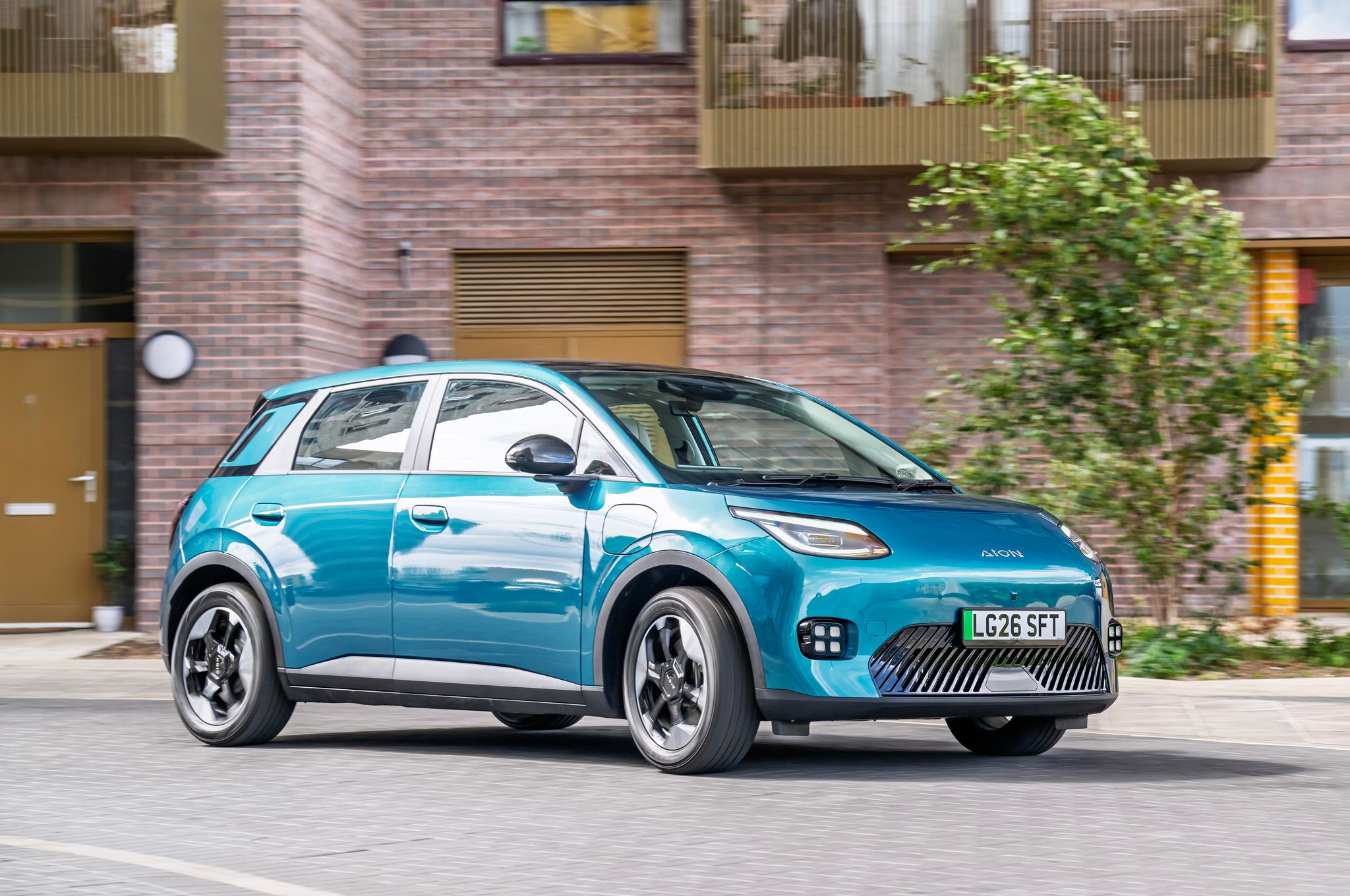.jpg?width=300&height=185)